Circle首席经济学家访谈:USDC入局Hyperliquid利好Circle与HYPE


- 核心觀點:本集播客深入探討了USDC取代USDH成為Hyperliquid核心抵押資產背後的市場結構與戰略邏輯,分析了AI價值捕獲的分布趨勢、CLARITY法案的政治卡點,並拆解了當前長端美債利率上揚主要由期限溢價驅動,以及穩定幣作為邊際買家對收益率曲線的結構性影響。
- 關鍵要素:
- USDC取代USDH是一場「雙贏」事件:Hyperliquid透過合作獲得90%的儲備收益用於HYPE回購,Coinbase作為抵押品管理方嵌入關鍵節點,Circle則獲得了USDC的重大部署陣地,總規模約500億美元,年化收益近2億美元。
- 關於AI價值捕獲,嘉賓普遍認為價值更多流向應用層和分發端,而非基礎LLM模型層。能源成本被視為另一關鍵優勢來源,擁有廉價能源和算力的參與者(如Elon)將佔據有利地位。
- CLARITY法案正處於立法關鍵階段(「希拉蕊之階」),最大卡點來自倫理問題,即如何處理總統家族的利益衝突(如World Liberty Financial)。法案在參議院已獲兩黨支持,但能否獲得60票通過仍有懸念。
- 當前30年期美債收益率突破5%主要由期限溢價(約80個基點)驅動,反映市場對長期財政赤字和通膨風險的擔憂,而非對短期利率的預期。聯準會新任主席Warsh被視為傾向於降息,但市場削減了此選項。
- 穩定幣(如USDC)作為美債邊際買家,其集中購買短期美債的行為,實質上壓低了美債整體加權久期,減少了市場上長期國債的供給,可能為長端利率提供反向支撐。
- OpenAI訴訟案以Musk敗訴告終,核心原因是訴訟時效已過。此案未裁決實質性法律問題,但為OpenAI後續潛在的IPO掃除了重大障礙,其長期影響在於如何理順加密領域基金會與營利性Labs之間的關係。
Compiled & Edited by: Odaily TechFlow
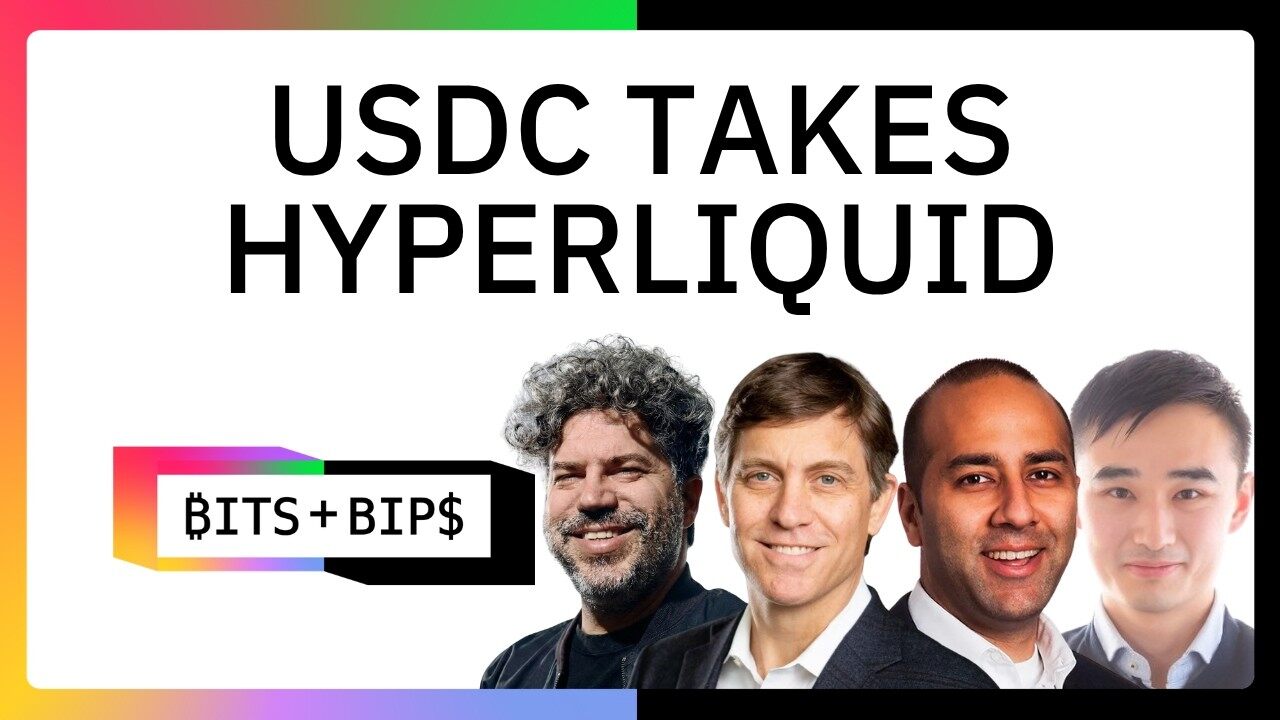
Guests: Gordon Liao (Chief Economist, Circle), Ram Ahluwalia (Co-founder & CEO, Lumida Wealth), Chris Perkins (Managing Partner, CoinFund)
Host: Austin Campbell
Original Title: The Fed, China, and CLARITY + Coinbase Eats USDH
Podcast Source: Unchained
Air Date: May 19, 2026
Editor's Note
In this episode, Gordon Liao, Chief Economist at Circle, systematically elaborates for the first time on the market structure logic behind USDH being replaced by USDC. USDC's balance on the Hyperliquid platform has doubled over the past year, with 90% of the reserve yield returned to Hyperliquid for HYPE buybacks. Coinbase acts as the treasury deployer, Circle as the technical deployer, staking 500,000 HYPE.
Gordon also deconstructs long-end Treasury yields. The current 30-year yield exceeding 5% is primarily driven by the term premium, while stablecoins are quietly becoming marginal buyers of Treasuries. In Q1 2026, USDC's on-chain settlement volume alone reached $21 trillion. Stablecoins' concentrated purchase of short-term Treasuries effectively reduces the overall weighted duration of U.S. debt, potentially providing reverse support for long-end rates.
Key Quotes
USDH Replaced by USDC
- "This is essentially a liquidity supernova event. As the dominant on-chain perpetual contract platform, the collateral assets it uses will radiate throughout the entire on-chain economy."
- "Eight or nine months ago, that governance vote chose a different reference asset. But as the platform grows and matures, it also needs to interact with more traditional institutions, and using high-quality, institutional-grade collateral assets is a key part of that."
- "Anywhere that can retain TVL – exchanges, prediction markets – will find a way to monetize that floating rate. Why should they let a third party have that money?"
- "For Coinbase and Circle, this is a strategic move to neutralize an emerging competitor. Coinbase, as the collateral manager, positions itself at the critical juncture of this new infrastructure."
The Multiple Attributes of Stablecoins
- "Regarding whether stablecoins are a medium of exchange or a store of value, we see they can be many things simultaneously. In payment scenarios, they are a medium of exchange; in this scenario, they are a vehicle for capital liquidity and collateral liquidity. As the system scales and becomes more institutionalized, the latter will become increasingly important."
- "An agent would probably want a money market fund that pays interest when its money is idle, but the moment it initiates a payment, it will want that money packaged as a stablecoin. The compliance paperwork alone for paying with securities is unbearable."
OpenAI Lawsuit and AI Value Capture
- "There is almost no value capture at the LLM layer. These AI labs spend tens of billions of dollars to provide free services to people like us, essentially doing public service. The value of an LLM lies in its model weights; that's called IP."
- "Whoever controls the end-user delivers the most value. Value primarily falls on the application layer, as well as cloud businesses and AI implementation service providers like Accenture; they will do very well."
- "I think it's a barbell structure. Besides the distribution end, the other end is energy. Whoever can access nearly free energy and cheap compute wins. Elon has an advantage here."
Regarding the CLARITY Act
- "The compromise by Thom Tillis and Angela Alsobrooks essentially separates the store of value function, the settlement function, and the unit of account function of money."
- "We are approaching the Hillary Step of this mountain. There are still the committee seat issue and the ethics issue; the ethics hurdle will be very difficult to pass."
- "From the very beginning, I felt that the banking industry's fight was very Quixotic. What exactly are you trying to get out of this? Are you just stabbing each other, or are you handing a huge gift to asset management companies?"
Long-Term Treasuries and Interest Rates
- "Most of the upward momentum in the 30-year yield comes from the term premium, which is now around 80 bps. This is quite high compared to when it was negative two years ago. This means the market reflects supply and demand dynamics, not expectations of future short-term rates."
- "The narrative that stablecoins are the marginal buyer of Treasuries has more substance than people give it credit for. Their duration is very short, concentrated in T-bills and reverse repos. This actually frees up space for the Treasury to issue more short-term debt. When weighted by dollar duration, it effectively reduces the supply of long-term Treasuries in the market."
- "Investors are saying: I need more compensation to hedge against greater inflation risk. That's all. They know the Fed is not inclined to cut rates."
Coinbase and Circle Team Up to Take Down USDH
Austin Campbell (Host): Hello everyone, welcome back to Bits + Bips, where we explore how crypto and macro collide, one basis point at a time. I'm your host, Austin Campbell. Today's guests are Ram Ahluwalia, Co-founder & CEO of Lumida Wealth; Chris Perkins, Managing Partner at CoinFund; and Gordon Liao, Chief Economist at Circle. There's a lot to discuss in the rates market and in the news today, and I'm particularly looking forward to Gordon's perspective.
Let's start with Circle today. Coinbase and Circle have essentially eaten USDH. USDC will be crowned the quote asset aligned with Hyperliquid (the on-chain perpetual DEX). Native Markets, which won the governance race eight months ago, has now been acquired by Coinbase. USDH holders will redeem for USDC during a migration period. Coinbase will become the official reserve capital management/deployment partner for USDC on Hyperliquid. Circle is responsible for the technical access and operational infrastructure of USDC on Hyperliquid and will stake 500,000 HYPE towards becoming a validator. 90% of the reserve yield will flow back to Hyperliquid, presumably used for HYPE buybacks through the aid fund.
Roughly speaking, there's about $5 billion USDC on Hyperliquid now. At a yield of just under 4%, that's an annualized amount close to $200 million. Most of this money will go to Hyperliquid, Coinbase takes a cut, and Circle gets a new USDC deployment venue, continuing its pursuit of Tether's scale.
The bull case logic is that deeper order books, less conversion friction, faster deposits/withdrawals, and better market maker support will occur as HYPE is tied to platform fees, staking, and Builder activity. Bitwise is also applying for a spot HYPE ETF. The bear case, as raised by people like ZachXBT, worries that if Hyperliquid's core collateral, quote asset, and liquidity become increasingly dependent on USDC, the entire system cedes a critical vulnerability to Circle/Coinbase/regulatory fiat. There's also the issue of Native Markets governance. Chris, as an investor in this space, what's your take?
Chris Perkins: I think this is one of a series of moves we're going to see, and the keyword is "net interest income." If you step back and look at the traditional exchange model: you earn face-value fees, taking a cut on every trade; typically, clearing doesn't make much money, although in our space it's become a new business line, sometimes monetizing data. But the real big money is net interest income.
In traditional finance, the way it works is: a client gives you USD as collateral, you give that USD to the clearinghouse, the clearinghouse invests it, keeps a large portion, and returns a small portion to you. That's your net interest spread. It's a fundamental component of any exchange's business model. Many decentralized applications have ignored this, effectively giving away this beautiful revenue stream for free. Now they're realizing this and are moving to take it back.
I can tell you, any venue that can retain TVL—exchanges, applications, prediction markets—will find a way to monetize that floating rate. Why should they let a third party have it?
If you're viewing it from the exchange's perspective, this is the bull case—Hyperliquid went up after the news because this circle is complete (pun intended on Circle). You've solved the net interest income problem, and it flows back to token holders. If you're on the Circle/Coinbase side, you're also a winner—the details are of course in the terms, like the length of the peg period, how often the rate is renegotiated, I'm not sure if Gordon can disclose that. But what you get is a ubiquitous stablecoin. USDC is fungible; the more circulation you have, the more likely end-users accept it as a payment method.
So USDC wins too. Maybe both sides will adjust the economic terms later. Hyperliquid wins big, securing net interest income; Circle gets greater ubiquity, scale, wider distribution, and hopefully incremental utility. I think it's a win-win.
Austin Campbell: Gordon, I'd like to toss the ball to you. I'm familiar with Circle myself, and USDC has many different facets in the current market. From a market structure perspective, Americans are used to thinking of money in layers—the money you use to buy coffee isn't the same as the money you use to settle derivatives. But now we're starting to see USDC being used for many things simultaneously, its fungibility is increasing. How do you see this from Circle's perspective? Zooming out to your economics background, how do you see the market structure?
Gordon Liao: A few observations. First, we are witnessing the overall maturation of infrastructure. Hyperliquid is the dominant on-chain perp platform today, and its size has grown significantly. USDC's balance on that platform has roughly doubled year-over-year.
The governance vote eight or nine months ago indeed chose a different reference asset. But as the platform grows and matures, it also needs to interact with more traditional institutions, and using high-quality, institutional-grade collateral assets is a key part of that. Choosing USDC is an endorsement of its underlying security and its commitment to 1:1 reserves.
As Chris said, this is a win-win, and it's also a liquidity supernova event. As the dominant on-chain perp platform, the collateral assets it uses will radiate throughout the entire on-chain economy. So this is a major liquidity event that will encourage the use of USDC and other associated infrastructure.
We deployed USDC to Hyperliquid last September, along with CCTP (Cross-Chain Transfer Protocol). So it's been there for a while, but this is a nice "reaffirmation" event.
Regarding whether stablecoins are a medium of exchange or a store of value, we see they can be many things simultaneously. In some scenarios, they are a medium of exchange for payments; in others, they are a vehicle for capital liquidity and collateral liquidity. As the system scales and becomes more institutionalized, the latter will become increasingly important.
We see a similar trend in settlement volumes. Our recent earnings report disclosed that Q1 USDC on-chain settlement volume was $21 trillion. This reflects the expansion of infrastructure and improved liquidity on the largest platforms, both centralized and decentralized.
Austin Campbell: Following that line of inquiry, USDC's circulation is actually highly tied to Coinbase. Many of Coinbase's products are built on USDC, like debit cards, credit card payments, and enterprise payments. Now we're using it as a core asset for exchanges like Hyperliquid. Ram, from a market perspective, does this make you more bullish or bearish on the stocks of Coinbase and Circle?
Ram Ahluwalia: It's good for everyone, especially beneficial for Hyperliquid. For Coinbase and Circle, they've successfully neutralized an emerging competitor. Coinbase inserting itself as the collateral manager at the critical juncture of this new infrastructure is a very strategic move.
For Hyperliquid, retaining 90% of the revenue is a reward for its achievements over the past few years. We discussed Hyperliquid three or four weeks ago; it's one of the assets you want to own this cycle. Coinbase moving preemptively is very forward-looking because Hyperliquid is becoming the core of decentralized trading venues. Circle secured a sizable recurring net interest income stream. So it's a situation where everyone wins, with Hyperliquid benefiting the most.
This ties back to another topic we've discussed before: distribution will ultimately drive most of the revenue in this system. Gordon, you've also said that Hyperliquid is the emerging perp DEX in crypto. All these parties coming together essentially recognizes the position of distribution and users. This theme will recur when determining winners and losers later on.
The OpenAI Lawsuit
Austin Campbell: Speaking of users and winners, today Elon Musk lost, Sam Altman won, at least in the first round. A federal jury in Oakland unanimously rejected all of Musk's claims in less than two hours. The core of the verdict was the three-year statute of limitations; the jury found that Musk knew OpenAI was converting to a for-profit model in 2021, but he didn't sue until February 2024.
He originally sought $134 billion in "ill-gotten gains" and the removal of Altman and Brockman from leadership, citing the 2025 for-profit restructuring. But the substantive issues of the case, including charitable trust breach and unjust enrichment, were not adjudicated. Musk's team has already indicated they will appeal. Wired magazine commented that the trial painted both parties as self-interested, with neither Musk nor Altman looking good. A subsequent interpretation is that, at least during the transition period, OpenAI might now be able to go for an IPO.
A few reactions on X are worth reading. Structural skeptics say that while this is a big legal win for OpenAI, the larger political and institutional questions remain—what does it mean when an organization builds public legitimacy with a "non-profit, humanity-first" mission and then becomes one of the world's most valuable commercial platforms? News24 said that a non-profit machine built to benefit humanity has forcibly pivoted into a closed, Microsoft-backed for-profit machine. The trial indeed revealed broken promises around openness and safety. Chris, what are your thoughts?
Chris Perkins: It looks like the statute of limitations had expired, so that's quite clear-cut. I don't know how Musk's lawyers will handle the appeal, but they're smart and will likely find a way.
At this point, Ram would usually say something negative about OpenAI, calling it a tempest in a teapot. Before he does, the bigger issue is that in the crypto space, due to regulatory pressure over the past four years, many foundations are designed as non-profits, alongside Labs. I'd like to see a clear legal precedent to sort out the relationship between foundations and Labs. Right now, in many protocols, everyone is confused about who is responsible for what and who is who.
I'm not saying foundations are useless; foundations definitely have non-profit ideals they can pursue, like Ethereum's cryptographic research. But many foundations might have been created to seek protection from a very aggressive regulator. So this case will have profound implications for the crypto space. Sam is also increasingly involved in our space now.
Ram Ahluwalia: Chris, you practically served that one up on a platter. I didn't expect this lawsuit to amount to much, so indeed nothing happened; it was indeed a tempest in a teapot