Clarity法案過審參議院委員會,市場已開始顯化利好影響


- 核心觀點:美國參議院銀行委員會通過了《數位資產市場清晰法案》(CLARITY Act),旨在明確數位資產的證券或商品分類,從而確立SEC與CFTC的監管邊界,是該領域首部全面性立法嘗試,但後續仍需通過參眾兩院及總統簽署等多重程序。
- 關鍵要素:
- 委員會以15比9的黨派投票結果通過法案,需在參議院全體投票中爭取至少9位民主黨支持。
- 法案禁止對「被動持有」穩定幣支付利息,但允許交易、質押等主動行為產生的收益,以平衡傳統銀行業與加密行業的利益。
- 法案包含對DeFi平台的反洗錢義務和制裁合規要求,同時明確保護未參與違法行為的開源軟體開發者。
- 核心衝突在於政府官員倫理條款(針對川普的加密持有)和執法力度,尤其涉及DeFi非法金融活動管控。
- 市場反應積極,Coinbase漲幅超10%,比特幣上漲約2.4%,行業視其為加密資產的「合法性加冕」。
Original | Odaily Planet Daily (@OdailyChina)
Author|jk

The U.S. Senate Banking Committee voted 15 to 9 on May 14 to advance the "Digital Asset Market Clarity Act" (CLARITY Act) out of committee, sending it to a full Senate vote.
The vote largely fell along party lines: all Republican committee members voted in favor, while two Democratic senators, Ruben Gallego from Arizona and Angela Alsobrooks from Maryland, broke with their party to vote yes.
Notably, Alsobrooks stated after the vote that her decision was a "vote of good faith to continue moving forward," but made it clear she would not support the bill in a full Senate vote until several core issues are resolved.
Committee Chairman, Republican Senator Tim Scott, secured this bipartisan outcome through procedural maneuvers as the hearing drew to a close. The entire hearing lasted several hours, during which the two parties fiercely debated multiple amendments, with several Democrat-proposed amendments being voted down or procedurally blocked.
What is the CLARITY Act? A Simple Breakdown for Everyone:
In simple terms, the CLARITY Act aims to answer a core question that has plagued the U.S. crypto industry for years: Who should regulate digital assets like Bitcoin and Ethereum?
Currently, the U.S. Securities and Exchange Commission (SEC) and the Commodity Futures Trading Commission (CFTC) have long had blurred boundaries and jurisdictional disputes over crypto asset regulation. This uncertainty leaves businesses confused and investors without adequate protection.
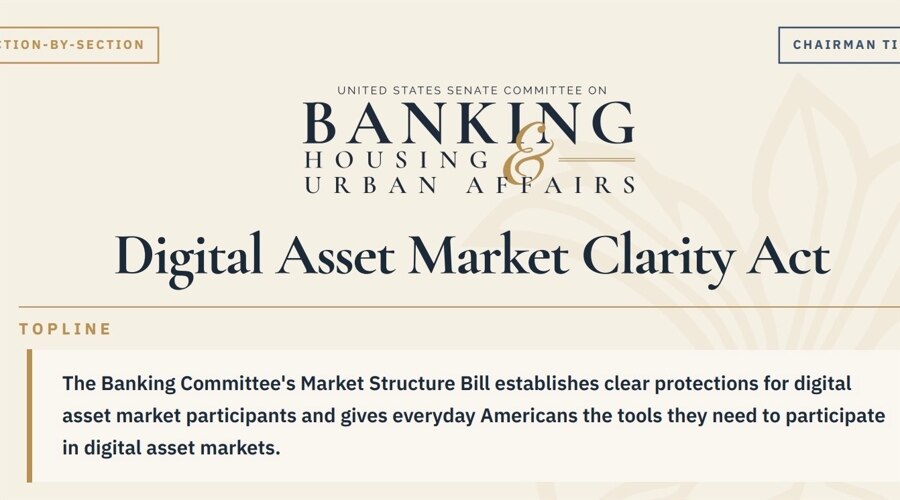
The core logic of the CLARITY Act is to clearly classify digital assets as either "securities" or "commodities," placing them under the respective jurisdictions of the SEC and CFTC, thereby establishing a clear federal regulatory framework. It is the first comprehensive legislative attempt for the crypto industry in U.S. history, spanning 309 pages.
Additionally, the bill addresses several important issues:
- Stablecoin Interest Rules: In the past, some platforms allowed users to earn returns similar to bank deposit interest simply by holding stablecoins, which triggered strong backlash from the traditional banking industry. The latest version of the bill prohibits paying interest on "passively held" stablecoins, but does not restrict returns generated through user-initiated activities like trading, transferring, or staking. The logic behind this distinction is that the former directly competes with bank deposits, while the latter represents legitimate returns from users actively participating in the market.
- DeFi Platform Regulatory Standards: Because DeFi lacks traditional "companies" and "managers," regulators have long struggled to find enforcement targets. The CLARITY Act attempts to establish rules requiring relevant platforms to implement anti-money laundering obligations, monitor suspicious transactions, verify user identities, and comply with the sanctions regulations of the Treasury Department's Office of Foreign Assets Control (OFAC).
- Legal Protections for Software Developers: This clause addresses a real-world dilemma where developers have previously been held accountable by regulators solely for writing code for an open-source protocol that was later exploited by bad actors. The bill explicitly states that if a malicious actor uses a protocol for illegal activities, legal liability should not automatically fall on the protocol's software developers, provided the developers themselves were not involved in the illegal conduct. This protection is seen by the industry as a crucial provision to encourage compliant innovation and prevent "guilt-by-association" enforcement.
Where Do Traditional Banking and the Crypto Industry Diverge?
This has been a core conflict stalling the bill in recent months.
The banking sector worries: If stablecoins are allowed to pay interest to holders like savings accounts, they will directly compete with bank deposits, leading to significant capital outflows and weakening banks' ability to lend to the real economy. Six major banking groups, including the American Bankers Association, jointly issued a statement demanding stricter limits on stablecoin yields.
The crypto industry argues that excessive restrictions on stablecoin yields will stifle innovation and leave the U.S. lagging behind in the global digital finance race.
The final compromise in the latest version of the bill (May 11 draft) prohibits paying returns similar to deposit interest on "passive holdings" of stablecoins but allows for returns generated through active actions such as trading, transferring, or staking. This distinction is viewed as a middle ground balancing the interests of both sides, though the banking industry has indicated it will continue to push for further tightening.
What's Next for the Bill?
Clearing the committee vote is just one step in a long legislative marathon. Several hurdles remain before it becomes law:
Step 1: Merging Committee Versions. The Senate Banking Committee and the Senate Agriculture Committee each have their own draft bill. These must be merged into a unified text.
Step 2: Full Senate Vote. The merged bill must first clear a 60-vote procedural hurdle (cloture motion) in the full Senate, then pass by a simple majority. This means Republicans need to secure support from at least 9 Democratic senators, with the likely key bargaining chips being the unsettled ethical standards and enforcement issues.
Step 3: House-Senate Reconciliation. The House of Representatives passed its own version back in July 2025 with a vote of 294 to 134, but it differs from the Senate version. The two chambers must reconcile their texts, followed by a final vote in each chamber.
Step 4: Presidential Signature. President Trump is widely expected to sign the bill. White House advisor Patrick Witt previously stated publicly that he hopes to have it signed around Independence Day on July 4th, but the timeline is extremely tight.
The crypto industry aims to complete the entire legislative process before the midterm elections in November this year, otherwise, Congressional attention will shift entirely to the campaign, potentially closing the legislative window.
Two Core Lingering Questions
1. Ethics Clause for Government Officials
The bill includes a clause restricting government officials from holding or profiting from crypto assets, an implicit reference to Trump himself, who has held and promoted multiple crypto projects during his tenure. Democrats see this as a necessary prerequisite for supporting the bill, while Republicans are more ambiguous. Cody Carbone, head of the Digital Chamber of Commerce, suggests this deal is likely to be finalized before the bill reaches the full Senate floor.
2. Law Enforcement and Anti-Money Laundering
Senator Elizabeth Warren and other Democrats insist the bill's provisions against illegal financial activities on DeFi platforms are insufficient. A related amendment was voted down 11-13 in today's committee vote, and this issue is expected to remain a focal point of negotiations.
Market Reaction
Following the announcement of the bill's advancement, the crypto market experienced a noticeable rebound. Coinbase (COIN) rose over 10% on the day, while Bitcoin (BTC) gained approximately 2.4%.
Industry bodies generally responded positively. Ripple CEO Brad Garlinghouse stated, "If the world's largest economy is going to lead in crypto – and it must – this is that moment." Circle Chief Strategy Officer Dante Disparte called the vote "a meaningful step forward for a bipartisan, comprehensive digital asset regulatory framework."
For the entire crypto industry, the CLARITY Act represents nothing less than a "legitimization crowning." For years, the unclear classification of crypto assets and inconsistent enforcement by U.S. regulators has kept significant institutional capital on the sidelines. Once the bill is enacted, the regulatory boundaries between the SEC and CFTC will be clear, compliance costs will become predictable, and the primary barrier to institutional entry will be removed.
This also serves as a clear statement by the U.S. in the global race for digital asset regulation. The EU passed the MiCA regulation in 2023, and jurisdictions like Hong Kong, Singapore, and Dubai have also established their regulatory frameworks. The U.S.'s prolonged absence has been exploited by its competitors.
Of course, the bill still has a long way to go. Today's committee vote marks an important beginning.