Huobi Growth Academy | Kyrgyzstan Web3 In-Depth Research Report: The Rise of a Central Asian Web3 Strategic Hub


- Core Insights: Leveraging its young population, high crypto adoption rate (19th globally), and efficient policy-driven approach, Kyrgyzstan is transforming from an energy-based economy into a digital financial hub by introducing top-tier resources like CZ and Justin Sun. Its innovative "dual-track" digital currency (KGST stablecoin and CBDC) and national crypto reserve offer a Web3 strategic model for small nations worldwide.
- Key Elements:
- Market Foundation: Population of ~7 million, over 70% working-age, internet penetration rate of 75%-80%, and crypto adoption rate among the highest in Central Asia.
- Policy Evolution: Pioneering legislation in 2022; revised the "Virtual Assets Law" in 2025 to introduce stablecoins, RWA tokenization, and regulatory sandboxes; brought in Justin Sun as a strategic advisor in 2026.
- Mining Ecosystem: Exchange turnover reached $115 million in the first seven months of 2025; 11 industrial mining companies registered; from 2026, exchanges require a capital threshold of 1 billion soms (approximately $115,000).
- Core Risks: Conflict between mining's high energy consumption and household electricity needs (mining one Bitcoin consumes electricity equivalent to the monthly usage of 1,200 apartments); excessive regulatory speed suppressing small and medium-sized innovation; relationship dependency on key figures.
- Innovation Tracks: National crypto reserve (formed through mining, tokenization, etc.), exploration of gold-backed stablecoins, and RWA tokenization (covering real estate and energy assets).
1. Basic Overview of Kyrgyzstan
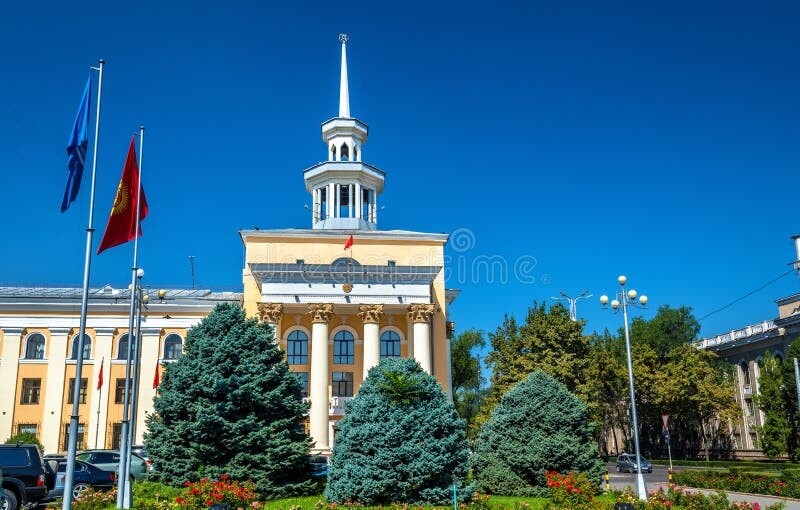
Kyrgyzstan, officially the Kyrgyz Republic (Кыргыз Республикасы / Kyrgyz Republic), is a landlocked country in eastern Central Asia. It borders China's Xinjiang to the east, Tajikistan to the south, Uzbekistan to the west, and Kazakhstan to the north. Its land area is approximately 199,900 square kilometers, ranking fourth among the five Central Asian countries. The capital, Bishkek, is the country's largest city and its political, economic, and cultural center, with a population of around 1.07 million.
According to the latest statistics, Kyrgyzstan's national population is about 7 million, with an urbanization rate of approximately 37%. The population has a young age structure; those over 65 account for less than 5% of the population, while adolescents and working-age individuals constitute over 70%. This demographic structure implies a large potential consumer base for digital services, providing a natural audience foundation for the adoption of cryptocurrency and blockchain services.
Regarding internet infrastructure, Kyrgyzstan's internet penetration rate is about 75% to 80%, with a mobile phone penetration rate exceeding 130%. Mobile internet users account for the vast majority of internet users. Since the 2020s, the country has continuously advanced digital infrastructure construction. 4G networks cover major urban areas, with stable broadband and mobile data services available in the capital and some second-tier cities. However, network coverage in vast rural and mountainous areas still has room for improvement, which to some extent limits the penetration speed of Web3 services in lower-tier markets.
Historically, Kyrgyzstan and China have deep-rooted ties in cross-border trade, energy cooperation, and cultural exchanges. China is one of Kyrgyzstan's largest trading partners, and the two countries have carried out numerous infrastructure cooperation projects under the "Belt and Road" framework. This historical background provides cultural affinity and business trust for Chinese-backed Web3 enterprises (such as TRON) operating in Kyrgyzstan. Justin Sun's visit to Kyrgyzstan is not just an extension of commercial cooperation but also carries strategic implications for deepening connectivity and mutual development in the digital economy between the two nations.
In terms of local acceptance of cryptocurrency and Web3, Chainalysis' Global Cryptocurrency Adoption Index ranks Kyrgyzstan 19th globally, leading in Central Asia. This indicates that the population's awareness and participation in crypto assets have surpassed most countries with similar economic sizes. This high adoption rate is closely linked to local demand for cross-border remittances and asset preservation, as well as the high receptivity of the younger generation to digital assets. Furthermore, the long-standing economic and cultural influence of Russia has fostered a greater openness and willingness among the populace to explore emerging financial tools, including cryptocurrencies.
Overall, Kyrgyzstan is a Central Asian country with a relatively small economy but high digital openness. Its young population structure, continuously improving internet infrastructure, deep historical ties with China, and leading position in global crypto adoption rates collectively form the social soil and economic foundation for the country's Web3 strategic advancement.
2. Kyrgyzstan's Web3 Strategy
Kyrgyzstan's Web3 strategy is essentially a national strategic pathway for a small, landlocked country to achieve an economic leapfrog using digital finance as a lever. Its core concept comprises three progressive layers: the first is the legalization and regulation of virtual assets, establishing a legal framework for cryptocurrency trading, issuance, and services through legislation. The second is the industrial application of blockchain technology, including state-led applications like mining, data centers, and cross-border payments. The third is the systematic construction of digital financial infrastructure, encompassing frontier explorations such as national stablecoins, central bank digital currencies (CBDCs), and national crypto reserves.
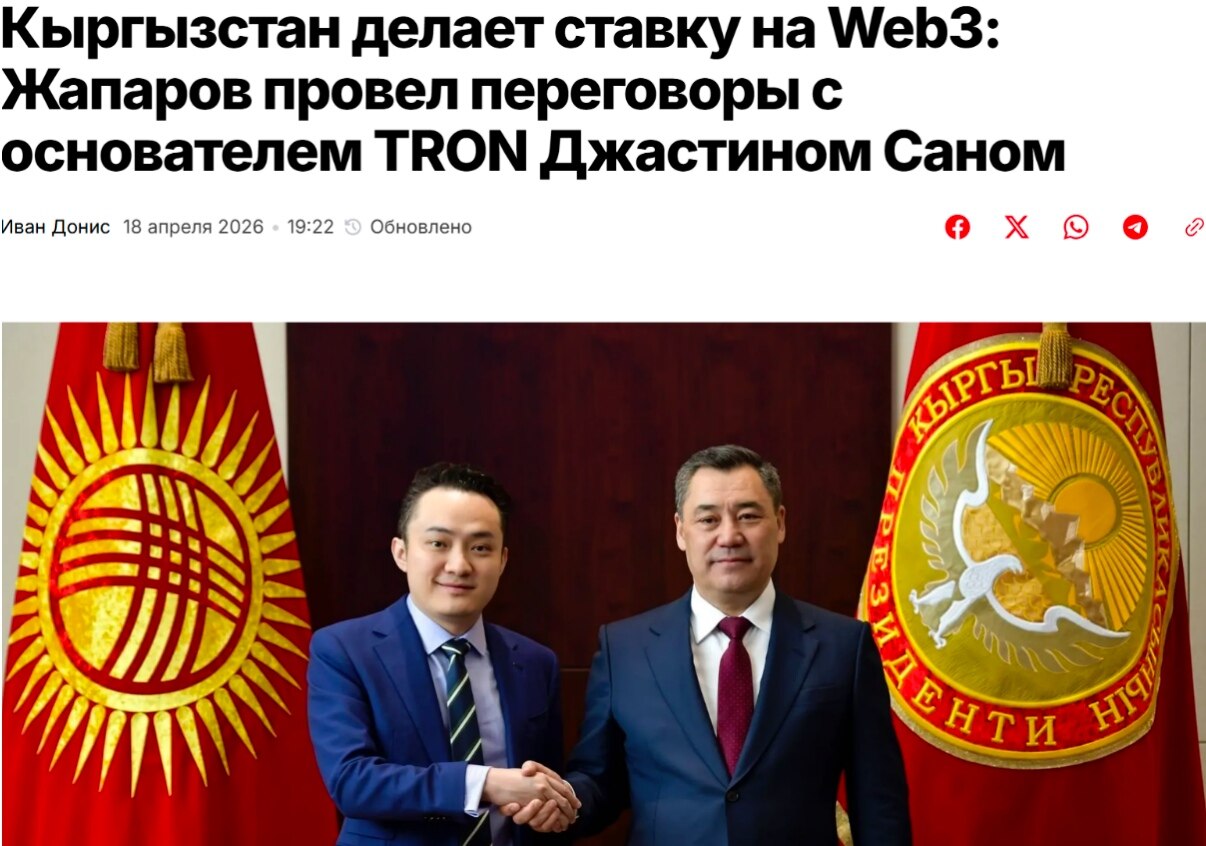
In terms of evolution stages, Kyrgyzstan's Web3 development can be divided into three key milestones. Phase One was the legislative pioneering period in 2022, when the country became the first in Central Asia to establish a comprehensive legal framework for virtual assets, providing legal clarity for market participants and attracting mining capital from China, Russia, and elsewhere. Phase Two was the regulatory systematization period in 2025, when the parliament formally passed comprehensive digital asset legislation, significantly amending the "Virtual Assets Law." This phase introduced innovative mechanisms such as stablecoin regulation, RWA token legalization, state mining, and regulatory sandboxes, completing a policy shift from "free exploration" to "orderly regulation." Phase Three is the international cooperation period in 2026. The appointment of CZ as the national advisor for Blockchain and Web3 strategy in April 2025, followed by the introduction of Justin Sun and TRON in April 2026, marks the entry of the country's Web3 strategy into an accelerated implementation phase driven by leading enterprises.
The internal driving force behind this evolutionary logic stems from multiple factors. Abundant hydropower resources and low electricity costs provide a natural foundation for mining and data centers. Its geographical advantage in the heart of Central Asia offers a strategic position to radiate across the entire Central Asian market. Moreover, the government's strong willingness to open up and its efficient policy implementation provide institutional guarantees for this strategy. With strategic ambition far exceeding its economic size, Kyrgyzstan is writing a blueprint for the digital financial transformation of a small landlocked nation.
3. Market Structure and Competitive Landscape
From the perspective of Central Asia and the broader Eurasian region, the Web3 market in Kyrgyzstan presents a pattern of "one leading superpower driving, multiple points competing." Here, "one superpower" does not refer to the country's market capacity itself but to its differentiated strategic path characterized by international top-tier collaborations, giving it a first-mover advantage in regional competition.
In terms of the legislative framework, the 2025 amendments to the "Virtual Assets Law" construct a comprehensive and detailed regulatory architecture. Regulatory bodies are endowed with 15 core functions covering the entire chain, including policy implementation, standard setting, market access, international cooperation, and law enforcement supervision. These are coordinated by the National Committee for the Development of Virtual Assets and Blockchain Technology, which reports directly to the President. The number of licensed virtual asset participants continues to increase, regulatory infrastructure projects are gradually emerging, and market maturity is constantly improving.
Regarding the mining ecosystem, according to statistics from the first seven months of 2025, the turnover of cryptocurrency exchanges reached 1 trillion som (approximately $115 million), with industry tax revenue around 1 billion som (approximately $11.5 million). There are currently 169 cryptocurrency exchange operators, 13 digital asset exchanges, and 11 registered industrial cryptocurrency mining companies nationwide. New regulations require that from January 2026, operating crypto exchanges must prove they hold capital of at least 1 billion som (approximately $115,000). This threshold will screen and regulate market participants in the medium to long term.
In the competitive landscape, neighboring Kazakhstan began embracing the cryptocurrency mining industry in the early 2020s. Uzbekistan authorized digital asset regulation directly by presidential decree. Tajikistan has also been actively researching blockchain technology application scenarios in recent years. Kyrgyzstan's core differentiation lies in the high-end nature of its international collaborations – from CZ to Justin Sun, the country directly connects with the world's top-tier Web3 resources and talent, rather than relying on general international advisory bodies. In the stablecoin field, Kyrgyzstan is not only promoting the KGST national stablecoin but also exploring the possibility of a gold-backed stablecoin, potentially becoming one of the first countries globally to issue a national stablecoin backed by gold.
4. Core Risk Analysis
Despite the strong development momentum of Kyrgyzstan's Web3 strategy, investors and participants must clearly recognize the multiple risks that this strategy faces.
The primary risk is the structural contradiction between energy and livelihood. There is a clear tension between the high energy consumption characteristic of the mining industry and the residential power supply. Representatives from Bishkek have warned that large-scale cryptocurrency mining could disrupt the electricity supply for residents. Congressional data shows that mining a single Bitcoin requires approximately 800,000 kilowatt-hours of electricity, enough to power around 1,200 apartments for a month. Kyrgyzstan's peak winter electricity demand is particularly concerning. As the government promotes state-led mining projects, the issue of fairness in energy distribution will become a persistent social controversy and could challenge the sustainability of the policy.
The second risk is the pressure of compliance costs due to rapid regulation. The capital threshold requirement of 1 billion som starting in 2026, mandatory licensing systems, and innovative mechanisms like the national crypto reserve create high entry barriers for small and medium-sized entrepreneurial enterprises. If the regulatory framework iterates too quickly, it could suppress the healthy development of the local innovation ecosystem, potentially leading to market concentration where "big players dominate and small players exit," which is detrimental to industry diversification and competition.
The third risk is the uncertainty of international partnerships. While the "dual advisor" structure involving CZ and Justin Sun brings top-tier resources, it also means that Kyrgyzstan's Web3 strategy is, to some extent, dependent on individual commercial interests and diplomatic relationships. Should significant fluctuations occur in the global crypto market, or should related enterprises face new regulatory pressures, the stability of these cooperative relationships faces some uncertainty. Kyrgyzstan needs to find a dynamic balance between introducing external resources and maintaining strategic autonomy.
The fourth risk is the bottleneck in talent and technological infrastructure. As a landlocked country with a population of about 7 million and a limited economy, Kyrgyzstan still has structural weaknesses in its reserves of blockchain technology talent, internet penetration rates, and fintech entrepreneurship ecosystems. Although proposals like sovereign AI joint development and digital banking services put forward by TRON are clear in direction, their implementation requires substantial local talent and infrastructure support, making rapid scaling difficult in the short term.
5. Innovation Trends and Sector Opportunities
The most significant aspect of Kyrgyzstan's Web3 strategy lies in its innovative approach of systematically integrating multiple frontier trends.
Trend one is the "dual-track" operation of the national digital currency system. Kyrgyzstan is simultaneously advancing the testing of the national stablecoin KGST and the central bank digital currency (CBDC) "Digital Som." KGST is positioned as a compliant stablecoin backed 1:1 by fiat currency, serving daily cross-border payments and transaction settlements. The "Digital Som" represents the exploration direction of sovereign digital currency, with a formal decision on issuance expected by the end of 2026. The coordinated advancement of these two instruments is expected to build a complete digital currency infrastructure for the country.
Trend two is the tokenization of Real World Assets (RWA), opening the door to the digitalization of the real economy. The 2025 amendments to the "Virtual Assets Law" established the legal status of real-world asset tokens at the legislative level for the first time. Tokenizable asset types include real estate, equipment, raw materials, and financial instruments. Considering Kyrgyzstan's abundant natural resource endowment and relatively low asset valuations, RWA tokenization could become an important tool to attract international capital. Kyrgyzstan can also explore the possibility of tokenizing strategic assets like energy and mineral resources, opening new avenues for financing.
Trend three is the innovative practice of a national crypto reserve. According to the amendments, the national crypto reserve will be held by the state, formed through methods including mining, issuance, tokenization, and targeted acquisitions. The primary purpose is to enhance national financial stability and support national digital projects. This arrangement means the state will directly participate in the cryptocurrency market. The transparency and governance quality of its reserve management and usage policies will directly determine the success or failure of this innovation.
Trend four is the regulatory sandbox, providing controlled experimental spaces for innovative applications. The President can introduce pilot regulations in specific regions and for limited periods. Participants can develop innovative services and blockchain technologies under special conditions without being fully bound by traditional laws. Temporary licenses for sandbox participants are registered, non-transferable, and have expiration dates. Business conditions follow current laws, and limitations can be placed on time, geography, transaction volume, and user scale. This mechanism provides a safe testing environment for emerging scenarios like DeFi protocols and AI + blockchain applications.
In terms of sector opportunities, taking public chains as an example, TRON's layout in Kyrgyzstan essentially positions itself as the technological infrastructure provider for the country's Web3 strategy, rather than just a simple blockchain network. Justin Sun's proposal for hydropower-driven data centers aligns highly with the green DePIN concept within the TRON ecosystem. Joint development of a sovereign Large Language Model (LLM) follows the industry megatrend of AI + blockchain integration. Furthermore, digital banking services have the potential to embed TRON's payment and settlement capabilities into traditional financial scenarios. This "infrastructure + application ecosystem" dual-wheel drive model will lay the foundation for TRON's deep penetration in Central Asia.
From the cooperation mechanism perspective, Justin Sun's proposed digital literacy improvement plan and promotion of blockchain technology application are long-term ecological cultivation strategies. These soft cooperation initiatives will, over the medium-to-long term, cultivate local market demand for cryptocurrencies and blockchain services, establishing a user base for TRON's sustainable growth. Especially in Central Asia, where the young population is relatively high, the market potential of digital literacy education should not be underestimated.
It is important to note that the above investment logic is based on the current policy environment and partnership relations. This analysis is for reference only and does not constitute any investment advice. The crypto asset market is highly volatile, and investors should fully assess their own risk tolerance before making prudent decisions.
6. Conclusion and Outlook
Based on the above analysis, Kyrgyzstan is undergoing a strategic transition from an energy-based economy towards a digital finance hub. In less than two years, the country has completed a comprehensive chain of actions, from prioritizing legislation to bringing in two global top-tier Web3 figures, CZ and Justin Sun, as strategic partners. Its implementation efficiency and strategic clarity are rare among both Central Asian and global emerging markets.
From an investment clock perspective, Kyrgyzstan's Web3 strategy is currently in a critical transitional phase from "infrastructure construction" to "ecological implementation." The legislative framework is largely in place, and top-tier partners have been onboarded. The key next step is how to translate paper cooperation agreements into quantifiable market outcomes. The progress on HTX's operating license approval, the construction pace of TRON's data center, and the actual implementation of the KGST stablecoin will serve as important observation windows for judging the success of this strategy.
From the perspective of Central Asia and the broader region, Kyrgyzstan's Web3 strategy is redefining the "new financial pathway for small nations." By proactively introducing international top-tier resources, building a systematic regulatory framework, and exploring innovative mechanisms like national digital currencies and national crypto reserves, the country has the potential to find its own differentiated competitive edge in the digital economy era. This Web3 experiment originating in Bishkek will ultimately not only shape Kyrgyzstan's own economic future but also provide a valuable Asian model for developing countries worldwide exploring the path to digital financial sovereignty. For investors and practitioners focused on the Central Asian Web3 track, Kyrgyzstan represents a strategic subject worth continuous monitoring.