為什麼美國沒有出現「花唄」、「借唄」?


- 核心觀點:美國缺乏像中國支付寶、花唄這樣普及的小額信貸產品,根源在於信用卡體系的壟斷、嚴苛的監管框架、隱私法律限制,以及金融巨頭的控制,這些因素共同構成了阻礙創新的結構性壁壘。
- 關鍵要素:
- 美國約有560萬「無銀行帳戶」家庭(占比4.2%)及1900萬「銀行服務不足」家庭,因缺乏小額信貸而依賴年化利率高達400%的「發薪日貸款」。
- 信用卡體系主導市場,70-80%成年人持有信用卡,未償餘額達1.28萬億美元,平均年化利率22.3%,2024年消費者支付利息1600億美元,被視為「最大的合法掠奪性貸款」。
- 聯邦與50州的雙軌制監管,以及2010年的「Dodd-Frank法案」,導致金融合規成本極高,客觀上限制了非銀行機構在小額信貸領域的發展。
- 隱私法律(如FCRA、CCPA)嚴格限制科技公司使用用戶數據建構信貸風控模型,構成的是法律紅線而非技術障礙。
- 華爾街資本市場對科技公司涉足金融業務給予估值懲罰(以Apple Card與高盛合作為例),加上大銀行集團嚴密控制信貸定價權,共同扼殺了互聯網小額信貸的創新空間。
Original|Odaily Planet Daily (@OdailyChina)
Author|Wenser (@wenser 2010 )
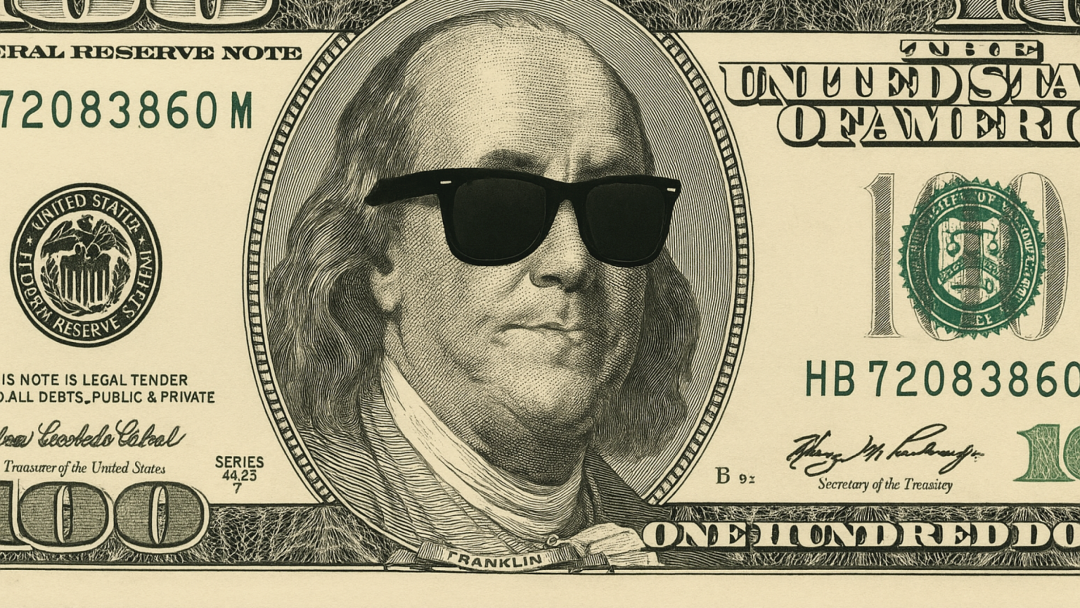
Recently, Elon Musk once again released news about X Money, maintaining his consistent enthusiasm for "reinventing WeChat" on one hand, while on the other, presenting the reality that the United States currently lacks an all-in-one payment platform like WeChat Pay or Alipay. This raises a subsequent question: why hasn't the US across the Pacific developed small loan products on the scale of Huabei or Jiebei, such as credit loans and consumer loans?
After careful study, the truth of the matter is somewhat surprising. In the fertile financial landscape of the United States, a system of层层叠叠的 barriers has suffocated small loans that should benefit millions of households, instead allowing a complete "high-cost, wide-coverage" credit card ecosystem to continue sucking blood.
The Cruel Underlying Tale of US Finance: Nobody Cares If You Have Money to Spend
In reality, the financially developed United States does have a demand for small loans.
According to a 2023 survey by the US FDIC, there are approximately 5.6 million "unbanked" households (about 4.2% of the population) and about 19 million "underbanked" households (about 14.2% of the population). Additionally, data from the Federal Reserve's 2024 Economic Well-Being report indicates that among adults earning less than $25,000 annually, 22% are unbanked; 6% of adults (about 15 million people) are in an "unbanked" status.
As for the primary reason these people don't open bank accounts, it's simple: "Not having enough money to meet minimum balance requirements"; followed by "distrust of the banking system." For many, banks are demonized vampires that only push and force you to pay off loans. About two-thirds of unbanked households rely entirely on cash for their daily transactions.
For those living at the bottom of the financial ladder, payday loans have become one of the few lifelines. Despite annual percentage rates (APRs) that can reach as high as 400%, this industry had 12 million active users at its peak in 2014, with an annual lending volume of approximately $46 billion, and over 1,000 service providers offering such services. In other words, these people can only borrow extremely expensive money. For major US banks, they are "junk users" with very low FICO scores who can't even get a credit card—the bottom of the bottom.
Building on this, the situation for users of "Buy Now, Pay Later" (BNPL) loan services is slightly better.
According to surveys, in 2024, there were approximately 380 million global BNPL users, projected to grow to about 670 million by 2028; in 2025, the number of BNPL users in the US reached 91.5 million, expected to hit 96.3 million by 2026; in 2025, the GMV of the US BNPL market was about $122.2 billion, with a CAGR of 20.3% from 2021 to 2024.
For young people and the main consumer force with strong spending desires and rapidly growing purchasing power, somewhat outdated and lengthy credit card processes are less appealing than the flexible, convenient, and zero-interest installment plans offered by BNPL. Thus, BNPL is in a phase of slow penetration. However, compared to the tens of millions of merchants globally and an even larger consumer base, this group is undoubtedly a niche. Of course, American Express, Citibank, and others have already launched similar BNPL installment features for their credit card holders, as traditional financial institutions are quickly trying to catch up.
In contrast, the credit card system, leveraging first-mover advantages, network effects, cross-subsidization, and compliance costs, thrives in the US, reaping significant benefits.
In terms of first-mover advantage and network effects, according to Federal Reserve statistics, 70%-80% of US adults hold a credit card; by the end of 2025, outstanding credit card balances reached $12.8 trillion (New York Fed data, February 2026); 175 million cardholders hold approximately 648 million cards, with an average APR of 22.3% (Q4 2025 data); additionally, the average APR for newly issued credit cards is 23.75%. A 2025 CFPB report noted that in 2024 alone, consumers paid a staggering $160 billion in credit card interest, a 52% surge from $105 billion in 2022. It's no exaggeration to say that credit cards are the largest legal predatory loan in the United States.
Regarding cross-subsidization and compliance costs, statistics show that about 45%-50% of credit cardholders choose to pay their balance in full each month. For them, credit cards are a free short-term credit tool (essentially offering a 25-day grace period), and they can even make money through points and cashback. However, among credit cardholders with an annual income below $50,000, 56% carry a balance month to month; for those earning over $100,000 annually, this figure drops to 36%. In contrast, over 27 million Americans can only afford the minimum monthly payment, effectively paying interest rather than the principal. Thus, the US credit card system has formed a bizarre equilibrium where users who cannot pay in full subsidize, through high APRs, the group that pays their balance entirely each month.
Both the supply and demand sides together reveal the cruel reality of the US financial industry today: some people cannot get a credit card; some credit cardholders are bleeding money to banks and others; and some people prefer consumer loans over credit cards. The reasons behind this reality are undoubtedly complex and deeply rooted.
The Forgotten US Internet Finance Industry: Regulation, Privacy, Capital, and Big Tech Control
Delving into the specific reasons why the US lacks a thriving internet finance industry like China's, it essentially boils down to a set of systemic and structural "four walls."
First, it is the stringent and fragmented regulatory system of the US financial industry.
On one hand, the dual-track regulatory framework of the federal government plus 50 states creates extremely high barriers to financial compliance. The fragmentation of regulation means that the compliance costs for companies wanting to engage in the lending business often grow non-linearly, resulting in a very low return on investment. On the other hand, the 2008 financial crisis provided strong support for tightening financial regulation. After the passage of the Dodd-Frank Act in 2010, the power boundaries of the Consumer Financial Protection Bureau (CFPB) expanded further, increasing compliance costs and objectively eliminating the possibility for non-bank institutions to grow big in the small loan sector. To a certain extent, the US regulatory system protects not consumers, but the banks that sit back and reap the benefits.
Second, it is the legal red line regarding privacy data in the US.
Theoretically, US internet tech giants possess more comprehensive user privacy data and personal information than their Chinese counterparts: Amazon knows what you buy, Google knows what you search, Apple knows what you use—but the FCRA (Fair Credit Reporting Act, enacted in 1970, with multiple amendments) strictly stipulates what data can and cannot be used for credit decisions; the CFPB pushed to expand the FCRA's scope in 2023-2024, bringing more data brokerage activities under regulation; California's CCPA and subsequent CPRA added another layer of state-level privacy protection. These regulations mean that even if US tech companies have a wealth of user behavioral data, they legally cannot directly feed this data into credit risk models. This is not a technical barrier; it's a legal red line.
Third, it is the capital market valuation penalty faced by internet companies.
In the eyes of Wall Street capital, where money never sleeps, once an internet tech company ties itself to financial services, its appeal in terms of revenue and profitability diminishes significantly. Internet tech companies have long enjoyed the benefits of high price-to-earnings ratios (light assets, high growth, network effects), while financial companies are valued lower by the market due to heavy assets, strict regulation, and cyclicality. Previously, Apple partnered with Goldman Sachs in 2019 to launch the Apple Card credit card business, which ultimately ended with Goldman Sachs suffering losses of over $60 billion, a bad debt rate of 2.93%, and the transfer of the business to JPMorgan. While this business failure can be partly attributed to investment banks like Goldman Sachs' shortcomings in retail credit and risk management, Apple's reluctance to get too deeply involved and bear credit risk was the more important reason.
Fourth, credit pricing power is held by financial giants.
The core players in US consumer credit are large banks and financial groups like JPMorgan Chase, Bank of America, Citigroup, Capital One, and Wells Fargo. They control virtually all consumer credit product lines, including credit card issuance, personal loans, mortgages, and auto loans. According to statistics, total US consumer debt is approximately $17.86 trillion (Equifax data, June 2025), of which mortgages account for $13.21 trillion and non-mortgage debt $4.65 trillion (including auto loans 36%, student loans 28.5%, and credit cards 24.2%). This massive credit empire is backed by financial hands with wealth rivaling nations. Driven by institutional design manipulated by banking lobbying groups and ingrained consumer behavior, the burden of that 22% credit card interest rate becomes a bitter pill that must be swallowed.
In summary, the reality of the US financial industry today is this: credit cards got there first, regulation blocked the path, privacy laws cut off data support, Wall Street dislikes the valuation methods of financial businesses, and banking giants will not tolerate challengers infringing on their authority and interests. All these factors together have locked the internet small loans that should benefit countless individuals and small businesses out of the US market.