






Thành phố Tô Châu đã đầu tư 30 triệu nhân dân tệ 18 năm trước, và số tiền đó đã trở thành mạch máu của AI


- Quan điểm cốt lõi: Bài viết lấy hành trình phát triển của Zhongji Innolight (nguyên là Innolight Technology) làm trường hợp điển hình, trình bày cách Tô Châu, thông qua chiến lược đầu tư công nghiệp mang tính hệ thống và chủ nghĩa dài hạn, đã nắm bắt được mắt xích quan trọng trong chuỗi cung ứng là module quang trong làn sóng sức mạnh tính toán AI, từ đó thúc đẩy nâng cấp công nghiệp đô thị, tăng trưởng vốn và tập trung nhân tài, hình thành một 'hiệu ứng bánh đà' bền vững.
- Các yếu tố chính:
- Trong cuộc khủng hoảng tài chính năm 2008, Yuanhe Holdings đã đầu tư 30 triệu nhân dân tệ vào công ty khởi nghiệp module quang trong lĩnh vực còn lạnh lẽo là Innolight Technology. Khoản đầu tư này, 18 năm sau, đã chuyển hóa thành gã khổng lồ thị trường chứng khoán A với vốn hóa hơn 1,5 nghìn tỷ là Zhongji Innolight, vượt qua cả Kweichow Moutai về giá trị thị trường.
- Tô Châu đã đầu tư chính xác vào chuỗi công nghiệp truyền thông quang học trong lĩnh vực AI. Ngoài Zhongji Innolight, nơi đây còn nuôi dưỡng các doanh nghiệp như Tianfu Communication, Yuanjie Technology, bao phủ toàn bộ các mắt xích từ chip quang, linh kiện đến module và thử nghiệm.
- Logic đầu tư của Tô Châu nằm ở việc 'chọn dự án khi đang ngồi xổm dưới đất': trong giai đoạn đầu, thông qua các cơ chế như Trung tâm Xúc tiến Khoa học Công nghệ, Quỹ dẫn dắt chuỗi khối, tận dụng các phương thức thị trường và nhân tài am hiểu ngành để bố trí dài hạn vào các lĩnh vực còn lạnh như y sinh, nano, AI giọng nói.
- Sự thực dụng của Tô Châu bắt nguồn từ xuất thân 'nghèo khó' với nền tảng công nghiệp yếu kém. Thông qua 'Kỹ sư Chủ nhật', các khu phát triển tự chủ tài chính, họ đã lồng ghép vào chuỗi công nghiệp Thượng Hải, tích lũy được nền tảng công nghiệp vững chắc và tinh thần kinh doanh tự chịu rủi ro.
- Khi các doanh nghiệp trưởng thành, giá trị sản lượng công nghiệp 4,89 nghìn tỷ của Tô Châu và các ngành nghề hoàn chỉnh đã cung cấp dữ liệu và kịch bản ứng dụng tự nhiên cho AI công nghiệp. Sức mạnh tính toán trở thành dịch vụ công cộng, hỗ trợ ngược lại cho ngành công nghiệp, hình thành một vòng tròn tích cực tương hỗ giữa thành phố và doanh nghiệp.
Original Authors: Sleepy, Daria
Original Editor: Cozzy
Thuong's most profitable investment occurred during the global financial crisis.
In the autumn of 2008, Lehman Brothers collapsed, and venture capital across China came to a standstill. Everyone was cutting losses or watching from the sidelines; the primary market had entered a deep freeze. It was during this window that Suzhou Industrial Park's state-owned venture capital platform, Yuanhe Holdings, invested about 30 million RMB into a startup.
The founder was Liu Sheng, a Tsinghua undergraduate with a PhD from Georgia Tech, who had worked in optical communications in North America for many years, first at Lucent Technologies and then at Opnext. In 2008, he returned from Silicon Valley and registered InnoLight Technology in Suzhou, aiming to produce high-speed optical transceivers.
In the investment circles of 2008, optical transceivers were more than just a niche; almost no investors were looking at this track. The domestic optical communication industry was entirely focused on the telecom market and low-to-mid-end manufacturing. According to LightCounting's report, in 2010, only one Chinese company, WTD (later merged into Accelink Technologies), barely made it into the global top ten for optical transceivers. At that time, the assessment that "cloud computing data centers would require massive amounts of high-speed optical transceivers" was miles away from any consensus.
Eighteen years later, that investment grew into Zhongji Innolight. Just before the Dragon Boat Festival in June 2026, its stock price surged to 1367.88 RMB, giving it a total market capitalization of 1.5 trillion RMB. It entered the top ten in the A-share market, surpassing Kweichow Moutai.
The Blood Vessels of AI
Optical transceivers are crucial to the entire AI industry. Without them, AI is just a pile of heating silicon wafers. To transmit signals from chips through optical fibers between data centers, you need optical transceivers.
Computing power is the heart; optical transceivers are the blood vessels.
In the A-share market, Eoptolink, Zhongji Innolight, and Tongguang Communication Technology are known as the "Yi Zhong Tian" (a play on words). These three major optical transceiver manufacturers control the most critical segment of the global AI computing power supply chain. Two of them are based in Suzhou: Zhongji Innolight's Suzhou operations headquarters is in Suzhou Industrial Park, as is Tongguang Communication's operations headquarters.
Beyond these, Suzhou-based company Lianxun Instruments specializes in high-end optical communication testing equipment. Less than two months after its 2026 listing, its stock price rose over twenty times from the IPO price, securing the title of the A-share market's "king of stocks." Yuanjie Technology, a leader in active optical chips and a company within the Zhongji Innolight investment network, saw its stock price touch 1712 RMB just before the Dragon Boat Festival, nearly quadrupling in six months.
Examining the AI data center landscape, Suzhou didn't just bet on a few companies; it bet on a series of interconnected positions.
Further upstream are optical chip companies like Yuanjie Technology. Moving downstream is the optical device domain where Tongguang Communication excels. Zhongji Innolight packages these components into high-speed optical modules for global data centers. Lianxun Instruments then provides the testing equipment to ensure these high-speed optical communication devices operate stably.
According to a report in Xinhua Daily, the total market capitalization of all A-share listed companies in Suzhou has surpassed 4 trillion RMB, ranking fourth nationwide, behind only Beijing, Shanghai, and Shenzhen.
Hangzhou's "Six Little Dragons" made it to the Spring Festival Gala and trending searches; Shenzhen's humanoid robots are dancing; three GPU companies in Shanghai are telling the grand story of domestic substitution. These stories are engaging, novel, and visual – a 15-second short video can make a name memorable.
But Suzhou tells a different story.
An optical fiber manufacturer in Wujiang district of Suzhou saw its sales revenue increase by over 35% year-on-year in 2026, with production capacity already booked through 2027. Multiple industry chain enterprises in Suzhou jointly invested in and began construction on the country's first 8-inch silicon photonics chip mass production line. Suzhou's optical communication industry has formed a hundred-billion-level cluster, with companies taking the lead in establishing over 50 innovation consortia. In the first quarter of 2026, the industry's scale grew by over 60%.
In this AI computing power explosion, real money first flowed into the places making the "blood vessels."
For Suzhou, the rise of a leading optical transceiver company brings more than just market capitalization. It brings along its suppliers, testing equipment makers, optical chip companies, funds, and talent. Its orders become the production capacity for upstream and downstream enterprises; its listing becomes credit for the local capital market; its industry insights in turn provide clues for Suzhou's next round of investment attraction and business development.
Beyond the returns on the books, what Suzhou has truly gained is a continuously rolling industrial chain.
When the world suddenly discovered optical transceivers in 2024 and rushed to buy stakes in the secondary market, Suzhou's name was already inscribed in InnoLight's earliest business registration records, as an old shareholder dating back to 2008.
Squatting Down to Pick Projects
Why was Suzhou able to make this bet successfully?
Some might say it was foresight, the ability to spot talent, or great vision. But that's all hindsight.
To have foresight, you need to stand high. Suzhou didn't stand high; it squatted down, looking at projects one by one, interviewing individuals, and then making a judgment.
The person who made this decision for the city was Dai Yu, the Yuanhe Holdings executive in charge of the InnoLight project. Years later, in a media interview, she recalled that the initial contact with InnoLight came through the Industrial Park's "Leading Talent Program." A large number of high-end talents returned to China with projects. Yuanhe screened them one by one and chose to invest in InnoLight.
Yuanhe later made multiple follow-on investments through three different fund stages and a debt platform, also bringing in Data Capital from Dongshahu Fund Town to co-invest. Restructuring documents show that the Yuanhe system collectively held over 7% of InnoLight's equity.
From its investment on the eve of the 2008 financial crisis to InnoLight's backdoor listing via Zhongji Equipment in 2017, Yuanhe navigated an entire economic cycle.
Around 2011, InnoLight's 40G products passed Google's certification, and it began engaging with Amazon and Huawei. In 2014, Google Capital led a $38 million Series C round, Google's first investment in China. InnoLight initially planned to list on the US stock market, but with the valuation winter for Chinese concept stocks in 2015, it reversed course, dismantled its VIE structure, and sought a path back to the A-share market.
In 2017, Zhongji Equipment acquired 100% of InnoLight for 2.8 billion RMB, completing the backdoor listing. The actual controller of Zhongji Equipment, Wang Weixiu, decided to delegate significant authority to the InnoLight team. *New Fortune* magazine described this decision as "great vision." By 2026, the net worth of Wang Weixiu and his son Wang Xiaodong had surged to 97.8 billion RMB, their ranking soaring from 161st to 30th. The owner of a small company making motor winding equipment, by acquiring a Suzhou-based optical module startup and being willing to share control, saw his fortune approach 100 billion RMB.
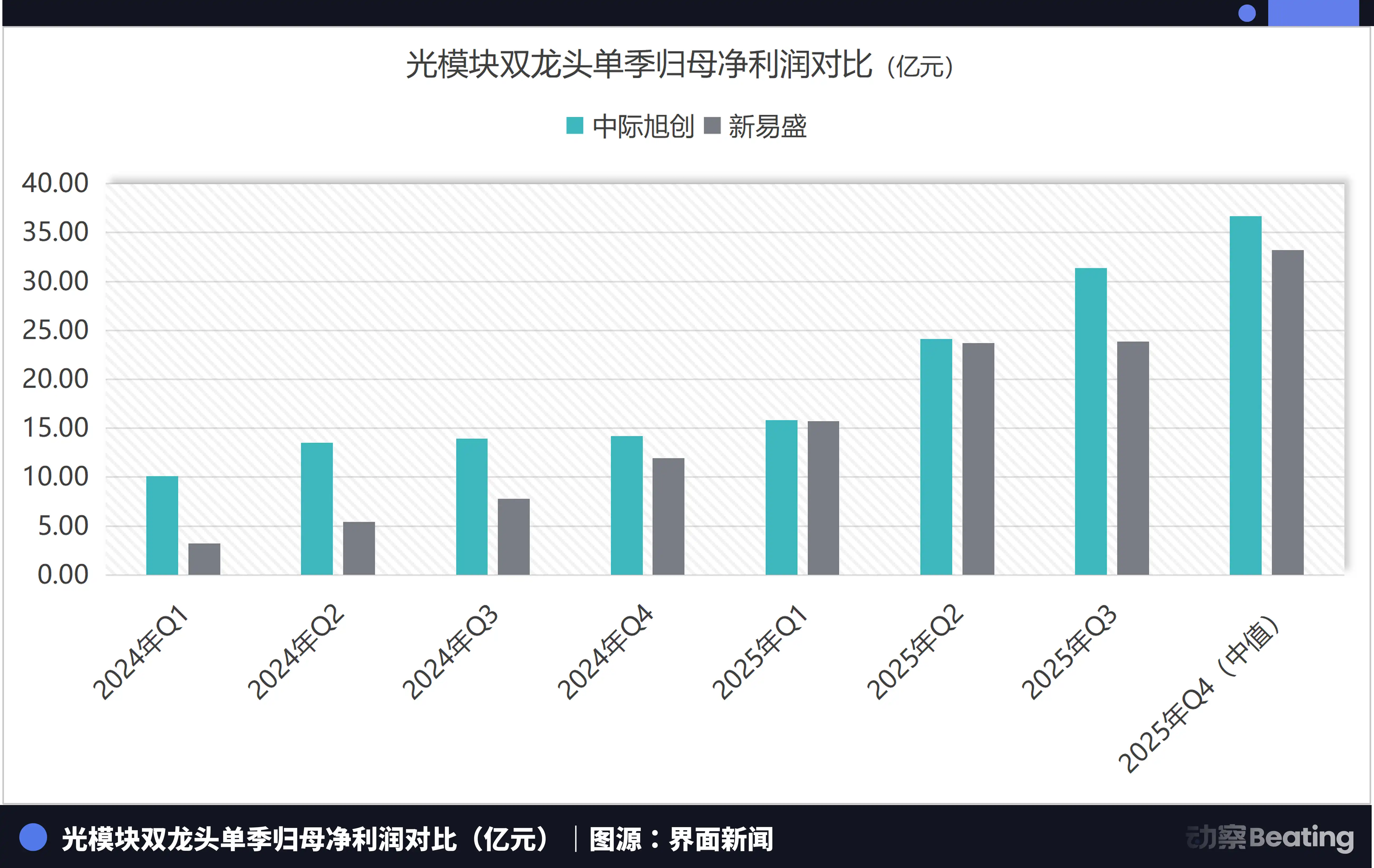
In 2025, Zhongji Innolight reported revenue of 38.2 billion RMB and net profit of 10.8 billion, both doubling year-on-year. In the first quarter of 2026 alone, quarterly revenue was 19.5 billion RMB (up 192% YoY), and net profit was 5.7 billion RMB (up 262% YoY). The tree has grown into a forest. InnoLight has further invested through subsidiaries in a chain of industrial enterprises like Jingyan Intelligent, Aoke Optoelectronics, and Raytelligence (Lasertec semiconductor?), and also invested in Yuanjie Technology, the new "stock king."
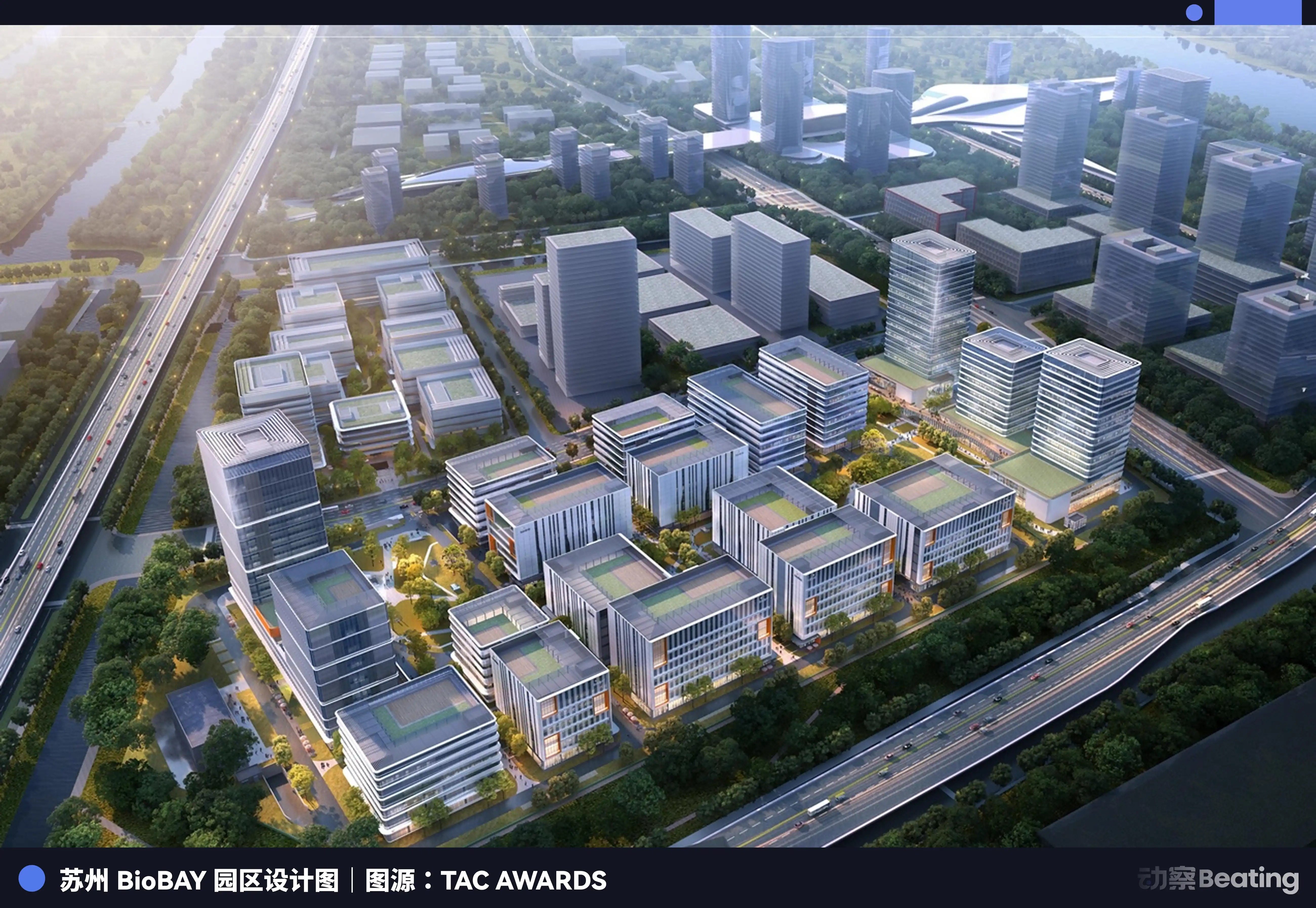
Looking back at Suzhou's investment record over the past two decades, InnoLight is not an isolated case. In 2006, "innovative drugs" were not yet a buzzword in the capital markets. Suzhou established BioBAY, which today houses hundreds of pharmaceutical companies and has produced over 30 listed firms. The same year, when nanotechnology was still far from industrialization, Suzhou began attracting national-level nanotech research institutions. In 2008, an investment team traveled to Cambridge, UK, and brought the voice AI startup, Unisound, back to Suzhou. That was a full nine years before the country launched its "New Generation Artificial Intelligence Development Plan."
Biomedicine, nanotechnology, voice AI, optical modules – four tracks where Suzhou placed its bets when others couldn't yet see the potential.
Supporting this strategy is a system that is not particularly glamorous but exceptionally solid. In 2006, Suzhou Industrial Park established the country's first Technology Investment Promotion Center. By 2022, all staff in the investment promotion line held master's degrees or higher, mostly in science or engineering. Suzhou currently has 212 investment promotion agencies and over 2,000 full-time staff. Of these, 119 are state-owned companies operating without bureaucratic constraints, recruiting with market-based salaries, and able to directly take equity stakes in companies – precisely performing tasks that the government wants to do but cannot achieve through administrative means.
In terms of investment judgment, Suzhou also invented the "Chain Leader Fund," where the industry chain leader acts as the fund manager, and the government follows with its investment. In the biomedical chain leader fund, Innovent Biologics and Jiangsu Alphamab directly act as managers, participating in project selection and post-investment management. More than ten such chain leader funds have invested over 20 billion RMB in total.
So, Suzhou's successful bet wasn't luck; it was about turning "betting" into a stable system. Using knowledgeable people to screen projects, relying on industry veterans to make judgments, and placing bets with patient capital spanning over a decade.
This is more than just foresight.
Three Generations
This tenacious, hardworking spirit was born from poverty.
At the beginning of the reform and opening-up, Suzhou's industrial base was very weak. Equipment was old, the industrial structure was backward, and both raw materials and sales markets were out of reach. So, they had to do whatever they could and learn from whoever they could.
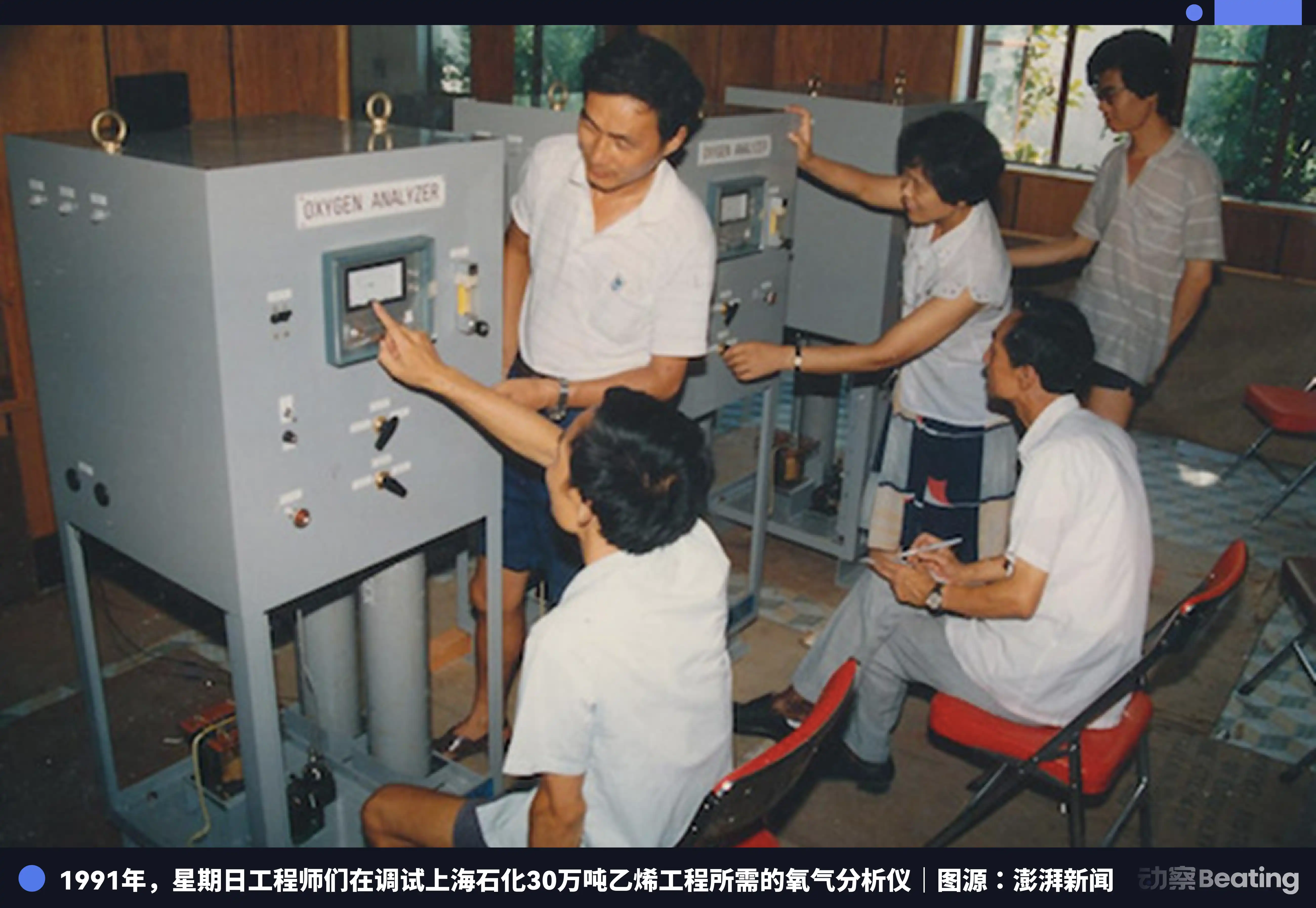
The "Shanghai Sunday Engineer" was a product of that era. Township enterprises in Suzhou would invite engineers from large state-owned factories in Shanghai during their weekends to guide production. By 1988, there were over 15,000 township enterprises. In 1992, the output value of township industries accounted for over 70% of the city's total.
But even after achieving this, when the state designated special economic zones and set up economic and technological development zones, Suzhou didn't get any.
Policy benefits were not going to come knocking.
Kunshan, a city under Suzhou's jurisdiction, simply stopped waiting. They pooled together 500,000 RMB of their own money and established the country's first self-funded development zone, bearing the risks themselves, and ran advertisements in Shanghai to attract investment. By positioning themselves with the clear yet somewhat humble strategy of "doing what Shanghai doesn't want to do" and "Shanghai handles 0 to 1, Suzhou handles 1 to 10," Suzhou wedged itself into the industrial chain led by Shanghai, completing its initial industrial accumulation.
Later, Suzhou learned "door-knocking investment promotion" from Singapore, setting up investment offices worldwide and proactively approaching companies one by one. By 2012, Suzhou's actual utilized foreign capital accounted for 8.1% of the national total, a 131-fold increase from 1990.
Later, when production costs rose, environmental capacity reached its limit, and labor-intensive industries began to move out, Suzhou again had no choice but to directly face the pain of transformation.
Within a 25-square-kilometer area around Nanjing Road in Taicang High-tech Zone, there are over 800 small and medium-sized foreign-invested enterprises, forming a complete automotive industry chain. Suppliers for 70% of a car's parts can be found there. In Shengze Town's SiLu Nanhua Cross-border E-commerce Park, a 20-story building houses 86 textile companies, from raw materials and fabrics to finished products and sales – upstairs and downstairs represent upstream and downstream.
These industrial clusters weren't planned; they grew organically over decades, one enterprise at a time, one order at a time.
In the 1980s, they learned skills from Shanghai engineers on weekends. In the 1990s, they bet 500,000 of their own money on a development zone. In 2008, they bet 30 million on an obscure returnee making optical modules.
When no one else believed in something, they used their own money to buy what was considered worthless. Three generations repeated the same action three times.
People with foresight stand high and choose their tracks. People with no choice squat down, pick up what others discard, clean it, and wait for it to become valuable. Suzhou's pragmatism is the survival strategy of a prefecture-level city that never got a special economic zone license. After three decades of use, this strategy became ingrained in its very bones. When Dai Yu had InnoLight's business plan before her in 2008, the mental circuitry she used to make her judgment was the same as the one Kunshan used when they spent their 500,000 three decades earlier.
It's not worth much now.
But it's worth the bet.
So, let's bet.
The Flywheel Spins
What happens after winning the bet?
An investment growing into a trillion-RMB company is just the first layer of return.
It begins to rewrite a city's industrial structure. The capital market becomes more active, the industrial chain more complete, AI has realistic manufacturing scenarios, and young people have more reasons to stay.
The relationship between the city and the company reverses at this point. In the early days, Suzhou helped the enterprise get a seat at the table. When the enterprise grows up, it becomes Suzhou's reason to continue attracting projects, talent, and capital.
Suzhou's figures on paper look very good. In 2025, the total industrial output value of enterprises above a designated size was 4.89 trillion RMB, ranking second nationally. The output value of high-tech industries grew by 6.7%, accounting for 56.2% of the total, an increase of 1.5 percentage points from the previous year. Twelve companies made their A-share IPO debut, ranking first nationally, surpassing Beijing, Shanghai, Guangzhou, and Shenzhen. For every ten newly listed companies in the country, one came from Suzhou. The per capita disposable income of all residents was 80,796 RMB, exceeding 90,000 in urban areas, trailing only Shanghai, Beijing, and Shenzhen nationwide – and it's still just a prefecture-level city.
Among the top ten cities by GDP, Suzhou's service sector accounts for only 52.9%, ranking last. While other big cities have long been transitioning to a service economy, Suzhou is still intensely focused on manufacturing things.
Suzhou has 160,000 industrial enterprises, covering 34 out of 41 major industrial categories and 514 sub-categories. It is one of the most complete industrial cities in China and the world. For industrial AI, this represents data – high-quality, continuous, large-scale production data generated daily in workshops. When other cities try to build industrial large models, their first step might be to search for data. But Suzhou doesn't need to search. Its factories are the data source. Models trained on this data return to the same production lines for validation and iteration. The production line is both the source of AI learning and the destination for AI monetization.
With a baseline of 4.89 trillion RMB, even a one or two percentage point efficiency gain from AI corresponds to tens of billions in absolute incremental value.
Suzhou has also turned computing power into a public service. The Industrial Park established a public computing power service platform. Companies submit their needs, get matched with suppliers within 24 hours, sign a contract within a week, and can receive a 20% subsidy. The platform's operations director describes it as simply as ordering takeout – selecting the flavor, portion, and delivery time, then clicking to order. For a small startup that can't afford the computing power of big tech firms, being able to "order takeout" can be the difference between life and death.
Once the flywheel got spinning, what did ordinary people gain?
Consider this set of data. In 2025, 415,000 new urban jobs were created, accounting for nearly 30% of Jiangsu Province's total. Additionally, 283,000 college graduates chose to stay in Suzhou. They didn't come because of the name of some genius founder; they came because there were real jobs, places to live, and a life to be built.


