






Đối thoại với CEO của VanEck: Cổ phiếu chip nhớ là bong bóng cung-cầu, hầu hết các dự án tiền mã hóa sẽ biến mất sau 5 năm


- Quan điểm cốt lõi: Jan van Eck, CEO của VanEck, cho rằng Nvidia đã chuyển đổi thành cốt lõi của cơ sở hạ tầng AI nhờ hệ sinh thái phần mềm, lợi thế quy mô và hiệu suất điện năng, sở hữu một hào kinh tế sâu rộng; trong khi đó, sự bùng nổ của cổ phiếu chip nhớ giống như một bong bóng cung-cầu mang tính chu kỳ hơn, cần thận trọng trong trung và dài hạn. Ông cũng chỉ ra rằng blockchain, stablecoin và Bitcoin sẽ tồn tại, nhưng hầu hết các dự án tiền mã hóa và hệ sinh thái token sẽ biến mất sau 5-10 năm.
- Các yếu tố chính:
- Lợi thế cạnh tranh của Nvidia: Đã chuyển đổi từ một nhà sản xuất GPU đơn thuần thành một "máy chủ" AI, sở hữu hệ sinh thái phần mềm, quy mô sản xuất và hiệu suất điện năng cao hơn. Với tỷ lệ giá trên thu nhập (P/E) kỳ hạn chỉ hơn 20 lần, đây là một tài sản vững chắc trong danh mục đầu tư.
- Rủi ro của cổ phiếu chip nhớ: Sự bùng nổ lợi nhuận chủ yếu đến từ việc tăng giá chứ không phải doanh số tăng mạnh, thiếu hào kinh tế cạnh tranh sâu như Nvidia. Trong trung hạn, họ phải đối mặt với áp lực từ những người mới tham gia và khách hàng tiết kiệm dung lượng.
- Triển vọng ngành tiền mã hóa: Hiện tại đang trải qua "mùa đông tiền mã hóa" và sẽ không quay đầu. Khái niệm blockchain, stablecoin và Bitcoin sẽ tồn tại, nhưng hầu hết các dự án và ứng dụng sẽ mất đi ý nghĩa hoặc biến mất sau 5-10 năm.
- Xu hướng năm 2026: Được gọi là năm của "chuỗi kiểm soát doanh nghiệp", các tổ chức tài chính Phố Wall đang hấp thụ lợi thế của blockchain nhưng vẫn kiểm soát hệ sinh thái. Đạo luật stablecoin lần đầu tiên cho phép các công ty công nghệ có khả năng cạnh tranh với hệ thống ngân hàng.
- Rủi ro vĩ mô và vàng: Vấn đề nợ của chính phủ Mỹ rất đáng lo ngại. Nếu thị trường mất niềm tin vào khả năng thanh toán của họ, vàng, với tư cách là công cụ phòng hộ trung và dài hạn, cũng có thể bị bán tháo trong ngắn hạn. Vàng đang trở lại vị thế là đồng tiền số một toàn cầu.
- Lời khuyên đầu tư AI: Nhu cầu năng lực tính toán AI tăng cao trong khi nguồn cung không đủ, chất bán dẫn đang ở vị trí trung tâm. Nên mua vào khi thị trường điều chỉnh chứ không phải đuổi theo đỉnh, và tham gia một cách đa dạng hóa.
Compiled & Translated by: Shenchao TechFlow
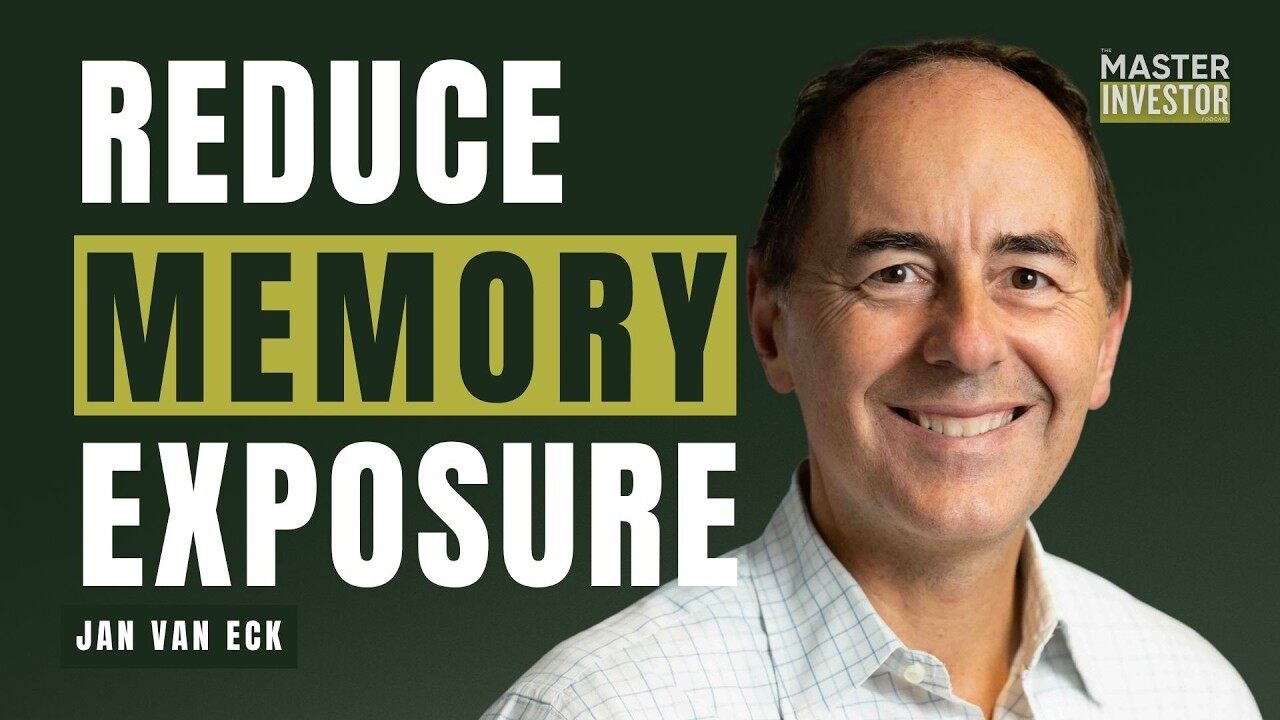
Guest: Jan van Eck (CEO of VanEck)
Host: Wilfred Frost
Original Title: Memory Is A Bubble, But Nvidia Protected – Jan Van Eck On Semis Surge
Podcast Source: The Master Investor Podcast with Wilfred Frost
Air Date: May 27, 2026
Editor's Introduction
This episode invites VanEck CEO Jan van Eck. His core thesis: Nvidia has transformed from a pure GPU manufacturer into the "host" of AI infrastructure, possessing a moat in its software ecosystem, scale, and power efficiency. However, the surge in memory chip stocks looks more like a bubble driven by cyclical supply-demand imbalances.
The head of VanEck, which manages approximately $225 billion in assets and was among the earliest to push for a Bitcoin ETF, distills the main themes of the next decade into three things: AI compute infrastructure buildout, the rise of India, and excessive fiscal borrowing by developed economies like the US, UK, and Japan.
More strikingly, he labels 2026 the "Year of the Corporate Controlled Chain," arguing that Wall Street will absorb the benefits of blockchain, stablecoins, and programmable money, but most crypto projects and software will become irrelevant in 5 to 10 years. Bitcoin, stablecoins, and blockchain will remain, but many token ecosystems will disappear.
Key Quotes
AI, Semiconductors & Memory Chip Stocks
- "From an AI perspective, the problem is simple. Demand for compute is here, but supply is below. Semiconductors are clearly at the core of this structure."
- "Nvidia is no longer just a GPU manufacturer; it's more like the host for AI. Its past as a cyclical, highly competitive single-chip manufacturer is not its whole story today."
- "Nvidia's advantage comes not just from manufacturing scale, but also from chips that are more efficient per dollar of electricity. With a forward earnings multiple in the low twenties, I still see it as a solid asset in a portfolio."
- "The profit explosion in memory chip stocks isn't primarily because they sold many more products, but because prices increased. This means companies using memory chips will start looking for ways to use less."
- "I don't like calling tops easily, but I am cautious on memory chip stocks. In the medium to long term, they don't have a competitive moat as deep as Nvidia's."
ETFs, Active Management & Asset Allocation
- "VanEck's investment philosophy is to look back from ten years in the future: by 2036, which major themes actually changed the world and financial markets?"
- "ETFs are a scale game. The larger the assets, the broader the client base you can serve. Many active management strategies, especially in private equity and hedge funds, can actually suffer from diseconomies of scale."
- "Even if the ETF vehicle itself is passive, deciding which ETFs you own, how to allocate, and when to increase or decrease positions are inherently very active decisions."
Macro Debt, Gold & Hard Assets
- "If the market truly loses confidence in the US government's ability to fulfill its obligations, I don't know where to hide. Even if gold is a medium-term hedge, it could be sold off in the short term alongside everything else."
- "I believe gold is re-emerging as the world's primary currency. Because if not the US dollar, I don't see China or India becoming the international reserve currency."
- "The government bond market is one of the strangest, most inefficient markets in the world. It can lock into a certain mindset and become disconnected from reality."
- "The nuclear energy ETF grew from under $20 million to $4.7 billion. Behind it was a very dramatic policy shift. Both US parties, as well as countries like Japan, have re-embraced nuclear energy."
Crypto, Stablecoins & The Corporate Controlled Chain
- "I call 2026 the 'Year of the Corporate Controlled Chain.' Banks, trading firms, and financial institutions want to absorb the best parts of blockchain but still control their own ecosystem."
- "I think we are going through a crypto winter, and it's not coming back. Many projects and software won't be interesting or even alive in five to ten years."
- "The concept of blockchain will remain, stablecoins will remain, Bitcoin will remain. But many other parts of the ecosystem, in my view, will disappear."
- "The stablecoin bill, for the first time, gives technology companies the ability to compete with the banking system. But banks have faced competition before, like from money market funds, and they survived."
India & The SpaceX IPO
- "You can't fight demographic trends. Under Modi, India has continuously pursued pro-business reforms. There's no reason such a country shouldn't grow at a higher rate."
- "SpaceX is enormous. As an ETF issuer, we are very happy to see it enter the public markets. The liquidity flowing into the economic system will be in the hundreds of billions of dollars."
The Frenzied Memory Chip Market
Wilfred Frost: Our guest today is Jan van Eck, President and CEO of VanEck and its affiliates. VanEck, the asset management firm founded by his father, is now a major player in the ETF industry with about $225 billion in assets under management. Jan is a frequent podcast guest, and his views are very direct and clear, which is why we welcome him. Jan, welcome to the show.
Jan van Eck: Wilfred, it's great to be doing this episode with you for the first time.
Wilfred Frost: I want to start with one specific ETF. Fair to say, it's been a big driver of your performance over the last few years and is right at the center of the current market. That's SMH, the VanEck Semiconductor ETF. It's been amazing lately. I understand it now has about $65 billion in AUM, correct?
Jan van Eck: Around that size.
Wilfred Frost: It has become the primary gateway for investors wanting semiconductor exposure. Up 58% year-to-date, up 135% over the last 12 months. More strikingly, it has an annualized return of about 29% since its inception.
Jan van Eck: It's crazy, right?
Wilfred Frost: It really is. Achieving that on a compounded basis is very difficult. You could retire now.
Jan van Eck: Yes, I should quit while I'm ahead.
Wilfred Frost: But I suspect you won't, which is why you're here. Over the past year or so, SMH grew to $65 billion. How much of that was price performance versus inflows?
Jan van Eck: A huge portion was price performance. I would be hard-pressed to see inflows accounting for more than 10% to 20% over the last 12 months.
Wilfred Frost: Interesting. I would have guessed inflows were a bigger part. What do you think is driving it? Perhaps a simple question, but is it purely the AI theme?
Jan van Eck: Yes. VanEck's investment philosophy is to look at things from a big-picture, macro perspective as much as possible. I call it "10-year macro." The idea is to look back from 2036 and say which themes most profoundly impacted the world, and therefore financial markets? This perspective aims to filter out a lot of noise.
I think at least three things survive that filter: AI, the rise of India, and the excessive debt led by the US, UK, and Japan. From an AI perspective, the logic is simple. Demand for compute is very high, and supply can't keep up. Semiconductors are clearly at the core.
Looking deeper, you get to Nvidia. Our ETF has outperformed other semiconductor ETFs partly because it focuses on only the top 25 stocks and allows the largest holding to go up to 20%. So it's essentially been a good vehicle to ride Nvidia.
Nvidia itself could be a whole show. Are we still comfortable with semiconductors and Nvidia today? My answer is yes. No one can guarantee a company will never lose its competitive moat, but I believe Nvidia will certainly still be one of the leaders in ten years. Part of the reason is that it has become like the host for AI, no longer just a single-chip or GPU manufacturer. That old business was not only highly cyclical but also intensely competitive.
Today's Nvidia has software, cost advantages, production scale advantages, and higher power efficiency. In other words, it offers more efficient chips per dollar or pound of electricity. Its forward earnings multiple is only in the low twenties. So, even though Nvidia hasn't been the hottest stock in SMH over the past nine months, I still consider it a very solid part of the portfolio.
Wilfred Frost: According to your recent disclosures, Nvidia is about 17% of SMH, and TSMC is about 9%. I want to delve into those later. You mentioned that having that large Nvidia exposure is important. But it's also interesting that, at least this year, or as you said the past nine months, the performance wasn't solely driven by giants like Nvidia. Over the last few years, many semiconductor companies were actually left behind by the AI theme and have only recently caught up.
Jan van Eck: Absolutely. There's some thinking and some luck in SMH's methodology. When you only pick the top 25 names, in the investment era of the last 15 to 20 years, what happened was that large-cap stocks truly led the market. There are certainly more than 100 semiconductor companies. By filtering out the bottom ones, which operate in a more fiercely competitive space, you effectively remove drag.
Of course, this doesn't apply to all investment phases. But during this period, it definitely amplified the impact of these big winners.
Wilfred Frost: In the short term, up 58% year-to-date, the rally has clearly broadened significantly. Memory chip stocks have surged dramatically. Can this trend continue?
Jan van Eck: I doubt this kind of performance is sustainable. We just saw historic performance in May, so I don't think it will continue at this pace. But I also don't think the market pricing is necessarily irrational. Going back to the super macro view, if demand is high and supply is low, the capital market is essentially telling entrepreneurs and builders: come here, we need your capital, and we are willing to value your capital highly because we need to build AI compute centers. This is not surprising.
I think this ten-year perspective is useful because humans naturally tend to look backward. When a big trend emerges, whether it's the rise of a country or a major technology, we can't just look back at a few quarters of company earnings or how the technology was used in the past to understand the scale of its buildout.
Of course, not all technology trends deliver. There are plenty of fake fads and fake technologies in the world. But AI is clearly grabbing the global market by the neck and shaking it.
Wilfred Frost: One more short-term question. The KOSPI hit another all-time high today. It has tripled over the last 18 months, which is astonishing for a country index, driven mainly by Samsung and SK Hynix. The Korean index had a day last week where it was up 12%. Does this remind you of the opposite side? Like in late 2021, some meme stocks soared, and then there was a big correction in 2022. I know these memory chip stocks, especially those two, have very impressive earnings per share expectations, so it's different from the meme stock frenzy. But are there any similarities that raise a red flag for you?
Jan van Eck: Within the AI ecosystem, I would say there are indeed some bubbles. Going back to the end of last year, the question was the financial sustainability of the OpenAI ecosystem. OpenAI is one of the leading model companies with ChatGPT. Will Claude surpass it? Among the companies I call the OpenAI ecosystem, Oracle, which is leveraged to building compute for OpenAI, and CoreWeave, are involved. Both of them fell 50% at one point.
So, even within the larger AI trend, you can find localized bubbles, or company-specific bubbles. To your point, I do think the memory segment pocket is a cyclical moment. People don't like calling tops at times like this, but personally, I am cautious on memory chip stocks because, in the medium to long term, they don't have what I consider to be as deep a competitive moat as Nvidia.
There will be new entrants in this space. There is definitely a shortage right now, which gives them pricing power. The main reason for their profit explosion isn't a massive increase in sales volume, as they have capacity constraints; the real reason is they raised prices. This also means that companies using these memory chips will start finding ways to use less.
So I agree with your sentiment; it feels very bubbly. In our active management funds, we are reducing exposure to the memory space.
Wilfred Frost: Nvidia is about 17% of SMH, the second largest is TSMC, then Intel, Broadcom, AMD, Micron, Texas Instruments, Qualcomm, each around 6% or 7%. Does TSMC have a defensible moat similar to Nvidia? Though different in type, is it comparable defensively?
Jan van Eck: I think so. TSMC not only has manufacturing capability but also the capital capacity to build incredibly expensive chip fabrication facilities. I suspect one of the shared advantages of Nvidia and TSMC is that they both work with a wide range of participants in the ecosystem, effectively seeing almost all customers. Consequently, they can see where technology is heading and how customer demand will change. Most people would say TSMC will still be there in ten years; it will be a survivor.
Wilfred Frost: You mentioned earlier that companies like Oracle or CoreWeave pulled back significantly from their late October highs to the "Iran war lows" in March. Oracle almost halved, which is significant for its size. I heard you say on another podcast that we shouldn't worry too much about a general AI bubble because it has already kind of burst once. The question is, how do you have the confidence to re-enter the right companies at these moments, especially since a large part of what we're discussing isn't yet public, and investors can only participate through proxies?
Jan van Eck: This might sound very much like an ETF issuer's answer, but from a company perspective, a diversified approach is certainly more sensible. Timing-wise, if you're in a trend like this, it's better to buy on the dips rather than chasing it right now. We talked about SMH's cash flows earlier. I suspect a lot of the assets in this fund came from investors who bought years ago and just let the appreciation happen. This is somewhat healthy because there isn't too much fast money chasing it.
Of course, money is chasing memory chip stocks and the hottest spots in the ecosystem. But overall, we still have an overweight position in semiconductors


