






ZORA giảm 95%, Coinbase cuối cùng cũng thừa nhận Creator Coin chưa thành công


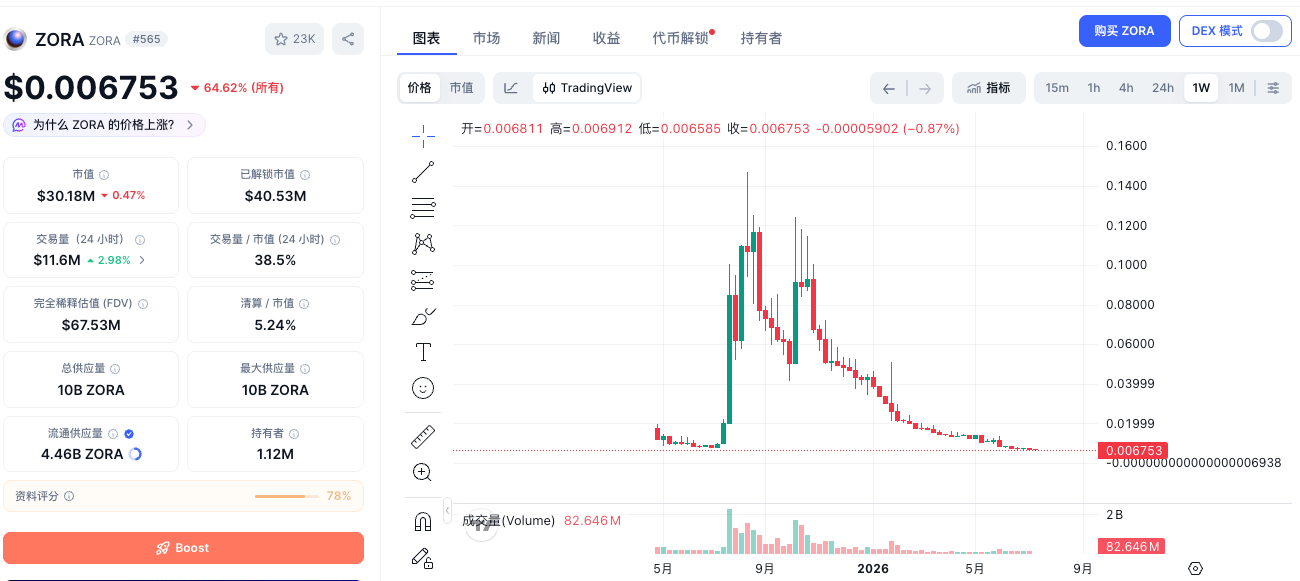
- Quan điểm cốt lõi: CEO của Coinbase, Brian Armstrong, công khai thừa nhận chiến lược token nội dung (content coins) của mạng L2 Base dựa trên nền tảng Zora đã thất bại. Thử nghiệm này không tạo ra được nhu cầu bền vững từ người dùng. Vốn hóa thị trường của token ZORA đã giảm khoảng 95% từ đỉnh khoảng 550 triệu USD xuống còn khoảng 30 triệu USD.
- Các yếu tố then chốt:
- Bản chất thử nghiệm: Base tích hợp chức năng "Mỗi bài đăng là một token" (ERC-20) của Zora vào sản phẩm ví. Khi người dùng đăng nội dung, token sẽ được tự động tạo ra, nhưng token này không đi kèm bất kỳ bản quyền hay quyền lợi doanh thu nào. Lợi nhuận của người mua phụ thuộc vào người đến sau.
- Sự bùng nổ ngắn hạn: Vào tháng 8 năm 2025, hoạt động của Zora đạt mức cao nhất lịch sử, với hơn 1,6 triệu token sáng tạo (creator coin) được đúc, gần 3 triệu người giao dịch độc lập, khối lượng giao dịch vượt quá 470 triệu USD, và giá token ZORA tăng gần 5 lần trong một tháng.
- Nguyên nhân thất bại then chốt: Các token được tạo tự động sau khi tài khoản chính thức của Base đăng nội dung đã giảm 95% chỉ trong vài giờ, cho thấy rủi ro người dùng khó phân biệt giữa đăng nội dung thông thường và sự bảo chứng chính thức. Hơn nữa, sự lan truyền viral đã không chuyển đổi được thành nhu cầu bền vững cho token.
- Chuyển hướng chiến lược: Vào tháng 2 năm 2026, Base đã dừng chương trình "Creator Rewards" và loại bỏ bảng tin xã hội (social feed), chuyển trọng tâm sản phẩm sang giao dịch và thanh toán stablecoin – lĩnh vực đã xử lý khối lượng giao dịch hơn 17 nghìn tỷ USD trong năm 2025.
- Hậu quả tiêu cực: Thử nghiệm không chỉ khiến vốn hóa thị trường của ZORA bốc hơi gần 500 triệu USD, mà còn gây ra sự bất mãn trong các nhà phát triển hệ sinh thái Base, những người cho rằng việc ưu ái nguồn lực này đã chèn ép không gian phát triển của các dự án khác. Ngoài ra, một lượng lớn người tham gia đã phải chịu tổn thất thực tế khi giá token giảm.
Original author: ChandlerZ, Foresight News
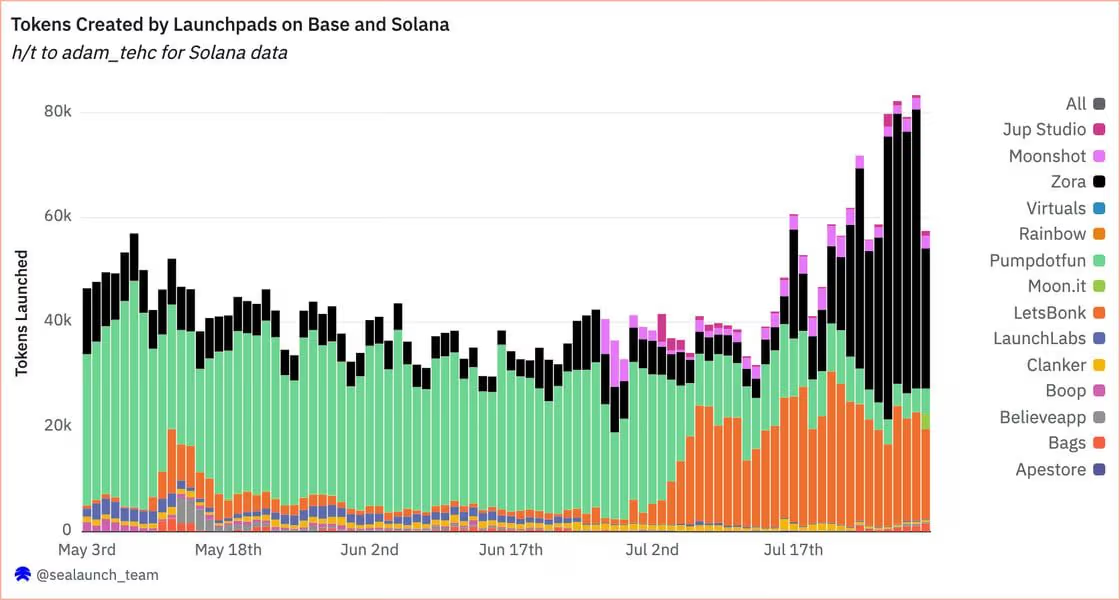
On July 13, Coinbase CEO Brian Armstrong publicly admitted on X that Base network's content coins strategy, which had been ongoing for over a year, has failed. Starting in 2025, Base heavily promoted content coins through the Zora platform, embedding them as a core feature in its own wallet product. This briefly propelled Base to become the L2 chain with the largest volume of new token issuances.
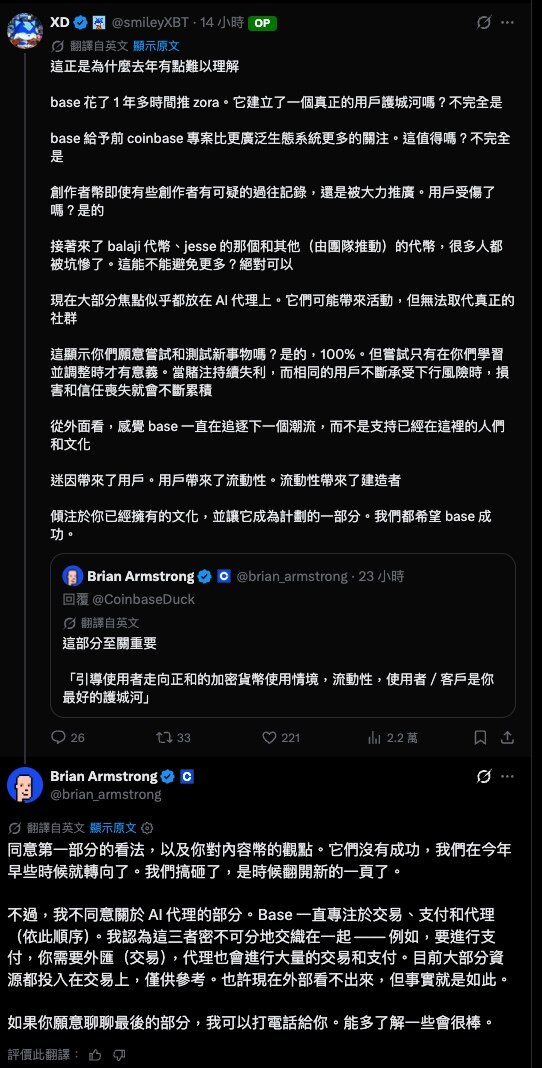
Brian Armstrong stated, "It didn't work. We pivoted earlier this year. We messed up, and it's time to move on." The ZORA token, which provided the core infrastructure for this experiment, has fallen approximately 95% from its all-time high in August last year, with its market cap shrinking from about $550 million to roughly $30 million.
From "Every Post is a Token" to "We Messed Up"
Brian Armstrong's statement provides the clearest confirmation of the failure of Base's roughly one-year-long creator token experiment. In July 2025, Coinbase rebranded Coinbase Wallet to Base App, simultaneously adding social feeds, chat, payments, trading, and app discovery features. When Base launched the app in over 140 countries in December of the same year, it was still defined as a product combining social, trading, and payment functions.
Base's creator economy relied on the on-chain social platform Zora for underlying tools. A content coin corresponds to a specific post. When a user publishes images, videos, or text, the system simultaneously creates a freely tradable ERC-20 token. Each content coin has a fixed supply of 1 billion tokens, with creators receiving 1% directly upon issuance, equivalent to 10 million tokens. Initially, the tokens have no price; after others buy them, an on-chain quote forms, and subsequent buying and selling determine the market cap and holder profits or losses.
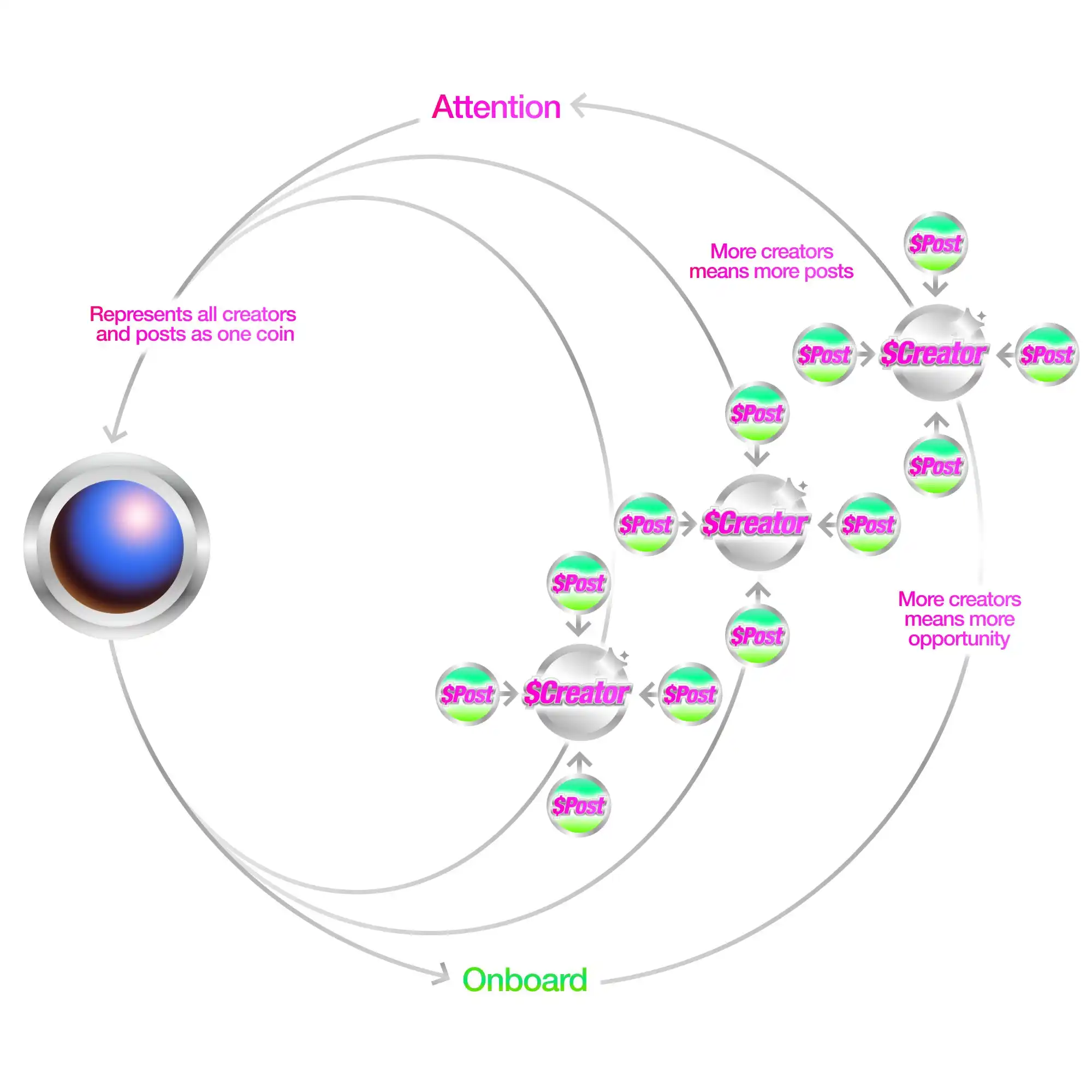
Buyers acquire a token linked to a post, which can be sold back to the market at any time. The token does not include copyright to the post, nor does it represent equity, future revenue, or profit sharing from the creator. Zora's terms of service limit the token's use to entertainment, use, and consumption, requiring users to confirm their purchase intent is not related to equity or profit sharing. Therefore, the buyer's profit primarily depends on whether later participants are willing to buy at a higher price.
A creator coin targets an entire account; each Zora account has only one. It also has a supply of 1 billion tokens, with 50% entering the public market and the other 50% linearly unlocking to the creator over five years. Subsequent content coins published by this account are linked to the creator coin. Zora hoped that popular content would increase demand for the creator coin. Creators can sell their allocated tokens and also receive a share of fees from each transaction. Base claimed at the time that this structure could bypass advertising, brand partnerships, and follower count thresholds, directly converting attention into transaction revenue.
100,000 Tokens Launched in a Day, Transactions Left No Users Behind
Low-cost token issuance quickly inflated Base's surface-level activity. In August 2025, following Base App's relaunch, Zora's activity reached an all-time high, with over 1.6 million creator tokens minted, nearly 3 million unique traders, and total trading volume exceeding $470 million. The price of the Zora token also surged nearly fivefold within one month.
In April 2025, after the official Base account published "Base is for everyone" content via Zora, the system automatically generated a token with the same name. The token surged briefly after launch, then plummeted approximately 95% within hours. Base explained that the official team did not sell the token or launch it as an official project, but ordinary users found it difficult to distinguish between a content release, a token launch, and an official endorsement.
The token of creator Nick Shirley provided a more direct example shortly after. Shirley's investigative video gained over 100 million views on social media and was publicly promoted by Brian Armstrong. Its creator coin's market cap briefly rose to $15 million before rapidly declining. Viral spread generated short-term buying pressure but failed to establish sustained demand for the token.
The Base-Zora partnership also sparked discontent among ecosystem developers. Some developers felt that Base channeled excessive exposure and resources into Zora and creator coins. This not only failed to create a stable user moat but also squeezed out opportunities for other Base projects. The community member who questioned Brian Armstrong on July 13 also pointed out that many participants suffered losses from the price decline of the tokens.
Defending Content Coins in January, Starting to Retreat by February
Brian Armstrong was still defending the model as recently as January this year. He responded to a former Coinbase engineer's criticism of the zero-sum nature of content coins, arguing that buying content coins generates economic value and demand for creator coins. About a month later, Base App announced the cessation of Creator Rewards and removed the social feed supported by Farcaster, shifting the product's focus towards tradable assets.
In March, Brian Armstrong admitted for the first time in a podcast that Base App's SocialFi features "didn't perform very well." Base's subsequently released 2026 strategy placed trading and stablecoin payments at its core. Official disclosures indicated that Base processed over $17 trillion in stablecoin trading volume in 2025, covering 26 local currencies and 17 countries. These figures provided a clearer commercial rationale for pivoting towards financial infrastructure.
In the same thread, Armstrong countered another criticism. @smileyXBT argued that Base's current heavy bet on AI agents was simply repeating a pattern of chasing hype cycles. Armstrong responded that Base's roadmap has always been organized around three priorities: trading, payments, and AI agents, with the majority of resources currently directed towards trading.
Fifteen months passed from Base's official minting in April 2025 to Armstrong's admission of failure in July 2026. ZORA's market cap evaporated by nearly $500 million. Coinbase continuously doubled down throughout the process, embedding Zora into its wallet product, encouraging funds to create creator token indices, and providing platform-level exposure for insider tokens.
Coinbase can categorize these 15 months as a product experiment that's now over. However, the losses in the accounts of token holders will not disappear with the strategic pivot.


