






伊朗世界杯逼平比利时,美伊局势缓和?| MEXC 预测市场观察


- ประเด็นสำคัญ: ฟุตบอลโลก 2026 ภูมิรัฐศาสตร์อิหร่าน-สหรัฐฯ น้ำมันดิบ ทองคำ และตลาดพยากรณ์ ล้วนเผยให้เห็นถึงแก่นแท้ของการที่ตลาดกำหนดราคาให้กับความไม่แน่นอน ผลงานที่แข็งแกร่งของทีมชาติอิหร่านในฟุตบอลโลก อาจส่งผลกระทบทางอารมณ์ต่อมุมมองของตลาดที่มีต่อการเจรจาระหว่างอิหร่านและสหรัฐฯ แต่สิ่งที่สำคัญยิ่งกว่าคือการประเมินความเสี่ยงจากช่องแคบฮอร์มุซและการคาดการณ์อัตราดอกเบี้ยในระดับมหภาคแบบบูรณาการ
- ปัจจัยสำคัญ:
- อิหร่านเสมอมาเป็นทีมที่แข็งแกร่งในการเจอกับนิวซีแลนด์และเบลเยียมในสองนัดแรกของฟุตบอลโลก สร้างวาทกรรมแห่งความทรหดและความรู้สึกเชิงบวกภายในประเทศ ความหวังในการเข้ารอบของกลุ่ม G ยังคงมีอยู่จนถึงนัดสุดท้ายกับอียิปต์ ซึ่งกลายเป็นวาทกรรมในตลาดที่ได้รับความนิยมในการอธิบายถึงการเปลี่ยนแปลงท่าทีของการเจรจา
- ช่องแคบฮอร์มุซขนส่งน้ำมันดิบประมาณ 15-20 ล้านบาร์เรลต่อวัน คิดเป็น 20%-34% ของการค้าโลก ซึ่งเปรียบเสมือน “สวิตช์หัวใจ” ของการค้าน้ำมันโลก ตลาดมีปฏิกิริยาเชิงบวกในระยะสั้นต่อความคืบหน้าของการเจรจาระหว่างอิหร่านและสหรัฐฯ ราคาน้ำมันเบรนท์ร่วงลงมาอยู่ที่ 79 ดอลลาร์สหรัฐฯ สะท้อนให้เห็นว่าเงินทุนเชื่อว่าสถานการณ์จะไม่失控ในทันที
- ทิศทางราคาทองคำมีความซับซ้อน ถูกดึงโดยสองพลัง คือ ปัจจัยทางภูมิรัฐศาสตร์ (ซึ่งหนุนราคา) และการคาดการณ์อัตราดอกเบี้ยแบบ Hawkish ของเฟด (ซึ่งกดดันราคา) ราคาทองคำไม่ได้เป็นไปตามตรรกะ “避险涨” (ราคาขึ้นเมื่อเกิดความเสี่ยง) แบบง่ายอีกต่อไป แต่เป็นผลลัพธ์จากการประเมินความเสี่ยง ดอลลาร์สหรัฐฯ และอัตราเงินเฟ้ออย่างครอบคลุม
- ตลาดคริปโตซึ่งเป็นสินทรัพย์ที่ซื้อขายได้ 24 ชั่วโมง 7 วัน ทำหน้าที่เป็น “กระดานอารมณ์นำ” ในช่วงสุดสัปดาห์ที่ตลาดแบบดั้งเดิมปิดทำการ สะท้อนการประเมินของนักลงทุนเกี่ยวกับสถานการณ์ตะวันออกกลางและความเสี่ยงได้รวดเร็วยิ่งขึ้น
- ตลาดพยากรณ์อย่าง MEXC เปลี่ยนเหตุการณ์จริงเช่นฟุตบอลโลกให้เป็นสถานการณ์การซื้อขายตามความน่าจะเป็น ราคาของมันจะเปลี่ยนแปลงแบบเรียลไทม์ตามข้อมูล (เช่น 11 ผู้เล่นตัวจริง ใบแดง ผลการแข่งขัน) ซึ่งเป็นเครื่องมือที่ตลาดใช้ในการกำหนดราคาความไม่แน่นอนอย่างต่อเนื่อง
This weekend, global markets were once again "spooked" by the Strait of Hormuz.
On one side, there were tough stances before US-Iran talks; on the other, oil prices continually tested market nerves. Investors worried about further escalation in the Middle East, while on the World Cup stage, Iran just held Belgium to a 0-0 draw in Los Angeles, keeping Group G's qualification suspense at its peak.
Adding to the drama, by Monday's US pre-market open, mediators Qatar and Pakistan signaled positive progress in US-Iran talks, causing market sentiment to cool rapidly. Oil prices retreated, Asian stock markets rebounded, and gold continued to oscillate between safe-haven demand and Federal Reserve rate expectations.
Thus, a highly shareable question emerged:
Could Iran's sudden shift in negotiating stance be related to the boost in domestic morale following the Iranian national team's strong World Cup performance?
Of course, this sounds more like market narrative than serious diplomatic analysis. But its intriguing aspect lies in how the 2026 World Cup, US-Iran tensions, oil and gold prices, and the MEXC prediction market are all being strung together by a single thread: how markets price uncertainty.
Iran's World Cup Performance: Unbeaten in Two, Still in with a Chance to Advance from Group G
First, let's look at the football.
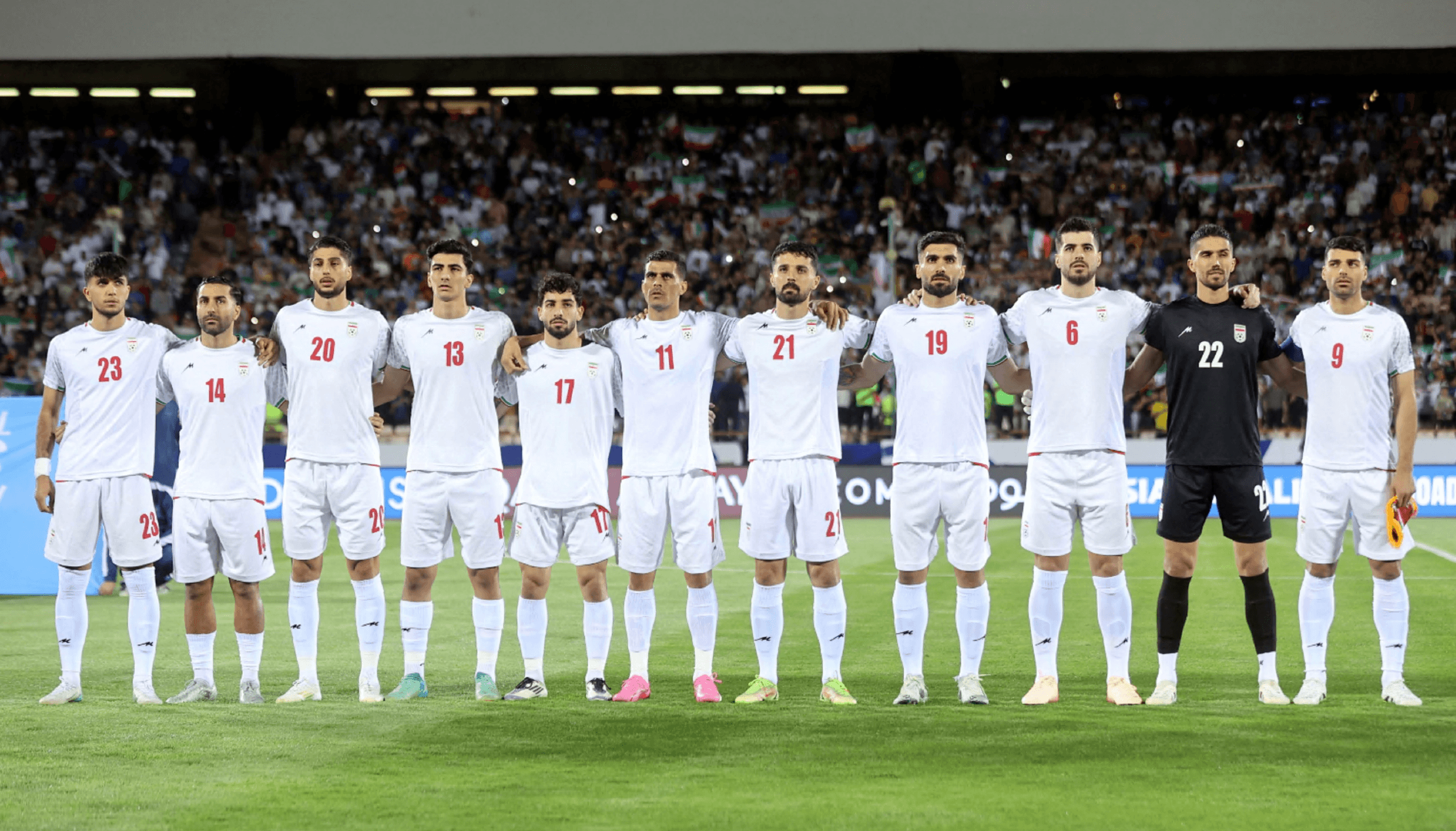
According to the official FIFA match report, Iran drew 2-2 with New Zealand in their opening match. New Zealand took the lead twice, but Iran equalized on both occasions, preventing a disastrous start to the group stage.
In their second match, against European powerhouse Belgium, Iran produced another resilient performance, securing a 0-0 draw. In the Belgium 0-0 Iran official FIFA match report, it was noted that the goalkeeper's performance was outstanding, ultimately forcing Belgium to settle for a point.
After two matches, Iran hasn't won but also hasn't lost. For a team navigating a complex socio-political backdrop, demonstrating this kind of resilience is easily amplified by domestic media and market sentiment.
Iran's current problem is also clear: their defensive tenacity has been proven. However, to truly advance, the final match against Egypt will require more than just defense. Group G also includes Belgium, Egypt, and New Zealand, where points and goal difference will determine the final outcome. To turn "playing well" into "successful qualification," Iran must adopt a more proactive attacking approach in the final round.
Why Does Iran's Performance Capture Market Attention?
Under normal circumstances, a team drawing with Belgium is just sports news.
But Iran is different.
Iran's matches occur against the backdrop of highly sensitive US-Iran tensions. According to a Reuters report, high-level US-Iran talks took place in Switzerland with Qatar and Pakistan acting as mediators, making progress on issues like a final agreement within 60 days, maritime security, and de-escalation of the conflict in Lebanon.
In other words, while the Iranian football team was playing in the World Cup on US soil, Iranian diplomats were at the negotiating table dealing with the most sensitive national security and economic issues.
This makes football about more than just football.
On the pitch, Iran holding Belgium to a draw demonstrated they weren't buckling under pressure. At the negotiating table, Iran showed a more positive signal, helping to revive market risk appetite. While no direct causality may exist between the two events, they are naturally woven into the same narrative from a communications perspective:
Preserve dignity on the football pitch, gain leverage at the negotiating table, and reprice risk in the market.
This is why the idea that "Iran plays well, negotiations suddenly go smoothly," though sounding like an anecdote, spreads easily. The market doesn't necessarily believe the story is true, but it loves a story that explains price movements.
The Strait of Hormuz: The Real "Heartbeat Switch" for Oil Prices
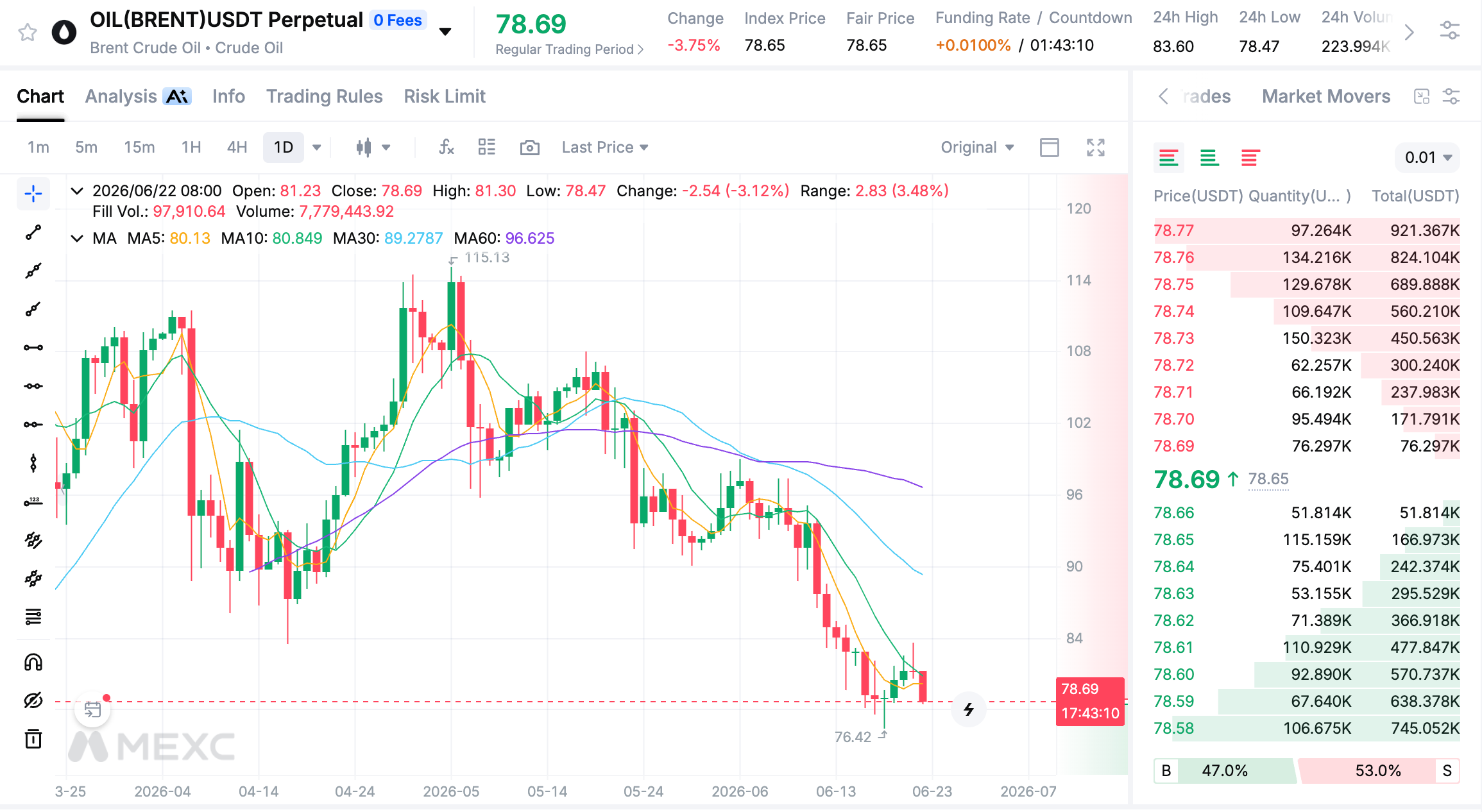
The core market variable in this round of US-Iran tensions remains the Strait of Hormuz.
The Strait of Hormuz is one of the most critical chokepoints for global energy transportation. According to IEA information on the Strait of Hormuz, approximately 15 million barrels of crude oil passed through the strait daily in 2025, accounting for about 34% of global crude oil trade. EIA data also shows that in 2024, oil flows through the Strait of Hormuz averaged about 20 million barrels per day, roughly 20% of global petroleum liquid consumption.
Therefore, any closure, restrictions, rising insurance costs, vessel diversions, or miscalculations involving military action in the Strait of Hormuz trigger an immediate reaction in oil prices.
This is why the market's primary concern this weekend wasn't simply "are the US and Iran arguing loudly," but rather:
Will something actually happen in the Strait of Hormuz?
Could oil transport be disrupted?
Will oil prices surge again?
Are inflation expectations set to rise again?
Will this make it even harder for the Fed to cut rates, potentially forcing them to remain hawkish?
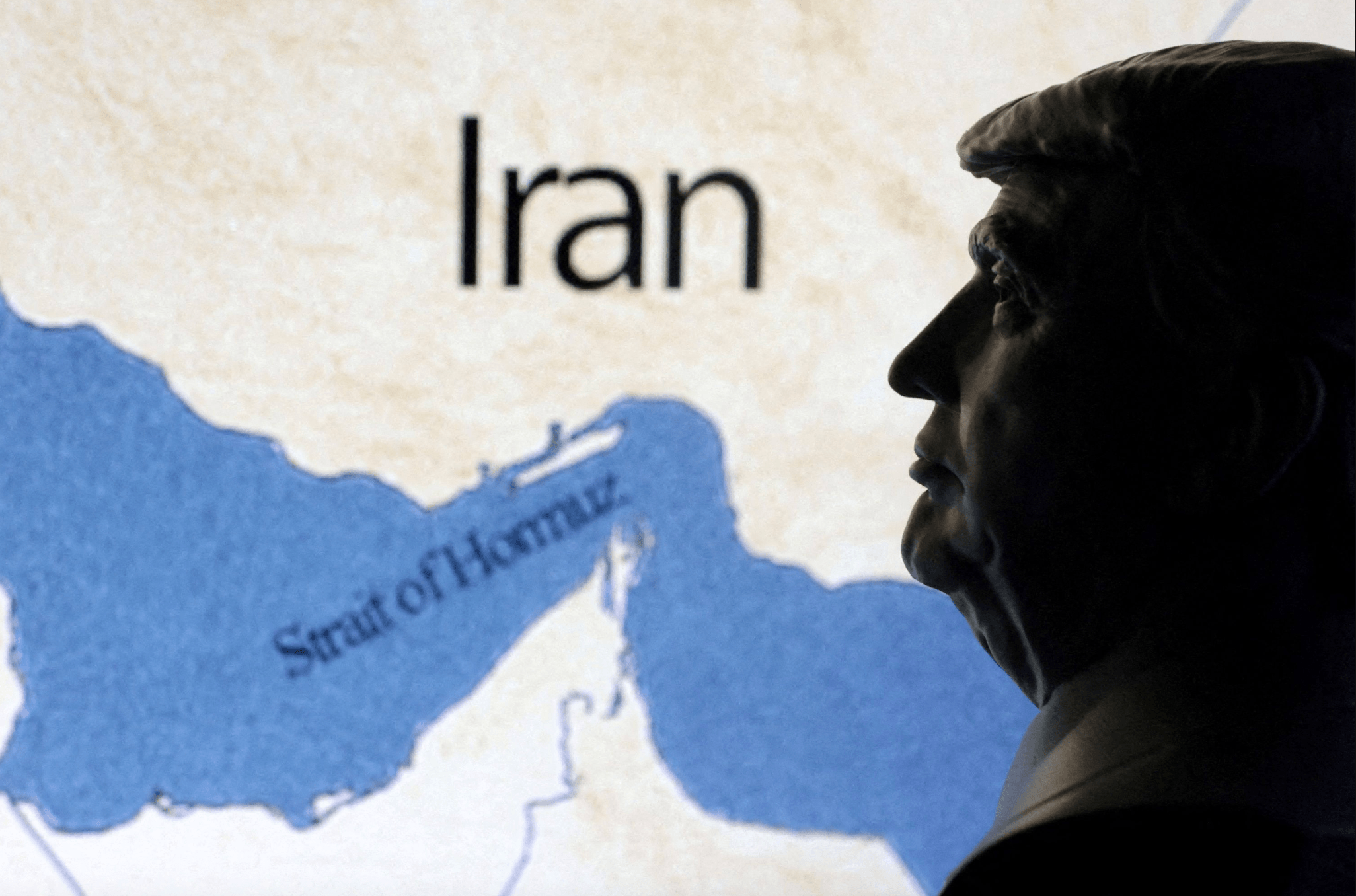
According to a Reuters market report, as progress emerged from US-Iran talks, Brent crude retreated to around $79, and Asian stock markets also rebounded. This reaction suggests that, for the short term, the market does not believe the situation is about to spiral out of control immediately.
In other words, oil prices are voting: it sounds tense, but for now, capital doesn't believe the worst-case scenario is imminent.
Gold Prices: Safe-Haven Fears Haven't Disappeared, But the Logic Becomes More Complex
Gold's reaction is more complex than oil.
Conventional wisdom suggests that US-Iran tensions should boost gold, the classic safe-haven asset. However, real markets don't follow a single linear logic.
According to a Reuters report on gold prices, gold rebounded from a one-week low, but hawkish Fed signals and expectations of higher interest rates limited the gains.
This indicates gold is currently being pulled by two forces:
On one side, geopolitical risk supports gold's safe-haven demand.
On the other, a stronger dollar and rising rate expectations suppress gold's performance.
If oil prices surge, markets may fear a resurgence of inflation, making it difficult for gold to benefit simply; the Fed might be forced to maintain higher interest rates.
If US-Iran tensions ease and oil prices fall, inflation pressure decreases. Gold's safe-haven demand would cool, but the interest rate pressure might also ease.
Therefore, gold prices are not simply a "buy on conflict, sell on peace" trade. It’s trading a composite outcome of geopolitical risk, the dollar, inflation, and interest rate expectations.
Why the Crypto Market Became the Weekend Sentiment Thermometer?
The reference article presented a very interesting perspective: traditional crude oil futures have a weekend trading hiatus window, but the crypto market trades 24/7, so it reflects market sentiment earlier.
This logic holds water.
When traditional markets are closed, investors wishing to express their view on Middle East tensions, dollar liquidity, safe-haven sentiment, or risk appetite often turn to the 24/7 crypto market for price signals. Bitcoin, Ethereum, stablecoin liquidity, on-chain capital flows, and some derivatives prices can all serve as leading indicators of weekend market sentiment.
Of course, the crypto market is not a direct proxy for the oil market and cannot fully replace traditional futures markets like the CME. However, it often plays the role of a "leading sentiment indicator."
This is also why the MEXC prediction market has significant potential during the World Cup cycle. It doesn't just price a single asset; it handles probability judgments for real-world events.
Will there be an upset in the match?
Can Iran advance from the group stage?
Can a certain team make it to the knockout rounds?
Has the market overvalued a favorite team?
Will breaking news change prediction prices?
These questions bring us closer to "event trading" than simply looking at a price chart.
MEXC Prediction Market: Turning the World Cup into a Probability Trading Arena
According to the official MEXC beginner's guide, a prediction market is a marketplace for trading around the outcomes of real-world events, where prices can reflect the market's consensus on the probability of an outcome occurring.
For example, in a prediction market, if the YES price for an event is 0.65, the market perceives the event has roughly a 65% probability. MEXC's Prediction Markets FAQ explains a similar mechanism: correct outcomes settle at $1, incorrect ones at $0.
This makes the World Cup an ideal subject for prediction markets.
Because the World Cup naturally possesses several characteristics:
High attention
High uncertainty
High emotional volatility
Frequent information updates
Clear match outcomes
Clear settlement criteria
From Iran's perspective, prediction market users can formulate judgments on various issues:
Can Iran defeat Egypt?
Can Iran qualify from Group G?
Is Belgium still the safest bet in Group G?
Will Egypt command a higher market valuation due to its attacking prowess?
After two unbeaten games, is the market reassessing Iran's true strength?
These aren't simple "who will win" bets; they are comprehensive assessments of information, probability, and price.
Users can view World Cup-related prediction events via the MEXC Sports Prediction Market, or visit the MEXC Prediction Market to explore more real-world event trading opportunities.
Iran vs. Egypt: The Next Match Might Be the True Pricing Inflection Point
Iran has performed steadily in its first two matches, but the true determinant of the market narrative could be the final match against Egypt.
If Iran wins, the storyline becomes very coherent:
Strong World Cup performance, easing US-Iran tensions, recovering risk appetite, making Iran one of the most talked-about Asian teams of the tournament.
If Iran draws, qualification could depend on the other match result, and the market will continue trading uncertainty.
If Iran loses, the "resilience narrative" built over the first two games weakens, and the market's repricing of Iran could quickly reverse.
This is the biggest difference between World Cup prediction markets and standard pre-match analysis. Standard analysis provides a conclusion before the game starts; prediction markets continuously reprice amid changing information.
Starting lineups affect prices.
A first-half red card affects prices.
A goal in another group match affects prices.
A stoppage-time penalty can change all prices instantly.
The World Cup is not a static event; it's a series of real-time variables. The value of the MEXC Prediction Market lies in converting these variables into observable, tradeable probability prices.
From the Iranian Football Team to Oil & Gold: Markets Truly Trade Uncertainty
Connecting Iran's World Cup performance, US-Iran relations, oil prices, gold prices, and the MEXC Prediction Market is not a stretch.
Because behind them lies the same logic:
Whether Iran advances is uncertainty at the football level.
Whether the US and Iran reach a final agreement is uncertainty at the geopolitical level.
Whether the Strait of Hormuz impacts transport is uncertainty at the energy supply level.
Whether gold continues to rally is uncertainty between safe-haven demand and rate expectations.
Price changes in the MEXC Prediction Market represent users' expression of probability for future outcomes.
Markets do the same thing every day: price uncertainty.
This is why this weekend's narrative is so compelling. One moment the market is worrying about risks from the Strait of Hormuz; the next, mediators signal positive progress. Oil prices fall, stock markets bounce, and Iran just drew with Belgium in the World Cup, creating a highly shareable emotional anchor point.
Football, diplomacy, crude oil, gold, and the crypto market - seemingly five different things, they all answer the same fundamental question:
Will future risks increase or decrease?
The World Cup is Becoming a Super Gateway for Prediction Markets
The 2026 World Cup isn't just a sporting event; it's a concentrated showcase of global attention, market sentiment, and prediction market products.
Iran's two unbeaten matches keep Group G's suspense alive.
Progress in US-Iran talks allows oil prices to fall and risk appetite to recover.
Gold continues to oscillate between safe-haven demand and rate expectations, indicating the market hasn't fully let its guard down.
The MEXC Prediction Market transforms these real-world events into observable, tradeable, and repriceable probability scenarios.
So, instead of debating whether Iran's World Cup performance genuinely smoothed negotiations, perhaps we should focus on another question:
When the World Cup, geopolitics, and financial markets heat up simultaneously, who can understand the market narrative faster and get closer to true price discovery?
For users interested in World Cup predictions, Iran's qualification, US-Iran relations, oil/gold, and crypto market opportunities, the MEXC Prediction Market offers a new observation window. Particularly within the MEXC Sports Prediction Market, the World Cup is no longer just something to watch; it becomes an arena for judging probabilities, tracking sentiment, and understanding the market.


