深入拆解 Anthropic 封号风暴的背后:安全宗教、AI 内战与中美脱钩下的 Claude 困局


- มุมมองหลัก: นโยบายการแบนบัญชีที่เข้มงวดของ Anthropic เป็นผลมาจากความหมกมุ่นเรื่อง "ความปลอดภัยต้องมาก่อน" ของผู้ร่วมก่อตั้ง Dario Amodei, โมเดลธุรกิจที่เน้นลูกค้าองค์กรที่จ่ายพรีเมียมสูง, การต่อสู้ภายในอุตสาหกรรม AI ของสหรัฐฯ ระหว่างฝ่ายเน้นความปลอดภัยและฝ่ายเร่งพัฒนา รวมถึงผลกระทบจากภูมิรัฐศาสตร์แห่งการแยกตัวทางเทคโนโลยี AI ระหว่างจีน-สหรัฐฯ โดยมีเป้าหมายเพื่อปกป้องผลประโยชน์ของลูกค้าองค์กรและหลีกเลี่ยงความเสี่ยงด้านกฎระเบียบผ่านการบังคับใช้เชิงป้องกัน
- องค์ประกอบสำคัญ:
- Anthropic แบนบัญชี 1.45 ล้านบัญชีในช่วงครึ่งหลังของปี 2025 โดยมีอัตราความสำเร็จในการอุทธรณ์เพียง 3.3% (สำเร็จ 1,700 จาก 52,000 ครั้ง) โดยใช้การควบคุมความเสี่ยงเชิงป้องกันแบบ "แบนผิดดีกว่าแบนไม่หมด"
- ผู้ร่วมก่อตั้ง Dario Amodei เนื่องจากประสบการณ์การเสียชีวิตของบิดาและการออกจาก OpenAI ได้ฝังความหมกมุ่นเรื่อง "การควบคุมความเสี่ยง" ไว้ใน DNA ของบริษัท ยึดมั่นในแนวคิดความปลอดภัยแบบ "รัฐธรรมนูญ AI" ถึงขนาดฟ้องร้องรัฐบาลสหรัฐฯ เพื่อปฏิเสธสัญญาทางทหารจากกระทรวงกลาโหม
- โมเดลธุรกิจมุ่งเน้นลูกค้าองค์กร เช่น ธนาคาร และสำนักงานกฎหมาย ทำกำไรจาก "ส่วนต่างราคาความปลอดภัย" ในขณะที่ให้บริการสมัครสมาชิกแบบอุดหนุนแก่ผู้ใช้ทั่วไป และควบคุมต้นทุนด้วยการแบนผู้ที่ "ใช้ประโยชน์จากระบบ"
- การต่อสู้ภายในระหว่างฝ่ายเน้นความปลอดภัย (Anthropic) และฝ่ายเร่งพัฒนา (OpenAI/กระทรวงกลาโหม) รวมถึงการผูกมัดผลประโยชน์ของทุนจาก Amazon/Google ผลักดันนโยบายควบคุมความเสี่ยงที่รุนแรงนี้ร่วมกัน
- ภายใต้บริบทการแยกตัวทางเทคโนโลยี AI จีน-สหรัฐฯ Anthropic บังคับใช้มาตรการแบน "การควบคุมความเสี่ยงตามภูมิภาค" ที่เข้มงวดที่สุดต่อผู้ใช้ชาวจีน เพื่อปฏิบัติตามข้อจำกัดการส่งออกของสหรัฐฯ และหลีกเลี่ยงค่าปรับ (เช่นเคยถูกปรับ 12 ล้านดอลลาร์)
In April 2026, employees of an American agricultural technology company called Agricultural Technology Company opened their computers as usual, ready to use Claude Code for coding, data analysis, and supply chain analysis, only to find that 110 employee accounts were all banned without any warning. The company network administrator's email received a message from Anthropic: Suspicious activity violating our usage policies has been detected, your account has been suspended.
Although the accounts were collectively banned, the backend API continued to function normally and charges were deducted as usual. The company network administrator even received payment reminder messages. Subsequently, the company's management sent appeal emails and contacted Anthropic, but ultimately made no progress. The shutdown of Claude Code directly brought the entire team to a standstill.
Around the same time, on Chinese internet forums like V2EX, Zhihu, and Juejin, complaints from Claude users were everywhere: Some had just topped up their Max subscription and were banned before they could even use it; others used a virtual card for payment, and the system immediately flagged "account violation" upon successful payment; some logged in using third-party tools and were blacklisted by the system, getting 4 accounts banned within three months without a single successful appeal.
In fact, ever since Anthropic stormed the market with its flagship product, Claude Code, and secured a top-tier position, it has become notoriously known as the "ban hammer king."
According to risk control data for the second half of 2025 published by Anthropic's Transparency Hub in January 2026, the platform banned a total of 1.45 million accounts in just six months. Among these, 52,000 appeals were filed, but only 1,700 were successful. This means the appeal success rate was only 3.3%.
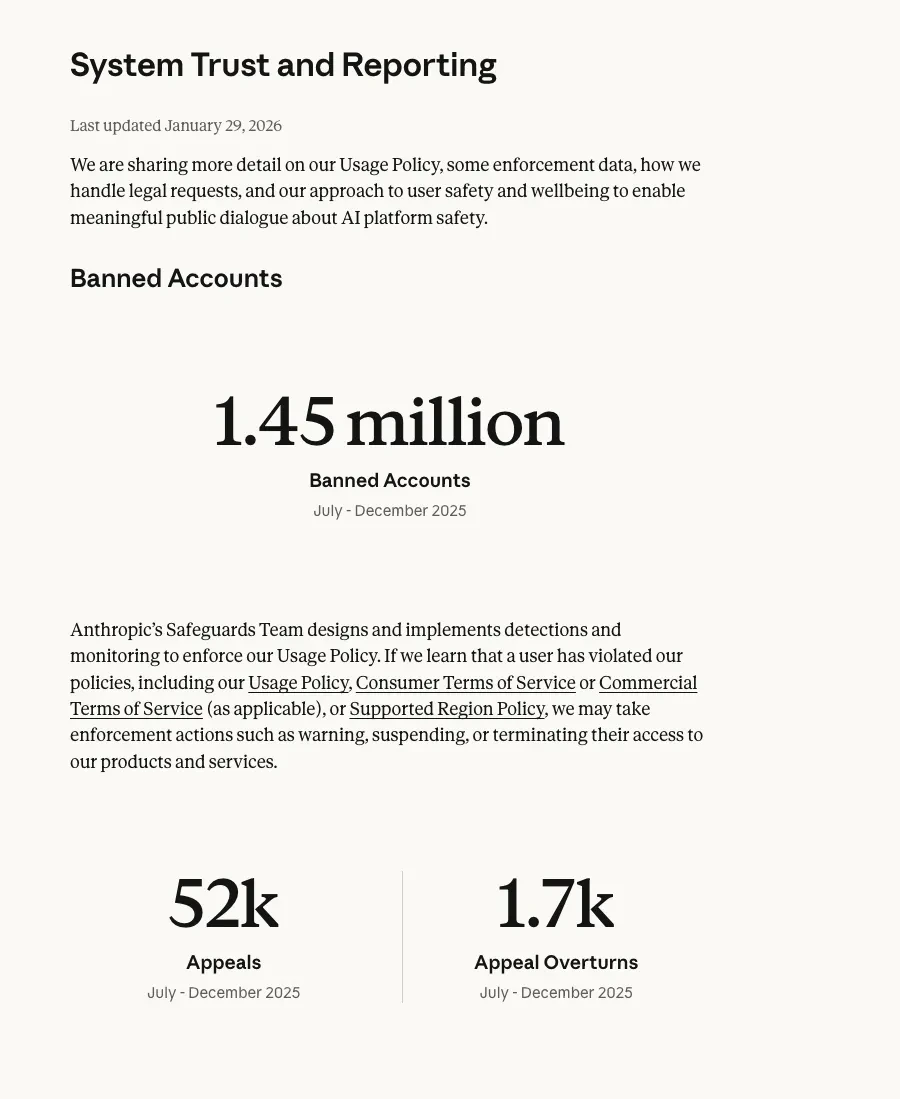
Source: https://www.anthropic.com/transparency
In other words, out of 100 users who feel particularly wronged about being banned, only about 3 can get their accounts back. The remaining 97 have to accept their misfortune.
So this also illustrates that Anthropic does not operate on the principle we might assume of first investigating the facts and then imposing penalties according to the rules. Instead, it leans more towards preventive enforcement. That is, its core goal is to intercept risks at their inception through high-coverage blocking, preferring to mistakenly punish 1000 rather than let a single one slip through.
In comparison, its rivals ChatGPT and Google Gemini are relatively more lenient.
ChatGPT is much more tolerant of third-party tools and edge-case prompts, with relatively looser account bans.
Gemini, even when tightening risk controls occasionally, rarely performs silent blanket bans or mass purges.
Only Anthropic treats "account bans" as a routine occurrence, with Claude Code being particularly hard-hit, almost becoming a disaster zone for bans.
So why is Anthropic's user policy so strict? I believe the reasons are relatively complex.
This involves the personal obsessions of founder Dario Amodei, the factional split at OpenAI, the power struggles within Silicon Valley capital, and the civil war between the safety faction and the accelerationist faction within the US AI industry. It is also tied to the geopolitical chess game of US-China AI decoupling—a grand game hidden behind the code concerning the future control of AI and global technological barriers.
Let's dissect this layer by layer in this article.
01. Dario Amodei's Obsession
The root cause of Anthropic's strict risk control lies hidden within the life trajectory of its founder, Dario Amodei. Every choice he made, every obsession he held, ultimately transformed into Anthropic's "zero-tolerance" iron rule, and likewise, into the account ban notices for countless users.
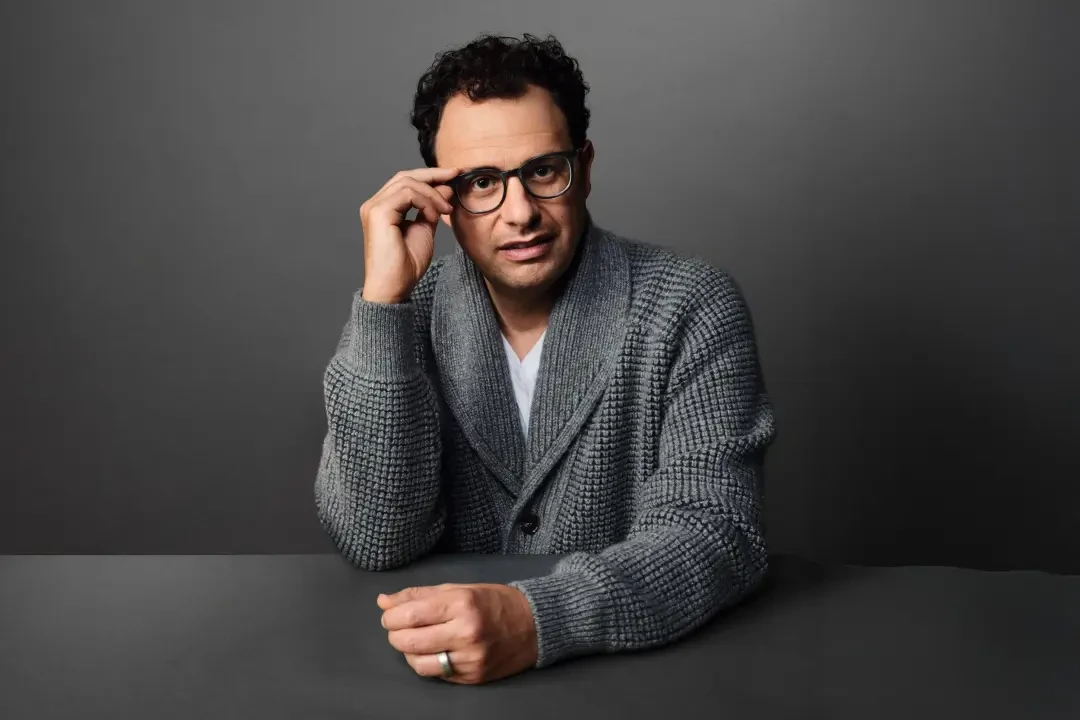
Recent official photo of Dario Amodei. Source: https://fortune.com
In 1983, Dario Amodei was born into an ordinary immigrant family in San Francisco. His father was an Italian-American leather craftsman who lived by his trade his whole life, with a stubborn personality who valued right and wrong above all else.
His mother was Jewish and managed library renovation projects. She was meticulous and instilled in Dario from a young age the philosophy that "responsibility comes before everything."
It was in this family atmosphere that Dario developed a personality of stubborn adherence to principles and unwavering bottom lines, intolerant of any ambiguity or compromise.
As a child, Dario showed the traits of a scientific prodigy. He disliked crowds, was not good at socializing, and poured all his energy into math and physics. When textbook knowledge wasn't enough, he would immerse himself in the library, devouring various profound theoretical works. His biggest dream at that time was to become a theoretical physicist and explore the ultimate mysteries of the universe.
In 2006, Dario's father contracted a rare and difficult disease. Despite seeking out renowned doctors, he could not be cured and ultimately passed away. His father's death was a devastating blow to the 20-year-old Dario, completely overturning his worldview.
Watching his father suffer from the illness and seeing the helplessness of medical science, he suddenly realized that abstract theoretical physics couldn't save the people in front of him, couldn't save the ordinary people plagued by disease.
Thus, he resolutely abandoned his deep-seated pursuit of theoretical physics and turned instead to biophysics, vowing to "use science to cure human diseases," deeply ingraining the principle of "controlling uncontrollable risks" into his very core.
This obsession has run through his entire career:
He first entered the California Institute of Technology for his undergraduate studies, then transferred to Stanford University to complete his bachelor's degree in Physics. Subsequently, he was admitted to Princeton University for a PhD in Biophysics, becoming a Hertz Foundation Fellow, specializing in the structure of biomolecules and their relation to disease. After earning his doctorate, he pursued postdoctoral research at Stanford Medical School, continuing his deep dive into the biomedical field, seeking ways to combat rare diseases.
It wasn't until 2014 that Andrew Ng extended an olive branch, inviting him to join Baidu's US lab, marking his first exposure to artificial intelligence.
At that time, AI development was in its very early stages, mainly used for image recognition and speech synthesis. But Dario acutely realized that AI could not only change lives but could also become a super tool for countering risks and saving humanity. However, this premise required it to be strictly controlled and prevented from going out of control.
After leaving Baidu, he joined Google Brain as a Senior Research Scientist, delving deeper into deep learning, with a focus on AI safety—specifically, how to make AI obedient and prevent it from harming humans.
It was during this period that he began to contemplate how to truly embed human values into the very foundation of AI, rather than simply applying post-hoc filters.
In 2016, shortly after OpenAI was founded, it attracted top global AI talent with its slogan of "open-source, non-profit, advancing AI for the benefit of humanity." Dario was drawn by OpenAI's philosophy and joined. Leveraging his top-tier technical skills, he rose from leading the AI safety team to Research Director, and then to Vice President of Research, fully participating in the development of GPT-2 and GPT-3.
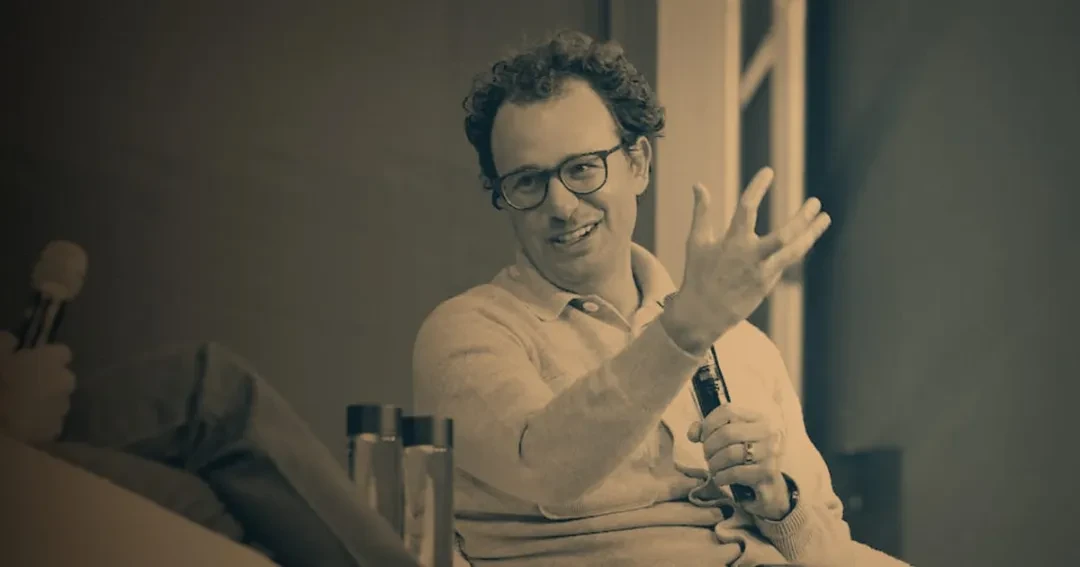
Photo from Dario Amodei's early career (OpenAI/Google Brain period, approx. 2018-2021). Source: bigtechnology
During this time, he was also a co-inventor of RLHF (Reinforcement Learning from Human Feedback). Simply put, this technology corrects AI outputs based on human feedback, making AI more aligned with human values, and later became the safety patch for the entire AI industry. At that time, Dario's heart was full of how to safely implement and deploy AI. But he never imagined that his ideals would soon be shattered by reality.
The Internal Strife at OpenAI: The Split Between Safety and Acceleration
In fact, many people only know that Dario Amodei led a team to leave OpenAI in 2021 to found Anthropic, but few know that behind this "defection" was a years-long battle of ideals, power struggles, and a "betrayal" that left a deep mark on Dario.
In its early days, OpenAI truly adhered to the philosophy of "non-profit, safety first." Elon Musk was an early investor and always emphasized that AI safety was paramount. However, as time went on, especially after Sam Altman became OpenAI's CEO, the company's development direction began to shift significantly.
Sam Altman is a classic "accelerationist." He believes AI development must keep pace with the times—first, build larger, more powerful models to seize market share and achieve commercialization, and then address safety issues.
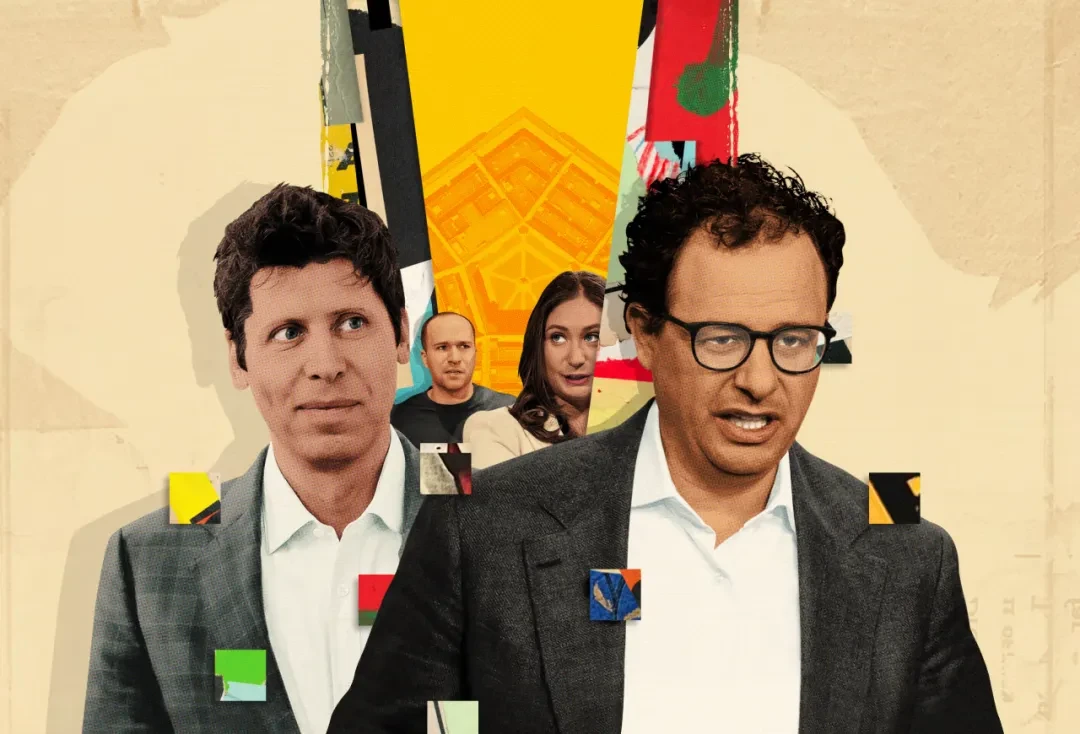
Symbolic image of the OpenAI vs. Anthropic factional split (Sam Altman vs Dario collage). Source: wsj.com
Under his leadership, OpenAI began to downplay its "non-profit" nature, actively seeking commercial partnerships, and even proactively aligning with Microsoft to secure more funding and computing power, all to rapidly iterate the GPT models and capture more market share in the AI space.
But Dario Amodei found all of this unacceptable.
In his eyes, AI is not merely a tool for capturing market share, but a "civilizational-level force that could either cure humanity or destroy it." If safety issues aren't resolved first, and AI alignment with humanity isn't ensured, the consequences of a model going rogue would be unimaginable.
He repeatedly proposed internally to slow down the pace of model iteration, strengthen safety testing, and prioritize "alignment first." However, his voice became increasingly marginalized.
In reality, the divergence in philosophy was just the surface. The deeper conflict lay in power reshuffling and credit attribution.
According to an in-depth 2026 report by the Wall Street Journal, Dario Amodei made core contributions during the development of GPT-3—specifically, the implementation of RLHF technology was spearheaded by him. Yet, in public announcements, his contributions were severely downplayed. Sam Altman's team tended to emphasize the "scale and capabilities of the models," overlooking the safety technology led by Dario.
Adding to Dario's disillusionment was the fact that after Elon Musk left OpenAI due to philosophical differences, company leadership fell entirely into Sam Altman's hands. The budget for the safety team was drastically cut, many core safety R&D projects were suspended, and some senior executives even publicly stated, "Safety issues can be addressed later. Let's commercialize first, make money, and then we can come back to solve safety problems."
Dario knew he could no longer realize his ideal of "safely deploying AI" at OpenAI. He later recalled this period on Lex Fridman's podcast, speaking with a calm yet resolute tone: "Arguing with others about core vision is an extremely unproductive thing. Rather than waste time, it's better to rally people and realize your own ideals."
In early 2021, the AI genius Dario made a decision that shocked Silicon Valley. He led his sister, Daniela Amodei (now Anthropic's President), along with OpenAI's core safety team and key research personnel, in a mass departure.
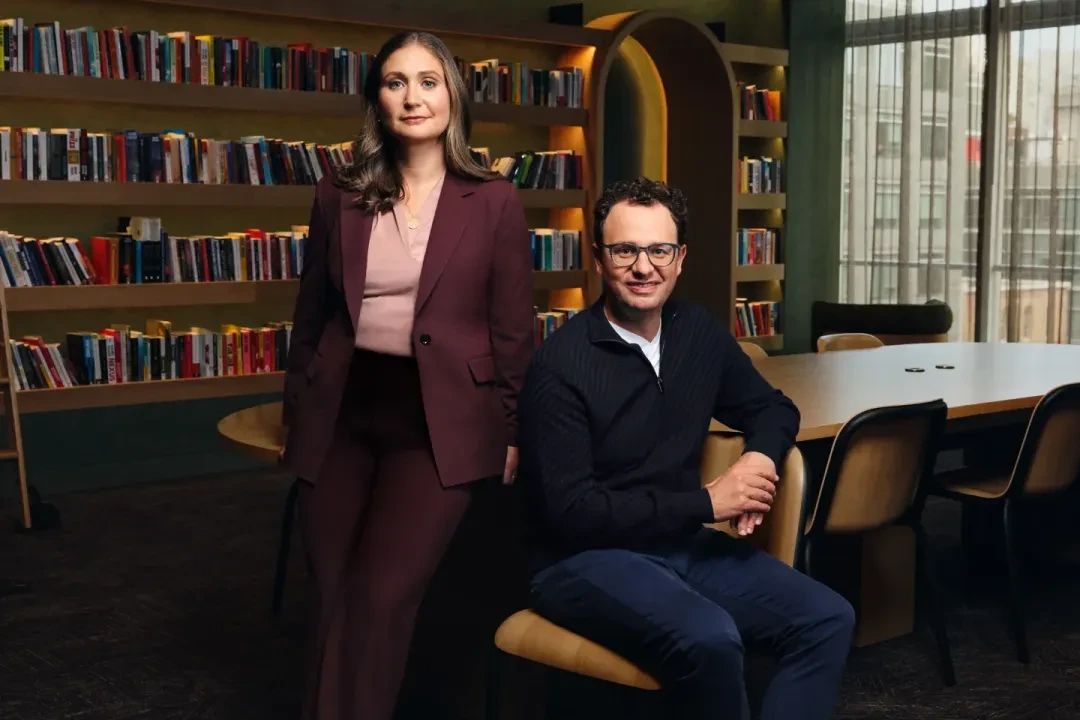
Photo of Dario Amodei with his sister Daniela Amodei. Source: Fortune
This departure was seen as a complete repudiation of OpenAI's accelerationism, and equally as a steadfast commitment to the principle of safety first.
At the time, OpenAI officially issued a polite statement congratulating Dario's team on their new venture. But privately, the rift between the two sides had become irreparable.
In reality, what Dario took with him was not just top talent, but also OpenAI's core safety technology and philosophy, which later formed the foundation of Anthropic. OpenAI, after Dario's departure, moved decisively down the path of commercial acceleration, moving further and further away from Dario's original vision.
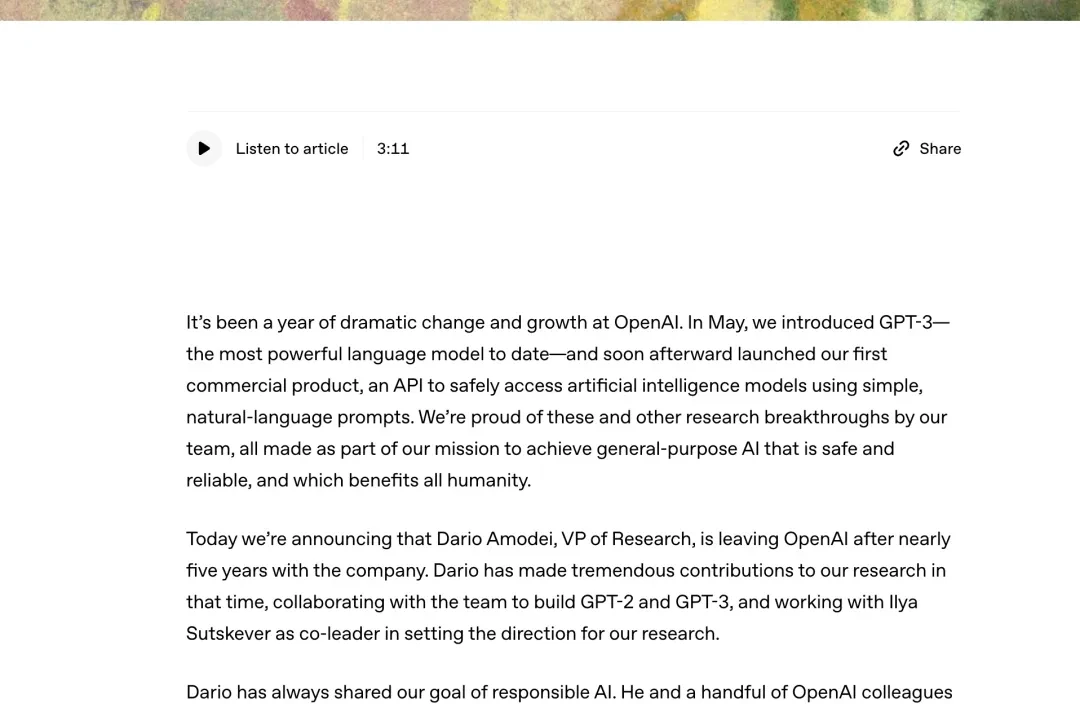
Source: https://openai.com/index/organizational-update/
Anthropic's "Religion of Safety"
In February 2021, Dario Amodei formally founded Anthropic, positioning it as a "public benefit corporation." This means that the company's core goal is not profit maximization, but rather "promoting the safe and controllable development of AI for the benefit of humanity."
And his obsession with "controlling risk," born from his father's death, along with the "safety-first vision" from his OpenAI days, ultimately became Anthropic's core system, ingrained as a "religion of safety" in the company's DNA.
From its inception, Anthropic established a core invention called Constitutional AI. This was the crystallization of Dario's years of thinking on "AI safety" and the key differentiator from OpenAI and Google Gemini.
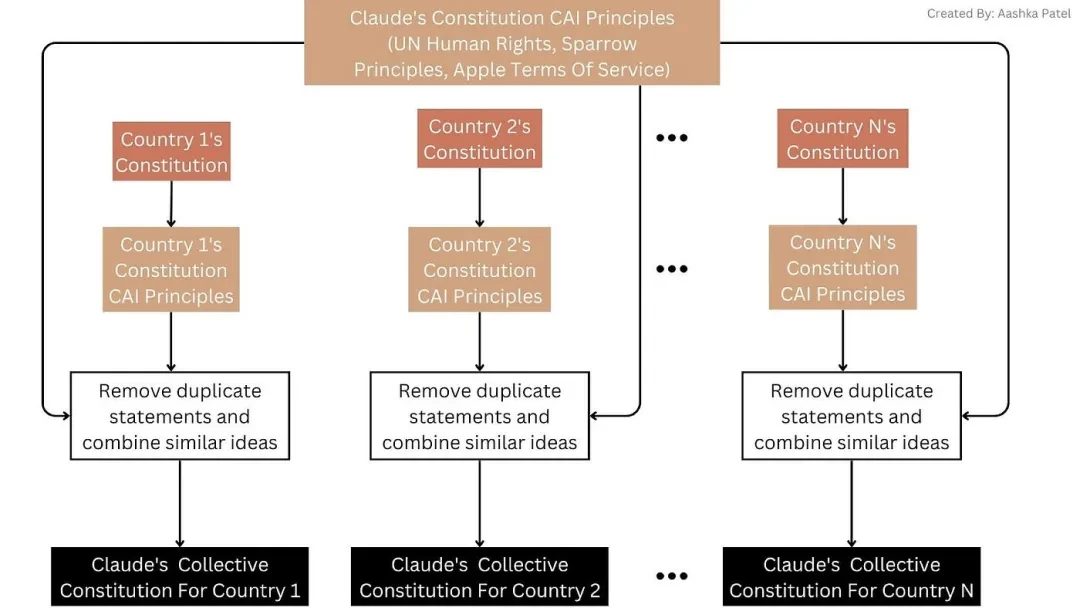
Diagram of Constitutional AI principles. Source: Aashka Patel
Constitutional AI did not follow OpenAI's method of using RLHF as a "post-hoc patch." Instead, it implants a "constitution" into the bottom layer of model training. This constitution incorporates the UN Universal Declaration of Human Rights, common ethical principles of humanity, and Anthropic's own safety principles. It forces the AI to perform a "self-check" and "self-critique" before generating any output or executing any command, ensuring the output aligns with human values and does not produce any dangerous content.
Dario personally authored two long articles, "Machines of Loving Grace" and "The Adolescence of Technology," elaborating on his AI vision:
He views AI like an adolescent—immense potential, but also full of uncertainty. It must be given rules and have defenses built in advance to prevent it from going astray. Constitutional AI is precisely the "rules" and "defenses" set for the AI.
This religion of safety is not only reflected in model training but also directly transmitted to every product and every risk control policy at Anthropic. Claude Code's high-permission design, coupled with prompt injection probes and conversation classifiers, is designed to add an extra layer of self-checking before the AI executes a command. The risk control logic of preventive enforcement—preferring to mistakenly punish the innocent rather than let any suspicious behavior slip through—is designed to nip risks in the bud.
The 2026 incident where Anthropic stood up to the US Department of Defense best exemplifies this "safety fundamentalism." This event not only shocked Silicon Valley but also showed the world Dario Amodei's determination to sacrifice profit rather than safety.
In early 2026, the US Department of Defense asked Anthropic to remove two major safety guardrails from Claude:
First, prohibiting Claude from being used for "mass surveillance of US citizens";
Second, prohibiting Claude from being used for the research and deployment of "fully autonomous lethal weapons."
The DoD promised that if Anthropic complied, it would sign a $200 million military contract and provide substantial computing power support.
It's important to note that at the time, Anthropic was under significant computing power and financial pressure. A $200 million military contract could have alleviated the company's immediate difficulties.
But Dario Amodei directly refused.
He issued a public statement with a firm tone: "We cannot go against our conscience to develop technology that could harm humans or violate human rights. Claude's safety guardrails are our bottom line. We will not compromise."
His refusal completely angered the US Department of Defense. Under the leadership of the Trump administration, the DoD directly placed Anthropic on a "supply chain risk" blacklist. This was the first time in US history that a domestic AI company was placed on this list, meaning all US defense contractors were prohibited from using Anthropic's products and services. Furthermore, the DoD threatened to invoke the Defense Production Act to force Anthropic to remove the safety guardrails.
Facing pressure from the state apparatus, Dario Amodei directly sued the US Department of Defense, arguing that this action was "retaliatory punishment against Anthropic" that violated US laws and values. Although the appeals court later denied Anthropic's request for a temporary injunction, Dario never compromised. Even