






年内涨15倍,ZEC还能继续FOMO吗?


- 核心观点:隐私币Zcash(ZEC)近期因Multicoin Capital重仓、多位加密KOL公开力挺及机构级催化剂(如ETF申请、Robinhood上线)驱动,价格月涨超110%,但团队核心人员已集体离职,其基本面与叙事热度存在明显背离。
- 关键要素:
- 价格与市场表现:ZEC 30天内涨幅超110%,年内涨幅达1500%,市值超95亿美元超越门罗币,5月6日单日涨幅近30%导致超过6200万美元空头清算。
- 投资逻辑支撑:Multicoin Capital公开重仓,认为Zcash的隐私池可通过零知识证明隐藏交易,作为对冲“比特币透明性导致财产税风险”的最干净标的。
- KOL叙事驱动:Arthur Hayes、Naval Ravikant等头部KOL密集发声,Hayes提出ZEC目标价可达“比特币价格的10%”(约8000美元),引发市场关注。
- 技术升级预期:Zcash开发团队宣布将推出量子可恢复钱包,并计划12-18个月内实现全面后量子安全,应对“先收割后解密”威胁。
- 机构入场信号:Grayscale提交ZEC现货ETF申请、Robinhood上线交易、Foundry启动矿池运营,为资产提供机构认可度和零售入口。
- 团队出走风险:核心开发团队Electric Coin Company于2024年1月集体辞职,Zcash当前运行缺乏原始工程团队支持,基本面与叙事热度不匹配。
Author: Kuri, Shenzhen TechFlow
If you've been scrolling through English Crypto Twitter lately, you've probably seen ZEC flooding your feed.
Big names like Naval, Arthur Hayes, Mert Mumtaz, Balaji, and Cobie are all appearing under the same topic. Combined with Multicoin Capital's public announcement of a heavy position and multiple privacy-themed panels at Consensus Miami, ZEC's social media volume has reached its highest point since the market surge at the end of 2025.
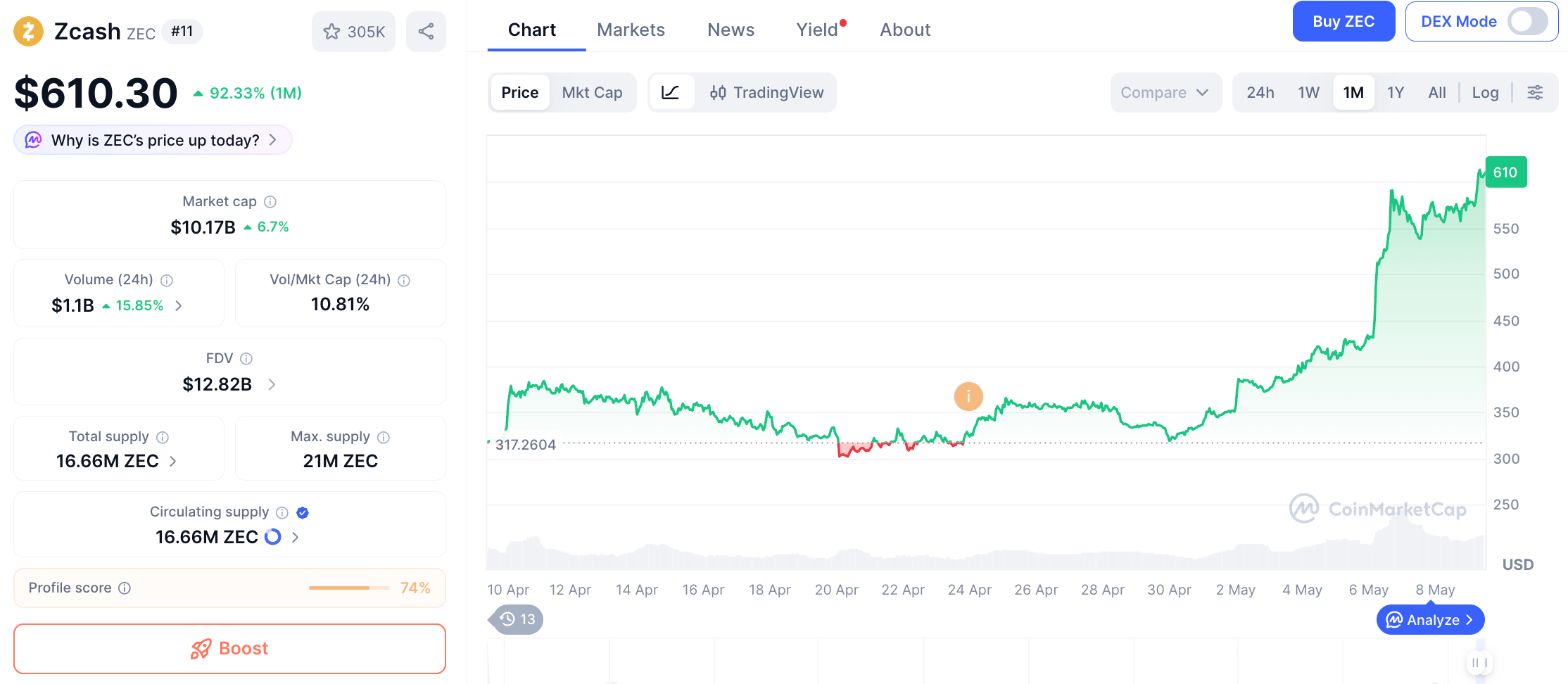
The price has already outpaced the narrative. As of writing, ZEC is trading at around $580, up over 110% in the past 30 days and over 1500% year-to-date. Its market cap has surpassed $95 billion, overtaking the veteran privacy coin Monero (XMR) and climbing into the top 20 on CoinGecko.
On May 6, ZEC surged nearly 30% in a single day, triggering over $62 million in short liquidations, of which shorts accounted for $46.7 million.
So the question is: what's driving this wave?
Multicoin's Heavy Bet: "Bitcoin is Censorship-Resistant, But Not Immune to Property Tax"
The most direct catalyst came from Multicoin Capital.
On May 6, Multicoin co-founder and managing partner Tushar Jain publicly stated during a panel at Consensus Miami that the firm has built a "significant position" since February this year. He didn't disclose the exact size, but laid out a clear investment logic framework.
In a subsequent long thread on X, Jain wrote: "Bitcoin is censorship-resistant. No one can freeze your BTC or stop you from using it. But this doesn't stop a government from confiscating known holdings via property tax."
His direct evidence was California's Initiative 25-0024, a proposal to impose a one-time 5% wealth tax (including unrealized gains) on residents with a net worth exceeding $1 billion, projected to raise around $100 billion.
Jain's core thesis: Bitcoin is insurance against fiat, but its on-chain balance is completely transparent. A tax agency armed with a blockchain explorer can see everything. ZEC's shielded pool, using zero-knowledge proof technology, hides senders, recipients, and amounts, making on-chain assets invisible to external observers.
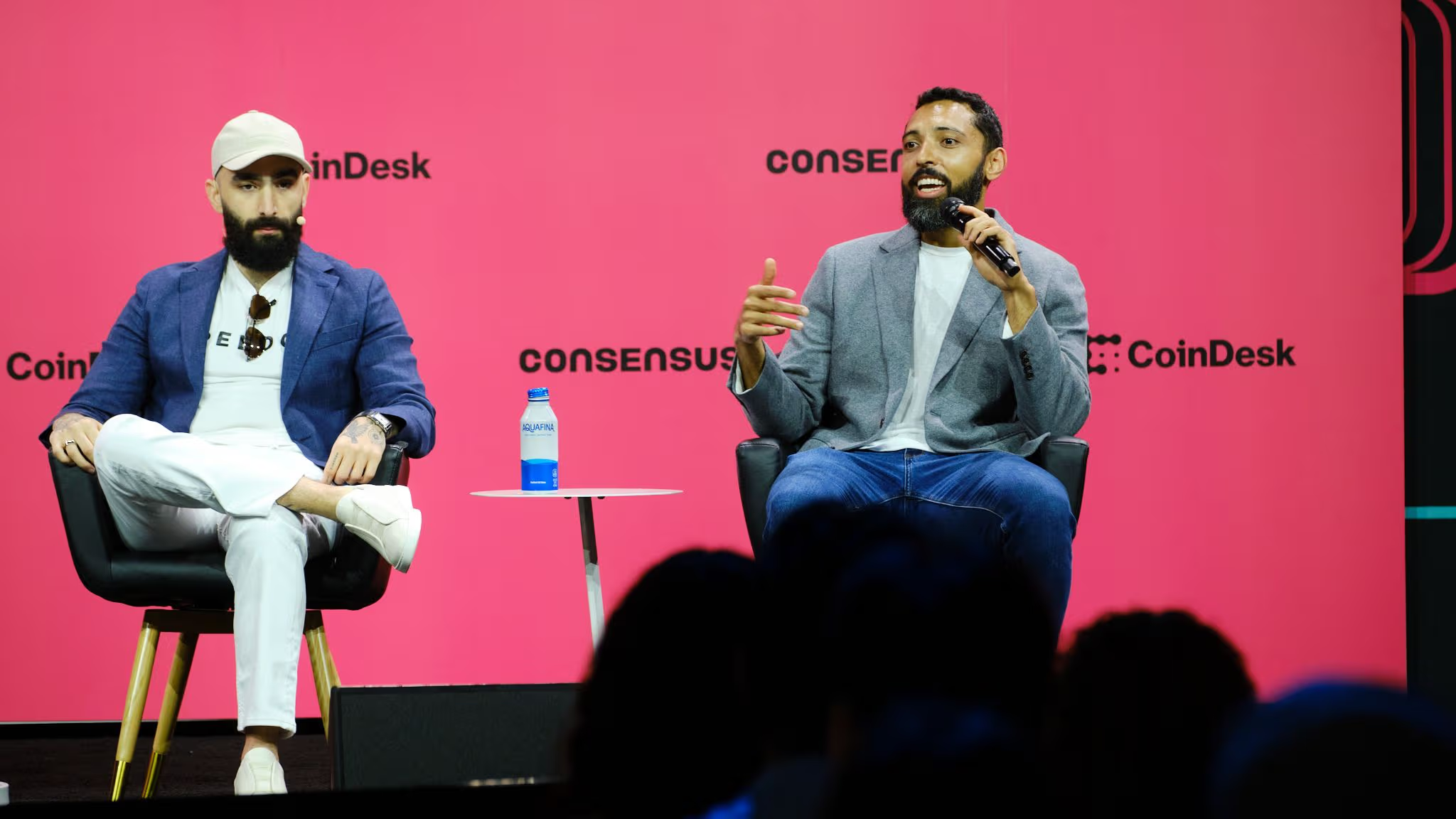
"We believe there is clear product-market fit for truly private, censorship-resistant, and seizure-resistant assets, and demand is accelerating," Jain wrote. "Zcash is the cleanest way to express this thesis in the public markets."
This marks a clear shift in stance for Multicoin.
In 2019, the fund argued that "privacy is a feature of valuable cryptocurrencies, not a standalone product," suggesting users shouldn't sell BTC or ETH to buy ZEC just for privacy.
Seven years later, this public statement looks like real money overturning its own past conclusions.
KOLs Unite, Arthur Hayes Calls for "10% of Bitcoin's Price"
The seeds of this ZEC narrative were actually planted in the second half of 2025.
BitMEX co-founder Arthur Hayes, AngelList co-founder Naval Ravikant (also an early investor in Zcash), Helius founder Mert Mumtaz, along with Balaji Srinivasan, Cobie, and other top crypto KOLs, have been vocally supporting ZEC since last fall.
Naval tweeted in October last year: "Bitcoin is insurance against fiat; Zcash is insurance against Bitcoin."
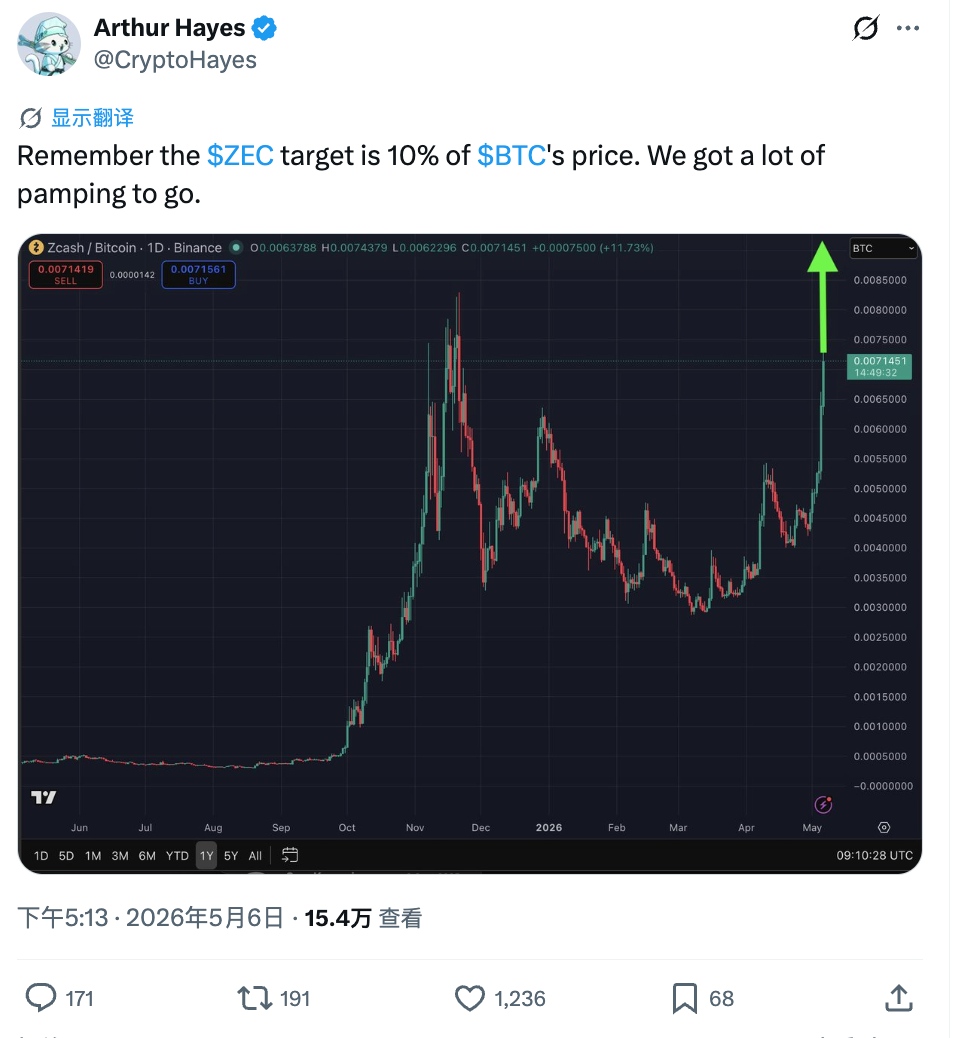
Hayes' statement was more aggressive. At Consensus 2026, he stated that ZEC's long-term price target should be "10% of Bitcoin's price." With BTC around $80,000 currently, this implies a ZEC target price of roughly $8,000, over 13x higher than the current price. Tyler Winklevoss also endorsed a thesis this week valuing ZEC at $9,700 for capturing offshore wealth.
These endorsements may not constitute investment advice, but their concentrated emergence indicates one thing: Top-tier capital and top-tier voices in the English crypto space are simultaneously tilting towards the privacy track.
The Post-Quantum Narrative at Consensus Miami
If Multicoin and the KOLs provided capital and narrative catalysts, the technology roadmap release at Consensus Miami gave the market a fundamental story.
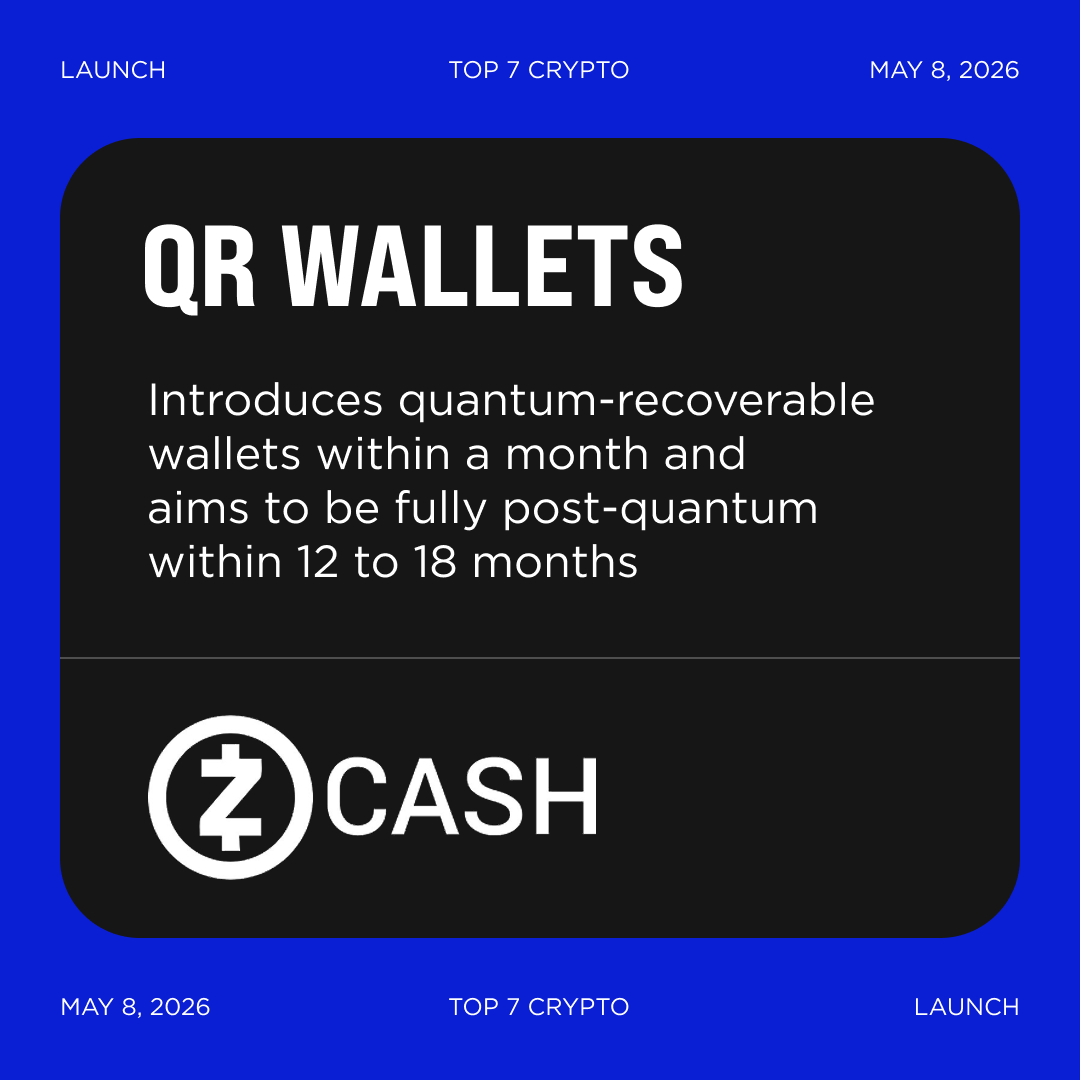
Josh Swihart, founder and CEO of Zcash Open Development Lab, announced at the privacy track session on May 8 that quantum-recoverable wallets will go live within a month, and Zcash plans to achieve full post-quantum security within 12 to 18 months.
The logic here is that the ECDSA signature algorithm used by most current cryptocurrencies will become vulnerable once quantum computers mature. A more dangerous scenario is the "harvest now, decrypt later" strategy, where adversaries record encrypted data now and crack it later when quantum hardware is ready. For a privacy coin whose value proposition rests entirely on transaction data confidentiality, this is an existential threat.
Swihart also disclosed that since the ECC wallet integrated the Near Intents cross-chain swap feature last October, approximately $600 to $700 million has flowed in and out through this channel, primarily against USD and USDC. Zcash's shielded pool currently holds about 30% of the circulating ZEC supply, an all-time high.
Institutional Entry Signals: Grayscale ETF, Robinhood Listing, Foundry Mining
Beyond Multicoin's heavy position, ZEC is accumulating more institutional-grade catalysts.
Grayscale has submitted an application for a spot ZEC ETF, currently awaiting an SEC decision. Grayscale has previously stated that ZEC's upside potential is closely tied to the "repricing of financial privacy in an AI-driven world."
Robinhood recently listed ZEC for trading, opening up retail access. Foundry (under Digital Currency Group) announced the launch of a large-scale ZEC mining pool, the second asset it supports after Bitcoin, adding endorsement for ZEC's mining security and institutional recognition.
On the on-chain data front, Santiment data indicates that retail investor interest in privacy coins is rising, driven by tightening exchange compliance rules and growing concerns over data tracking. A report published by CoinDesk Research in March this year stated that Zcash has reached a critical point of "encryption supremacy," driven by three converging forces: AI tools capable of de-anonymizing users on transparent blockchains by tracking transaction patterns, the increasingly real threat of quantum computing to current crypto wallet security, and quarterly trading volumes surpassing $100 billion.
However, The Team That Built Zcash Has All Left
These catalysts paint a bullish picture, but one fact shouldn't be overlooked: the core team that built Zcash is gone.
In January this year, Electric Coin Company (ECC) CEO Josh Swihart and the entire ECC team resigned en masse, citing governance conflicts with the Bootstrap Project board and characterizing the departure as a "constructive discharge." ECC is the core organization that created and maintains Zcash. The team's exodus means the chain operates without its original engineering team.
So currently, ZEC's narrative heat significantly outpaces its fundamentals. KOL shilling, heavy fund positions, consecutive Consensus panels – these are stories of capital and attention, but on-chain public trading volume hasn't grown much.
Because transactions within the shielded pool are invisible by design, you can't use on-chain data to differentiate between "real adoption" and "speculative capital parked."
Nevertheless, lacking fundamentals is the norm for most coins. In this wave of "old guard coin" revival, ZEC is arguably the most prominent, but likely not the last.


