






ใครคือโคล อัลเลน? อีกด้านหนึ่งของมือปืนที่พยายามลอบสังหารทรัมป์


- ประเด็นหลัก: บทความตั้งคำถามกับคำบรรยายของทางการที่ระบุเพียงว่าโคล อัลเลน ผู้ต้องสงสัยในเหตุกราดยิงงานเลี้ยงอาหารค่ำของสมาคมผู้สื่อข่าวทำเนียบขาว เป็น "พวกหัวรุนแรงที่ต่อต้านศาสนาคริสต์" โดยชี้ให้เห็นจากพื้นฐานทางวิศวกรรมจากคาลเทค ความเชื่อทางศาสนา และเนื้อหาในคำประกาศของเขา ว่าเขาเป็น "คนธรรมดา" ประเภทหนึ่งที่เชื่อว่า "ระบบการเมืองล้มเหลว ต้องมีใครสักคนลงมือ" แรงจูงใจในการกระทำของเขามีความซับซ้อน และความรุนแรงถูกมองว่าเป็นหน้าที่ทางศีลธรรม
- องค์ประกอบสำคัญ:
- อัลเลนไม่เคยถูกเอฟบีไอจัดให้เป็นเป้าหมายในระบบเฝ้าระวังต่อต้านการก่อการร้ายภายในประเทศ พื้นฐานของเขา "ธรรมดามาก": จบการศึกษาด้านวิศวกรรมเครื่องกลจากคาลเทค ทำงานเป็นวิศวกรเครื่องกลในบริษัทวิศวกรรม และพัฒนาเกมด้วยตัวเอง
- เขาไม่ได้เกลียดชังศาสนาคริสต์ แต่กลับอ้างอิงพระคัมภีร์ไบเบิลอย่างมากมายในคำประกาศเพื่อสร้างความชอบธรรมให้กับความรุนแรง แยกแยะการแก้แค้นส่วนตัวออกจาก "การถูกกดขี่เพื่อผู้อื่น" และตั้งคำถามต่อการตีความแบบยอมจำนนต่อประโยคที่ว่า "ของของซีซาร์จงถวายแก่ซีซาร์"
- อัลเลนเคยเป็นประธานชมรม Nerf ในมหาวิทยาลัย คัดค้านการ "ทำให้เป็นทหาร" ของปืนของเล่น แต่ปัจจุบันกลับใช้ปืนจริงในการพยายามลอบสังหารประธานาธิบดี ซึ่งเป็นความแตกต่างที่ชัดเจน ตอกย้ำถึงความรุนแรงของการเปลี่ยนแปลงทางความคิดของเขา
- บทความเปรียบเทียบอัลเลนกับลุยจิ มังจิโอเน โดยชี้ให้เห็นว่ามือปืนประเภทนี้ไม่ใช่พวกเกลียดสังคมและเก็บตัว แต่เป็นคนฉลาด มีอุดมการณ์ ไม่มีประวัติอาชญากรรม และมีร่วมกันในความเชื่อที่ว่า "ระบบการเมืองได้ล้มเหลวโดยสิ้นเชิง"
- ทรัมป์ระบุว่าเหตุการณ์นี้เป็น "ภัยคุกคามที่ต่อต้านศาสนาคริสต์" ซึ่งสอดคล้องกับตรรกะของคำสั่งความมั่นคงแห่งชาติ NSPM-7 คำบรรยายอย่างเป็นทางการนี้อาจครอบงำการสอบสวน และผลักดันให้หน่วยงานบังคับใช้กฎหมายเพิ่มงบประมาณด้านความมั่นคง แต่กลับหลีกเลี่ยงคำถามพื้นฐานที่ว่า "ทำไมคนที่ดูเหมือนปกติมากขึ้นเรื่อยๆ ถึงหันไปใช้ความรุนแรงทางการเมือง"
Original Title: Assassin Wasn't on FBI's Radar, Sources Say
Original Author: Ken Klippenstein
Translated by: Peggy, BlockBeats
Editor's Note: On April 25, 2026, a shooting attempt occurred at the White House Correspondents' Association Dinner. Following the incident, suspect Cole Allen was quickly labeled an "extremist." However, as his "manifesto" sent before the action and his personal background were gradually revealed, this portrayal began to grow more complex.
Who is he really? This article attempts to reconstruct a more realistic individual through his resume and interviews with classmates. Allen was not a marginalized figure in the traditional sense, but an engineer with a background from Caltech, a stable career, religious faith, and a relatively complete value system. This contradicts the official narrative of an "anti-Christian extremist"—on the contrary, in his manifesto, he repeatedly quotes the Bible, trying to establish a certain "legitimacy" for his actions from a perspective of faith and law.
The author further points out that such individuals are not isolated cases. They share a common judgment: the political system has failed, therefore "someone must act." Within this logic, violence is no longer seen as abnormal but is understood by some as a moral responsibility.
When the government and media continuously reinforce a certain security narrative (such as the "anti-Christian threat"), perhaps the more pressing question is: why are more and more seemingly normal people turning to political violence?
Below is the original text:
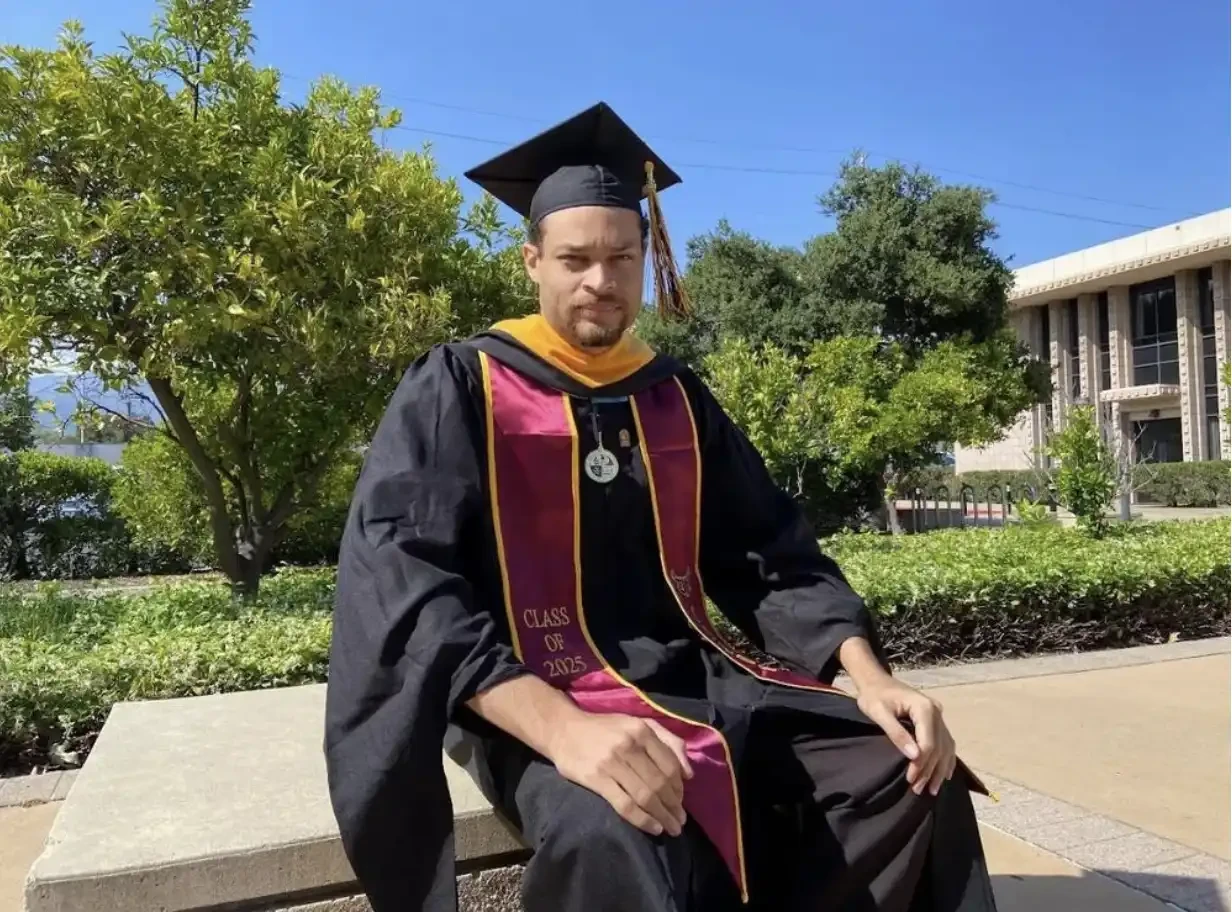
Cole Tomas Allen
Cole Allen was never on the FBI's extensive domestic terrorism watchlist, multiple sources including a senior FBI official confirmed to me. The 31-year-old suspect attempted to break into the White House Correspondents' Association Dinner on Saturday, but until then, he seemed like nothing more than an ordinary person, until everything suddenly spiraled out of control.
Reportedly, Allen himself was shocked by the "absurd" security loopholes at the Washington Hilton Hotel, which has hosted the dinner for decades (and was also the site of the attempted assassination of Ronald Reagan in 1981). Live footage showed Secret Service agents and Washington Metropolitan Police Department security personnel chatting and joking as guests took their seats, while Allen simply ran past them.
Now, rumors have begun to spread surrounding Allen, with some calling him an anti-Christian extremist who may have been assisted by a group of left-wing accomplices. Acting Attorney General Todd Blanche stated that the FBI is investigating whether he acted alone. But the question remains: who is he, and what does he represent?
The answer comes from a copy of his resume I obtained and interviews with his acquaintances.
The unsettling part lies precisely in its "ordinariness."
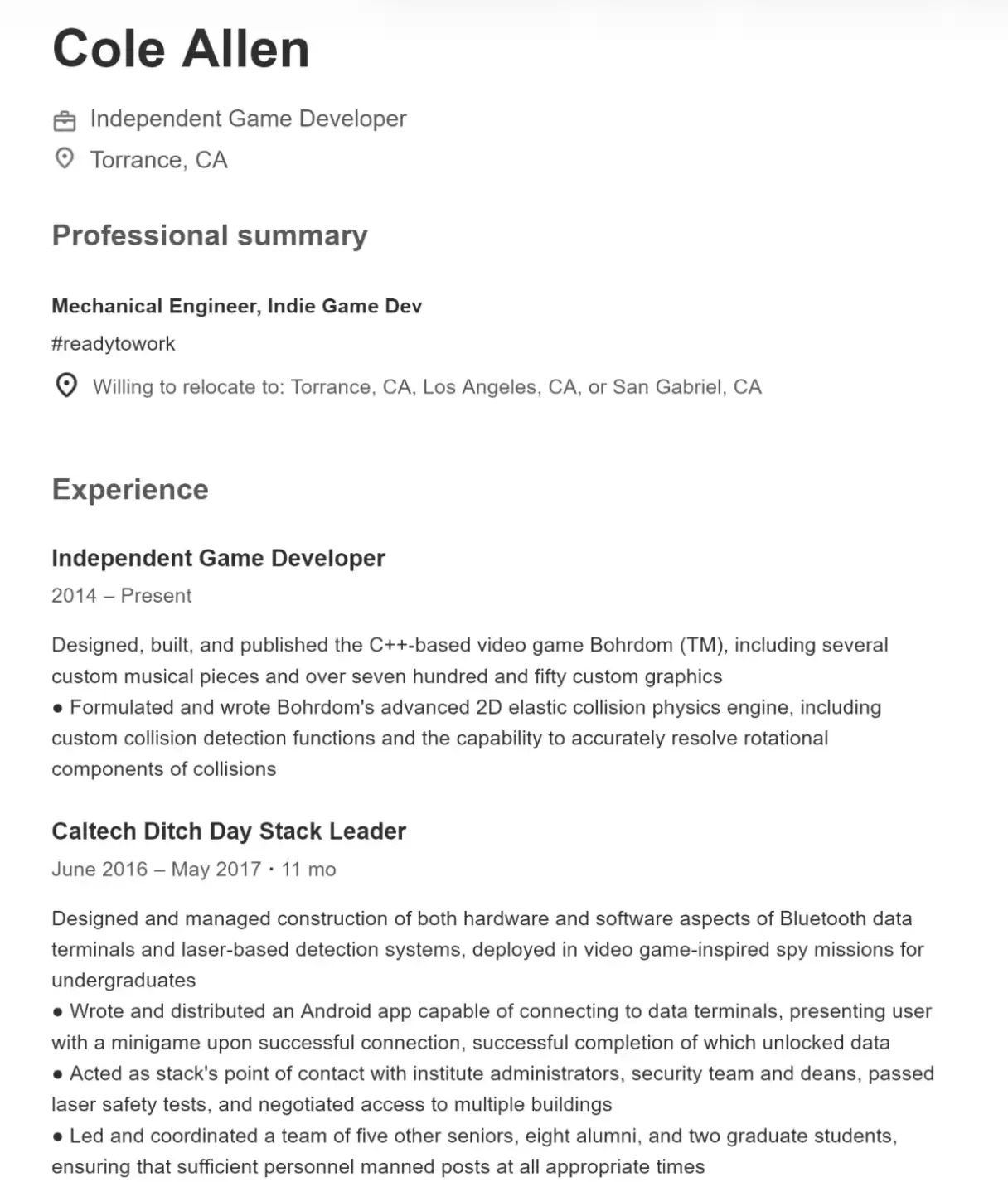
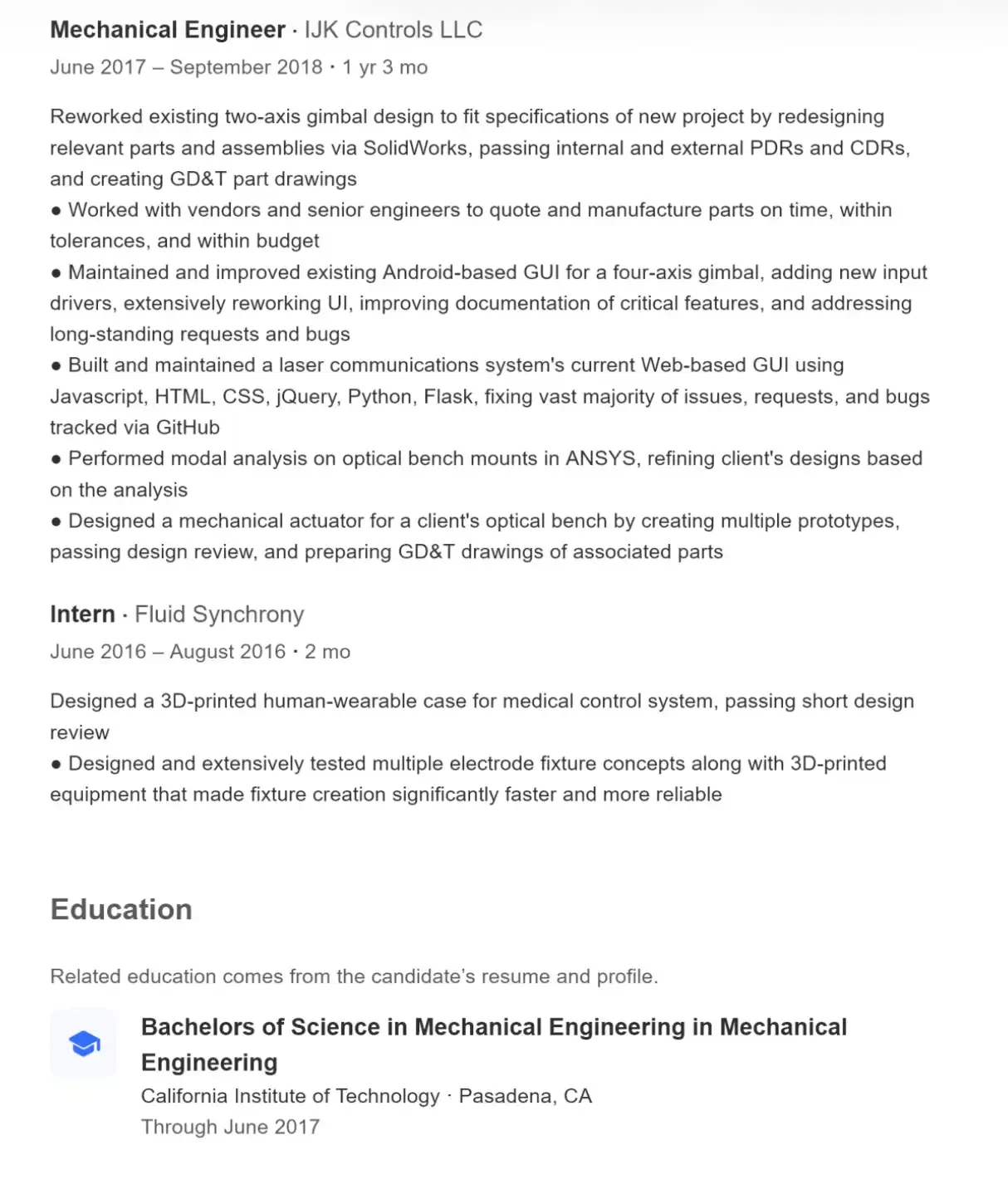
Looking at his resume, Cole Allen followed a typical engineering track. He graduated from Caltech with a degree in Mechanical Engineering, interned early on at a biomedical startup, where he worked on 3D printing design for medical device casings and related fixture development.
Professionally, he worked as a mechanical engineer at the Southern California engineering firm IJK Controls, primarily engaged in precision mechanical system design (such as gimbal structures), optical platform analysis, as well as software development, including Android UI optimization and web-based development for laser communication systems. Additionally, he independently developed games for a long time, creating everything from the underlying physics engine to graphics and music. Overall, his background spans engineering and software, with a relatively comprehensive technical skillset.
Allen graduated from Caltech in 2017. This prestigious science and engineering school in Pasadena has produced 24 Nobel laureates and is home to NASA's Jet Propulsion Laboratory (JPL). He majored in mechanical engineering and after graduation went to work for a small Southern California engineering firm, IJK Controls LLC, developing precision hardware used to stabilize cameras and sensors on moving platforms, widely applied in drones, satellites, and military targeting systems. He also worked on software that uses lasers instead of radio waves to transmit data between devices.
Before entering Caltech, he interned at a biomedical startup, designing 3D-printed casings for medical devices and creating specialized fixtures and jigs to hold electrodes during production.
He also developed video games—not by modifying existing ones, but by building them from scratch. His most representative work, *Bohrdom*, was entirely his creation: the underlying physics system governing object motion and collision, 750 original graphics, and the soundtrack, which he composed himself.
His classmates say this was not unusual at Caltech, known for its technical prowess. There is a tradition called "Ditch Day Stack," where senior students design complex puzzle games for underclassmen, and Allen was fully immersed in it. "You could tell he was proud of it," one former classmate said.
In the memory of his classmates, Allen was hardworking, devout, and polite. "He was quite active in the Christian fellowship at Caltech," an acquaintance and former classmate told me. "Very devout, and very mild-mannered." "If I hadn't seen the photo of him being pinned down, face on the ground, I wouldn't have believed it was him," he said, referring to the image released after police finally subdued Allen.
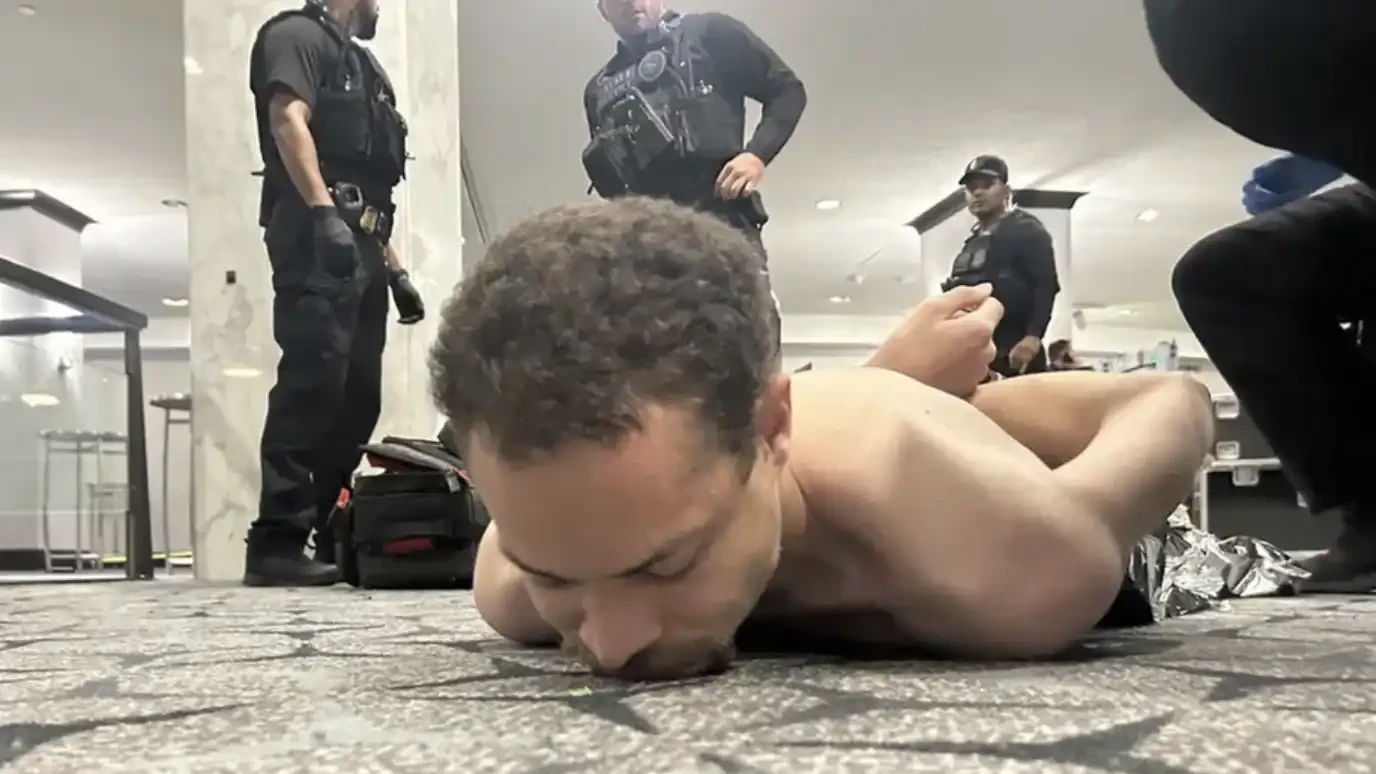
These details, especially his religious beliefs, sharply contradict President Trump's description of the attack.
Note: This passage indicates that he did not hate Christianity (as the media and Trump defined him), but rather used Christianity to provide a moral justification for violence, thereby challenging the simplistic narrative of him being an "extremist."
"When you read his manifesto, he hates Christians," Trump said in a Fox News interview. "He hates Christians, a hatred." Subsequently, several mainstream media outlets, citing anonymous "government insiders," repeatedly reinforced this judgment.
Note: The assassination attempt occurred on April 25, 2026, during the White House Correspondents' Association Dinner. The suspect, Cole Allen, sent a "manifesto" to his family approximately 10 minutes before carrying out the action.
But the manifesto itself says otherwise. On the contrary, if anything might have angered Allen, it could be Trump portraying himself as Jesus Christ (e.g., that AI-generated image of Trump in a robe healing the sick). Furthermore, a suspected copy of the manifesto published by the *New York Post* shows Allen heavily citing Christian theology to defend the shooting, analyzing the Gospels section by section in a way that resembles someone who has actually spent time studying the Bible.
In a section titled "Response to Objections," he first addresses the doctrine of "turning the other cheek"—a teaching from Matthew 5:38–39 (The Sermon on the Mount), where Jesus advises believers not to retaliate against personal harm.
Allen reinterprets it, arguing that the principle does not apply when the victim is someone else:
Objection 1: As a Christian, when others harm you, you should not retaliate but choose forbearance and forgiveness, letting them "strike the other cheek."
Response: "Turning the other cheek" applies when *you* are the one being oppressed. I am not the woman being raped in the detention camp, I am not the fisherman executed without trial, I am not the student being bombed, the child starving, or the teenage girl abused by the numerous criminals in this government.
Choosing to "turn the other cheek" when *others* are suffering oppression is not a Christian act; it is complicity in the oppressor's sin.
He then discusses the classic statement "Render unto Caesar what is Caesar's"—from Matthew 22:21, Mark 12:17, and Luke 20:25. When asked whether Jews should pay taxes to Rome, Jesus responded to give to Caesar what belongs to Caesar and to God what belongs to God. This passage has long been used to argue for submission to political authority.
Note: The phrase "Render unto Caesar what is Caesar's, and to God what is God's" means obeying secular power (government) where it is due, and reserving what belongs to faith for God.
Allen argues from a constitutional perspective:
Objection 5: Render unto Caesar what is Caesar's.
Response: The United States of America is governed by the rule of law, not by one or a few individuals. As long as elected representatives and judges do not follow the law, no one is obligated to obey their unlawful orders.
Within the manifesto, the third religious reference is a brief thanks: "Thank you to my family, both biological and church, for their love over these 31 years."
Reportedly, Allen's account on the social platform Bluesky also frequently mentioned Christianity, including calling himself a "Protestant" earlier this month and repeatedly comparing Trump to the "Antichrist."
On April 13, in response to the image of "Trump playing Jesus," Allen quoted a passage from the Book of Revelation about the Antichrist, now seeming prescient: "Those who worship the beast and its image and receive its mark… they have no rest day or night."
Perhaps the most ironic part is a story told by his former classmate.
Allen served as president of Caltech's Nerf gun club and took the role quite seriously. He opposed the tendency within the club to "militarize" the toy guns—modifying them for greater power or painting them to look more like real weapons. He worked closely with campus security and, according to classmates, demonstrated impressive skills in de-escalating conflicts.
In other words, this man who once tried to make toy guns look less like real ones is now accused (per NBC News) of carrying a sawed-off shotgun and multiple handguns, driving across several states, and attempting to assassinate the President. "It's really shocking," another person who knew him said. "From my limited interactions with him, he was incredibly smart."
So, what happened?
From Luigi Mangione to Cole Allen, these shooters are not the antisocial loners media often imagines. They are intelligent, well-liked, and often idealistic; they have no criminal record; they even try to avoid harming innocents—allegedly true of Allen as well. But they share a common belief: the political system has completely failed, and someone must take action.
"I don't see anyone else filling this gap," Allen wrote in his manifesto.
Although Trump's claim that Allen "hates Christians" is inaccurate, this framing aligns with the logic of his National Security Presidential Memorandum (NSPM-7), which lists "anti-Christian" bias as an indicator of domestic terrorism. This narrative will likely dominate, regardless of the facts, and the FBI and intelligence agencies will be tasked with investigating the so-called "anti-Christian threat." Law enforcement will also use this as a reason to request more funding for security screening and surveillance, which will likely be approved.
The real question is: will anyone still ask why more and more seemingly "ordinary" people feel that the political system is unresponsive to their concerns, to the point of resorting to violence?


