






"Mad King" Trump, "Crazy War" and "Unhinged Markets"


- Core Thesis: As the US-Iran war enters its eighth week, the Trump administration's decision-making exhibits characteristics of "madness" and "loss of control." His erratic diplomatic posture, strategic choices influenced by external forces, and lack of a contingency plan for the Strait of Hormuz have paralyzed the global crude oil pricing mechanism and triggered a collapse in domestic US economic confidence.
- Key Elements:
- Trump displayed extreme emotionalism during the pilot rescue crisis, subsequently posting insulting messages on social media to deliberately cultivate an "unstable" image, yet was excluded from decision-making by his aides.
- During Iran's preliminary ceasefire window to reopen the Strait, the US refused to lift the maritime blockade and ordered the boarding and inspection of ships, completely destroying strategic credibility and causing peace talks to collapse.
- Israel "sold" Trump on the prospect of a swift victory, prompting him to disregard warnings from US military experts, leading strategic decisions to be swayed by external forces.
- After the Strait of Hormuz closure, Washington lacked an effective contingency plan, causing spot crude oil price spreads to surge from the normal $1-2 to $60, paralyzing crude oil pricing functions.
- Brent crude broke through $102, yet US stocks continued to hit new highs, exhibiting a "doomsday party" K-shaped divergence: the market traded on Trump's emotional tweets, while the Consumer Confidence Index plummeted to 47 points, far exceeding levels seen in 2008 and post-9/11.
- The market observed correlation coefficients among the dollar, oil prices, gold, and Bitcoin approaching 95%, and Iran published memes mocking Trump for allegedly manipulating oil prices before announcing news.
Original Author: Long Yue
Original Source: Wall Street CN
On April 23, the US-Iran war entered its eighth week.
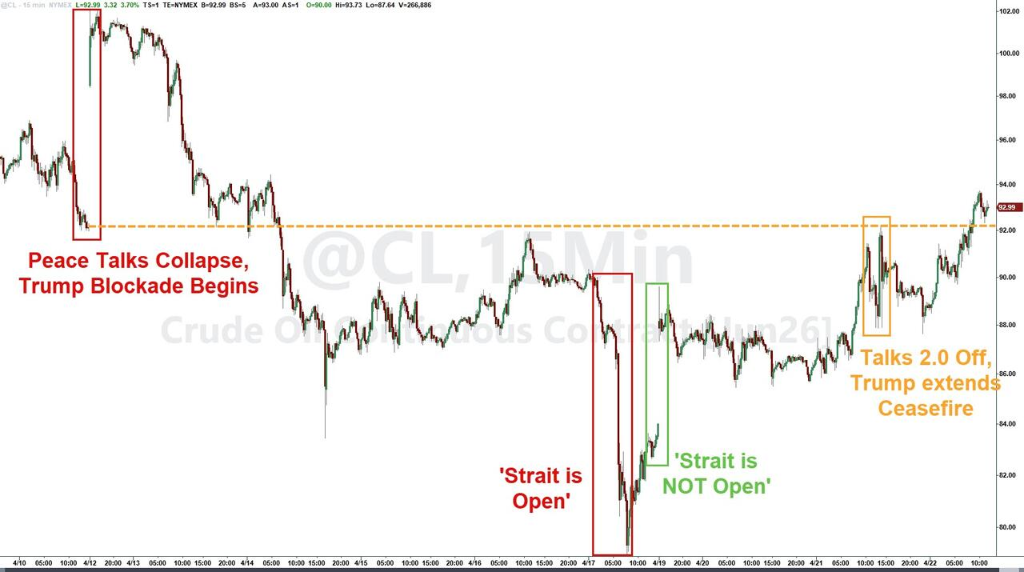
Just days earlier, a turning point seemed to have emerged: a ceasefire in Lebanon was implemented, Iran announced the reopening of the Strait of Hormuz, and peace talks in Islamabad appeared imminent. But then, Trump declared that the US naval blockade would not be lifted and ordered the boarding and inspection of vessels heading to Iran — Iran promptly announced the re-closure of the strait and firmly rejected a second round of talks.
This volatility is not a first.
Since the war began, this conflict has consistently been describable in one word: madness. A "mad king" president, ushered into the Situation Room by his aides, waging an unwinnable war that reverses every few hours, creating an uncontrollable market that even mainstream media struggles to comprehend.
And the newly revealed inside story finally allows us to see clearly where this "madness and loss of control" truly comes from, and where it is leading the situation.
The 'Mad King' Trump: The President Shut Out of the Room
On April 22, according to the latest inside information leaked by US local media, an incident over the recent Easter weekend profoundly revealed the management style of this war.
At that time, a US F-15 was shot down over Iranian airspace, and two pilots were missing. When the news reached the White House, Trump yelled at his aides for hours.
"The Europeans aren't giving any help," he repeated. At that moment, the average US gasoline price had risen to $4.09 per gallon, and images of the 1979 Iran hostage crisis kept playing in his mind.
"Look at Carter [the 39th US President]... the helicopters, the hostages, it cost him the election," Trump complained. "What a mess."
He demanded the military rescue the pilots immediately. But his aides judged that his impatience was no help in this situation. So, they kept the president out of the decision-making room, only going out to update him on progress at key junctures.
Vice President Vance dialed in via video from Camp David, White House Chief of Staff Susie Wiles called in from her home in Florida. The entire team tracked the rescue operation almost minute by minute — the aircraft getting stuck in the sand, feints against Iranian forces... while the president could only wait outside for phone calls.
One pilot was quickly found. The second pilot wasn't rescued until late Saturday night. Trump didn't go to bed until after 2 AM.
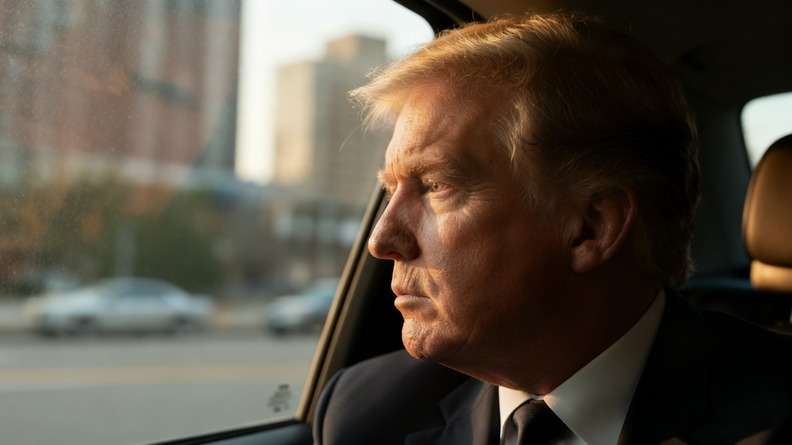
Six hours later, on Easter morning, he sent out that shockwave social media post: "Open the Fuckin' Strait, you crazy bastards, or you will live in hell." At the end of the post, he appended an Islamic prayer phrase.
This post did not originate from any national security plan. According to senior White House officials, it was Trump's improvisation. He said he wanted "to appear as unstable and as insulting as possible" because he believed it was "the language the Iranians understand."
After posting it, he asked his aides: "How's the reaction?"
From a man shattered by fear to a strategist playing mad — Trump completed the switch in 12 hours. The question is: which one is the real him? Or are both?
International relations scholar John Mearsheimer used one word in a recent interview: mad king.
'The Mad War': The Destruction of Underlying Trust Between the US and Iran
Driven by this extreme emotionality, US diplomatic actions have suffered severely from counter-intuitive regression, directly leading to today's breakdown in peace talks.
Iran has repeatedly emphasized that it was the repeated threats and volatility from the US that led them to refuse the second round of negotiations.
In his analysis, Mearsheimer hit the nail on the head, pointing out that last Friday, an extremely valuable ceasefire window actually appeared: When Iran had initially reopened the Strait as a goodwill gesture, the US side should have gone with the flow to advance the Islamabad talks.
But the Trump administration tore up this tacit understanding at that very moment: Not only did he publicly declare his refusal to lift the naval blockade of Iran, he even ordered US forces to intercept, fire upon, and board Iranian vessels for inspection.
"The result was that the Iranians did a complete 180-degree turn and re-closed the strait."
This tactic of lacking any strategic resolve and "flip-flopping" at a critical moment has completely exhausted Washington's strategic credibility. In the eyes of Iranian hardliners, the US has become a "madman" devoid of any spirit of contract, rendering any negotiation meaningless.
The complete collapse of trust has directly pushed peace talks to their death.
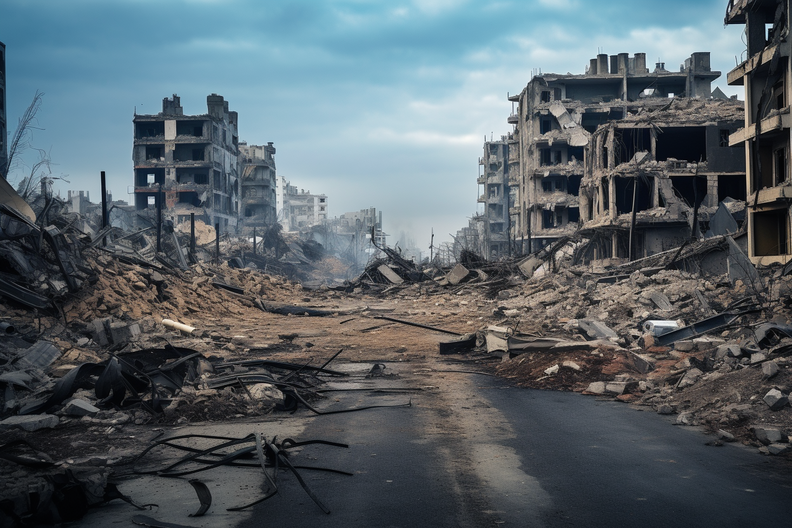
'The Mad Strategy': How Israel 'Sold' the War and 'Controlled' Trump
And the root of this loss of control lies in Washington's extremely rare act of "outsourcing" grand strategy to the lobbying of external forces.
International relations scholar John Mearsheimer stated that, except for a very few individuals like Defense Secretary Pete Hegseth, the vast majority of US military and intelligence leadership held strong skepticism or even opposition towards this war. They clearly foresaw the extraordinarily high risks, including Iran's countermeasure of closing the Strait.
But Trump completely ignored the warnings from his own country's experts. Mearsheimer stated bluntly: "It was the Israelis who sold him a bill of goods."
In the White House Situation Room, Israeli Mossad chief David Barnea and Prime Minister Benjamin Netanyahu painted a fantasy for Trump:
America's overwhelming military power would bring a swift and decisive victory, with no need to worry about Iran closing the Strait of Hormuz. Trump, captivated by the experience of "changing the regime in Venezuela in hours without a shot fired," bought into it without hesitation.
After the war began, Trump saw explosions inside Iran and clips of "victory videos" every morning. Aides described him as "shocked" by the scale of military force, repeatedly praising the performance of the US military.
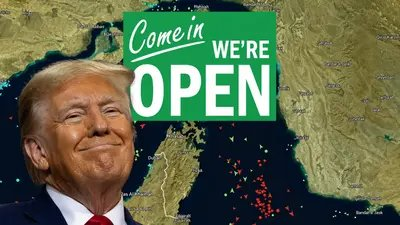
But the "impressiveness" on the battlefield did not translate into political victory. As the war entered deep water, the loss of strategic control began to manifest.
On one hand, facing the closure of a strait that chokes off 20% of global crude oil supply, Trump rejected advice from the military to deploy ground forces to seize Kharg Island (which handles 90% of Iran's oil exports) because he was extremely fearful of producing unacceptable US military casualties.
On the other hand, Israel even bypassed the US, directly attacking Iran's largest South Pars gas field, forcing Trump to quickly distance himself on social media. This state of being strategically controlled by others while tactically fearing to act doomed the war process to complete loss of control.
'The Mad Strait of Hormuz': A Problem Nobody Planned For
When top-level decision-makers are both unpredictable and pulled by external forces, implementation on the ground inevitably falls into chaos. The Strait of Hormuz is the perfect example.
Before the war broke out, Trump told his team that the Iranian government would likely cave on the strait issue, and even if they didn't, the US military could handle it. So when oil tanker traffic quickly ground to a halt after the bombing began, some White House advisors were caught off guard.
Trump later expressed belated surprise: "A guy with a drone can just shut it down."
This is the most ironic picture of the entire story: The one who started the war never thought about what would happen afterward.
Facing the dilemma of high-level lack of contingency planning for a critical chokepoint, Jim Bianco, founder of market research firm Bianco Research, put it more bluntly at the Hedgeye Investment Summit on April 23:
"My frustration is that they have no plan for the Strait of Hormuz, or if they had one, it doesn't work. What the market really cares about now is the flow of oil. The market can be patient on the nuclear issue; but with oil flow, the market has no patience."
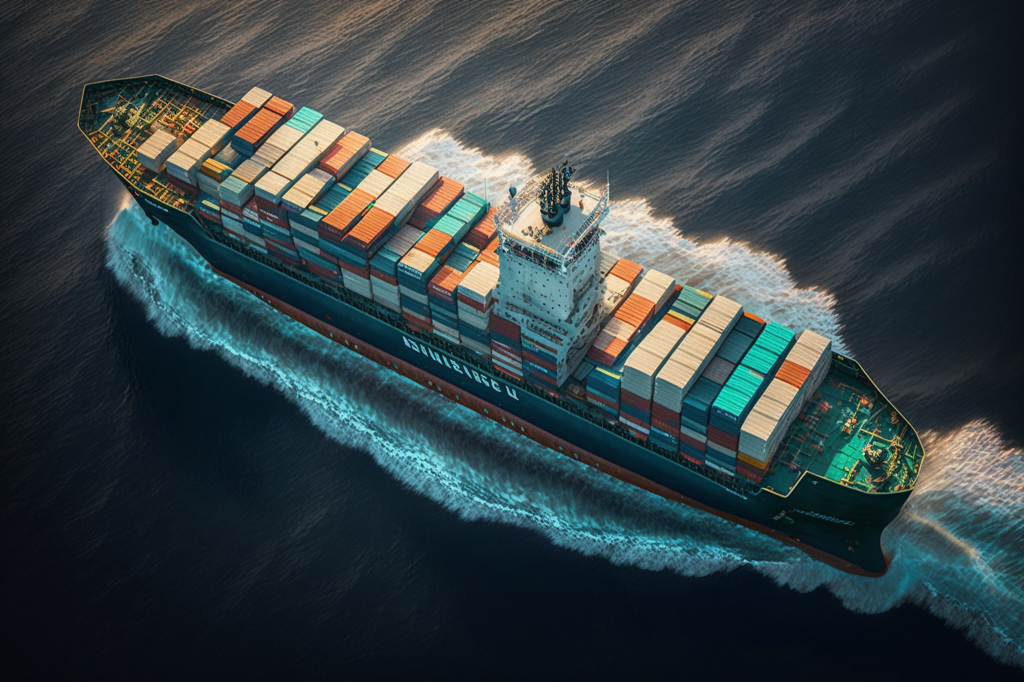
In this political game of back-and-forth, Brent crude has already broken through $102, completely reversing last week's decline, and continues to climb higher.
'The Frenzied Market': 'The Crude Oil Pricing Mechanism is Paralyzed'
When political decisions lose their anchor, financial markets also lose theirs.
The first thing to collapse is the pricing mechanism for underlying commodities. Jim Bianco revealed an extremely dangerous signal: the pricing function of the global crude oil market has become dysfunctional.
In a normal year, whether it's Western Canadian Select, Brent, WTI, or Oman crude for prompt delivery, the spreads between them usually remain in a very narrow range of $1 to $2, a sign of a healthy global energy supply chain. But today, amid two-way blockades and a "no-timeline" protracted war, the spreads on these physical crudes have widened to a staggering $60!
"If you are extremely bearish, you can find quotes at $70; if you are extremely bullish, there are also physical offers at $130 on the market."
Bianco warned that this extreme dispersion proves that the physical network of the oil market has been severed by geopolitics. Brent crude breaking $102 is just the surface; the truly fatal part is that the underlying pricing anchor has vanished.
In other words: no one knows what oil is really worth. This isn't market volatility; it's market failure.
However, facing the abyss in the real economy, the US financial market displays a kind of frenzied "Doomsday party."
The US stock market is still hitting new highs. Capital trades at high frequency based on Trump's emotional tweets, just like chasing "meme stocks." As long as the White House releases a tiny bit of positive news, the market buys in mindlessly.
And Trump himself, even amidst the war's stalemate, spent significant time boasting to donors that he deserved the "Medal of Honor" and studying renovation plans for the White House ballroom.
But illusory candlesticks cannot mask the underlying bleeding. The University of Michigan Consumer Sentiment Index delivered the cruelest verdict — this authoritative 74-year-old data series plummeted to a historic low of 47 points in March this year.
The level of despair among the American public regarding the current economy has far exceeded the 2008 subprime mortgage crisis, the 9/11 terrorist attacks, and the Great Inflation of the 1970s.
This is an extremely fragmented and completely uncontrollable K-shaped macro picture: stock market bulls toast to the news flow manipulated by the White House, while the gasoline price tag of $4.09 has already pierced the survival line of ordinary people.
Is Trump 'Manipulating' the Market?
This is the most sensitive and difficult question for market participants to discuss openly.
Keith McCullough said outright at the summit what many were thinking: "Trump seems increasingly accustomed to manipulating market movements in the direction he wants, when he wants, because people are still too focused on single factors."
He further pointed out that the correlation coefficient between the US dollar, oil prices, gold, and Bitcoin is now close to 95%. "It's not complicated," he said. "If you can know the direction of oil and the dollar in advance, you can know the direction of almost all assets."
Even more striking was a detail he mentioned: the Iranian side has started posting Lego meme emojis, taunting Trump that someone was shorting oil every time before he announced the strait was "about to open."
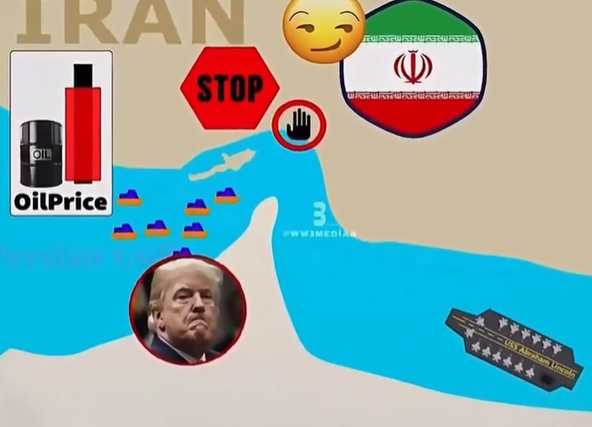
"It's already an open secret," McCullough said. "And it seems no one cares, because everyone wants the same thing — the market goes up, Trump is driving it, okay, let's keep going."
The Real Risks of This Game
In the interview, Mearsheimer said a phrase worth repeating:
"The Trump administration should want to reach a deal. There are two reasons: First, they have no way to win on the path of escalation; second, they risk pushing the global economy off a cliff. So they should want a deal."
"But sometimes Trump acts like he wants a deal, and sometimes he acts like he doesn't."
This is precisely the most dangerous aspect of the current situation — not a deliberate act of destruction by any one party, but a systemic loss of control driven by chaotic decision-making.
Trump dared not truly send ground troops to seize Kharg Island, yet constantly issued the harshest threats on social media, even sending contradictory signals while his aides tried to manage the situation.
In this "chicken game," both sides are waiting for the other to blink first. And the problem is: when the decision-maker on one side is inherently in an unpredictable state, no one can truly calculate where the Nash equilibrium of this game lies.
And once the gears of "loss of control" start turning, they are very difficult to stop in the short term.


