Messari报告:全面解读Terra Columbus-5升级


原文作者:Will Comyns
原文来源:Messari
原文编译:DeFi之道
由于UST的快速增长,Terra区块链及其原生代币LUNA最近经历了前所未有的增长。仅在2021年,LUNA的市值就发生了+14,000%的变化,UST的供应量超过了100亿美元。
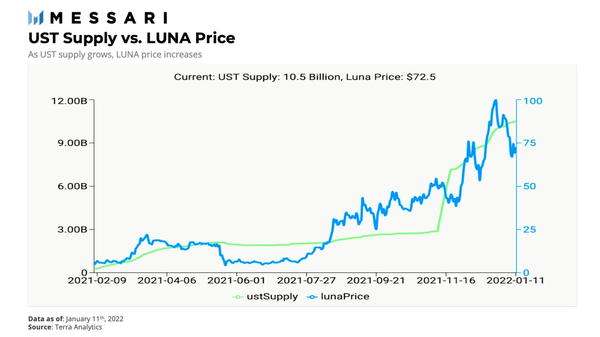
Terra公司在去年初秋时实施的Columbus-5升级,是UST最近供应增长的主要原因。启动Columbus-5的主要目的是简化Terra的经济设计,在UST增长的基础上提高LUNA持有者的价值捕获。这次升级在很大程度上实现了这一目标,通过增加燃烧和质押来减少LUNA的流动供应,并通过扩大其跨链普及率来增加UST的供应。UST跨链分布的增加也通过消除对少数协议的依赖风险,而提高了资产的安全性。在深入研究Columbus-5的具体细节之前,有必要先了解一下Terra的背景。
Terra基础知识
Terra是一种权益证明(PoS)协议,可以创建去中心化的算法稳定币。虽然Terra可以创建跟踪任何法定货币的稳定币,但UST一直是它的主要用例。
Terra通过其UST-LUNA双重代币模型所实现的弹性货币政策来维持UST对美元的挂钩。当UST的单位价值高于美元挂钩时,用户会被激励燃烧LUNA并铸造UST。当单位UST的价值低于美元挂钩时,用户会被激励燃烧UST和铸造LUNA。在UST收缩的时候,LUNA的价值会下降,而在扩张的时候,LUNA的价值会上升。LUNA是UST的变量对应物。通过调节供应,LUNA的价值随着对UST的需求增加而增加。
LUNA持有者通过将他们的LUNA绑定到网络验证器上来保证网络的安全。Bonded LUNA会产生三个来源的抵押奖励:gas、市场稳定费和掉期费。用户可以通过Anchor协议将他们的LUNA质押给网络验证者,以换取bLUNA,bLUNA是bonded LUNA的代币化代表,可以自由交易或作为Terra网络中其他协议的抵押品使用。解除LUNA的绑定可能需要21天的时间,在此期间没有奖励。
Columbus-5升级
经济变化
当LUNA被兑换成新的UST时,就会产生铸币税(Seigniorage)。在TIP43和Columbus-5之前,每当铸造UST的时候,Terra协议都会烧掉一部分赚取的LUNA,其余的会被转用于资助各种社区项目。由于铸币税的快速产生,Terra的社区池和预言机奖励池变得资金过剩。为了解决这个问题,并使LUNA持有者可以获得最大化的价值,Columbus-5实施了销毁所有社区资金池的措施,并将100%的未来铸币税全部烧毁。
根据数据,大约有8900万LUNA从社区池中被烧毁。价值10亿美元的被烧毁的LUNA转换为UST,被用来启动Terra上基于算法的索赔保险协议Ozone。Ozone后来被DeFi自动风险管理协议Risk Harbor接管。
燃烧数量的增加使得LUNA成为一种极度通货紧缩的资产,并在UST的增长基础上提高了它的价值捕获。虽然社区项目可能不再从铸币税那里获得资金,但其他社区主导的项目已经浮出水面,为新项目提供资金。
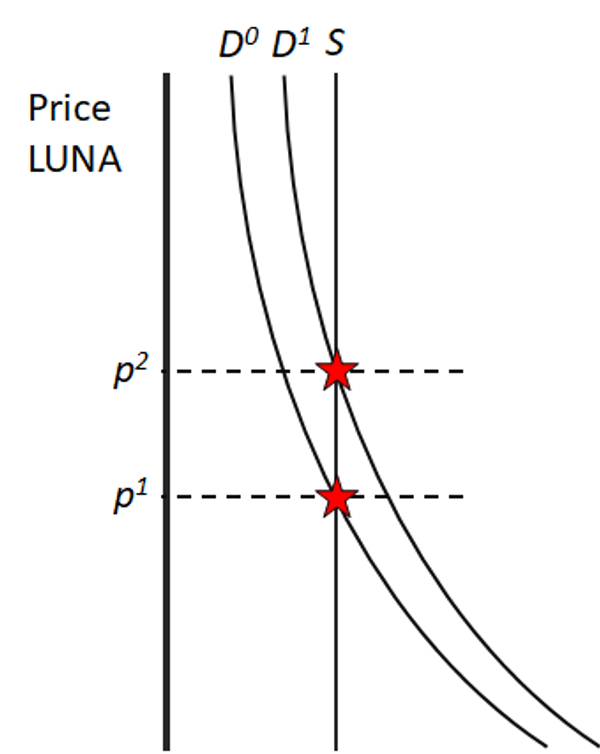
在经济上,UST需求的增加同时导致了LUNA需求曲线的扩张和LUNA供应曲线的收缩。鉴于LUNA的需求曲线在较低的供应水平下更缺乏弹性,因此在较低的LUNA供应水平下,UST的需求增加对LUNA价格的影响呈指数级增长。随着LUNA供应的减少,用于铸造UST的实际LUNA量也会减少。如果UST的采用随着时间的推移继续增长,那么LUNA的供应量在未来可能会基本固定在一个较低的水平上。
预言机(Oracle)发展
验证者预言机投票对于保持UST以正确的价格发行至关重要。在Columbus-5之前,预言机投票有可能在网络需求量大的时期被挤出内存池(Mempool)。在2021年5月的市场崩溃期间,这种情况恰恰发生了,当时大量其他交易将预言机选票排除在区块之外。在Columbus-5之后,预言机投票在mempool中获得了优先权,以使它们在网络流量激增期间不会被挤出区块。
在100%的铸币税被销毁之前,其中一部分被分配给验证者以鼓励准确的预言机投票。另外,为补偿验证者损失的铸币税奖励,Columbus-5将交易费用分配给验证者,否则这些费用将被烧毁。这一变化提高了质押LUNA的收益,并明显增加了质押的LUNA数量。

跨链(Cross-Chain)进步:区块链间通信(IBC)
Terra是一个利用Tendermint共识的Cosmos SDK区块链。所有建立在Cosmos SDK上的区块链都自带IBC,这是一个IBC兼容区块链的标准化通信协议。Columbus-5在Terra上激活了IBC功能,使Terra和其他支持IBC的链(如Cosmos Hub、Secret Network、Akash、Thorchain等)之间实现了资产和数据的无缝传输。
在Terra的IBC整合之前,IBC缺乏一个高流动性的稳定币。启用IBC后,UST的流动性涌入其他启用IBC的链上,正如假设的那样,UST自此成为Cosmos流动性最强的DEX——Osmosis上占主导地位的稳定币对。而随着Cosmos生态系统的不断发展,UST的增长也将受益匪浅。

在其他连接的区块链上对UST的需求增加,将继续扩大UST的网络效应,改善其流动性分布。虽然UST的跨链普及率正在提高,但许多未完成的UST供应仍然高度集中在少数协议中,如Anchor。随着UST的跨链分布的增长,与其挂钩的向下反射性和与它对少数协议的依赖性相关的风险可能会降低。
其他发展
Wormhole V2
虽然IBC将Terra连接到Cosmos上的特定应用区块链,但Wormhole将Terra连接到不同的共享状态机区块链,如Solana和Ethereum。虽然目前许多跨链桥接器为了方便而牺牲了一定程度的去中心化,但Wormhole声称其保留了两者的好处。Wormhole作为一个去中心化的预言机网络运行,在链之间中继消息,依靠连接的链的共识来接受它们之间的状态变化。在撰写本文时,7.55亿美元的UST已经被桥接到其他Wormhole集成的区块链上。
最近,Wormhole遭遇了有史以来最大的DeFi漏洞,超过3.26亿美元的ETH从桥上被盗。此后,Jump Capital补充了所有被盗资金,使所有Wormhole用户都得到了补偿。尽管遭遇了这一挫折,Wormhole仍然是最大的跨链桥之一,锁定价值超过20亿美元。
Terra生态系统的发展
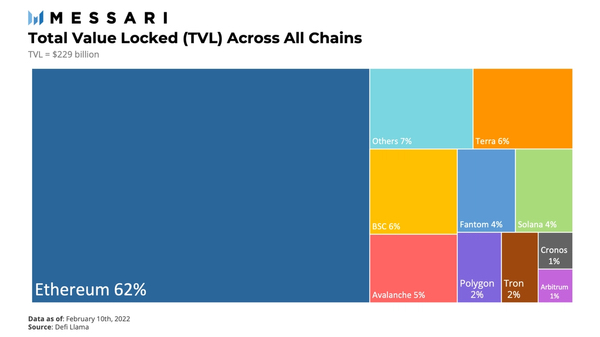
在Columbus-5之后,许多新项目在Terra上启动,给该区块链带来了新的用例和实用程序。最近推出的项目,如Astroport,迅速引导了流动性,并推动Terra成为仅次于以太坊的第二大区块链,拥有140亿美元的TVL,几乎是所有链的TVL的近7%。除了新项目,通过Ozone增加的风险管理也可能会增加Terra上现有项目的TVL。据称,Ozone今年推出了专门为Anchor提供保护的产品,并将很快推出与Mirror和Orion的集成。
激励计划
为了进一步在其他区块链上采用UST,LUNA持有者在2021年11月通过了一项治理决定,将300万美元的社区池UST(转换为LUNA)部署到主要L1的各种协议的流动性池中。最近,LUNA持有者投票决定实施一个额外的流动性挖矿计划,将200万美元的LUNA部署到Solana、Oasis和NEAR上的各种协议中。
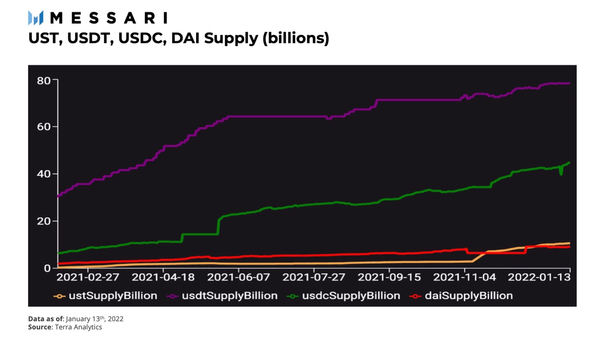
虽然最近去中心化的稳定币有所增长,但中心化的稳定币仍然主导着整个稳定币的流动性。因此,Terra将他们的利益与去中心化的稳定币MIM和FRAX结合起来,以加强去中心化稳定币在稳定币市场上的份额。由于以太坊上的大部分稳定币流动性都在Curve上,LUNA持有者最近投票决定部署大量资金,以激励Curve上的深度UST流动性。这些激励措施需要部署1200万美元的LUNA用于Convex激励,2.5亿美元的UST用于通过Curve的USTw-3CRV池耕作CVX/CRV,以及200万美元的LUNA用于Tokemak激励。
竞争
DAI和中心化稳定币
虽然DAI在技术上是一个去中心化的稳定币,但它主要由USDC抵押,使其相对于UST来说较为中心化。在UST于11月18日超过它之前,DAI是市值最大的去中心化稳定币。目前,UST的供应量比DAI超出17%。正如UST最近的快速增长期所显示的那样,激励计划可以极大地加速了采用。虽然UST还远未达到让USDC或USDT黯然失色的地步,但最近围绕中心化稳定币的监管问题,再加上UST、MIM和FRAX合作提高Curve上的去中心化稳定币流动性,有可能比其他竞争对手更快改变这种情况。
MIM
在这一点上,MIM与其说是竞争对手,不如说是伙伴。然而,它仍然是UST的第二大去中心化稳定币。虽然很多种类的收益率资产为MIM提供抵押,但UST主要是通过其Degenbox战略为其提供抵押。它为Terra的Anchor协议贡献了大量的存款。和Terra一样,Abracadabra通过向Votium UST-MIM激励机制投入数百万美元的SPELL,来刺激UST和MIM在Curve上的增长。
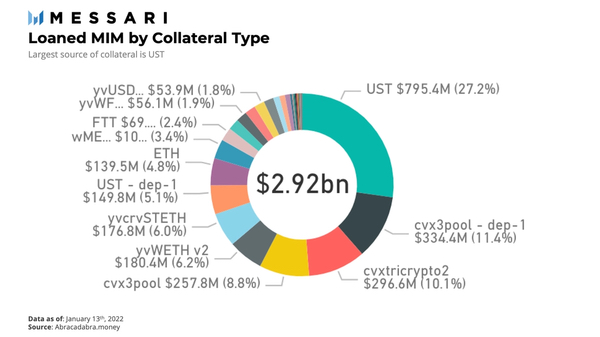
MIM和Abracadabra也是开发商Daniele Sestagalli领导的一个更大的项目生态系统的一部分,被称为 “Frog Nation”(SPELL、TIME、ICE和SUSHI)。除了Abracadabra之外,Wonderland还通过部署其最近的4800万美元的UST收益耕作(Yield Farming)战略,以促进UST的采用。虽然像MIM这样的去中心化稳定币,如果其供应量开始超过USDC和USDT这样的中心化稳定币,可能会成为UST的长期竞争对手,但就目前而言,他们的增长是共生的。
未来发展
截至2022年1月14日,Terra将把其税率降至0。LUNA质押者目前通过链上交易费用和网络税收收入的组合获得奖励。目前,对于资金紧张、希望在链上部署合约的开发者来说,税率是一个阻碍因素。Terra试图通过降低税率来激励更多新的开发者在区块链上建立,并进一步促进创新。
据悉,Terra最近通过的其他提案继续将UST流动性带到其生态系统之外,进一步巩固UST作为跨链稳定币的地位。分配如下:
6000万美元的UST用于MarketXYZ、Themis和Rari Fuse池。
170万美元的UST用于为OlympusDAO和InvictusDAO提供债券和激励措施。
1800万美元的UST,用于增加Votium的激励措施。
5000万美元用于耕作TOKE。
140万美元用于奖励Avalanche、Fantom和Moonbeam上的领先协议。
1500万美元用于引导ZigZag交易所的流动性,这将使UST进入zkSync和StarkNet。
虽然Terra最近的大多数治理建议都是为了提高UST的跨链优势,但Terra的最新建议是以营销为重点。在批准4000万美元的社区池资金用于体育合作后,Do Kwon宣布Terra将与华盛顿国民队合作。作为协议的一部分,UST将成为Nationals Park接受的支付方式。
结论
Terra的Columbus-5升级将UST推向了最大的去中心化稳定币,并为LUNA持有者创造了巨大价值。这次升级为UST的采用铺平了道路,以继续在其他支持IBC的区块链和主要的L1上增长。在Columbus-5改进的燃烧和质押机制之后,LUNA的供应也将在未来经历更大的收缩。最近,Terra的参与者提出了积极的倡议,试图通过增加跨链普及率和现实生活用例来促进UST的供应增长。如果这些举措被证明是成功的,那么LUNA持有者将因Columbus-5实施的变化而直接获得巨大的价值。