"Grand Theft Auto" developer's parent company acquires Zynga and enters Web 3.0
Produced | Baize Research Institute
Social game developer Zynga is best known for casual titles like FarmVille and Words With Friends, but the company pivoted to NFT-powered blockchain games in late 2021.
Today, the company announced that it will be acquired by gaming giant Take-Two Interactive for $12.7 billion.
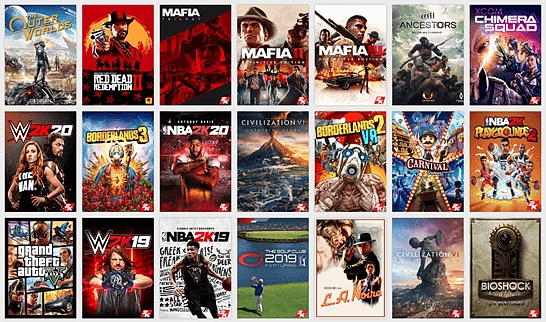
Take-Two Interactive is the parent company of game developers Rockstar Games and 2K Games, and its well-known game series include "Grand Theft Auto", "Borderland", "NBA 2K" and so on.

The cash and stock transaction is expected to close on June 30, pending approval from the companies' respective shareholders and regulatory approvals.
The transaction, in addition to integrating and complementing Take-Two Interactive's fastest-growing mobile gaming business in the interactive entertainment industry, took-Two Interactive CEO Strauss Zelnick said on today's conference call that the acquisition of Zynga will enable the combined of companies are able to address the new "Web 3.0 opportunities". "This combination will allow us to solve the problem more effectively than either company alone," he added.
secondary title
Zynga turns to NFT games
Most of the games developed by Zynga are web games published on many global platforms, including Facebook, Google, Tencent, iOS, and social networking sites such as MySpace. Zynga's profit model is simple, the main source of income is to sell virtual items to users through social games to make money.
With the flourishing of social networks Facebook and Myspace in the first decade of the 21st century, social games also experienced a golden period of growth. According to active user data, Zynga's games once occupied 6 of the top ten Facebook games, with a total of 235 million monthly active users and a total of 65 million daily active users. Its casual games on mobile have been downloaded more than 4 billion times.
Late last year, Zynga made two announcements that marked the start of the company’s shift toward NFT-backed blockchain games.
First, Zynga hired Matt Wolf as vice president of blockchain gaming in November 2021. After taking office, Wolf has focused on integrating NFT and blockchain technology into Zynga's existing game products and its own IP, as well as developing games with NFT as the core.
Before joining Zynga, Wolf was vice president of entertainment and venture capital at The Coca-Cola Company, and later founded D20, an emerging media agency focused on gaming, esports, creator culture, blockchain, and NFTs. Additionally, he is an advisor to several crypto startups and venture capital firms, including NFT platforms Epics Digital Collectibles and Kolex.
Wolf believes: "Zynga's mission to connect the world through games makes NFT and blockchain technology a natural next step in the company's development. The Token system based on Web3.0 will allow us to innovate in games and provide new forms of At the same time, it also changes the way players interact. Create an integrated experience through NFT, allowing players to become masters in their game experience.Most importantly, while enhancing the player experience, we will also focus on staying safe, inclusive, and environmentally friendly.”
Zynga began to take the first step in December 2021, which was to form a strategic alliance with Forte to create blockchain-based games around Zynga's game IP and huge user base. The companies emphasized that they plan to build games that focus on security and engagement, which will provide a layer of security for players struggling with the safety of blockchain games.
Forte is a blockchain game solution provider. Forte's platform allows traditional game developers to easily integrate blockchain technology into their games, enabling seamless integration, encrypted wallets, Minting and selling of NFT, payment channels and other functions. The company has secured $725 million in Series B funding in 2021, led by Sea Capital and Kora with support from investors including Animoca Brands, Big Bets (Huuuge Games), Overwolf, Playstudios, Warner Music Group, zVentures (Razer ) as investors, as well as blockchain partners Cosmos, Polygon Studios and Solana Ventures, with A16z and Tiger Global among other investors.
Forte co-founder and CEO Josh Williams said: "We are proud to partner with Zynga, as we want to responsibly advance the blockchain gaming ecosystem, engage and benefit gamers, and provide them with greater many economic opportunities.”
secondary title
The Polarization of NFTs in the Gaming Community
Zynga CEO Frank Gibeau also talked about his views on NFT in the conference call of this acquisition.
“It’s early days as far as NFTs are concerned, and I think conceptually we have a lot of faith and belief in the process — the idea that players are going to play to earn money or play to own is a very compelling A compelling idea that we think will gain support as the industry evolves.”
In recent months, major traditional game companies have shown great interest in the encryption field.
Electronic Arts (EA) is one of the largest game developers, and CEO Andrew Wilson once called NFTs "an important part of the future of the gaming industry" during its quarterly earnings conference.
Square Enix, the Japanese developer of Final Fantasy, has also recently set its sights on NFT and blockchain technology. Yosuke Matsuda, the company's president, mentioned in his New Year's letter in 2022: "I think 2021 is not only the first year of the metaverse, but also the first year of NFT, because during this year, NFT has been favored by a rapidly expanding user base. Enthusiasm. So our mid-term business strategy will be artificial intelligence, cloud and blockchain games.”
According to Yosuke, games traditionally involve a one-way process, where developers provide games to players; in contrast, blockchain games have grown from their infancy, and they are built on a token economy, so they have the potential to achieve self-sustaining games. potential for growth.
Despite the enthusiasm of these traditional game developers, blockchain technology and NFT have always been controversial.
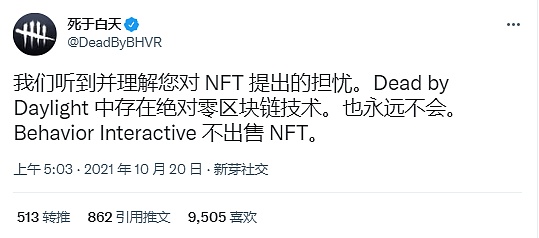
The survival horror game Dead by Daylight received dissatisfaction from players when it adjusted the introduced Pinhead character model to an NFT in October 2021. It is understood that developer Behavior has worked with a company called Boss Protocol for "months to adjust the in-game character models for use as NFTs."
But after the news broke, gamers expressed dissatisfaction. On the social platform Twitter, players objected that NFT was "energy-consuming, worthless, and a scam", and posted negative comments on the game on the Steam store, arguing that the company funded NFT and improper business practices. People also asked for a refund.
Developer Behavior was forced to issue a compromise statement: "We understand your concerns about NFTs. Dead by Daylight absolutely does not contain blockchain technology and never will. We will never sell NFTs."
However, for the encryption community, since NFT is not directly sold in the game and does not contain blockchain technology, many people think that this is a scam chasing the "NFT trend".

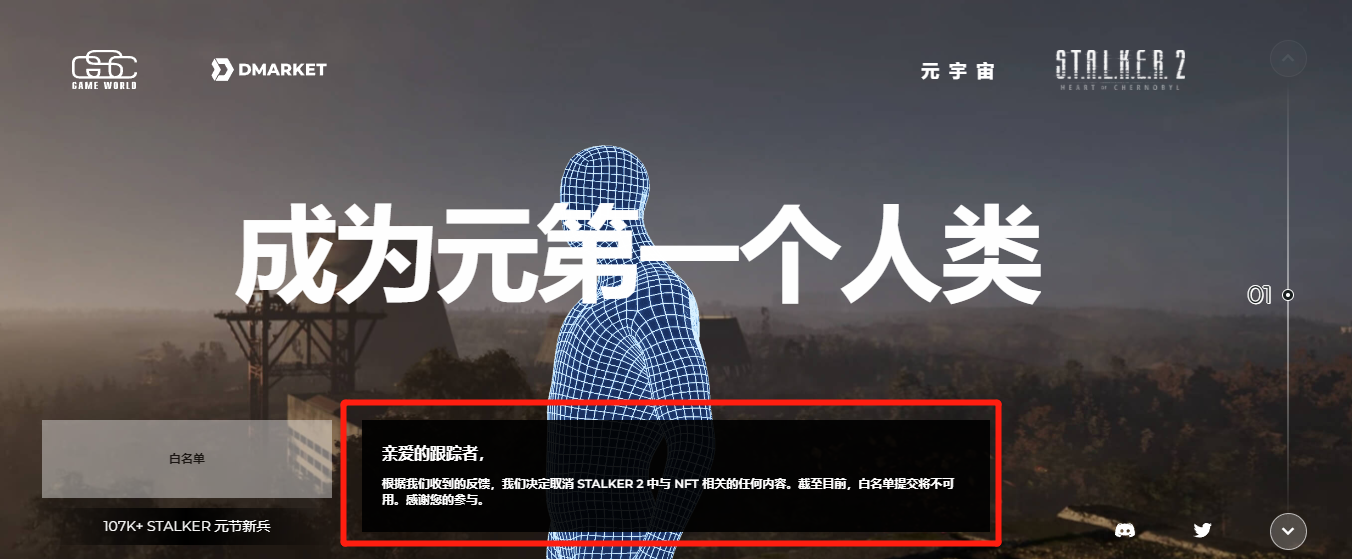
Another example is "Stalker 2: Heart of Chernobyl", the developer behind it, GSC Game World, announced that it will add NFT to the game (the blockchain on which NFT is based is not disclosed), and sell NFT at a high price as a sequel. made development funds. However, the company canceled its NFT plans after receiving negative criticism from the gaming community.
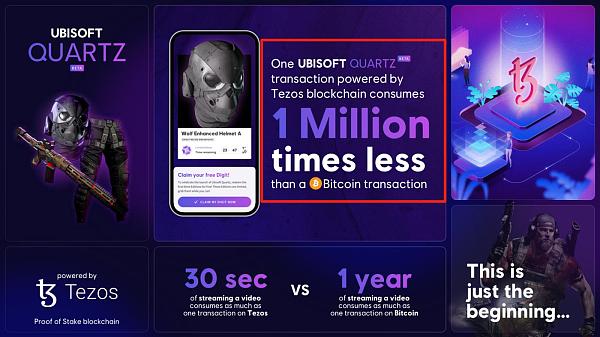
The well-known game developer Ubisoft launched the Tezos blockchain-powered NFT game items for the beta version of "Ghost Recon: Breakpoint" in December last year. Players who meet the conditions in the game can receive free NFTs and attach One message: "This is just the beginning of our exploration of NFTs..."
In order to prevent players from objecting that "NFT consumes energy", Ubisoft has shown a great desire to survive. In the announcement, it has repeatedly mentioned the Tezos blockchain of the proof-of-stake mechanism and the Bitcoin of the workload proof mechanism. The difference in environmental impact, a single transaction on the Tezos network needs to use "1 million times less energy" than Bitcoin, and a single Tezos transaction uses only as much energy as a 30-second video.
Despite this, the game was widely criticized on Twitter.

While it’s unclear whether gamers who oppose NFTs represent the majority, according to surveys, there are some gamers who like crypto assets and NFTs, and even own them.
According to the "Notice on Further Preventing and Dealing with the Risk of Hype in Virtual Currency Transactions" issued by the central bank and other departments, the content of this article is only for information sharing, and does not promote or endorse any operation and investment behavior. Participate in any illegal financial practice.
risk warning:
According to the "Notice on Further Preventing and Dealing with the Risk of Hype in Virtual Currency Transactions" issued by the central bank and other departments, the content of this article is only for information sharing, and does not promote or endorse any operation and investment behavior. Participate in any illegal financial practice.