Summary of major events in the encryption industry in 2021: four key points, the explosive Crypto
With the support of many external macroeconomic catalysts, and the participation of giant companies and institutions in different industries, the encryption industry has passed through 2021 under the world's spotlight.
This section contains four key points, broken down as follows:
●Public sector activity: Policymakers, especially central banks and leaders in some countries, are continuing to adopt digital assets, albeit in different ways. Although starting from 2020, many countries began to deeply explore and experiment with central bank digital currency (CBDC), but in 2021, we can also see some countries/regions begin to embrace cryptocurrencies.
●Institutional Adoption: Financial institutions and corporates are becoming more active in the crypto industry. In 2021, some banks have significantly increased their capabilities in cryptocurrency custody services. While bitcoin spot ETFs continue to be rejected in the US, investors now have greater access to structured products such as bitcoin futures ETFs. Additionally, in 2021, it will become more common for companies to accept Bitcoin and other cryptocurrencies as payment methods and hold Bitcoin on their balance sheets.
●Changing regulation: Regulators have been very active this year, with some countries banning cryptocurrencies, while regulators in other countries are paying more and more attention to stablecoins and beginning to impose stricter scrutiny on businesses in the crypto industry.
first level title
secondary title
China leads CBDC, but global progress is slow
With a proliferation of research papers and pilot announcements, 2020 has been the year that transformed the CDBC from a niche idea discussed by economists and blockchain enthusiasts to a practice across countries. But CBDCs appear to be years away from progress in most countries.
The Bank for International Settlements (BIS) in 2021 has consolidated its role as the lead institution and facilitator of international CBDC experiments. In June, BIS Innovation Centers were launched in Northern Europe and London, and the program will expand to five regions. Additionally, cross-border CBDC projects regulated by the BIS, such as the mCBDC Bridge and Project Dunbar, have also published findings.
2021 has not made the question of a USD CBDC clear. In a statement in March, Fed Chairman Jerome Powell reasoned that given the dollar's international importance, the Fed would maintain an edge whenever it issues a CBDC. However, this does not mean that the Fed is ignoring the issue, and U.S. lawmakers have begun to discuss the importance of CBDC.
In Europe, European Central Bank President Christine Lagarde said at the beginning of the year that the euro zone would also have a CBDC, but it could take four years to develop. Since then, the ECB has launched their digital euro project.
Meanwhile, China is rapidly advancing experiments with a digital yuan, differentiating itself from other major powers. The People's Bank of China (PBOC) added provinces in the country to trial in April. That same month, the People’s Bank of China joined the Bank for International Settlements’ mCBDC Bridge, testing cross-currency transfers in China, Singapore, Hong Kong and Thailand.
secondary title
El Salvador doubles down on Bitcoin
In a video sent to [Bitcoin Miami Conference], El Salvador's President Nayib Bukele announced a new legislative proposal that would make bitcoin a legal tender, which was later passed on June 9. Signed into law. While Bukeler cited El Salvador's low rate of financial inclusion as a driving factor for its decision, the World Bank rejected El Salvador's decision to make Bitcoin a legal tender, and the International Monetary Authority also commented that the move triggered "macroeconomic tensions in El Salvador." Economic, financial and legal issues".
El Salvador launched the Chivo wallet on September 7, the same day the law went into effect. While users received an airdrop of $30 worth of bitcoin when they signed up, there were technical issues with transferring funds on the day the wallet was launched. Soon after, some citizens took to the streets to protest, expressing frustration with the wallet’s limitations, while others opposed the policy of bitcoin as a legal tender.
However, over the past few months, major banks and merchants in El Salvador have added the ability to accept bitcoin for payments and credit using the Chivo wallet. Additionally, Chivo Wallet ATMs have proliferated in certain U.S. cities, facilitating remittance payments between the U.S. and El Salvador.
secondary title
Miami Receives First City Token, New York Followed
In 2021, embracing the crypto industry is a strategic move for the new mayors of Miami and New York. In August, Miami Mayor Francis Suarez announced “MiamiCoin,” a cryptocurrency created by crypto startup CityCoins. Residents hold and trade the token, which represents a stake in the municipality. By running nodes, residents can mine tokens that will be split between residents 70% and municipalities 30%. As of this writing, the city has earned $21 million from MiamiCoin. Meanwhile, Mayor Suarez has been vocal about making it easier for Miami-based crypto companies to do business.
first level title
secondary title
Some companies rush to add bitcoin to their balance sheets in the first half of 2021
After Bitcoin hit a new all-time high in the final weeks of 2020, a series of companies are starting to move. Nasdaq-listed mining firm Marathon Group bought $150 million worth of bitcoin. Not long after, well-known investor Ray Dalio published his stance in support of Bitcoin on the show. However, Elon Musk stole the show a day later, capturing the attention of the entire financial world by adding #bitcoin to his Twitter profile. Musk and his Tesla company have been trying to make a connection with cryptocurrencies throughout 2021. Tesla added bitcoin to its balance sheet in February and began accepting bitcoin as Tesla's payment method in March. However, Musk reversed his decision to accept bitcoin as payment in May due to concerns over energy use.
In addition to Tesla, in the first half of 2021, many companies made their first bitcoin purchases. Arguably, no company exemplifies this more than Michael Saylor's Microstrategy. Microstrategy, a 30-year-old data software company, first purchased Bitcoin in August 2020, and has since made regular purchases of large amounts of Bitcoin throughout 2021. To encourage other businesses to follow suit, Microstrategy held a "Bitcoin for Business" summit in February, aimed at educating and encouraging business leaders to buy bitcoin.
secondary title
Banks Explore Crypto Custody and Trading
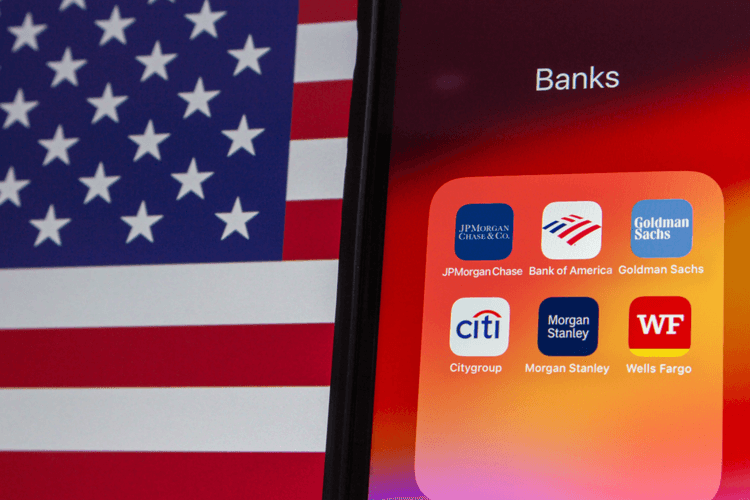
2021 marks a huge inflection point in banks' awareness and engagement with cryptocurrencies. While banks have been exploring blockchain technology, it's mostly for internal or cross-organizational use. In 2021, we see banks start to use cryptocurrencies more directly.
First, financial institutions and traditional service providers alike have made big strides. In March, payments giant PayPal acquired crypto escrow company Curv, which has since added features that allow users to buy, sell and hold cryptocurrencies on the Venmo app. About a week later, BNY Mellon, the world's largest custodian bank (approximately $25 trillion in assets under custody), invested in another leading crypto custodian, Fireblocks, to meet growing institutional demand for the bank's crypto custody services. In late June, State Street, the world's second largest custodian bank, announced the establishment of a new digital finance department and partnered with crypto custodian Lukka to provide crypto services to private equity clients. Leading financial services provider Fiserv partnered with crypto services firm NYDIG to launch a third-party crypto custody solution for banks in May.
secondary title
Encrypted structured products appear in the United States
Eight years after the Winklevoss twins first filed for a bitcoin ETF, the U.S. Securities and Exchange Commission (SEC) has approved three bitcoin futures ETFs in 2021, but has yet to approve any bitcoin spot ETFs.
first level title

secondary title
Stablecoins Under Regulatory Scrutiny
Stablecoins are a major focus for regulators in 2021. From 2020 to 2021, the rapid growth in usage and market value in circulation makes stablecoins a potential tool of financial system importance.
First, the Office of the Comptroller of the Currency (OCC) issued a letter allowing U.S. banks to use stablecoins for payment activities, enabling banks to participate in verifying stablecoin transactions. The move provides further clarity for banks considering stablecoins as an effective means of settling transactions.
In February, the "fight" between Tether, the issuer of the largest stablecoin USDT, and regulators came to an end. The company reached a settlement with the New York Attorney General's office over the company's financial investigation. As part of the settlement, Tether agreed to pay an $18.5 million fine and cease operations in New York. In October, Tether made yet another settlement, with Tether agreeing to pay the Commodity Futures Trading Commission (CFTC) $41 million for misleading claims about USDT.
secondary title
Several countries move to ban cryptocurrencies and related activities
Regulators in several countries have moved to outright ban cryptocurrency-related activities. Among them, China has become the focus in 2021. Based on environmental issues and concerns about financial risks associated with encrypted transactions, it banned cryptocurrency mining in May and completely banned cryptocurrency transactions in September.
secondary title
Regulators step up crypto taxation and act to curb money laundering
Most regulators step up efforts in 2021 to develop and enforce crypto tax frameworks and combat money laundering. In March, the IRS bolstered its crypto oversight capabilities, creating a team trained to analyze crypto transactions to identify investment gains that are missing from tax returns.
In addition to stepping up enforcement, regulators are also starting to introduce new tax-related legislation in 2021. In August, the U.S. Senate passed a multi-trillion-dollar infrastructure plan that included too many broad taxes on the crypto industry. Despite “language protests” by the crypto community, the bill was signed into law in November, handing over responsibility for rulemaking to the U.S. Treasury Department.
secondary title
Develop a framework for digital asset securities
In 2021, regulators continue to battle unregistered securities in the crypto industry. In August, at the Aspen Security Forum, SEC Chairman Gary Gensler addressed the issue of the potentially large number of unregistered securities in the crypto industry, emphasizing the need to bring these securities under regulation. While emphasizing that existing securities laws apply to encrypted assets, Gensler called for new legislation to guard against the risks of encrypted transactions, lending, and DeFi.
As the framework used to regulate crypto assets continues to evolve, regulators are already taking action in specific cases where non-compliance is found. In September, crypto exchange Coinbase announced they would be canceling their “lending” product, which would allow customers to earn interest by lending their crypto assets, after being threatened with prosecution by the SEC. In October, the New York Attorney General's Office joined the SEC in taking action against non-compliant crypto lending platforms, ordering Nexo Financial and Celsius Network to cease operations in the state.
first level title
secondary title
An important part of the Metaverse - NFT
Over the past year, NFTs have experienced meteoric growth. Once considered a small part of the overall crypto market, NFTs have now gone “out of the loop” and into the mainstream as many struggle with the idea of digital property being realized through token scarcity.
For many companies that have purchased popular NFTs or released their own, NFTs have become a way to signal cultural relevance. Taco Bell took the lead in early March, releasing 25 taco-themed NFTs, with proceeds from sales going towards their Live Más scholarship. They’re not the only fast food brand experimenting with NFTs, with McDonald’s releasing a McRib-based NFT in November.
Instead of launching its own NFT, payments giant Visa purchased a CryptoPunk NFT for $150,000 in August. CryptoPunks is one of the first series of NFTs created and represents an important culture in the crypto community. Visa also released a white paper after the purchase explaining the intersection of NFTs and traditional commerce. Companies such as Visa publicly announced their support for NFT, which is a historic moment when traditional companies and the encryption industry first merged.
secondary title
NFTs bring the world of 'TradArt' back to life
Driven by the NFT wave, digital art in 2021 has changed the shortcomings of the traditional art industry, which is usually unable to compensate for the contributions of creators.
Digital artist Beeple is a long-time creator who has achieved some success in his previous career, but his fortunes changed completely when he entered the NFT field. He auctioned off an NFT collage of his first 5,000 works, titled "Everydays - The First 5,000 Days," at Christie's, which ended up fetching a whopping $69.4 million. A month later, Sotheby's auctioned off a series of works by NFT artist Pak for nearly $17 million, and added cryptocurrencies as bidding currencies, such as ETH. In November, Sotheby's held a historic auction in which an original U.S. Constitution sold for $43.7 million, the highest price ever paid for a historic document at auction. Although ConstitutionDAO raised over $40 million in an attempt to purchase the document, it unfortunately failed.
secondary title
Metaverse plays key role in some tech companies' growth plans
As Metaverse analyst Matthew Ball said: "The Metaverse is a large-scale and interoperable real-time rendering 3D virtual world. An unlimited number of users can experience it simultaneously and continuously, and the data will maintain continuity. Metaverse's Use cases typically include identity, history, rights, objects, communication, and payments."
2021 is the "first year of the Metaverse", and many large companies have indicated that they will carry out major research and development work in the field of the Metaverse. One company that has undergone an unprecedented transformation is Meta, formerly Facebook. CEO Mark Zuckerberg sees it not just as the next chapter for the company, but "the next chapter for the internet."
During Meta's (Facebook) third-quarter earnings call, Mark told shareholders that they will spend $10 billion on Metaverse-related research efforts in 2021 alone. Moreover, the company expects to continue at this pace in the next few years. With a complete rebrand and the massive amount of money invested in building the Metaverse, Meta represents the ambition to bring the Metaverse concept to life.
Other companies such as TikTok, Twitter, Microsoft, and Disney have all recently announced their plans for the intersection of the crypto industry, NFTs, and the Metaverse. As these three areas become increasingly sought after, they are likely to be at the heart of defining technological developments over the next decade.

According to the "Notice on Further Preventing and Dealing with the Risk of Hype in Virtual Currency Transactions" issued by the central bank and other departments, the content of this article is only for information sharing, and does not promote or endorse any operation and investment behavior. Participate in any illegal financial practice.
risk warning:
According to the "Notice on Further Preventing and Dealing with the Risk of Hype in Virtual Currency Transactions" issued by the central bank and other departments, the content of this article is only for information sharing, and does not promote or endorse any operation and investment behavior. Participate in any illegal financial practice.