






资深分析师对談:パウエル退任、ウォ―シュ就任が暗号資産に意味するもの


- 核心的見解:現在の市場には深刻な「株と債券の乖離」が存在する。株式市場はAI関連の投機に牽引されている一方、債券市場は世界的な緊縮のマクロ経済的現実を反映している。構造的な「下支え期待」がリスク選好を支えているが、インフレ鈍化は緩やかかつ長期的なトレンドであり、ビットコインはマクロ資産として競争に直面し、短期的な触媒を欠いている。
- 重要な要素:
- 「Bliss Trade(大規模で永続的な市場救済期待)」が「Taco Trade」に取って代わり、構造的な市場の支えとなっている。政府は危機に際して下支えを行い、モラルハザードとシステムの脆弱性を増大させるが、それがリスク選好を支えている。
- インフレはすぐには低下しない。コアCPIは2024年以来2.6%~3%で横ばいであり、インフレ上昇は(トランプ関税以前からの)脱グローバル化によって推進されており、短期的なエネルギー価格の影響が修復されるには時間を要する。
- FRBのパウエル議長の在任中は功罪相半ばする。彼は独立性を守った一方、暗号資産企業の銀行からの排除(de-banking)やシルバーゲート銀行の閉鎖を主導し、インフレを誤認した。次期議長のウォ―シュ氏はフォワードガイダンスを縮小する可能性があるが、市場の制約によりバランスシート縮小能力は限られる。
- ビットコインは通貨下落に対するヘッジ手段だが、すでに「マクロ資産化」しており、多くのマクロ資産の一つとなっている。高ボラティリティ投資家はAIなどのテーマをより好み、ビットコインには上昇の触媒が不足している。
- 現在の市場と歴史的に最も類似するのは、1999年のインターネットバブル直前である。S&P500の時価総額加重平均指数と均等加重指数の差が拡大しており、市場が少数の主力銘柄に牽引され、構造的に脆弱であることを示唆している。
Compiled & Arranged: Odaily TechFlow
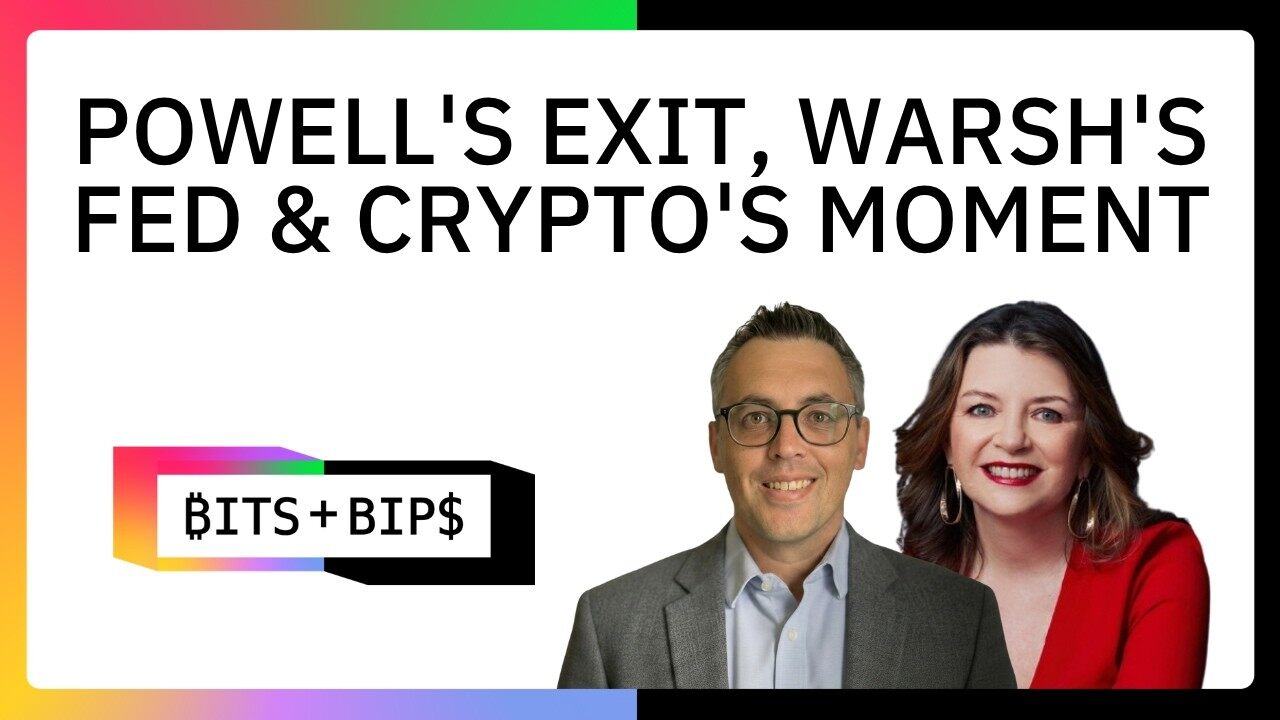
Guest: Noelle Acheson
Host: Steve Ehrlich
Podcast Source: Unchaind
Original Title: Powell Is Out, Warsh Is In: What It Means for Crypto
Air Date: May 22
Editor's Introduction
The "Bliss Trade" (Big, Large, Lasting Stimulus or Support expectation), proposed by former IMF Chief Economist Gita Gopinath in the Financial Times, is replacing the "Taco Trade" as the underlying logic of the market. This is a structural, cross-party, cross-government expectation of a fiscal backstop, forming the true moat for current risk asset valuations, and the core rationale for currency debasement trades.
Noelle Acheson, author of the 'Crypto is Macro Now' newsletter, offered three key judgments in the podcast: First, the current extreme divergence between stocks and bonds, where the bond market prices global tightening while the stock market is driven by AI hype, similar to the divergence between the S&P 500 Equal Weight Index and the Market Cap Weighted Index before the 1999 dot-com bubble. Second, while Powell's tenure should be credited for defending the Fed's independence, we must not forget his role in the 2023 shutdown of Silvergate and the debanking of crypto companies. Third, inflation will not fall quickly; even if the Hormuz crisis ends tomorrow, energy price transmission and consumer expectations would take months to repair, and the rise in inflation predates Trump's tariffs, driven by the long-term trend of deglobalization.
Key Quotes
Stock-Bond Divergence, 'Bliss Trade', and Systemic Fragility
- "Global bond yields are rising. This is global tightening, which is not good for markets. But stocks are always marching to a different drummer. That's not new. What's new is the magnitude of this divergence. It's astonishingly large."
- "The bond market has traditionally been called 'smart money' because they look at macro data, narratives, and trends; whereas stocks get swept up in various hype cycles. Right now, stocks follow the hype, bonds follow the macro, two completely different drummers telling two different stories. But they don't have to be the same."
- "The Bliss Trade is fundamentally structural, unlike the Taco Trade which is limited to the Trump term. It means, no government today, when their people are in trouble – whether it's a market crash, banking crisis, or high oil prices – would choose not to spend money to bail them out. This has nothing to do with political party, or even whether it's a democracy; we've seen it many times south of the equator."
- "'Backstopping' is now part of the system, which of course adds another layer of fragility. This is one of the reasons why risk appetite remains so strong despite such an uncertain environment."
- "Historically, market tops are often triggered by a mega-sized IPO."
- "The contrarian indicator I'm most focused on right now is that everyone is cheering the S&P 500 hitting new highs, but ignoring the widening chasm between the S&P 500 and the Equal Weight index. The last time it widened at this pace was 1999. Anything that's top-heavy will, according to the laws of physics, eventually topple over."
Inflation Won't Fall Quickly
- "I must push back on an assumption. Inflation actually hasn't been falling as much as many think. Since 2024, core CPI has been flat between 2.6% and 3%. It hasn't come down at all."
- "The real reason inflation is going up is deglobalization, a trend predating the Trump administration, starting under Biden. Trump is just accelerating it, turbocharging it. Tariffs are flip-flopping, the Hormuz crisis is a match underneath. The real reason inflation is going up is deglobalization."
- "Even if the Hormuz crisis ends tomorrow, it will take time for energy prices to fall, let alone for that to transmit to inflation indices and expectations. So this inflation story, regardless of how the Hormuz crisis plays out, won't be over soon."
- "A target of 3% would be more reasonable, and many Fed officials think this privately. But they can't change the target because a big part of what the Fed does is manage trust. Changing the target would be telling the market, 'we can't hit our original target,' damaging the entire trust framework of the Fed."
Powell's Tenure: Mixed Legacy
- "Powell looks like the grandpa you'd want to go have a marshmallow latte with, but we can't forget he was the driving force behind debanking crypto companies, the shutdown of Silvergate, and the events of March 2023. He also misread inflation completely."
- "The word 'independence' itself deserves scrutiny. He deserves credit for fighting back when the DOJ sent subpoenas; but regarding shutting down crypto-related banking, there was no independent thought visible, it was politically influenced. Does independence mean not being accountable for any decision? Does it mean being able to ignore subpoenas?"
- "He wants to shrink the balance sheet, but the market won't let him. It's that simple. The bond market is the boss. The Fed cannot allow disorder in the Treasury market because it affects the dollar and price stability. So he can wish, but it won't happen. I also wish I were a professional pianist, but that's not going to happen either."
The Cost of Bitcoin Becoming a Macro Asset & The Clarity Act Outlook
- "Bitcoin is a hedge against currency debasement. When Bitcoin surged during the 2023 banking crisis, everyone said 'because people realized the banking system is corrupt and fragile.' I said no, it's because people expected central banks to pump liquidity. That's what Bitcoin is really reacting to."
- "It's good for Bitcoin to be a macro asset, but there's a cost. It's now just one macro asset among many. And investors chasing volatility will pick higher-volatility plays, which right now isn't Bitcoin. We have countless AI narratives, prediction markets – there's plenty to play with."
- "Even if the Clarity Act passes this year, it won't have a huge impact on Bitcoin, which already has regulatory clarity. The real beneficiary is ETH, and when ETH rises, it often drags Bitcoin up with it due to their correlated movements."
- "My concern is the details of the innovation exemption. If it allows third parties to issue tokens wrapping a company's stock without the company's knowledge or consent, that's purely a derivatives speculation market, not a capital formation market. This contradicts the fundamental purpose of markets and is bad for crypto's already existing stigma of being 'purely speculative'."
Steve Ehrlich: Welcome back to Bits and Bips, where we explore the intersection of macro and crypto. I'm Steve Ehrlich, Head of Research at SharpLink, and your host. This is a fantastic episode. There's a lot going on in the macro world, stocks and bonds are diverging completely, crypto is caught in the middle. We have a new Fed Chair tomorrow, and plenty more to discuss.
Let me welcome our guest. She's a former head of research at CoinDesk, worked at Genesis, and currently writes the highly influential newsletter 'Crypto is Macro Now' – Noelle Acheson. Noelle, welcome.
Noelle Acheson: Steve, hi. Great to be chatting with you again.
Steve Ehrlich: How are you doing today?
Noelle Acheson: I'm recovering from almost 35-degree Celsius heat in Philadelphia. Pretty hot for May.
Steve Ehrlich: I hear you. You'll probably have to get used to that weather. Like many tuning in today, I'm trying to understand what's happening in the markets. As I opened, equities are still strong.
Noelle Acheson: Yes, but there are warning signs flashing.
Steve Ehrlich: Right, Nvidia delivered another stellar earnings report, but the market reaction was muted. There's considerable panic in the bond market, with 10-year and 30-year yields rising, which you've been watching closely. To make things worse, we got our first inflation data point since the Iran conflict started. No one's sure what's next. Powell steps down as Fed Chair on Thursday (though he stays on the board to vote, apparently for the foreseeable future). Crypto is also caught up; Bitcoin was in the $80k-$83k range, ETH touched the $2400s, and both have pulled back.
So let's go item by item. First question: how are you interpreting this panic in the bond market, yields going up, and the stock market being unbothered?
Stock-Bond Divergence and the Bond Market's 'Smart Money' Narrative
Noelle Acheson: You're right, they are concerning signals, and they're global warnings. Global bond yields are rising; this is global tightening, which is not good for markets. But stocks always march to a different drummer. That's not new. What's new is the magnitude of this divergence.
You probably remember how everyone loved the 60/40 portfolio, theoretically designed for stocks and bonds to move inversely. We are seeing that inverse movement, but the scale is staggering.
Stocks are currently driven by some endogenous, temporary factors, mainly AI enthusiasm – just look at the chip sector. Meanwhile, the bond market is looking at the macro outlook, the future. The bond market has traditionally been called 'smart money' because they focus only on macro data, narratives, and trends; whereas stocks can get caught up in various hype cycles, with increasing frequency.
So the situation today is that stocks are following hype, which might have some foundation or might not – we can discuss that. Bonds are following the macro, and the macro indicators don't look good right now. That's why you have two completely different drummers telling different stories, but they don't have to be the same story.
Steve Ehrlich: Let's talk about those macro indicators. Everyone's watching inflation data, and PPI is starting to tick up. What else are you seeing? How do you interpret these inflation signals? I don't want to use the word 'transitory', but theoretically, if the strait reopens and there's any resolution to the Iran issue, energy markets return to pre-February 28th strike levels, things should calm down.
Noelle Acheson: Things will calm down, at least in oil prices. But that doesn't mean inflation will immediately fall, for two reasons. First, transmission is slow. We've already seen some uptick in the core indices the Fed looks at, but it's small because while oil affects everything, transmission takes time.
Second, we will see increased volatility in expectations. This is interesting, especially in the US economy. Gasoline prices have a huge impact on inflation expectations. You see the numbers ticking up at the pump, and it feels like money being drained from your bank account. So even if gasoline isn't in core inflation, consumers feel inflation is rising. This affects their expectations, which influences their behavior, and ultimately affects actual inflation.
So even if the Hormuz crisis ends tomorrow, it will take a long time for energy prices to fall, and even longer for that transmission to inflation indices and expectations. In other words, this inflation story won't be over soon, regardless of Hormuz. Because this isn't new; inflation was building up before the Hormuz crisis.
Steve Ehrlich: Can you expand on that? I know you're in Spain, a European perspective. I'm American. Since inflation peaked post-COVID and started coming down, the Fed raised rates to push it down. It didn't hit the 2% target, but it was trending down. What do you mean by 'building up before'?
Noelle Acheson: I must push back on an assumption. It hasn't been falling as much as you think. Look at the chart since 2024; core CPI has been flat between 2.6% and 3%. It hasn't been falling at all.
Actually, a year or even a year and a half ago, many were saying, "Okay, the inflation story is over. The disinflation process is ending. We'll plateau here for a while and then go back up." Why were people expecting it to go back up? Because of deglobalization, a trend predating the Trump administration, starting under Biden. It's a long-term trend. Trump is just accelerating it, turbocharging it. Tariffs are flip-flopping, the refund situation is unclear, but prices have already gone up because of them. The Hormuz crisis is a match underneath. But seriously, if you look at the chart, inflation hasn't been falling for a long time.
Steve Ehrlich: You're right. I remember discussions about whether the Fed's 2% target should be raised, recalibrating the neutral rate.
Noelle Acheson: 3% would be a reasonable target. Many are discussing this, even many Fed officials think so privately. But they can't change the target. The Fed's fundamental problem is credibility. A big part of what the Fed does is manage trust. If they suddenly say, "We can't hit 2%, so we're changing the target," that undermines market trust in the Fed's ability to achieve its own goals.
Steve Ehrlich: Understood. We'll talk more about the Fed and trust in about ten minutes.
From Taco Trade to Structural Backstop Expectations
Steve Ehrlich: I want to press you more on this 'unstoppable force vs immovable object' dynamic between stocks and bonds. In your newsletter this week, you highlighted a fascinating op-ed from a former IMF deputy director about the so-called 'Bliss Trade', potentially a more sustainable version extending from the Taco Trade, in the same family as Fed put expectations. I read a book months ago about the rise of carry trades, arguing there will always be a market backstop, an expectation turbocharged during COVID when central banks had to flood the system. Can you explain the Bliss Trade? Which side gives way first?
Noelle Acheson: The Bliss Trade comes from an interesting FT op-ed a few weeks ago by Gita Gopinath, former IMF Chief Economist and Deputy Director, now a Harvard professor. You have to read it through her IMF background lens, but she made a fantastic point: the market's expectation of a 'backstop' or 'safety net' is no longer just the Taco Trade. The Taco Trade is part of it, where Trump provides countless events making people believe he'll eventually back down. But her argument is it's broader.
The Taco Trade is temporary, limited to the Trump term; but the Bliss Trade stands for 'Big, Large, and Lasting Stimulus or Support', and it's structural. Her argument is that no government today, when their people are in trouble – market crash, banking crisis, high oil prices – would choose not to spend money to bail them out. We saw it in 2020, again in 2022 over energy prices, and now in Europe due to the Hormuz crisis. Governments don't get voted in for not bailing people out.
This has nothing


