Gate Research: Gate's Wealth Management Matrix Fully Upgraded, Multiple Core Metrics Leading the Industry


- Core Viewpoint: After stablecoin market capitalization surpassed $300 billion, exchange wealth management competition has shifted from single high-APY offerings to a comprehensive contest of product matrix, capital capacity, and yield sustainability. Gate has built a complete wealth management system covering six categories of capital demand.
- Key Elements:
- Stablecoin circulating supply exceeds $305 billion, growing approximately $100 billion since early 2025; the 3-month U.S. Treasury yield stands at 3.78%, providing a pricing anchor for low-risk yields.
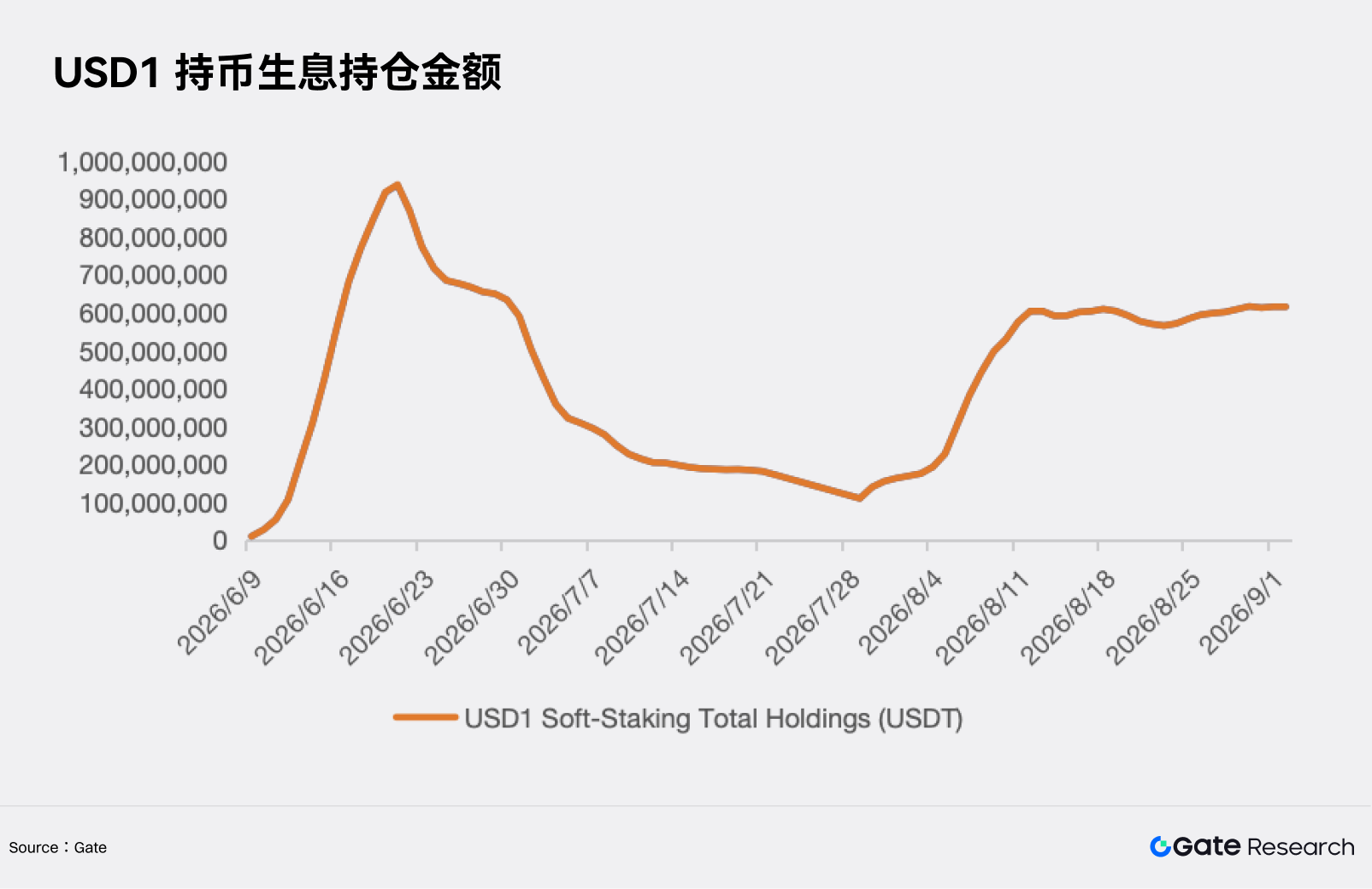
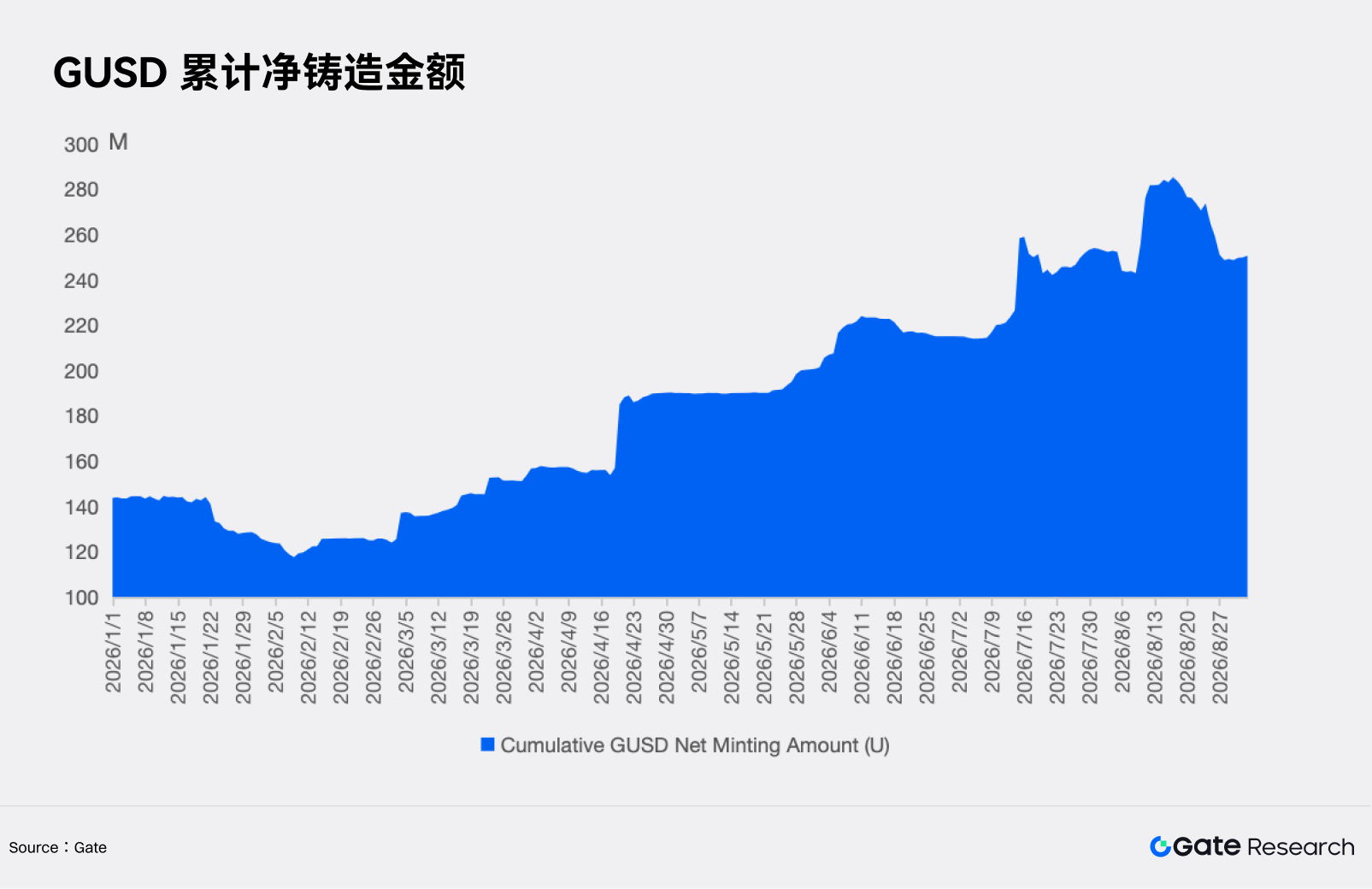
- Gate product matrix: USD1 hold-to-earn scale approximately 610 million USDT (annualized 5%–12%), on-chain yield TVL approximately 1.2 billion USDT, GUSD cumulative net subscriptions approximately 250 million USDT (U.S. Treasury portfolio weighted yield 3.77%).
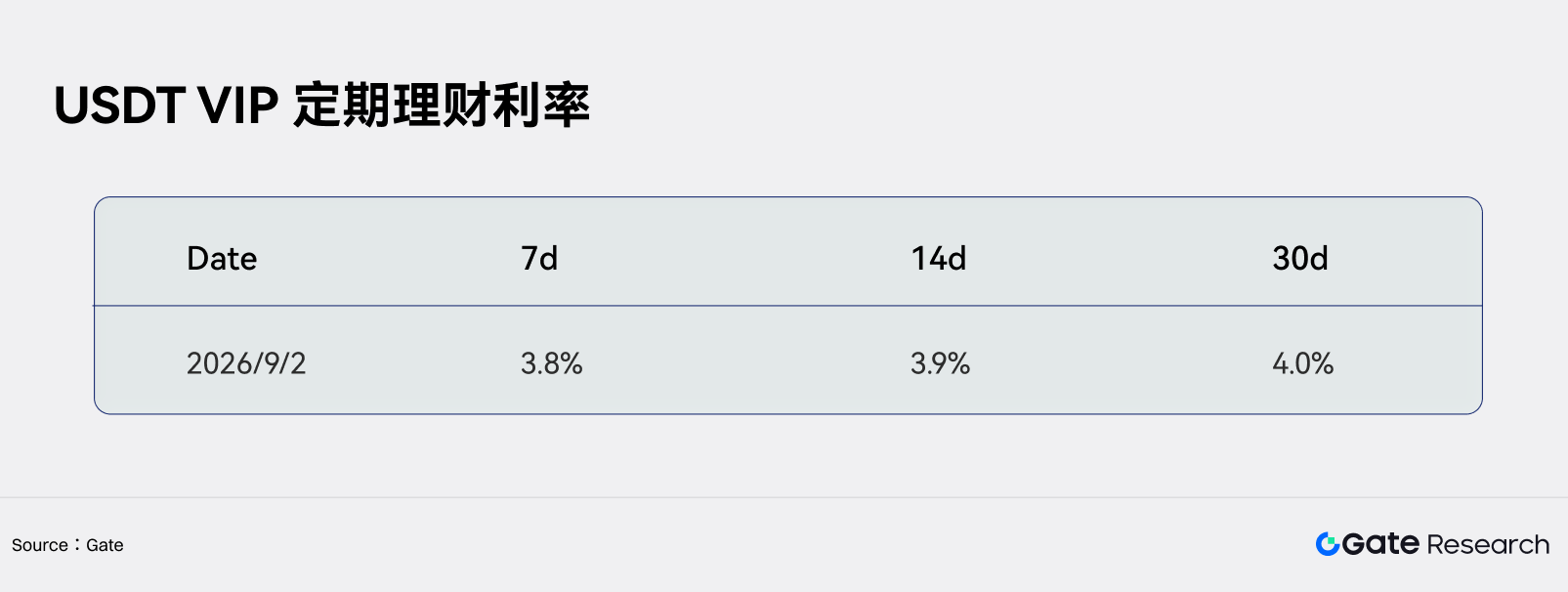
- USDT VIP fixed-term 7–30 day annualized 3.8%–4%, with single-user limits reaching the tens of millions of USDT level; dual-currency investment average annualized 50%–150%, with the high-elasticity end reaching several hundred percentage points.
- Competitors' high APY offerings are mostly concentrated in the first 500 USDT or limited-time net deposit campaigns; based on a 200,000 USDT calculation, Gate VIP weighted annualized yield is close to the quoted page rate, showing a clear advantage for large-capital yields.
- VIP 5–14 users enjoy on-chain yield service fee discounts (20%/40%/60%) and exclusive product offerings, supporting four-tier capital bucket allocation: trading reserve, stable allocation, coin-denominated增益, and high-yield enhancement.
Summary
• As stablecoin supply surpasses $300 billion and demand for low-risk yield keeps rising, competition among exchanges is shifting from a single high-APY product to a broader contest spanning product coverage, capital capacity, liquidity, and yield sources.
• Gate has built a product matrix covering six categories of capital needs. The lineup includes USD1 Hold-to-Earn, On-chain Earn, Dual Investment, GUSD, USDT VIP Fixed-Term, and Easy Earn, serving highly liquid balances, coin-denominated gains, U.S. Treasury RWA, short-term conservative allocation, and structured yield enhancement, respectively.
• USD1 Hold-to-Earn maintains stable scale, On-chain Earn TVL is close to 1.2 billion USDT, and GUSD cumulative net subscriptions total about 250 million USDT. Meanwhile, Dual Investment offers higher yield elasticity, while VIP Fixed-Term and Easy Earn address large-ticket and idle capital management needs, respectively.
• Compared with the product systems of mainstream exchanges, Gate further integrates automatic yield on idle funds, GUSD Treasury yield, On-chain Earn, Dual Investment, and VIP-exclusive products into a unified system, forming a complete risk-return gradient from cash management and steady yield to coin-denominated gains and structured enhancement—better suited to cross-product asset allocation by high-net-worth users.
• Some exchanges concentrate high APY on the first 500 USDT, limited-time subsidies, or large net-deposit campaigns, whereas Gate's displayed rates are closer to actual portfolio-weighted returns. Gate's USDT VIP 7–30 day products offer 3.8%–4% annualized, with investable quotas reaching the tens of millions of USDT level.
1. Industry Background: Rising Demand for Low-Risk Yield Intensifies Competition on Comprehensive Capabilities
1.1 Stablecoin Expansion Provides the Capital Base for Digital Asset Cash Management
According to DeFiLlama, as of September 4, 2026, stablecoin circulation exceeded $305 billion, up roughly $100 billion since the start of 2025, spanning networks including Ethereum, Solana, Aptos, Tron, and Monad. The growth in stablecoin volume has expanded the serviceable capital pool for exchange wealth management and has also changed users' expectations of stablecoin functionality—stablecoins now simultaneously serve trading settlement, margin, cross-border transfers, and short-duration cash management. Stablecoin balances parked in accounts for extended periods thus create clear yield demand.
Stablecoin yield demand has three characteristics. First, users place greater emphasis on principal stability, and yield products need to maintain low volatility relative to dollar assets. Second, trading opportunities are uncertain, and the longer funds are locked, the greater the trading optionality forgone. Third, users are better at discerning yield sources—yields from short-term Treasuries, money market funds, excess reserves, on-chain staking, and platform subsidies have different levels of sustainability. The same APY displayed on a product page may correspond to entirely different risk budgets and subsidy intensity.
Once the stablecoin market reaches the $300 billion scale, the capital efficiency of trading platforms is no longer determined solely by order book depth. Whether account balances can earn yield while idle, whether yield-bearing assets can continue to serve as margin, and whether users can move smoothly between different wealth products begin to directly affect users' overall holding returns. This shift is pushing exchanges to extend from trading tools toward digital asset cash management and wealth management platforms.
1.2 Treasury Yields Establish a Low-Risk Yield Anchor for Stablecoins
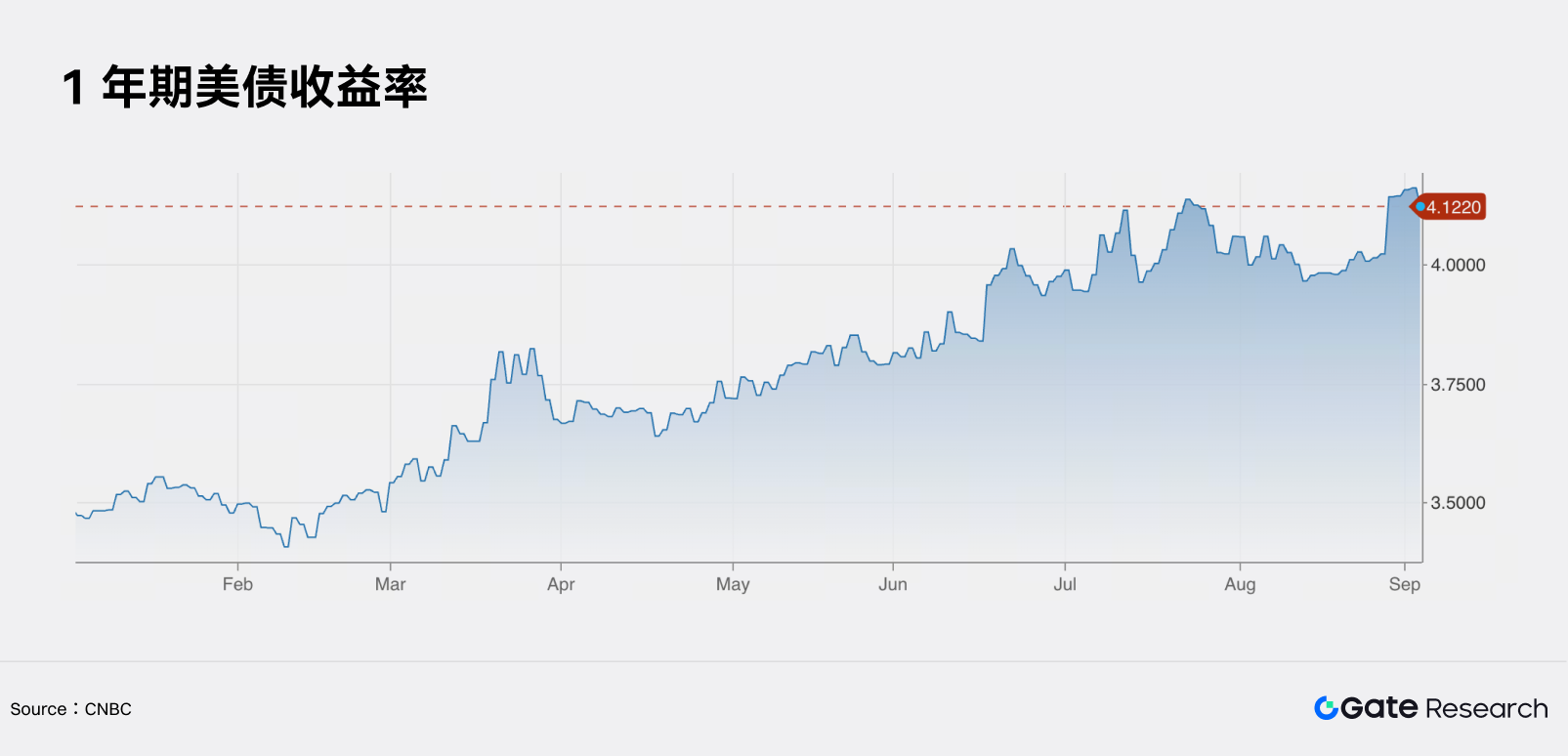
Federal Reserve H.15 data shows that on September 2, 2026, the secondary market yield on 3-month U.S. Treasury bills was 3.78%, the 6-month was 3.9%, and the 1-year was 3.98%; on the same day, the constant maturity yields on 3-month, 6-month, and 1-year Treasuries were 3.92%, 4%, and 4.16%, respectively.
This rate range provides a reference baseline return for conservative stablecoin products. If a product's underlying assets are primarily cash, short-term Treasuries, and highly liquid money market instruments, the user-facing yield will typically float around short-end dollar rates after deducting custody, liquidity reserve, operational, and risk costs. GUSD's 3.8% reference annualized rate sits in a range similar to short-term Treasury yields, showing strong consistency between its yield source and quoted level. Stablecoin yields that substantially exceed short-end Treasuries require further scrutiny to determine whether they include platform subsidies, token rewards, lending spreads, liquidity incentives, or structured risk premiums.
However, Treasury yields impose a dual constraint on industry competition. When rates are higher, exchanges can build sustainable baseline yields through RWA and cash management tools; when rates decline, yields from products relying solely on Treasuries will gradually compress, and platforms need to add on-chain staking, lending matching, ecosystem incentives, and structured strategies while maintaining risk isolation. The ability to diversify yield sources thus becomes a mid-term competitive moat.
1.3 On-Chain Yields Are Tiered and Highly Volatile
On-chain yields can be broken down by source into four layers: PoS network issuance and transaction fees are protocol-native yields; lending interest depends on capital utilization rates and collateralized borrowing demand; liquidity pool yields are determined jointly by trading fees and impermanent loss; and project token incentives depend on token prices, emission schedules, and subsidy budgets.
The value of exchange On-chain Earn products lies in packaging protocols, nodes, contracts, redemption processes, and yield distribution so that users can participate in on-chain yields through a centralized account experience. Platforms must simultaneously bear responsibility for protocol screening, on-chain operations, fund aggregation, liquidity arrangements, and exception handling.
1.4 User Funds Are Migrating from Pure Trading to Yield Management
Trading accounts typically hold four types of funds: stablecoins waiting for position entry, risk assets waiting to be reduced, long-term coin-denominated positions, and margin reserved for derivatives trading. Under the traditional exchange model, these balances generate returns only when trades are executed or price risk is taken on; wealth management systems convert idle funds into yield-bearing assets, making users' total returns a combination of trading P&L and balance yields.
Data from Gate's July transparency report corroborates this shift. In July 2026, cumulative subscriptions to Simple Earn exceeded $1.56 billion, On-chain Earn TVL peaked above $1.27 billion, and total GUSD subscriptions rose from about 182 million at the start of the month to about 215 million by month-end, briefly exceeding 230 million during the month. Stable-yield and highly liquid products can still absorb large-ticket capital during periods of weaker risk appetite.
The highest APY on a single product can only explain localized appeal and cannot represent long-term wealth management capability. Industry competition has thus expanded into a comparison of six comprehensive capabilities: whether multiple yield sources can be offered, whether the term and risk gradient from demand to structured products can be covered, whether billion-dollar-scale capital can be absorbed, whether yield-bearing assets can continue to participate in trading and ecosystem activities, whether public reserve and underlying asset information can be provided, and whether quota, fee rate, and customized services can be offered to high-net-worth users.
2. Gate Wealth Management Forms a Multi-Tier Yield Product Matrix
Against the backdrop of rising low-risk yield demand and intensifying competition on comprehensive capabilities, Gate has formed a complete wealth management product system covering Hold-to-Earn, on-chain yield, Treasury yield, structured products, fixed-term wealth management, and idle fund management. Its wealth product matrix can provide differentiated allocation solutions for different asset types, term preferences, and risk-return needs.
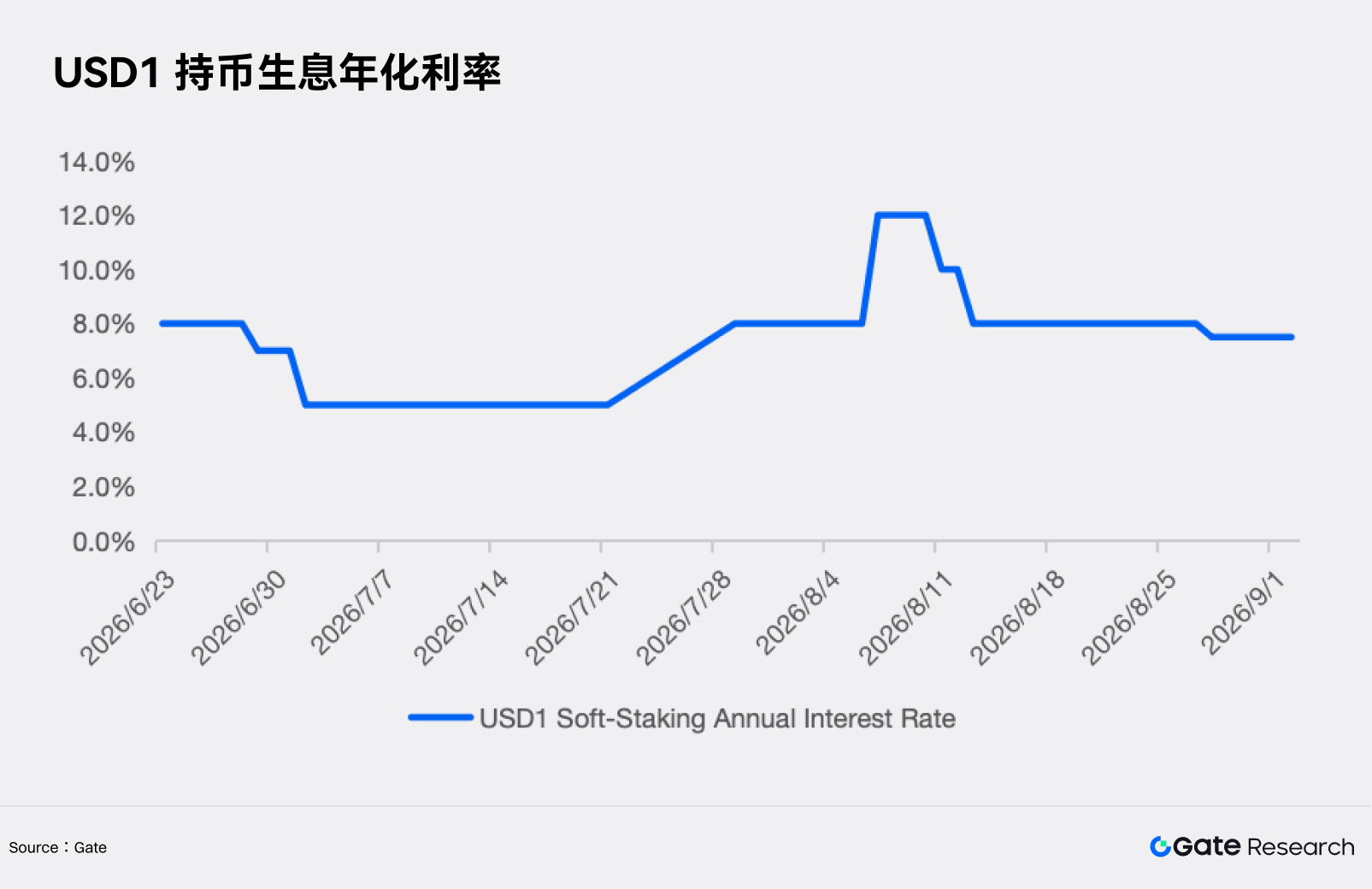
Looking at product data, several of Gate's wealth product lines have already reached substantial capital scale. USD1 Hold-to-Earn maintains a scale of about 600 million USDT, On-chain Earn TVL is about 1.2 billion USDT, and GUSD cumulative net subscriptions are about 250 million U. Meanwhile, USD1's annualized yield has long remained in the 5%–12% range, and some BTC Dual Investment products can reach annualized yields of several hundred percent.
2.1 USD1 Hold-to-Earn: Stable Scale, High Rates as a Core Competitive Advantage
USD1 Hold-to-Earn is an important foundational product in Gate's stablecoin wealth management system. Since launching in June, the product's scale has grown rapidly, with total holdings approaching 950 million USDT in late June; it subsequently pulled back as market capital was reallocated, but recovered to about 600 million USDT in mid-August and has recently stabilized around 610 million USDT. Compared with its early days, the product has formed a relatively stable deposit base in the hundreds of millions of dollars, demonstrating strong stablecoin capital absorption capacity.
On the yield side, USD1 Hold-to-Earn has generally maintained a high level. The annual rate was about 8% in late June, rebounded to 8% after a July pullback; it peaked at 12% in early August and has recently stabilized at about 7.5%. Over the entire observation period, its rate has mainly ranged between 5% and 12%, notably higher than conventional yields on traditional cash-type assets. The coexistence of higher yields with holdings exceeding 600 million USDT gives USD1 Hold-to-Earn both scale and yield advantages, making it one of the most representative products in Gate's current stablecoin wealth management system.
2.2 On-chain Earn: TVL Nears 1.2 Billion USDT, One of Gate's Largest Yield Products
On-chain Earn plays an important role in Gate's wealth management system by connecting user assets with on-chain native yields. Through PoS staking, on-chain protocols, and other methods, it converts the native yields of crypto assets such as ETH and SOL into wealth products users can participate in directly.
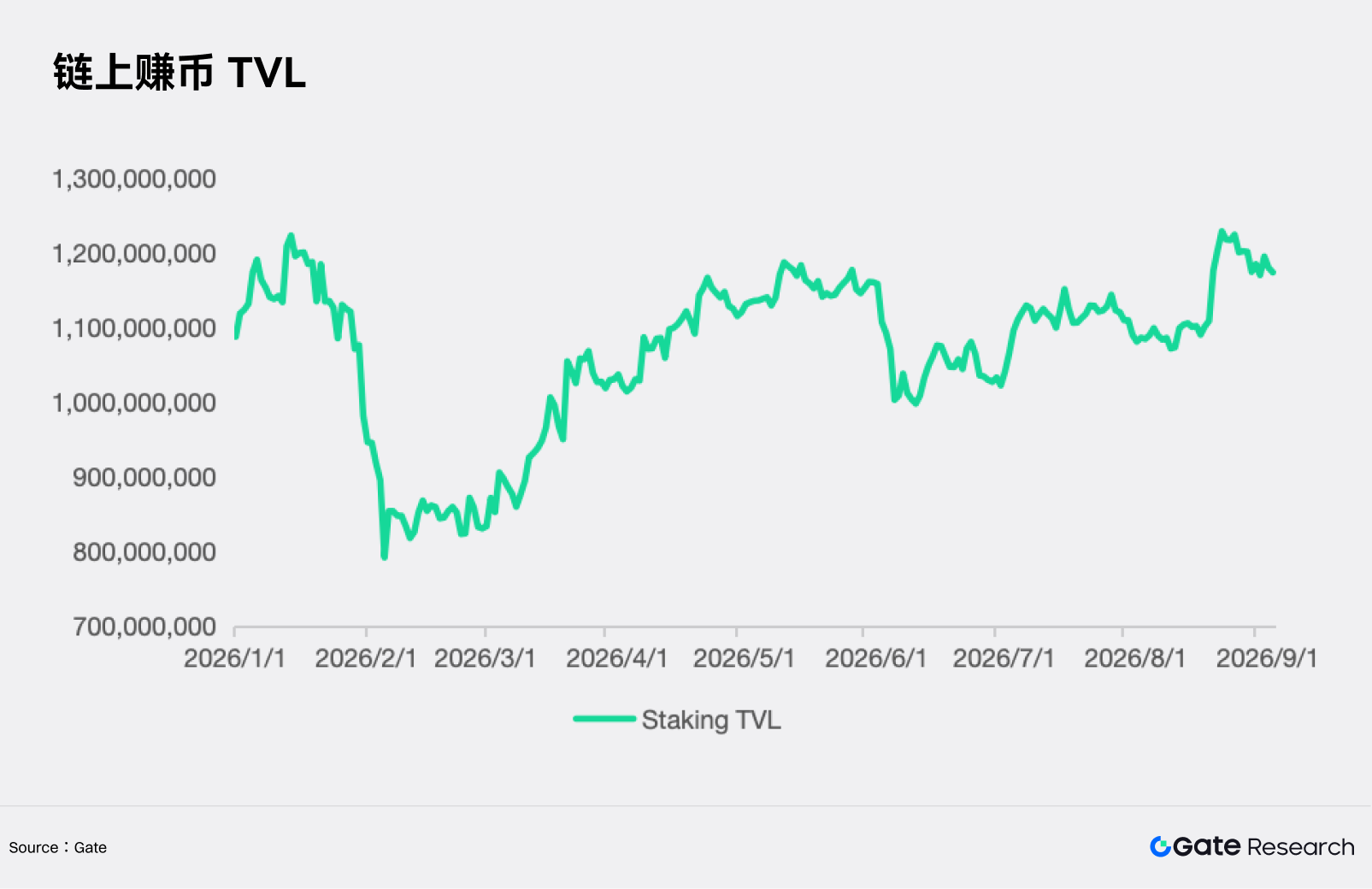
Data shows that Gate Staking TVL has generally remained at a high level since 2026. It was about 1.08 billion USDT at the start of the year, dipped to a low of about 800 million USDT during the February market correction, but then continued to recover, returning above 1.1 billion USDT in April–May. In mid-August, TVL briefly exceeded 1.22 billion USDT and was still about 1.18 billion USDT by the end of August. This means on-chain yield products have formed a stable asset base of nearly $1.2 billion, making it one of the largest product segments in Gate's wealth management system. Compared with products relying on short-term high-interest subsidies, On-chain Earn relies more on native yields generated by underlying blockchain networks, which also enhances the diversity of yield sources across Gate's wealth management products.
2.3 Dual Investment: Average Yields Notably Higher Than Ordinary Wealth Products, High-Elasticity Products Reach Hundreds of Percent Annualized
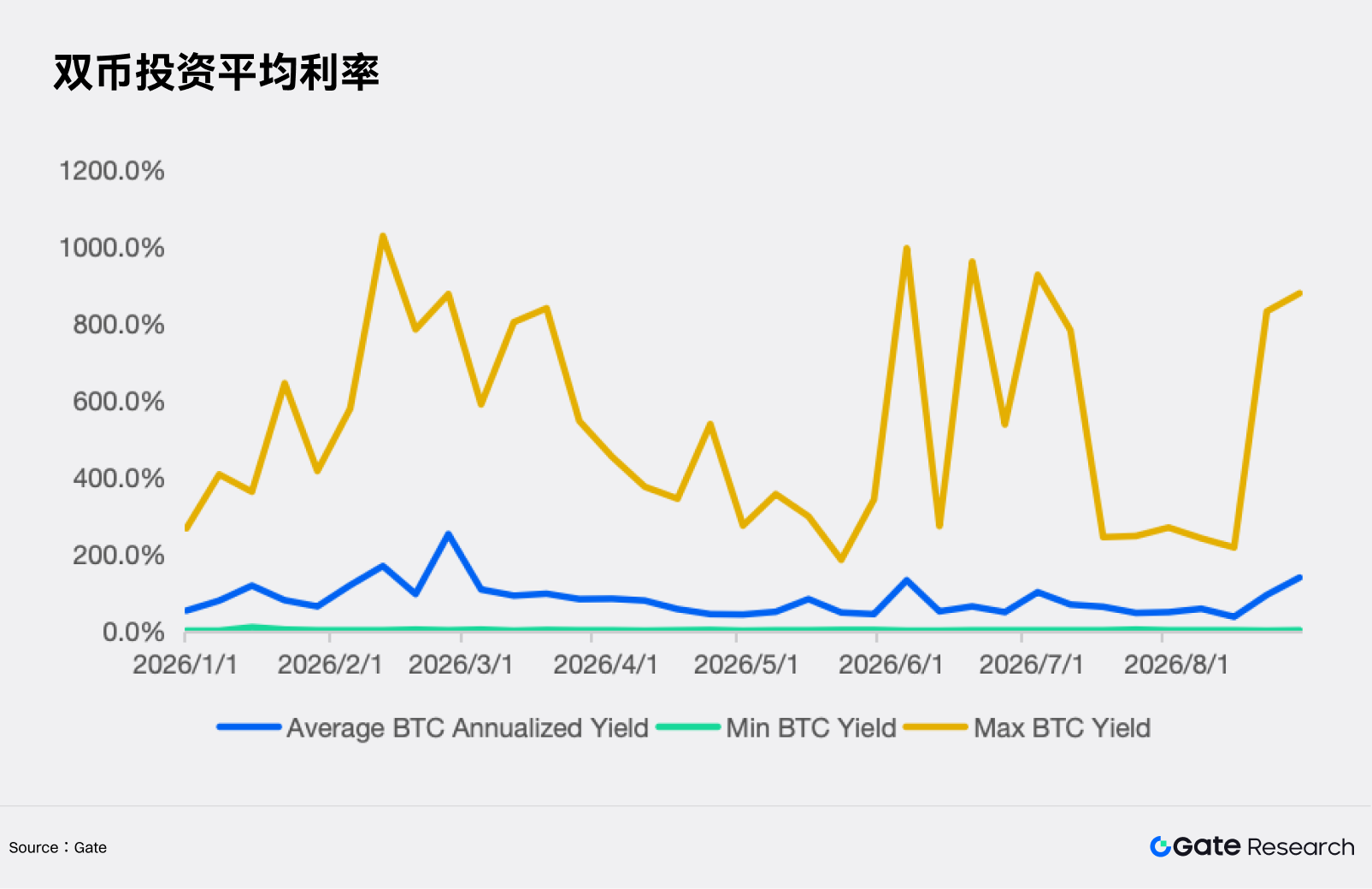
Dual Investment serves the structured yield enhancement function in Gate's product system. It is not a simple fixed-income product but combines users' views on the future price of assets such as BTC with option-style structures, generating different yield levels through different terms and target prices, so yields are typically significantly higher than ordinary stablecoin wealth products.
2026 data shows that BTC Dual Investment's average annualized yield stayed mostly in the roughly 50%–150% range, even exceeding 200% during periods of pronounced market volatility. Differences across terms and target prices are even more pronounced: the high-yield end repeatedly reached around 800%–1,000%, still rebounding to about 850%–900% at the end of August; even the low-yield end maintained positive annualized returns for most of the period. The Max BTC Yield and Min BTC Yield here reflect the upper and lower bounds of yield levels corresponding to products with different terms and target prices, rather than fixed returns actually available to all users.
This structure shows that Gate Dual Investment can offer a very wide range of risk-return choices: users can choose options closer to the current price with higher yields, or reduce risk by adjusting term and target price. Compared with fixed-income products, Dual Investment significantly raises the yield ceiling of Gate's entire wealth management system and has become an important differentiated product for the platform targeting active and higher-risk-preference users.
2.4 GUSD: Cumulative Net Subscriptions of About 250 Million USDT, Building a Low-Risk Stablecoin Yield Base on Treasury Yields
GUSD represents an important product through which Gate connects crypto asset accounts with traditional fixed-income assets. Since 2026, GUSD cumulative net subscriptions have generally trended upward, growing from about 140 million USDT at the start of the year to above 180 million USDT in April and further to about 220 million USDT in June; it peaked at about 285 million USDT in mid-August and remained at about 250 million USDT by the end of August. Although it has pulled back from the peak recently, scale is still up more than 70% compared with the start of the year, indicating continuously rising user demand for stable products based on Treasury yields.
On the yield side, the weighted average yield of the Treasury portfolio in which GUSD invests is about 3.7676%. For reference, U.S. Treasury data shows that on September 2, 2026, the 1-year U.S. Treasury yield was about 4.16%. Note that the two are not a strictly same-term comparison: GUSD corresponds to the weighted yield of the actual Treasury portfolio held, while the 1-year Treasury is a single-term market benchmark. Nonetheless, at 3.77%, the yield is fairly close to the short-end U.S. risk-free rate over the same period, indicating that GUSD can effectively transmit Treasury rates to on-chain assets, providing users with a stable yield source distinct from DeFi incentives and crypto market volatility.
2.5 USDT VIP Fixed-Term Wealth Management Rates: Short-Term Rates Near 4%, Strengthening Large-Ticket Stablecoin Retention
USDT VIP Fixed-Term wealth management primarily targets large-ticket users with high requirements for capital certainty and term yields. As of September 2, 2026, among Gate's USDT VIP fixed-term products, the annualized rates for 7-day, 14-day, and 30-day terms reached 3.8%, 3.9%, and 4%, respectively, with yields rising slightly as terms lengthen.
The advantage of this product is not the pursuit of Dual Investment-style high-elasticity yields but the provision of near-4% certainty annualized returns over relatively short lock-up periods. Especially for users holding large amounts of USDT who are unwilling to bear DeFi, token price, or complex structured product risks, the 7–30 day short-term design reduces capital opportunity costs. Combined with products such as USD1 Hold-to-Earn and GUSD, Gate is now able to form a fairly complete low-risk yield gradient for different stablecoins and different liquidity needs.
2.6 Easy Earn Rates: USDT at 3% Annualized, Completing the Automatic Management Scenario for Idle Account Funds
Easy Earn further completes the cash management layer in Gate's wealth management system. Unlike fixed-term wealth management, which requires active user allocation, its core value lies in improving the capital utilization efficiency of temporarily idle account assets, making it closer to money market funds or securities account cash management tools in traditional finance.
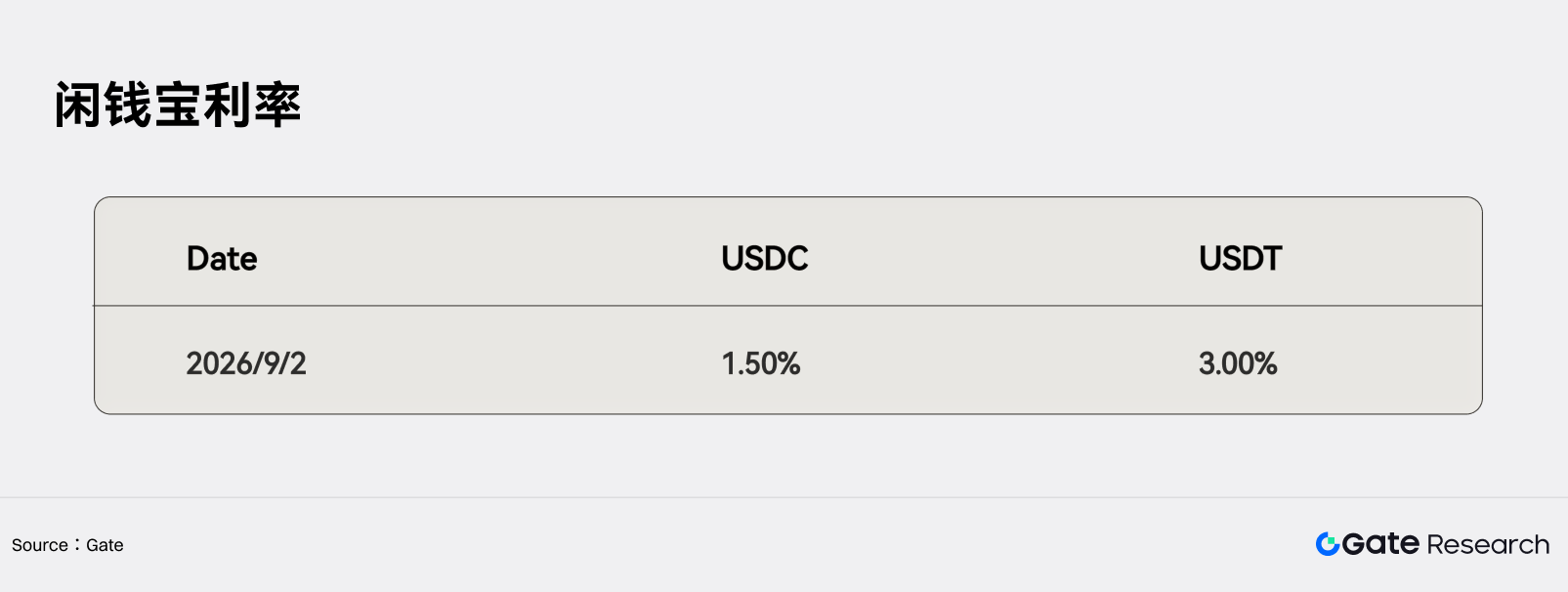
As of September 2, the annualized yield for USDT in Gate Easy Earn was 3.0%, and for USDC 1.5%. Although absolute yields are lower than USD1 Hold-to-Earn and some fixed-term products, the advantage lies in liquidity and convenience: users do not need to accept longer lock-up periods to earn yield, so stablecoin funds originally waiting for trading or allocation opportunities can also generate returns continuously. For high-frequency traders and asset-allocation-oriented users, such products can significantly reduce the cost of idle cash and further extend Gate's wealth management system from "actively purchasing wealth products" to "account-level automatic capital management."
Overall, Gate has formed a six-tier wealth management product matrix. Among them, Easy Earn and fixed-term wealth management address liquidity and certainty needs; USD1 provides stablecoin yields above traditional cash management products; GUSD brings Treasury rates on-chain; On-chain Earn captures PoS and DeFi native yields; and Dual Investment further raises the potential yield ceiling of portfolios.
3. Exchange Cross-Comparison: Sources of Gate Wealth Management's Competitiveness
3.1 Comparison Methodology: Disaggregating Base