






From AI applications to the Agent Economy, payments are becoming the new infrastructure


- Key Insight: DogPay proposed at a Hong Kong event that AI Agents are becoming new commercial participants, and the future of commerce will require a value transfer network covering identity, usage, and payments. The core shift in Agentic Payment is that the payer may no longer be a "person" for the first time, but rather an Agent.
- Key Elements:
- DogPay proposed a three-layer infrastructure framework: DogID (identity), DogRouter (usage), and DogPay (payment), supporting the formation of the Agent Economy.
- Agentic Payment embeds payments into task execution, budget control, permission management, result-based billing, and dynamic pricing, rather than serving merely as the final step after a user clicks a button.
- Agent Trading evolves along two paths: Agents acting as independent autonomous trading entities that proactively discover opportunities, or serving as digital avatars of traders that replicate trading systems and execution discipline.
- Regardless of the trading path, all rely on infrastructure such as wallet security, permission management, trusted data, execution cost control, audit trails, and accountability boundaries.
- The Agent Economy is already emerging across scenarios including content production, API calls, cross-border收款, crypto payments, automated revenue sharing, and intelligent trading—it is not a distant concept.
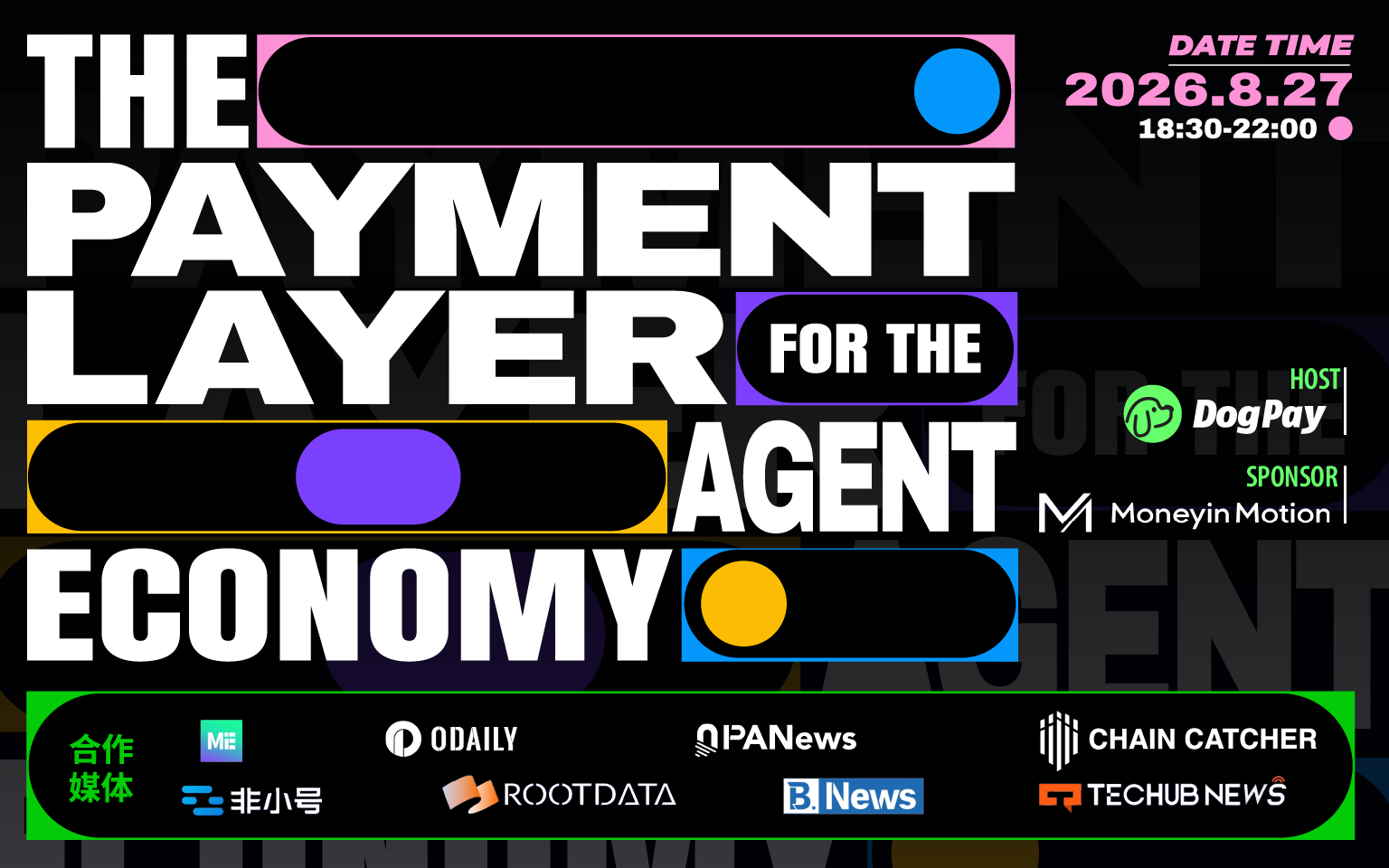
On the evening of August 27, DogPay hosted "The Payment Layer for the Agent Economy" event in Hong Kong. As a Side Event during Bitcoin Asia, this gathering centered on topics such as AI Agents, global payments, Agentic Payment, and intelligent trading, with speakers from diverse fields including payments, Web3, AI applications, trading, and cross-border commerce.
This was not merely a discussion about "payment tools," but a conversation about the future infrastructure of commerce.
In the past, when we talked about AI, the focus was mostly on model capabilities, application efficiency, and content generation. When discussing payments, attention was typically paid to fees, channels, settlement speed, and success rates. But as AI Agents begin to handle search, judgment, ordering, trading, settlement, and even collaboration on behalf of humans, a new question emerges:
In the future business world, who is doing the paying?
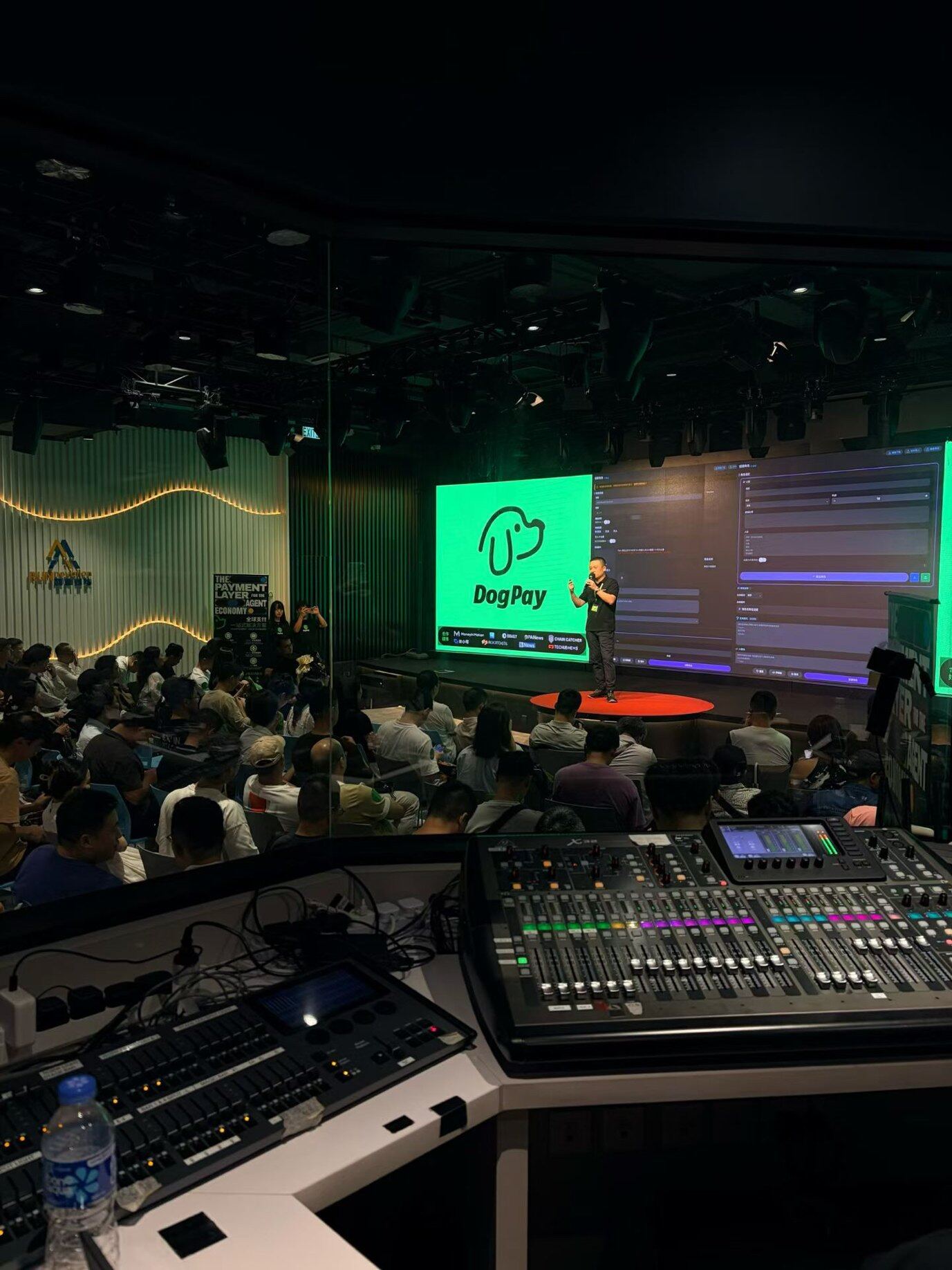
During the event, DogPay presented a core thesis: AI commerce needs more than just a "collect payment" button—it requires a value transfer network capable of carrying identity, accounts, usage, settlement, and revenue sharing.
From DogID to DogRouter, and then to DogPay, the underlying architecture corresponds to the three layers of infrastructure required for the Agent Economy to take shape: identity, usage, and payments. AI Agents are not just tools for invoking models; they are becoming new participants in commerce. They need to be identified, authorized, metered, and also trigger payments, revenue splits, and reconciliation after completing tasks.
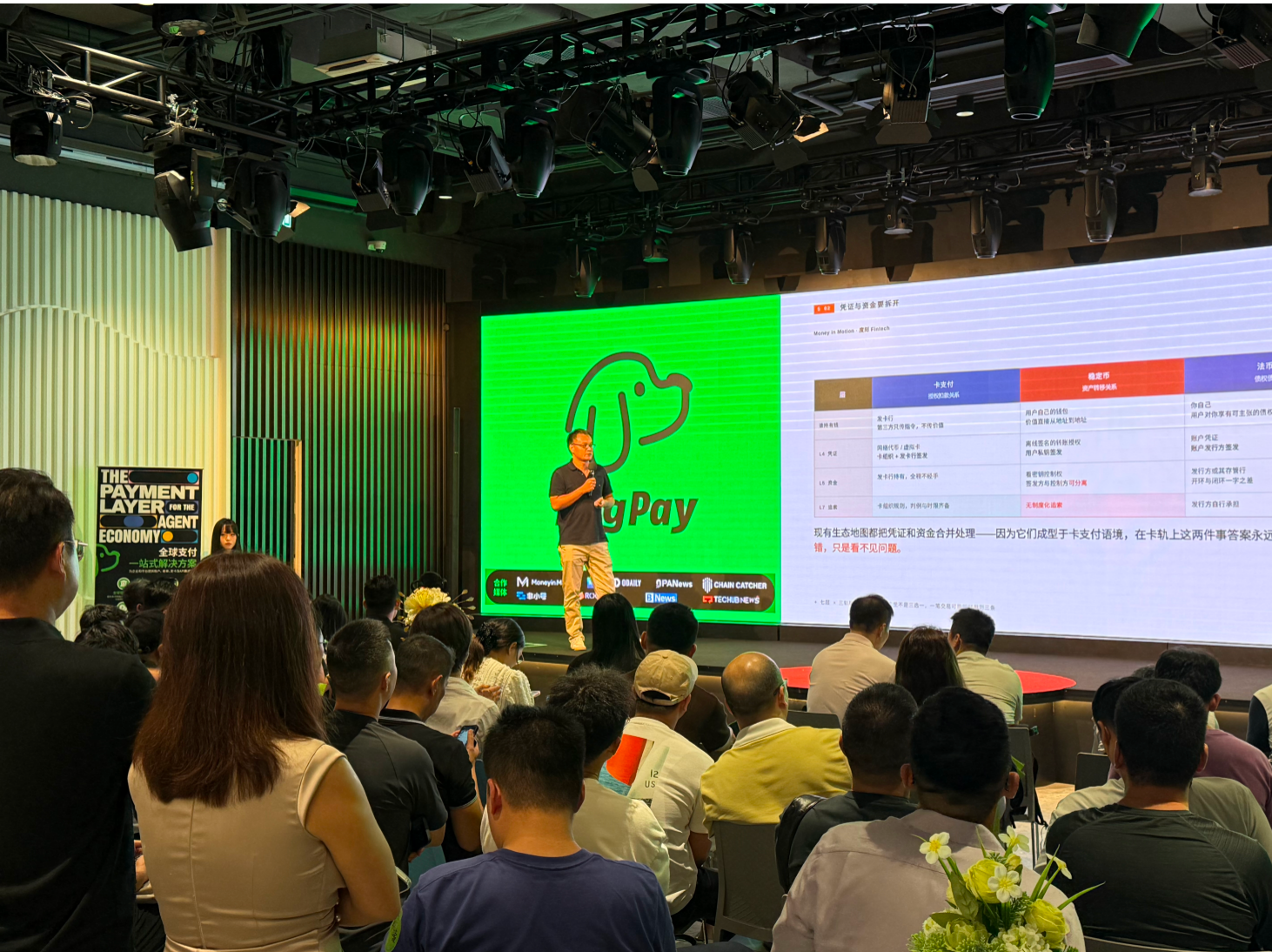
Will mentioned in his presentation that the key shift in Agentic Payment lies in the fact that, for the first time, the payer may no longer be a human, but rather an Agent. Payment is no longer just the final step after a user clicks a button; it becomes embedded in task execution, budget control, permission management, outcome-based billing, and dynamic pricing.
This implies that future payment systems will not just need to handle "who pays whom," but also "why the payment is made, who authorized it, under what conditions it is triggered, how it is recorded, and how it can be traced."
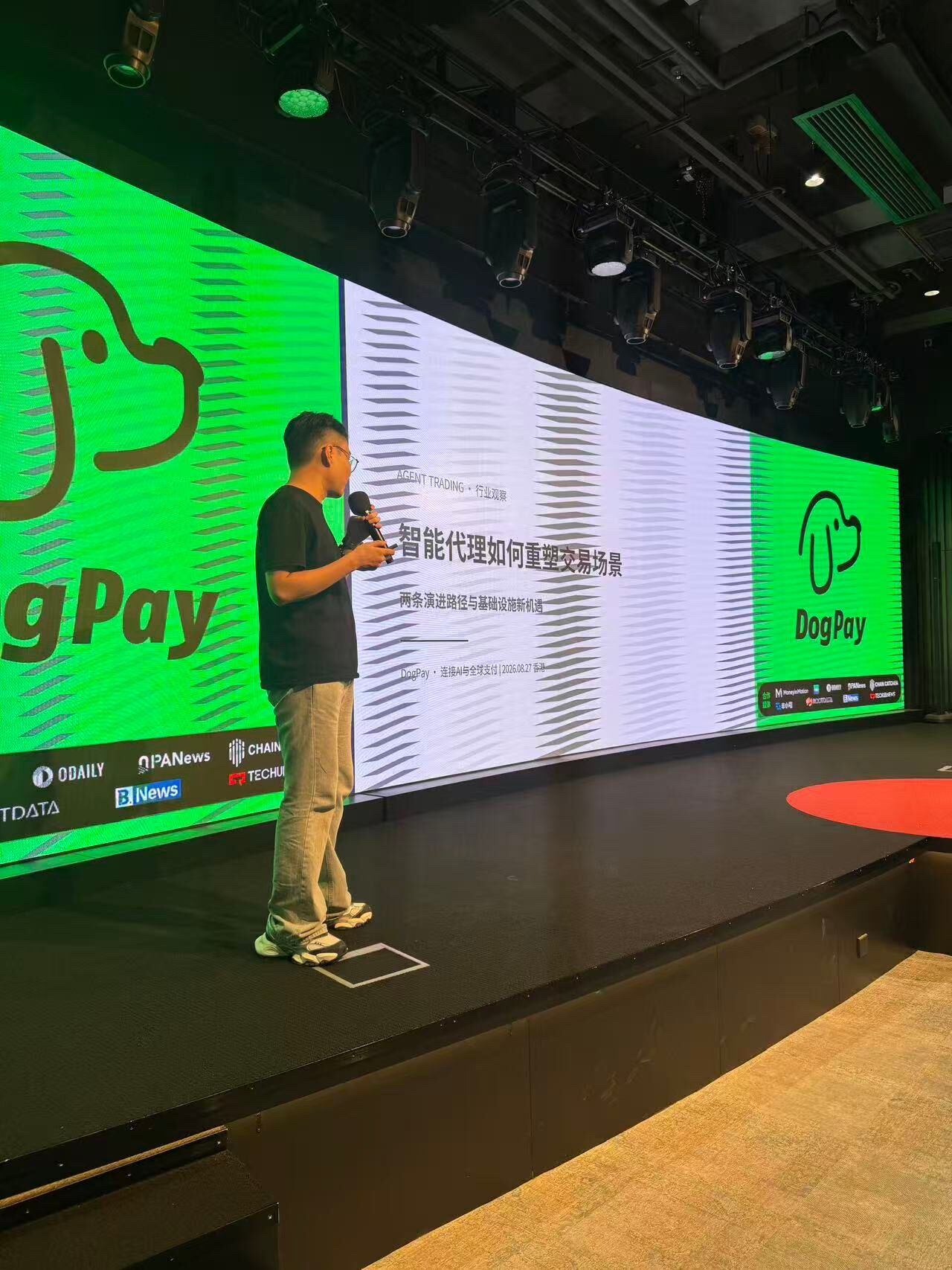
In the Agent Trading session, Dayu further brought this issue into the trading context. The role of AI Agents in trading is likely to evolve along two paths: one is becoming fully autonomous trading entities that proactively discover opportunities and generate trading logic; the other is becoming digital avatars of traders, replicating human trading systems, risk appetites, and execution discipline.
The former represents greater room for imagination, while the latter is closer to an application path that can be implemented today. But regardless of the path, the underlying infrastructure—wallet security, permission management, trusted data, execution cost control, audit trails, and accountability boundaries—remains indispensable.
This is also what makes this event most worth noting: the convergence of AI and payments is not simply about connecting AI tools to a payment collection system, but about redefining the participants in future commerce and the way value flows.


When enterprises, developers, creators, traders, and even AI Agents themselves enter the same collaborative network, how value is recorded, distributed, and settled will become the new core issue.
This is precisely the foundational layer that DogPay is addressing.
Connecting AI with global payments is essentially about building a new commercial foundation for the Agent era. The AI commerce of the future will not be driven solely by models, nor solely by applications, but will be supported collectively by identity, permissions, usage, payments, settlement, and compliance.
Judging from the exchanges at the event, the Agent Economy is not a distant concept. It is gradually emerging across scenarios such as content production, API calls, cross-border collections, crypto payments, automated revenue sharing, and intelligent trading.
This event in Hong Kong served more as a reminder: AI is transforming productivity, and payments will determine how that productivity truly enters the commercial world.


