






When SpaceX goes public, Crypto is converging with TradFi


- Core Thesis: With tech giants like SpaceX and OpenAI poised to trigger a wave of mega IPOs in the US stock market, global risk capital will be reallocated. This is not about draining liquidity from the crypto market, but rather accelerating its integration with the traditional finance (TradFi) system, driving the pricing logic of crypto assets closer to that of macro risk assets.
- Key Elements:
- The US stock market is entering an era of "super IPOs," with SpaceX's potential valuation approaching $2 trillion, making it one of the largest IPOs in global capital market history, with AI and space technology as core sectors.
- The crypto market is gradually integrating into the TradFi system through BTC ETFs, stablecoins (USDT/USDC), and compliant platforms. Its pricing logic is shifting from on-chain narratives to being influenced by macro risk assets, such as the Federal Reserve's interest rates and Nasdaq trends.
- TradFi (Traditional Finance) is essentially a global capital operation system, offering stable regulation, mature exit mechanisms, and deep liquidity. This determines that Crypto needs to integrate into, rather than replace, this system to secure long-term pricing power.
- In the short term, super IPOs may divert institutional risk budgets, but in the long term, they will bring massive institutional capital to Crypto, driving its evolution from a retail-dominated, highly volatile market towards a mature capital structure.
- Trading platforms are restructuring their product logic around "multi-asset trading." For example, BitMart has launched a TradFi aggregation page, integrating traditional assets like stocks, indices, and precious metals, moving towards becoming a globalized digital financial terminal.
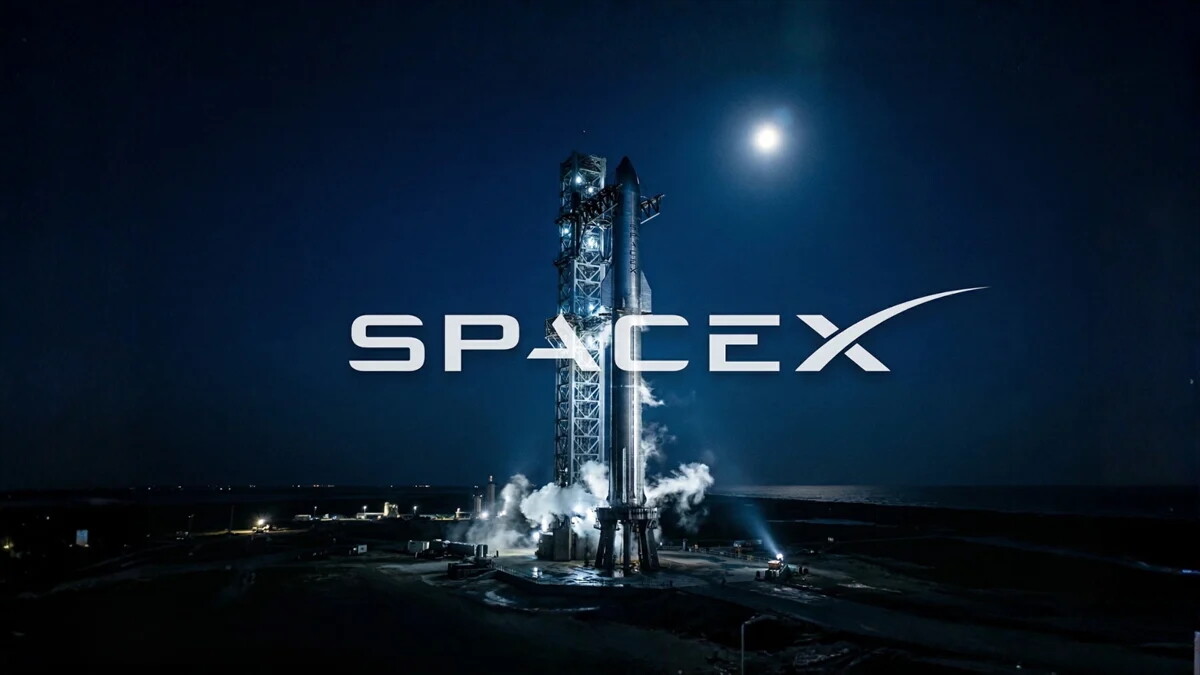
In 2026, the U.S. stock market has re-entered an era of "mega IPOs."
Tech giants like SpaceX, OpenAI, Anthropic, and Databricks have successively reported plans to go public, with SpaceX drawing the most attention. According to reports from Reuters and other media outlets, SpaceX's potential valuation has already approached $2 trillion. If it ultimately materializes, it could even become one of the largest IPOs in the history of global capital markets. Meanwhile, OpenAI is also pushing forward with its IPO plans, as AI, space technology, and next-generation infrastructure companies once again become core sectors/areas of focus for global capital.
However, the impact of this IPO wave is not limited to U.S. stocks. For the Crypto market, a more pressing question is emerging: As more mainstream, high-growth, and high-volatility assets enter traditional financial markets, how will global risk capital be reallocated?
In the past, many viewed Crypto as a world independent of Wall Street. But today, the boundary between the crypto market and traditional finance is becoming increasingly blurred. BTC ETFs, stablecoins, publicly listed trading platforms, and the influx of increasing institutional capital all indicate that Crypto is being integrated into the global capital system. Behind this trend, one term is frequently appearing—TradFi.
What is TradFi?
When many people first hear the term TradFi (Traditional Finance), they simply understand it as "traditional finance," such as banks, brokerages, or the stock market. However, TradFi is more like a complete system for the operation of global capital. It includes the Federal Reserve, commercial banks, Wall Street investment banks, the ETF market, pension funds, asset management companies, and the entire dollar liquidity network. Whether it's U.S. stocks, bonds, or commodities, they are all fundamentally built upon this system.
The true strength of TradFi lies not just in its capital scale, but in its mature rules and complete financial infrastructure. Why are global institutional funds more willing to allocate to U.S. stocks? Why do pension funds and sovereign wealth funds prefer the Nasdaq over on-chain assets? The reason is that TradFi provides a more stable regulatory environment, more mature exit mechanisms, and greater liquidity depth.
In essence, TradFi determines how global capital flows and which assets can achieve long-term pricing power. Over the past few years, Crypto has attempted to build its own financial system. However, with the development of ETFs, stablecoins, and compliant trading platforms, the crypto market has not completely broken away from TradFi; instead, it is gradually integrating into it.
Why is Crypto Becoming More "Stock Market-like"?
What truly changed the structure of the crypto market was the BTC ETF. In the past, Bitcoin was more like an asset independent of the traditional financial system. The advent of ETFs allowed BTC to enter Wall Street's asset allocation framework for the first time. Now, institutional investors can buy Bitcoin directly through their brokerage accounts without needing a wallet or on-chain operations.
This means the pricing logic of Crypto has begun to change. Previously, the market was more influenced by on-chain narratives and industry sentiment. Today, the Fed's interest rates, Nasdaq trends, dollar liquidity, and even the performance of the AI sector all begin to affect the rise and fall of Crypto. Bitcoin is increasingly resembling a global macro risk asset rather than a mere "cryptocurrency."
At the same time, stablecoins are also becoming part of the dollar system. The core of USDT and USDC is still essentially an on-chain mapping of dollar credit. While many once believed Crypto would challenge the dollar, the reality is that Crypto is becoming increasingly dependent on dollar liquidity. Coupled with the fact that Crypto companies like Coinbase and Circle have successively listed on the U.S. stock market, the entire industry is being re-"securitized" by traditional capital markets.
Why Could TradFi Be an Opportunity for Crypto?
Many worry that this wave of mega IPOs will "drain" liquidity from the crypto space. In the short term, this concern is not entirely unfounded. When mega-assets like SpaceX and OpenAI emerge, institutions will inevitably re-allocate their risk budgets. Compared to altcoins with high FDV and low circulating supply, more mainstream, compliant tech assets that are easier to incorporate into index systems will naturally find it easier to attract capital.
However, from a longer-term perspective, the entry of TradFi is also bringing something to Crypto that it has never had before: truly massive institutional capital. The crypto market of the past was more like a high-volatility market driven by retail sentiment. Now, with the development of ETFs, stablecoins, and compliant trading platforms, Crypto is developing an increasingly mature capital structure.
This is why more and more platforms are restructuring their product logic around "multi-asset trading." For example, the TradFi aggregation page recently launched by BitMart is fundamentally adapting to this trend. In the past, users had to switch between different pages or even different platforms to check stocks, gold, indices, forex, and crypto assets. BitMart integrates these traditional financial asset gateways into a unified interface, allowing users to complete market checks, asset screening, and trade execution within the same trading environment.
Currently, BitMart's TradFi section covers stocks, index ETFs, precious metals, forex, and some commodities, including mainstream asset targets like AAPL, TSLA, SPY, QQQ, XAU, and PAXG. For users who are increasingly accustomed to cross-market trading, this kind of aggregation structure actually represents a new direction: the future trading platform will no longer be just a crypto platform, but more like a globalized, multi-asset digital financial terminal.
TradFi and Crypto Are Moving Towards Convergence
In the past, one of the most popular phrases in the Crypto world was "Decentralization will replace Wall Street." But the direction of today's market development seems not to be confrontation, but convergence. TradFi offers scale, liquidity, and a global capital network, while Crypto provides more efficient settlement methods, more open financial structures, and on-chain programmability.
In the coming years, we may see a new form of finance gradually emerge: Bitcoin will increasingly resemble a global macro asset, stablecoins will increasingly resemble digital dollars, trading platforms will increasingly resemble global digital brokerages, and truly high-quality on-chain protocols will become part of the next generation of financial infrastructure.
Therefore, this wave of mega IPOs may not necessarily be a bad thing for Crypto. It is more like a reminder to the entire industry: the crypto market is no longer an isolated little world, but is formally entering the mainstream global capital system. And the platforms and assets that can truly navigate cycles will inevitably be those participants who can understand both TradFi and Crypto.


