OKX Launches Exchange OS Protocol, Enabling Anyone to Create a Trading Market


- Core Thesis: OKX has launched the Exchange OS protocol, which descends institutional-grade exchange infrastructure (matching, clearing, etc.) to the blockchain protocol layer. It aims to solve the fragmentation of on-chain financial infrastructure, allowing developers to permissionlessly create spot, perpetual, and prediction markets, while enabling unified accounts and capital flow across different markets.
- Key Elements:
- Exchange OS protocols core functions such as matching, margin, clearing, settlement, and risk management, allowing developers and institutions to freely configure front-end design, market structure, and compliance frameworks.
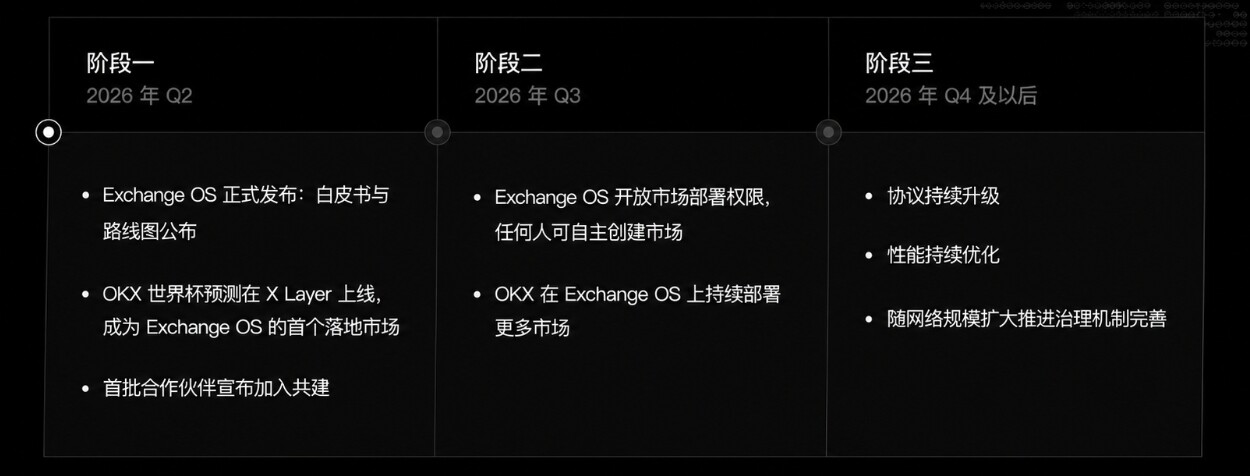
- The first market built on Exchange OS is the "2026 World Cup Prediction Market", created by OKX itself. It is expected to launch in June to validate the infrastructure's capabilities.
- Supports permissionless deployment of trading venues, governed through XIP proposals; simultaneously allows regulated institutions to operate fully KYC-compliant, isolated markets on the same infrastructure.
- Traders benefit from a unified account and margin system, enabling capital to flow freely between spot, perpetual, and prediction markets, eliminating capital fragmentation.
- The infrastructure's performance is homologous with OKX, offering millisecond-level matching latency, unified settlement, and a throughput of up to 300,000 TPS, lowering the barrier to development.
Author: Star Xu, CEO and Founder of OKX
Today, we are officially launching Exchange OS, a major protocol upgrade for X Layer. It enables developers, institutions, and ecosystem participants to deploy spot, perpetual, or prediction markets using the same institutional-grade infrastructure as OKX.
The first market built on Exchange OS will go live in June: the 2026 World Cup Prediction Market, a simulated prediction market deployed directly on Exchange OS. The platform is currently rolling out in phases, and broader ecosystem access will be facilitated through XIP-Exchange OS (X Layer Exchange OS Improvement Proposals).
Exchange OS is designed to address one of the biggest structural bottlenecks in on-chain finance today: infrastructure fragmentation. While blockchain has enabled open asset issuance, the infrastructure surrounding trading, settlement, margin, and liquidity remains scattered across isolated platforms and applications. Developers have always faced a choice: rely on centralized infrastructure or build a complex trading system from scratch.
We believe the next evolution of on-chain finance lies in building shared market infrastructure: enabling developers and institutions to create new trading markets more efficiently, while retaining full flexibility in front-end design, market structure, risk control, and compliance frameworks.
Opening Market Creation to Everyone
Exchange OS pushes core exchange functions like matching, margin, clearing, settlement, and risk management down to the protocol layer, leaving the upper layers for operators to customize. Your user experience and operational model are entirely up to you. Instead of operating in silos, different trading venues share the same execution environment, allowing multiple market types to coexist on a single track.
With Exchange OS, developers and institutions can deploy trading venues using a set of configurable infrastructure components, including asset selection, oracle systems, revenue models, and market structure. The framework supports diverse operational models, including regulated and compliance-friendly deployments tailored to different jurisdictions and user needs.
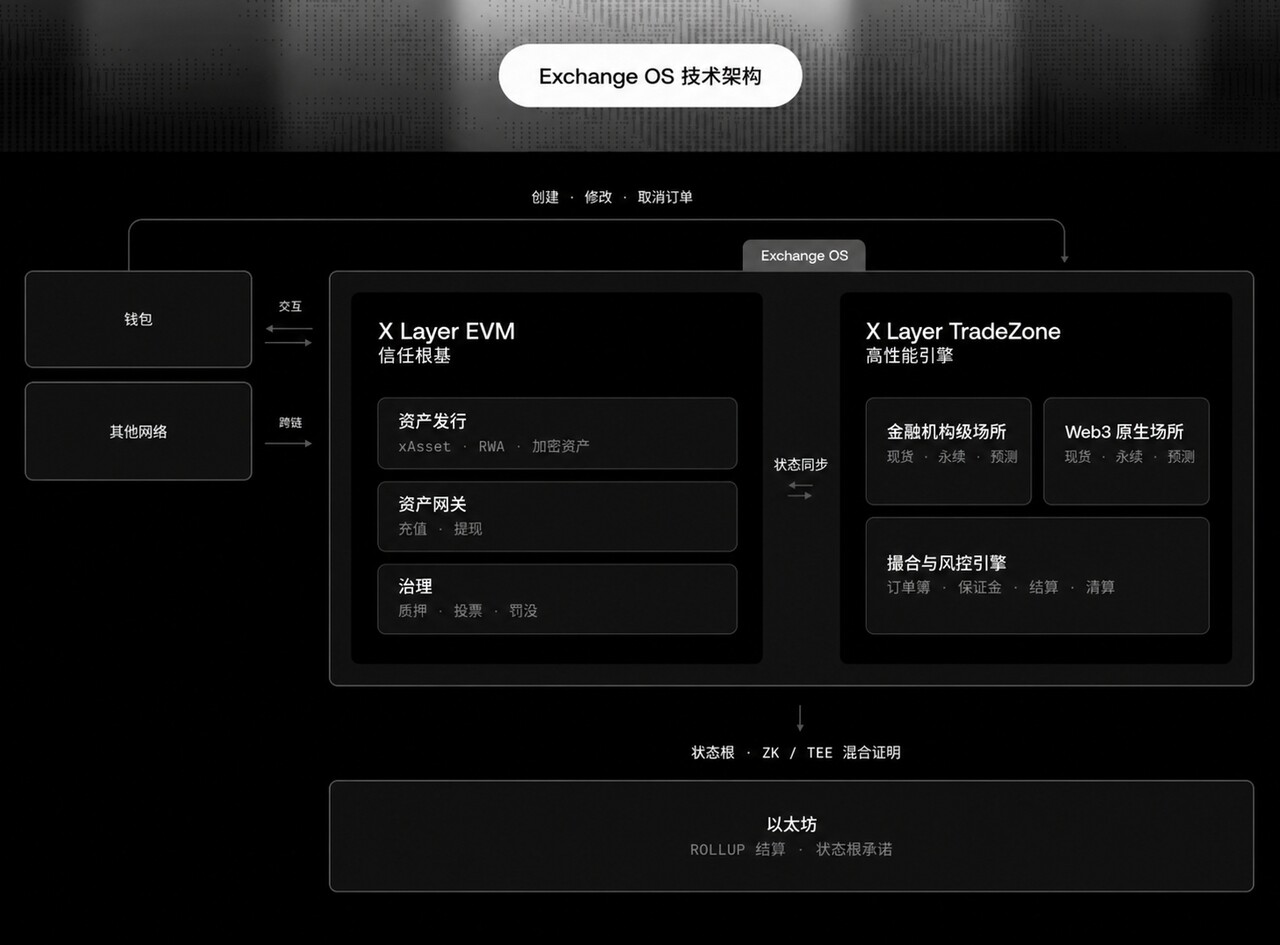
On Exchange OS, developers can deploy trading venues permissionlessly through the X Layer Improvement Proposal for Exchange OS (XIP-Exchange OS), autonomously selecting assets, oracle systems, revenue models, and compliance frameworks without requiring approval from any centralized operator. Regulated institutions can launch fully KYC-compliant venues here, while Web3 native teams can run a permissionless market on the same infrastructure. Both operate within the same infrastructure but in isolated risk control groups, with no interference, and the operational model is controlled by the developer.
For traders, Exchange OS introduces a unified account and margin system across spot, perpetual, and prediction markets. Funds can move freely between different market types without being scattered across isolated balances and platforms. Whether making market judgments around AI, macro events, sports tournaments, or tokenized assets, the same capital can freely participate in different market themes simultaneously.
All markets deployed on Exchange OS run on high-performance infrastructure derived from OKX, including millisecond matching latency, unified settlement, and throughput of up to 300,000 TPS. Our goal is simple: enable developers to easily launch scalable, high-performance on-chain markets without having to build core infrastructure from scratch.
OKX Leads with the First Use Case
We choose to demonstrate the capabilities of this infrastructure through action rather than promises. The first market deployed on Exchange OS will be created by OKX itself. We will launch the "2026 World Cup Prediction Market" in June, a simulated market deployed directly on Exchange OS. We believe the best way to showcase infrastructure capability is to build and validate on it ourselves first.
So, today's launch is just the starting point. Exchange OS will go live in phases, gradually opening infrastructure components, deployment capabilities, and ecosystem participation channels. The whitepaper released today details the underlying architecture, governance model, and roadmap.
The Next Chapter of On-Chain Finance
We believe the next financial era will be defined by markets that are: more open, interoperable, and global. Tokenization and asset fragmentation have the potential to open global markets to more people; real-time settlement can enhance capital efficiency and reduce friction inherent in traditional market infrastructure.
Users should be able to express a complete market thesis using the same capital across spot, derivatives, and prediction markets, rather than splitting funds across different platforms. Liquidity, order flow, and strategies should be able to flow efficiently between different markets, not trapped within separate siloed systems.
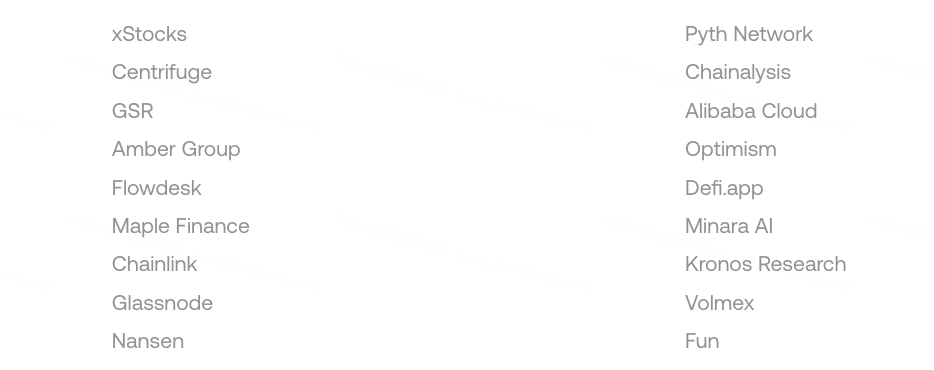
Exchange OS launches today with support from partners across various ecosystem sectors:
The next chapter of on-chain finance should not be written by any single platform. It should be written collectively by everyone who wants to build a market.
Read the whitepaper, join us, and help build the future of trading markets.
Whitepaper: https://web3.okx.com/xlayer
The OKX World Cup Prediction Market is a simulated market and does not involve any real assets.
Disclaimer: This announcement is for informational purposes only and does not constitute investment, tax, or legal advice, nor is it an offer to buy, sell, hold digital assets, or provide related services. Digital assets (including stablecoins and NFTs) involve high risk and prices can fluctuate significantly. Before trading or holding digital assets, please carefully assess your financial situation and risk tolerance. OKX does not provide investment or asset advice, and investment decisions are solely your responsibility. Some products and features are not available in all regions; products such as perpetual contracts and derivatives may be restricted or unavailable due to local laws and regulations.