






All the money is flowing into bonds and IPOs, leaving only HYPE rising in crypto


- Key Thesis: Global capital is currently undergoing a systemic withdrawal from the crypto market, shifting toward the bond market (offering 5% yields) and traditional IPOs (with $4 trillion in the pipeline), leading to pullbacks in major assets like BTC, ETH, and Solana. Meanwhile, Hyperliquid is rising against the trend by facilitating Pre-IPO trading of traditional assets.
- Key Drivers:
- The yield on 30-year U.S. Treasury bonds has surged to 5.12% (the highest since 2007), with long-term government bond yields across G7 nations approaching 5%, driving global capital toward assets offering guaranteed returns.
- Bitcoin spot ETFs saw net outflows of $1.039 billion for the week of May 11-15, ending six consecutive weeks of net inflows. ARKB and IBIT recorded weekly outflows of $324 million and $317 million, respectively.
- An estimated $4 trillion in IPOs are queued for 2026 (including SpaceX), along with surging AI capital expenditures, diverting risk capital away from crypto asset allocations.
- SpaceX's Pre-IPO contract on Hyperliquid generated $40 million in trading volume on its first day. The HIP-3 platform directs on-chain liquidity toward traditional stock pricing rather than native crypto assets.
- Newly appointed Federal Reserve Chair Kevin Warsh faces a dilemma between political pressure to cut rates and the bond market's high inflation expectations (five-year inflation expectations at 2.7%), potentially upending market bets on rate cuts.
Where did all the money go?
The S&P 500 hit a new all-time high last week, while the Nasdaq ended its seven-week winning streak. The 30-year US Treasury yield surged to 5.12%, its highest level since 2007. SpaceX's pre-IPO contract on Hyperliquid saw a trading volume of $40 million on its first day.
Money is flooding into everything except crypto. BTC only managed to climb back above $82,000 on May 14, but has since plunged through $77,000 in the last couple of days. ETH hasn't fared well either, dropping nearly 10% for the week from the $2,300 range down to $2,110. Solana has fully given back its recent gains, falling from a high near $100 back to $84. It seems like no project in the broader crypto industry is strong, except for HYPE.
Both are risk assets, so why is crypto alone underperforming?
30-Year Bond Yields Hit Nearly 20-Year High
The bond market is once again becoming the center of gravity for global capital.
The 30-year US Treasury yield reached its highest level since June 2007, rising from 4.63% at the end of February to 5.12%. Meanwhile, the 10-year yield touched 4.6%, and the 2-year yield climbed to 4.08%.
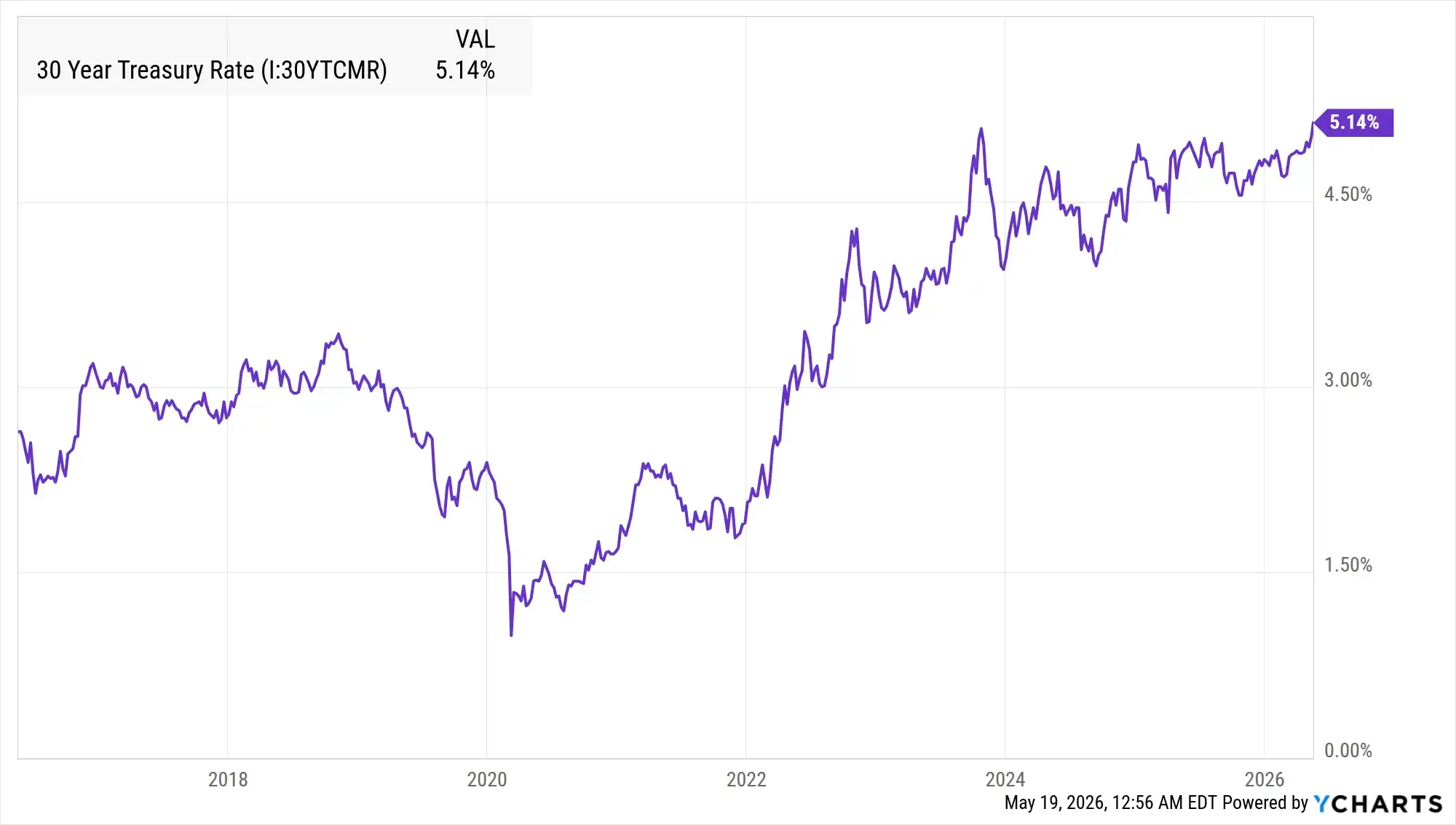
This trend is not limited to the US. Torsten Slok, Chief Economist at Apollo Global Management, noted in his Sunday report on May 17 that government bond yields with 10-year or longer maturities in G7 countries have all reached their highest levels since 2004, collectively approaching 5%.
Governments worldwide are expanding their fiscal deficits, needing to borrow more and issue more bonds. The US fiscal deficit remains around 6% of GDP. Rising borrowing costs make it harder for governments to spend their way out of crises, at a time when many nations are facing crises precisely because of war.
Jim Reid of Deutsche Bank pointed out in his May 18 report that the bond issue was likely on the agenda of the two-day G7 finance ministers' meeting that opened in Paris that day. However, the structural problems in the bond market cannot be solved by any single ministerial meeting.
During times of heightened geopolitical tension, global capital prefers assets with guaranteed returns.
The outflow of data from Bitcoin ETFs corroborates this point.
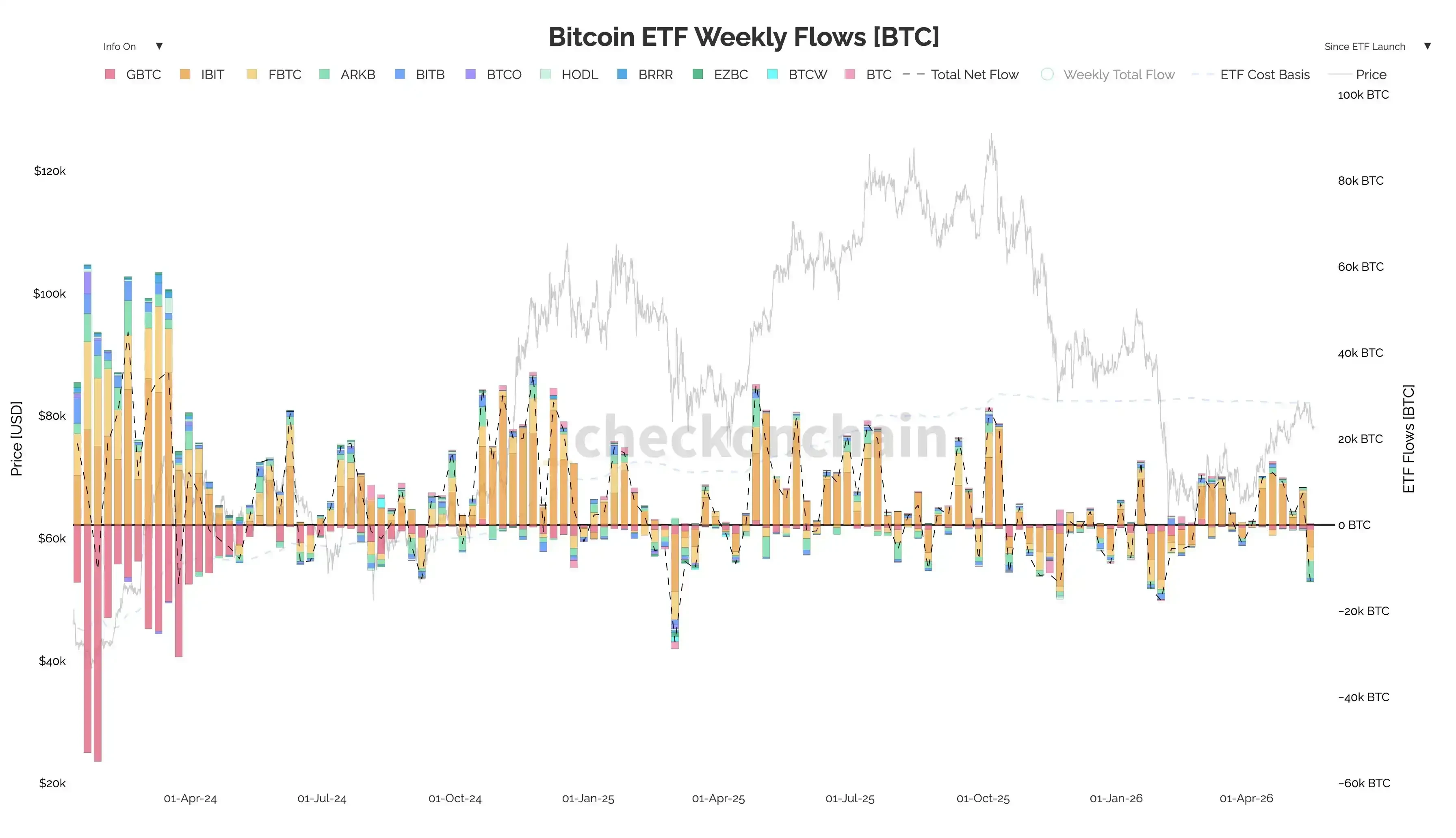
According to SoSoValue data, Bitcoin spot ETFs saw a net outflow of $1.039 billion in the week of May 11 to May 15, ending six consecutive weeks of net inflows. This represents the largest single-week outflow since the end of January.
At the product level, ARKB saw a weekly net outflow of $324 million, and IBIT saw a net outflow of $317 million, with both leading products bleeding simultaneously. The daily data paints an even sharper picture. There was a net outflow of $233 million on May 12, followed by a $635 million withdrawal on a single day, May 13. On Friday, May 15, the 11 Bitcoin ETFs combined for another $290 million outflow, indicating an orderly retreat of institutional capital.
Comparing data from previous weeks highlights the magnitude of the turn. The week ending April 17 saw net inflows of nearly $1 billion, the week ending April 24 had $824 million, and the week ending May 8 still saw net inflows of $623 million. The capital flow reversed from "sustained inflows" to a "weekly outflow of $1 billion" within just one week.
During the same period, Ethereum ETFs also saw a net outflow of $255 million, recording negative flows for five consecutive days. The capital flow for the entire crypto ETF asset class made a collective U-turn in mid-May.
As the bond market becomes more attractive, the relative appeal of crypto naturally diminishes.
$4 Trillion IPO Pipeline: How Can Crypto Compete?
Bonds are siphoning off risk-averse capital. IPOs are competing for risk capital, which represents the most direct liquidity drain for crypto.
In 2026, there is a $4 trillion IPO pipeline waiting to compete for capital. This is a figure capable of reshaping the global capital allocation map.
SpaceX has become the next focal point for the market. In this environment, pre-IPO and new issue strategies offer an appeal that bonds cannot: non-linear wealth effects.
Meanwhile, the AI narrative remains the dominant theme for 2026. Evercore analysts noted in their May 15 report that US economic data shows demand remains strong, especially with a surge in AI-related capital expenditure. The flip side of this AI capital expenditure boom is that AI leaders are generating life-changing wealth effects in the secondary market.
The return efficiency of names like Nvidia and Cerebras makes any crypto narrative seem less appealing.
More tellingly, even the on-chain world is helping traditional markets attract capital.
On the night SpaceX launched on Trade.xyz, the pre-IPO contract on Hyperliquid saw a first-day trading volume of $40 million. The HIP-3 platform is using perpetual contracts for price discovery on traditional stocks. Hyperliquid itself rose 10% for the week to $45, making it the only major crypto asset bucking the overall downtrend. Related reading: 'The Biggest Winner of the SpaceX IPO Might Be Trade.xyz'.
In the short term, this is not good news for crypto-native assets.
On-chain liquidity is being directed to price traditional stock targets like SpaceX, rather than flowing back into Bitcoin, ETH, or Solana. Even Hyperliquid's gains are essentially a dividend from the traditional asset narrative, not a crypto-native one.
Warsh Takes Over, but Rate Cuts May Be Reversed
Bond markets and IPO markets are draining liquidity from the crypto space. Looking at the Fed, the expected new liquidity may not materialize either.
Powell's term ended on May 15. Warsh was confirmed by the Senate as the new Fed Chair last week and is currently awaiting the president's formal commission appointment while completing asset divestitures to meet ethical standards.
But before Warsh has even been formally sworn in, he is already facing difficult challenges.
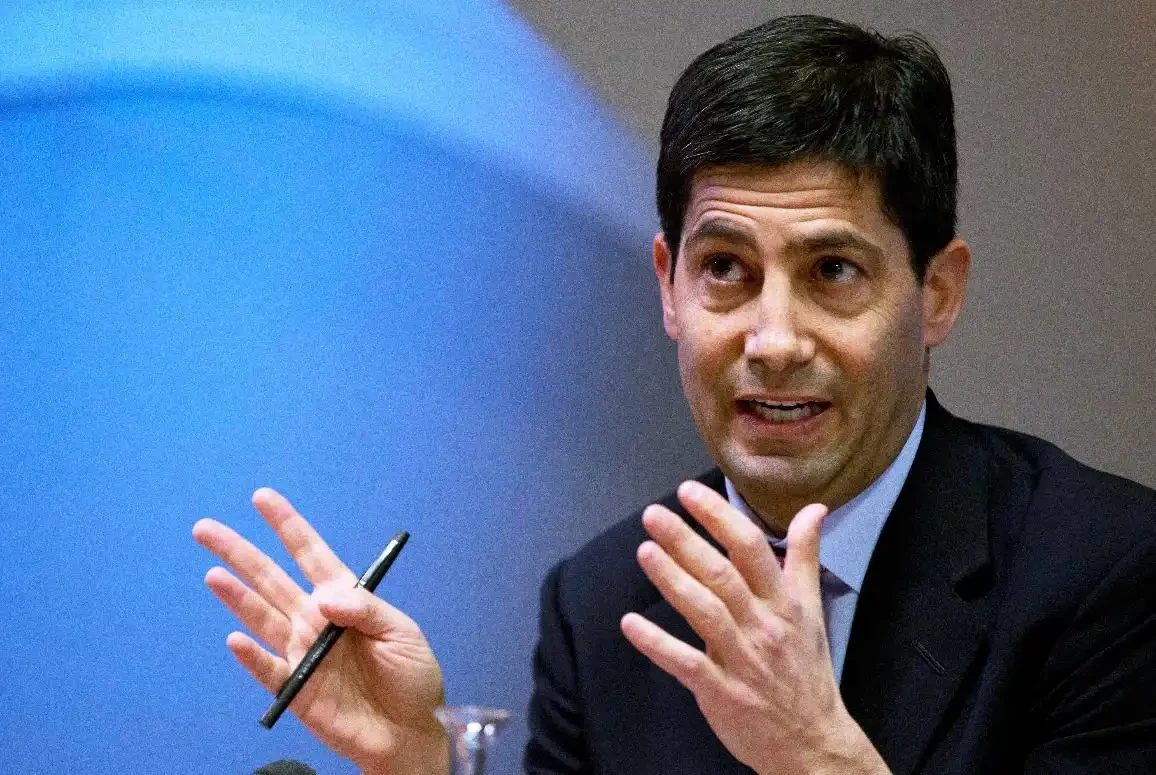
Trump nominated Warsh partly in the hope that he would be more cooperative with the White House's cost-reduction agenda than Powell. Treasury Secretary Bessent has spent the past few months placing the reduction of Treasury borrowing costs at the core of the White House's cost-cutting promises. As he detailed in a speech at the New York Fed last fall, lowering Treasury borrowing costs means lowering corporate borrowing costs, lowering mortgage rates, lowering car loan payments, and improving affordability for all Americans.
However, as mentioned earlier, the reality today is that the bond market has pushed five-year inflation expectations to 2.7%, the highest since 2023. A May 17 report from Yardeni Research directly points out that the 2-year Treasury yield of 4.08% is the market telling the Fed, through price action, that the current target range of 3.50%-3.75% is set too low.
According to Warsh's own logic, he should continue raising rates, or at least not cut them. But the White House, particularly Trump himself, has a nearly open political demand for rate cuts.
On the other hand, those who listened to Warsh's pre-confirmation hearing testimony would know he spent considerable time discussing AI. He believes AI will boost productivity and suppress inflation, thus supporting rate cuts. The problem is that short-term data shows no signs of this happening yet.
José Torres, Senior Economist at Interactive Brokers, likely represents a significant portion of market opinion. In his May 15 report, he concluded that due to lack of progress on geopolitical conflicts, the market has abandoned bets on room for interest rate tightening.
If Warsh chooses to succumb to Trump's political pressure and force a rate cut, the bond market would likely respond with higher long-end yields, making life harder for all duration assets. If Warsh chooses a hawkish stance, the expectation for rate cuts this year would evaporate, forcing a complete repricing of all bets on liquidity easing.
This means that the market's bets over the past few months on Warsh cutting rates after taking office may be completely overturned.
HYPE Leading the Crypto Recovery
After the leverage wipeout post-October 10, the recovery period for the crypto market should have been fueled by fresh capital inflows.
With a $4 trillion IPO pipeline in 2026 and AI names continuing to generate wealth effects, the appeal of altcoins in this environment is being continuously diluted. Even Bitcoin, the most institutionally-oriented crypto asset, is ceding ground to traditional markets. The weekly $1 billion outflow from ETFs is the most direct evidence.
High interest rates in the bond market lead to Bitcoin ETF outflows. The repair period is being indefinitely prolonged, and crypto consistently fails to keep pace with the overall upward rhythm of risk assets.
However, it's worth noting that some divergence is appearing within the broader crypto market.
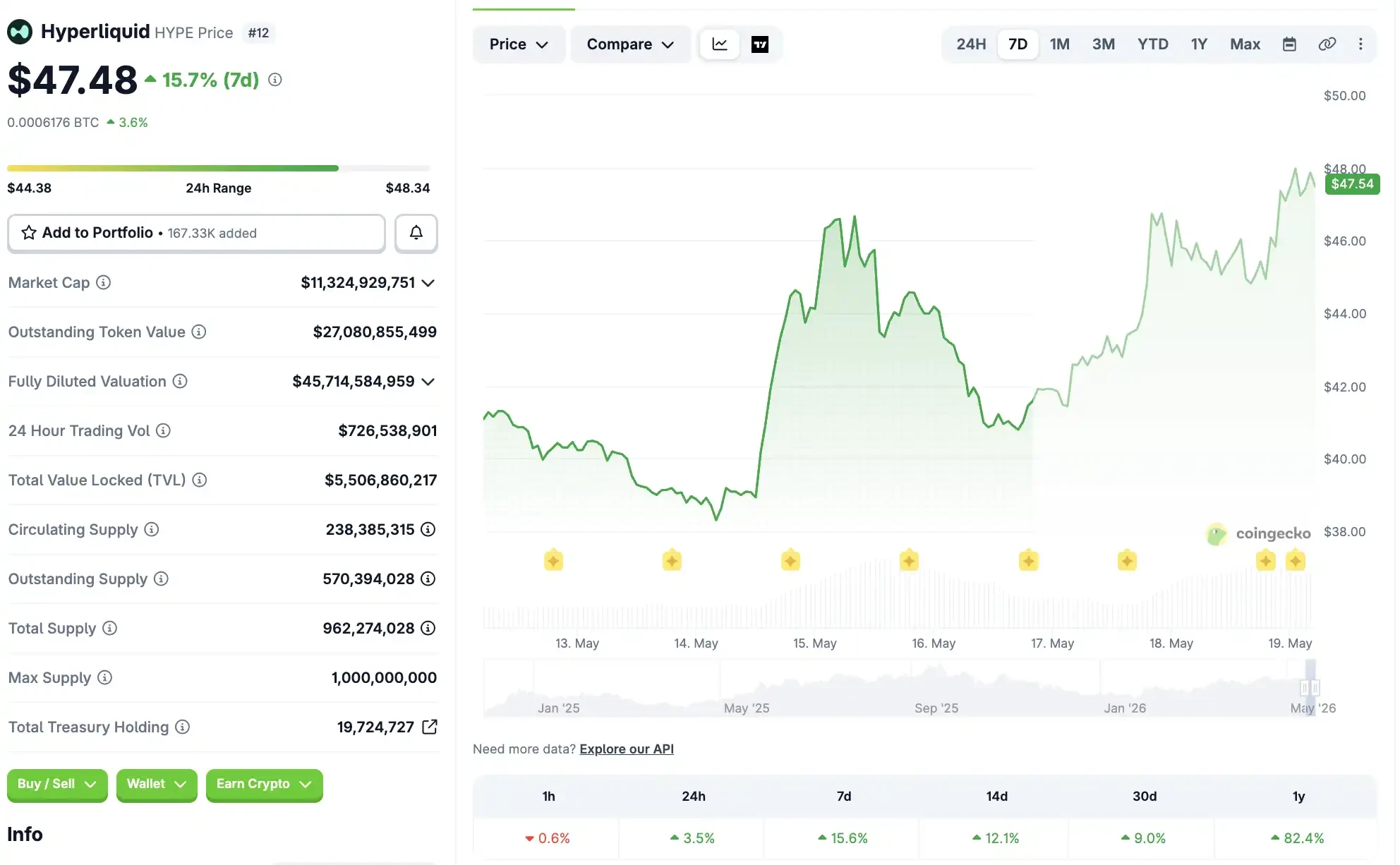
Hyperliquid rose 15% for the week to $48, bringing its year-to-date gains to 69%, driven precisely by the pre-IPO price discovery narrative on HIP-3. Assets that can tell new stories and capture entry points to traditional markets are still rising, while purely beta-driven assets are being compressed in valuation, and even Bitcoin is being sidelined.
Zooming out to the broader financial landscape reveals that three forces have been simultaneously draining liquidity from the crypto space in recent weeks. The bond market is pulling risk-free capital back with 5% yields. The IPO market is grabbing incremental risk budgets with a $4 trillion pipeline. And new Fed Chair Warsh may not be able to deliver on the expected rate cuts this year.
However, it's not all bearish for Bitcoin's next phase.
The upside catalyst is the CLARITY Act taking effect in August. This represents the biggest policy window of the year for crypto, where increased regulatory clarity could directly release some pent-up institutional demand.
The downside risk is that before the catalyst materializes, Bitcoin might need to retest the $70,000 level. If the current $77,000 level fails to hold, the next effective support is likely around the $70,000 mark.





