2026 US Stock Crypto Sector Deep Research Report: Opportunities, Risks, and Allocation Framework


- Core View: The US stock crypto sector is moving from a "product innovation period" towards an "ecosystem maturity period." New products and business models represented by spot Bitcoin/Ethereum ETFs as the cornerstone, Ethereum staking ETFs, and Ethereum treasury companies are driving the compliance, institutionalization, and yield structuring of crypto assets. However, high volatility, regulatory uncertainty, and product leverage risks remain core challenges.
- Key Elements:
- A "three-pillar" product landscape: Spot ETFs (dominated by BlackRock's IBIT), crypto treasury/mining companies (e.g., MicroStrategy and BMNR), and leveraged/thematic ETFs (e.g., MSTX, BKCH) constitute the core investment categories.
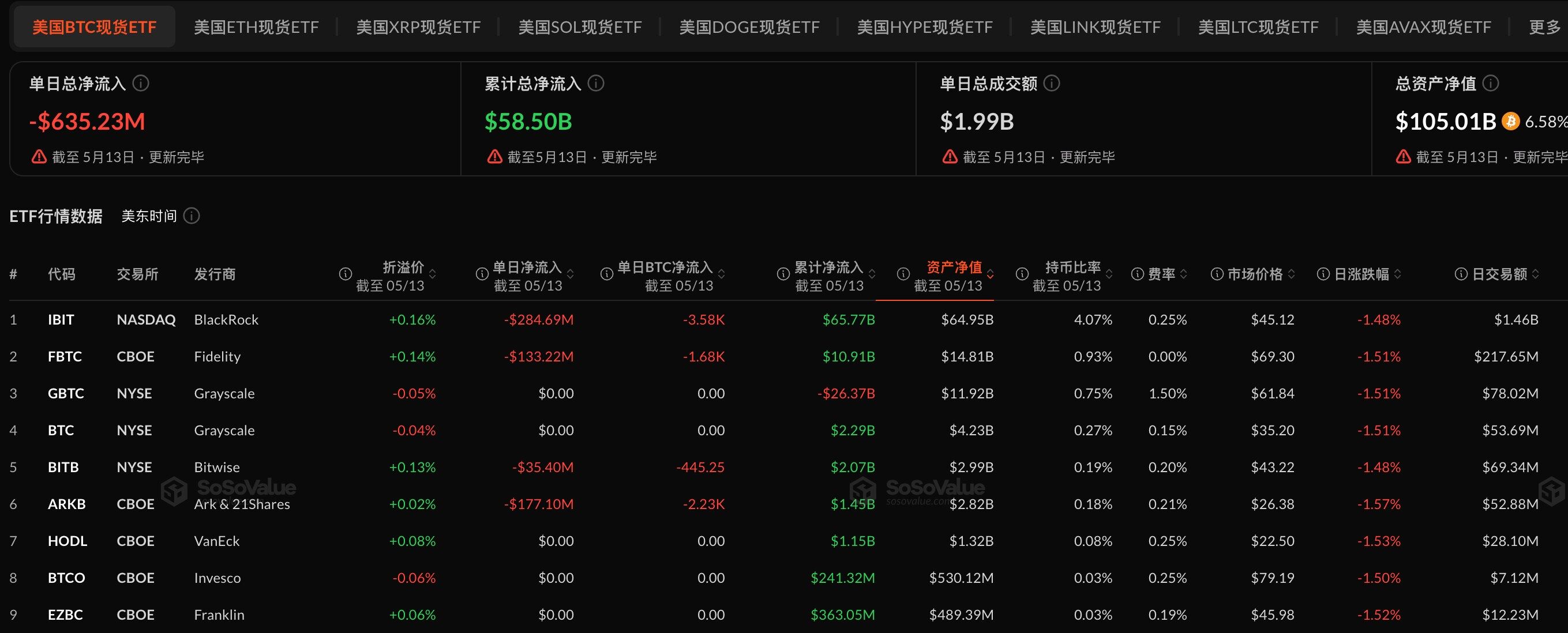
- Market Scale and Dominance: Bitcoin spot ETFs collectively hold approximately 1.32 million BTC, with a total scale of about $105 billion; among them, BlackRock's IBIT commands a 60% market share with approximately $65 billion in assets, demonstrating a strong top-tier effect.
- Paradigm Innovation in Business Models: Ethereum treasury company BMNR holds approximately 4.8 million ETH (3.98% of total supply) and generates approximately $196 million in annual staking yield, achieving a "native cash flow generation" model that covers expenses without selling its holdings.
- Key Regulatory and Product Milestones: The 2025 GENIUS Act establishes a federal regulatory framework; BlackRock's ETHB first supports staking yield, and ETFs for altcoins like XRP/Solana are approved, marking the evolution of the product line into a "one superpower, multiple strong players" multi-category era.
- Key Risk Warnings: High volatility of crypto assets (BTC declined ~18% in 2026), financial leverage of crypto treasury companies (e.g., MSTR's bond financing risk), compounding decay of leveraged ETFs (MSTX/MSTU plummeted 80% in 2025), and ongoing regulatory uncertainty.
I. Definition and Evolutionary Logic
The U.S. stock cryptocurrency sector essentially represents an investment category that allows trading cryptocurrency-related assets in the form of stocks on traditional stock exchanges. Investors can participate in this high-growth sector through familiar securities accounts without needing to directly hold cryptocurrency private keys. The evolution of this model reflects the complete journey of crypto assets from the "geek circle" to "mainstream institutions."
In terms of evolution, the growth of this sector has gone through three key phases. The first phase was the "Underground Mining Period" (2017-2020), represented by pure mining companies like Riot Blockchain and MARA Purpose. These entities had single business lines, chaotic governance, and unclear valuation logic, trading primarily on the Pink Sheets with extremely low liquidity, attracting little attention from mainstream institutions. Crypto stocks from this period were highly correlated with cryptocurrencies themselves, exhibiting volatility far exceeding the underlying assets and earning the moniker "Leveraged Bitcoin."
The second phase was the "Compliant Securitization Period" (2021-2023), marked by Coinbase's (NASDAQ: COIN) direct listing and MicroStrategy's (NASDAQ: MSTR) massive Bitcoin accumulation program. The emergence of compliant exchanges signaled the industry's standardization. Coinbase's milestone direct listing on the NASDAQ in April 2021, as the only publicly listed crypto exchange in the US, was a landmark event. Concurrently, MicroStrategy accumulated over 150,000 Bitcoins between 2020 and 2023, transforming itself into a "Bitcoin Treasury Company" and pioneering a new paradigm for corporate valuation.

The third phase is the "ETF Product Explosion Period" (2024-present). The SEC's approval of spot Bitcoin ETFs marked the formal entry of crypto assets into the mainstream U.S. financial product ecosystem. BlackRock's iShares Bitcoin Trust (IBIT) accumulated hundreds of billions of dollars in assets within months of its launch, becoming the fastest-growing ETF category in history. The core characteristic of this phase is productization: the risk-return profile of cryptocurrencies is packaged into standardized financial products, lowering the compliance barrier for institutional entry and enabling retail investors to access professional-grade exposure at a lower cost.
II. Market Structure and Competitive Landscape
From a market structure perspective, the U.S. stock cryptocurrency sector in 2026 presents a "three-pillar" product landscape: spot ETFs dominate, crypto equity companies provide beta exposure, and leveraged and thematic products cater to specific needs.
In the spot ETF arena, the market is highly concentrated. Bitcoin ETFs collectively hold approximately 1.32 million BTC, with a total current market cap of around $105 billion. BlackRock's iShares Bitcoin Trust (IBIT) commands roughly 60% market share with about $65 billion in assets under management, benefiting from a competitive expense ratio of 0.25%. Fidelity's Bitcoin Trust (FBTC), also with a 0.25% fee and around $14.8 billion in assets, is IBIT's most direct competitor. Grayscale's GBTC, formerly the largest crypto trust, faces pressure from its higher 1.50% fee after converting to an ETF and currently holds about $12 billion. Meanwhile, the lower-fee (0.15%) BTC Mini Trust (approximately $4.2 billion) has attracted rate-sensitive capital. As for new entrants, Morgan Stanley's MSBT officially listed in April 2026, signaling the entry of traditional banking giants into the crypto ETF space, a development with profound industry implications.
Regarding Ethereum ETFs, BlackRock's ETHA (approximately $7 billion in AUM) holds a leading position and is the largest single Ethereum ETF. Notably, BlackRock's ETHB, launched in 2026, supports staking rewards for the first time, pioneering direct access to native crypto yield within an ETF structure. This innovation could reshape future ETF product design logic. Altcoin ETFs saw formal approval following regulatory reforms in 2025, with XRP and Solana categories each attracting around $1 billion. It is projected that over 26 new altcoin ETFs (e.g., Dogecoin, Chainlink) will launch in 2026, transitioning the crypto ETF landscape from a BTC/ETH duopoly to a "one superpower, multiple strong players" multi-asset era.
In the crypto treasury and mining company space, a structural divergence is underway. MicroStrategy (MSTR), the pioneer of the Bitcoin treasury model, currently holds about 700,000 Bitcoin, making it the publicly listed company with the largest Bitcoin holdings globally. However, with Bitcoin's price down approximately 18% year-to-date in 2026, approaching the cost basis of some companies, pure-play miners like MARA and RIOT have significantly slowed their accumulation, raising questions about the sustainability of the treasury model. In contrast to the "forced selling" dilemma faced by many Bitcoin treasury companies, emerging Ethereum treasury companies like Bitmine Immersion Technologies (BMNR) demonstrate a distinct business logic. BMNR generates approximately $196 million in recurring staking revenue annually through its MAVAN staking infrastructure, allowing it to cover operational expenses without selling crypto assets, creating a true "native cash flow generation" capability. As of 2026, BMNR holds about 4.8 million ETH, valued at approximately $10.8 billion, representing 3.98% of the total global ETH supply. Its strategic target is to hold 5% of the global ETH supply. Achieving this scale would make BMNR a significantly influential holder within the Ethereum ecosystem.
Leveraged, inverse, and thematic ETFs exhibit significantly different risk-return profiles that require careful investor scrutiny. Leveraged ETFs amplify daily returns using derivatives. During the market correction in late 2025, the 2x Long MicroStrategy ETFs MSTX and MSTU plunged around 80%, wiping out approximately $1.5 billion in retail investor capital, highlighting the extreme risks of these products. Mainstream products include BITO (1x BTC futures), ETHU (2x ETH futures), and MSTZ (inverse MSTR). Blockchain thematic funds offer indirect exposure for more conservative investors: BKCH (Global X) is heavily weighted in Coinbase and major miners; BLOK (Amplify) covers approximately 80 blockchain-related stocks; STCE (Schwab) has a low expense ratio of 0.30% and holds about 40 stocks including MicroStrategy and Bitdeer, suitable as a core long-term holding tool.
III. Core Risk Analysis
Beneath the high-growth characteristics of the U.S. stock cryptocurrency sector lies a complex and multi-faceted risk landscape. Investors need a clear understanding of the following four key risks before constructing a portfolio.
The first risk is the dynamic uncertainty of the regulatory framework. Although the "GENIUS Act" in 2025 established the first federal stablecoin framework, formalized the U.S. Strategic Bitcoin Reserve, and allowed banks to engage in crypto custody, the overall regulatory structure for cryptocurrencies remains in flux. The jurisdictional division between the SEC and CFTC over crypto assets is not fully clear, and the approval pace for some altcoin ETFs still faces potential policy friction. Furthermore, if the Trump administration adjusts its financial regulatory direction in 2026, the continuity of related policies could be impacted, meaning the sustainability of regulatory tailwinds remains to be seen.
The second risk is the high volatility of the underlying assets. The cryptocurrency market is known for extreme price swings, evidenced by BTC's roughly 18% decline year-to-date in 2026. This volatility is transmitted to investors through ETFs and stocks. Moreover, due to friction costs like management fees, discounts to NAV, and liquidity premiums present in some products, actual losses can exceed the direct decline of the underlying asset. Investors allocating to this sector should treat it as a high-risk asset class, strictly control position sizing, and avoid concentrated holdings that lead to significant tail risk.
The third risk involves the financial structure of crypto treasury companies. For MicroStrategy, the core logic of its "treasury model" involves raising capital through convertible bonds and preferred stock to purchase Bitcoin, betting that Bitcoin's appreciation will exceed its financing costs. However, this model carries significant financial leverage. If Bitcoin continues to decline, not only does the value of the Bitcoin holdings shrink, but interest expenses and debt repayment pressures on the financing side also amplify concurrently. While BMNR's staking revenue model offers more resilience, staking yields themselves fluctuate with Ethereum's price and face the potential risk of Slashing—if a validator node engages in malicious behavior, the staked ETH may be penalized. Investors in such assets must monitor both the company's financial structure and the cyclical risks of the underlying crypto assets.
The fourth risk is product-level liquidity and tracking error. For leveraged ETFs and smaller-cap crypto stocks, extreme intraday volatility can lead to liquidity crunches, widening bid-ask spreads, and increasing transaction costs. More critically, the "Compounding Decay" mechanism of leveraged ETFs means that even if the underlying asset moves in the expected direction, long-term holding can result in cumulative losses from daily rebalancing—the late 2025 MSTX/MSTU crash is a stark reminder. Additionally, while Grayscale's historic discount for GBTC has narrowed post-conversion, its higher management fee and lack of staking yield support still make it less attractive to institutional capital compared to competitors like IBIT.
IV. Innovation Trends and Sector Opportunities
Despite the risks, the U.S. stock cryptocurrency sector in 2026 exhibits several noteworthy new trends that are reshaping investment logic and the product landscape.
Trend One is the advent of "Staking ETFs," the most groundbreaking product innovation of 2026. BlackRock's ETHB supports staking rewards for the first time, allowing ETF holders to indirectly earn Ethereum staking yields through their shares without running validator nodes or using DeFi protocols. This innovation upgrades the ETF from a passive holding vehicle to an active yield generator, significantly expanding its use cases. For institutional investors, ETHB provides a compliant, convenient way to earn yield on ETH without managing private keys—a need previously largely unmet in traditional finance. If ETHB gains market traction, more staking ETFs based on other PoS chains are expected, further broadening the ETF product frontier.
Trend Two is the rise of specialized Ethereum treasury companies. Unlike the "buy-and-hope" Bitcoin treasury model, Ethereum treasury companies generate native yield through staking, creating a business loop where staking income can cover operating expenses even during a crypto bear market, eliminating the need for forced asset sales. With a strategic target of holding 5% of the global ETH supply, BMNR aims to become a systemically important holder in the Ethereum ecosystem. Its strategic decisions (e.g., participation in PoS governance, adjusting staking parameters) could materially impact the entire network. This model may spur the emergence of more specialized ETH treasury companies, forming a new investment sub-sector.
Trend Three is the structural inflow of institutional capital towards on-chain fixed-income assets. Despite Bitcoin's roughly 18% decline year-to-date in 2026, institutional funds are migrating towards on-chain fixed-income assets. This trend is linked to the maturation of Ethereum's staking ecosystem. Projects like EigenLayer and Pendle Finance have built restaking and yield tokenization infrastructure, allowing staking yields to be structured, fragmented, and even used as collateral within DeFi. The stable yields generated by Ethereum treasury companies like BMNR through MAVAN staking perfectly align with institutional demand for "crypto-native yield without direct price exposure."
Trend Four is the continued expansion and multi-chain diversification of ETF product lines. From the BTC/ETH duopoly to the launch of major altcoin ETFs like XRP/SOL, and the anticipated approval of emerging assets like Dogecoin and Chainlink in 2026, ETFs are evolving from "full coverage of major coins" towards precise, thematic allocation. Chainlink's oracle infrastructure, Solana's high-performance blockchain positioning, and Dogecoin's meme culture cater to distinct investment themes like DeFi, infrastructure, and community culture. The multi-chain expansion of ETFs will enable investors to more precisely express views on specific sectors rather than passively holding the entire crypto market.
V. Participation Strategies and Investment Logic
For investors considering allocating to the U.S. stock cryptocurrency sector, the following provides a risk-based reference framework for evaluation.
For a core portfolio foundation, BTC and ETH spot ETFs, particularly low-fee options like IBIT and ETHA, are the most universally accessible tools. Given the existing scale of ~$86.9 billion in BTC spot ETFs and ~$18 billion in ETH ETFs, coupled with the brand backing of the world's largest asset manager BlackRock, these products offer ample liquidity, low tracking error, and clear regulatory compliance. They are recommended as an "industry beta" allocation within a portfolio, with a position size of 1% to 5%, primarily to gain exposure to the overall trend of the crypto market.
For industry beta exposure, blockchain thematic funds like BKCH and BLOK offer diversified exposure to stocks of exchanges, mining hardware manufacturers, and infrastructure companies. Compared to holding a single crypto company, thematic funds can mitigate the impact of idiosyncratic black-swan events while benefiting from the systemic growth of the entire crypto ecosystem. For more risk-averse investors, this might be the most appropriate entry point. The relatively low-fee STCE (0.30%) is suitable as a long-term core holding.
For high-risk, high-reward opportunities, Ethereum treasury company BMNR and Bitcoin treasury company MSTR are suitable for investors willing to tolerate higher volatility in exchange for potential outsized returns. BMNR's staking revenue model provides operational resilience relative to MSTR, while MSTR's "aggressive accumulation plus leverage" strategy demonstrates significant elasticity in bull markets. Position sizing for such assets is recommended at 0.5% to 2%, requiring continuous monitoring of changes in the company's financial structure and the impact of crypto asset price movements on debt servicing capabilities.
For tactical allocation, leveraged and inverse ETFs like MSTX and MSTZ are suitable only for professional investors with short-term timing abilities. Holding periods should be measured in days or weeks, and long-term holding is strictly prohibited. The compounding decay mechanism means that even with a correct directional bet, long-term returns can significantly underperform the underlying asset's price movement. Most ordinary investors should exercise restraint with this category.
It is critically important to emphasize that the above analysis is for reference only and does not constitute investment advice. Crypto assets carry extremely high volatility and uncertainty. Investors should make prudent decisions after fully assessing their own risk tolerance. Leveraged products involve compounding decay, staked assets face slashing risks, and crypto treasury companies face financial leverage pressures. Position sizes in any single asset should not be overly large. Maintaining portfolio diversification is key to long-term survival.
VI. Conclusion and Outlook
In summary, the U.S. stock cryptocurrency sector in 2026 is at a critical juncture, transitioning from a "product innovation phase" to an "ecosystem maturity phase." Spot Bitcoin ETFs opened the door for institutional entry, while Ethereum staking ETFs and Ethereum treasury companies are redefining the business model for "compliantly holding crypto assets." The regulatory framework established by the 2025 "GENIUS Act" provides unprecedented policy certainty for the industry. With banks permitted to offer crypto custody and a federal stablecoin framework in place, the position of crypto assets within the U.S. financial system is now irreversible.
Looking ahead, several key indicators merit continuous monitoring. First, whether the scale of staking revenue for Ethereum treasury companies can continue to grow will determine the long-term viability of this business model. Second, the capital inflows into the staking ETF (ETHB) will validate the market acceptance of the "ETF + native yield" product innovation. Third, the actual approval pace and initial fundraising scale of altcoin ETFs like XRP and Solana will reveal the scope for productization beyond mainstream coins. Fourth, further clarification of the U.S. regulatory framework at the federal level will determine whether the long-term institutional dividends for this sector can persist.