






Deconstructing Circle’s Q1 Earnings: As Interest Rate Tailwinds Fade, USDC Prepares for a Bigger Game


- Core Insight: Circle's Q1 2026 financial report shows total revenue of $694 million, missing expectations, compressed by the Fed's rate cuts reducing reserve yields. However, non-interest income hit a record high, profit margins improved, and USDC on-chain transaction volume surged, indicating a shift from stablecoin issuer to an underlying dollar network, betting on AI and payment ecosystems.
- Key Points:
- Circle's Q1 revenue was $694 million, up 20% year-over-year but below the expected $715 million; Adjusted EBITDA was $151 million, up 24% YoY; Net income was $55 million, down 15% YoY, primarily due to a decline in reserve yields following the Fed's rate cut to 3.5%-3.75%.
- Non-reserve revenue (Other Income) reached $42 million, growing for consecutive quarters, showing income diversification; The RLDC Margin (profit margin after deducting distribution costs) increased to 41%, improving for four straight quarters, reflecting optimized distribution efficiency.
- USDC circulation stood at 77 billion tokens, up 28% YoY; On-chain transaction volume reached $21.5 trillion, up 263% YoY, accounting for 63% of total stablecoin transaction volume globally, indicating a significant increase in usage frequency.
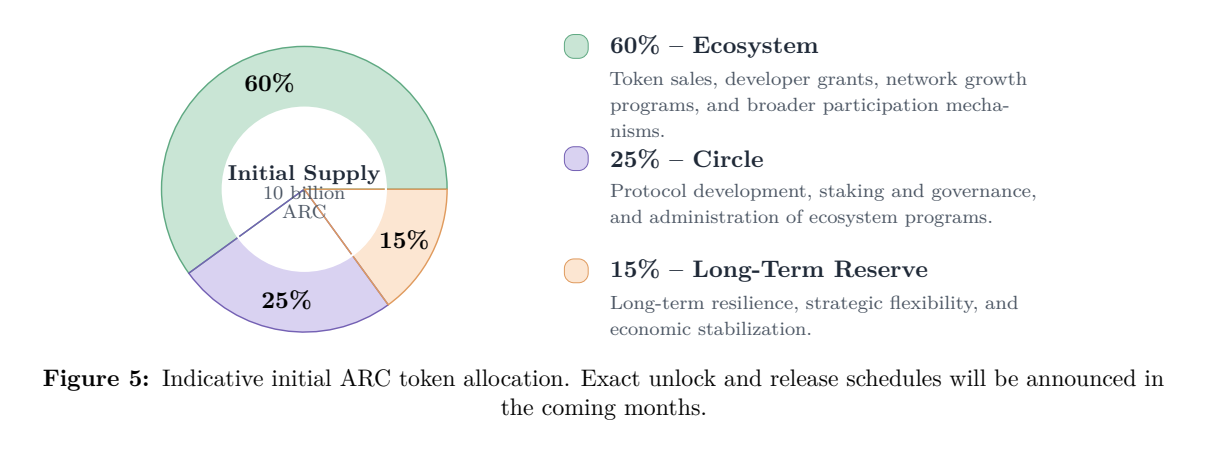
- Circle's payment network, Arc Network, completed a $222 million presale of its ARC tokens, valuing it at $3 billion, with investors including a16z and BlackRock; 60% of tokens are allocated to the ecosystem, 25% to Circle, and 15% to a long-term reserve.
- Operating costs surged to $242 million, up 76% YoY, mainly due to IPO-related stock-based compensation expenses doubling compensation costs to $138 million; The largest expense item was distribution and transaction costs at $405 million, with the Coinbase contract expiring in August.
- The CPN annual transaction volume is estimated at $8.3 billion; Launched a "Custody Payments" product and the Agent Stack tool suite for AI agents to expand payment and financial service capabilities.
Original: Odaily (@OdailyChina)
Author: Azuma (@azuma_eth)
On May 11, before the US stock market opened, stablecoin issuer Circle officially released its Q1 2026 financial report.
The financial data shows that Circle's total revenue and reserve income for Q1 was $694 million, slightly below the market expectation of $715 million; EPS was $0.21, higher than the anticipated $0.18; adjusted EBITDA was $151 million, up 24% year-over-year; net income was $55 million, down 15% year-over-year.
Following the earnings release, CRCL experienced significant volatility pre-market, with an initial gain of nearly 6% gradually being erased amidst fluctuations. As of 22:00, CRCL continued to decline sharply in after-hours trading but quickly reversed to a gain, temporarily trading at $115.74, up 2.52% for the day.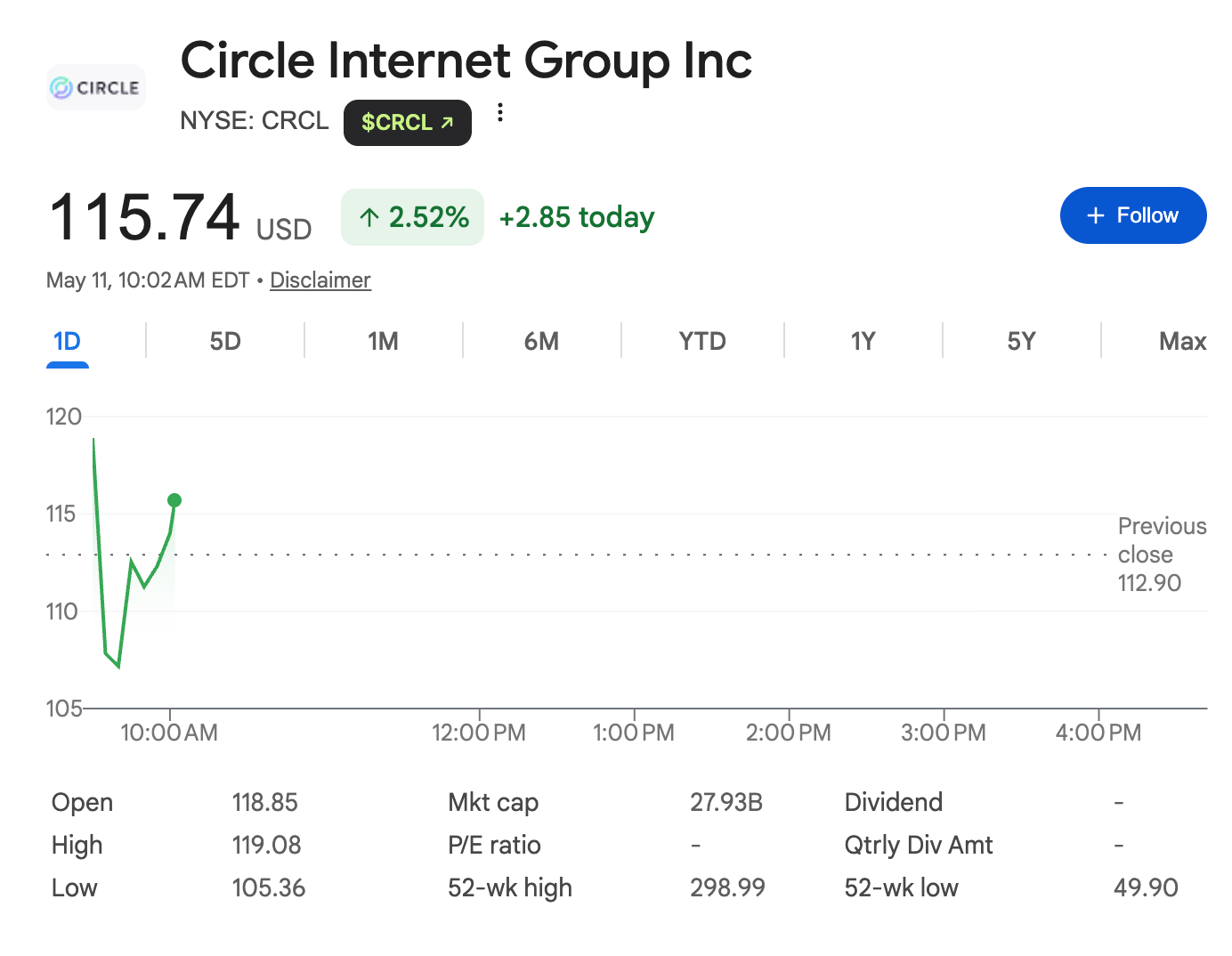
Key Data Interpretation
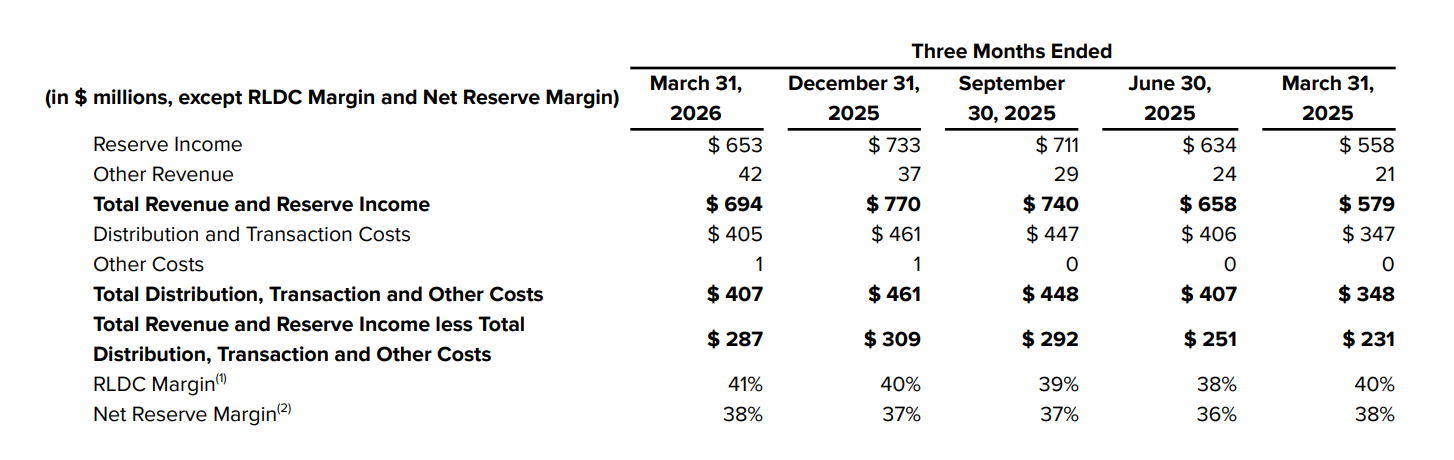
As shown in the report, Circle's total revenue and reserve income for this quarter was $694 million. While this represents a 20% increase year-over-year, it breaks the growth trend observed over several consecutive quarters ($579M ➡️ $658M ➡️ $740M ➡️ $770M ➡️ $694M) and fell short of market expectations.
Circle attributed the slowdown in revenue growth to a decline in the Reserve Return Rate. On December 10, 2025, the Federal Reserve lowered the target range for the federal funds rate by 25 basis points to 3.5%-3.75%, thereby compressing the yield on Circle's reserve assets, which are primarily composed of U.S. Treasury bonds.
However, amidst the relatively weaker revenue, Circle's earnings report still revealed some encouraging segment data.
First, Circle's Other Revenue, excluding Reserve Income, reached a new high of $42 million, showing a trend of growth over several consecutive quarters ($21M ➡️ $24M ➡️ $29M ➡️ $37M ➡️ $42M).
As detailed in our article earlier today, "Earnings, Legislation, Fed... Circle Faces Three Major Tests This Week", this indicates that Circle's revenue sources are becoming more diversified. Its platform services, API tools, and payment products are generating substantial commercial returns, reducing its reliance on interest income.
Another noteworthy metric is the RLDC Margin, defined as revenue minus distribution costs. This reflects the profitability of core business after deducting distribution expenses and is widely regarded as Circle's most critical profitability indicator. This quarter, Circle's RLDC Margin reached 41%, achieving growth for four consecutive quarters (36% ➡️ 39% ➡️ 40% ➡️ 41%). This signifies that Circle is becoming more efficient in managing its distribution costs.
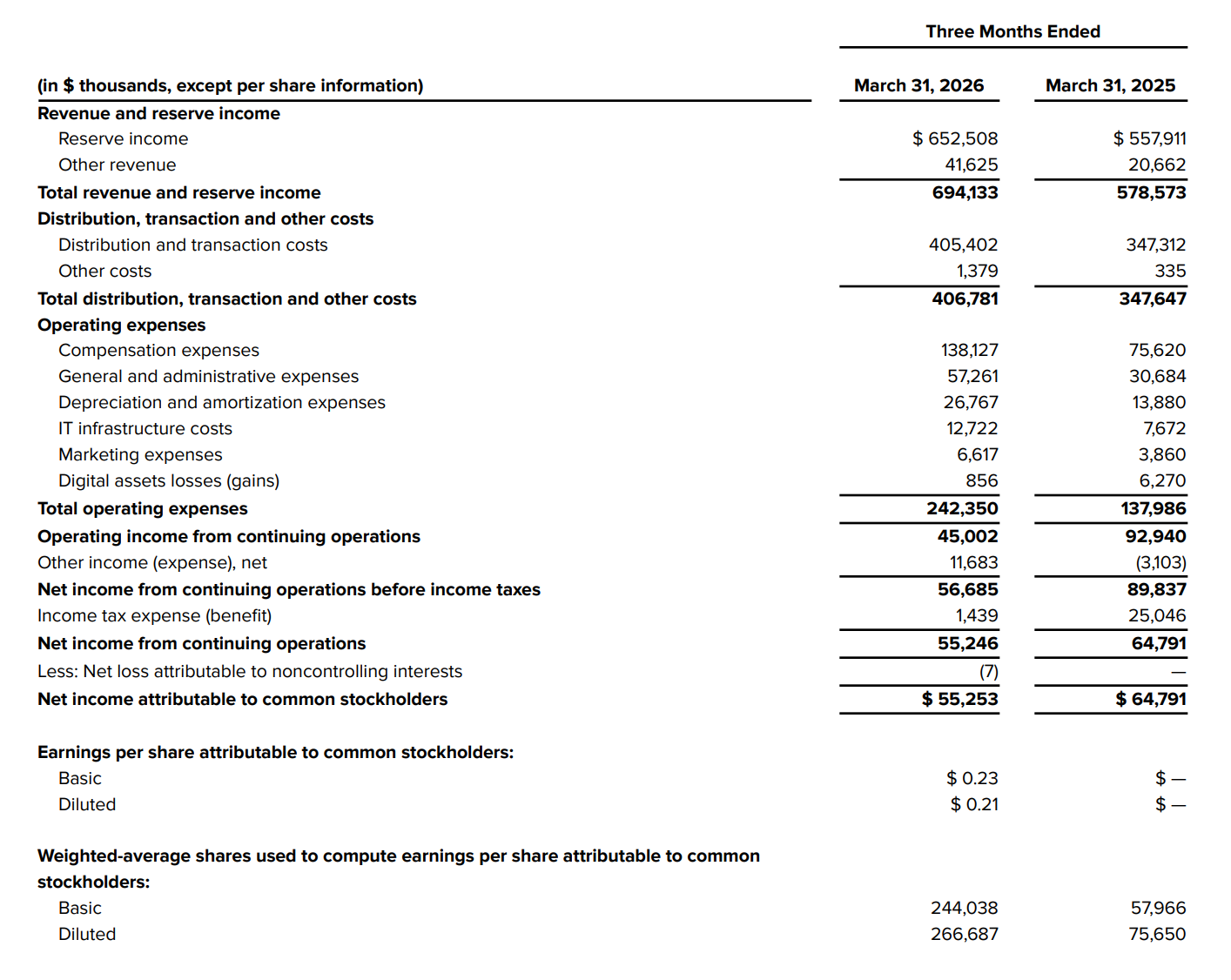
Let's examine the expenditure side. Distribution and Transaction Costs remain Circle's largest expense, totaling $405 million this quarter, up 17% year-over-year. This expenditure is primarily linked to the USDC distribution contract with Coinbase. This contract is set to expire in August this year, and how it is renewed (mainly concerning potential adjustments to the revenue-sharing ratio) will significantly impact Circle's future spending and profitability.
Excluding distribution costs, Total Operating Expenses surged from $138 million last year to $242 million, a year-over-year increase of 76%. The primary driver was Compensation expenses, which nearly doubled from $75.62 million to $138 million. Circle explained this was mainly due to stock-based compensation expenses related to the IPO and associated taxes.
Affected by the surge in expenses, Circle's operating profit for this quarter fell to $45 million, down from $92.94 million in the same period last year; net income attributable to common shareholders decreased from $64.79 million to $55.25 million; earnings per share (EPS) was $0.23, or $0.21 on a diluted basis.
Other Operational Highlights
Beyond core financial data, Circle also disclosed several operational highlights in its Q1 report.
The most critical among these is that USDC's circulating supply reached 77 billion tokens at the end of Q1, up 28% year-over-year. However, USDC's on-chain transaction volume during the same period reached an astonishing $21.5 trillion, a 263% increase year-over-year. Data from Visa Onchain Analytics also shows that USDC accounted for 63% of total stablecoin transaction volume across the network in Q1.
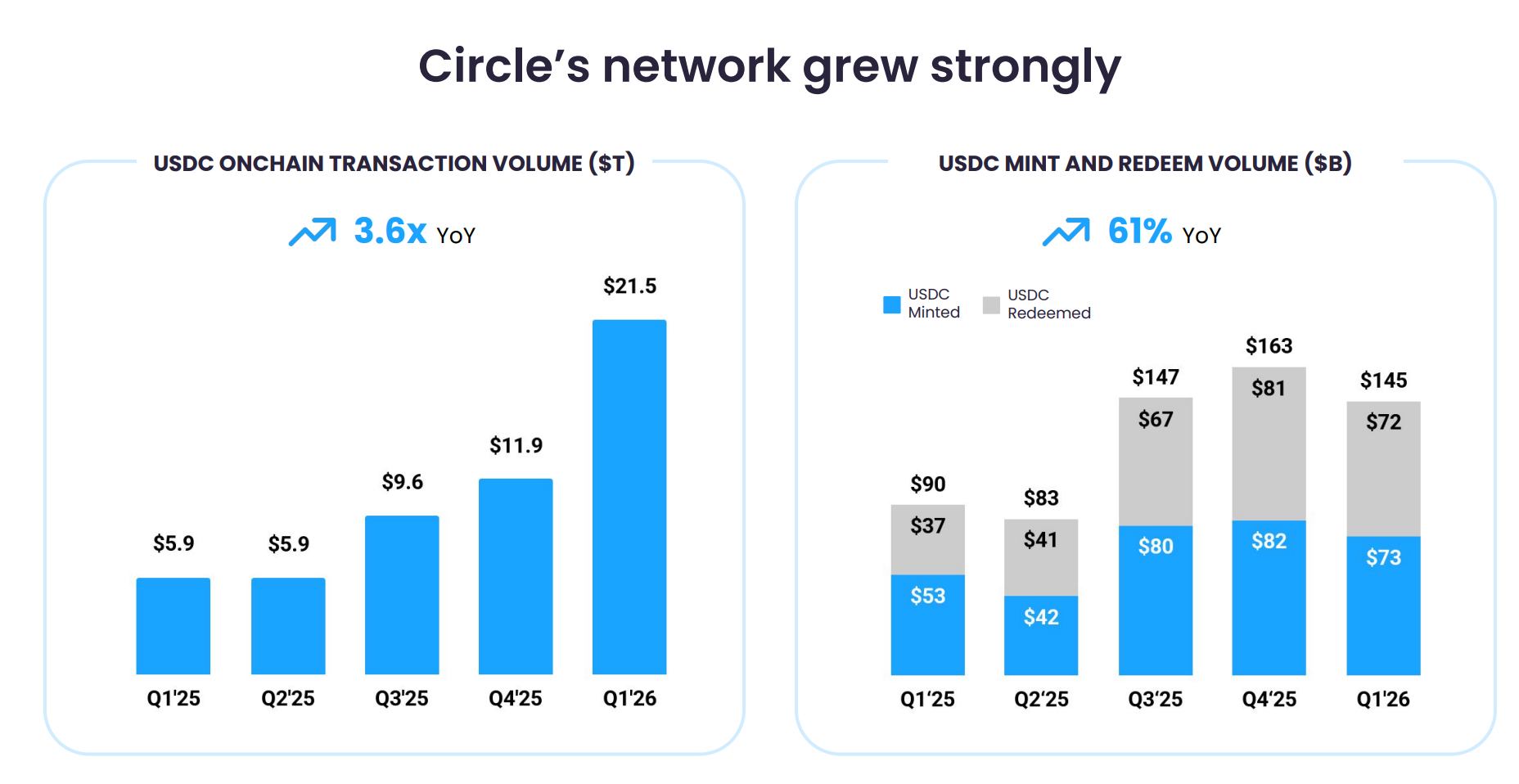
The transaction volume growth rate far exceeds the circulation growth rate, implying that each USDC token is being transferred and utilized on-chain with much higher frequency — USDC is not statically sitting in wallets but is being genuinely and frequently used for payments, DeFi, cross-border settlements, and other use cases.
Another key point is that Circle disclosed that its payment network, Arc Network, has completed a $222 million pre-sale of ARC tokens, achieving a valuation of $3 billion. Investors include prominent institutions such as a16z, BlackRock, Intercontinental Exchange, Standard Chartered, and SBI. The ARC token whitepaper released today indicates that 60% of the tokens will be allocated to the ecosystem (token sales, developer grants, network growth); 25% will be allocated to Circle (protocol development, staking, and governance); and 15% will be allocated to a long-term reserve (strategic flexibility and economic stability).
Furthermore, Circle's institutional payment service, Circle Payments Network (CPN), reached an estimated annualized transaction volume of $8.3 billion (extrapolated from the 30-day period ending March 31). In April, Circle launched the "Managed Payments" product to expand its payment offerings, allowing financial institutions to initiate stablecoin payment services without needing to manage digital assets themselves.
To cater to an AI Agent-driven commercial future, Circle also announced the launch of Agent Stack, a suite of infrastructure services and tools designed for the AI Agent economy, aimed at providing high-speed, low-cost financial service capabilities for autonomously operating AI Agents. Circle co-founder and CEO Jeremy Allaire commented on this vision: "With the ARC token pre-sale, the building momentum of Arc Network, and the launch of Agent Stack, we are building trusted infrastructure for AI-native economic activity and a more programmable internet financial system."
Circle's New Strategic Play
Against the macro backdrop of waning high-interest-rate dividends (with Warsh succeeding as Fed Chair likely promoting a "rate cut + balance sheet reduction" strategy), Circle is clearly unwilling to be entirely subject to the Fed's interest rate policies. Its strategic focus has quietly shifted towards diversifying non-interest income sources.
Based on the details disclosed in this quarter's report, following the successive launches of CPN, Managed Payments, Agent Stack, and Arc Network, Circle's ambition extends beyond being just a "stablecoin issuer." It is attempting to position USDC as the foundational dollar network for the internet era. Under this new vision, Circle's target audience is no longer limited to exchanges or crypto-native users but is expanding comprehensively into cross-border payments, enterprise settlements, and even the AI Agent economy.
Circle's ambition is unmistakably clear: to completely transform USDC from a "static reserve asset" into a "circulating lifeblood of the economy." This is perhaps the grand strategic game Circle truly intends to play.


