SunX Research Weekly Report | May FOMC Concludes and ETF Capital Surges: Macro and Liquidity Deconstruction of BTC's Stabilization


- Core Viewpoint: Against the backdrop of a macro "risk-on window" established by the Fed's dovish signals, despite the DeFi security crisis on the crypto chain, the influx of Wall Street ETF capital (nearly $1 billion in weekly net inflows) has propelled Bitcoin above $81,000, with market capital accelerating its concentration towards core assets (BTC/ETH).
- Key Elements:
- The May FOMC meeting kept interest rates unchanged, and Powell's dovish signals eliminated market fears of a rate hike resumption within the year, providing a safe window for risk assets.
- The large lending protocol Kelp lost over $200 million due to a multi-signature vulnerability, severely damaging DeFi trust and accelerating capital flow back to centralized platforms with proof of reserves.
- Bitcoin broke through $81,000, Ethereum stabilized at $2,360, while altcoins suffered from a liquidity drought, leading to capital concentration in core assets.
- The US Bitcoin spot ETF saw weekly net inflows of $996 million, with total net assets surpassing $100 billion; the Ethereum ETF recorded net inflows of $275 million, demonstrating institutional conviction in accumulation.
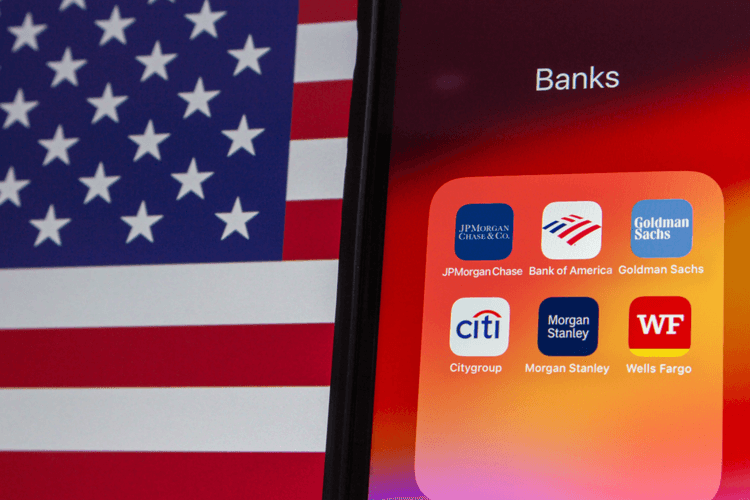
- Morgan Stanley's ETF (MSBT) saw net inflows of $103 million in its first six days of trading, significantly accelerating the trend of Wall Street's "old money" entering the market through low-fee products.
1. Macro & Traditional Finance (Macro): FOMC Dovish Signals & the Establishment of a "Long Window"
1. The May FOMC Meeting Sets the Tone: Dispelling Rate Hike Concerns, Liquidity Expectations Stabilize The most significant event in the macro market this week was the conclusion of the May FOMC meeting. The Fed, as expected, decided to maintain the target range for the federal funds rate, aligning with Wall Street's general expectations. More crucially, Fed Chair Jerome Powell delivered dovish signals during the subsequent press conference: despite recent inflation data (such as core CPI and PCE) showing some stickiness, the committee believes the current policy rate is sufficiently restrictive, making the "next move a rate hike" highly unlikely.
Additionally, the Fed's characterization of the labor market as "moving towards better balance" suggests it is seeking economic data support for future rate cuts.SunX Analysis: This FOMC meeting completely erased the market's earlier panic pricing of a "resumption of rate hikes within the year," which had been fueled by the rebound in inflation. The removal of policy uncertainty has built a relatively safe "long window" for global risk assets (including US equities and Crypto) through the remainder of the year.
2. US Equity Sector Rotation: The Continuation of the AI Rally and Cross-Market Hedging Supported by the Fed's policy backstop, the US stock market remains immersed in optimism over a soft landing. Capital is rapidly rotating between the AI supply chain upstream (e.g., memory, optical modules), tech giants, and core software stocks. However, significant pricing divergence persists among major asset classes: the bond market and prediction markets are pricing long-tail inflation risk far more pessimistically than the equity market.
For professional traders, this cross-market pricing mismatch offers excellent arbitrage opportunities. While maintaining a long position in core tech stocks or BTC, establishing low-cost tail-risk hedges using derivative instruments is a necessary tactic to guard against unexpected geopolitical black swan events.
2. Crypto Market Fundamentals (Crypto): Resilience After a Black Swan Event and the Surge of Core Assets
1. DeFi Trust Damage and the Onshore Shift of Liquidity The native crypto market has recently suffered a heavy blow. The major lending protocol Kelp was breached by hackers due to a multi-signature vulnerability, resulting in direct losses of over $200 million. In a reckless pursuit of growth, the protocol had previously overlooked risk control底线, accepting high-risk assets as collateral, ultimately leading to devastating bad debt.
This security incident represents a significant negative for trust in the entire DeFi lending ecosystem and smart contract public chains. It may not only set back the development of on-chain uncollateralized lending but also severely weakens the willingness of traditional compliant capital to seek yields through DeFi channels. This will further accelerate the flow of risk-averse capital back to centralized, secure platforms with 100% reserve proof.
2. Core Assets Defy the Downtrend: BTC Breaks Through $81,000, ETH Stabilizes at $2,360 Amidst the panic triggered by the on-chain crisis, leading crypto assets have demonstrated remarkable resilience and upward momentum, supported by positive macroeconomic factors. As of the latest data,Bitcoin (BTC) price has strongly broken through the $80,000 mark, trading near $81,100;Ethereum (ETH) has steadily climbed and stabilized around $2,360.
During this turmoil, the Matthew Effect of capital concentrating on core assets has been amplified infinitely. Institutions represented by MicroStrategy (MSTR) have displayed record-breaking purchasing power, splurging on 34,000 BTC in a single week. A very strong positive spiral is forming between their stock price and the BTC price. In contrast, the altcoin market, plagued by strong-whale manipulation and liquidity drying up, shows dismal overall PNL performance, with investment value facing severe challenges.
3. Micro Divergence in the Futures Market: Precursor to a "Short Squeeze" Realized and the Main Upwave Affected by a combination of the prior security incident and macro volatility, the micro-derivatives structure of the crypto market had shown a significant divergence. Although funding rates in the Futures market turned broadly negative, with bearish sentiment extremely crowded at the ports, the poor risk-reward ratio ultimately triggered a market reversal, driven by the resonance of active spot buying and ETF inflows. The market has now realized a major technical "Short Squeeze" campaign against bears, completely demolishing the technical barriers hindering the broader market uptrend.
3. ETF Surge and "Old Money" Entry: Nearly $1 Billion in Net Inflows Seize Pricing Power
In the darkest hour of low on-chain sentiment, traditional Wall Street ETF capital treated the FOMC's stability signal as a starting gun. Displaying astonishing conviction to accumulate, they successfully turned the year-to-date capital flows positive.
1. Giants Absorb Capital, Fund Flows Return to the Spotlight
● US Bitcoin ETFs: Recorded a staggering $996 million in total net inflows last week, pushing total net asset value past the $100 billion mark (reaching $101.45 billion). BlackRock's IBIT remained the absolute powerhouse, absorbing $906 million in a single week, rebounding approximately 19% cumulatively from the earlier sell-off.
● US Ethereum ETFs: Followed closely, capturing $275 million in net inflows (with BlackRock's ETHA contributing $99.2 million), signaling that institutional long-term allocation appetite for ETH is strongly reviving.
● Hong Kong Market: Hong Kong Bitcoin spot ETFs saw net inflows of 44.2 BTC, but Ethereum spot ETFs experienced net outflows of 483.67 ETH, revealing a slight divergence in specific asset choices between Eastern and Western capital.
2. Morgan Stanley's Catfish Effect and the Rise of Multi-Asset ETFs The battle for capital within Wall Street is intensifying:
● Morgan Stanley (MSBT) Catches Up: In just six trading days since its listing, MSBT saw daily inflows of $19.3 million, accumulating net inflows of $103 million, surpassing the WBTC fund, which launched in January this year. Leveraging its market-low fee of 0.14%, the price war among old-money institutions is accelerating the entry of traditional wealth management capital.
● Aggressive Horizontal Expansion of the Track: Crypto market maker GSR launched the first US actively managed multi-asset crypto ETF with accessible staking functionality (GSR Crypto Core3 ETF, ticker BESO) on Nasdaq, covering BTC, ETH, and SOL. Goldman Sachs officially submitted an application for a Bitcoin Premium Income ETF; Bitwise's spot Avalanche ETF (BAVA) saw trading volume reach $400,000 within the first 90 minutes of its launch. These moves signal Wall Street's accelerating evolution from single-asset products towards diversified, yield-bearing complex financial instruments.
4. SunX Trading Strategy Guide: The Steady Choice of Safeway and Saferich
In summary, the current market is in a deep game-theoretic period characterized by "positive FOMC macro outlook + Wall Street capital providing support vs. frequent native on-chain crises." Under the new framework of BTC strongly breaking $81,000 and ETH stabilizing at $2,360, the trend of capital concentrating on core assets is irreversible.
For SunX professional traders and high-net-worth users, this week's core strategy should implement the Safeway and Saferich philosophies of "risk prevention, steady yield generation":
1. Return to a Secure Base, Avoid On-Chain Risks: Until the DeFi lending trust crisis is completely resolved, users are advised to significantly reduce interactions with on-chain high-leverage protocols. Transfer assets to the SunX official platform, which possesses 100% reserve proof, to ensure the absolute safety of underlying assets.
2. Master the Futures Market, Utilize the "10% Risk Rate" Moat: In extreme market conditions following a price breakout, volatile shakeout wicks hitting both longs and shorts are likely to occur frequently. SunX's unique "Fixed 10% Risk Rate Model" can provide you with the widest buffer during extreme conditions. It is recommended to gradually build Futures long positions in core assets near key support levels, strictly set stop-losses, and capture the substantial PNL from the right-side breakout.
3. Embrace Earn and Copy Trading to Achieve Passive Appreciation: Facing high-volatility rotational markets, trading costs for ordinary investors are extremely high. It is recommended to transfer idle assets not currently being traded into SunX Earn accounts to obtain stable annualized yields. Alternatively, directly utilize the "Universal Copy Trading Square" to filter and one-click follow high-quality traders with zero barriers, efficiently achieving the Saferich leap in wealth.
The only rule for navigating bull and bear cycles is the long-term commitment to high-quality assets combined with strict risk control discipline. Follow the SunX Research Institute, which filters market noise weekly to provide direct access to the core Alpha of global capital markets.