






Polymarket and Kalshi Launch Perpetual Contracts, Exchanges Simultaneously Infiltrate the Prediction Market Home


- Core Viewpoint: The prediction market sector is undergoing a structural evolution, shifting from being dominated by native platforms to being systematically entered and integrated by centralized exchanges (CEXs). By lowering barriers, offering leverage, and optimizing user experience, they are competing for users and liquidity, reshaping the market landscape.
- Key Elements:
- Native Platforms Upgrade Defenses: Polymarket and Kalshi plan to launch perpetual contract features to counter the erosion of core "betting demand" by derivative protocols like Hyperliquid, representing a proactive defensive expansion.
- CEXs Accelerate Entry and Integration: Major CEXs like Binance, OKX, and MEXC are launching prediction markets as built-in features through self-development or integration of third-party protocols (e.g., predict.fun, Polymarket), significantly lowering the barrier to user participation.
- Diversification of Product Forms: Integration paths include Binance's "exchange-like experience" integration, Gate.io's complete embedding, Bitget Wallet's DeFi-style integration, and the development of "event contract"-type native CEX products by OKX and MEXC.
- Shift in Competitive Focus: The core of competition is shifting from product innovation among native platforms to CEXs leveraging their advantages in funding channels, liquidity, and massive user bases to compete for and redistribute prediction market infrastructure.
Original | Odaily (@OdailyChina)
Author | Asher (@Asher_ 0210)
The prediction market has suddenly begun to "accelerate its evolution."
Yesterday, Polymarket posted on X announcing it will launch a perpetual contracts (Perps) feature tied to cryptocurrencies, U.S. stocks, and commodities. Users will soon be able to use leverage to participate in prediction market trading on the platform, with early access registration now open. As of now, the post has garnered over 16 million views, instantly igniting market sentiment—prediction markets are moving from "making judgments" to "adding leverage."
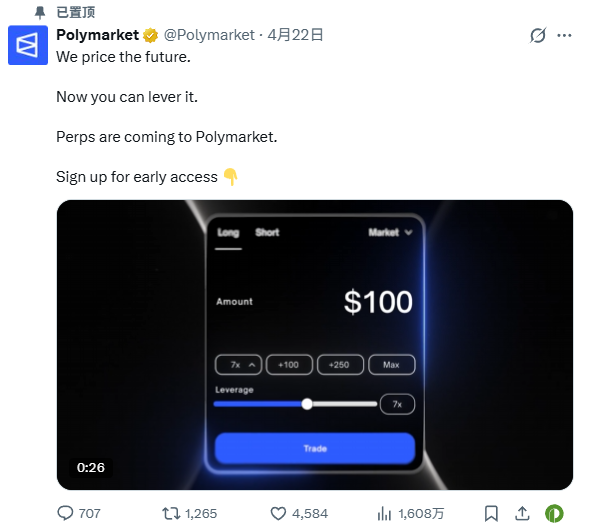
Polymarket Expands into the Perpetual Contracts Market
Furthermore, another giant, Kalshi, has also started signaling its moves. On April 14th, in its official teaser video, a continuously rotating green spiral eventually converged into the word "Timeless," hinting that the product will break through the constraints of "time." The community widely speculates that this update may involve introducing perpetual prediction markets with no expiration date.

Kalshi May Also Be Expanding into the Perpetual Contracts Market
According to an exclusive report by The Information on April 22nd, Kalshi plans to launch perpetual futures products, starting with crypto-linked perpetual contracts, with the potential to extend this model to commodities and other asset classes in the future. Initially, USD will be used as the collateral asset, with stablecoin support to be introduced later.
Looking at these moves together, this is not merely a simple product upgrade but rather a clear expansion. The derivatives newcomer Hyperliquid is rewriting the rules from the ground up—allowing anyone to issue perpetual contracts on its platform, even for "event-based assets" like election results, sports scores, and macroeconomic data. In other words, the core layer of "betting demand" in prediction markets is being directly absorbed by native derivatives protocols. This proposal was already launched on the testnet as early as the beginning of February.
Under such pressure, the simultaneous "Perps-ification" of Polymarket and Kalshi is less of an offensive move and more of a proactive defense—introducing perpetual contracts to counter the spillover impact of Hyperliquid on their core demand.
But the real variable doesn't stop there. While decentralized protocols are beginning to encroach on the heartland of prediction markets, on the other side, centralized exchanges have also quietly entered the arena. Prediction markets are becoming a piece of infrastructure that must be contested.
Binance: Integrates BNB Chain Ecosystem Prediction Market predict.fun into Main Site, Currently Available in Select Regions
Binance chose not to build a prediction market from scratch but instead directly integrated predict.fun, the largest prediction market platform on BNB Chain.
On March 31st, Binance Wallet announced it would launch a Prediction Markets feature, with the core partner being the leading BNB Chain protocol predict.fun. Users can directly participate in prediction trading within the app using USDT from their accounts, without needing to jump to external platforms, while also supporting market and limit orders. Paired with an independent Prediction Account (based on MPC technology) and Gas fee subsidies, this design essentially does one thing—transforming the originally on-chain prediction market into a product with an "exchange-like experience."
On April 9th, Binance released an official announcement stating that it had integrated the Prediction Markets feature into its Wallet, providing users with a probability trading gateway by connecting to the third-party on-chain prediction market platform Predict.fun. The product covers sports, macroeconomics, crypto, and other categories, but Binance itself does not participate in market-making or result adjudication, focusing instead on the "gateway layer"—facilitating connections between users and on-chain prediction protocols.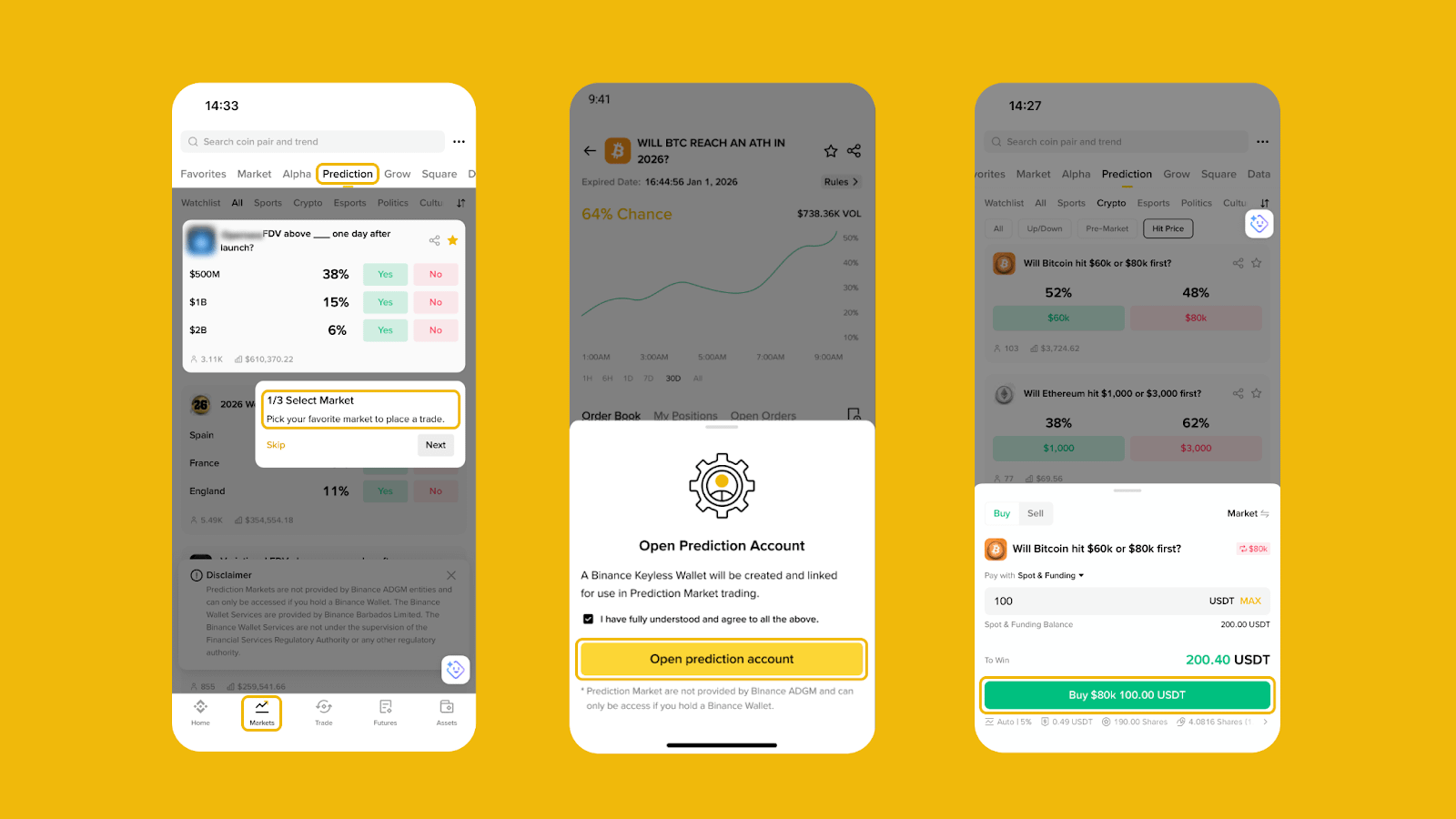
Screenshot of Binance's Main Site Prediction Market (Currently only available in select regions)
Furthermore, at the BNB Chain offline event in Hong Kong last weekend, based on user feedback, predict.fun not only appeared as a major sponsor but also secured a nearly "center-stage" display position.
OKX: Leaks First, Prediction Market Plans Gradually Surface
Long before any official product signals emerged, rumors about OKX's foray into prediction markets were circulating within the industry. In February, job postings indicated that OKX had begun hiring "DeFi Traders (Prediction Markets/Sports)."

LinkedIn Post Regarding OKX Hiring Prediction Market-Related Staff
Subsequently, KOL AB Kuai.Dong revealed that a leading exchange was signing long-term contracts with KOLs to promote its newly launched prediction market product, with the internal product nearing completion and expected to launch in May or June. Combined with information from exchanges at offline events in Japan, the market widely pointed to OKX as the subject.
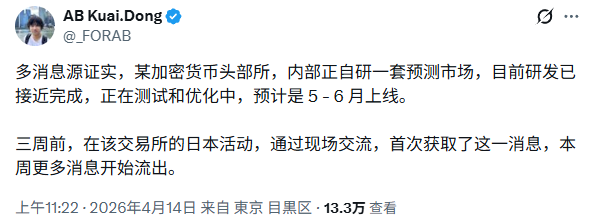
KOL AB Kuai.Dong's Revelation
After entering April, related signals began moving from rumors to the product level. In early April, OKX's product documentation page quietly added content related to "Prediction Markets/Event Contracts," including documents such as "How to Trade Event Contracts and Settlement Logic Introduction" and "What are Event Contracts." The documentation mentions that event contracts are a type of derivative product defined through natural language events and settled based on final outcomes, a design widely interpreted by the public as a "simplified version" of the prediction market format.
More crucially, last weekend, OKX CEO Star posted, indirectly confirming this direction: Events & Options have been upgraded, allowing users to predict and trade around events such as 15-minute price fluctuations, intraday price ranges, and supporting single trades as well as multi-strategy portfolio trading. This statement further connects the previously scattered product signals and market speculations.
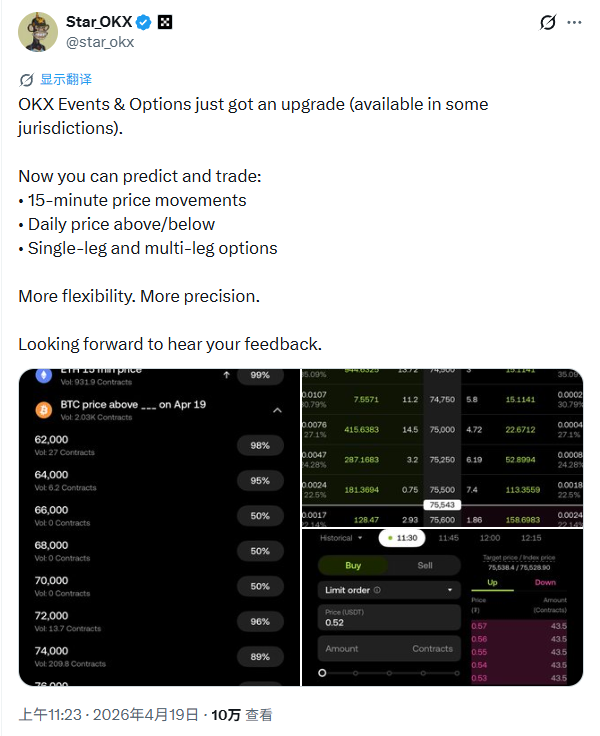
OKX CEO Star's Post: Events & Options Have Been Upgraded
Based on currently disclosed information, the so-called "event contracts" appear more like a CEX version of a prediction market prototype, primarily revolving around short-term price outcomes for BTC and ETH, such as price movements within 15 minutes or whether a target price is reached. Without altering the derivatives framework, it embeds "event judgment" into the trading structure, lowering the barrier to understanding while also reserving space for future product expansion.
MEXC: Has Launched Its Own Prediction Market Platform
On March 16, 2026, MEXC officially launched Prediction Market Beta (Event Contracts), becoming one of the few CEXs to launch its own prediction market relatively early.
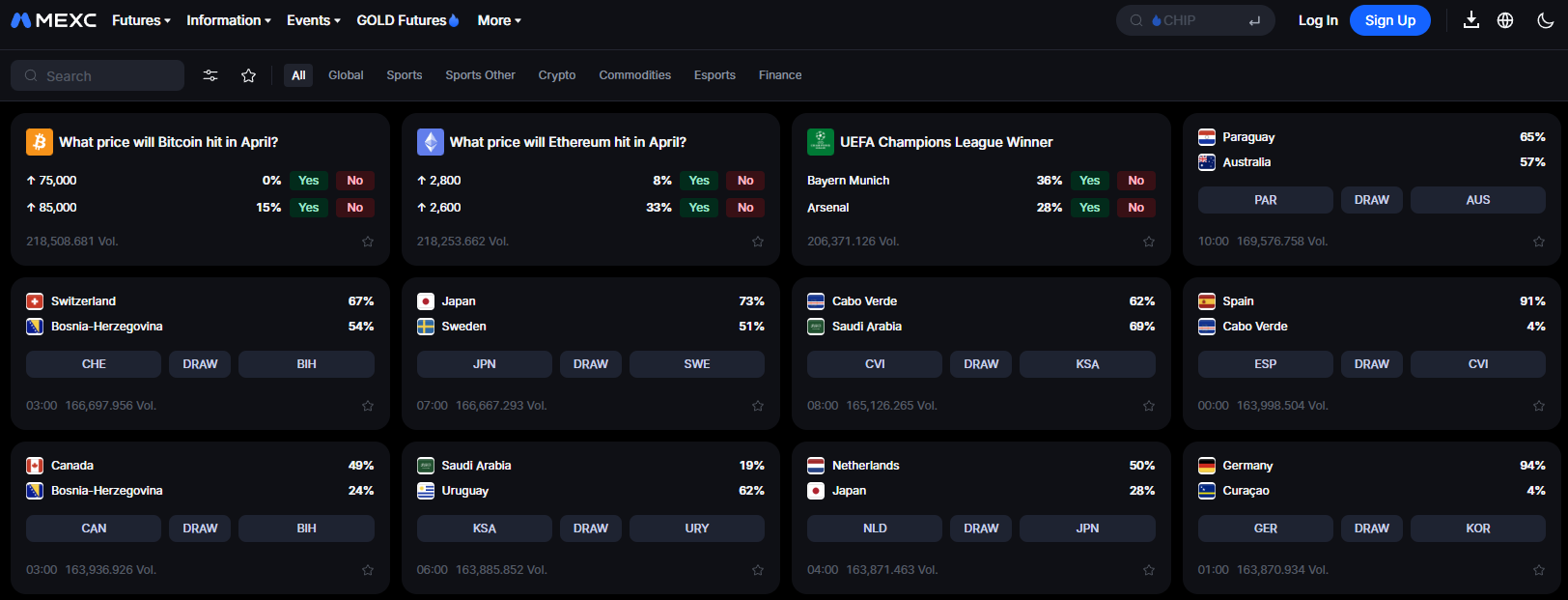
MEXC's Prediction Market Section
In terms of product form, MEXC's prediction market is essentially a centralized version of event contracts, allowing users to trade around geopolitical events, macroeconomic indicators, and key events in the crypto industry.
Regarding user experience, MEXC emphasizes "native integration": under a unified account system, users can directly use funds from their spot or futures accounts to participate in trading without on-chain operations or asset transfers; simultaneously, by offering zero trading fees, zero settlement fees (during the public beta), and millisecond-level settlement, it further lowers the participation barrier. Overall, its approach is more direct—treating prediction markets as a new type of contract product within the exchange, rather than an external extension feature.
Gate.io and Bitget: Both Integrate Polymarket, But with Completely Different Paths
Apart from building their own or integrating protocols, Gate.io and Bitget have chosen a third path—directly integrating the leading prediction market platform Polymarket. However, their entry methods and product forms are distinctly different.
Gate.io adopts the most direct product integration path. On March 24th, it directly embedded a Polymarket entry point within its main app. Users can participate in Yes/No share trading using USDT from their accounts without needing to redirect or connect a wallet, with backend systems automatically handling USDC settlement and Polygon on-chain operations. On this basis, Gate also provides two interface modes: "Prediction Mode" (geared towards beginners) and "Trading Mode" (with professional tools like order books and K-line charts). Essentially, this fully "transplants" Polymarket into the exchange ecosystem, preserving its original liquidity while significantly lowering the usage barrier.
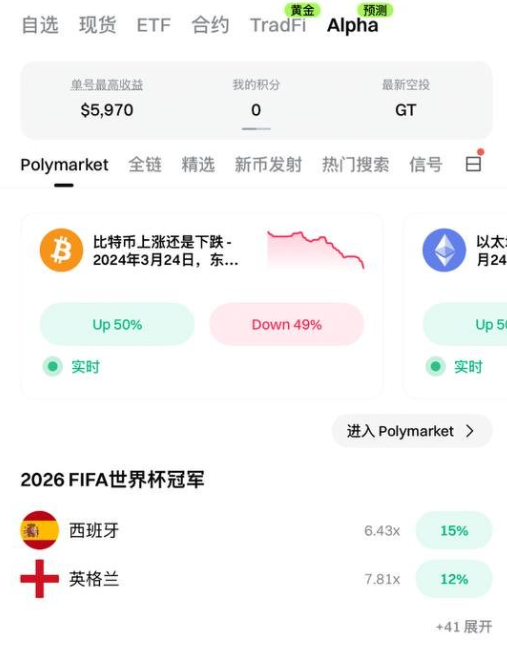
Gate Main Site Integrates Polymarket
In contrast, Bitget's integration currently occurs within Bitget Wallet. On April 21st, Bitget Wallet natively integrated Polymarket. Users can browse and trade related events directly in a self-custodial environment, while also introducing AI-assisted tools that provide data analysis and decision-making references for high-frequency events like sports. In this model, assets remain under user control, offering a more decentralized experience, while also reducing operational complexity through gas abstraction and convenient deposit methods.
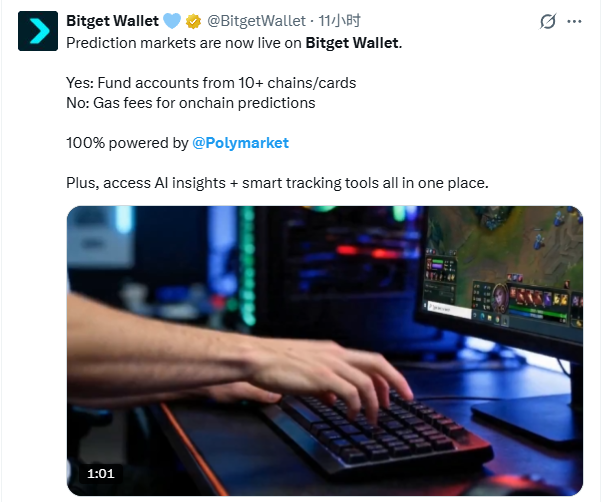
Bitget Wallet Integrates Polymarket
Summary
Rather than saying Polymarket and Kalshi are competing for the new battlefield of perpetual contracts, it's more accurate to say that centralized exchanges have begun systematically entering the prediction market, siphoning off the user base and trading demand that originally belonged to native platforms.
In comparison, centralized exchanges still hold clear advantages in terms of capital gateways, liquidity, and user scale. As various players enter the field one after another, the pie of the prediction market is being redistributed.


