The Real WLFI Behind Satirical Literature


- Core Viewpoint: Based on verifiable information, the article systematically outlines the multiple structural risks of the World Liberty Financial (WLFI) project concerning profit distribution, regulatory connections, market operations, and compliance. It highlights that the project's core characteristic is the extreme concentration of benefits towards entities linked to the Trump family, accompanied by a series of suspicious temporal correlations between regulatory actions and market operations.
- Key Elements:
- Highly Concentrated Profit Distribution: The WLFI whitepaper stipulates that 75% of net income flows to DT Marks DEFI LLC, an entity linked to the Trump family. Furthermore, 80% of the token supply is controlled by internal entities, creating a structure of "zero investment, high extraction."
- Temporal Correlation Between Regulatory Actions and Commercial Interests: Cases involving individuals like Justin Sun, Changpeng Zhao, and BitMEX executives show that the timing of their regulatory settlements or pardons overlaps with their investments in or collaborations with WLFI.
- Suspected Market Manipulation: Prior to two major policy announcements, abnormal large positions appeared in related financial markets (e.g., stock index options, oil futures), which precisely matched and profited from the policy outcomes.
- Significant Compliance Flaws: Shortly after the US sanctioned the Prince Group in Cambodia, WLFI established a partnership with AB DAO, which is linked to the sanctioned entity. The subsequent movement of funds remains unclear.
- On-chain Operations Expose Governance Risks: The WLFI treasury used its own low-liquidity governance tokens as collateral to borrow a significant amount of stablecoins from the affiliated platform Dolomite. This related-party transaction lacked transparent disclosure and once triggered a liquidity crisis.
- Limited Investor Rights: External investors hold positions with extremely low liquidity, while governance voting power is highly concentrated. Operations such as project buybacks have not benefited ordinary investors.
Original Author: @BlazingKevin_, Blockbooster Researcher
On April 11, 2026, a series of lengthy tweets on platform X from Peter Girnus (@gothburz) garnered widespread attention. Written from a first-person perspective, the tweets systematically revealed the interest structure, regulatory arbitrage pathways, and potential market manipulation between World Liberty Financial (WLFI) and the Trump family. Two days later, the same author, posing as an ordinary investor, recounted the experience of investing $3,200 of emergency funds only to have the tokens locked shortly after.
When reading the above, one crucial background detail cannot be ignored: Peter Girnus is a blogger known for satirical creations. His signature technique involves using public financial documents as source material, fabricating the identity of a core insider, and crafting a literary narrative of "self-exposure." He is not an actual WLFI insider; the details in his writing are a literary reconstruction of publicly available information.
This disclaimer of identity does not negate the referential value of the tweet content. The core data, document clauses, and timelines cited in the tweets can be independently verified through congressional reports, on-chain data, and mainstream media coverage. We have extracted these verified pieces of information from the literary narrative and, following six analytical threads, conducted a structural examination of WLFI's actual risks.
1. Revenue Distribution Mechanism: A One-Way Extraction Model
The core controversy surrounding WLFI lies not in its technology but in its revenue distribution structure.
According to the explicit stipulation on page 14 of WLFI's "Gold Whitepaper," 75% of the project's net revenue will flow to DT Marks DEFI LLC—a Delaware-registered limited liability company directly linked to the Trump family. The remaining 25% is retained for project operations. This clause is presented in standard contractual language within the whitepaper, but its essence is this: the project's largest beneficiary has neither made capital contributions to the project nor bears any legal liability for it.
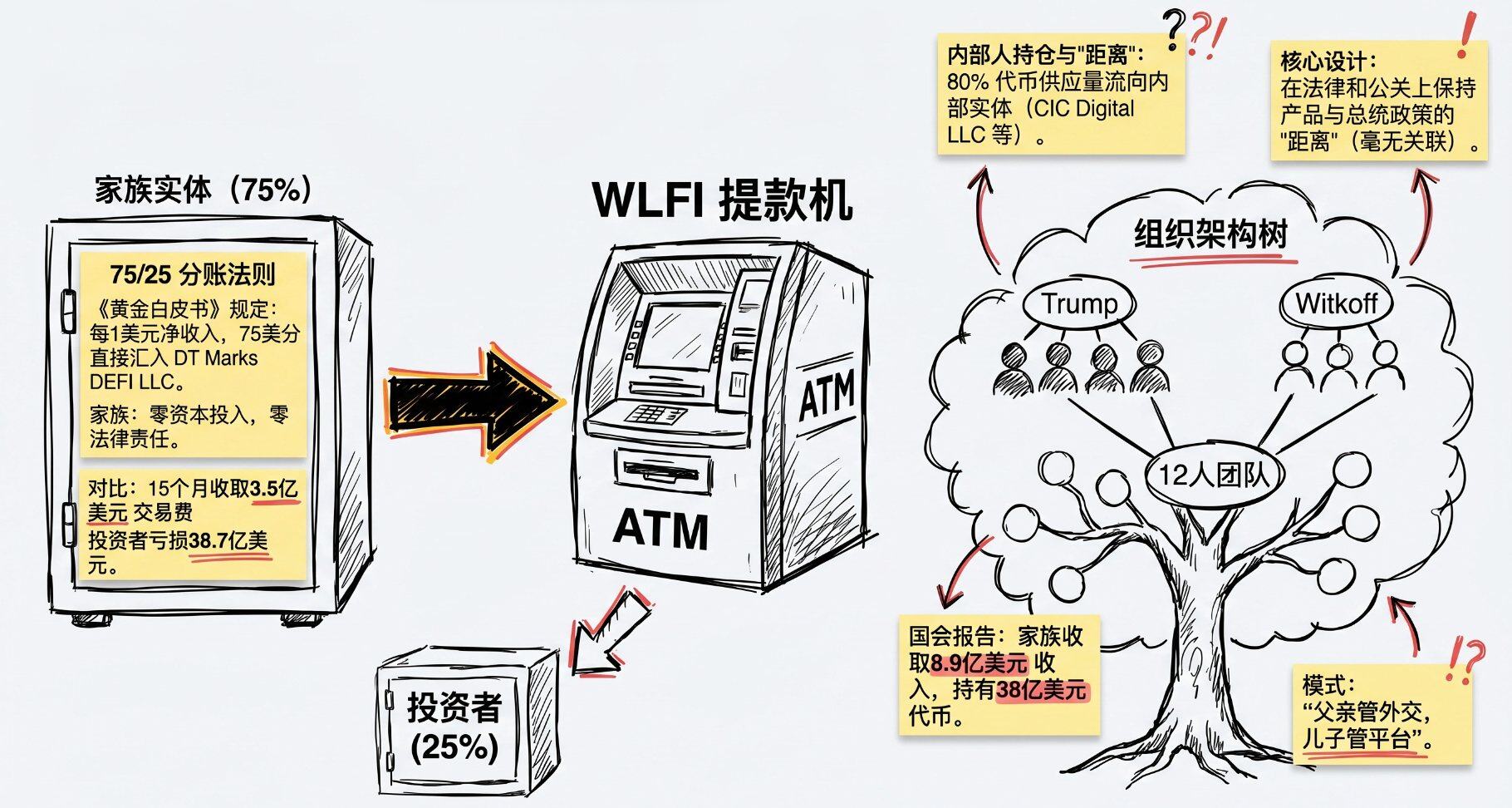
A staff report released by House Judiciary Committee Democrats on November 24, 2025, described the above structure as "presidential self-dealing on an unprecedented scale." The report's data indicates that the Trump family has derived at least $890 million in revenue from WLFI-related businesses and holds WLF tokens valued at approximately $3.8 billion, with these benefits not corresponding to any verifiable capital injection.
The token distribution also exhibits highly concentrated characteristics. According to public disclosures, a staggering 80% of the token supply was allocated to two internal entities: CIC Digital LLC and Fight Fight Fight LLC. The proportion of tokens held by external investors is low, subject to lock-up restrictions, with liquidity nearly zero.
The team composition further confirms the closed nature of this structure: among the 12 core members listed on WLFI's official website, 4 bear the surname Trump, and 3 bear the surname Witkoff. Co-founder Steven Witkoff also serves as the U.S. Presidential Envoy to the Middle East, with his two sons, Zach and Alex, responsible for crypto business operations and a co-founder position, respectively.
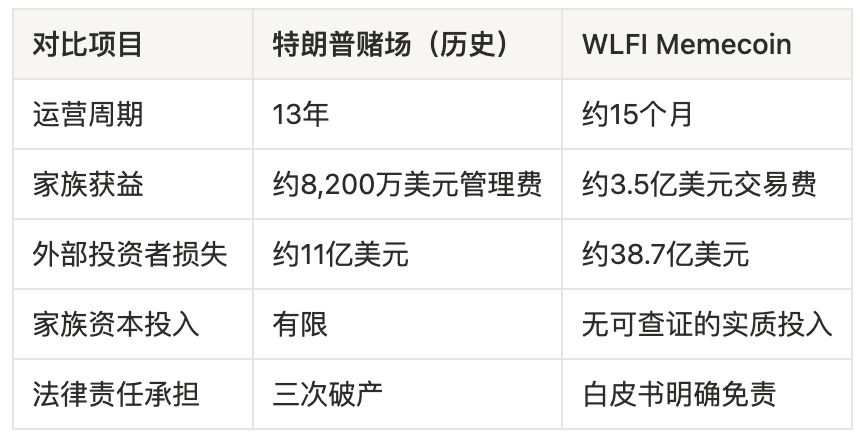
This structure of "zero investment, high extraction, zero liability" is the core feature distinguishing WLFI from typical crypto projects and a primary focus of congressional investigation.
2. Regulatory Arbitrage Pathway: Timeline of Pardons, Dropped Cases, and Investments
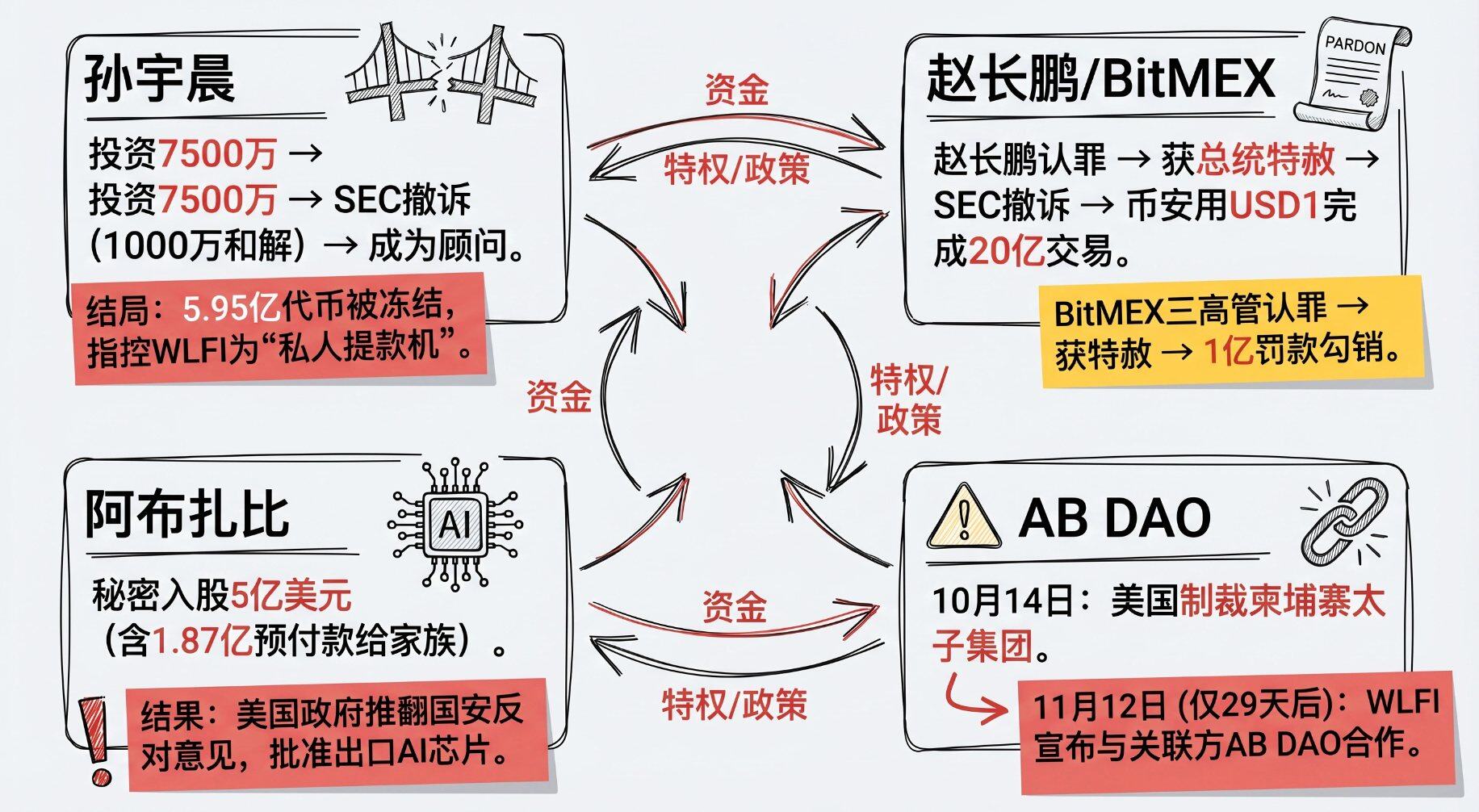
The second thread of controversy surrounding WLFI involves the temporal correlation between multiple pardons or regulatory actions and external investments. The following are all independently verifiable events.
The Justin Sun Case: Justin Sun invested $75 million in WLFI in 2024, while he was facing SEC charges for fraud, wash trading, and failure to disclose celebrity endorsements. In 2025, the SEC settled and dropped the case for $10 million, after which Sun appeared on WLFI's advisory list.
However, this relationship reversed in September 2025. WLFI blacklisted a wallet holding 595 million WLFI tokens (worth approximately $107 million at the time) belonging to Justin Sun, citing the prevention of phishing attacks. In April 2026, Sun publicly accused WLFI of treating users as a "private ATM" and claimed the blacklisting function was a "backdoor" pre-embedded in the smart contract. This incident revealed WLFI's highly centralized control at the core contract level.
The Changpeng Zhao and Binance Case: Changpeng Zhao received a presidential pardon after pleading guilty to violating federal anti-money laundering regulations. Shortly thereafter, the SEC dropped its lawsuit against Binance. Binance subsequently used the USD1 stablecoin issued by WLFI to settle a $2 billion transaction.
The BitMEX Executives Case: Arthur Hayes, Benjamin Delo, and Samuel Reed all received presidential pardons after pleading guilty to violating the Bank Secrecy Act, with a $100 million corporate fine for their company simultaneously waived.
Individually, each of these three sets of events can be explained within the bounds of legal and administrative procedures. However, their timing intersects with WLFI's commercial interests, making their correlation worthy of further scrutiny. For observers inclined towards an "isolated incidents" interpretation, the congressional investigation has not yet reached a final conclusion; for analysts leaning towards a "structural linkage" interpretation, the existing timeline provides some support.
3. Foreign Capital Penetration: Abu Dhabi Investment and Chip Export Approval
In early 2026, The Wall Street Journal reported a transaction where an Abu Dhabi-based investment entity with sovereign background purchased a 49% stake in WLFI for $500 million. The deal included a $187 million upfront payment to a Trump family entity, with the agreement signed by Eric Trump representing the family side.
What raised national security concerns were the policy changes surrounding this investment. Shortly after the transaction was completed, the U.S. government reversed its previous objections based on national security reviews and approved the export of advanced semiconductor products (including Nvidia AI chips) to the aforementioned Abu Dhabi-linked entity.
Senators including Chris Murphy publicly questioned this, viewing it as a direct exchange of national security assets for family business interests. The White House did not provide a direct response.
The analytical difficulty of this event lies in information asymmetry: transaction details have not been fully disclosed officially, and the internal considerations during the policy approval process are equally opaque. Structurally, however, the synchronous occurrence of external capital inflow, family收益, and federal policy adjustments within the same time window constitutes, at minimum, a substantial red flag regarding conflicts of interest.
4. Sanctions Compliance Risk: The AB DAO Partnership Incident
On October 14, 2025, the U.S. government imposed sanctions on Cambodia's Prince Group, citing its alleged involvement in transnational criminal activities.
Twenty-nine days after the sanctions were imposed, on November 12, WLFI announced a partnership with AB DAO. Investigations revealed that AB DAO is linked to the Prince Group.
The project subsequently explained this as being "unaware." After journalists inquired about the matter, the stablecoin balance held by AB DAO on the WLFI platform plummeted from $10 million to $3.6 million, with approximately $6.4 million unaccounted for, a matter on which the project offered no explanation.
Regardless of whether this incident stemmed from compliance oversight or subjective factors, the outcome is this: a project applying for a U.S. banking license established a commercial partnership with an entity linked to a sanctioned party one month after U.S. government sanctions were imposed, with insufficient public explanation afterward. From a compliance assessment perspective, this is an unignorable red flag.
5. Market Manipulation Suspicions: Policy Timing and Prediction Markets
The Tariff Incident (April 9, 2025): The President posted on Truth Social that "Now is a good time to buy." Several hours later, a 90-day tariff suspension was announced, followed by a roughly 12% rise in the Nasdaq index. Reuters reported abnormal options market positions worth millions of dollars appearing before the official announcement.
The Iran Incident (March 23, 2026): After the President posted about striking Iranian power stations, oil prices rose. The next morning at 6:49, 15 minutes before the President announced "progress in negotiations, strike delayed," a $580 million buy order for oil futures appeared in the market (approximately 6,200 contracts, 9 times the daily average). Oil prices subsequently fell, the Dow Jones Industrial Average rose about 1,000 points for the day, and the involved positions were estimated to have profited between $40 million and $50 million.
Prediction Market Level: On Polymarket, a trader placed bets on unannounced military actions with a 93% success rate, profiting nearly a million dollars; another 8 accounts accurately predicted the timing of the Iran ceasefire. The Guardian described these accounts as showing "signs of insider knowledge." Donald Trump Jr. simultaneously serves on the advisory board of Polymarket and as a paid strategic advisor to its competitor, Kalshi, while his father's undisclosed military decisions happen to be the most profitable betting subjects on both platforms.
On April 10, 2026, the White House sent an internal email to all staff reminding them of the prohibition against trading on confidential information. Around the same time, the SEC's chief enforcement officer resigned due to disagreements with the chair over pursuing cases involving the President's inner circle, stalling related investigations.
The common feature of the above events is the precise temporal alignment between policy actions and market positions. No judicial body has yet announced formal investigation conclusions, but the data itself has drawn regulatory attention.
6. The Dolomite Lending Incident: Direct Manifestation of Governance Risk
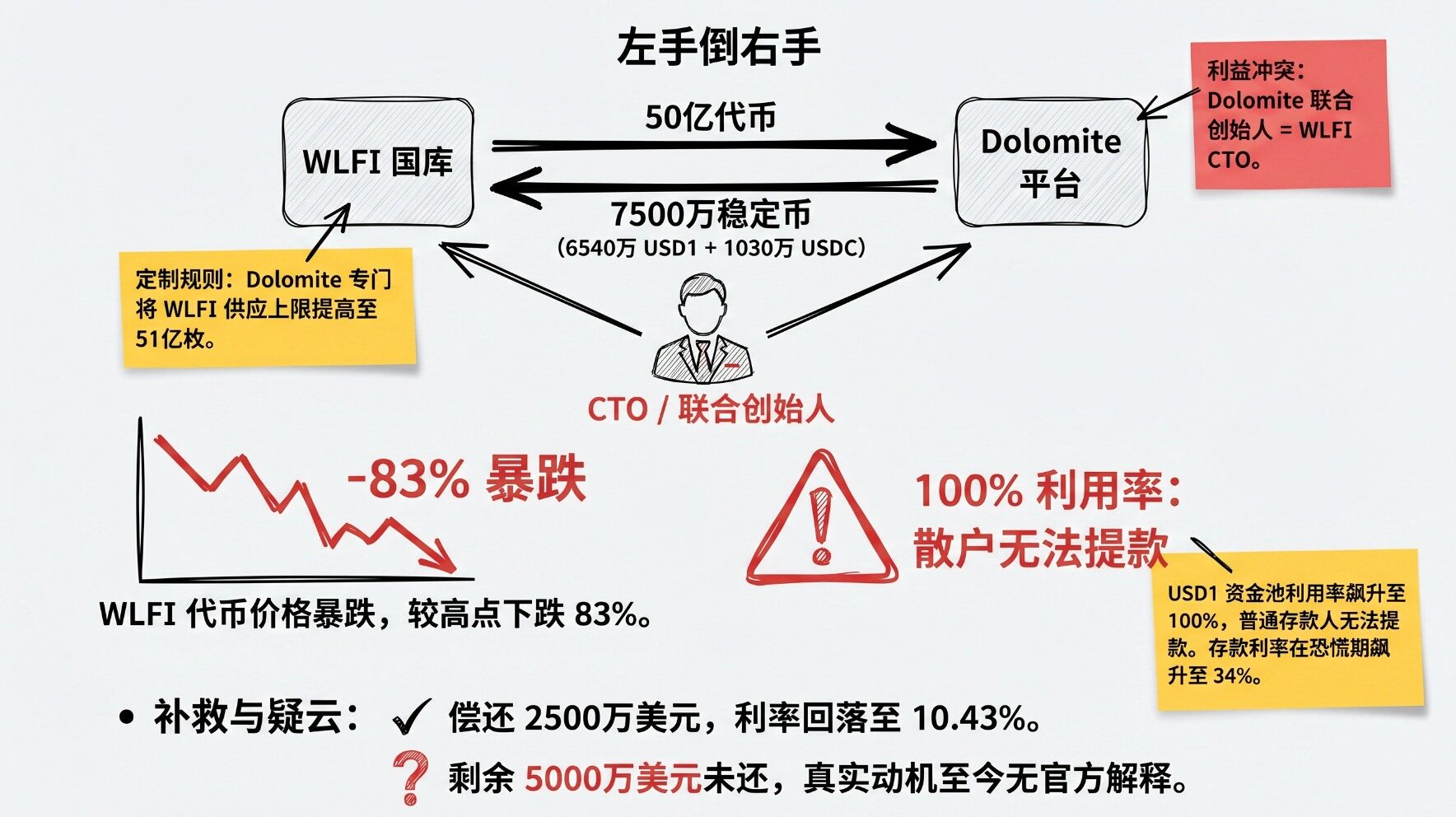
In April 2026, all the aforementioned macro-level controversies culminated in a concentrated market sentiment eruption triggered by a specific on-chain operation.
According to reports from Gizmodo and CoinDesk, the WLFI treasury deposited 5 billion of its own issued WLFI governance tokens into the affiliated DeFi lending platform Dolomite, using them as collateral to borrow approximately $75 million in stablecoins (65.4 million USD1 and 10.3 million USDC).
This operation directly caused the utilization rate of Dolomite's USD1 liquidity pool to briefly reach 100%, temporarily preventing third-party depositors from withdrawing. Notably, Dolomite co-founder Corey Caplan also serves as WLFI's Chief Technology Officer, and the Dolomite platform specifically raised the WLFI supply cap to 5.1 billion tokens to accommodate this deposit.
This structure presents two core issues:
First, using self-issued governance tokens with poor secondary market liquidity as collateral to borrow hard-currency stablecoins is an operation that transfers token price risk to the lending platform and its users. If a price drop triggers liquidation, the highly illiquid WLFI tokens face a spiral crash risk, potentially leaving behind substantial bad debt.
Second, there is a clear related-party relationship between the borrower and the lending platform, a relationship not adequately disclosed prior to the operation.
Under market pressure, the WLFI token price fell nearly 20%, hitting a record low. The project subsequently repaid $25 million of the USD1 loan. Dolomite's available liquidity recovered to $35 million, and the deposit interest rate fell from the crisis level of 34% to 10.43%.
The partial repayment alleviated immediate liquidity risk but did not answer the core questions: Why was this loan taken? Where did the funds go? The project has yet to release a detailed official explanation. This operational opacity is a primary driver of the current decline in market confidence.
7. The Situation of Ordinary Investors
The aforementioned macro structures and on-chain operations ultimately impact ordinary investors through the token lock-up mechanism.
Participating in WLFI token sales requires investors to qualify as "accredited investors," meaning a net worth exceeding $1 million or an annual income exceeding $200,000. However, this qualification verification relies on investor self-certification, lacking substantive verification mechanisms. In other words, this threshold holds significance for regulatory compliance but has little constraining effect on actual access control.
Upon purchase, tokens enter a lock-up period. Currently, approximately 80% of external investor holdings remain non-transferable, with no secondary market exit. The project offers a "governance voting" mechanism as compensation, but on-chain data shows that 76% of voting power is concentrated in the top 10 wallets, rendering ordinary holders' voting weight almost negligible.
In contrast, during the same period, the project used $65 million to repurchase tokens at an average price of $0.15 (roughly 10 times the early sale price), but these funds did not flow back to ordinary holders in any form.
8. Product Evolution: From Governance Token to Stable Currency
Examining the timeline, WLFI's product strategy has traversed three stages within 17 months:
- October 2024: Issued the WLFI governance token, completing a $550 million fundraising.
- January 2025: Launched Memecoin, with related tokens cumulatively causing approximately $3.87 billion in losses for investors, while the project collected about $350 million in transaction fees.
- March 2026: Issued the USD1 stablecoin, which was used within weeks to settle a $2 billion transaction between Binance and Abu Dhabi sovereign funds.
In January 2026, WLFI applied to the U.S. Office of the Comptroller of the Currency (OCC) for a national trust bank charter, proposing to establish the World Liberty Trust Company, with Zach Witkoff as President. If approved, the project would transition from the crypto periphery into the core U.S. financial regulatory system.
Summary
Synthesizing the six analytical threads above, WLFI's risk profile can be divided into two layers:
Structural Risk: The 75/25 revenue distribution clause, the 80% internal token concentration, and the multiple overlapping identities between family members and regulatory decision-makers constitute the institutional foundation for conflicts of interest. Issues at this level do not automatically resolve with improving market conditions or partial repayments.
Operational Risk: The Dolomite lending incident reveals a fundamental lack of risk management awareness in the project's financial decision-making and a lack of transparent disclosure for related-party transactions. Combined with the token's low liquidity, such operations possess potentially disruptive power for market stability.
Currently, congressional investigations are ongoing, WLFI has yet to provide a complete official explanation for the Dolomite lending incident, and crypto risk rating agencies have issued a "D" grade warning against it.
WLFI's bank charter application would transform it from a crypto project into a federally regulated financial institution. This implies stricter compliance scrutiny is imminent. At that point, each of the aforementioned疑点 will face more formal legal and regulatory examination.
About BlockBooster
BlockBooster is a next-generation alternative asset management firm for the digital age. We leverage blockchain technology to invest in, incubate, and manage the core assets of the digital era—from blockchain-native projects to real-world assets (RWA). As value co-creators, we are committed to discovering and unleashing the long-term potential of assets, capturing卓越 value for our partners and investors in the wave of the digital economy. Disclaimer: This article/blog is for informational purposes only and represents the author's personal views, not the position of BlockBooster.
This article is not intended to provide:
(i) investment advice or recommendations; (ii) an offer or solicitation to buy, sell, or hold digital assets; or (iii) financial, accounting, legal, or tax advice. Holding digital assets, including stablecoins and NFTs, involves extremely high risk, significant price volatility, and the potential to become worthless. You should carefully consider whether trading or holding digital assets is suitable for you based on your financial situation. For questions regarding specific circumstances, please consult your legal, tax, or investment advisor. The information provided herein (including market data and statistics, if any) is for general reference only. Reasonable care has been taken in compiling this data and these charts, but no responsibility is accepted for any factual errors or omissions expressed therein.