






Powell's Reappointment Probability Soars to 98%, Is Trump's "Firing Order" Just Empty Talk?


- Core View: Due to opposition from key senators and the impact of judicial investigation procedures, the confirmation of Kevin Warsh, Trump's nominee for Fed Chair successor, faces significant hurdles. Incumbent Chair Powell is highly likely to continue serving as Acting Chair after his term expires on May 15, leading to a continuation of the policy stalemate between Trump and Powell, which will affect market expectations.
- Key Elements:
- Data from prediction market Polymarket shows the probability of Powell stepping down after his term has fallen to 2%, indicating a high likelihood of his reappointment.
- Republican Senator Thom Tillis, citing the ongoing Justice Department investigation into Powell, may block Warsh's nomination from proceeding to a full Senate vote.
- The Justice Department's investigation into Powell regarding the renovation costs of the Fed building was initiated at Trump's urging, but no evidence of misconduct has been found so far.
- The time window for confirming Warsh's nomination is tight, with the Senate having only 13 working days before Powell's term ends to address the matter.
- U.S. law allows Fed governors to continue serving if a successor is not confirmed, providing a basis for Powell to remain.
- Trump lacks statutory grounds to forcibly dismiss Powell, and any such attempt would likely face legal challenges and fail.
- The market expects Warsh to be more likely than Powell to promote interest rate cuts and adopt a more crypto-friendly stance.
Original | Odaily (@OdailyChina)
Author | Golem (@web3_golem)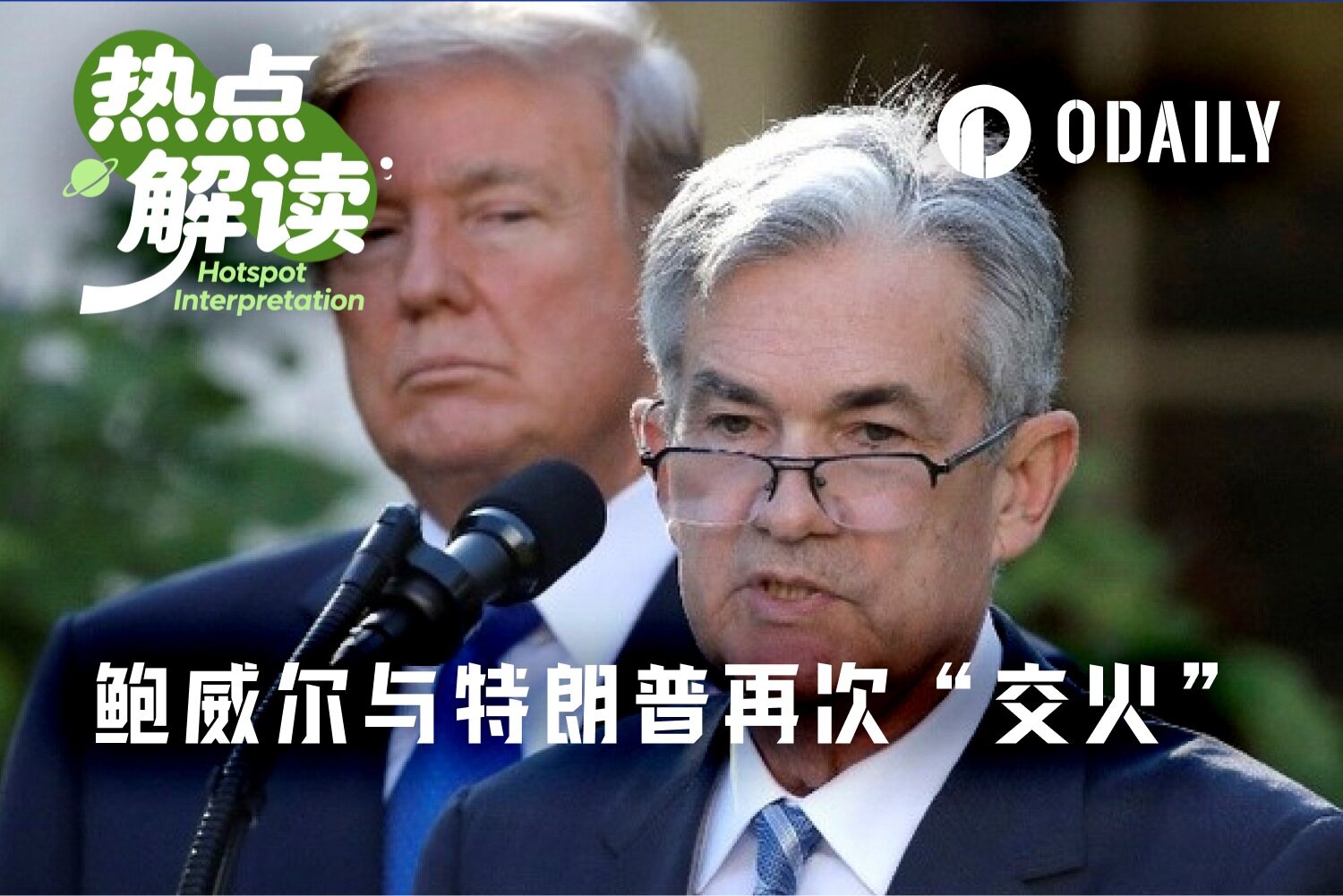
Trump is now truly facing "troubles at home and abroad": externally, he is locked in a protracted struggle with Iran; internally, his "palace intrigue" with Federal Reserve Chairman Jerome Powell is heating up.
The two have long been at odds. Powell has repeatedly failed to follow Trump's wishes on interest rate cuts, and Trump has repeatedly stated his intention to fire Powell. Originally, if Trump could just endure a little longer, this problem would soon disappear on its own: Powell's term as Fed Chair is set to expire on May 15, 2026. Although he could remain as a Board member until 2028, once Trump's favored candidate, Kevin Warsh, takes the helm, the new chair would hold sway, and an era of compliant rate cuts seemed within reach.
However, an unexpected twist has emerged. Monitoring by Odaily Seer Channel shows that on Polymarket, the probability of Powell stepping down as Fed Chair after his term expires has dropped to 2%. It is highly likely that Powell will continue to serve as the interim Fed Chair after May 15.
As early as March 19, Powell stated that if his successor is not confirmed before his term ends (May 15), he will continue to serve as Fed Chair. He further indicated that as long as the Justice Department's investigation into him remains ongoing (Odaily Note: This investigation concerns whether Powell lied to Congress about the $2.5 billion renovation of the Fed building), he will not leave the Federal Reserve Board.
Therefore, whether Trump can get rid of Powell hinges on whether the Senate approves Kevin Warsh as the successor. Although prediction markets have already priced in an outcome, the real answer will only be revealed on April 21 (next Tuesday).
Key Milestone: Will Kevin Warsh's Fed Nomination Be Confirmed by the Senate on April 21?
Kevin Warsh is Trump's nominee for the next Fed Chair, but his final appointment is subject to review by the U.S. Senate, which has the power to reject his nomination. On April 21, Warsh will first appear at a hearing before the Senate Banking Committee, and the market's concern is that Warsh may not even pass the committee's confirmation.
The central figure obstructing Warsh's appointment is Republican Senator Thom Tillis from North Carolina, a member of the Banking Committee. His reason is that the Justice Department's investigation into Powell has not concluded. He has publicly stated that he will block Warsh's nomination from proceeding to a full Senate vote until the Justice Department ends its investigation. Thom Tillis has the influence to do this because, although Republicans hold a 13-to-11 majority on the Senate Banking Committee, if Thom Tillis casts a dissenting vote, Warsh's nomination could stall.
The Justice Department's investigation into Powell dates back to July 2025, when Trump visited the Fed building renovation site and publicly questioned its budget as unreasonable. Subsequently, in January 2026, the Justice Department formally launched an investigation into Powell regarding the renovation costs of the Fed building. This investigation was originally a political maneuver by Trump aimed at tarnishing Powell's public image and increasing pressure on the Fed.
Perhaps Trump didn't anticipate that he would face blowback. However, Trump also does not intend to terminate the investigation into Powell just to clear the path for Warsh's appointment. In an interview with Fox Business on April 15, he stated that while Thom Tillis's opposition would delay Warsh's confirmation, he does not plan to end the investigation, bluntly asking, "Don't you think we need to find out what happened there?"
Stepping back, even without the obstruction of this investigation, Warsh might struggle to secure the 51 Senate votes needed for confirmation. Given the current geopolitical and economic climate, Warsh is likely to face questions at the hearing about Fed independence and interest rate policy. If bottlenecks in energy and commodities persist due to war, the Fed's focus should be on whether to raise rates, not cut them.
This forces Warsh to choose his stance: either consistently support Trump, which would lower his chances of confirmation; or defend the Fed's current wait-and-see stance, thereby angering the President.
Regardless of Warsh's choice, his window is narrow: The hearing is scheduled for April 21, meaning the Senate has only 24 days left before Powell's term ends to confirm Warsh's nomination and hold a vote. Of those 24 days, the Senate is only scheduled to be in session for 13 days.
The Trump-Powell Stalemate
Therefore, based on the above analysis, if Warsh encounters obstacles at the April 21 hearing, there is a high probability that Powell will continue to serve as the interim Fed Chair after his term expires on May 15, continuing to oppose Trump.
There is precedent for an incumbent chair continuing to lead the Fed as "interim chair" due to an unconfirmed successor. For example, during President Clinton's administration, then-Fed Chair Alan Greenspan continued to lead the Fed for over three months as interim chair after his term expired because his successor's confirmation process was incomplete. Powell also served as interim chair for about three months in 2022 while awaiting Senate confirmation for his second term.
This mechanism also has a basis in U.S. law. The Federal Reserve Act, which governs the Fed, stipulates that Board members may continue to serve until their successors are appointed.
Faced with this situation, Trump is not willing to sit idle. In his April 15 interview with Fox Business, he stated that if Powell does not leave on time, he will fire him, while also not abandoning the investigation.
However, this may also just be an empty threat. Trump has not revealed what strategy he would use to fire Powell. Some conservatives believe Trump has the authority to appoint one of his own nominated Fed governors—such as Michelle Bowman, Christopher Waller, or perhaps even Kevin Warsh himself—to serve as acting chair before Warsh is confirmed, instead of Powell. This is based on a memo drafted during the Carter administration, which suggests that if the President's nominee is not confirmed in time, the President can designate an acting chair.
But the Fed's stance on this memo is unknown. Moreover, the memo ultimately cannot serve as legal precedent, so Trump appointing someone other than Powell as interim chair has little legal basis.
If Trump tries to fire Powell through normal procedures, success is unlikely. U.S. law states that Trump does not need Congressional confirmation to fire Powell, but he also cannot fire him directly without reason; it must be "for cause," meaning there must be a legal justification, not simply policy disagreements. Whether the firing reason is justified would ultimately be decided by the courts.
Under current circumstances, the only justifiable reason for Trump to fire Powell would be if Powell lied or was corrupt regarding the $2.5 billion Fed building renovation. However, according to a March 25 report by The Washington Post, a senior aide to U.S. Attorney General Jeanne Pirro admitted during a closed-door hearing this month that the Justice Department has no evidence of wrongdoing by Fed Chair Powell in its criminal investigation into the Fed building renovation costs.
In other words, the investigation into Powell has not made substantial progress. Therefore, if Trump were to actually fire Powell, the latter would certainly appeal and challenge the decision. With insufficient evidence, the court's ruling would most likely side with Powell.
For capital market investors, however, a delay in Warsh's appointment and Powell retaining control of the Fed for several more months is not good news. Compared to Powell, who consistently emphasizes "wait-and-see," the market clearly prefers Warsh, who, upon taking office, might signal more rate cuts. Furthermore, Warsh's own demonstrated crypto-friendly stance could more easily bring new imagination to the crypto market.


