






The Rise of "Bitcoin Diplomacy": Pakistan's Path to Diplomatic Reversal


- Core Viewpoint: By actively embracing cryptocurrency and leveraging key figures like Bilal Bin Saqib to establish ties with World Liberty Financial, backed by the Trump family, Pakistan has successfully turned crypto diplomacy ("Bitcoin Diplomacy") into geopolitical leverage. This has significantly improved relations with the United States and yielded substantial economic benefits.
- Key Elements:
- Pakistan hosted high-level executives from the Trump family's enterprise, World Liberty Financial, using cryptocurrency as a tool for "Bitcoin Diplomacy." This deepened relations with the Trump administration and allowed Pakistan to play a key mediating role in the US-Iran conflict.
- Bilal Bin Saqib rapidly ascended from a crypto industry figure to a senior government official. He spearheaded the establishment of Pakistan's virtual asset regulatory framework and successfully secured key partnerships, including Binance founder Changpeng Zhao and World Liberty Financial.
- Pakistan introduced a series of crypto-friendly policies, including setting up a regulatory body, allocating 5% of the nation's electricity for mining, and planning to establish a national crypto reserve. These moves aim to leverage its globally leading crypto user base (approximately 40 million).
- Crypto diplomacy has brought direct economic gains: the US significantly lowered tariffs on Pakistani goods to 19% and designated the Balochistan Liberation Army, long advocated by Pakistan, as a terrorist organization.
- This marks a strategic shift for Pakistan from keeping cryptocurrency at arm's length to fully embracing it. The goal is to reshape the national image, attract investment, and reduce dependence on the IMF, although future challenges include the IMF's stance and geopolitical risks.
Original Author: Faseeh Mangi
Original Compilation: Saoirse, Foresight News
In January of this year, within an ornately decorated building in central Islamabad, Pakistan's most powerful leaders gathered to welcome a special visitor: Zachary Witkoff, the CEO of World Liberty Financial, a crypto platform co-founded by U.S. President Donald Trump.
The guest list for the event was exceptionally distinguished, resembling a state visit more than a ceremonial, non-binding, exploratory stablecoin cooperation agreement with no major capital commitments. A group photo shows the 32-year-old son of Trump advisor Steve Witkoff standing alongside Pakistani Prime Minister Shehbaz Sharif and the country's even more powerful Army Chief, General Asim Munir.
Standing on the other side of Asim Munir was the key figure driving the transformation of U.S.-Pakistan relations over the past year: Bilal Bin Saqib, a 35-year-old self-described "crypto guy." He openly admits to having worked three jobs during university, including cleaning toilets. At the event, Saqib praised the visit of Zachary Witkoff and other World Liberty Financial executives, saying it helped "put Pakistan on the international stage."
Pakistan's adept use of cryptocurrency diplomacy—Saqib calls it "Bitplomacy," derived from Bitcoin—has solidified the rapidly warming friendship between Trump and Asim Munir. Islamabad's high-level reception for the U.S. President's family business highlights the deepening of this increasingly important geopolitical relationship. In a conflict that could upend the global economy, Pakistan has emerged as a key mediator between the U.S. and Iran, further underscoring the weight of this relationship.
Steve Witkoff confirmed via Bloomberg Terminal last week that Pakistan had submitted a 15-point action plan. With Trump's April 6 deadline looming—where Iran must either reach a deal or face strikes on critical infrastructure—Islamabad has also been mentioned as a potential venue for negotiations. Pakistan itself has a strong incentive to facilitate this: Iran's blockade of most shipping through the Strait of Hormuz has left Pakistan facing a severe energy shortage crisis.
"Given the importance of personal relationships in the Trump White House's decision-making process, Pakistan likely gained some influence in the White House through this, giving it an advantage when offering itself as a mediator to Washington," said Michael Kugelman, a senior South Asia researcher at the Washington-based Atlantic Council, commenting on Pakistan's cooperation with Zachary Witkoff. "With such an unconventional U.S. administration, unconventional factors often play a role—and cryptocurrency is clearly one of them."
Last year, Saqib was still relatively unknown, but he has now risen to become one of Pakistan's most influential figures. He has established collaborations with several crypto industry giants, including Changpeng Zhao (CZ), founder of the world's largest cryptocurrency exchange, Binance. He also maintains close ties with fund manager Cathie Wood, Bitcoin billionaire Michael Saylor, and El Salvador's President Nayib Bukele—who made Bitcoin legal tender in 2021 and established a Bitcoin strategic reserve fund.
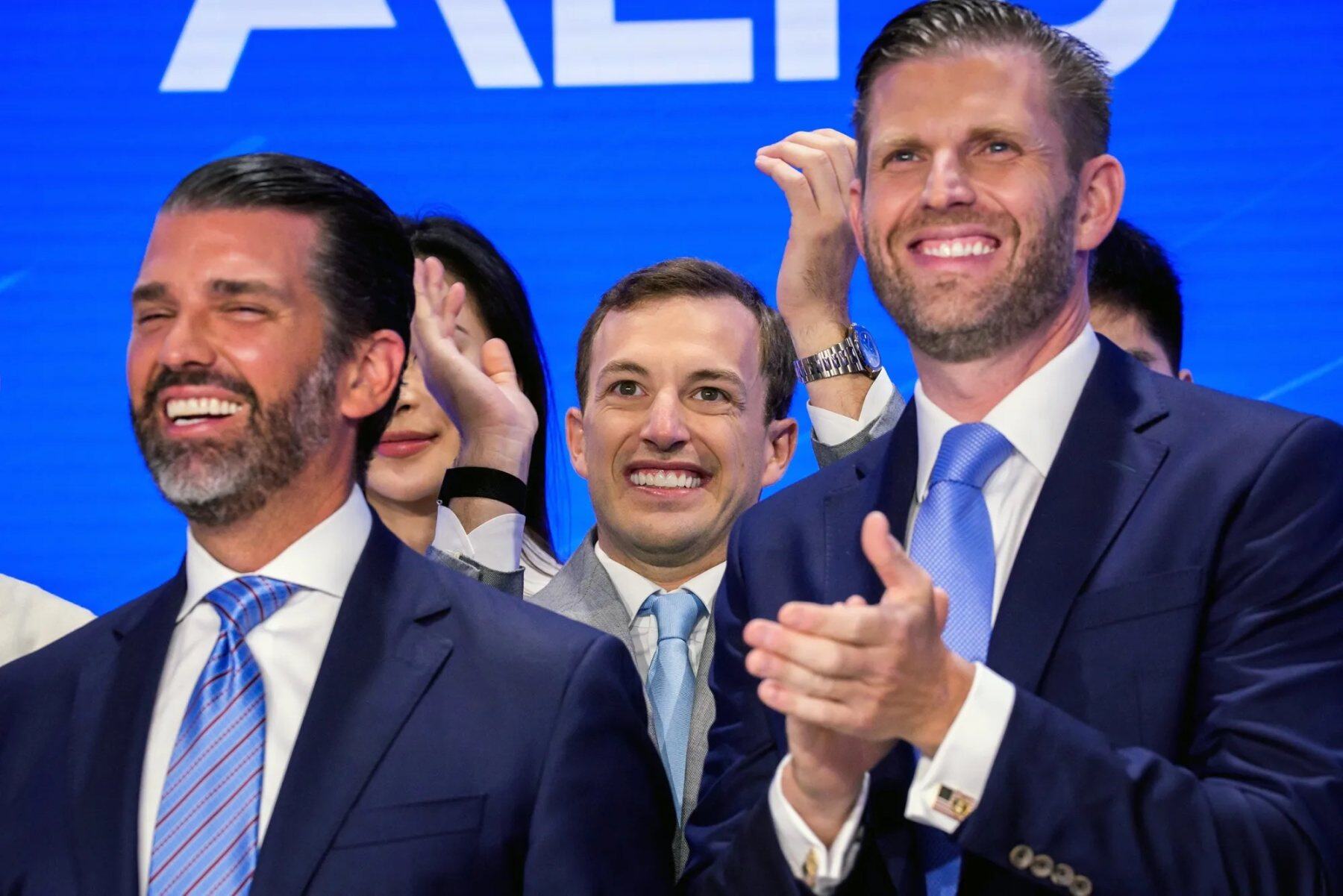
On August 13, during the opening bell ceremony at the Nasdaq exchange in New York, Zachary Witkoff stands beside Donald Trump Jr. and Eric Trump as they celebrate a deal by World Liberty Financial. Photographer: Adam Gray / Bloomberg
However, his closest relationship, which has brought him the greatest diplomatic and commercial returns, is with World Liberty Financial. The company hired Saqib as an advisor last April. David Wachsman, a spokesperson for World Liberty Financial, stated that Saqib resigned from this position after taking a government role and did not receive compensation during his tenure.
Last month, Saqib posted a selfie with Zachary Witkoff and other company executives at Trump's Mar-a-Lago club in Florida. Around the same time, Pakistan and the U.S. reached a deal to renovate Manhattan's Roosevelt Hotel, a transaction led by Steve Witkoff in negotiations.
"Because of cryptocurrency, doors opened," Saqib said in a recent interview. "New conversations started, trust was built. We got the chance to rebrand the country."
For Pakistan, this is a stunning reversal. Over the past decade, as the U.S. courted India to counter China's rising military and economic power, Pakistan teetered on the brink of bankruptcy and deep diplomatic isolation. The situation shifted abruptly last May: the Pakistani military claimed Trump prevented an Indo-Pakistani armed conflict—a claim New Delhi flatly denied, leading to months of tension in U.S.-Pakistan relations.
Although the White House later repaired relations with India, Trump has frequently praised Asim Munir. In February, at a Peace Committee meeting, the President called the Pakistani military chief a "great general," a "wonderful man," and a "tough fighter." Pakistan has reciprocated by calling for Trump to be awarded the Nobel Peace Prize and offering other gestures of goodwill, while using cryptocurrency to further solidify ties with the White House.
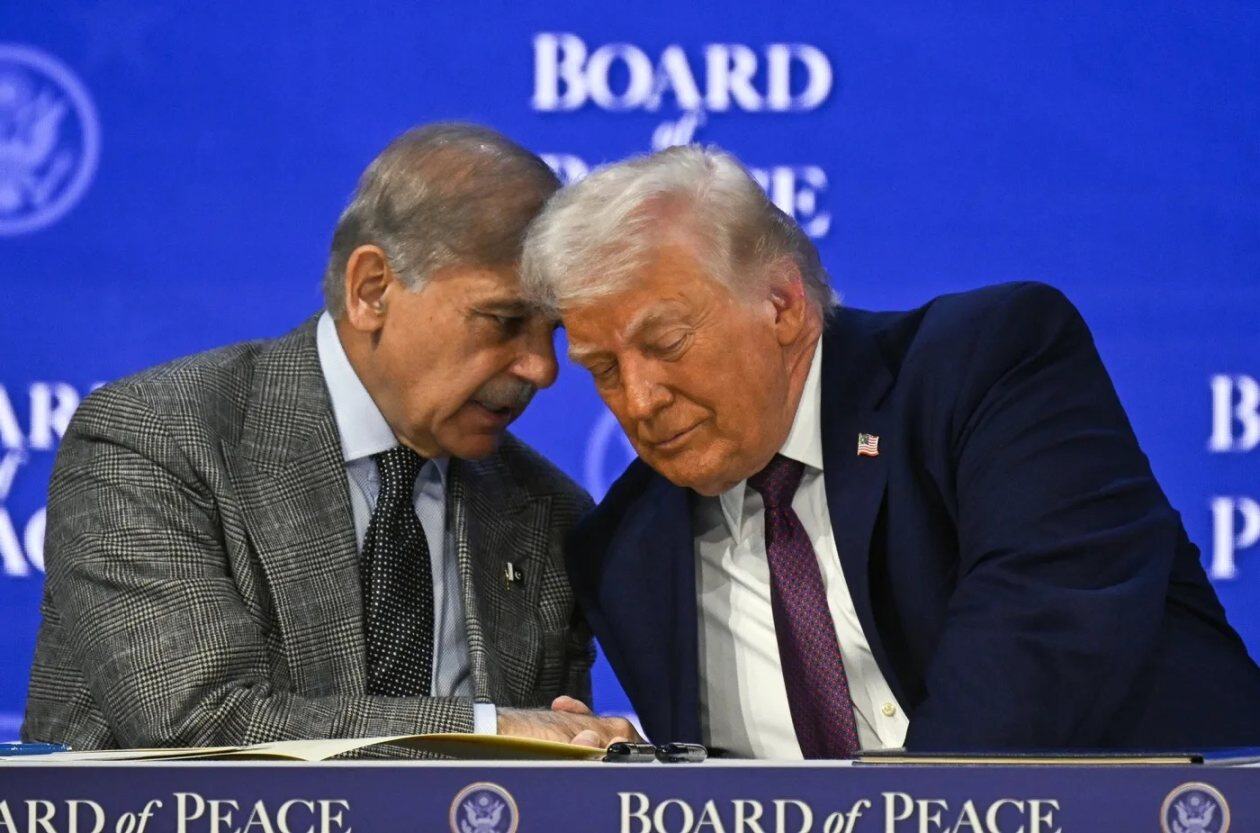
U.S. President Donald Trump (right) and Pakistani Prime Minister Shehbaz Sharif attend a Peace Committee meeting during the World Economic Forum in Davos on January 22. Photographer: Harun Ozal / Anadolu Agency / Getty Images
"For a country lacking global investor attention, keeping up with Washington's crypto pivot isn't just about technology," said Uzair Younus, a partner at Washington-based consultancy The Asia Group. "It's about signaling: Pakistan still matters in a changing global order."
Until two years ago, Pakistan kept cryptocurrency at arm's length. Its regulators had distanced themselves from the industry for a decade, citing concerns over fraud, Ponzi schemes, and money laundering. Plagued by high inflation, heavy debt, and depleted foreign exchange reserves, Pakistan was reliant on IMF bailout loans and under immense repayment pressure.
But by 2024, attitudes shifted. As the economy recovered, Pakistan's military leadership realized cryptocurrency could be a useful chip in global diplomacy. The country swiftly enacted virtual asset regulatory laws, established a dedicated regulator, and invited global exchanges to apply for licenses. Pakistan also proposed creating a national crypto reserve and allocated 2,000 megawatts of electricity—about 5% of the national grid—for cryptocurrency mining.
Advancing these initiatives required a point person, and Saqib stepped into the role. Starting last March, he was successively appointed to key positions: Chief Advisor on Crypto Affairs to the Finance Minister, CEO of the Pakistan Crypto Committee, Special Assistant to the Prime Minister on Blockchain and Crypto Affairs, and finally, Chairman of the Pakistan Virtual Asset Regulatory Authority.
The specific reasons for his rapid rise to become one of Pakistan's most influential officials in such a short time remain unclear. When asked who invited him into the government, Saqib did not provide details, only saying it was the Finance Ministry.
Asked about his professional competence, Saqib said his core skill is "getting things done."
"I'm not a trader," he said. "I'm a builder. I'm an artist, not a scientist."
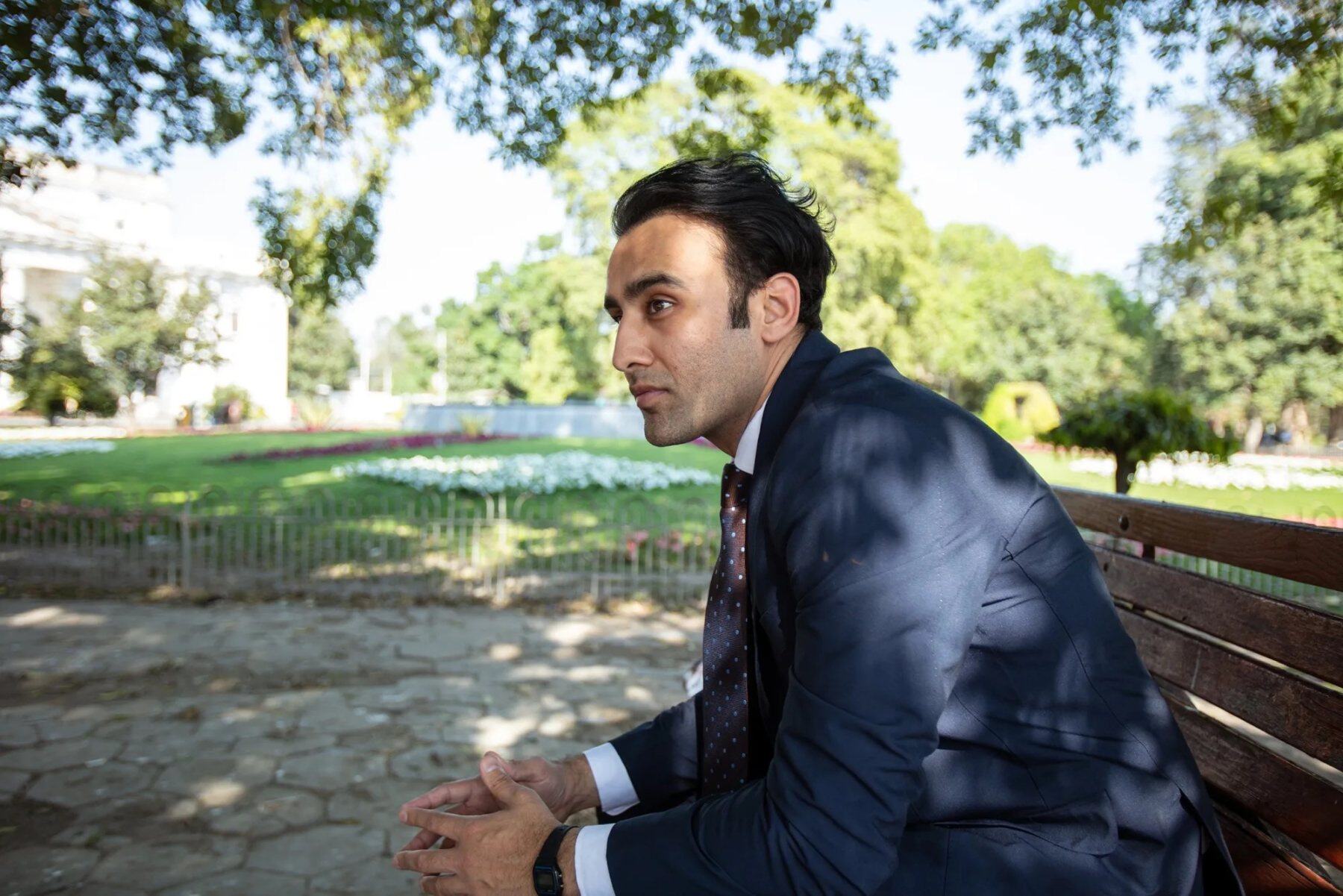
Bilal Bin Saqib outside the Jinnah Library in Lahore on March 27. Photographer: Shah Zaman / Bloomberg
However he defines himself, success has indeed followed. Saqib, hailing from Pakistan's second-largest city, Lahore, says his interest in cryptocurrency began during Bitcoin's historic bull run in 2017—when Bitcoin soared from under $1,000 at the start of the year to $14,000 by year-end.
He lived in both the UK and Pakistan, working three jobs during his undergraduate studies, including cashiering, stocking shelves, and cleaning toilets at a university supermarket. He later earned a master's degree in Social Innovation and Entrepreneurship from the London School of Economics, soon after giving a TED talk and being featured on Forbes in 2019 for co-founding the charity Tayaba with his brother to help impoverished women access drinking water.
While living in the UK during the COVID-19 pandemic, Saqib co-launched the "Million Meals" campaign, delivering fresh meals to healthcare workers and vulnerable groups. This earned him recognition from former Prime Minister Boris Johnson and the British royal family, who awarded him an MBE (Member of the Order of the British Empire).
Despite his many accolades in the philanthropic sector, Saqib initially struggled in the crypto industry. In the four years before his government appointment, his LinkedIn profile showed he worked at The Coin Master, a company with just 2-10 employees whose slogan was "helping tokens navigate the Web3 market path."
In interviews, Saqib admits to experiencing many difficult moments but does not elaborate.
"In crypto, failure is the best teacher," he said. "There's no formal school for this. You learn by doing, by getting back up again and again after making mistakes."
"I only know one thing," he added. "If you throw enough mud at the wall, some of it will stick."
After formally joining the Pakistani government in March 2025, Saqib quickly delivered results. The following month, he persuaded Binance's Changpeng Zhao to serve as a strategic advisor to the Pakistan Crypto Committee—Zhao had previously served a prison sentence in the U.S. for failing to establish adequate anti-money laundering controls and was pardoned by Trump in October.
"The chef has arrived in Pakistan. We are firing on all cylinders—vibes are high, momentum is unstoppable!" Saqib posted on X. His profile picture shows him wearing a T-shirt that reads "Crypto is not a crime."
A Binance spokesperson stated that the company has received permission from Pakistani regulators to operate in the country and "will always adhere to all applicable regulatory requirements, work closely with local authorities, and support the responsible development of the digital asset ecosystem."
Recruiting CZ was just the beginning. About three weeks later, Saqib hosted World Liberty Financial's Zachary Witkoff and other executives in Islamabad, where the company signed a letter of intent with the Pakistani government to deepen cooperation on stablecoin adoption.
Pakistan publicized the event prominently. The government stated at the time that World Liberty Financial was "backed by the Trump family, including President Donald and his sons," and that Trump "personally endorses WLF."
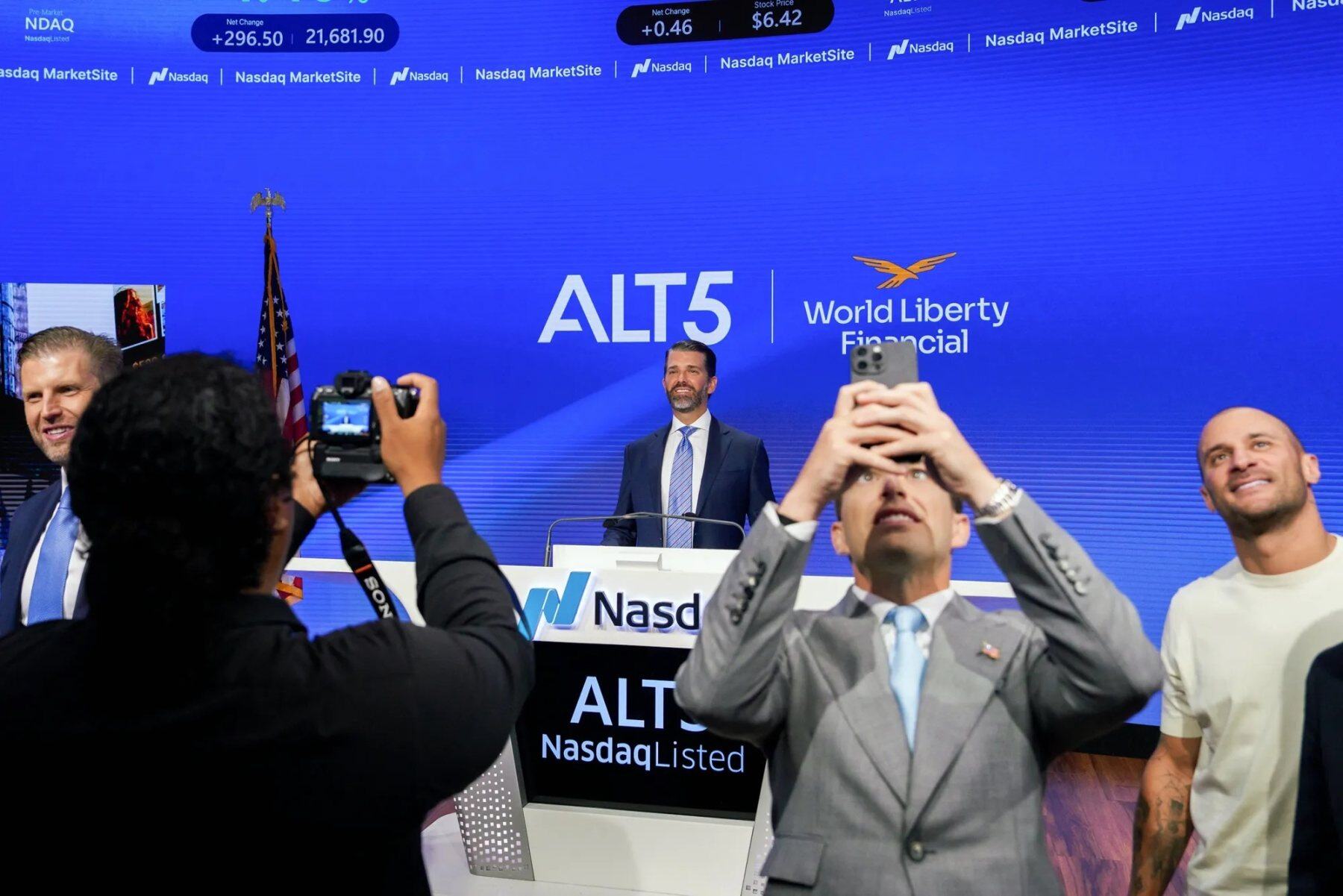
On August 13, Eric Trump (far left), Donald Trump Jr., Zachary Witkoff, and World Liberty Financial co-founder Chase Herro appear at the New York Nasdaq MarketSite. Photographer: Adam Gray / Bloomberg
Zachary Witkoff is equally ambitious. In May of this year, during a video conversation with Saqib from Lahore's scenic Shalimar Gardens, he expressed hopes of helping Pakistan digitize its economy, tokenize its trillions of dollars worth of rare earth assets, and provide digital wallets, stablecoins, and other services to cover the world's third-largest unbanked population. He said Pakistan has "enormous potential."
In late May, Saqib promoted Pakistan's crypto industry rise at a Bitcoin conference in Las Vegas, attended by U.S. Vice President JD Vance and the President's sons, Donald Trump Jr. and Eric Trump—both co-founders of World Liberty Financial. Days later, Saqib met with Bo Hines, then Director of the President's Digital Asset Advisory Committee, at the White House.
The following month, Saqib was unexpectedly added to Pakistan's trade negotiation delegation to the U.S. He was on vacation with his family in a Himalayan resort town with poor mobile signal when an official called urgently: "You're going to Washington, pack your bags immediately."
Despite having no background in tariffs, no knowledge of the meeting agenda, and not even formal attire, Saqib seized the opportunity. Upon arriving in Washington, he went straight to a mall to buy a suit jacket. The next morning, he sat across from U.S. trade officials, eloquently discussing digital assets and trade corridors. By the time he left Washington, he had helped draft a framework for a trade agreement.
This agreement was just one of several tangible benefits the Trump administration granted Pakistan. The U.S. lowered tariffs on Pakistani goods to 19%, significantly lower than for many Asian countries and far below previous rates on Indian goods—Indian tariffs had been as high as 50% until Trump reduced them to 18% this January. The Trump administration also formally designated the Balochistan Liberation Army as a terrorist organization, a move Pakistan had long sought internationally.
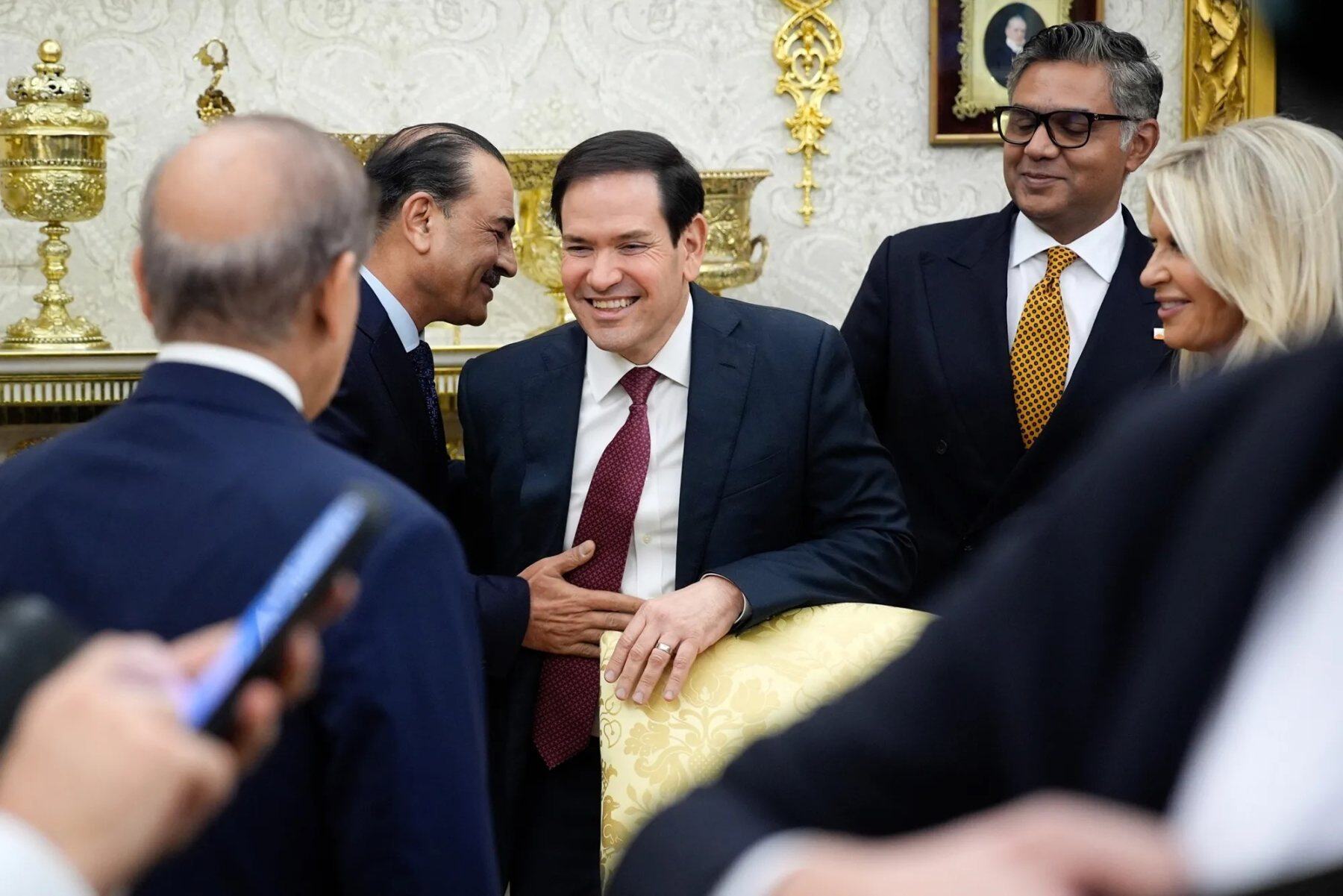
General Asim Munir (center left) and U.S. Secretary of State Marco Rubio in the White House Oval Office in September, when U.S. President Donald Trump hosted Pakistani Prime Minister Shehbaz Sharif. Photographer: Yuri Gripas / Abaca Press / Bloomberg
For the U.S., Pakistan holds multiple strategic values. It is not only a nuclear-armed nation in a crucial location but can also help the U.S. diversify its critical mineral supply chains. In September, Missouri-based Strategic Metals signed a memorandum of understanding with a military-backed company to develop rare earth resources.
The Trump family business can also benefit from entering Pakistan's virtual asset market. According to Pakistani Finance Ministry data, the country has 40 million crypto users, with estimated transaction volumes exceeding $300 billion, making it one of the countries with the highest crypto adoption rates globally—a result of people seeking alternative investment channels in a long-term high-inflation economy.
The situation could still change, especially amid soaring oil prices. Pakistan still needs to repay IMF loans, and the Fund has traditionally been skeptical of sovereign crypto experiments. El Salvador serves as a cautionary tale: its Bitcoin adoption strained relations with the IMF, stalling financing talks.
Trump is also notoriously mercurial, regardless of previous closeness. He might demand that Pakistan, which signed a defense pact with Saudi Arabia last year, participate in some form of action against Iran—a move that would put Asim Munir in an extremely difficult position.
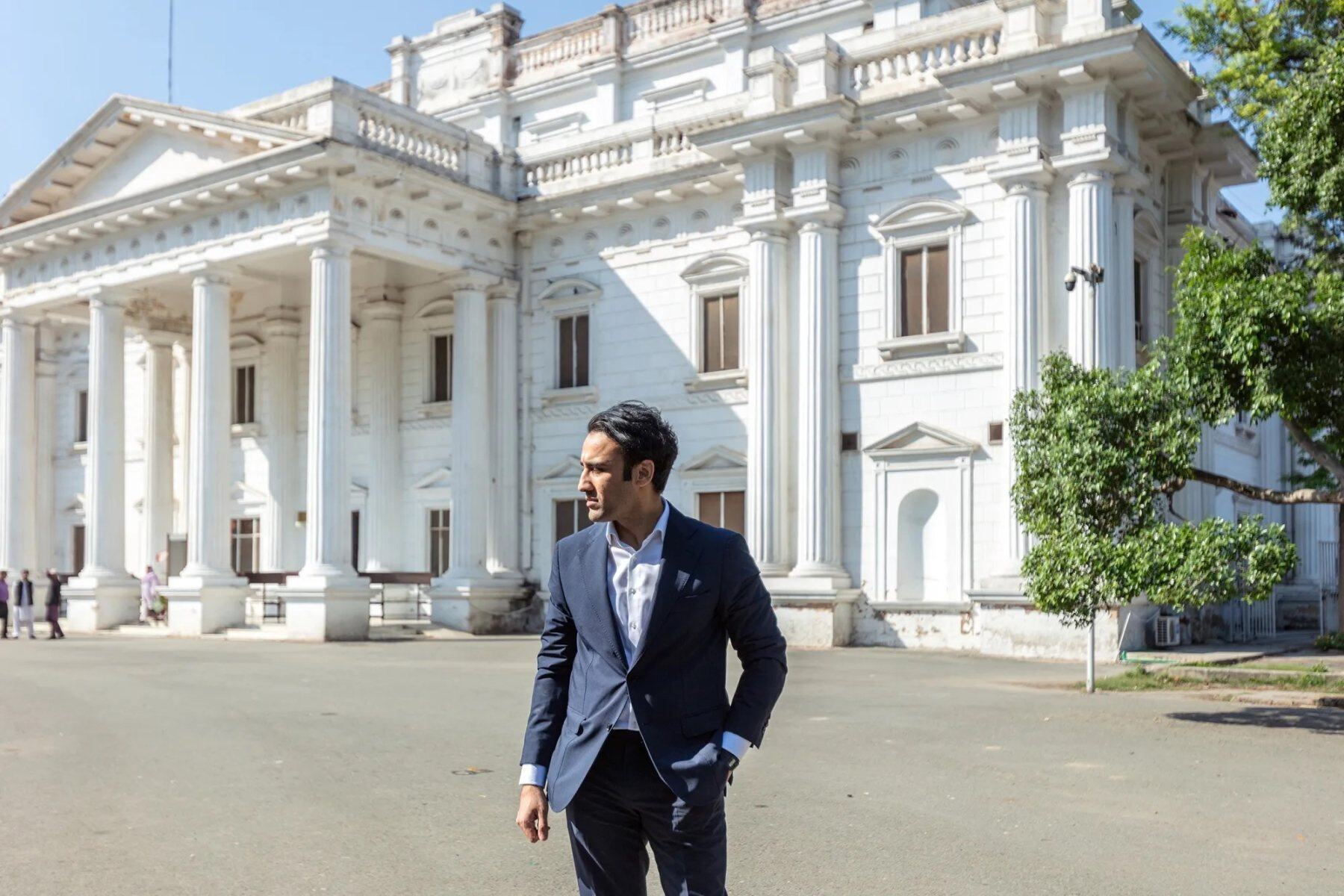
"I'm not a trader, I'm a builder. I'm an artist, not a scientist." Photographer: Shah Zaman / Bloomberg
For Saqib, however, the focus is on cultivating the technical capabilities of Pakistan's younger generation to drive economic development and avoid having to turn to the IMF for bailouts every few years. Despite global uncertainties, he remains optimistic about the country's direction.
"There's been a lot of serendipity, and the timing has been right," Saqib said. "All the stars have aligned."
Reporting assistance: Sidhartha Shukla, Ryan Weeks, Suvashree Ghosh


