






From Precious Metals to U.S. Stocks, Crypto Platforms Are Reshaping Global Asset Pricing Power


- Core Viewpoint: Recent geopolitical conflicts have highlighted the advantage of 7x24 perpetual contract trading provided by crypto platforms, allowing them to price assets ahead of traditional market closures, accelerating the trend of integration between traditional and digital finance.
- Key Elements:
- During traditional market closures, the price of WTI crude oil perpetual contracts on the MEXC platform surged to approximately $96, exceeding the previous closing price, completing rapid pricing for the sudden event.
- The trading volume of oil perpetual contracts offered by crypto platforms skyrocketed from $339 million to around $7.3 billion within days, indicating a rapid influx of capital.
- Such perpetual contracts allow for high leverage and have no expiration date, meeting traders' demand for volatility and round-the-clock trading, especially on weekends.
- The trend is expanding from crude oil to tokenized U.S. stocks and assets like gold and silver, aiming to achieve 7x24 trading for all assets.
- The high-leverage and round-the-clock trading model also carries high risks, making it prone to triggering large-scale liquidations during periods of extreme price volatility.
When geopolitical black swans take flight over the weekend, traditional financial market investors are often left watching helplessly. Recent attacks on facilities in places like the UAE have intensified oil price volatility. Since the US and Israel launched airstrikes on Iran, numerous traders have flocked to crypto platforms to trade oil perpetual contracts. While traditional energy investors spent last weekend counting down the hours until the futures market reopened on Sunday, overseas cryptocurrency traders had already begun betting on oil price movements.
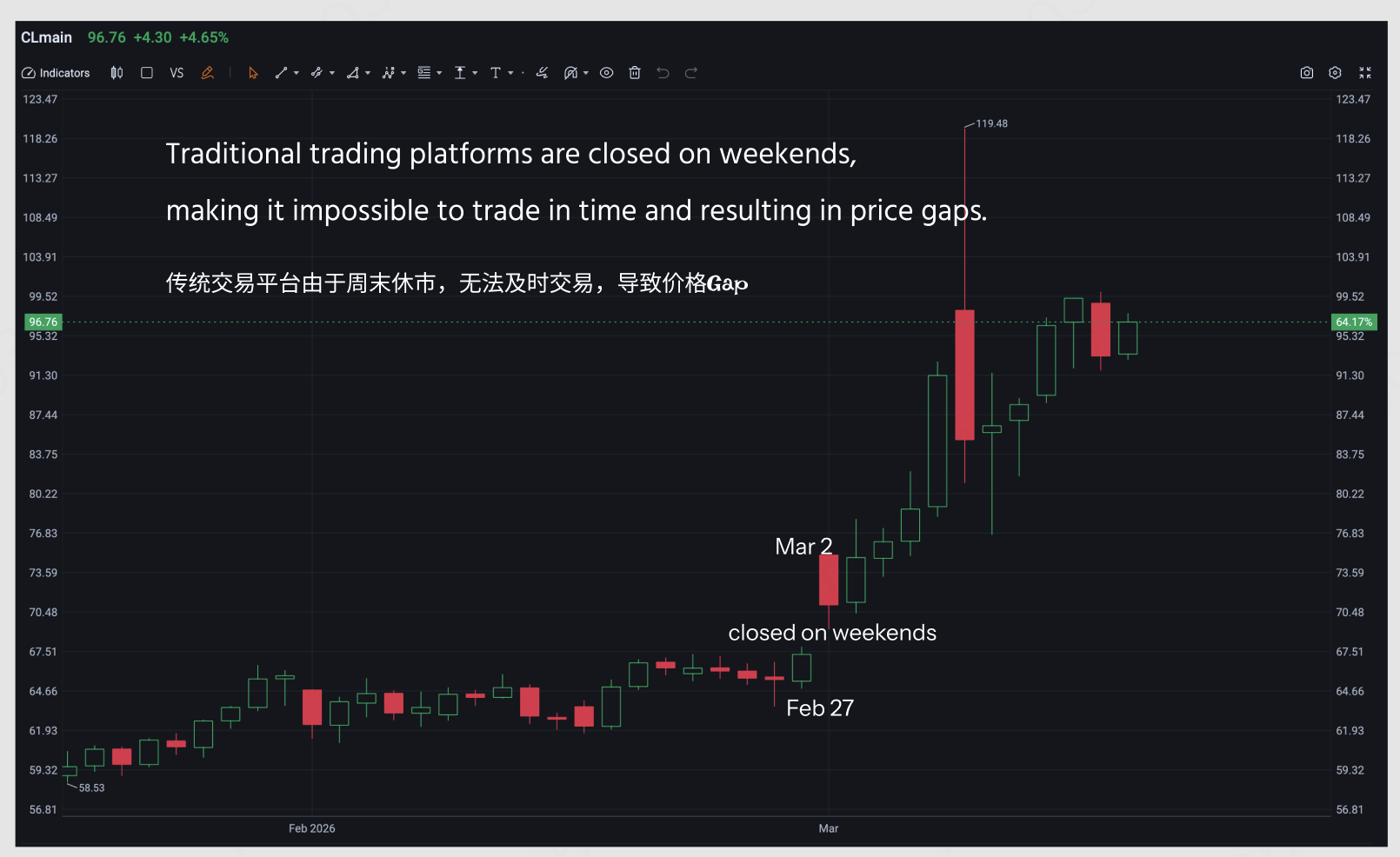
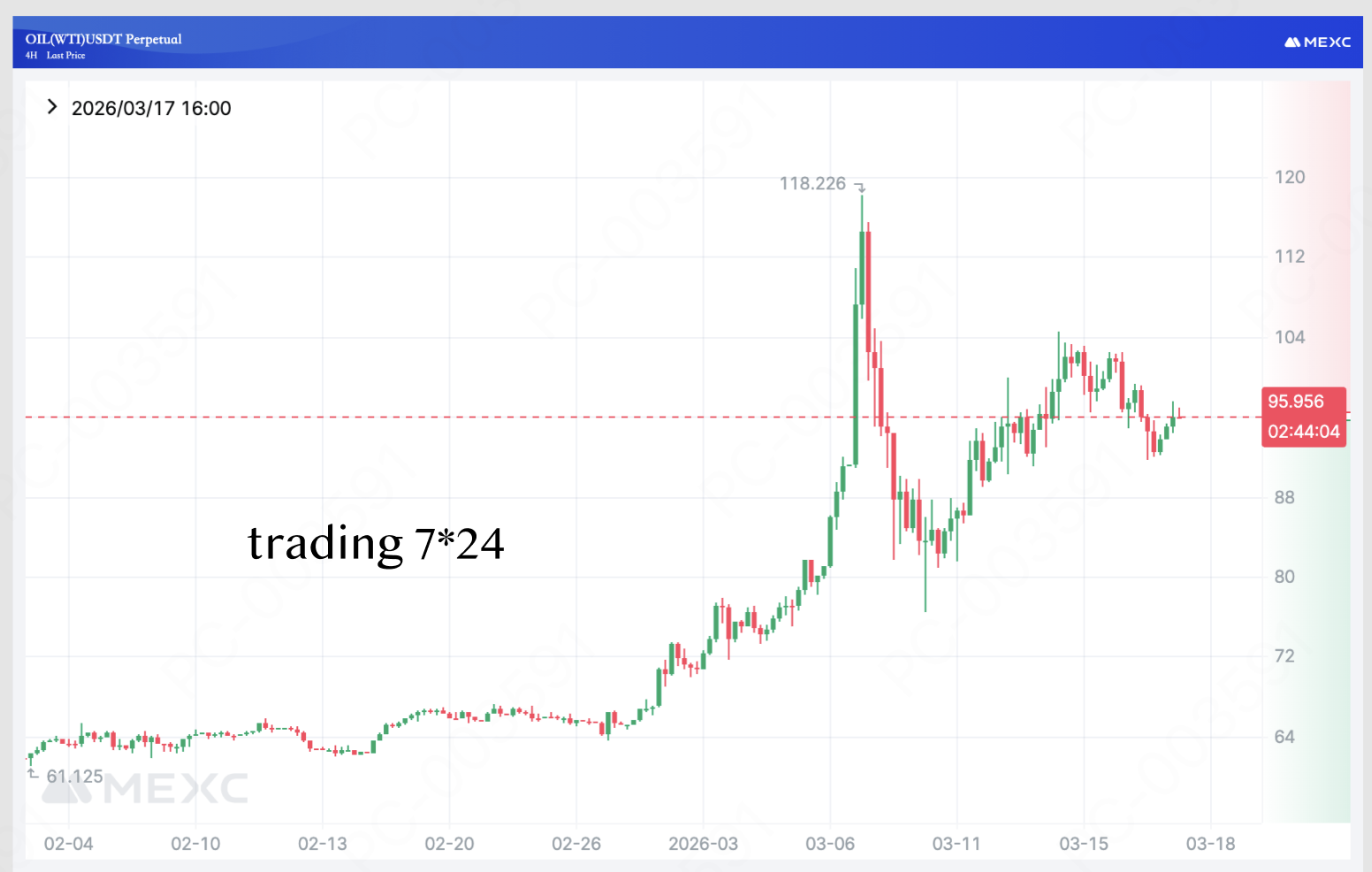
Last Saturday evening, roughly 20 hours before mainstream derivative markets opened, the price of WTI Crude Oil Perpetual Futures on the MEXC platform surged to around $96 per barrel, surpassing the Friday afternoon closing price of $90.90 for regular crude oil futures. In this market movement triggered by sudden conflict, crypto platforms were the first to complete asset repricing. Their seamless, round-the-clock operation mechanism starkly exposed the lag inherent in traditional exchanges' rigid market closure schedules.
The Wall Street Journal: Accelerating Convergence of Traditional and Digital Finance
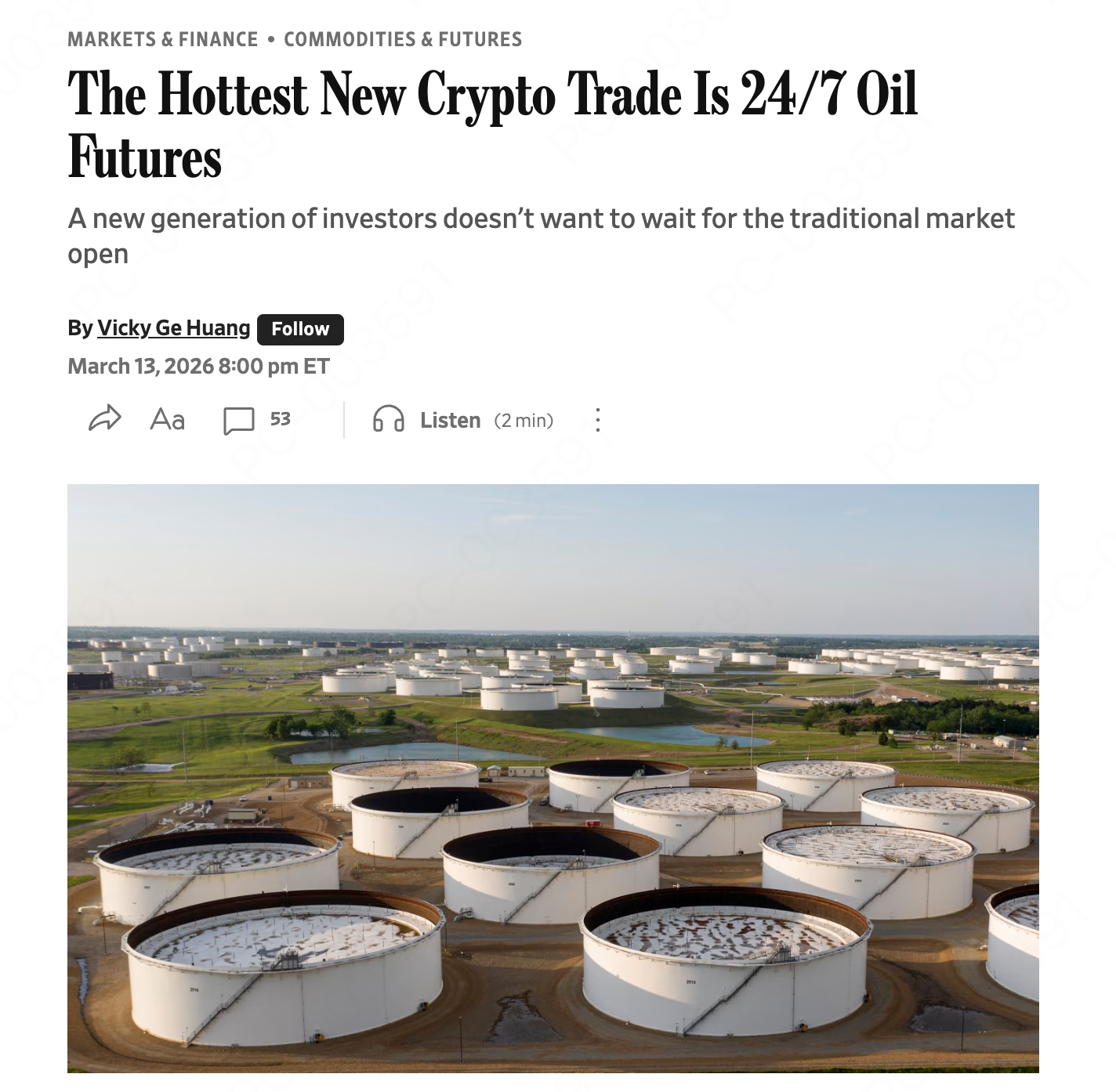
This disruptive market phenomenon quickly caught the attention of The Wall Street Journal. The report noted that a new generation of investors is no longer willing to wait for traditional markets to open. Crypto platforms now offer perpetual futures tracking commodities, which are highly speculative derivatives.
Perpetual contracts never expire and have no strike price (the point at which the contract becomes effective). They also allow traders to use extremely high leverage, which can amplify profits but also lead to the loss of their entire investment. As industry professionals have stated, "You don't need to wait until Monday for the market to open for people to start moving." This is changing traditional models, enabling genuine participants to take action when weekend events occur.
Market data vividly reflects capital voting with its feet. In just a few days, the cumulative trading volume for oil futures skyrocketed from $339 million on February 28th to approximately $7.3 billion by Thursday.
Transcending Asset Boundaries: The 24/7 Wave from Crude Oil to US Stocks
Time arbitrage in the crude oil market is just the beginning. 24/7 trading is already commonplace for cryptocurrency investors. For modern traders, the trading mechanisms offered by crypto platforms are demonstrating significant appeal for US stocks and other commodities.
Wall Street is racing to leverage the digital ledger technology underpinning Bitcoin and other cryptocurrencies to tokenize stocks and other traditional assets. Similar to digital assets and prediction markets, so-called tokenized stocks are increasingly attracting a younger generation of investors who desire 24/7 trading and the ability to react in real-time to geopolitical events and corporate breaking news. For instance, investors can now trade contracts for hot US stock tickers like AMD on crypto platforms at any time.
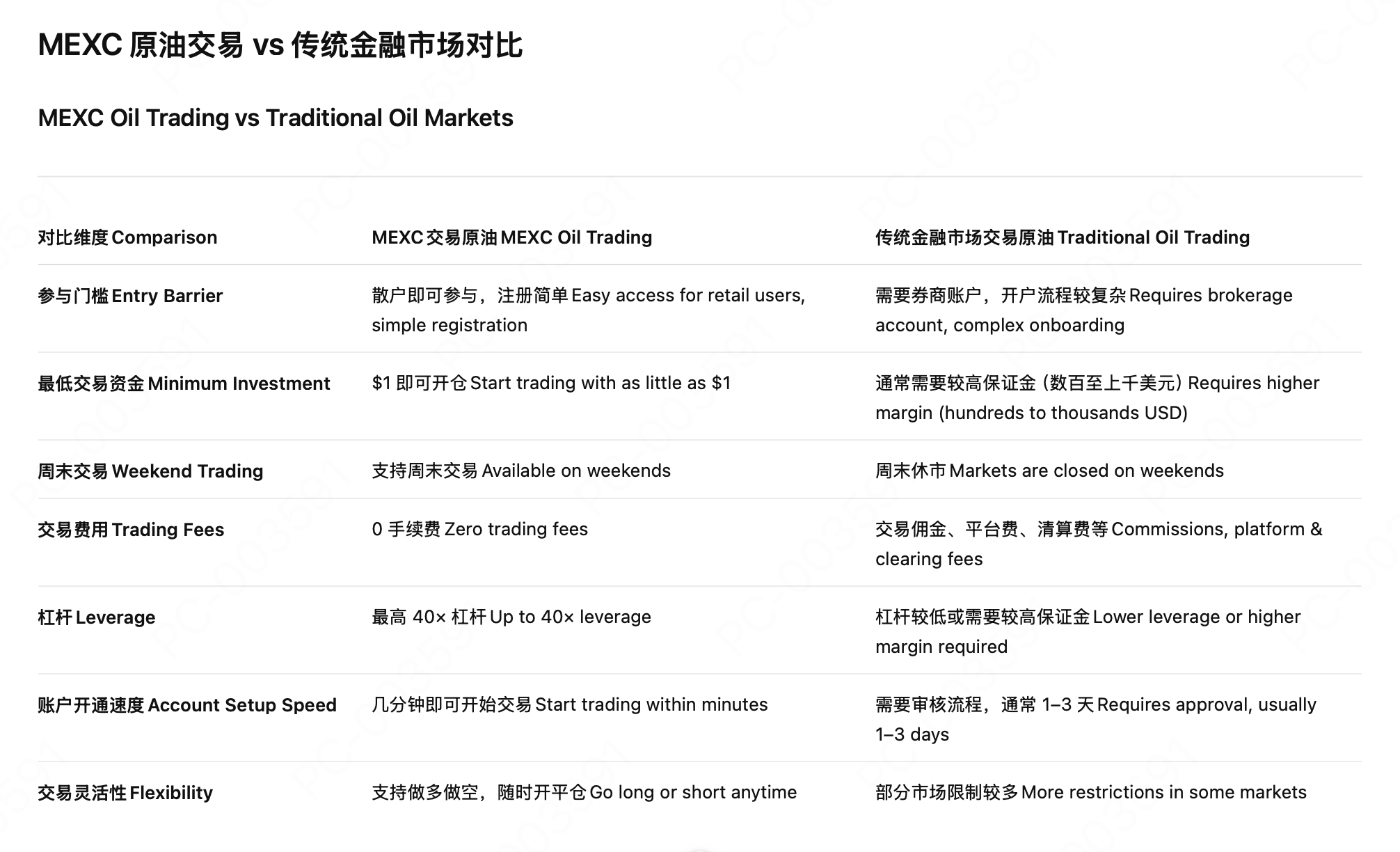
Beyond oil, crypto platforms have recently launched perpetual contracts for gold and silver, and these precious metals have also experienced abnormal volatility. The prices of both metals have soared to record highs, only to subsequently plummet.
As liquidity and trading habits migrate, an irreversible trend is emerging: Crypto platforms, with their advantages of 24/7 seamless trading, high capital efficiency, and disregard for geographical and temporal limitations, are continuously eroding the market share of traditional trading platforms. While traditional financial institutions remain constrained by rigid business hours, the crypto ecosystem is gradually absorbing the trading demand for a massive volume of global assets, becoming the core hub for a new generation of pricing power.
A New Paradigm of Coexisting Opportunities and Challenges
Objectively speaking, this trading model combining high leverage with 24/7 operation is a double-edged sword. In the author's view, cryptocurrency traders have short attention spans, so they seek quick returns and crave volatility. On Sunday, the author observed that oil prices had reached unsustainable levels and began shorting—a judgment that proved correct: On Monday, after President Trump stated that the war with Iran was "pretty much all over," crude oil futures prices retreated below $100 per barrel.
This volatility can backfire when problems arise.
For many traders, the ability to trade these assets with leverage 24/7 is highly attractive, especially on weekends when traditional markets are closed. That said, trading highly volatile assets with leverage carries genuine market risks, and the author has also observed large-scale liquidations during sudden price swings.
Despite the challenges, the recent debut of oil futures contracts on multiple crypto platforms foreshadows a future of convergence between traditional and digital finance—a future where all forms of assets can be traded at any time. In this historical process, crypto exchanges are at the forefront of this transformation. For traders eager to maintain market initiative at all times, a trading ecosystem that never sleeps is undoubtedly the most attractive battleground of the future.





