






Crypto Exchanges Cross into TradFi: How Does the Underlying Business Model Affect Your Trading Experience?


- Core Viewpoint: When crypto platforms offer derivatives on traditional financial assets, the differences in their underlying business models (market maker model vs. pure matching model) fundamentally determine traders' fund security, withdrawal smoothness, and trading experience during extreme market conditions.
- Key Elements:
- Under the Market Maker (CFD/B-Book) model, the platform or liquidity provider acts as the user's counterparty. During extreme volatility, risk control mechanisms such as trading or withdrawal restrictions may be triggered due to the risk of massive losses.
- Under the Pure Matching (P2P) model, the platform remains neutral. User profits and losses come from market counterparties, eliminating conflicts of interest for the platform, thus providing no incentive to restrict withdrawals of legitimate profits.
- The pure matching model enables 7x24 trading of TradFi assets, avoiding "gap risk" caused by traditional market closures, and offers a more transparent cost structure (e.g., zero base interest rates, negative Maker fees).
- Business model choice directly impacts user experience: The market maker model performs well in stable markets, but the pure matching model offers greater advantages for professional traders in terms of fund security and execution freedom.
Recently, with the volatility in the macroeconomic landscape, the boundaries between the crypto market and traditional finance (TradFi) are rapidly converging. An increasing number of crypto trading platforms are introducing derivative trading for assets like US stocks and crude oil, providing users with the convenience of using crypto assets to directly participate in global macro plays.
However, during periods of intense market volatility (especially sudden weekend moves), occasional controversies arise within the industry regarding "strict risk control reviews for withdrawals after profits" or even "trades being deemed non-compliant." A recent example that sparked heated discussion involved holding long positions in crude oil over a weekend and facing account scrutiny after profiting from a Monday opening "gap."
When faced with such phenomena, simply attributing them to "platform pettiness" or "malicious withdrawal blocking by customer service" is not objective. In fact, the root of these controversies often lies deep within the underlying business model and liquidity provision mechanisms adopted by the platform.
Exploring the Root Cause: Market Making vs. Pure Matching Models
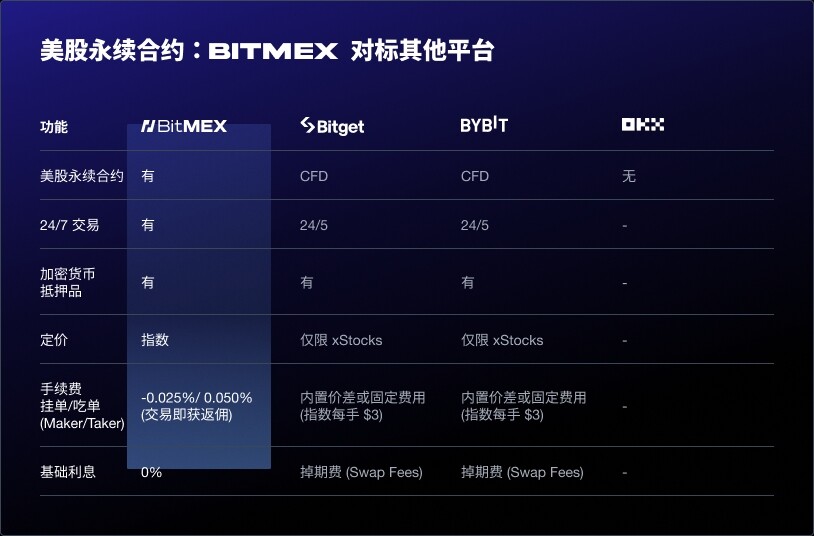
Currently, crypto platforms offering TradFi asset derivatives (like US stocks, crude oil) primarily operate on two fundamentally different underlying architectures:
The first is the CFD (Contract for Difference) or B-Book model that introduces third-party liquidity. In this model, the platform acts more like a "market maker." To provide quotes for external assets, the platform typically connects to traditional CFD brokers as liquidity providers, or the platform itself assumes the market maker role. This means that in certain specific trades, the liquidity provider essentially becomes the user's "counterparty." In stable markets, this model works well; but when encountering extreme one-sided moves, such as a major event over a weekend closure causing a significant Monday "gap" in crude oil/US stocks, if a large number of users profit correctly, the market maker acting as the counterparty faces direct financial exposure risk. To control such extreme exposure losses, this model often has strict risk control clauses embedded in its underlying protocol (e.g., restricting gap trades). This is a natural risk defense mechanism of this business model.
The second is adhering to a pure Peer-to-Peer (P2P) matching model. In this model, the platform returns to the essence of an "exchange." Taking BitMEX, an early explorer in this field, as an example, its Global Equity Perpetuals (Equity Perps) and commodity derivatives employ a pure order book matching mechanism. Under this mechanism, the platform is absolutely neutral. Every cent of profit for long users comes from the losses of real short users in the market. The platform does not participate in trading games, does not bear directional exposure, and relies solely on providing a stable matching engine to earn transparent transaction fees.
How Do Differences in Business Models Translate to Traders' Actual Experience?
Understanding the differences in underlying models allows us to see the specific performance of different products in actual trading environments. Taking BitMEX's perpetual contract mechanism as an example, by剥离了 the "betting" relationship with users, the platform can, based on neutrality, offer more trader-friendly product features:
- Smoothness of Withdrawals and Rebuilding Trust: Due to the absence of conflicts of interest, BitMEX lacks the underlying incentive to restrict withdrawals for compliant users. This is also why BitMEX, having operated for 11 years through multiple market cycles and experienced countless extreme black swan events, has maintained a "zero security incident" record and has never restricted user withdrawals due to platform exposure issues. Your profits stem from your market insight and should be freely accessible.
- Breaking Time Barriers (24/7 Trading): Products reliant on traditional CFD liquidity are often constrained by the 24/5 trading hours of traditional finance. Leveraging its native crypto liquidity system, BitMEX enables 7x24 trading for TradFi assets. This means traders do not have to passively bear the "gap" risk from weekend market closures and can adjust positions in real-time whenever macro events occur.
- More Transparent Cost Structure: The CFD model typically includes hidden spreads and daily overnight fees (Swap Fees). Under the pure matching perpetual contract mechanism, BitMEX employs clear index pricing and sets the base interest rate to 0%, significantly reducing long-term holding costs. Furthermore, to incentivize liquidity, the platform even offers a -0.025% negative fee rate for Makers (order placers), directly returning a portion of the fee revenue to traders.
Conclusion
The core of financial trading is monetizing insight and managing risk. As the crypto market continues to expand into traditional financial assets, when choosing a platform, traders should look beyond the usability of the product interface and delve deeper into its underlying operational mechanisms.
Whether it's the Broker model offering a wide range of assets or the Exchange model坚守 absolute neutrality, each has its own business logic. However, for professional traders with larger capital sizes and trading strategies偏向 capturing extreme market moves, choosing a pure matching platform that "does not act as a counterparty and has no conflict of interest" might be the safest choice to ensure trade execution and fund security.


