Open Access to Unicorn Tickets: From Robinhood to MSX, An On-Chain Equity Experiment for Pre-IPO


- Core Viewpoint: Blockchain technology is driving the migration of the Pre-IPO (pre-listing) primary market on-chain. Through methods like tokenization or derivative contracts, it attempts to break down traditional high barriers and construct a "quasi-primary market" that connects global liquidity.
- Key Elements:
- Market Status: Tokenization of mainstream secondary market assets (like U.S. Treasuries, U.S. stocks) is relatively mature. However, Pre-IPO shares in the primary market, including super unicorns like SpaceX and ByteDance, remain highly closed-off, making participation difficult for ordinary investors.
- Core Driving Force: Companies in the Pre-IPO stage have mature business models and reduced risks, yet there remains significant valuation leap potential around the IPO. The existing OTC market has high barriers and low efficiency, creating an inherent demand for innovation through blockchain technology.
- Two Main Paths: First, the perpetual contract model adopted by platforms like Hyperliquid, which provides price exposure without involving real equity—low barrier but in a regulatory gray area. Second, the model of Robinhood, MSX in partnership with Republic, which involves compliant equity tokenization through SPV structures, allowing investors to hold legally protected rights.
- Key Developments: Robinhood in Europe and MSX in the Asia-Pacific market have successively launched compliant Pre-IPO tokenized products, with minimum thresholds lowered to as low as 10 USDT. This validates regulatory adaptability and user demand, serving as an important market entry point.
- Market Significance: This not only meets retail investment demand but also provides new global liquidity exit options for early shareholders. Bidirectional demand is pushing the market's evolution from peer-to-peer matching towards an efficient, low-barrier tokenized era.
- Future Challenges: The development of this field still depends on clear compliance pathways, reliable risk control mechanisms, effective bilateral liquidity matching, and more platforms engaging in practice to validate and promote viable models.
Since 2026, there seems to have been no new major developments in the RWA space.
Looking back over the past five years, from stablecoins to U.S. Treasuries, and then to funds and U.S. stocks, mainstream assets have been gradually introduced into the on-chain system. Through tokenization, they have become new, tradable financial products, to some extent validating the on-chain trading logic for secondary market assets from traditional finance (TradFi).
However, the primary market—the realm hiding super unicorns like SpaceX, ByteDance, OpenAI, and Anthropic—remains tightly shut. Users can trade Tesla stock seamlessly on-chain, yet it remains difficult to secure a "ticket" to SpaceX before its IPO.
Nevertheless, since last year, boundaries have indeed been tested: Robinhood experimented with tokenized private equity products like OpenAI in Europe, Hyperliquid listed perpetual contracts for assets like SpaceX, and this week, MSX launched on-chain Pre-IPO share offerings for unicorns including SpaceX and ByteDance.
While these approaches differ, they point in the same direction: Pre-IPO, a previously highly exclusive primary market, is attempting to embrace the on-chain world.
1. Pre-IPO Is, and Must, Embrace On-Chain
To understand the significance of going on-chain for Pre-IPO, we must first clarify the unique role "Pre-IPO" plays in the capital market lifecycle.
For a long time, the legendary investment stories we are familiar with—such as Masayoshi Son deciding on Alibaba in six minutes, a16z's early investment in Meta (Facebook), and Sequoia's bet on Coinbase—essentially tell the same story. It's about institutions securing positions in high-quality assets before their IPO, capturing the "valuation gap" between the private and public markets.
Objectively speaking, this is what they deserve.
After all, early-stage venture capital is a "game of probability." a16z might have invested in hundreds of failed social networks before hitting it big with Facebook. The number of internet companies Masayoshi Son missed or mis-invested in, both before and after betting on Alibaba, is countless... Ultimately, bearing extremely high trial-and-error costs, enduring exit cycles lasting up to a decade, and finally covering overall losses with outsized returns from a few successful projects—this is the fundamental business logic of venture capital and the "risk premium" institutional capital rightfully earns.
However, when we talk about Pre-IPO (the period just before listing), the logic undergoes a qualitative shift.
This is a distinctly different stage. As the "last mile" before going public, companies at this point have matured into super unicorns like SpaceX, ByteDance, OpenAI, and Anthropic. Their business models are highly mature, and revenue paths are clearly visible. Entering at this stage carries significantly lower risk compared to early-stage VC and even possesses a certain quasi-secondary market certainty.
Paradoxically, during this high-certainty phase, the returns around the IPO can still be astonishing. Taking two representative stocks from 2025 as examples: Figma listed at $33 and closed at $115.5 on its first day, a gain of over 250%. Bullish also saw a first-day surge of nearly 290%.
This means that institutions that secured shares before the bell rang took the juiciest piece of the cake while facing minimal risk.
Unfortunately, even with secondary trading platforms for private company equity like Forge and EquityZen, they generally operate on a peer-to-peer OTC matching model. Minimum investment thresholds often start at tens of thousands of dollars and are only open to accredited investors. Ordinary users still have to wait until after the IPO bell rings to buy in the secondary market.
From a capital efficiency perspective, this is an inefficient structure. On one side, unicorn valuations keep climbing; on the other, ordinary investors are kept outside the high walls. A natural question arises:
Since blockchain can lower the barrier to entry for U.S. stocks and enable asset fractionalization, can it also, through tokenization, allow users to share in the valuation growth红利 (benefits) of unicorn assets during the transition from private to public markets, even before they list?
2. Route Contention: Perpetual Contracts or Tokenized Mirrors?
Current on-chain attempts for Pre-IPO have diverged into two paths with fundamentally different logics.
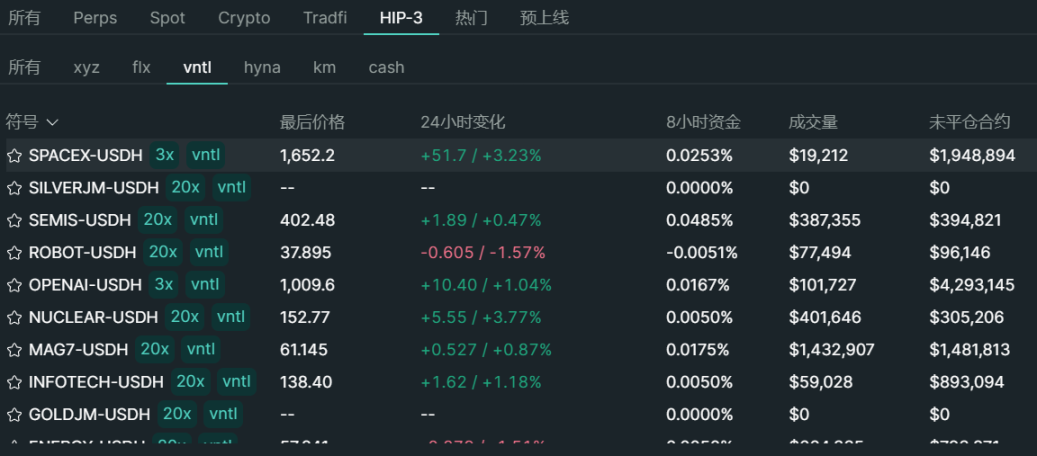
One is the perpetual contract model represented by Hyperliquid. For example, based on the HIP-3 framework, developers can custom-deploy perpetual contract products for Pre-IPO assets like OpenAI and SpaceX. The core logic combines Pre-IPO with perpetual contracts, not involving actual equity delivery. It essentially bypasses the equity itself, providing only price exposure, allowing users to bet on the valuation fluctuations of companies like SpaceX and OpenAI.
The advantages are also evident, such as extremely low entry barriers (no accredited investor certification required) and instant transaction completion (no complex equity settlement processes).
Mechanically, we can simply understand it as a betting agreement on the valuation of unicorns like SpaceX. Liquidity is activated by market makers and leverage mechanisms. Precisely because of this, one must constantly monitor the stability of oracles, the reliability of risk control mechanisms, and the fairness of liquidations during extreme market conditions.
Furthermore, from a compliance perspective, whether this model constitutes a form of disguised securities issuance remains a gray area in major global jurisdictions.
The other path is much more challenging: allowing users to actually hold tokenized equity assets under compliance, not just trade prices.
Robinhood's European experiment in June 2025 and MSX's launch of a Pre-IPO zone in March 2026 both point in this direction. Both platforms have successively established strategic partnerships with the U.S.-based compliant asset tokenization platform Republic, aiming to tokenize real Pre-IPO equity through SPV (Special Purpose Vehicle) structures, allowing investors to hold legally protected equity shares.
The core value of this model lies in the fact that the tokens correspond to real, existing equity, held by regulated third-party custodians, possessing a foundation of legal and asset backing.
Specifically, Republic employs an "indirect holding via SPV" structure. An offshore SPV is established to hold the underlying company shares, and then the SPV's interests are tokenized and distributed to investors. Although it's still indirect holding, compared to pure derivatives, this model at least establishes a traceable chain of "token → SPV → equity."
Of course, the implementation of this model highly depends on compliant infrastructure. It must operate under regulatory frameworks like the U.S. SEC, partnering with licensed custodians (such as BitGo Trust Company, etc.) to ensure asset security and legal validity. This means it's not just a product innovation but also an institutional engineering project.
Overall, these two paths represent two截然不同的 (completely different) value orientations. The former (perpetual contracts) aligns more with DeFi's efficiency logic, pursuing极致 (ultimate) liquidity and low barriers, at the cost of lacking a real connection to the underlying asset. The latter (tokenized equity mirrors) aligns more with TradFi's institutional logic, with the difficulty lying in building the compliance framework.
But regardless of the path chosen, a consensus is forming: by tokenizing unlisted equity, a "quasi-primary market" situated between primary and secondary markets is taking shape.
3. From Robinhood to MSX: The Global Bridge for the "Quasi-Primary Market"
The爆发 (explosion) of a market requires not just a grand narrative but, more crucially, gateway-level products.
From a technical perspective, tokenization technology has undergone years of engineering validation. Smart contracts, oracles, and on-chain compliance frameworks all possess the capability to support complex financial products. From an application perspective, DeFi and TradFi have completed their initial磨合 (磨合 -磨合磨合磨合磨合磨合磨合磨合磨合磨合磨合磨合磨合磨合磨合磨合磨合磨合磨合磨合磨合磨合磨合磨合磨合磨合磨合磨合磨合磨合磨合磨合磨合磨合磨合磨合磨合磨合磨合磨合磨合磨合磨合磨合磨合磨合磨合磨合磨合磨合磨合磨合磨合磨合磨合磨合磨合磨合磨合磨合磨合磨合磨合磨合磨合磨合磨合磨合磨合磨合磨合磨合磨合磨合磨合磨合磨合磨合磨合磨合磨合磨合磨合磨合磨合磨合磨合磨合磨合磨合磨合磨合磨合磨合磨合磨合磨合磨合磨合磨合磨合磨合磨合磨合磨合磨合磨合磨合磨合磨合磨合磨合磨合磨合磨合磨合磨合磨合磨合磨合磨合磨合磨合磨合磨合磨合磨合磨合磨合磨合磨合磨合磨合磨合磨合磨合磨合磨合磨合磨合磨合磨合磨合磨合磨合磨合磨合磨合磨合磨合磨合磨合磨合磨合磨合磨合磨合磨合磨合磨合磨合磨合磨合磨合磨合磨合磨合磨合磨合磨合磨合磨合磨合磨合磨合磨合磨合磨合磨合磨合磨合磨合磨合磨合磨合磨合磨合磨合磨合磨合磨合磨合磨合磨合磨合磨合磨合磨合磨合磨合磨合磨合磨合磨合磨合磨合磨合磨合磨合磨合磨合磨合磨合磨合磨合磨合磨合磨合磨合磨合磨合磨合磨合磨合磨合磨合磨合磨合磨合磨合磨合磨合磨合磨合磨合磨合磨合磨合磨合磨合磨合磨合磨合磨合磨合磨合磨合磨合磨合磨合磨合磨合磨合磨合磨合磨合磨合磨合磨合磨合磨合磨合磨合磨合磨合磨合磨合磨合磨合磨合磨合磨合磨合磨合磨合磨合磨合磨合磨合磨合磨合磨合磨合磨合磨合磨合磨合磨合磨合磨合磨合磨合磨合磨合磨合磨合磨合磨合磨合磨合磨合磨合磨合磨合磨合磨合磨合磨合磨合磨合磨合磨合磨合磨合磨合磨合磨合磨合磨合磨合磨合磨合磨合磨合磨合磨合磨合磨合磨合磨合磨合磨合磨合磨合磨合磨合磨合磨合磨合磨合磨合磨合磨合磨合磨合磨合磨合磨合磨合磨合磨合磨合磨合磨合磨合磨合磨合磨合磨合磨合磨合磨合磨合磨合磨合磨合磨合磨合磨合磨合磨合磨合磨合磨合磨合磨合磨合磨合磨合磨合磨合磨合磨合磨合磨合磨合磨合磨合磨合磨合磨合磨合磨合磨合磨合磨合磨合磨合磨合磨合磨合磨合磨合磨合磨合磨合磨合磨合磨合磨合磨合磨合磨合磨合磨合磨合磨合磨合磨合磨合磨合磨合磨合磨合磨合磨合磨合磨合磨合磨合磨合磨合磨合磨合磨合磨合磨合磨合磨合磨合磨合磨合磨合磨合磨合磨合磨合磨合磨合磨合磨合磨合磨合磨合磨合磨合磨合磨合磨合磨合磨合磨合磨合磨合磨合磨合磨合磨合磨合磨合磨合磨合磨合磨合磨合磨合磨合磨合磨合磨合磨合磨合磨合磨合磨合磨合磨合磨合磨合磨合磨合磨合磨合磨合磨合磨合磨合磨合磨合磨合磨合磨合磨合磨合磨合磨合磨合磨合磨合磨合磨合磨合磨合磨合磨合磨合磨合磨合磨合磨合磨合磨合磨合磨合磨合磨合磨合磨合磨合磨合磨合磨合磨合磨合磨合磨合磨合磨合磨合磨合磨合磨合磨合磨合磨合磨合磨合磨合磨合磨合磨合磨合磨合磨合磨合磨合磨合磨合磨合磨合磨合磨合磨合磨合磨合磨合磨合磨合磨合磨合磨合磨合磨合磨合磨合磨合磨合磨合磨合磨合磨合磨合磨合磨合磨合磨合磨合磨合磨合磨合磨合磨合磨合磨合磨合磨合磨合磨合磨合磨合磨合磨合磨合磨合磨合磨合磨合磨合磨合磨合磨合磨合磨合磨合磨合磨合磨合磨合磨合磨合磨合磨合磨合磨合磨合磨合磨合磨合磨合磨合磨合磨合磨合磨合磨合磨合磨合磨合磨合磨合磨合磨合磨合磨合磨合磨合磨合磨合磨合磨合磨合磨合磨合磨合磨合磨合磨合磨合磨合磨合磨合磨合磨合磨合磨合磨合磨合磨合磨合磨合磨合磨合磨合磨合磨合磨合磨合磨合磨合磨合磨合磨合磨合磨合磨合磨合磨合磨合磨合磨合磨合磨合磨合磨合磨合磨合磨合磨合磨合磨合磨合磨合磨合磨合磨合磨合磨合磨合磨合磨合磨合磨合磨合磨合磨合磨合磨合磨合磨合磨合磨合磨合磨合磨合磨合磨合磨合磨合磨合磨合磨合磨合磨合磨合磨合磨合磨合磨合磨合磨合磨合磨合磨合磨合磨合磨合磨合磨合磨合磨合磨合磨合磨合磨合磨合磨合磨合磨合磨合磨合磨合磨合磨合磨合磨合磨合磨合磨合磨合磨合磨合磨合磨合磨合磨合磨合磨合磨合磨合磨合磨合磨合磨合磨合磨合磨合磨合磨合磨合磨合磨合磨合磨合磨合磨合磨合磨合磨合磨合磨合磨合磨合磨合磨合磨合磨合磨合磨合磨合磨合磨合磨合磨合磨合磨合磨合磨合磨合磨合磨合磨合磨合磨合磨合磨合磨合磨合磨合磨合磨合磨合磨合磨合磨合磨合磨合磨合磨合磨合磨合磨合磨合磨合磨合磨合磨合磨合磨合磨合磨合磨合磨合磨合磨合磨合磨合磨合磨合磨合磨合磨合磨合磨合磨合磨合磨合磨合磨合磨合磨合磨合磨合磨合磨合磨合磨合磨合磨合磨合磨合磨合磨合磨合磨合磨合磨合磨合磨合磨合磨合磨合磨合磨合磨合磨合磨合磨合磨合磨合磨合磨合磨合磨合磨合磨合磨合磨合磨合磨合磨合磨合磨合磨合磨合磨合磨合磨合磨合磨合磨合磨合磨合磨合磨合磨合磨合磨合磨合磨合磨合磨合磨合磨合磨合磨合磨合磨合磨合磨合磨合磨合磨合磨合磨合磨合磨合磨合磨合磨合磨合磨合磨合磨合磨合磨合磨合磨合磨合磨合磨合磨合磨合磨合磨合磨合磨合磨合磨合磨合磨合磨合磨合磨合磨合磨合磨合磨合磨合磨合磨合磨合磨合磨合磨合磨合磨合磨合磨合磨合磨合磨合磨合磨合磨合磨合磨合磨合磨合磨合磨合磨合磨合磨合磨合磨合磨合磨合磨合磨合磨合磨合磨合磨合磨合磨合磨合磨合磨合磨合磨合磨合磨合磨合磨合磨合磨合磨合磨合磨合磨合磨合磨合磨合磨合磨合磨合磨合磨合磨合磨合磨合磨合磨合磨合磨合磨合磨合磨合磨合磨合磨合磨合磨合磨合磨合磨合磨合磨合磨合磨合磨合磨合磨合磨合磨合磨合磨合磨合磨合磨合磨合磨合磨合磨合磨合磨合磨合磨合磨合磨合磨合磨合磨合磨合磨合磨合磨合磨合磨合磨合磨合磨合磨合磨合磨合磨合磨合磨合磨合磨合磨合磨合磨合磨合磨合磨合磨合磨合磨合磨合磨合磨合磨合磨合磨合磨合磨合磨合磨合磨合磨合磨合磨合磨合磨合磨合磨合磨合磨合磨合磨合磨合磨合磨合磨合磨合磨合磨合磨合磨合磨合磨合磨合磨合磨合磨合磨合磨合磨合磨合磨合磨合磨合磨合磨合磨合磨合磨合磨合磨合磨合磨合磨合磨合磨合磨合磨合磨合磨合磨合磨合磨合磨合磨合磨合磨合磨合磨合磨合磨合磨合磨合磨合磨合磨合磨合磨合磨合磨合磨合磨合磨合磨合磨合磨合磨合磨合磨合磨合磨合磨合磨合磨合磨合磨合磨合磨合磨合磨合磨合磨合磨合磨合磨合磨合磨合磨合磨合磨合磨合磨合磨合磨合磨合磨合磨合磨合磨合磨合磨合磨合磨合磨合磨合磨合磨合磨合磨合磨合磨合磨合磨合磨合磨合磨合磨合磨合磨合磨合磨合磨合磨合磨合磨合磨合磨合磨合磨合磨合磨合磨合磨合磨合磨合磨合磨合磨合磨合磨合磨合磨合磨合磨合磨合磨合磨合磨合磨合磨合磨合磨合磨合磨合磨合磨合磨合磨合磨合磨合磨合磨合磨合磨合磨合磨合磨合磨合磨合磨合磨合磨合磨合磨合磨合磨合磨合磨合磨合磨合磨合磨合磨合磨合磨合磨合磨合磨合磨合磨合磨合磨合磨合磨合磨合磨合磨合磨合磨合磨合磨合磨合磨合磨合磨合磨合磨合磨合磨合磨合磨合磨合磨合磨合磨合磨合磨合磨合磨合磨合磨合磨合磨合磨合磨合磨合磨合磨合磨合磨合磨合磨合磨合磨合磨合磨合磨合磨合磨合磨合磨合磨合磨合磨合磨合磨合磨合磨合磨合磨合磨合磨合磨合磨合磨合磨合磨合磨合磨合磨合磨合磨合磨合磨合磨合磨合磨合磨合磨合磨合磨合磨合磨合磨合磨合磨合磨合磨合磨合磨合磨合磨合磨合磨合磨合磨合磨合磨合磨合磨合磨合磨合磨合磨合磨合磨合磨合磨合磨合磨合磨合磨合磨合磨合磨合磨合磨合磨合磨合磨合磨合磨合磨合磨合磨合磨合磨合磨合磨合磨合磨合磨合磨合磨合磨合磨合磨合磨合磨合磨合磨合磨合磨合磨合磨合磨合磨合磨合磨合磨合磨合磨合磨合磨合磨合磨合磨合磨合磨合磨合磨合磨合磨合磨合磨合磨合磨合磨合磨合磨合磨合磨合磨合磨合磨合磨合磨合磨合磨合磨合磨合磨合磨合磨合磨合磨合磨合磨合磨合磨合磨合磨合磨合磨合磨合磨合磨合磨合磨合磨合磨合磨合磨合磨合磨合磨合磨合磨合磨合磨合磨合磨合磨合磨合磨合磨合磨合磨合磨合磨合磨合磨合磨合磨合磨合磨合磨合磨合磨合磨合磨合磨合磨合磨合磨合磨合磨合磨合磨合磨合磨合磨合磨合磨合磨合磨合磨合磨合磨合磨合磨合磨合磨合磨合磨合磨合磨合磨合磨合磨合磨合磨合磨合磨合磨合磨合磨合磨合磨合磨合磨合磨合磨合磨合磨合磨合磨合磨合磨合磨合磨合磨合磨合磨合磨合磨合磨合磨合磨合磨合磨合磨合磨合磨合磨合磨合磨合磨合磨合磨合磨合磨合磨合磨合磨合磨合磨合磨合磨合磨合磨合磨合磨合磨合磨合磨合磨合磨合磨合磨合磨合磨合磨合磨合磨合磨合磨合磨合磨合磨合磨合磨合磨合磨合磨合磨合磨合磨合磨合磨合磨合磨合磨合磨合磨合磨合磨合磨合磨合磨合磨合磨合磨合磨合磨合磨合磨合磨合磨合磨合磨合磨合磨合磨合磨合磨合磨合磨合磨合磨合磨合磨合磨合磨合磨合磨合磨合磨合磨合磨合磨合磨合磨合磨合磨合磨合磨合磨合磨合磨合磨合磨合磨合磨合磨合磨合磨合磨合磨合磨合磨合磨合磨合磨合磨合磨合磨合磨合磨合磨合磨合磨合磨合磨合磨合磨合磨合磨合磨合磨合磨合磨合磨合磨合磨合磨合磨合磨合磨合磨合磨合磨合磨合磨合磨合磨合磨合磨合磨合磨合磨合磨合磨合磨合磨合磨合磨合磨合磨合磨合磨合磨合磨合磨合磨合磨合磨合磨合磨合磨合磨合磨合磨合磨合磨合磨合磨合磨合磨合磨合磨合磨合磨合磨合磨合磨合磨合磨合磨合磨合磨合磨合磨合磨合磨合磨合磨合磨合磨合磨合磨合磨合磨合磨合磨合磨合磨合磨合磨合磨合磨合磨合磨合磨合磨合磨合磨合磨合磨合磨合磨合磨合磨合磨合磨合磨合磨合磨合磨合磨合磨合磨合磨合磨合磨合磨合磨合磨合磨合磨合磨合磨合磨合磨合磨合磨合磨合磨合磨合磨合磨合磨合磨合磨合磨合磨合磨合磨合磨合磨合磨合磨合磨合磨合磨合磨合磨合磨合磨合磨合磨合磨合磨合磨合磨合磨合磨合磨合磨合磨合磨合磨合磨合磨合磨合磨合磨合磨合磨合磨合磨合磨合磨合磨合磨合磨合磨合磨合磨合磨合磨合磨合磨合磨合磨合磨合磨合磨合磨合磨合磨合磨合磨合磨合磨合磨合磨合磨合磨合磨合磨合磨合磨合磨合磨合磨合磨合磨合磨合磨合磨合磨合磨合磨合磨合磨合磨合磨合磨合磨合磨合磨合磨合磨合磨合磨合磨合磨合磨合磨合磨合磨合磨合磨合磨合磨合磨合磨合磨合磨合磨合磨合磨合磨合磨合磨合磨合磨合磨合磨合磨合磨合磨合磨合磨合磨合磨合磨合磨合磨合磨合磨合磨合磨合磨合磨合磨合磨合磨合磨合磨合磨合磨合磨合磨合磨合磨合磨合磨合磨合磨合磨合磨合磨合磨合磨合磨合磨合磨合磨合磨合磨合磨合磨合磨合磨合磨合磨合磨合磨合磨合磨合磨合磨合磨合磨合磨合磨合磨合磨合磨合磨合磨合磨合磨合磨合磨合磨合磨合磨合磨合磨合磨合磨合磨合磨合磨合磨合磨合磨合磨合磨合磨合磨合磨合磨合磨合磨合磨合磨合磨合磨合磨合磨合磨合磨合磨合磨合磨合磨合磨合磨合磨合磨合磨合磨合磨合磨合磨合磨合磨合磨合磨合磨合磨合磨合磨合磨合磨合磨合磨合磨合磨合磨合磨合磨合磨合磨合磨合磨合磨合磨合磨合磨合磨合磨合磨合磨合磨合磨合磨合磨合磨合磨合磨合磨合磨合磨合磨合磨合磨合磨合磨合磨合磨合磨合磨合磨合磨合磨合磨合磨合磨合磨合磨合磨合磨合磨合磨合磨合磨合磨合磨合磨合磨合磨合磨合磨合磨合磨合磨合磨合磨合磨合磨合磨合磨合磨合磨合磨合磨合磨合磨合磨合磨合磨合磨合磨合磨合磨合磨合磨合磨合磨合磨合磨合磨合磨合磨合磨合磨合磨合磨合磨合磨合磨合磨合磨合磨合磨合磨合磨合磨合磨合磨合磨合磨合磨合磨合磨合磨合磨合磨合磨合磨合磨合磨合磨合磨合磨合磨合磨合磨合磨合磨合磨合磨合磨合磨合磨合磨合磨合磨合磨合磨合磨合磨合磨合磨合磨合磨合磨合磨合磨合磨合磨合磨合磨合磨合磨合磨合磨合磨合磨合磨合磨合磨合磨合磨合磨合磨合磨合磨合磨合