






What Does the Web3 Workplace Actually Look Like? A Sample Observation from a Leading Exchange


- Core Viewpoint: Using Gate.io as a case study, the article systematically depicts the true nature of the Web3 workplace through employee interviews and data. It identifies key characteristics including remote work, an emphasis on compliance and long-termism, high growth potential, and a results-based incentive mechanism. It also posits that the Web3 industry possesses unique adaptability in the AI era.
- Key Elements:
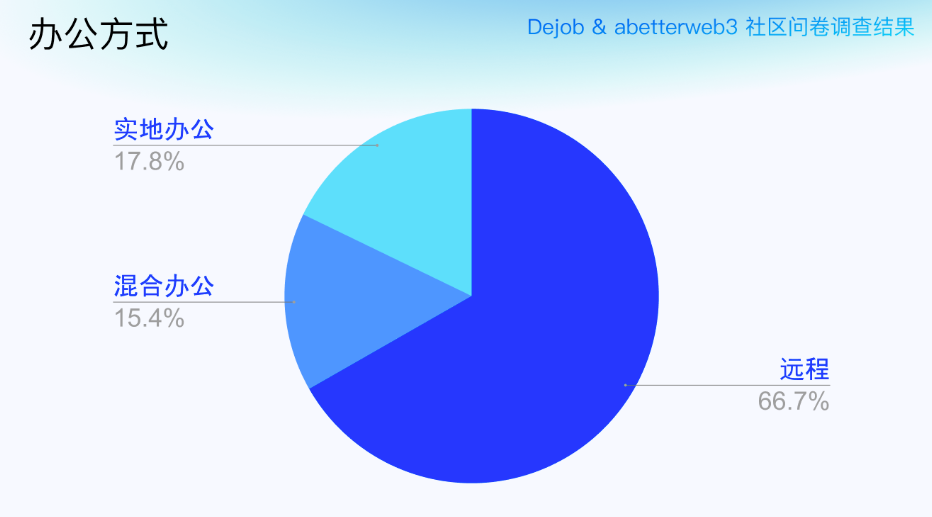
- Remote work is the mainstream model in Web3 (supported by over 66.7% of companies), offering freedom and work-life balance, but also intensifying employee concerns about company stability and compliance.
- A company's long-term vision and compliance strategy (e.g., Gate.io obtaining licenses in multiple countries globally) are key to attracting and retaining talent (including from traditional finance), providing a sense of security and career development opportunities.
- Salaries in the Web3 industry (taking Gate.io as an example), combined with "geographic arbitrage," are competitive. They are complemented by an incentive system including project bonuses and high year-end bonuses (averaging 2-6 months' salary), emphasizing "high effort, high reward."
- Work intensity is high but results-oriented, not simply "996"; remote work demands high self-discipline, and offline team-building activities are crucial for enhancing team cohesion.
- Facing the impact of AI on employment, the rapid evolution, openness, and technology-driven nature of Web3 make it a field likely to integrate with AI and generate new employment dividends.
Original | Odaily (@OdailyChina)
Author | Golem (@web3_golem)
Over the past year, an increasing number of Web2 professionals have begun seriously considering a move into Web3.
Whether it's due to layoffs at major internet companies, AI reshaping job structures, or the growing mainstream adoption of the crypto industry, talent migration is being driven forward. However, a practical issue has also become increasingly apparent: most people's understanding of the Web3 workplace still comes from fragmented personal experiences and highly polarized public discourse.
Negative labels like instability, non-compliance, and high pressure, which are often sensationalized, tend to dominate the narrative. When information sources are highly fragmented, what's truly lacking is systematic observation based on samples.
Therefore, rather than discussing abstract evaluations, it's better to return to the samples. By interviewing current Web3 employees and cross-referencing organizational structures and recruitment data, we can present the real working conditions of employees at a Web3 company. This time, we have selected Gate as our case study. Founded in 2013, Gate, as one of the world's leading trading platforms, is representative in terms of scale and has also been at the center of public attention.
When the narrative returns to specific companies, specific roles, and specific individuals, many judgments naturally become more nuanced.
Remote Work: Does Web3 Make Professionals Feel Insecure?
Every weekday morning, Olivia wakes up promptly at 9 AM. She doesn't need to rush for the subway, fight for an elevator, or commute through the city's morning rush hour. After a quick wash, she heads to the fresh-air park downstairs, starting her day with 40 minutes of yoga. After a leisurely breakfast, by 10 AM, Olivia sits back in front of her screen, joining her department's morning meeting to review the previous day's work with colleagues from around the world and plan for the new day.
Olivia is not a senior executive at a major tech firm; she is just an ordinary employee at Gate. Although Gate has nearly 3,000 employees globally, it has essentially achieved full remote work, with staff distributed worldwide. However, in recent years, Gate has also begun establishing physical offices in licensed regions globally, such as Japan, Dubai, the United States, and Malta, extending online collaboration to offline physical presence.
There is no clock-in/clock-out system, no strict time control. Despite being in the fast-paced crypto industry, Olivia can still enjoy life at any time. "Gate doesn't care where you work from. You can work while taking care of your children, looking after family, or even while traveling—it's completely fine," Gate founder Dr. Han stated in an interview when discussing the differences between Web3 and traditional industries.
Remote work is a common model in Web3. A 2025 crypto industry workplace survey showed that over 66.7% of Web3 companies support remote work.
However, remote work is a double-edged sword for employees. While the high degree of freedom certainly brings conveniences, it also makes it harder to discern whether a company is reliable.
After all, remote work inherently reduces the "visibility" of an organization. In traditional companies, employees can gauge the company's operational status through daily observation, whereas in a remote environment, this perception is replaced by screens.
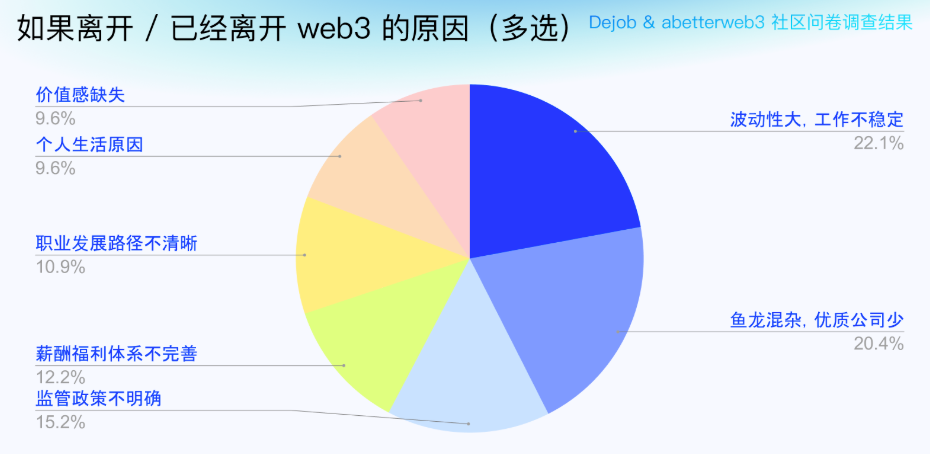
If you've never been to the company or met the boss and colleagues, how do you judge if the company is legitimate? This concern was highlighted in the 2025 crypto industry workplace survey, where over 40% of people cited worries about job instability and the mixed quality of Web3 companies as reasons for leaving Web3.
A direct result of this concern is that talent is beginning to cluster towards Web3 companies with a long-term vision.
Alex is currently responsible for global middle-office operations at Gate, having just completed his first year. Before joining Gate, he had already spent 6 years in the crypto space. This "lengthy" crypto career experience has made Alex more adept at choosing a reliable Web3 company. "Gate has been around for 13 years since its founding. There are many employees with six or seven years of tenure, and even some who have been there since the early days, with over 12 years of service. This is quite rare in Web3," Alex noted.
Alex cited a sense of security as one of his reasons for joining Gate: "You don't have to worry about the company pulling off a big scheme and then disappearing."
Simultaneously, the compliance of a Web3 company can alleviate some of the insecurity remote work brings to employees and also attract high-end talent from traditional finance.
According to official information, as of now, multiple entities under Gate have completed relevant regulatory registrations and license applications in places like Malta, the Bahamas, Japan, Australia, and Dubai.
Gate's proactive push for compliance attracted Kevin Lee, a high-end talent from the traditional finance industry. Kevin Lee previously worked at JPMorgan Chase Bank and currently serves as Chief Business Officer (CBO) at Gate. Before entering the Web3 industry, Kevin worked in traditional finance for about 15 years.
"Although we only announced the compliance licenses obtained in many countries last year, we actually started preparing for this as early as 2018," Kevin stated, adding that his career journey from traditional banking to a compliant exchange aligns perfectly with Gate's goal of advancing compliance. "At Gate, I can maximize my personal value."
However, not everyone adapts well to remote work.
For professionals accustomed to the rhythm of a physical office, remote work often means higher demands for self-discipline. Without fixed working hours or face-to-face immediate communication, some people feel their rhythm disrupted and may even experience a sense of isolation.
Especially during periods of intensive project launches or high industry volatility in Web3, the cost of information synchronization in a remote environment is higher, potentially amplifying employees' anxiety. Work that originally required collaboration can easily turn into "everyone working in silos."
Therefore, remote work is not only a natural perk of Web3 but also a work format that demands higher personal capabilities.
Another drawback of remote work is that colleagues from different departments can become overly distant, almost like strangers, weakening team cohesion. To address this issue and bridge the gap between employees from different regions and cultural backgrounds, the 2025 crypto industry workplace survey showed that most people believe offline team-building activities are crucial, in addition to frequent meetings.
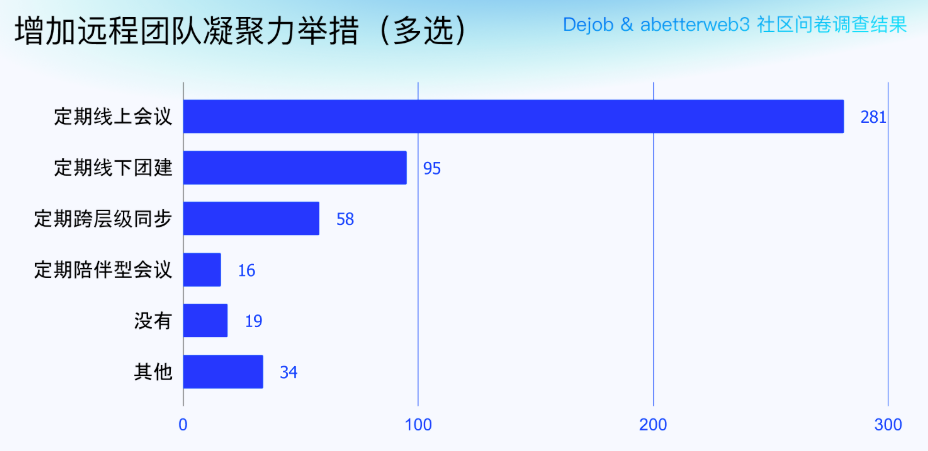
However, for remote Web3 companies, offline team-building is indeed a "luxurious" affair.
Olivia's previous employer was also a remote cryptocurrency exchange, but during her three years there, she never participated in any offline team-building events. In contrast, just two months after joining Gate, she experienced her first team-building activity. She was very surprised: "This was my first time participating in team-building." After the event, Olivia also felt that when everyone steps out from behind cold screens to meet in reality, it genuinely fosters stronger bonds. "I feel much more familiar with the team now."
Why is Web3 Becoming a New Hub for Talent?
For many job seekers, industry/company potential and personal growth prospects are top priorities before joining a particular sector or firm.
According to CoinDesk's latest exchange evaluation report, Gate has a global user base of nearly 50 million. In January of this year, it ranked third globally in spot market share among centralized exchanges and fourth in derivatives market share. It was also rated as one of the fastest-growing mainstream trading platforms globally.
A platform with strong development prospects and in a phase of rapid growth naturally attracts excellent talent with professional capabilities and a desire for growth.
In terms of talent structure, the Gate team exhibits highly international and highly educated characteristics. 89.33% hold a bachelor's degree or higher, with 22.33% holding a master's degree or above, and 4.6% holding a doctorate or above. From a global educational background perspective, over half are international graduates, with 5.2% having backgrounds from QS World Top 200 ranked institutions.
Although Web3 is considered an industry that doesn't prioritize academic qualifications as a barrier to entry, it still emphasizes rapid learning ability and interdisciplinary integration. High educational attainment and quality educational backgrounds usually indicate that job seekers have a strong foundation of professional training and an international perspective, which aligns well with the open, global nature of the Web3 industry.
Grace is a product designer responsible for the trading business line at Gate. She previously worked at Tencent. After an incubation project she participated in did not succeed, she joined a Top 5 crypto exchange in Web3 in 2021. In February 2025, she chose to switch to Gate.
The driving force behind Grace's decision was personal development space. "By 2025, the crypto trading business at my previous company had entered a stable phase, while Gate was still experiencing strong growth. I felt there would be more room for growth at Gate," Grace stated. She mentioned that the first time she encountered Gate's Launchpad, she noticed that compared to other exchanges, Gate always listed tokens quickly and comprehensively.
Grace's move to Gate was also influenced by her direct department head at the time. "We joined Gate together. At the previous company, we could only focus on immediate tasks with no time to improve overall personal capabilities. At Gate, besides completing work, the company also provides some space to consolidate experience and broaden horizons," Grace said, noting this was one of the important reasons they chose to join Gate.
We learned from a senior HRBP at Gate that even during the recruitment process, Gate does not place too much emphasis on a candidate's past experience. Instead, self-motivation, passion for the industry, and innovative ability are key factors considered. Consequently, a large number of Web2 talents apply to Gate.
Alex, who has experience working at multiple exchanges, believes there are more growth opportunities in Web3. "Good operations require support from product, development, and other resources. Gate responds particularly quickly in this regard. As long as it's a good idea, the company provides opportunities," Alex said, describing this as one of the most attractive aspects of Web3.
On a sturdy ship sailing at full speed, sailors naturally have little desire to jump to other vessels. This reflects the real thoughts of Web3 employees when approached by headhunters. "In terms of benefits, compensation, and growth opportunities, I think Gate is already very competitive," Olivia mentioned, adding that she had just turned down a request from a headhunter in mid-January, choosing to stay at Gate.
Are Employee Incentives and Benefits at Web3 Companies Reliable?
Besides industry prospects and personal growth space, salary and benefits are also important factors for job seekers. According to the 2025 crypto industry workplace survey, the overall salary level in Web3 is not higher than that of most top internet companies. Most people's monthly salaries fall within the range of $1,500 to $4,000 USD (approximately ¥10,500 to ¥28,000).
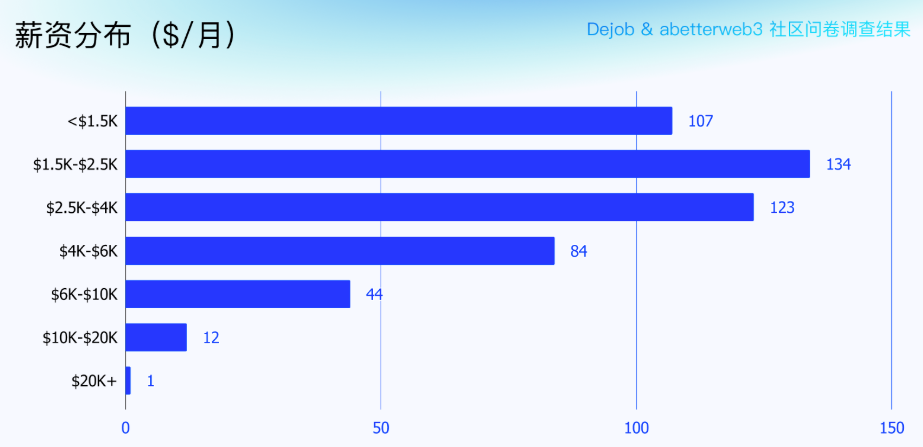
Although looking at the "absolute value," Web3 salaries may not have a significant advantage, when combined with "geographic arbitrage," this salary already surpasses that of most people. While internet professionals in big cities may have high salaries, their cost of living is also high. In contrast, Web3 company employees can earn big-city salaries while living in smaller cities. If factors like living environment and city comfort are considered, Web3 employees with equivalent salaries tend to live more comfortably.
Regarding benefits, according to an HR representative at Gate, although Gate employees are spread across the globe, the company still provides benefits and handles tax payments according to local laws through locally established entities.
In addition to basic statutory employee benefits, Gate has established its own comprehensive employee benefit support system. This includes festival bonuses for employees in different regions and growth allowances (such as reimbursements for learning English, crypto industry knowledge, etc.). If employees encounter emergencies or unexpected situations, there is also an employee care fund to help them through difficult times.
Regarding year-end bonuses, the Web3 industry does not lag behind. According to the survey, Web3 companies with stable revenue streams, such as exchanges and media, provide year-end bonuses to employees, typically ranging from 1 to 3 months' salary.
Taking Gate as a specific example, it is understood that, on average, each Gate employee can receive a year-end bonus equivalent to 2 to 6 months' salary.
At the Gate Global Annual Meeting on February 6th, founder Dr. Han announced that Gate would continue to increase incentives for outstanding talent. This year, employees with an SS rating will receive a year-end reward equivalent to 20 months' salary.
In an interview, an HR representative also mentioned that in terms of talent mechanisms, Gate adheres to the incentive principle of "high effort, high reward." Through more transparent evaluation mechanisms and clear career paths, the company promotes a positive cycle between personal growth and platform development, allocating resources with a focus on elite talent utilization and long-term value. In addition to year-end bonuses, appropriate rewards are also given for employees' significant contributions and personal growth.
In March 2025, just one month after Grace joined Gate, she was incentivized for her outstanding contribution to the company's 12th-anniversary redesign project. "It feels good to be recognized," Grace said, noting that such incentives are highly aligned with personal value realization.
Alex is also a beneficiary of this incentive mechanism. When Alex joined Gate in February 2025, he coincided with a major project launch. Due to outstanding performance, within less than six months of joining, Alex received a 20% salary increase. He also transitioned from solely responsible for contract operations to managing multiple business segments, achieving a promotion.
Is "996" Also a Must in Web3?
Work models like "996" and "007" have been widely criticized in Web2. So, does the Web3 remote work model, without standard working hours, mean "being on call all the time"?
The work intensity at Gate itself is significant. Being in the exchange sector, "not striving hard" is not an option. On one hand, the crypto industry itself is fast-paced. On the other hand, exchanges operate 24/7, requiring teams to be able to respond to the market at any time.
However, based on descriptions from Gate employees, we have learned a fact: even in a high-intensity Web3 company like Gate, "996" is not necessarily mandatory.
Objectively speaking, with remote work layered on top of the unique nature of the Web3 industry, no crypto professional can truly separate work and life into two distinct segments. Olivia mentioned that although she usually finishes work between 6-7 PM, if there is related work requiring attention, she is willing to do it. "It's impossible to completely disconnect from Web3 after work."
Regarding questions about working hours and flexibility in Web3, Kevin, who comes from a traditional finance background, has his own unique perspective. Kevin stated that when he worked as a stock trader at a bank, he often had to sit at a desk for 10 consecutive hours staring at 6 computer screens. Compared to that "hardship," although his daily work at Gate is also very busy, it offers him much greater flexibility.
"Because daily work offers great personal flexibility, when emergencies arise, even on rest days, I am willing to contribute more to the company," Kevin said, using the example of the Trump coin launch. He noted that even though the launch day was a Saturday, the entire team, including himself, chose to continue working. However, Kevin believes the crypto industry doesn't have emergencies every day, so this kind of rapid response shouldn't be simply categorized as "996."
Gate's results-oriented work approach, paired with the "high effort, high reward" incentive principle, also provides precise and substantial rewards for employees' extra contributions.
A Gate HRBP mentioned that besides industry emergencies, if the platform has new features or projects launching, the working hours for responsible employees during that period do increase. However, the company correspondingly arranges special project bonuses and year-end performance weighting. Therefore, Web3 leans more towards "more work, more pay." Blindly stacking working hours is meaningless.
Rather Than Believing Rumors, Experience It Yourself
Although most employees have positive evaluations of Gate, over the past year, there has been no shortage of external criticism towards Gate, such as strict management and large-scale layoffs.
No company can satisfy everyone's demands, so both positive and negative evaluations exist. Regarding this, Gate's Chief Business Officer Kevin believes that over the past three years, Gate's organizational changes have been significant. Alongside rapid business advancement, the number of employees has also expanded


