






The Rise of the Machine Economy: How Web3 is Driving Robots from Tools to Autonomous Systems


- 核心观点:机器人产业正迈向“物理+智能+金融+组织”的系统性重塑。
- 关键要素:
- 技术成熟:AI、仿真、硬件多技术收敛,实现规模化部署。
- 资本涌入:巨额融资验证产业拐点与商业化路径。
- 经济赋能:Web3提供支付、身份与协作框架,支撑机器自主经济。
- 市场影响:催生新商业模式与协作网络,重塑价值捕获方式。
- 时效性标注:长期影响
Introduction
In recent years, the robotics industry has witnessed a dual turning point in both technology and business paradigms. In the past, robots were largely seen as "tools," reliant on backend scheduling by companies, unable to collaborate autonomously, and lacking economic capabilities. However, with the integration of new technologies such as AI Agents, on-chain payments (x402), and the Machine Economy, the robotics ecosystem is evolving from a single-dimensional hardware competition into a multi-layered, complex system comprised of "body—intelligence—payment—organization."
More noteworthy is that global capital markets are rapidly pricing in this trend. Morgan Stanley predicts that the humanoid robot market could reach $5 trillion by 2050, further driving growth in related industries such as supply chain, operation and maintenance, and services. In the same year, the number of humanoid robots in use is expected to exceed 1 billion. This means that robots will truly move from industrial equipment to "large-scale social participants." (1)
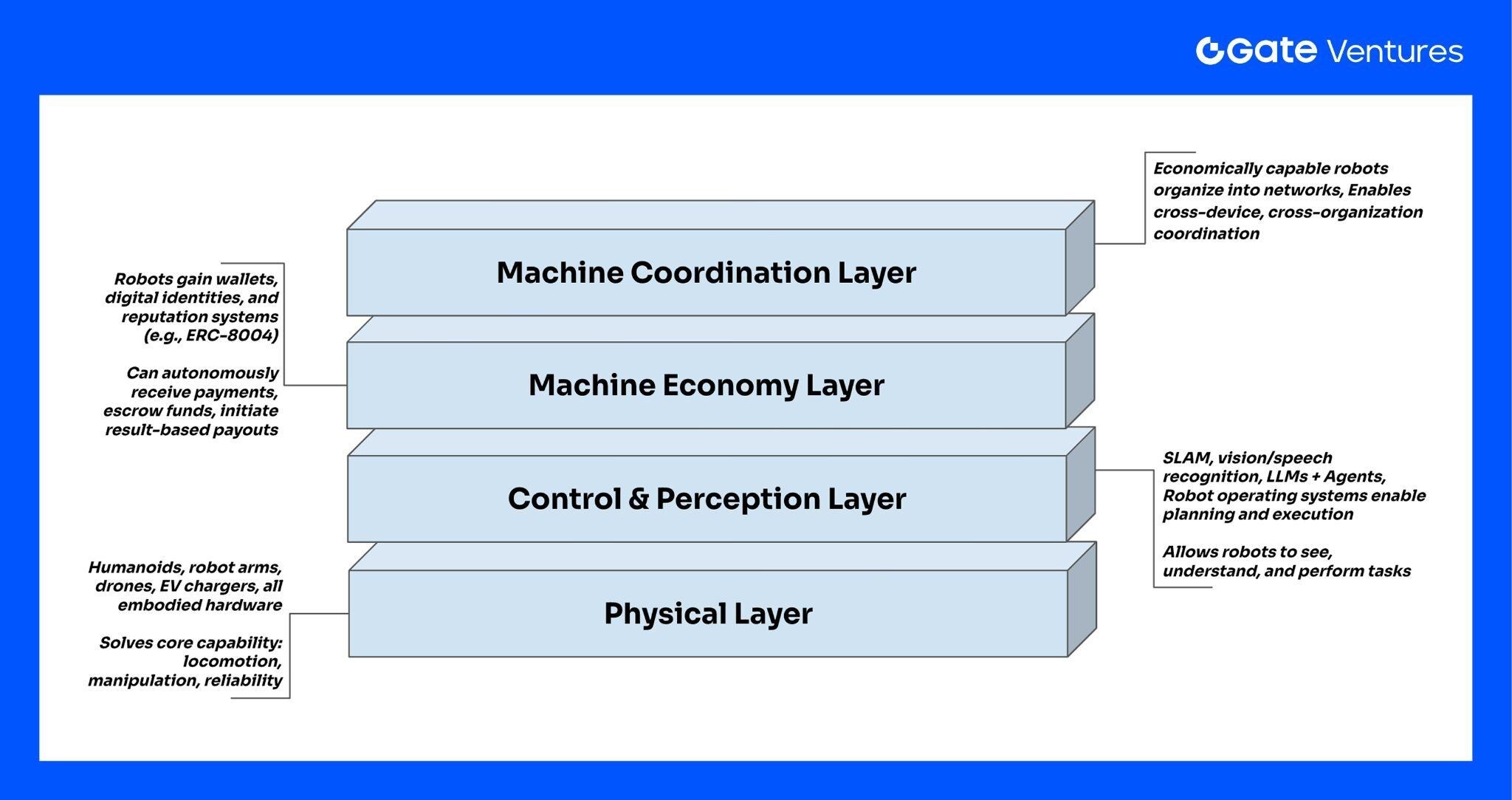
To understand the future development direction of the robotics industry, we can understand the entire ecosystem as a four-layered structure:
Source: Gate Ventures
The first layer is the Physical Layer: this includes all embodied carriers such as robots, robotic arms, drones, and EV charging stations. These address basic mobility and operational capabilities, such as walking, grasping, mechanical reliability, and cost. However, machines in this layer still lack "economic capacity," meaning they cannot autonomously perform actions such as charging, making payments, or purchasing services.
The second layer is the Control & Perception Layer: This layer encompasses traditional robot cybernetics, SLAM, perception systems, speech and vision recognition, to today's LLM+Agent, and an increasing number of robot operating systems with abstract planning capabilities (such as ROS and OpenMind OS). This layer enables machines to "understand, see, and execute tasks," but economic activities such as payments, contracts, and identity verification still require human intervention in the background.
The third layer is the Machine Economy Layer: the real transformation begins here. Machines begin to possess wallets, digital identities, and reputation systems (such as ERC-8004), and directly pay for computing power, data, energy, and right-of-way through mechanisms such as x402, on-chain settlement, and onchain callbacks; they can also autonomously collect payments, manage funds, and initiate result-based payments for performing tasks. This layer transforms robots from "corporate assets" into "economic agents," enabling them to participate in the market.
The fourth layer is the Machine Coordination Layer: Once a large number of robots possess autonomous payment and identity capabilities, they can be further organized into fleets and networks—drone swarms, cleaning robot networks, EV energy networks, etc. They can automatically adjust prices, schedule shifts, bid for tasks, share revenue, and even form autonomous economic entities in the form of DAOs.
Through the above four-layer structure, we can see that:
The future robotics ecosystem will no longer be just a hardware revolution, but a systemic reshaping of "physical + intelligent + financial + organizational".
This not only redefines the boundaries of machine capabilities but also redefines how value is captured. Whether it's robotics companies, AI developers, infrastructure providers, or crypto-native payment and identity protocols, all will find their place in the new robotic economy.
Why is the robotics industry booming right now?
For decades, the robotics industry has lingered in laboratories, exhibition booths, and specific industrial scenarios, always just one step away from true large-scale commercialization and social deployment. However, after 2025, this step began to be crossed. Whether from the perspective of the capital market, technological maturity, or the judgment of industry observers such as Nvidia CEO Jensen Huang, all are sending the same signal:
“The ChatGPT moment for general robotics is just around the corner”
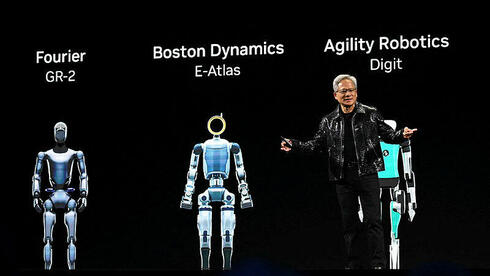
This assessment is not an exaggeration, but rather based on three key industry signals:
1. Computing power, modeling, simulation, perception and control, and other fundamental capabilities are all maturing simultaneously.
2. Robot intelligence is evolving from closed control to open decision-making driven by LLM/Agent.
3. The leap from stand-alone capabilities to system capabilities: Robots will transform from being "active" to "collaborative, comprehension-based, and economically efficient."
Huang Renxun even went further and predicted that humanoid robots will be widely used in the next 5 years, a view that is highly consistent with the behavior of the capital market and industry implementation in 2025.
From a capital perspective: Massive financing proves that the "robotics tipping point" has already been priced in by the market.
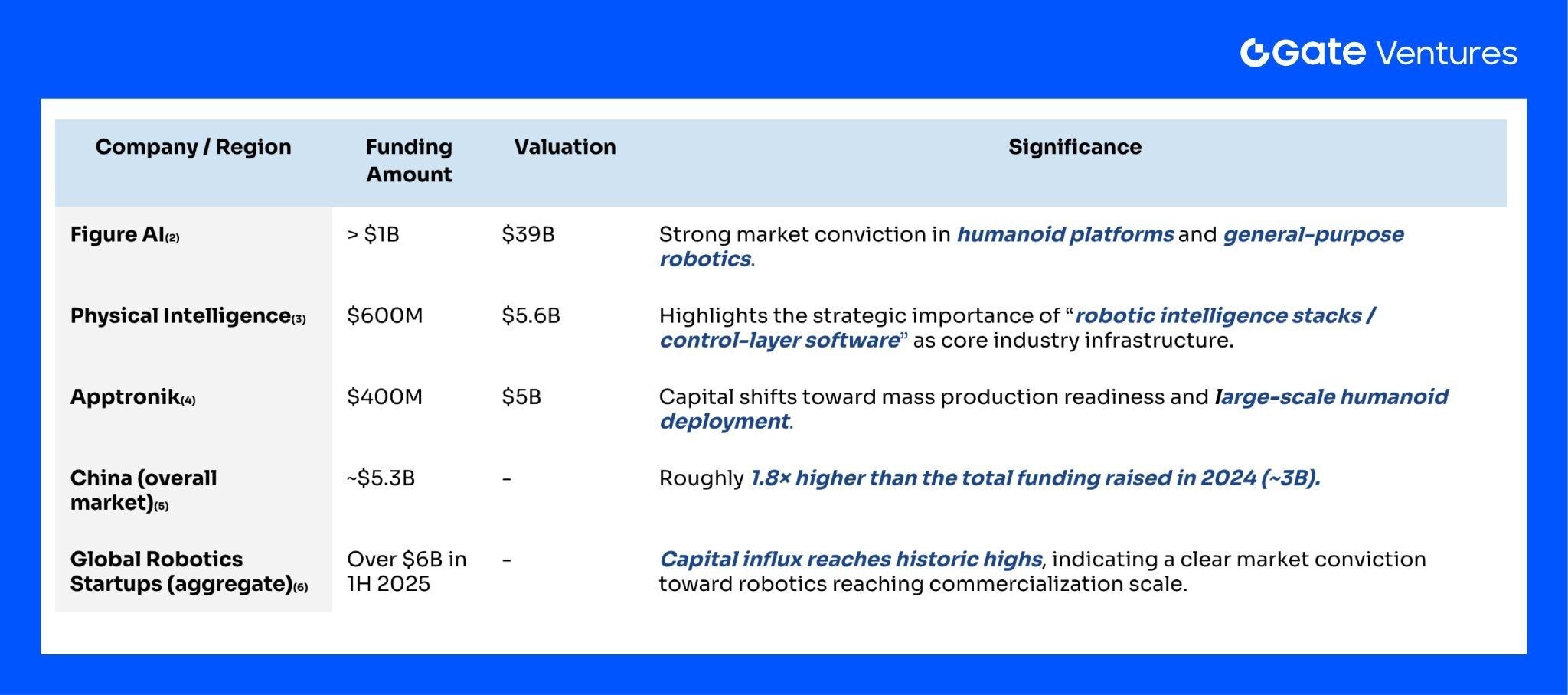
In 2024-2025, the robotics industry saw unprecedented density and scale of financing, with multiple rounds of financing exceeding $500 million in 2025 alone. Typical examples include:
Source: Gate Ventures
Capital has made it clear that the robotics industry has reached a stage where investment can be validated.
These financings share the following characteristics:
● This is not "concept financing," but rather a focus on production lines, supply chains, general intelligence, and commercial deployment.
● It's not a collection of isolated projects, but a comprehensive system integrating hardware and software, a full-stack architecture, and a full lifecycle service for robots.
Capital doesn't bet billions of dollars arbitrarily; it reflects a confirmation of the industry's maturity.
Technical aspects: Decisive breakthroughs occur simultaneously
The robotics industry witnessed an unprecedented convergence of multiple technologies in 2025. Firstly, breakthroughs in AI agents and large-scale language models transformed robots from mere "operable machines" capable of executing instructions into "understandable intelligent agents" capable of understanding language, breaking down tasks, and reasoning using both vision and touch. Secondly, multimodal perception and next-generation control models (such as RT-X and Diffusion Policy) gave robots, for the first time, fundamental capabilities approaching general intelligence.
Source: Nvidia
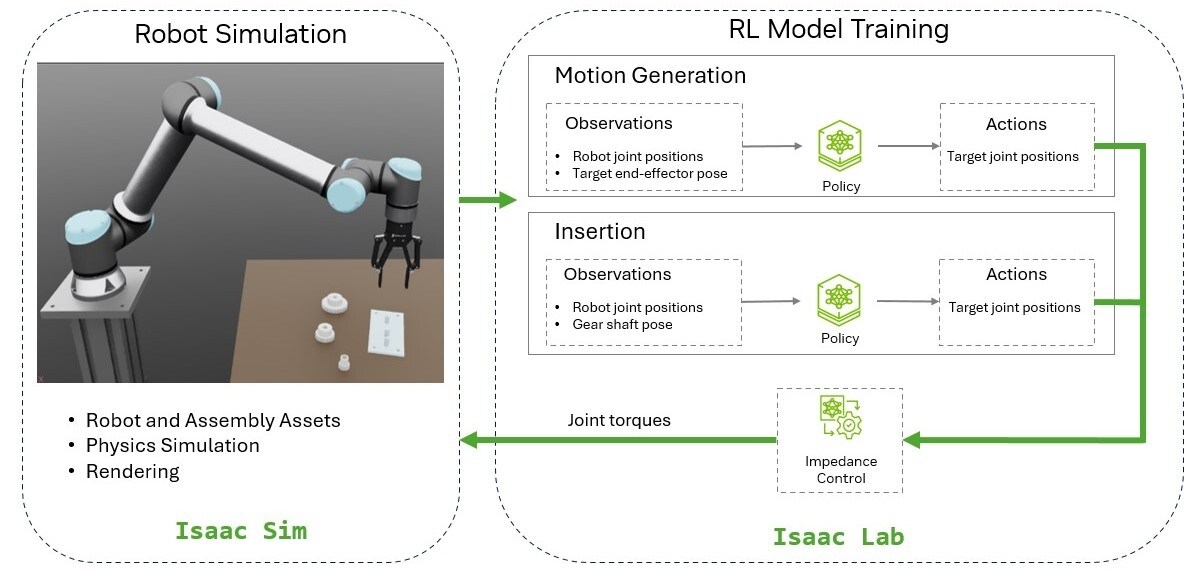
At the same time, simulation and transfer technologies are rapidly maturing. High-fidelity simulation environments such as Isaac and Rosie significantly narrow the gap between simulation and reality, enabling robots to complete large-scale training in virtual environments at extremely low cost and reliably transfer their learning to the real world. This solves the fundamental bottlenecks of slow robot learning speed, expensive data collection, and high risks in real-world environments.
The evolution of hardware is equally crucial. Core components such as torque motors, joint modules, and sensors have seen continuous cost reductions due to supply chain scaling, and China's accelerated rise in the global robot supply chain has further enhanced industry productivity. With multiple companies launching mass production plans, robots have, for the first time, acquired an industrial foundation that is "replicable and scalable."
Finally, improvements in reliability and energy efficiency enable the robot to truly meet the minimum requirements for commercial applications. Better motor control, redundant safety systems, and a real-time operating system allow the robot to operate stably for extended periods in enterprise-level environments.
These factors have enabled the robotics industry to, for the first time, possess all the necessary conditions to move from the "laboratory demo stage" to "large-scale real-world deployment." This is the fundamental reason why the robotics boom is happening now.
Commercialization: From prototype to mass production to real-world deployment
2025 also marked the first clear emergence of a commercialization path for robots. Leading companies such as Apptronik, Figure, and Tesla Optimus successively announced mass production plans, signifying that humanoid robots have moved from prototypes to a replicable industrialization stage. At the same time, many companies began pilot deployments in high-demand scenarios such as warehousing and logistics, and factory automation, to verify the efficiency and reliability of robots in real-world environments.
With the improvement of hardware mass production capabilities, the "Operation-as-a-Service (OaaS)" model has begun to be validated by the market. Enterprises do not need to pay high upfront purchase costs; instead, they subscribe to robot services monthly, thereby significantly improving their ROI. This model has become a key business innovation driving the large-scale application of robots.
Furthermore, the industry is rapidly filling the gaps in its previously missing service systems, including infrastructure such as repair networks, spare parts supply, and remote monitoring and maintenance platforms. With these capabilities in place, robots are beginning to possess the complete conditions required for continuous operation and a closed-loop business model.
Overall, 2025 is a milestone year for robots, marking a shift from "whether they can be made" to "whether they can be sold, used, and affordable," with the commercialization path showing a sustainable positive cycle for the first time.
Web3 X Robotics Ecosystem
With the full-scale explosion of the robotics industry expected in 2025, blockchain technology has also found a clear position within it, supplementing the robotics system with several key capabilities. Its core value can be summarized in three main directions: i.) data collection for robotics technology, ii.) cross-device machine coordination networks, and iii.) machine economic networks that support autonomous machine participation in the market.
Decentralization combined with token incentives provides a new source of data for robot training, but data quality still depends on the backend Data Engine for improvement.
The core bottleneck in training Physical-AI models lies in the scale of real-world data, scene coverage, and the scarcity of high-quality physical interaction data. The emergence of DePIN/DePAI enables Web3 to provide new solutions to the question of "who contributes data and how to contribute it sustainably."
However, from an academic research perspective, while decentralized data has potential in terms of scale and coverage, it is not inherently equivalent to high-quality training data. It still needs to be screened, cleaned, and bias-controlled by a backend data engine before it can be truly used for training large models.
First, Web3 addresses the issue of "data supply dynamics" rather than directly guaranteeing "data quality".
Traditional robot training data mainly comes from laboratories, small fleets of vehicles, or internal enterprise collection, which is insufficient on an exponential scale.
Web3's DePIN/DePAI model uses token incentives to enable ordinary users, device operators, or remote operators to become data contributors, significantly increasing the scale and diversity of data sources.
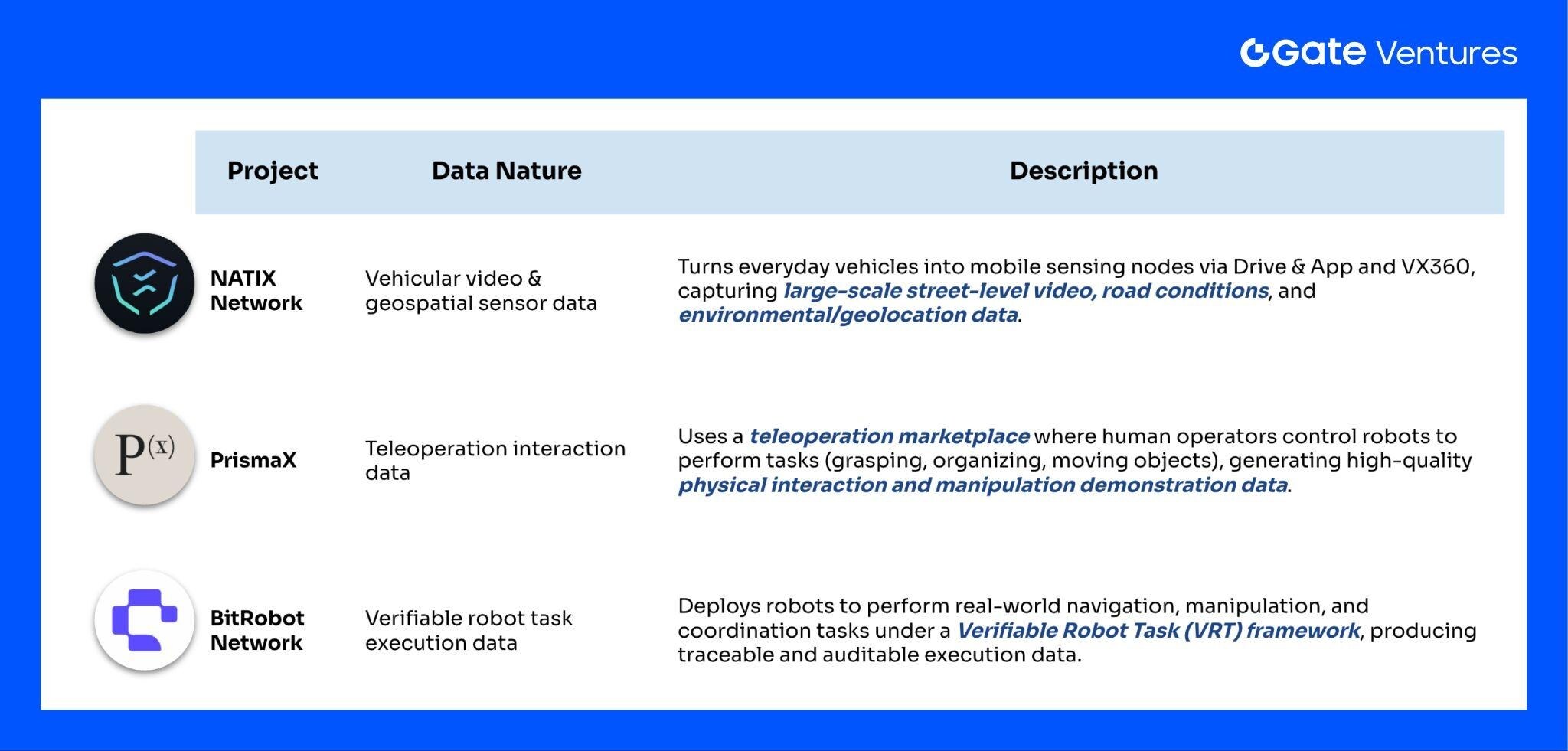
The project includes:
Source: Gate Ventures
● NATIX Network: Turns Volkswagen vehicles into mobile data nodes through Drive & App and VX360, collecting video, geographic, and environmental data.
● PrismaX: Collects high-quality robot physical interaction data (grasping, sorting, and moving items) through remote market control.
● BitRobot Network: Enables robot nodes to perform verifiable tasks (VRTs), generating data on real-world operations, navigation, and collaborative behaviors.
These projects demonstrate that Web3 can effectively expand the data supply side, supplementing real-world scenarios and long-tail situations that are difficult for traditional systems to cover.
However, according to academic research, crowdsourced/decentralized data often suffers from structural problems such as "insufficient accuracy, high noise, and large bias." Extensive academic research on crowdsourcing and mobile crowdsensing points out that:
1. Data quality fluctuates greatly, with significant noise and format differences.
Differences in the equipment, operating methods, and understanding of different contributors can lead to a large amount of inconsistent data, which needs to be detected and filtered.
2. Structural bias is widespread.
Participants often cluster in specific areas/groups, leading to a discrepancy between the sampling distribution and the real-world distribution.
3. Raw crowdsourced data cannot be directly used for model training.
Research in autonomous driving, embodied AI, and robotics widely emphasizes that high-quality training sets require a complete process: collection → quality review → redundancy alignment → data augmentation → long-tail completion → label consistency correction, rather than "collect and use immediately". (7)
Therefore, Web3's data network provides a wider range of data sources, but whether it can be directly used as training data depends on the backend data engineering.
The true value of DePIN lies in providing a "continuous, scalable, and lower-cost" data foundation for Physical AI.
Rather than saying Web3 immediately solved the data precision problem, it's more accurate to say it solved:
● "Who is willing to contribute data long-term?"
● How to encourage more real devices to connect?
● How can we shift data collection models from centralized to sustainable open networks?
In other words, DePIN/DePAI provides the foundation for data scale and coverage, making Web3 an important piece of the puzzle in the "data source layer" of the Physical AI era, but not the sole guarantor of data quality.
Cross-device machine coordination networks: A general-purpose OS provides a basic communication layer for robot collaboration.
The robotics industry is currently transitioning from standalone intelligence to group collaboration, but a key bottleneck persists: robots of different brands, forms, and technology stacks cannot share information, interoperate, or share a unified communication medium. This forces multi-robot collaboration to rely on closed systems built by manufacturers, severely limiting large-scale deployment.
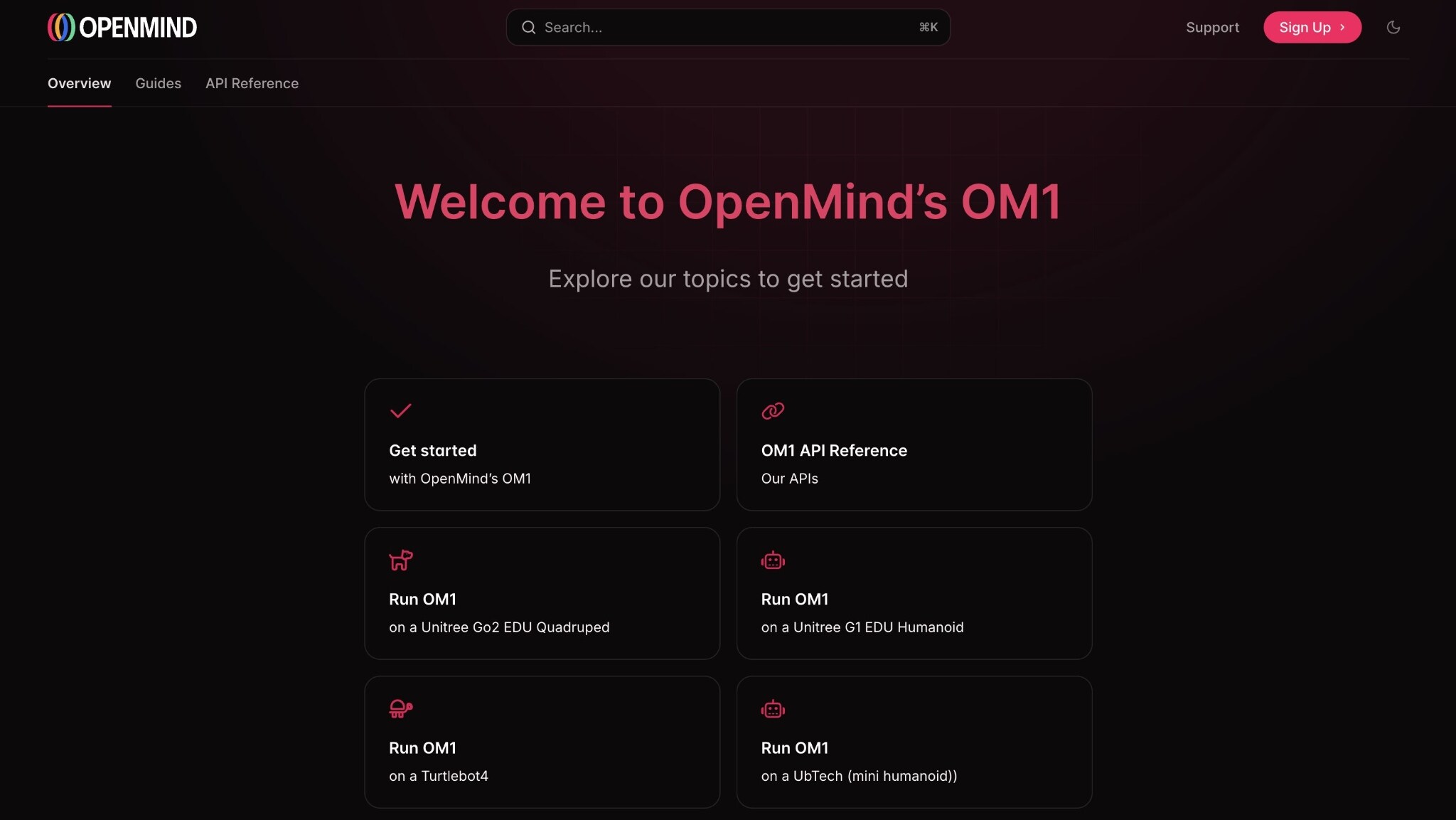
In recent years, the emergence of general-purpose robot operating system layers (ROS layers), represented by OpenMind, has provided a new solution to this problem. These systems are not "control software" in the traditional sense, but rather intelligent operating systems that cross the robot body. Like Android in the mobile phone industry, they provide a common language and common infrastructure for communication, cognition, understanding, and collaboration between robots. (8)
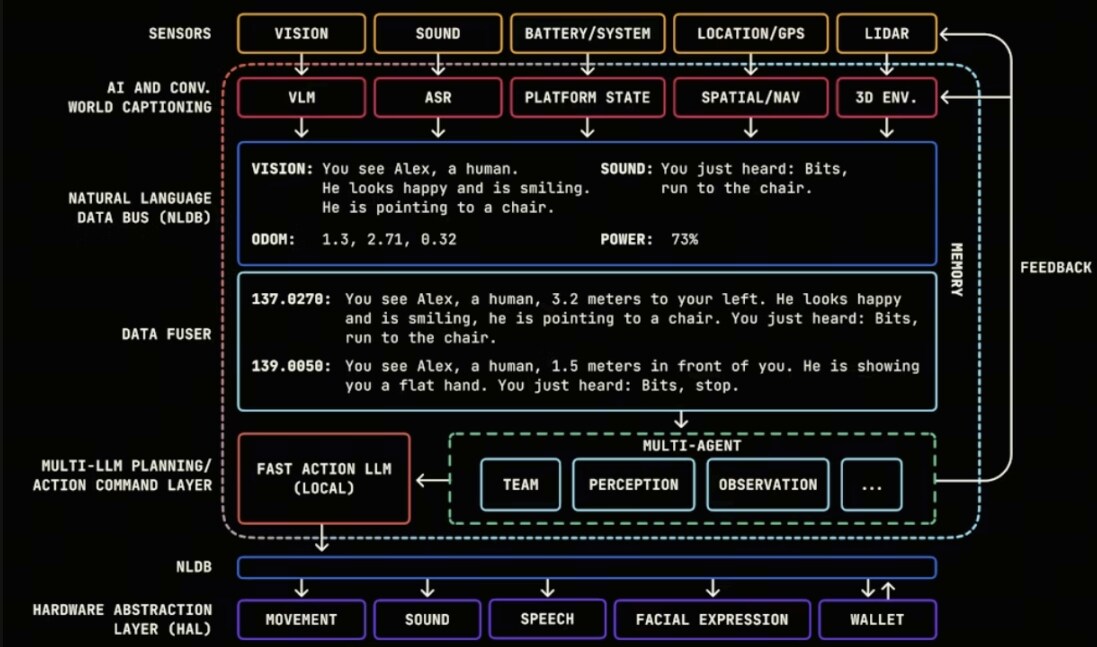
In traditional architectures, the sensors, controllers, and inference modules within each robot are isolated, making it impossible to share semantic information across devices. However, a general-purpose operating system layer, through a unified perception interface, decision-making format, and task planning method, allows the robot to acquire, for the first time:
● Abstract descriptions of the external world (vision / sound / tactile → structured semantic events)
● Unified understanding of instructions (natural language → action planning)
● Shareable multimodal state representation
This is equivalent to adding a cognitive layer to the robot from its base, enabling it to understand, express, and learn.
Robots are therefore no longer “isolated actuators” but have a unified semantic interface, enabling them to be incorporated into larger-scale machine collaboration networks.
Furthermore, the biggest breakthrough of the universal OS lies in "cross-machine compatibility," enabling robots of different brands and forms to "speak the same language" for the first time. Various robots can access a unified data bus and control interface through the same OS.
Source: Openmind
This cross-brand interoperability has enabled the industry to truly discuss for the first time:
● Multi-robot collaboration
● Task bidding and scheduling
● Shared Sensing / Shared Map
● Joint mission across space
Collaboration requires "understanding the same information format," and general-purpose operating systems are addressing this underlying language issue.
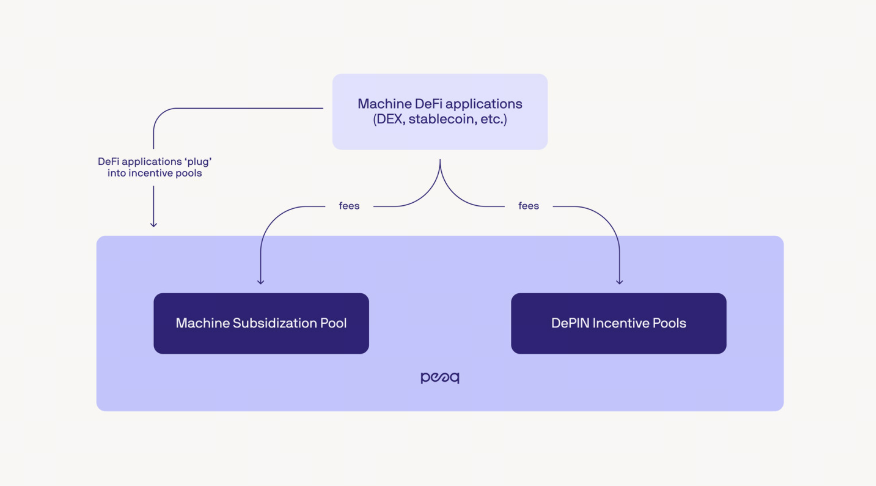
In cross-device machine collaboration systems, peaq represents another type of critical infrastructure: a low-level protocol layer that provides machines with verifiable identities, economic incentives, and network-level coordination capabilities. (9)
It doesn't address "how robots understand the world," but rather "how robots can participate in collaboration as individuals within a network."
Its core design includes:
1. Machine Identity
PeaQ provides decentralized identity registration for robots, devices, and sensors, enabling them to:
● Access any network as an independent entity
● Participate in a trustworthy task allocation and reputation system
This is a prerequisite for a machine to become a "network node".
2. Autonomous economic accounts
Source: Peaq
The robot has been given economic autonomy. Through natively supported stablecoin payments and automatic billing logic, the robot can automatically reconcile accounts and make payments without human intervention, including:
● Sensor data is billed based on quantity
● Pay-per-use for computing power and model inference
● Instant settlement after robots provide services (handling, delivery, inspection)
● Infrastructure access such as self-service charging and rental space
In addition, robots can use conditional payments:
● Task completed → Automatic payment
● If the result does not meet the target → Funds will be automatically frozen or refunded.
This makes robot collaboration trustworthy, auditable, and automatically arbitrable, a key capability for large-scale commercial deployment.
Furthermore, the revenue generated by robots in providing services and resources in the real world can be tokenized and mapped onto the blockchain, making its value and cash flow present in a transparent, traceable, tradable, and programmable form, thereby constructing an asset representation method with machines as the main body.
As AI and on-chain systems mature, the goal is to enable machines to autonomously earn, pay, lend, and invest, directly conduct M2M transactions, form a self-organizing machine economy network, and achieve collaboration and governance in the form of a DAO.
3. Multi-device task coordination
At a higher level, peaq provides a coordination framework between machines, enabling them to:
● Share status and availability information
● Participate in task bidding and matching
● Perform resource scheduling (computing power, mobility, sensing capabilities).
This enables robots to collaborate like a network of nodes, rather than operating in isolation. Only when languages and interfaces are unified can robots truly enter collaborative networks, instead of remaining in their own closed ecosystems.
Cross-device intelligent operating systems like OpenMind attempt to standardize how robots "understand the world and understand instructions"; while Web3 coordination networks like Peaq explore how to enable different devices to achieve verifiable, organized collaboration capabilities within a larger network. These are just a few examples of many attempts, reflecting the industry's accelerated evolution towards a unified communication layer and an open interoperability system.
Machine economy network supporting autonomous machine participation in the market
If cross-device operating systems solve the problem of "how robots communicate" and coordinated networks solve the problem of "how they cooperate," then the essence of machine economic networks is to transform the productivity of robots into sustainable capital flows, enabling robots to pay for their own operation and form a closed loop.
A crucial missing piece in the robotics industry's long-standing puzzle is "autonomous economic capability." Traditional robots can only execute preset instructions but cannot independently allocate external resources, price their services, or settle costs. Once they enter complex scenarios, they must rely on human backend accounting, approval, and scheduling, severely hindering collaboration efficiency and making large-scale deployment even more difficult.
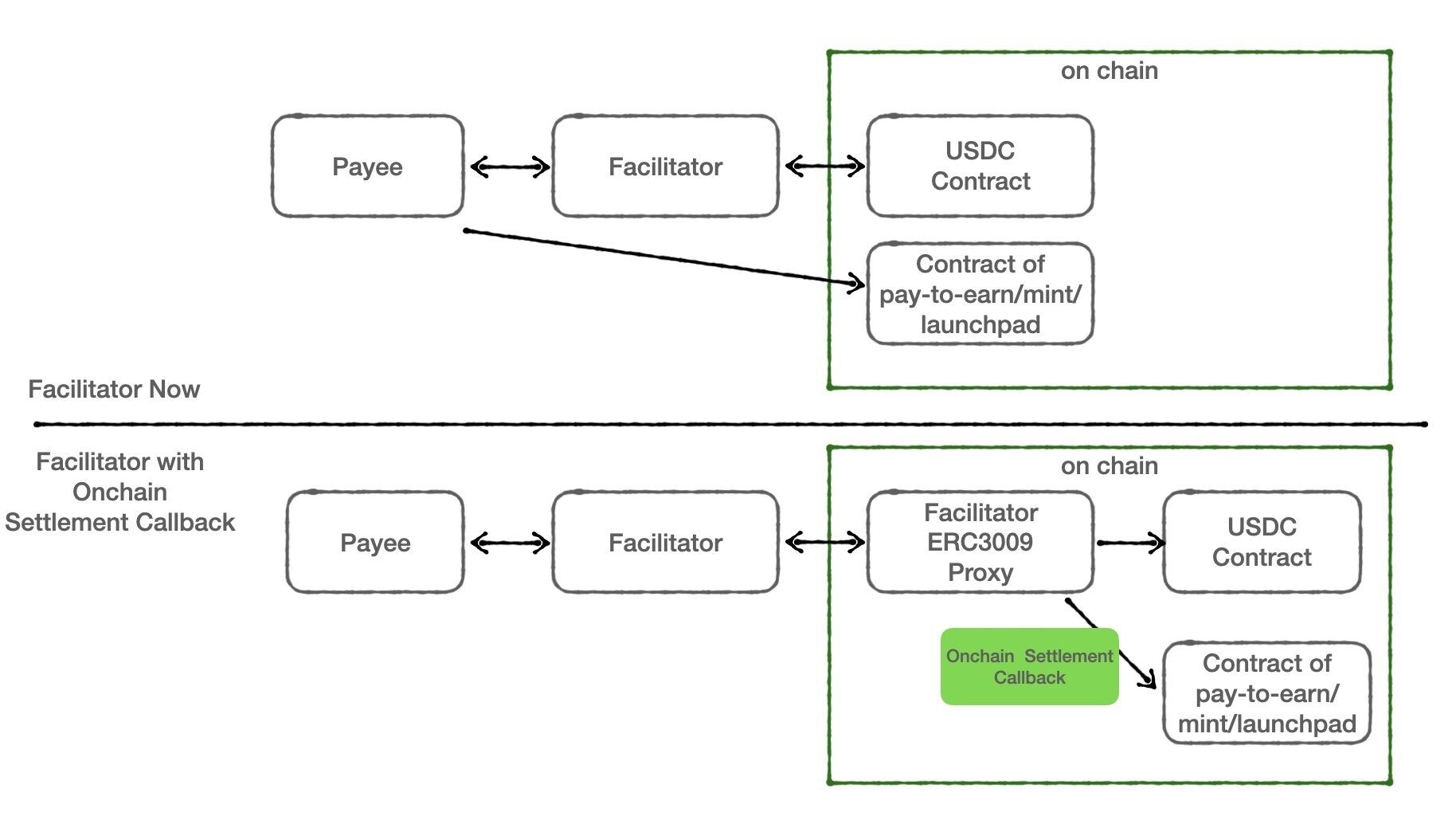
x402: Giving robots the "economic entity status" they deserve
Source: X@CPPP2443_
x402, as a next-generation Agentic Payment standard, fills this fundamental gap for bots. Bots can directly initiate payment requests via the HTTP layer and complete atomic settlements using programmable stablecoins such as USDC. This means that bots can not only complete tasks but also autonomously purchase all the resources needed for those tasks.
● Computational power allocation (LLM inference / control model inference)
● Scene access and equipment rental
● Labor services for other robots
For the first time, robots were able to consume and produce autonomously, just like economic entities.
In recent years, there have been representative cases of cooperation between robot manufacturers and encrypted infrastructure, indicating that the machine economy network is moving from concept to reality.
OpenMind × Circle: Enabling native stablecoin payment support for bots

Source: Openmind
OpenMind has integrated its cross-device robot OS with Circle's USDC, enabling robots to use stablecoins directly in the task execution chain to complete payments and settlements.
This represents two breakthroughs:
1. The robot's task execution chain can natively integrate with financial settlement, no longer relying on backend systems.
2. The robot can make "borderless payments" in cross-platform and cross-brand environments.
For machine collaboration, this is a fundamental capability for moving towards an autonomous economy.
Kite AI: Building an Agent-Native Blockchain Foundation for the Machine Economy

Source: Kite AI
Kite AI further advances the underlying structure of the machine economy: it is designed specifically for AI agents with on-chain identities, composable wallets, and automated payment and settlement systems, allowing agents to autonomously execute various transactions on-chain. (10)
It provides a complete "autonomous agent economic operating environment", which is highly compatible with the autonomous participation in the market that robots want to achieve.
1. Agent/Machine Identity Layer (Kite Passport) : Issues encrypted identities and multi-layered key systems to each AI Agent (which may also be mapped to specific robots in the future). This allows for precise control over "who spends money" and "who they represent," and supports revocation and accountability at any time. This is the premise for treating Agents as independent economic actors.
2. Stablecoin native + x402 primitive built-in : Kite integrates the x402 payment standard at the chain level, using stablecoins such as USDC as default settlement assets. This enables agents to complete sending, receiving, and reconciliation through standardized intent authorization. It has made underlying optimizations for high-frequency, small-amount, and machine-to-machine payment scenarios (sub-second confirmation, low fees, and auditability).
3. Programmable constraints and governance : Through on-chain policies, spending limits, whitelists of allowed merchants/contracts, risk control rules, and audit trails can be set for agents, so that the "opening wallets for machines" can find a balance between security and autonomy.
In other words, if OpenMind's OS enables robots to "understand the world and collaborate," then Kite AI's blockchain infrastructure enables robots to "survive within the economic system."
Through the above technologies, the machine economy network constructs a "collaborative incentive" and a "value closed loop," enabling robots not only to "pay money," but more importantly, enabling them to:
● Performance-based income (result-based settlement)
● Purchase resources on demand (autonomous cost structure)
● Participate in market competition based on on-chain reputation (verifiable performance)
This means that for the first time, robots can participate in a complete economic incentive system: they can work → earn money → spend money → independently optimize their behavior.
Summarize
Outlook
Looking at the three main directions mentioned above, the role of Web3 in the robotics industry is gradually becoming clear:
● Data Layer : Provides the power for large-scale, multi-source data collection and improves coverage of long-tail scenarios;
● Collaboration Layer : Introduces a unified identity, interoperability, and task governance mechanism for cross-device collaboration;
● Economic Layer : Provides a programmable framework for economic behavior for robots through on-chain payments and verifiable settlements.
These capabilities collectively lay the foundation for a potential future machine internet, enabling robots to collaborate and operate in a more open and auditable technological environment.
Uncertainty
Despite the unprecedented breakthrough that the robotics ecosystem achieved in 2025, its transition from "technically feasible" to "scalable and sustainable" remains fraught with uncertainty. These uncertainties do not stem from a single technological bottleneck, but rather from the complex coupling of engineering, economic, market, and institutional factors.
Is economic feasibility truly valid?
Despite breakthroughs in perception, control, and intelligence, the large-scale deployment of robots ultimately depends on whether real business demand and economic returns materialize. Currently, most humanoid and general-purpose robots remain in the pilot and validation stages. Whether companies are willing to pay for robot services in the long term, and whether the OaaS/RaaS model can consistently achieve a high ROI across different industries, still lacks sufficient long-term data support.
Meanwhile, the cost-effectiveness advantage of robots in complex, unstructured environments has not yet been fully established. In many scenarios, traditional automation or human alternatives remain cheaper and more reliable. This means that technological feasibility does not automatically translate into economic necessity, and the uncertainty of the commercialization pace will directly affect the expansion speed of the entire industry.
Systemic challenges to engineering reliability and operational complexity
The biggest real challenge facing the robotics industry is often not whether it can "complete the task," but whether it can operate stably and cost-effectively in the long term. In large-scale deployments, hardware failure rates, maintenance costs, software upgrades, energy management, and safety and liability issues can all rapidly amplify into systemic risks.
Even if the OaaS model reduces upfront capital expenditure, the costs hidden in operations, insurance, liability, and compliance can still erode the overall business model. If reliability cannot meet the minimum requirements for commercial applications, the vision of robot networks and the machine economy will be difficult to realize.
Ecological collaboration, standard convergence and institutional adaptation
The robotics ecosystem is undergoing rapid evolution simultaneously in terms of operating systems, agent frameworks, blockchain protocols, and payment standards, but it remains highly fragmented. Cross-device, cross-vendor, and cross-system collaboration is costly, and universal standards have not yet fully converged, potentially leading to ecosystem fragmentation, redundant development, and efficiency losses.
At the same time, robots with autonomous decision-making and economic capabilities are challenging existing regulatory and legal frameworks: the attribution of responsibility, payment compliance, and data and security boundaries remain unclear. If regulations and standards fail to keep pace with technological evolution, machine-based economic networks will face uncertainties in terms of compliance and implementation.
Overall, conditions for the large-scale application of robots are gradually taking shape, and the rudiments of a machine economy system are emerging in industrial practice. Although Web3 × Robotics is still in its early stages, it has already demonstrated noteworthy long-term development potential.
References
1. https://www.morganstanley.com/insights/articles/humanoid-robot-market-5-trillion-by-2050
5. http://www.xinhuanet.com/tech/20250908/89cc1111e729403ca5af4a397ebd01ce/c.html
7. https://orbilu.uni.lu/bitstream/10993/39438/1/comst-preprint.pdf


