2025 Crypto Market Year-End Review: From Frenzy to Maturity, a Year of Transformation Driven by Policy Dividends and Technology.


- 核心观点:2025年是加密市场转型成熟的关键年。
- 关键要素:
- 比特币向储备资产转变,机构资金持续流入。
- 稳定币合规化并成为主流金融基础设施。
- 监管框架(如美国、香港)日益清晰,引导行业合规。
- 市场影响:推动行业向合规、稳健、机构化方向发展。
- 时效性标注:长期影响。
If you had to summarize the cryptocurrency market in 2025 in just one sentence, it would be:
This wasn't the craziest year, but it was a year in which the crypto market transformed and matured. Regulatory rules became clearer, institutional adoption became more widespread, and blockchain infrastructure became more complete.
Cryptocurrency prices continue to fluctuate wildly. Bitcoin hit an all-time high of $126,000 in October, only to retreat during the crypto market crash on October 11. It subsequently fell back to around $90,000, erasing most of its year-to-date gains. However, unlike in the past, the structure of funds entering the crypto market is changing: more and more funds are no longer simply chasing short-term speculation, but are entering the market along clear compliant paths, explainable institutional channels, and long-term allocation logic.
If we were to draw a "yearly map" of the changes this year, the main theme would be quite clear:
- Bitcoin is completing a crucial shift from a "speculative narrative" to a "reserve asset narrative," no longer just the asset with the largest price increase, but gradually becoming a value anchor for the market.
- Stablecoins have evolved from settlement tools within the crypto ecosystem into compliant mainstream assets, profoundly changing how funds enter and flow.
- Encryption infrastructure is entering a new phase of becoming more usable and scalable.
But this map isn't just an upward curve. 2025 also clearly reveals two points: policies are influencing market sentiment and capital flows at a deeper level, and safety costs have shifted from an option to a hard threshold for trading systems. Market maturity always means higher requirements and more challenges.
Start of the year | Trump ignites the market, crypto is no longer just a story told by the market.
At the beginning of 2025, the crypto market was ignited by political forces. Trump launched his personal Meme token, Trump, on the eve of his inauguration and repeatedly stated publicly that he wanted to "build a global crypto capital" and "advance the crypto strategic reserve," directly translating his political influence into on-chain liquidity.
The related tokens experienced dramatic fluctuations in a short period, with trading volume and leverage rapidly increasing. For the first time, the crypto market felt so directly that power, sentiment, and capital were simultaneously entering the market's pricing system. The Trump token's issuance quickly ignited the market, with its price soaring to an all-time high of $74.35.
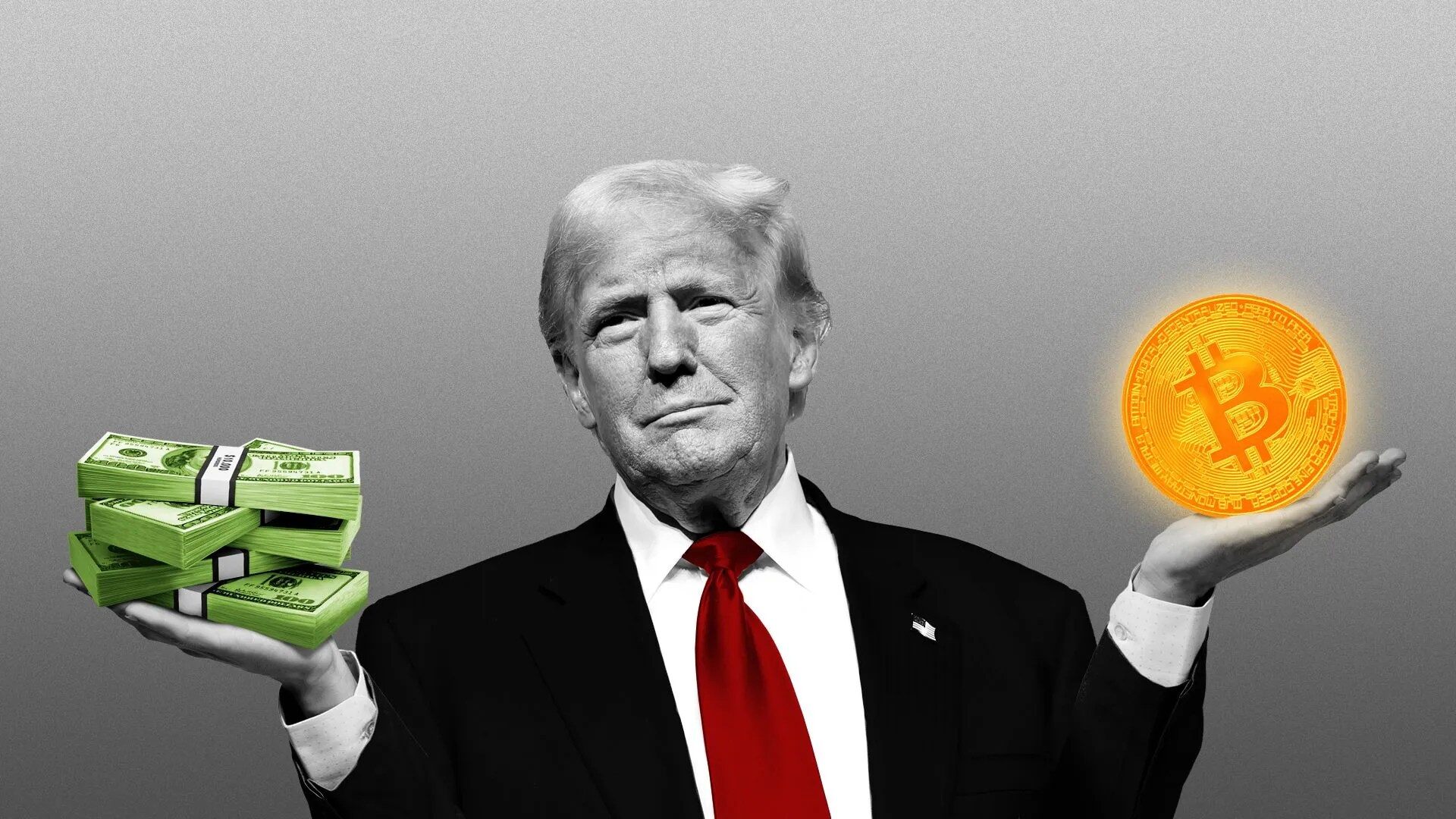
Behind this frenzy is, on the one hand, the concentrated influx of Trump supporters, and on the other hand, the official marketing strategy for the benefits of holding the currency.
What followed was a pullback and controversy. The Trump token experienced dramatic price fluctuations. Entering the second half of the year, with the overall crypto market correction, the waning of the Meme coin craze, and increased regulatory scrutiny, the Trump price continued to be under pressure. By mid-December 2025, Trump had fallen to approximately $5.05, a drop of over 93% from its peak at the beginning of the year. This phase signaled that while the crypto commercialization of political IP was pioneering, it also exposed the unavoidable extreme speculative nature of celebrity tokens.
Throughout the year | 2025 saw a high incidence of security incidents, making risk management an industry consensus.
In 2025, as the crypto industry matures, security incidents will be an unavoidable topic. According to Chainalysis, over $3.4 billion in crypto assets were stolen throughout the year, with North Korean-linked hackers stealing approximately $2.02 billion, representing a year-on-year increase of over 50%. Unlike in the past, the number of attacks did not increase significantly, but individual incidents were larger in scale and more precise in their methods, often employing sophisticated social engineering, impersonating executives, or infiltrating supply chains.
In response to security challenges, centralized exchanges, as the core infrastructure of the industry, continued to strengthen their asset protection and technical defense capabilities in 2025. Regarding asset security, trading platforms continued to advance reserve and risk preparedness mechanisms, enhancing asset transparency through regular disclosure of proof of reserves, third-party audits, and Merkle Tree verification, and providing buffers and safeguards for user assets in extreme circumstances.
At the technical level, exchanges are increasingly adopting a more systematic and multi-layered approach to security. On one hand, they are effectively reducing the risk of single points of failure in private key management by separating cold and hot wallets, using multi-signature or MPC escrow architectures. On the other hand, they are strengthening Web2 layer protection by introducing endpoint detection and response (EDR) systems, hardware security modules (HSMs), and stricter internal access control. Meanwhile, at the Web3 layer, more and more platforms are deploying real-time on-chain monitoring and transaction verification mechanisms to identify abnormal behavior before transaction execution and automatically trigger contingency plans when necessary.
In addition, in response to the off-chain risks that have emerged in recent years, the industry has also placed greater emphasis on security governance at the organizational level, including employee background checks, anti-social engineering training, and internal process audits, in order to address the shortcomings of "non-technical risks" beyond traditional technical protection.
Overall, supported by both reserve mechanisms and continuous technological upgrades, the crypto market is evolving towards a more stable and mature direction.
June and the Whole Year | Stablecoins Enter the Mainstream, Circle IPO Fires the First Shot in Compliant Capitalization
In 2025, stablecoins will have completely moved beyond the era of being a "niche infrastructure" and officially entered the center of the global financial system. According to a16z crypto, the total annual transaction volume of stablecoins will surpass $40 trillion for the first time. The total market capitalization of stablecoins will also remain stable above $310 billion. They will no longer merely serve transactions within the crypto market, but will accelerate their penetration into cross-border settlements, supply chain finance, cross-border e-commerce, and daily payments in emerging markets, becoming the true "lifeblood" of the on-chain economy and a crucial bridge between the real world and the blockchain.

This narrative shift has gradually shed the high-risk label of stablecoins, transforming them into a "digital extension of the dollar" and a tool for improving global payment efficiency. A landmark moment in this change was Circle's successful listing on the NYSE in the first half of the year, becoming the world's first listed stablecoin company.
Circle's IPO formed a clear and complete closed loop: with the regulatory certainty provided by the GENIUS Act (100% compliance reserves and stringent audit requirements), the company successfully gained recognition from the capital market. More importantly, this event reshaped the competitive logic of the industry—compliance was no longer seen as a burden, but as a moat leading to mainstream capital markets, forcing other stablecoin issuers to accelerate transparency and bank-level transformation, thus officially ushering in the era of compliance capitalization.
Mid-Year to Year-Round | The RWA Narrative Heats Up Again: From Pilot Innovations to Institutional Infrastructure
In 2025, the tokenization of Real-World Assets (RWA) completed a crucial leap from experimentation to large-scale implementation. Throughout the year, the total market capitalization of RWA repeatedly broke records, with its on-chain value exceeding $18.8 billion by the end of the year. US Treasury bonds, private lending, and commodities became the core growth engines, with institutional funding taking over comprehensively. RWA is no longer just a peripheral narrative in the crypto market, but has evolved into a vital infrastructure connecting traditional finance and blockchain.
The institutional breakthrough is first reflected in tokenized US Treasury bonds and on-chain fund products. The BlackRock BUIDL fund manages over $1.75 billion and has attracted more than 100 institutional clients, becoming one of the most representative institutional-grade RWA products. Meanwhile, Circle, Franklin Templeton, Ondo, and others have driven the market value of tokenized US Treasury bonds to approximately $9 billion, and they are widely used by institutions as "cash alternatives" and DeFi collateral assets.
In terms of asset structure, private credit accounts for about 13%, with a total scale of over US$2.4 billion. Protocols such as Figure, Tradable, and Maple have driven the large-scale on-chaining of traditional private lending and supply chain finance, further clarifying RWA's financial attributes and revenue structure.
As US Treasury bonds, private lending, and on-chain funds become "standard features," RWA is completing its transformation from a crypto narrative to a global financial infrastructure.
August & September | Perp DEX vs. CEX: Why Hyperliquid and Aster Broke Out
Perpetual contracts have always been the core engine of high-risk funds, and the collective rise of Perp DEXs in 2025 essentially migrated this engine from centralized exchanges to on-chain. The daily trading volume of leading platforms such as Hyperliquid and Aster once exceeded 30 billion and 17 billion US dollars respectively, and for the first time had the scale to compete head-on with CEXs, and showed stronger anti-run potential during high volatility periods.
This breakthrough was not accidental, but driven by three structural changes. First, the trading experience is no longer a "cost" of decentralization: through its self-developed high-performance blockchain and on-chain order book (CLOB) architecture, leading Perp DEX has achieved millisecond-level confirmation, low latency, and stable throughput, rapidly narrowing the gap between on-chain and off-chain experiences. Second, transparency is translating into a liquidity advantage. All orders and transactions are verifiable on the entire chain, significantly reducing information asymmetry and black-box operations. Third, a one-stop product structure improves capital efficiency. Spot trading, perpetual bonds, staking, points systems, and collateralized lending form a closed loop, eliminating the need for users to frequently operate across platforms.
When decentralization no longer means compromise, but rather an efficient, transparent, and rich trading experience, the rise of Perp DEX becomes inevitable—the prelude to the competition of on-chain derivatives has officially begun.
October | Bitcoin hits a record high of $126,000: From a speculative tool to a reserve asset
On October 6, 2025, Bitcoin surged to an all-time high of $126,000. However, just days later, due to a combination of macro-level deleveraging and a chain reaction of liquidations, its price subsequently fell back to around $90,000, almost erasing all of its gains for the year. Nevertheless, this "October crash," which triggered dramatic volatility, failed to shake Bitcoin's core narrative throughout the year—its focus on reserves and institutionalization.
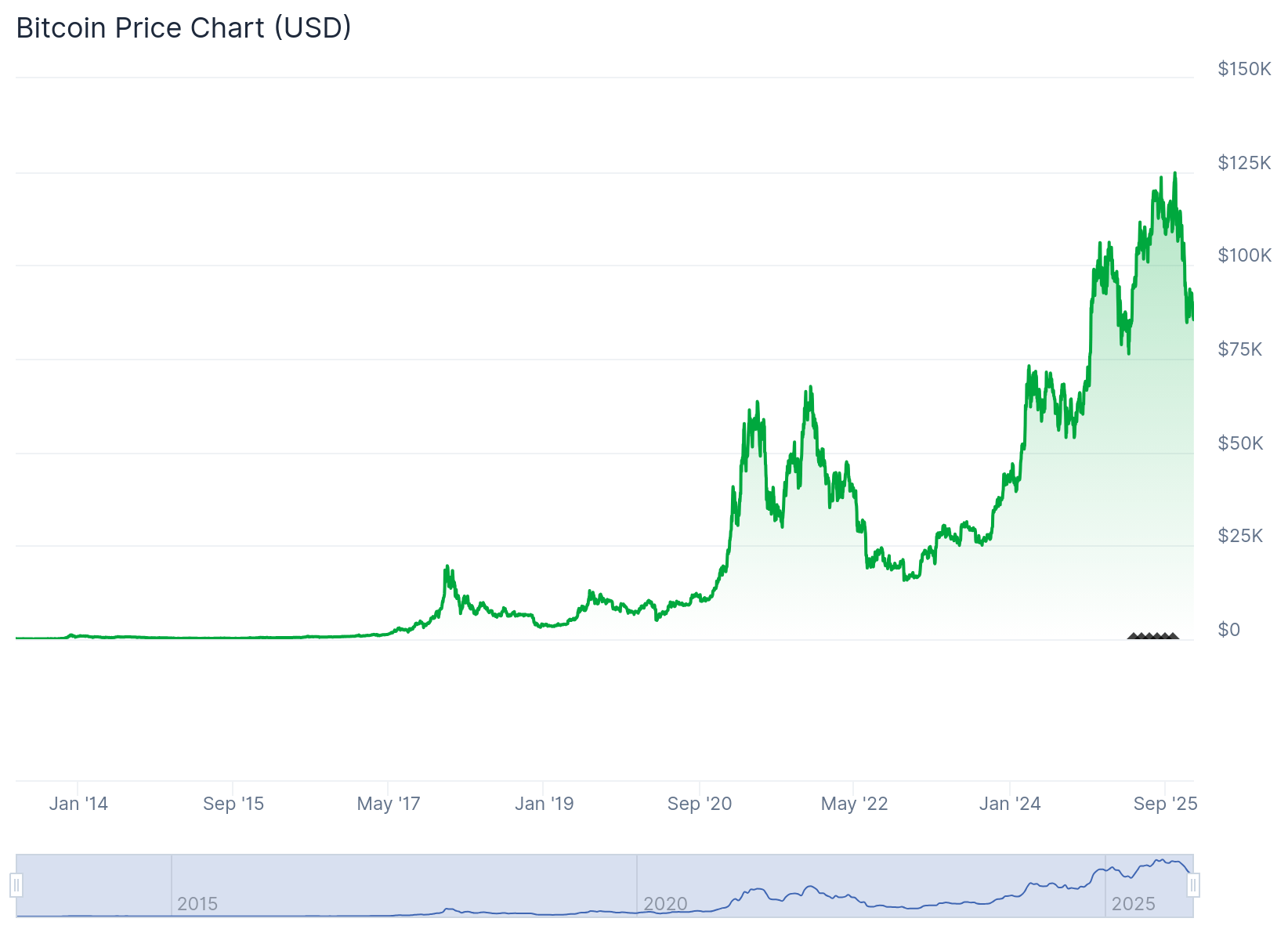
The real change lies not in price, but in the buyer structure. Price fluctuations cannot mask the fundamental shift in underlying capital: Bitcoin has transformed from a speculative asset dominated by retail investors into a strategic reserve asset in the eyes of institutions, corporations, and even the public finance system.
This shift was driven by three types of buyers: First, spot ETFs became the main entry point for compliant funds, with net inflows exceeding $57.7 billion throughout the year, continuing to increase holdings even during pullbacks; second, hundreds of listed companies transformed into "Crypto Treasury Companies (DATs)," directly incorporating crypto assets such as BTC into their balance sheets, with total BTC holdings exceeding 1 million coins, serving as a long-term hedging tool; third, discussions on reserves at the local and national levels pushed "digital gold" into the public policy sphere—with the US federal pilot program and emerging markets following suit, Bitcoin entered the sovereign asset allocation discussion framework for the first time. After the pullback, the proportion of long-term funds reached a record high: Bitcoin's narrative is not about reaching new price highs, but about transforming from a speculative tool into a reserve asset.
October | Trump pardons Changpeng Zhao, a landmark event marking a shift in the regulatory cycle.
On October 23, 2025, US President Trump announced a pardon for Binance founder Changpeng Zhao (CZ). This decision is less a single administrative act and more a signal of an era that outweighs numerous regulatory reports.

This clearly marks a turning point in industry sentiment and a dramatic shift in global crypto policy: from strict enforcement and high-pressure compliance during the Biden era to a more explicit "crypto-friendly" approach and relaxed expectations during the Trump era. The impact quickly spilled over—Binance BNB surged that day, Changpeng Zhao regained more opportunities to participate, and the operational foundation of the world's largest exchange was stabilized.
More importantly, this event reshaped the competitive landscape of global exchanges: encouraging more platforms to re-embrace the US regulatory framework and accelerate their compliance process; at the same time, it strengthened the "politically tied" compliance narrative, leading the market to widely believe that the period of stringent regulation had come to an end, allowing institutional funds and innovative projects to actively redeploy. In just a few days, market expectations shifted from cautious observation to proactive offense—this pardon became a psychological watershed moment in 2025, marking the transition of the crypto world from defense to offense.
Second Half of the Year | Market Prediction: From Niche Speculative Tools to Alternative Information Hubs
In 2025, prediction markets completed their transformation from "niche speculative tools" to "compliant information hubs." Polymarket and Kalshi emerged as the biggest beneficiaries of this transformation: both platforms completed multi-billion dollar valuation-level financing rounds, Polymarket received formal approval from the CFTC regulatory sandbox during the year, and Kalshi successfully expanded political event contracts to mainstream election betting scenarios, with monthly trading volume once exceeding $4.4 billion. The advancement of compliance has led regulators and mainstream media to view prediction markets as "a mass-market intelligent pricing mechanism for event outcomes."
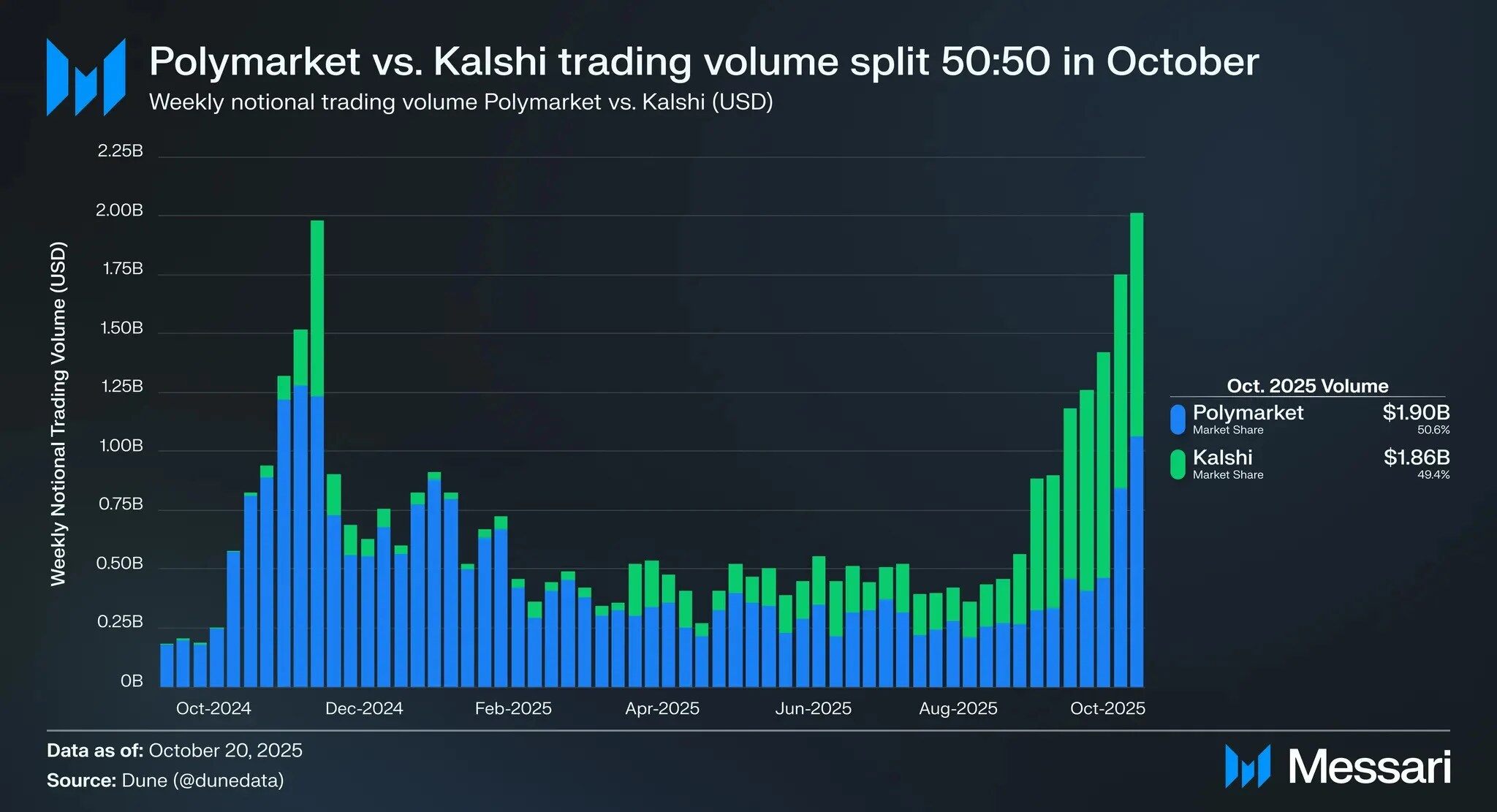
The entry of industry giants further signifies that this sector has been formally accepted by the capital market. Coinbase and Gemini have both announced strategic investments and launched their own prediction market products. Coinbase plans to integrate its prediction market, while Gemini has launched a prediction contract channel for institutions. Meanwhile, traditional financial institutions such as Susquehanna and Jump Trading have also begun to provide support. With both crypto-native platforms and Wall Street giants betting on this, prediction markets are no longer fringe experiments but are seen as an alternative asset class comparable to stocks and options. The core of the competition is not simply trading volume, but attention and the power to price information. By 2025, prediction markets have proven their value with trading volume, moving from a speculative tool to a core position in information infrastructure.
Mid-year to December | Strict controls in mainland China, pilot programs in Hong Kong, and accelerated finalization of implementation paths.
In 2025, China's "dual-track" regulatory framework for encryption will be finalized, providing clearer boundaries for the market's most pressing concerns: "whether and how to participate."
In December, the People's Bank of China, together with thirteen other departments including the Ministry of Public Security and the Cyberspace Administration of China, issued a document explicitly including stablecoins in the category of virtual currencies, and placing their related business activities under the regulatory framework for illegal financial activities. The core direction is clear: domestic regulation will continue to focus on risk prevention and control, with a focus on preventing spillover risks such as money laundering, illegal fundraising, and illegal cross-border fund transfers. The overall logic leans towards "preventing risk spillover and protecting financial sovereignty." Under this framework, individuals and institutions directly engaging in cryptocurrency trading, issuance, or settlement activities within mainland China still face strict restrictions.
Meanwhile, Hong Kong is accelerating its role as an "innovation window." The Stablecoin Ordinance, which came into effect in August 2025, established a high-standard entry system: including a minimum registered capital requirement of HK$25 million, 100% compliant reserve assets (cash or highly liquid assets), and multiple thresholds such as monthly independent audits. Simultaneously, it promoted the launch of innovative products such as the first Solana ETF. This system design has rapidly attracted global Web3 projects to gather, with licensed platforms such as HashKey and OSL continuously increasing their investment.
The practical significance of the dual-track system lies in the significantly increased importance of compliant participation pathways and licensed platforms. Participating in the market through Hong Kong or other international compliant channels is gradually becoming the mainstream choice. Under the dual-track regulatory framework, compliance is becoming a long-term trend with certainty for the future.
May and December | Two Ethereum upgrades drive large-scale account abstraction and Layer 2 scaling.
In 2025, Ethereum completed two major network upgrades, marking its steady evolution towards greater efficiency, scalability, and user-friendliness.

Pectra Upgrade (Mainnet Activation May 7, 2025): This is the first hard fork this year, introducing key improvements such as EIP-7702 and significantly advancing Account Abstraction. Traditional External Accounts (EOAs) can temporarily gain smart contract functionality, supporting features such as Gas Sponsored Payments, Batch Transactions, and Social Recovery. This allows ordinary users to manage assets via email or biometrics without needing to remember mnemonic phrases, greatly reducing the barrier to entry for Web3 while improving security and fund efficiency.
Fusaka upgrade (mainnet activated on December 3, 2025): Following this, the focus shifts to data availability sampling (PeerDAS) and blob capacity expansion, optimizing Layer 2 (L2) data processing, which can theoretically increase rollup throughput several times, reduce node operating costs, and pave the way for the future goal of 100,000+ TPS.
These two upgrades complement each other: Pectra improves user experience and wallet abstraction, while Fusaka strengthens underlying scalability. Together, they remove obstacles to the large-scale onboarding of traditional applications (such as social networking, games, and e-commerce), and promote the transformation of Web3 from a developer tool to mainstream adoption.
Looking ahead to 2026 | Clearer rules, crypto on the path to sustainable growth
The crypto market in 2026 will enter a new cycle of "robust growth within clear rules." The global regulatory framework is maturing—the implementation details of the US GENIUS Act are gradually being finalized, the EU MiCA is fully in effect, and Hong Kong's regulatory system is operating stably—providing more predictable entry channels for institutional funds. The reserve and payment attributes of Bitcoin and stablecoins will continue to strengthen, and RWA (Real-World Asset Tokenization) is expected to move from concept to large-scale implementation, becoming a core sector with trillion-dollar potential. Simultaneously, the integration of AI and blockchain may give rise to a new generation of decentralized application ecosystems.
The trends worth paying close attention to are mainly reflected in three aspects:
First, institutional and sovereign capital continue to flow in. Bitcoin strategic reserves may be implemented in more countries, and stablecoins will be more deeply embedded in the global payment system and supply chain, becoming an important infrastructure for cross-border settlement.
Second, the large-scale adoption of on-chain infrastructure. Account abstraction, intent-driven architecture, and modular blockchain will significantly lower the barrier to entry, bringing the Web3 experience closer to that of Web2.
Third, compliance and security constitute a decisive competitive advantage. Security audits and insurance mechanisms are gradually becoming standard practice, and projects with insufficient risk control capabilities will be eliminated more quickly.
For ordinary users, a more rational mindset is to view crypto assets as long-term investments, rather than as get-rich-quick schemes. Continuous learning, choosing compliant platforms, diversifying risks, and prioritizing self-custody and security practices are crucial. In an environment with increasingly clear rules, patience and discipline are often more valuable.
For industry professionals, looking ahead to 2026, the core discussion may no longer be "whether a bull market exists," but rather "who can achieve replicable growth under clear rules." In a truly mature market, the winners are those participants who use compliance as a moat, security as a bottom line, and always place user experience at the core.
About XT.COM
Founded in 2018, XT.COM is a leading global digital asset trading platform with over 12 million registered users, operating in more than 200 countries and regions, and boasting an ecosystem traffic exceeding 40 million. The XT.COM cryptocurrency trading platform supports over 1300 high-quality cryptocurrencies and over 1300 trading pairs, offering diverse trading services including spot trading , leveraged trading , and contract trading , and is equipped with a secure and reliable RWA (Real World Asset) trading market. We are committed to the philosophy of "Explore Crypto, Trust Trading," dedicated to providing global users with a safe, efficient, and professional one-stop digital asset trading experience.