Read a 100,000-word Messari report in 10 minutes


- 核心观点:加密行业将向专业化、机构化和消费级应用演进。
- 关键要素:
- 稳定币法规化,成为美国货币政策工具。
- 以太坊是机构结算中心,Solana主导零售交易。
- AI与加密深度融合,催生数据收集、DeFi等新机会。
- 市场影响:推动行业合规化、专业化,吸引传统资本。
- 时效性标注:中期影响
Original author: Bilibili News
This article summarizes 60 crypto trends for 2026 from Messari's 100,000-word annual report, combining AI and human analysis.
1. If L1 does not see real growth, more and more money will flow into Bitcoin.
2. ETH is currently still Bitcoin's "little brother," not an independent leader. ETH has institutional and corporate support and can profit by following Bitcoin, but it cannot yet stand on its own.
3. The correlation between ZEC and Bitcoin has dropped to 0.24, which is a privacy hedge for Bitcoin.
4. The application of dedicated currencies (such as Virtuals Protocol and Zora) will become an emerging trend in 2026.
Using Virtuals Protocol as an example, we can introduce application-specific currencies:
- When a user creates an AI agent, a token exclusive to that agent will be issued.
- All proxy tokens are paired with the platform token VIRTUAL (you have to use VIRTUAL to buy proxy tokens, providing liquidity).
- The more popular the platform becomes and the more useful the AI agent is, the greater the demand for VIRTUAL, which then becomes the "dedicated currency" of this ecosystem.
5. Stablecoins: From Speculative Tools to a US "Monetary Weapon". The GENIUS Act (to be passed in 2025), the first federal stablecoin regulation in the United States, transforms stablecoins from crypto toys into a tool of US monetary policy.
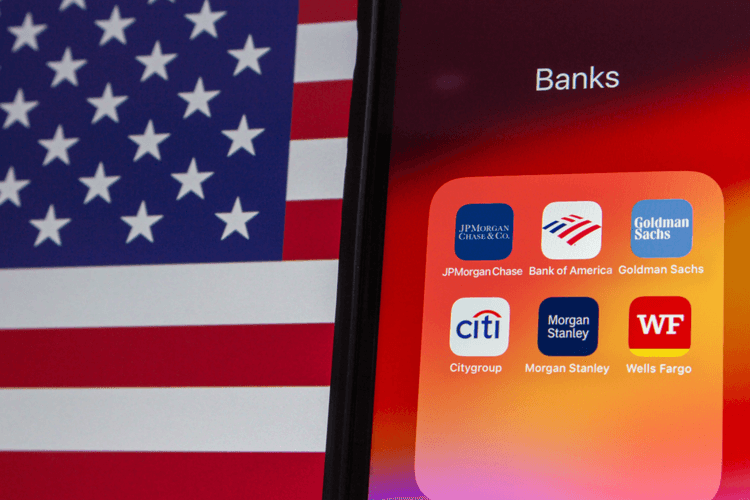
6. Tether is likely to continue dominating the stablecoin market in developing countries, while large institutions are vying for the developed market. Tether's profits are high, and its valuation is approaching $500 billion. JPMorgan Chase, Bank of America, Citigroup, PayPal, Visa, Google, and others have all entered the market, issuing stablecoins or building infrastructure.
7. Cloudflare and Google are building stablecoins and payment protocols specifically for AI-assisted transactions, preparing to enter the future world of AI automatically spending money.
8.2026 With interest rates falling, yield-generating stablecoins (such as lending spreads, arbitrage, and GPU collateralized loans) will see a surge (such as Ethena's USDe).
9. Real Asset Tokenization (RWA): Trillions of assets will be on-chain in the future. The total size of RWA is projected to reach $18 billion by 2025, primarily consisting of government bonds and credit. DTCC (the US securities clearing giant) has received SEC approval to tokenize US securities. Most are deployed on Ethereum (64%), but institutions may use private blockchains.
10. Ethereum: The "settlement center" for institutions and large sums of money. Ethereum remains the most reliable "settlement layer".
11. Ethereum L2 handled the majority of transactions, but tokens performed poorly. Base had the strongest revenue, accounting for 62% of L2 transactions. Arbitrum DeFi was the strongest.
12. Solana: The King of Retail and Speculation. Solana continues to dominate retail trading, spot volume, and the memecoin craze.
13. In 2026, Ripple aims to transform XRPL into an "institutional DeFi-friendly chain," adding various compliance features to its underlying infrastructure.
14. Stellar will focus on stablecoins and payment applications in 2026 (with extremely low fees of $0.00055 per transaction, readily available wallets, global fiat currency channels, and bulk payment platforms).
15. Hedera aims to be a “regulated enterprise infrastructure backbone”, focusing on two key areas: RWA tokenization and verifiable AI.
16. BNB Chain receives direct traffic from Binance's 290 million users. Binance Alpha continues to act as a "new project incubator," prioritizing BNB Chain.
17. TRON will remain the king of USDT transfers in emerging markets. TRON is one of the most profitable "businesses" in the crypto world, with annual revenue exceeding $500 million. Newly emerging "stablecoin-specific chains" are trying to take its place, but TRON has a strong moat. As long as it maintains its dominant position in USDT and expands its global influence, it will remain a core pillar of the stablecoin economy in 2026.
18. Sui is evolving from a "high-performance execution chain" to a "full-stack unified platform".
19. Aptos aims to be the core engine for "tokenizing all assets and enabling 24/7 global trading without intermediaries".
20. Near Intents: Cross-chain + AI proxy base layer.
21. Polygon is focusing on the payment sector, integrating stablecoins, merchant processors, and consumer finance. Its payment app has already exceeded 1 billion RMB in monthly transactions (6.4 billion RMB annually), with a target of 2.5-3 billion RMB per month by 2026.
22. Stablecoin public chains Arc and Tempo are competing with SWIFT (international wire transfer), ACH (US clearing), and payment processors, aiming to bring large offline payments onto the blockchain.
- Arc steals money from large institutions (banks, capital market FX, tokenized assets).
- Tempo is taking money from the Stripe ecosystem (merchants, consumer payments, and payroll).
- Arc may become the default platform for institutional foreign exchange, tokenized assets, and B2B payments (if Circle expands its institutional reach and is regulatory-friendly). Tempo may become the best platform for merchants to issue funds and for cross-border settlements.
23. Chainlink continues to hold the top spot in DeFi oracles, but institutional data services will become the main source of new revenue for oracles (traditional financial data has huge budgets; Bloomberg earns $10.6 billion a year).
24. Privacy-focused cross-chain technology: THORChain plus Monero (exchanging transparent coins for privacy coins), Chainlink Confidential Compute (securely computing sensitive institutional data before putting it on-chain).
25.2026DEX will integrate wallet, bot, and launch platform services. DEX's three main profit-generating businesses:
- Wallet: Phantom earned 9.46 million in November (fee rate 0.95%), with a volume of less than 1 billion but exceeding most DEXs.
- Trading bot: Axiom, fee rate 1.15%, earned 18.74 million.
- Asset issuance (launchpad): Selling exclusive new coins. pump.fun earned 34.92 million with a fee of 0.51%, and Four.meme earned 1.05% (backed by Binance).
In 2026, DEX will integrate wallets, bots, launchers, and DEX bundles to control the entire trading process, earning more than just transaction fees. Potential new revenue streams include subscriptions and premium execution fees.
26. Modular lending (such as Morpho) will surpass monolithic lending (Aave), relying on RWA lending, high-yield stablecoins, and institutional distribution.
Why is modularity advantageous?
- There is a large demand for lending in long-tail assets (small cryptocurrencies, RWA), but we dare not touch integrated ones; modular ones can open independent vaults.
- Institutions and new banks prefer to isolate risks + custom parameters.
- It can serve as a backend for centralized exchanges and new banks (such as the collaboration between Morpho and Coinbase, which brought in nearly 1 billion in deposits).
27. Perpetual stock contracts are becoming a new trend in crypto, enabling high-leverage stock trading globally and circumventing offline regulations.
28. Exogenous Revenue Stablecoins: Stablecoin yields come from real-world off-chain cash flows (such as private lending, infrastructure, and tokenized real estate), not government bonds. More exogenous revenue products (credit, real estate, energy, etc.) will be on-chain. Yield-bearing stablecoins will become the main collateral and savings tool in DeFi.
Successful examples:
- USD.Ai: Treasury bond floor + AI infrastructure (GPU collateral) loans, locked up at 670 million, with a yield version yielding 9.7%.
- Maple syrup USDC/T: Collateralized loans to trading companies/market makers, locking up 4.5 billion units with a yield of 5.5%.
29. Real Asset (RWA) Collateralized Lending. On-chain RWA lending is almost entirely driven by home equity lending, with Figure platform dominating (14.1 billion USD in active loans). Another potential area is merchant lending, where on-chain lending uses transparent cash flow for automated assessment and disbursement, serving merchants worldwide.
30. DeFi banks may become the mainstream distribution layer for crypto banks. A DeFi bank is one that integrates savings, transactions, cards, and remittances into a single permissionless wallet.
31. Decentralized AI-specific high-quality data collection (active/passive) is the most profitable. Decentralized computing networks (DCNs) are finding a new path by wholesaling and verifying inference. Medium-sized open-source models + swarm intelligence/agents will be popular. AI and encryption are feeding each other, and DeAI is entering the "enlightenment era".
32. Cutting-Edge Data: Opportunities in the Era of AI Data Shortage
The pool of publicly available free AI data is nearly exhausted. Now, there's an urgent need for high-quality, complex, multimodal (image + text + video + audio) data tailored to cutting-edge tasks (such as robots and computer agents). This presents a significant opportunity for crypto companies to collect large-scale, proprietary data, which can be categorized into two types:
- Active collection: Data generated by users on a specific task (like an upgraded version of traditional labeling companies).
- Passive collection: Users generate "digital waste" incidentally while using the product (zero friction, large scale). Grass example: using idle bandwidth to scrape multimodal data from web pages, revenue could reach 12.8 million by 2025 (repeatedly purchased by big AI).
In 2026, these "data foundries" specializing in a cutting-edge use case (not just collecting, but also enhancing learning environments/new benchmarks) are most likely to become the most profitable part of decentralized AI.
33. By 2026, more companies are expected to publicly announce "collaborations with leading AI labs" for passive data collection.
Passive data collection differs from active data collection (where users intentionally perform tasks). Users generate data incidentally while using the product, resulting in virtually zero friction and enabling massive-scale data collection. The most promising example for 2025 is Shaga (a DePIN network that transforms idle gaming PCs into a distributed cloud gaming platform, where users contribute computing power to earn rewards). In 2026, more companies are expected to publicly announce collaborations with leading AI labs, and traditional companies will also add crypto incentives and stablecoin payments.
34. By 2025, DeAI Labs had trained strong and medium-sized open-source models using globally distributed heterogeneous GPUs. Prime Intellect, Nous Research, Gensyn, and Pluralis are already leading labs, and more products may be commercialized and monetized in 2026.
35.2026 Young, high-volume agent-based businesses may take off. The X402 fire, ERC-8004 giving agents on-chain identities, Google AP2, OpenAI ACP (in partnership with Stripe) promoting agent payment protocols.
36. Three possibilities for DeFAI (AI + DeFi) in 2026:
- Vertical integration: a dedicated platform that covers everything (research + trading + revenue + management), like the Bloomberg terminal, a data flywheel that locks in users.
- Embedded AI: Connect to the best systems via large interface (Phantom, Axiom, exchanges) APIs, or acquire exclusive access.
- Modular coordination: The aggregation platform coordinates thousands of dedicated agents, and users use the "main agent" to route to the best specialist, just like an agent for an app store.
37. Bittensor: The king of Darwin platforms, using competition to incentivize top global talent. Its ecosystem consists of a bunch of independent subnets, each specializing in a single AI task.
38. Smart Contract Security Challenges: AI is a Double-Edged Sword
AI helps write code, making DeFi applications easier to deploy, but it also provides hackers with powerful tools to find vulnerabilities.
Smart protocols are now incorporating AI defenses to prevent the large-scale weaponization of AI hackers. Security is shifting from "pre-deployment audits" to "continuous proactive defense." Investment in AI defenses will surge—large institutions with substantial budgets require high-trust environments, as static audits are insufficient to combat dynamic AI adversaries.
39. Predicting a market shortage of AI, future integration is expected.
AI is not meant to replace human judgment, but rather to act as a "new layer of participation"—continuously aggregating information, stabilizing liquidity, improving calibration, reducing structural biases, and remaining true to the market's fundamental nature. For a mature predictive infrastructure in the market, AI agents are an essential layer. Current protocols are already incorporating AI prediction, agent participation, and decision support.
40. Depin's vertical integration (turning resources into complete products) is the most profitable, solving demand problems.
Most DePin products, including "commodity resources" (computing power, bandwidth, storage), are difficult to sell for high prices—they are interchangeable, have low prices, and rely on volume.
Winning strategy: Vertical integration – packaging your resources into complete consumer/enterprise products and selling directly to users (D2C). For example, Helium Mobile has annual revenue of 21 million (ranked number one in DePin).
41.2026 Depin Opportunity DePAI Data Collection:
AI needs real-world data (robotics, autonomous driving, physical interactions), and currently lacks 2-4 orders of magnitude more (only tens of thousands of hours are needed, compared to millions/tens of millions). DePAI uses DePIN to incentivize global robot/sensor collection, which is faster than centralized methods. Companies like Hivemapper and DIMO are already making money.
42.2026 A new player launched specifically for physics AI data:
- BitRobot: Robot data + computing power + datasets + human collaboration.
- PrismaX: Robot data + remote control operation (funded 11 million).
- Poseidon: High-quality long-tail data with permission.
They directly address the pain points of large AI companies (exclusive data) and have no competitors. Issuing tokens and proving revenue could lead to explosive token demand. In the long run: Beyond just selling data, they train their own exclusive physical AI models/operating systems (exclusive data, higher profits).
43. InfraFi has the opportunity to invest on-chain funds in new infrastructure (such as computing power and distributed energy) that are difficult for traditional lending to access. USD.Ai: Lending money to AI startups to buy GPUs.
44. The SEC believes that DePIN tokens are not securities, the regulations are clear, and DePIN startups will explode.
45. The era of consumer-grade crypto has arrived. Consumer-grade crypto includes memecoin, NFTs, social media, wallets, games, etc. The most advanced applications embed "marketplaces" into their products (memecoin/NFT culture, prediction market information, social content, collectible trading).
46. Prediction Markets: Prediction markets surged after the US election, with trading volume jumping from a post-election low of $1.7 billion to $9.2 billion in November. Sports and culture saw the fastest growth in trading volume.
47. Financialization of Social Media Holds Promise: Social media is the biggest sector in consumer technology (creator economy projected at $480 billion by 2027). Crypto transforms content, creators, and interactions into a tradable market. Zora is particularly promising in 2026, with Coinbase driving traffic.
48.2026 Exotic RWA may become a new hot spot in consumer crypto. Trading cards, sports cards, TCG cards, whiskey, clothing, CS skins, figurines, etc. will become popular on the blockchain.
49. Messari's self-developed L2 assessment framework, Disruption Factor, conclusion:
- Arbitrum One (69.5): The DeFi economy is sustainable, with net capital inflows and strong ecosystem revenue, not relying on a single hit app. Companies like Robinhood, Franklin Templeton, and WisdomTree have joined.
- Base Second (67.1): Coinbase leads in user/transaction/revenue/narrative, attracting DeFi and consumer apps.
50.2026 Stablecoins Enter Everyday Life: In 2026, major platforms (Remitly, Western Union, etc.) will launch stablecoins, the S supply will double to over 600 billion, and multiple platform-specific coins (USDH, CASH, PYUSD) will compete for market share, making stablecoins a part of the daily lives of hundreds of millions of people.
51. Morpho is vying for Aave's lending market share: Morpho's modular design and risk isolation, coupled with partnerships with Coinbase and Revolut, make it more suitable for institutions and new banks in 2026, allowing it to compete for Aave's lending market share.
52. After memecoin, alt with strong fundamentals has a chance to reverse.
53. Pricing TGE with Prediction Markets: In 2026, prediction markets will become direct markets for institutions/users to price risk, hedge, and real-time information.
2026 is the year of (stock) perpetual contracts: Traditional and crypto markets are deeply intertwined, with perp DEXs benefiting the most. Hyperliquid has surpassed 28 trillion in trading volume, and HIP-3 allows for the easy listing of new underlying assets. Stock perps are simple, available in all time zones, offer high leverage, and have no regulatory friction, attracting new users and outperforming 0DTE options. 2026 may become a new killer application in crypto, also attracting the attention of traditional finance.
55.2026 The biggest winner is the wallet: all roads lead to wallets, and crypto can capitalize on this wave (products not available in the traditional market): perpetual bonds + prediction markets, these products are all aggregated in wallet apps, making wallets closest to users. In 2026, wallets will add more (traditional financial tools), becoming the main interface for most people's financial activities.
56. Smart Money will seek more "lock-up + hedging" strategies in 2026 to scale up DeFi cash flow.
"Smart Player": Lock veAERO on Aerodrome (earning 31% weekly return), while simultaneously opening an equal perpetual short position on Hyperliquid (earning 11% funding fee). Total return 31% + 11% = over 40%. This isn't betting on direction, but rather a synthetic return strategy: hedging against price fluctuations and only earning the protocol's real cash flow (fees + bribes).
57.2026 The following 4 major tracks will accelerate:
- On-chain infrastructure embeds more real-world financial functions (payments, lending, settlements).
- Tokenization of traditional assets blurs the lines between asset classes.
- There are many IPOs of crypto companies.
- The development of financial "super apps": wallets + on-chain track, integrating stocks, payments, and credit.
58.2026 Crypto sentiment will improve
59. Bitcoin continues to be "digital gold," with its price fluctuations positively correlated with the total supply of stablecoins (the more stablecoins, the more expensive Bitcoin).
60. Altcoins (especially L1 tokens) are no longer "high-growth versions of Bitcoin," but rather like high-growth tech stocks, relying on adoption, fees, and applications, many of which will fall to reasonable valuations.