






Securities or commodities? A decade-long tug-of-war ends, the Cryptocurrency Market Structure Act heads to the Senate.


- 核心观点:美国加密监管法案进入关键立法阶段。
- 关键要素:
- 法案明确划分数字商品与证券的监管权。
- 为比特币等成熟区块链提供监管豁免路径。
- 特朗普任命多位加密友好官员推动法案。
- 市场影响:监管清晰化将吸引机构资金流入。
- 时效性标注:中期影响
Original article by Odaily Planet Daily ( @OdailyChina )
Author/ Dingdang ( @XiaMiPP )
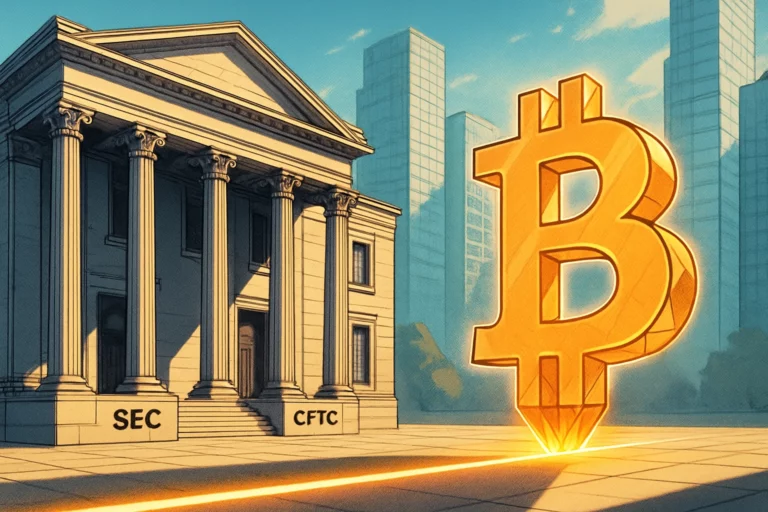
On December 10, U.S. Senators Gillibrand and Lummis stated at the Blockchain Association Policy Summit that the draft of the Cryptocurrency Market Structure Act (CLARITY AC) is expected to be released this weekend, and will enter the revision, hearing, and voting phase next week . This means that this long-awaited legislative project has officially entered a crucial window.
The bill was first formally introduced to the U.S. House of Representatives on May 29, 2025, by Patrick McHenry, chairman of the House Financial Services Committee, and French Hill, chairman of the Subcommittee on Digital Assets and Innovation. It passed the House vote by an overwhelming majority (294 votes in favor) on July 17 and is currently awaiting final review by the Senate.
The core design of the bill: classification rather than a one-size-fits-all approach.
The core of the Cryptocurrency Market Structure Act is its attempt to end the decade-long tug-of-war between US regulators and the industry over whether something is a security or a commodity. For the first time, it legislates to clearly define the boundaries of digital assets, avoiding a "one-size-fits-all" regulatory approach and instead adopting a categorized regulatory framework . Specifically:
The legal distinction between "digital goods" and "digital securities"
The bill explicitly defines the vast majority of tokens natively issued on decentralized blockchains as "digital commodities," transferring their regulatory authority to the Commodity Futures Trading Commission (CFTC); only those tokens that meet the Howey test and possess typical "investment contract" characteristics will continue to be regulated by the SEC in accordance with securities regulations.
Exemption pathway for "mature blockchains"
To avoid all tokens being forcibly classified as securities, the bill establishes a "mature blockchain system" standard: a blockchain can be exempt from the SEC's securities registration requirements only if it simultaneously meets the criteria of "high decentralization" (no single entity controls more than 20% of the token supply or verification rights, and its value primarily derives from actual network use). This provides a clear path for mainstream assets such as Bitcoin and Ethereum, ensuring that regulation does not stifle technological progress.
The secondary market has fully shifted to CFTC regulation.
The bill requires all platforms engaged in spot or derivatives trading of digital commodities to register with the CFTC as a "Digital Commodity Exchange" (DCE), digital commodity broker, or dealer. Considering the realities of the industry, the bill also includes a 360-day "temporary registration" period to ensure that existing compliant platforms are not forced to shut down due to technical violations during the transition period, thus achieving a smooth transition.
Limited financing exemption
Even if an initial coin offering (ICO) is conducted on a mature blockchain, if it is still considered an "investment contract," the issuer can apply for an exemption from the registration requirements of the Securities Act of 1933, but the total amount raised in a single year cannot exceed $75 million , and more stringent information disclosure obligations must be fulfilled. This design attempts to strike a balance between encouraging innovation and protecting investors.
The division of labor between the CFTC and the SEC: from adversarial to collaborative
The long-standing tug-of-war between the SEC and CFTC over jurisdiction over digital assets has been described by the industry as the "Achilles' heel" of the crypto sector. Regulatory uncertainty has even been considered a significant hidden cost suppressing innovation in the United States. If the Cryptocurrency Market Structure Act takes effect, it will legislatively end this situation, establishing a clear division of responsibilities: the CFTC will become the core regulator of the secondary market for digital goods, while the SEC will focus on token issuance and private placements that still possess security characteristics in the primary market.
To ensure coordination between the two agencies in overlapping areas, the bill mandates the establishment of a permanent " Joint Advisory Committee ." Either party must formally respond to the committee's non-binding recommendations when developing rules that might affect the other's jurisdiction. This mechanism aims to prevent future regulatory vacuums or duplication of regulation.
At the same time, the bill provides clear protection for the decentralized finance ecosystem: non-custodial, non-profit roles such as protocol front-end developers, node validators, and miners will be explicitly excluded from the definition of "broker" or "dealer," thereby significantly reducing the compliance burden at the protocol level and preserving reasonable space for technological innovation.
Supporting measures are being implemented simultaneously: the CFTC is taking the lead in implementation.
As the Senate deliberations on the Cryptocurrency Market Structure Act entered a crucial phase, on December 5, Caroline D. Pham, acting chair of the U.S. Commodity Futures Trading Commission (CFTC), announced that spot cryptocurrency products would be permitted to be traded on CFTC-registered regulated futures exchanges for the first time.
Pham stated that this move is part of the Trump administration's plan to make the United States the "crypto capital of the world," aiming to address the lack of security at offshore exchanges by providing a regulated domestic market.
Furthermore, as part of the “Crypto Sprint” initiative, the CFTC will also promote the use of tokenized collateral (including stablecoins) in the derivatives market and revise rules to support the application of blockchain technology in infrastructure such as clearing and settlement. This will strengthen the CFTC’s leadership role in the digital asset field and is highly consistent with the spirit of the bill.
Trump's nomination process accelerates: Crypto-friendly leadership in place
Since Trump's second term, the personnel reshuffles of major U.S. financial regulatory agencies have continued to shift in favor of digital assets, a shift that has become a key catalyst for the accelerated development of the crypto industry.
In an interview with CNBC, U.S. Securities and Exchange Commission (SEC) Chairman Paul Atkins stated that the U.S. "resistance" to cryptocurrencies has been "too long." Atkins, appointed by Trump and scheduled to take office in 2025, views the Cryptocurrency Market Structure Act as part of "Project Crypto," a project aimed at bringing order and fairness to the classification of digital assets through legislation and regulations.
Meanwhile, on October 25, 2025, Trump nominated Brian Quintenz to serve as Chairman and Commissioner of the CFTC. He is a former crypto lawyer who represented numerous crypto companies (such as venture capital funds and blockchain projects) at the law firm Willkie Farr & Gallagher, and has served as the lead legal counsel for the SEC's Crypto Task Force since March 2025, reporting directly to Atkins.
Trump also nominated Travis Hill to be chairman of the Federal Deposit Insurance Corporation (FDIC), where he is already serving as acting chairman until 2025. Hill is also a crypto enthusiast and has publicly supported banks' involvement in crypto custody and stablecoin issuance, believing it would improve financial inclusion. The FDIC regulates the interface between banks and crypto (such as stablecoin issuers), and his appointment could facilitate banks' entry into the crypto space.
After the government resumed operations, the SEC has also introduced a series of institutional optimization plans to accelerate the approval process for ETFs. The overall signal is very clear: the regulatory logic is transitioning from defensive management to structural acceptance.
Conclusion: The United States is completing the "crypto legal puzzle".
More importantly, the advancement of the Cryptocurrency Market Structure Act may solidify the achievements of the American Stablecoin Innovation Act, signed by Trump earlier this year, which already provides a security framework for stablecoin issuance. This bill further completes the legislative puzzle regarding the crypto industry, fills market structure gaps, and propels the United States from a "follower" to a "leader" in global crypto regulation.
Overall, these policy and personnel changes foreshadow structural opportunities for the US crypto ecosystem, with clearer regulations potentially attracting more institutional funding. However, challenges remain, such as coordinating DeFi regulatory details and aligning with international standards. But for global crypto professionals, this isn't just a US story; it represents a crucial window of opportunity for the entire industry.


