






The cat-and-mouse game gets an upgrade: Malaysia uses drones and sensors to crack down on Bitcoin mining farms stealing electricity.


- 核心观点:马来西亚政府正升级打击非法比特币挖矿。
- 关键要素:
- 五年查处1.4万非法窝点,窃电损失11亿美元。
- 成立跨部门特别委员会,统筹专项打击行动。
- 官员认为非法挖矿多由犯罪集团操控,威胁电网安全。
- 市场影响:可能加剧全球合规挖矿算力竞争。
- 时效性标注:中期影响
Original authors: Ryan Weeks, Kok Leong Chan, Netty Idayu Ismail, Bloomberg
Original translation by Chopper, Foresight News
In areas of Malaysia known for rampant illegal cryptocurrency mining, the investigations take place from the air. Drones hover over rows of shops and abandoned houses, searching for unusual heat sources—a typical thermal signal from illegal mining rigs. On the ground, police use handheld sensors to check for abnormal electrical usage. Sometimes, the investigations are even more rudimentary: residents call the police after hearing strange bird calls, only to find upon arrival that someone is deliberately playing natural sound effects to mask the roar of machinery behind closed doors.
These tools together form a mobile surveillance network to crack down on illegal Bitcoin mining.
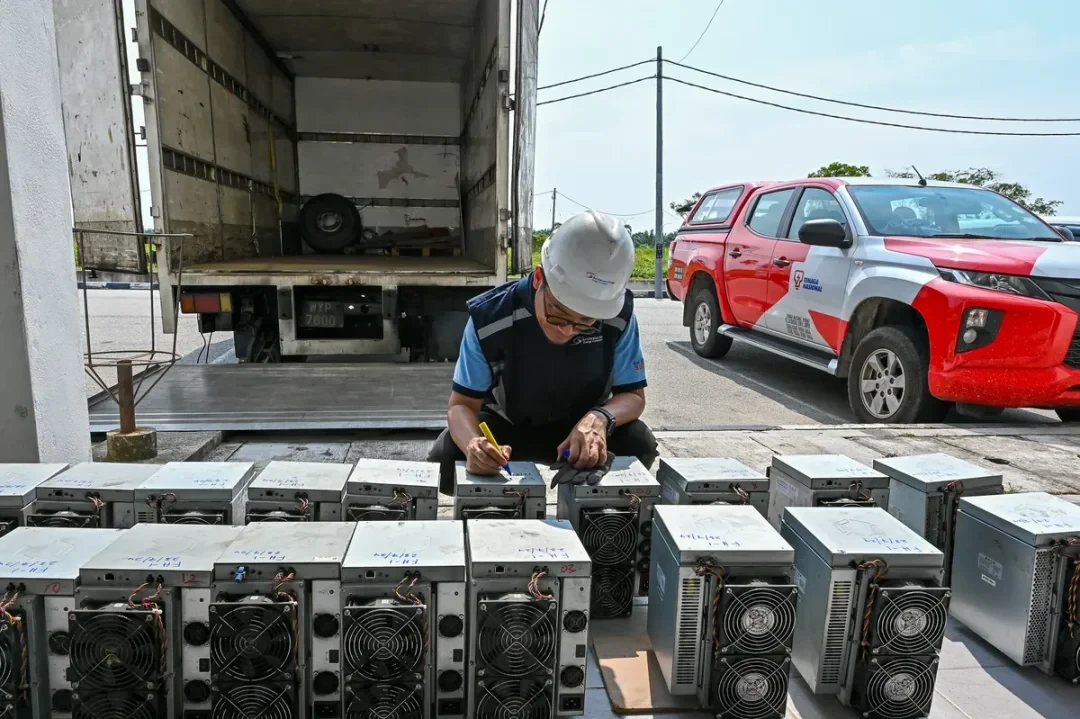
In July 2024, an official inspects mining rigs after a Bitcoin mining raid.
The mining companies under investigation acted very cautiously: they frequently moved between vacant shops and abandoned buildings, installed insulation layers to cover the heat radiation from the mining machines, and equipped entrances and exits with closed-circuit television, heavy security facilities, and broken glass barriers to prevent uninvited guests from breaking in.
This is the cat-and-mouse game between Malaysian authorities and Bitcoin miners. Over the past five years, Malaysia has shut down approximately 14,000 illegal mining sites. According to data from the Ministry of Energy, during the same period, the state-owned energy company Tenaga Nasional (TNB) suffered losses of up to $1.1 billion due to electricity theft, and this trend is intensifying. In early October this year, when Bitcoin prices reached an all-time high, authorities had registered approximately 3,000 cases of electricity theft related to mining.
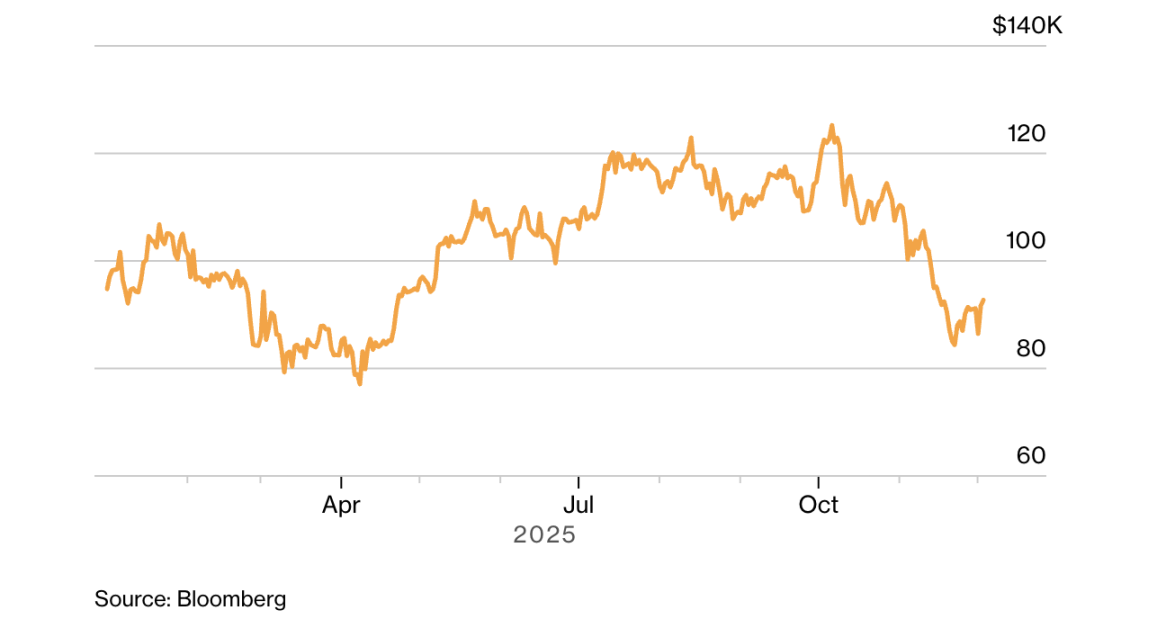
Bitcoin reached a record high of $126,251 in October 2025, after which the cryptocurrency price fell sharply.
Malaysia is now escalating its crackdown. On November 19, the government established an inter-ministerial special committee, comprised of members from the Ministry of Finance, Bank Negara Malaysia, and Tenaga Nasional Berhad (TNB), to coordinate a special campaign against illegal cryptocurrency mining operators.
"The risks of allowing such behavior to continue go beyond electricity theft," said Akmal Nasrullah Mohd Nasir, Deputy Minister of Energy Transition and Water, who also chairs the committee. "These activities could even damage our power infrastructure and pose a serious challenge to the grid system."
Bitcoin mining is essentially a competition of computing power: rows of specialized equipment can perform trillions of calculations per second in order to successfully verify transactions and earn Bitcoin rewards.
Bitcoin mining is a big business. The electricity consumed by Bitcoin mining globally exceeds the total electricity consumption of South Africa or Thailand. According to a report by the Cambridge Centre for Alternative Finance, over 75% of Bitcoin mining activity is currently concentrated in the United States. Malaysia's share in the industry is relatively unclear: in January 2022, its global hashrate share was 2.5%, but the latest Cambridge University survey has not released updated data.
It is clear that Malaysian miners are skilled at modifying various special sites for mining.
Overlooking the Straits of Malacca, the ElementX shopping mall, a massive complex, was deserted during the COVID-19 pandemic and has since suffered a severe decline. Today, much of the mall still resembles a construction site, with exposed concrete floors and unshielded electrical wires. In early 2022, the mall welcomed a peculiar tenant: Bitcoin miners. The mining machines weren't removed until early 2025, when a TikTok video exposing their mining operations went viral.
Similar clandestine mining sites exist hundreds of miles away in Sarawak, East Malaysia. Bloomberg News previously reported that a company called Bityou had set up a mining farm in an old logging camp. The company did not respond to requests for comment regarding the issues raised in this article.
In Malaysia, Bitcoin mining is legal as long as the operator obtains electricity legally and pays taxes in accordance with the law.
Akmal disagreed. At the first meeting of the special committee on November 25, members discussed whether to recommend a complete ban on Bitcoin mining.
"Even if mining operations are compliant, the extremely high volatility of the market in which they operate remains a major challenge," he pointed out. "I don't think any mining company can be considered 'legally successful' at present."
He further stated that the sheer number of illegal Bitcoin mining sites and the modus operandi of those behind them indicate the presence of organized crime.
"These activities are clearly controlled by criminal groups," Akmal said. "Judging from the mobility of frequently moving mining machines between different locations, their modus operandi has become a fixed pattern."


