第一梯队从业者如何看待Web3游戏产业机遇?|SevenX New Trends Summit香港站精彩回顾



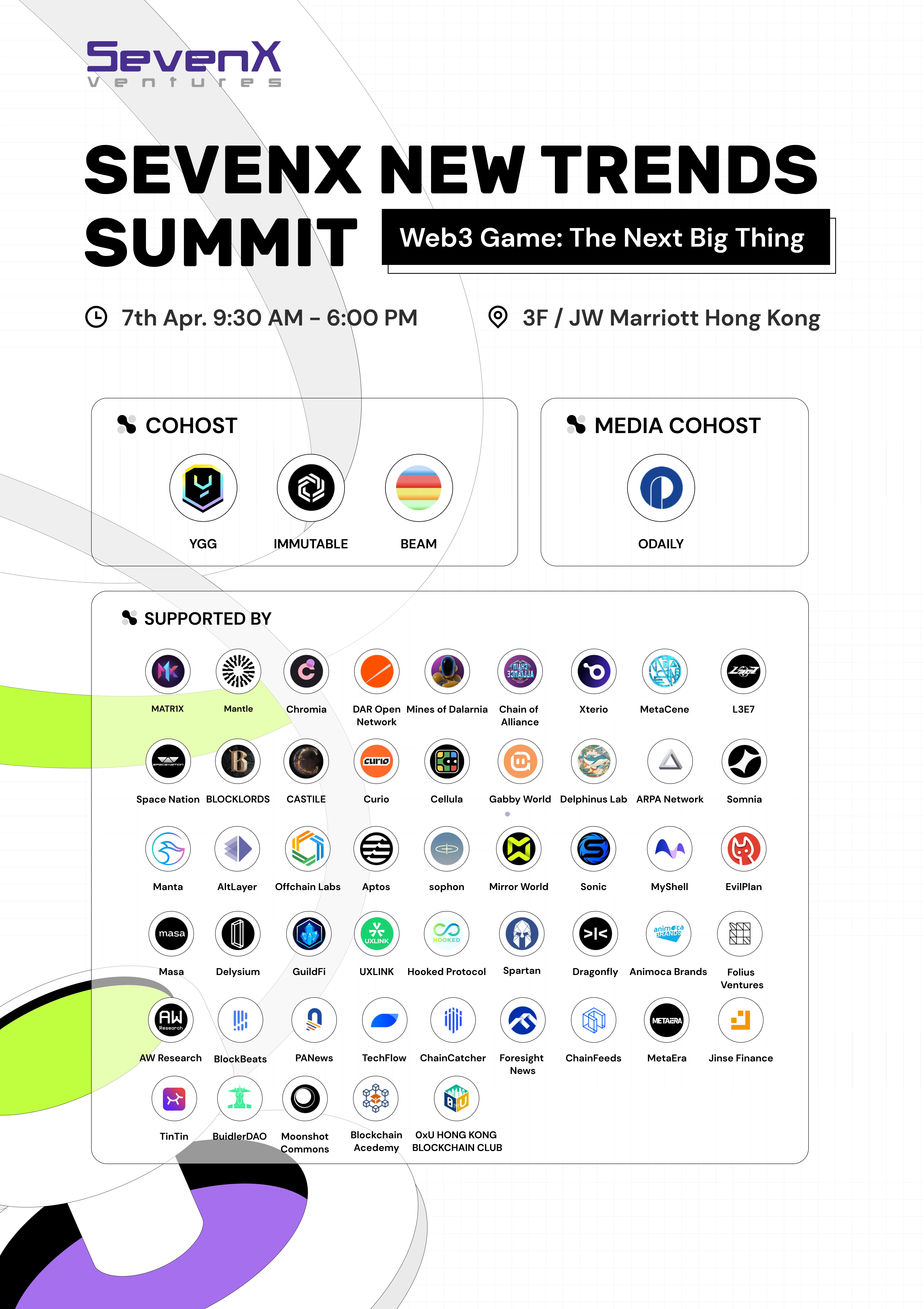
On April 7, the New Trends Summit hosted by SevenX Ventures and co-organized by YGG, Immutable and Beam was officially held at JW Marriott Hong Kong. With the theme of Web3 Game: The Next Big Thing, this summit includes many practitioners from leading projects in all aspects of the industry chain, including the game content side, distribution side, traffic side, server side, platform side, and infrastructure side. Guests from VC institutions, Chinese KOLs, game trade unions and other organizations who have been involved in the gaming industry for many years enthusiastically shared many observations and insights about the industry and projects, and jointly discussed many cutting-edge issues that are currently attracting much attention in the gaming industry.
As the exclusive co-host media of this summit, Odaily will lead everyone to understand the insights and wonderful speeches of the guests of this summit.
The past, present and future of Web3 games
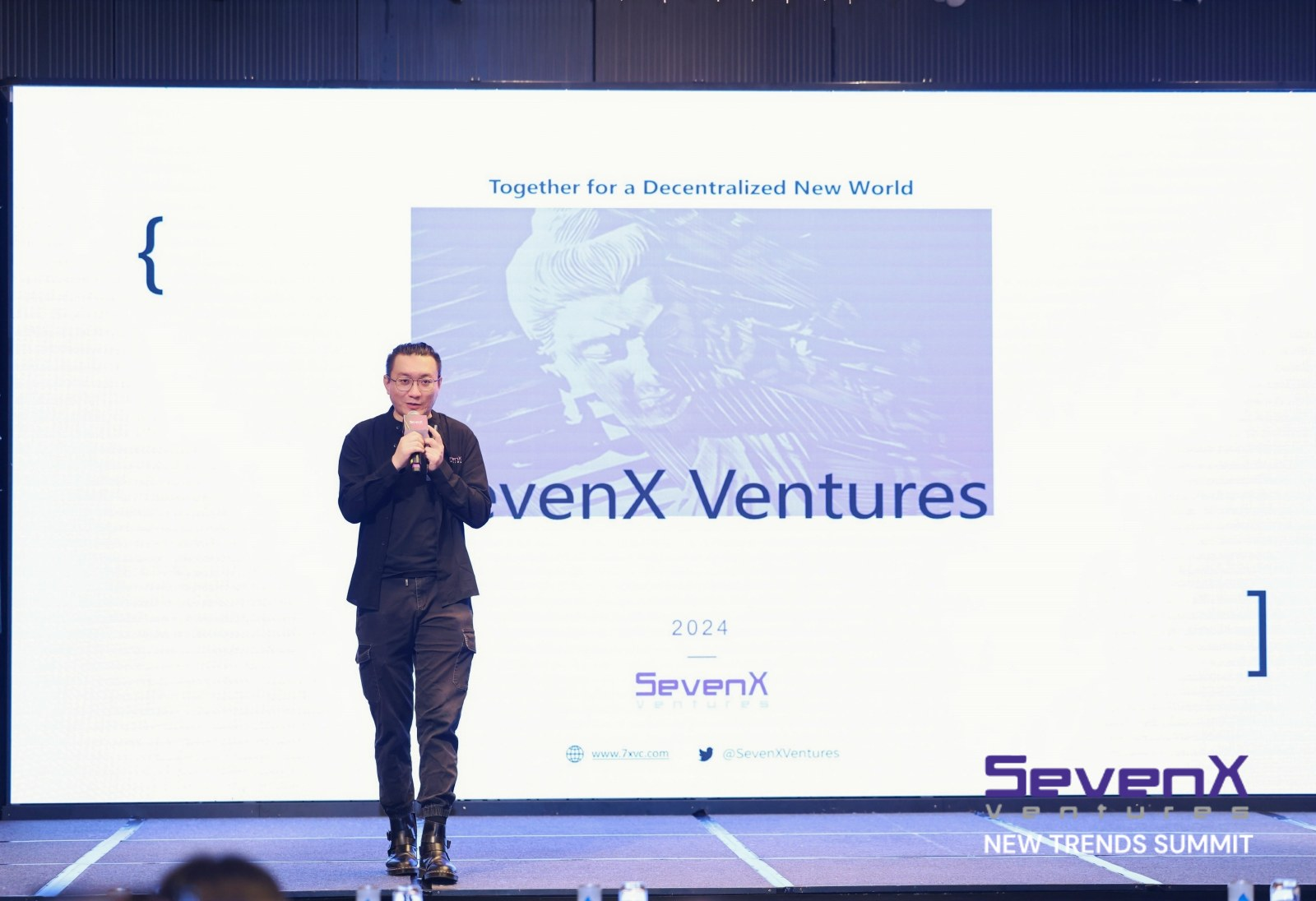
In the opening speech, Eraser, the founding partner of SevenX Ventures, first gave a brief introduction to SevenX and past portfolios, and then affirmed the role of games in social life and the long life cycle of this industry. He believed that the game industry has great influence on The entire IT industry plays a huge role in promoting and can interact with infrastructure construction, and the two complement each other. Finally, Eraser shared his thoughts on the layered structure of the game industry, which mainly includes: underlying blockchain network, decentralized storage, cross-chain and chain abstraction solutions, developer tools, distribution channel platforms, content and Traffic, game segments, finance and services. Among them, finance and services include 4 sectors: data services, game-related finance, e-sports, and predictive markets. Finally, he mentioned that in the next 2 to 3 years, full-chain games, game-integrated social platforms, data-driven services, “game + AI” and “game AI +” will become the focus of industry development.
Roundtable: Past, Present and Future of Web3 Games • Chapter 1
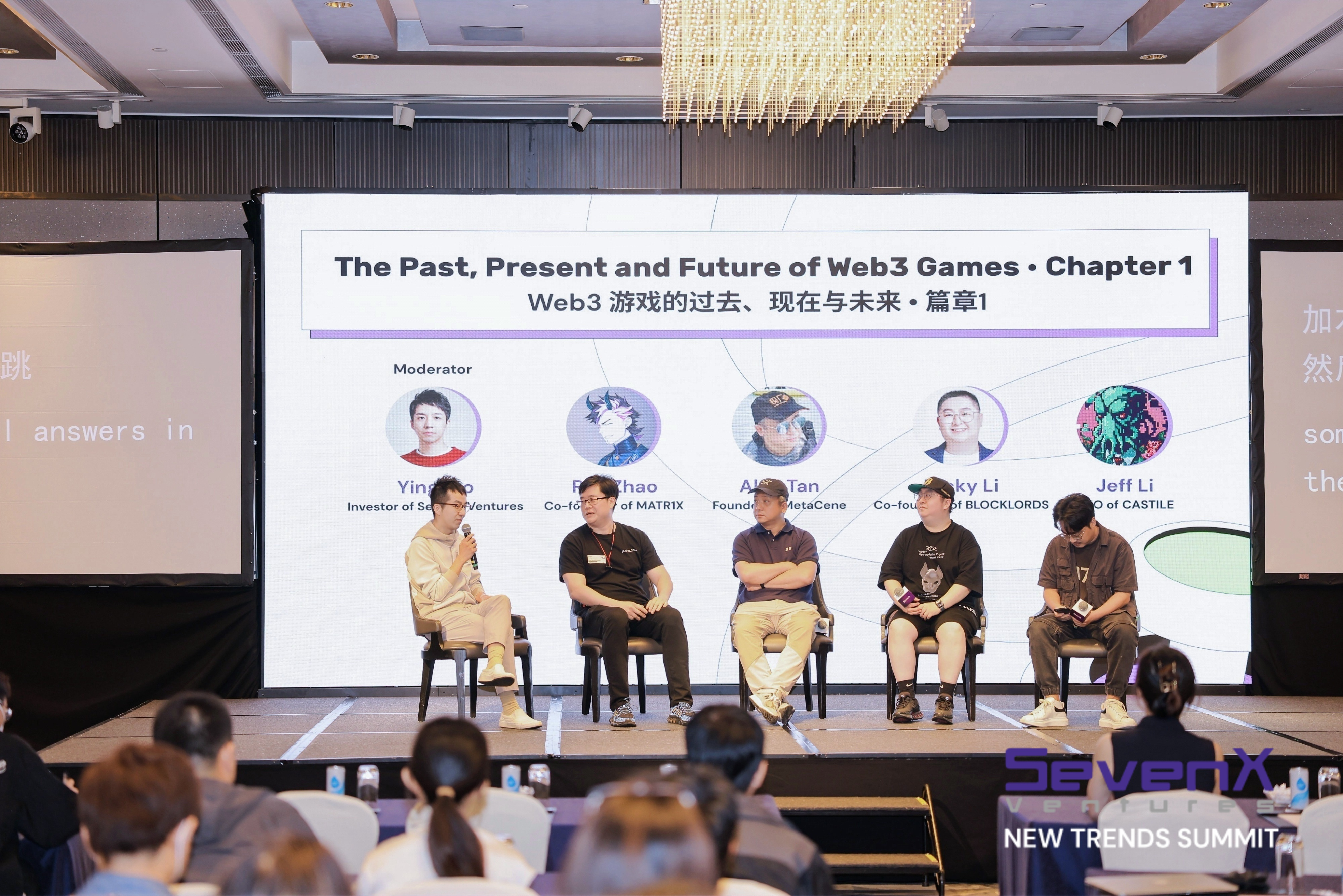
At the round table hosted by SevenX investor Yinghao, four Web3 game industry practitioners had an in-depth exchange of experience on Web3 game project entrepreneurship and related experiences.
Ray Zhao, co-founder of MATR1X, an innovative cultural and entertainment platform, believes that the Web3 game market has broad prospects. Based on the current revenue of the global game industry of US$150 billion, 5% of the revenue sources are expected to shift from game props to game NFTs. He believes that this is a major trend. In addition, global operations, creator economy and strong money-making effects are crucial to the subsequent development of Web3 games.
Alan Tan, founder of MMO platform MetaCene, said based on his own experience that high-quality or Web3 games with more Web2.5 attributes are gradually recognized by players and the capital market. The play to earn business model will partially replace the item base business model, and will be strengthened in the future. Understand the needs of Web3 players and asset appreciation needs, and will attract more users to join based on the confirmation of virtual asset ownership and transaction rights.
Nicky Li, co-founder of the strategy game BLOCKLORDS, also resonantly mentioned that the continued advancement of early testing has prompted continuous iteration of the game and inspired the team to think and practice on the NFTization of on-chain game content and game assets. In addition, play To own (goal achievement) and fun conquer (game playability) are crucial.
Jeff Li, CEO of CASTILE, a 3A-level ARPG card game, expressed his strong confidence in the future development of the Web3 game industry. He mentioned that on the one hand, with the maturity of various infrastructures, the Web3 game track has entered a new era. In this era, the key is to discover new traffic or user channels; on the other hand, the essence of the IP problem is the homogenization of assets and narratives, and it is necessary to find new breakthroughs in user operations in the future. The asset fission properties of Web3 games and the establishment of the games value-added model deserve long-term attention.
Roundtable: The past, present and future of Web3 games • Chapter 2
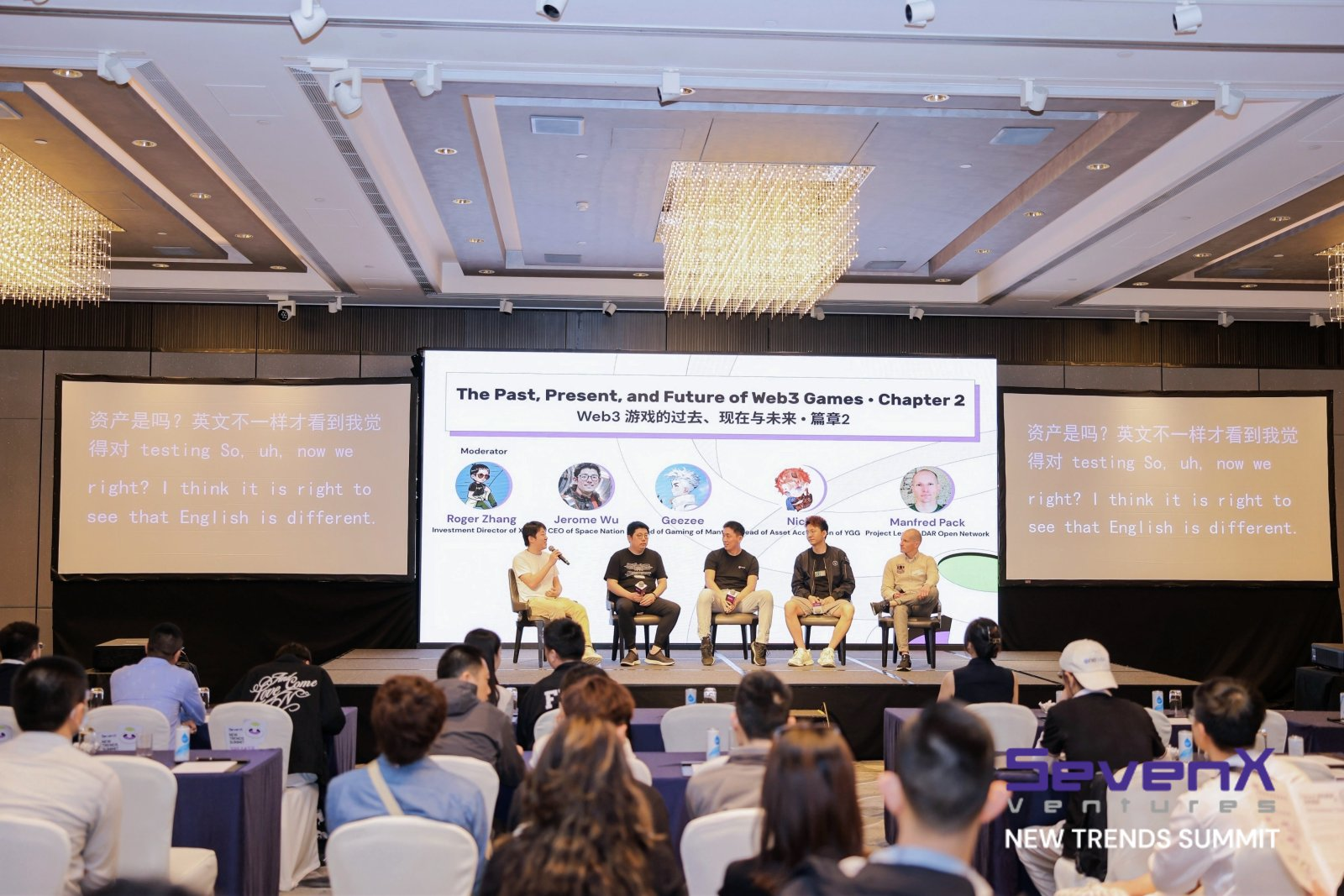
In the second roundtable, Roger, investment director of Xterio, a Web3 game ecosystem and infrastructure platform, served as the moderator and discussed changes in the Web3 game industry and other related topics with a group of guests.
Space Nation CEO Jerome Wu pointed out that in the past, GameFi games were more like DeFi products disguised as games, and now they prefer to call their projects Web3 games. As a Web3 space opera MMORPG, Space Nation leverages Web3 technologies and tools to enhance the gaming experience, rather than emphasizing everything related to assets or revenue.
Based on his own experience in the industry, Mantle Game Director Geezee mentioned that looking back at the mobile game industry and the large-scale online online game industry, once a new and truly sustainable business model emerges, the golden age of the game industry will come. Based on the emergence and continuous development of past successful projects, Web3 games are now in the transition period between the third and fourth stages of a lot of trial and error, and their own golden age is coming.
Nick, head of asset acquisition at YGG, mentioned that one of the biggest changes in the entire industry is the shift in consumer perspective - from play-to-earn to play-and-earn to play-and-own, people are paying more and more attention to The game itself. Therefore, YGG has gradually transformed from a union into an ecosystem, and then uses data protocols to serve players and data contributors.
DAR Open Network project leader Manfred Pack concluded that from focusing on revenue to focusing on the game itself, the Web3 game industry has gradually shifted from the initial technical enthusiasm and speculative imitation to a more rational and in-depth discussion. With the continuous improvement of infrastructure, More innovative experiments in game design and gameplay are also worth looking forward to.
Roundtable: Decoding full-chain games
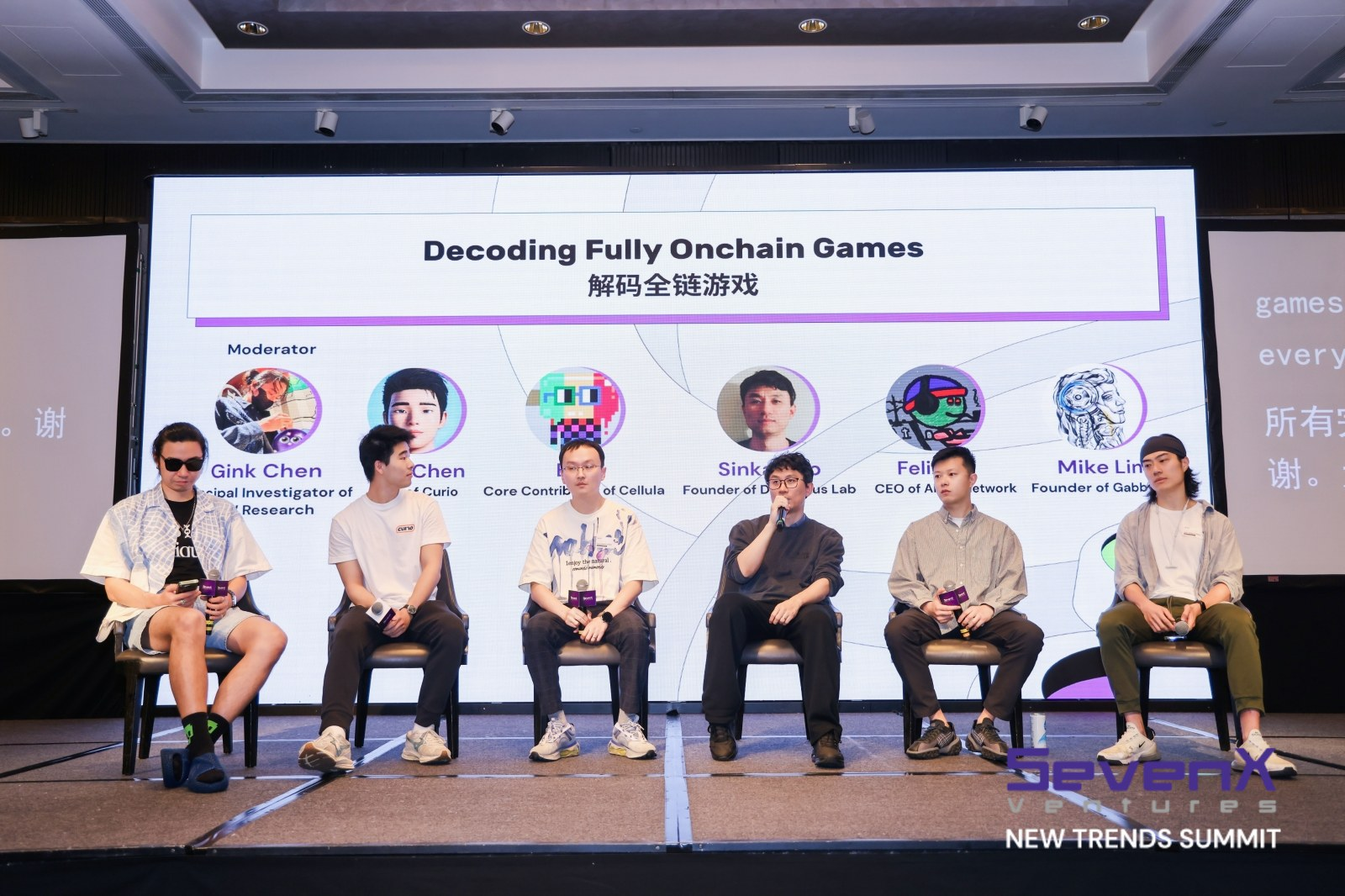
In this roundtable hosted by Gink Chen, chief researcher of AW Research, relevant practitioners exchanged and discussed the current status, development trends and future directions of full-chain games.
Mike Lin, founder of Gabby World, believes that games can be divided into broad and narrow senses. Broad games have game theory as the core and are then packaged around games in the narrow sense. Web3 games are not only entertainment, but can also provide educational value, strategic thinking and social interaction. , and also provides a durable way to run decentralized games. AI technology also opens up new possibilities for enhancing player immersion and engagement, as well as game design.
ARPA Network CEO Felix Xu mentioned that we are trying to build something different from traditional games, such as an autonomous world. In order to do this, we have to have a deep understanding of smart contracts and use tools, and then build on top of tools like MUD v2, which will be a combination of asset trading, game theory, and just like something built from numbers.
Sinka Gao, founder of Delphinus Lab, said that when switching from Web2 games to Web3 games, we need to clearly understand who the audience is, and then use Web3 trusted computing methods to provide a trustless and fairer value system to produce high-quality products. content and high-quality games.
Eric, a core contributor of Cellula, summarized many opinions from the development history of DeFi. He believes that the current state of the full-chain game is very similar to the initial state of DeFi in 2019. The order book in the past was just a phased state, just like Uniswap later. , the emergence of MakerDAO replaced it, so full-chain games may take a completely different path in the future.
Curio CEO Yijia Chen agreed, saying that financialization is probably one of the most important innovations a vertical should embrace, as it allows in-game assets and transactions to have real economic value. This economic value not only increases the depth and complexity of the game, but also provides players with new ways to participate and interact. In addition, there is still a lot of room for development in the combination of social and gaming, such as in Friend.tech, where people can speculate on the top players in the ecosystem.
Roundtable: Exploration and imagination of AI+Web3 applications
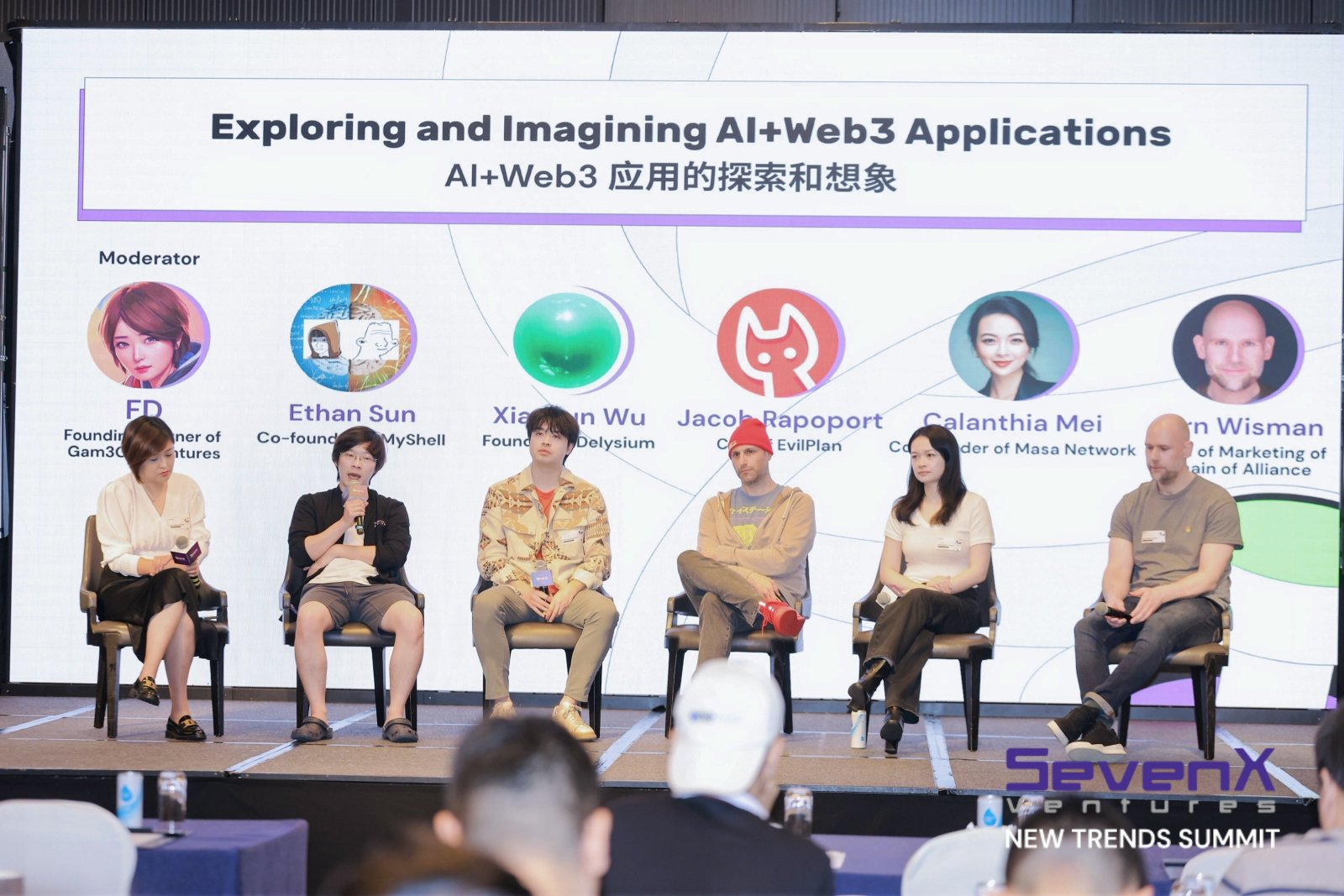
In this roundtable discussion on AI + Web3 applications, FD, founding partner of Gam 3 Girl Ventures, as the moderator, raised many interesting questions to practitioners in the AI + Web3 application industry, such as whether he believes that the current AI market and Web3 market Is there too much hype? What is the true utility of AI in the blockchain world? What is the valuation framework for an AI project? Lets listen to the answers of the guests.
MyShell co-creator Ethan Sun believes that AI and Web3 are indeed over-hyped. But generative AI technology has truly lowered the threshold for creators to build interactive, high-value applications, and as a flexible financial market, the encryption industry can help creators raise funds and launch market strategies. Traditional equity-based product and company valuations may gradually shift to token-based mechanisms.
Delysium founder Xiankun Wu put forward a different view. For example, his consultant Cece believed that AI was not overhyped, but undervalued. He agreed and said that we have not really realized the potential of AI. Blockchain technology may become an important tool for interaction and transactions between AIs in the development process of AI. What we want to do is to become the Memecoin of AI agents. .
EvilPlan CEO Jacob Rapoport is optimistic, pointing out that most of the current investment ends up in highly commoditized services, and only a few companies really control the training data. On the other hand, AI-produced content has its own advantages. The dynamics and openness will have far-reaching impacts, and the future market will be far broader than the current initial situation.
Calanthia Mei, a co-founder of Masa, expressed her views from the data level. She pointed out that AI, especially AI tokens, may be over-hyped in the short term, but in the long term, it is seriously underestimated. On the one hand, as of the end of February, AI tokens accounted for approximately US$39 billion in the total market value; on the other hand, global venture capital inflows into AI in 2022 were only US$4 billion, but this number increased five times in 2023 , AI is fundamentally changing every corner of our lives.
Jorn Wisman, head of marketing at Chain of Alliance, believes that AI is not just a technical tool, it can also improve accessibility, enhance user experience, and provide new opportunities for content creation to create more value for various projects and content.
Roundtable: User Growth and Traffic Operation of Web3 Games
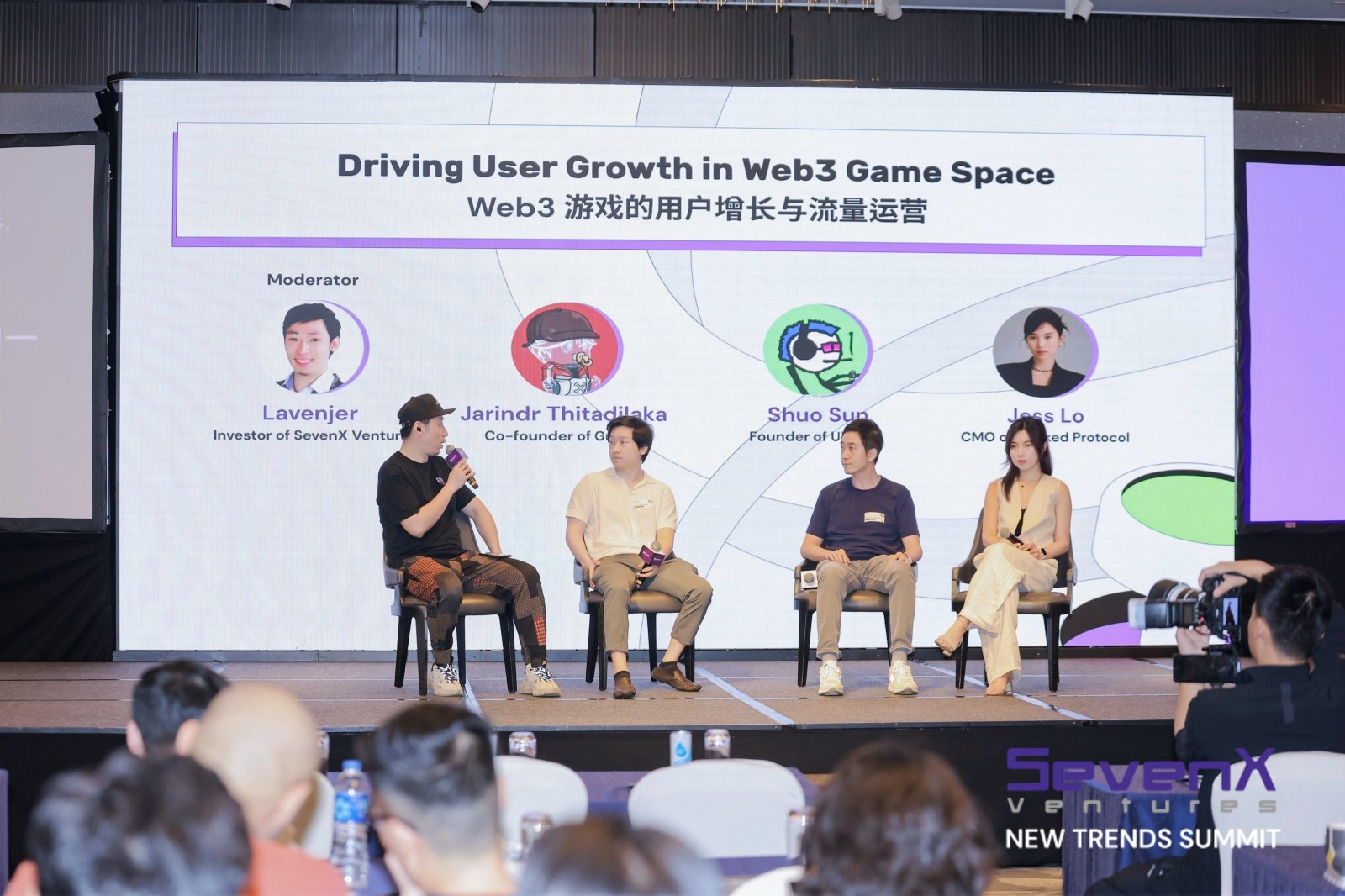
In this roundtable hosted by SevenX Ventures investor Lavenjer, many senior practitioners gave their own insights and sharing on topics such as user growth and traffic operation of Web3 games.
GuildFi Lianchuang Jarindr said that the most powerful tool for marketing in Web3 is tokens. Tokens + good products are used to motivate and attract user participation, which makes the entire user group have strong consistency with the product itself.
Shuo Sun, founder of UXLINK, combined his own experience and gave answers from many aspects, including a user growth system based on fission to build trust; choosing Telegram, the largest social network in Web3, as a channel; and lightweight product construction methods to ensure user experience. .
Hooked Protocol CMO Jess Lo replied that the key points are: first, to reduce the friction of entry barriers and give users early motivation; second, to provide the right incentives at the right time; third, to learn from the hotel points or flight mileage points system, users have the chain on the record and can unlock proof of other experiences. This initiative combines a token economics system with decentralized instant reward sharing to become an excellent community growth tool.
Roundtable: Web3 Games from the Perspectives of Players, Communities and KOLs
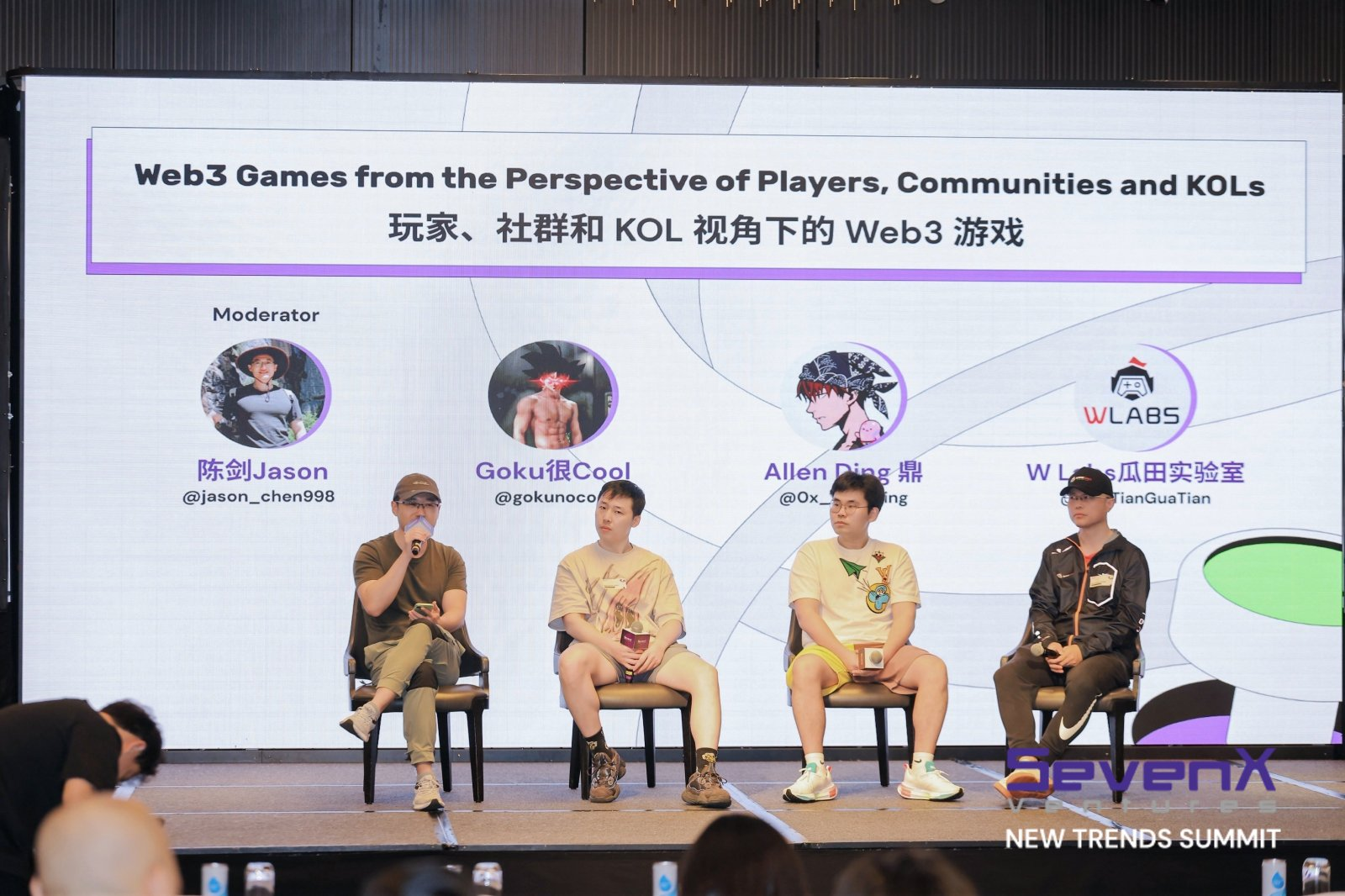
Later, under the organization of host Jason Chen Jian, guests from the game players, gaming community and KOL field discussed different roles’ views on Web3 games.
Nothing Research partner, Ebunker founder Allen Ding spoke first, stating his views on the GameFi field. He believed that compared to other investment tracks (such as NFT, Memecoin, etc.), GameFi requires users to devote time, energy and brainpower, which is relatively The price/performance ratio is low, especially in the bull market.
Gua Ge, a spokesman for W Labs (Gua Tian Laboratory), the largest Chinese game community, answered the question about which aspect of Web3 games is more important in one sentence. He said that the bull market is Fi, and everyone plays in the bear market. In addition, whether Game first and then Fi, or Fi first and then Game, has little impact. As long as it promotes the industry, it is good. For example, the quality of this wave of chain games is obviously better than the previous wave, which shows that the entire industry is moving towards Walking up.
Crypto KOL Goku Cool emphasized that Web3 games do have real users and gamers. He believes that Web3 is essentially a logic of asset issuance and wealth reconstruction, so in theory it is not a problem of game quality, the main problem is the game There is a lack of consensus and real playability. Therefore, there is no need to measure the quality of the game. What is important is the type of the game. Whether the game type can seize the users time and make the user have the desire to play.
Roundtable: The Growth and Evolution of Game Public Chains
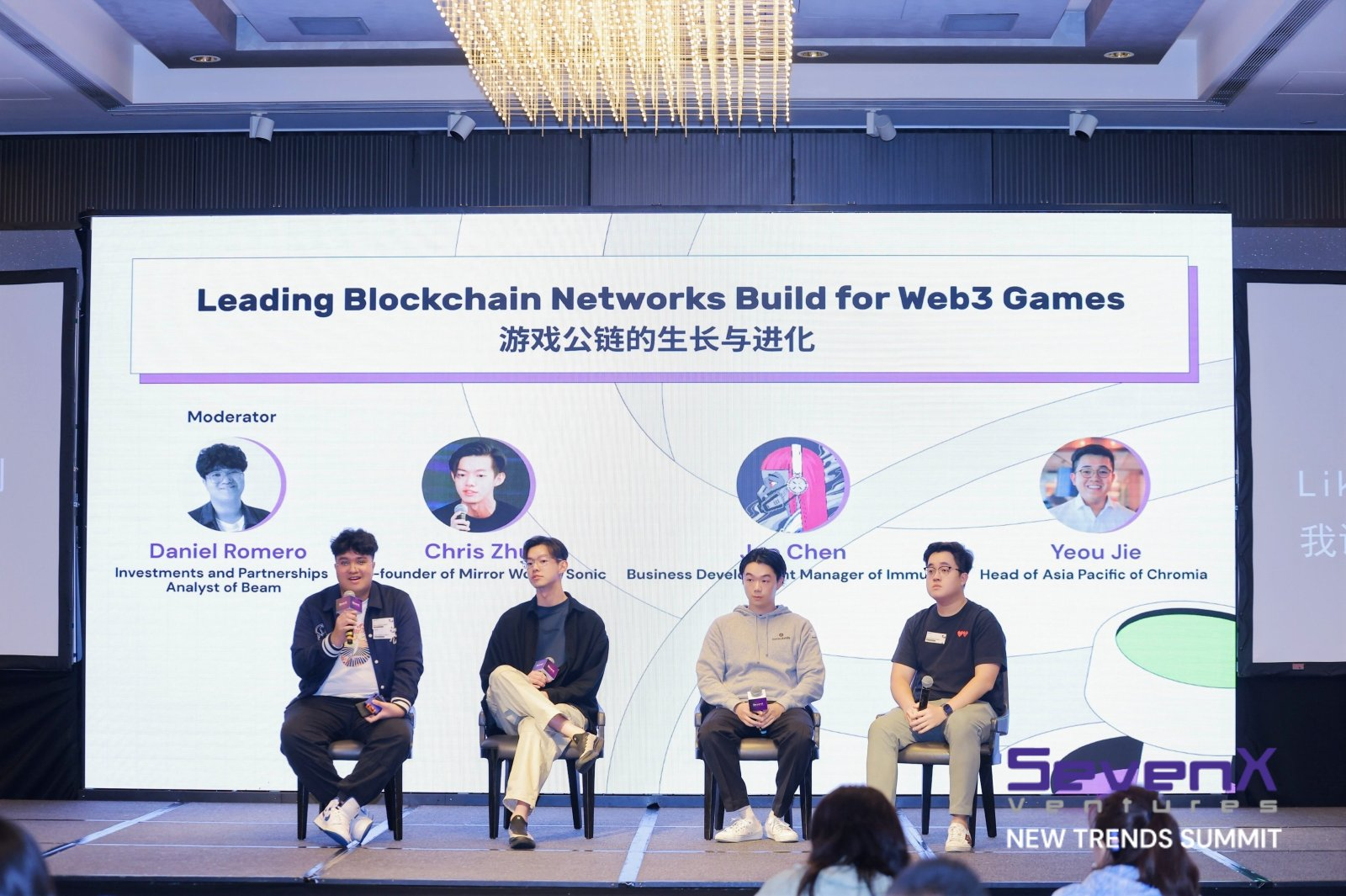
In 2024, the game public chain is also a subfield that many people are paying attention to. Under the auspices of Daniel Romero, an investment and cooperation analyst from Beam, three guests also discussed the early challenges, coping methods, and long-term operations of the game public chain. exchange and discussion.
Yeou Jie, head of Chromia Asia Pacific, shared that because of the difference in technical architecture, we had to build everything from scratch, our wallet, our cross-chain bridge, block browser, etc. This is why the announcement will take a while, and Everything that exists is developed in-house.
Immutable BD manager Joe Chen believes that Immutable currently faces two challenges: one is the C-side challenge that it is trying to solve; the other is the B2B challenge, that is, B-side retail for different games. Among them, liquidity and market share are the top priorities, and universal accessibility of games, cross-platform support, support of different game engines, and game studio support all need to be solved urgently.
Chris, co-founder of Mirror World Sonic, pointed out that timing is crucial. For core technology partners, there are usually three important questions: First, how long will it take for the corresponding technical solutions and frameworks to be launched on the market? The second is business support, that is, how much cash and token exchange subsidies can partners receive? How to motivate alignment? Third, how to go public? How to obtain liquidity? How to launch an asset? The timing of considering these questions is an exciting one, but also a great challenge.
Roundtable: Web3 Games and Cutting Edge Infrastructure
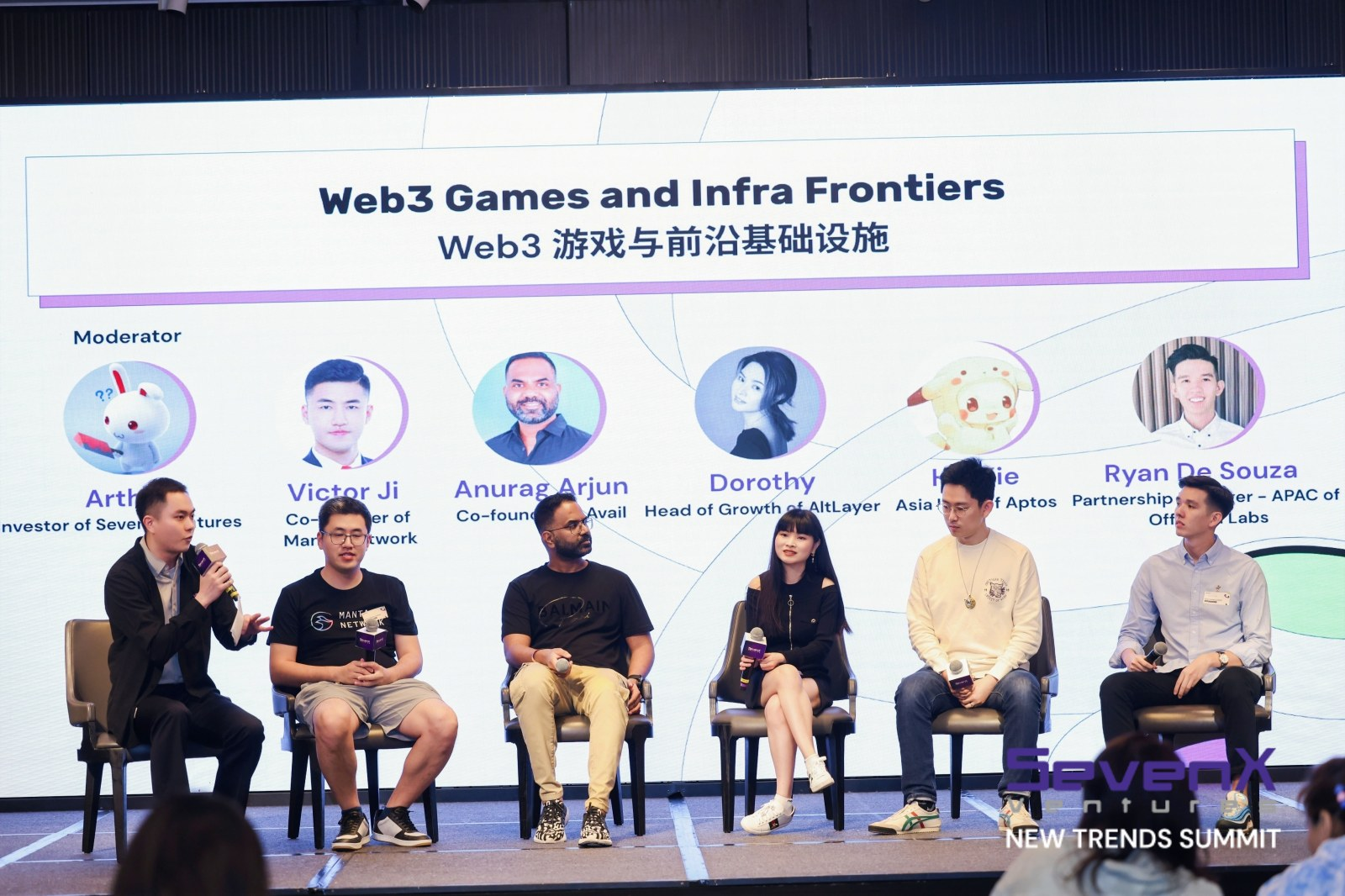
Hosted by SevenX Ventures investor Arthur, several roundtable guests discussed the development status of Web3 games and current infrastructure.
Manta Network co-founder Victor Ji said that he is very concerned about sustainable daily active users (DAU) in Web3 games and how such games can bring more on-chain activities.
AltLayer Growth Director Dorothy reached a consensus after communicating with the founder of the game platform Assets, but players will only enjoy the game itself; or it is a full-chain game, everything is tokenized, and all player operations are performed on the chain. In addition to this, it is necessary to ensure that players can make money from the game, which is also the primary goal of Web3 users, but this does not necessarily have to do with the gameplay.
HC Xie, head of Aptos Asia, said that in the past year, the team has communicated with more than 200 different Web3 game projects from China, South Korea, Japan, Southeast Asia and the West, focusing on three things: First, the quality of the game, such as whether the past Have successful cases; the second is game publishing, or user acquisition, clear target users are necessary; the third is the Web3 elements of the game, that is, you need to think about what additional value the Web3 elements provide to game developers, game publishing, or the end users themselves .
Ryan De Souza, Partner Manager of Offchain Labs Asia Pacific, pointed out that there are many exciting games in the Asia Pacific region, especially those built on Arbitrum, and the most important feature of the game is the user experience, which must be interesting to ensure user stickiness; at the same time It must also be in line with the spirit of Web3, that is, asset ownership, whether it is an in-game asset or a certain token.
Roundtable: Web3 Games from a VC Perspective
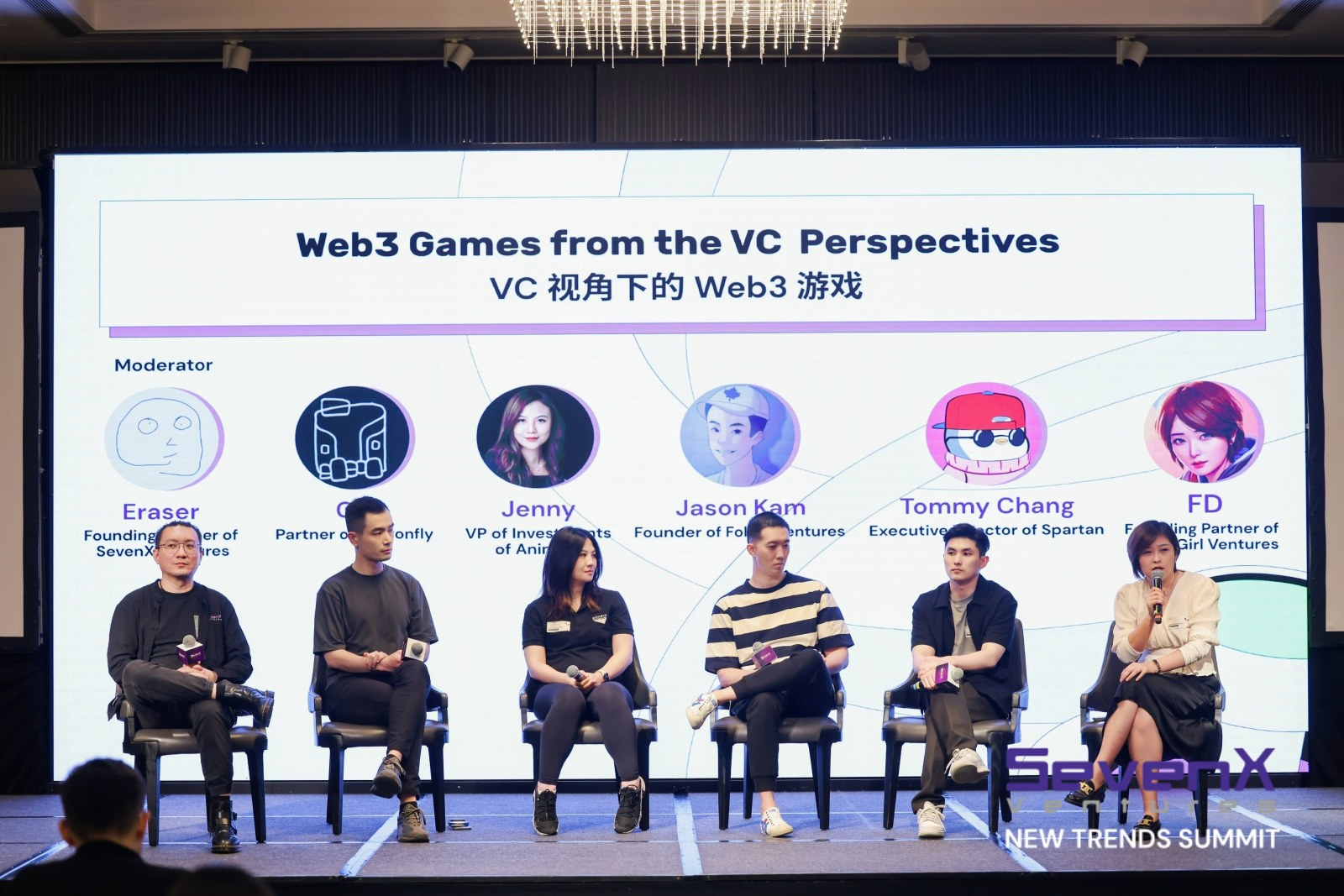
Finally, under the auspices of Eraser, founding partner of SevenX Ventures, guests from well-known investment institutions shared a lot of industry knowledge and investment experience about Web3 games. The following is their sharing.
FD, founding partner of Gam 3 Girl Ventures, said that the possible reasons why some traditional investment institutions focus on the gaming track include category logic, regional logic, crowd logic, and multi-end analysis and multi-dimensional evaluation. In the process of paradigm shift in Web3 game investment, key points that can be noted include: 1) Discovery of path records, that is, thinking about how Web3 can better empower Web2? That is to say, solve some problems that have not been solved in Web2 in the past; 2) Looking for Web3 Native teams. Game companies such as MiHoYo and Riot Games make games from the perspective of gamers and solve existing problems.
Tommy Chang, executive director of Spartan, also responded to the difficulty of investing in Web3 games. He believes that the current competition in the Web2 game industry is extremely fierce and the financial returns are not stable. Entering Web3 for game development is a difficult task for many game studios. It is not easy to say, including choosing the right on-chain ecosystem, finding the right cooperative union, and ensuring the overall integration of the game and the token. These are also issues that need to be considered in game investment.
Jason Kam, founder of Folius Ventures, expressed his personal views based on his previous investment experience. He believes that as entertainment products that take up people’s time, many games put research and development first, but at the same time, the cost of publicity and promotion or mental costs is huge, especially for high-end games. Competitive games, such as FPS shooting games and gambling games, may spend money on promotion costs; while the key to Web3 games lies in game distribution and financial leverage, and these conditions must be used to amplify the game.
The point made by Animoca Investment VP Jenny is that Innovation comes first. She believes that Web3 game investment should avoid path dependence and avoid games that will trigger a large number of imitation cases. The focus of Web3 game investment is on category and seizing opportunities.
Dragonfly partner GM pointed out that for the Web2 team that has just entered the Web3 industry, it is recommended to fully embrace tokens, because tokens are the distinguishing point between the Web2 and Web3 industries and are also the best weapons that Web3 games can utilize. On the other hand, Web3 game projects should learn more about advanced experiences from Web2 game studios or manufacturers and understand how real games should be made. There is still a lot of market space in this area.
Conclusion
At this summit, there were not only the experience sharing and experience talks of industry practitioners, but also the collision of opinions and cognitive exchanges among investors from different regions and institutions, as well as the exchange of perspectives from game unions, crypto KOLs, and industry researchers. and personal practice, I believe that with the continuous exploration of Web3 gamers, investors, and many players and users who love Web3 games, Web3 games will continue to develop and move towards the next peak.