






Should the crypto industry be nervous about US Senator Warren’s anti-money laundering bill?


Original - Odaily
Author - jk
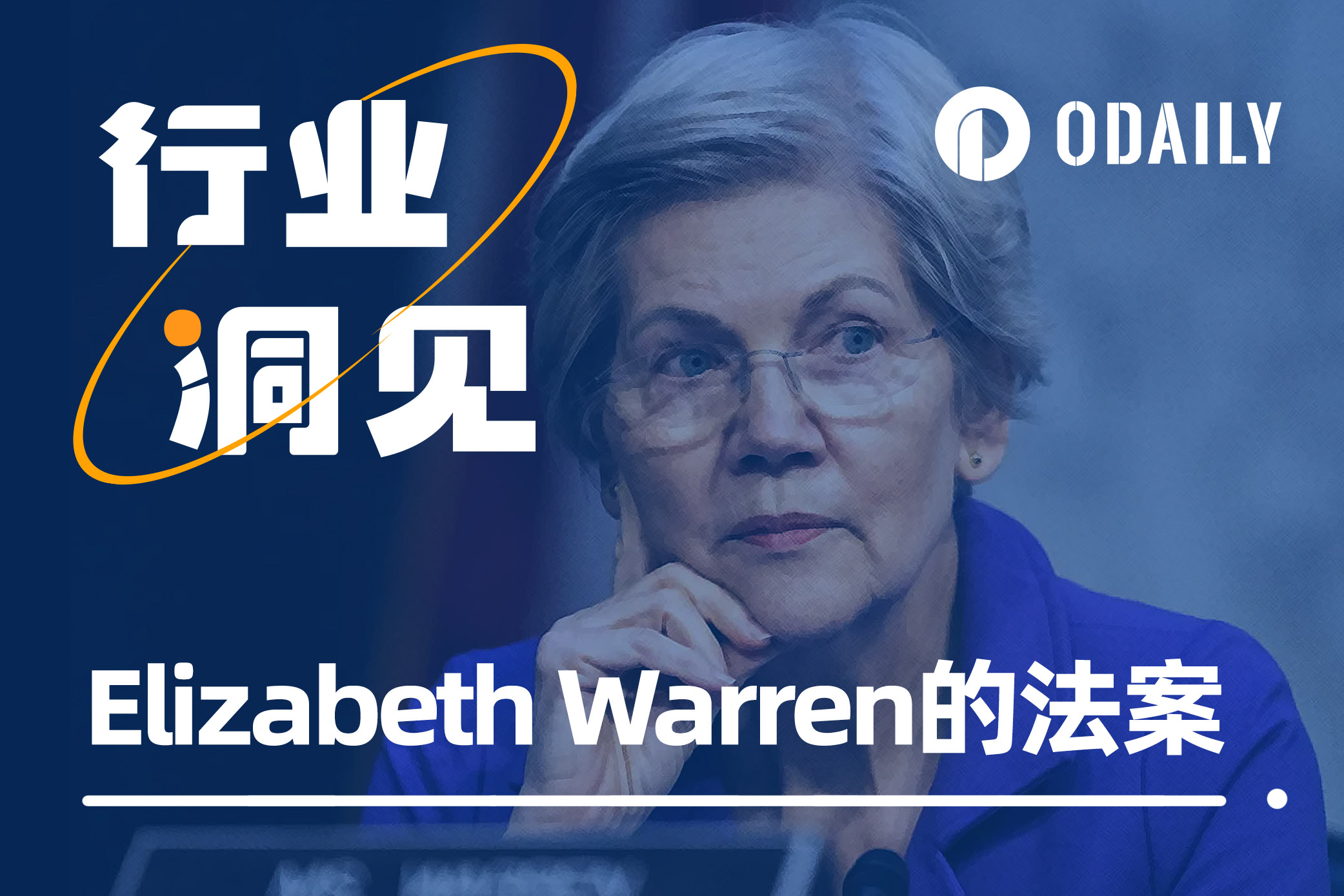
On December 19, local time in the United States, U.S. Senator Elizabeth Warren sent a letter to encryption industry groups and Coinbase, accusing industry groups of using a not-so-secret weapon by hiring former defense and law enforcement officials in an attempt to undermine Congress. Efforts to address the role cryptocurrencies play in funding terrorist groups, including Hamas and others. she says:The crypto industry is spending millions of dollars to give itself a veneer of legitimacy while fighting to block common-sense rules aimed at limiting the use of cryptocurrencies for terror financing — rules that could cut into crypto companies’ profits.”
These actions of Elizabeth Warren are consistent with her long-standing stance on strong regulation, and there is speculation that this is part of her push for the bill she has drafted. At the end of last year, she proposed the Digital Asset Anti-Money Laundering Act regarding cryptocurrencies, adding various provisions for the reporting of cryptocurrencies;This year she introduced a new version of the bill, which received support from five senators last month.
Amid the volatility of last month’s Bitcoin retracement, there were some voices in the English-language crypto media and community generally saying,Mentioned that the drafting of this bill could be detrimental to Bitcoin’s prospects, and discussions on this bill rarely occur in the Chinese encryption community. So what exactly does this bill say that makes crypto KOLs so nervous?
Let’s start with Elizabeth Warren.
Who is Elizabeth Warren?
Elizabeth Warren is an American politician and professor known for her advocacy for consumer protection, economic equity, and social justice. She is a U.S. Senator from Massachusetts and a key member of the Democratic Party. Warren taught at Harvard Law School and played a key role in helping create the U.S. Consumer Financial Protection Bureau (CFPB) following the 2008 global financial crisis. she usesCriticizes the unequal policies of big banks and the wealthyKnown for his participation in the Democratic primary campaign for the 2020 U.S. presidential election. Michelle Wu, Boston’s first Chinese-American mayor who was previously popular on the Chinese-language Internet, was Warren’s student.
What does this bill include?
According to documents on Elizabeth Warren’s official website, this bill, called the “Digital Assets Anti-Money Laundering Act of 2023,” aims to address the issue of digital assets being increasingly used for criminal activities such as money laundering, ransomware attacks, theft and fraud schemes, trafficking, and terrorist financing. It is estimated that half of the missile programs of countries subject to U.S. sanctions, such as North Korea, come from cybercrime and digital assets, with $1.7 billion worth of digital assets stolen in 2022 alone. Ransomware attackers, almost exclusively demanding payment in digital assets, attacked more than 2,400 local governments, schools and hospitals in the United States last year. Last year, illicit use of digital assets reached a record high of at least $20 billion, with 44% of transactions linked to U.S.-sanctioned entities.
The Digital Asset Anti-Money Laundering Act seeks to mitigate the risks digital assets pose to U.S. national security by closing loopholes and making the digital asset ecosystem more compliant with the Anti-Money Laundering and Countering the Financing of Terrorism (AML/CFT) framework. .”
The details of this bill are very detailed and greatly expand the scope of current supervision.:
Extend Bank Secrecy Act (BSA) responsibilities, including KYC requirements, to digital asset wallet providers, miners, validators, and other network participants who may be involved in validating, securing, or facilitating digital asset transactions.
Directing the Financial Crimes Enforcement Network (FinCEN) to complete and implement its December 2020 proposed rule that would require banking and money services businesses to (MSBs) verify customer and counterparty identities, maintain records, and submit reports on certain transactions involving non-custodial wallets or wallets hosted in non-BSA compliant jurisdictions.
Directs FinCEN to issue guidance to financial institutions to mitigate the risks of processing, using, or transacting with digital assets anonymized using digital asset mixers and other anonymity-enhancing technologies.
By directing the Treasury Department to establish an anti-money laundering/counter-terrorism financing (AML/CFT) inspection and review process for MSBs and other digital asset entities with BSA obligations, and directing the Securities and Exchange Commission and the Commodity Futures Trading Commission to establish AML for the entities they regulate /CFT compliance inspection and review process to enhance enforcement of BSA compliance.
Expands BSA rules on reporting foreign bank accounts to include digital assets, requiring U.S. persons who trade in one or more foreign accounts to report foreign bank and digital assets to the Internal Revenue Service if the transaction value exceeds $10,000 in digital assets. Financial Account Report (FBAR).
Mitigate the illicit financial risks of digital asset ATMs by directing FinCEN to ensure that owners and administrators of digital asset ATMs regularly submit and update the physical addresses of the kiosks they own or operate and verify customer and counterparty identities.
According to the above terms, it can be found thatIf this bill is implemented, all participants in the crypto world such as wallet providers, miners, and network verifiers will need to provide KYC. For non-custodial wallets, the identity of the individual and the identity of the counterparty will all need to be verified and reported to banks and financial institutions. For service providers, the use of technologies that enhance anonymous identities such as digital asset mixers will be weakened and the reporting of foreign digital assets will be enhanced.Taken together, this bill reduces the anonymity of cryptocurrency users in the United States. If successfully passed,, banks and other institutions will control the sensitive personal information of most participants in the crypto world, and the risk of centralization will be greatly enhanced.
The impact on crypto consumers is also very direct. If this bill is passed,Then future users will need to complete the KYC process when using wallet services such as Metamask, and this information will eventually be held by banks and financial service providers, and they also have compliance obligations and need to report to regulatory authorities when appropriate.This is obviously not good news for the crypto world, which has always preached decentralization.
To put it further, technologies such as account abstraction have not yet gone very far. Using services such as exchanges and non-custodial wallets to send digital assets over the network is far more complicated than bank transfers.If one more layer of procedures is added, cryptoassets will further lose their advantages compared to the traditional financial industry.
How do crypto KOLs react?
Cointelegraph says we don’t need to be too nervous;Because in Warrens more than ten years of political career, she has introduced a total of 330 bills, of which only 11 were passed.
Alex Thorn, head of research at Galaxy, noted:
The bill specifically calls for a significant expansion of the Bank Secrecy Act to cover open source software, including non-custodial wallets, miners and validator nodes.But non-custodial and decentralized software cannot reasonably perform centralized compliance functions, so the bill would effectively ban cryptocurrencies in the United States. Take miners or validators, for example, these entities passively add transaction data to the blockchain. While they can exclude known sanctioned addresses, they are structurally unable to know each users identity. It is not possible for miners or validators to perform KYC on every public blockchain trader. In fact, it cant even be said that these entities have a customer to understand.
Warren’s bill also seeks to impose the Bank Secrecy Act on non-custodial wallets, many of which are free, open-source software. To be clear, there is no such thing as a “non-custodial” digital wallet – these are just wallets. Requiring non-custodial open source software to perform bank-like compliance is a major attack that Bitcoin’s enemies have been threatening.For example, it is impossible for Bitcoin Core to comply with this, so this would be the equivalent of an outright ban on Bitcoin in the United States.
These rules effectively ban cryptocurrencies in the United States and fundamentally undermine the core innovation itself — peer-to-peer digital cash. If you believe people should have the right to conduct transactions without intermediaries, you must oppose this bill.
Crypto industry lobbying group Coin Center believes the bill may be unconstitutional. Neeraj K. Agrawal, Director of Communications, mentioned that the Digital Assets Anti-Money Laundering Act is a direct attack on technological progress, as well as on our personal privacy and autonomy.
He said: There is no doubt that while this bill has been introduced to address potential money laundering and terrorist financing problems, in fact it is a repudiation of liberal values. Unfortunately, this bill cannot be improved; it can only be opposed outright. .Coin Center will do everything in its power to protect Americans’ rights and defeat this unwarranted attack on individual privacy and autonomy.”


