






After $Ordi, how will the BTC ecosystem be laid out?


author:Echo,Infinitas
Director: Hong Shuning, Jademont
TL;DL
“The Bitcoin ecosystem is divided into three opportunities: short-term, medium-term, and long-term, with a total of four tracks. The short-term opportunities for the Bitcoin ecosystem are the Inscription track represented by BRC-20; the medium-term opportunities are the Bitcoin Layer 2 track and Nostr plus Lightning. The network track; the long-term opportunity is the off-chain solution track represented by the RGB protocol and BitVM. - Jademont
The popularity of $Ordi allows us to see the short-term development of the inscription track, and also injects the imagination space of ten thousand times growth into the Bitcoin ecosystem. From the initial craze in the inscription market triggered by BRC-20, to the opportunities brought by the second layer of Bitcoin and Nostr and the Lightning Network in the mid-term, to the new vitality injected into Bitcoin by the long-term RGB protocol. As the Bitcoin ecosystem welcomes the halving in 2024 and the adoption of BTC ETF, it is about to explode with huge potential, which will also give birth to a new narrative in the market.
Short-term——BRC-20 ignited a 10,000-fold increase
In the short term, we focus on the opportunities brought by BRC-20. Ordinals, as the leader of BRC-20, achieved a 5,600-fold increase in 60 days from mint cost 0.005 U to 28 U; a 13,800-fold increase in 270 days from mint cost 0.005 U to 69 U; and a 10,000-fold increase from mint to open trading. $ORDI will undoubtedly bring huge traffic to BRC-20 and the Inscription Track, and will also bring market attention to the BTC ecosystem, further promoting the innovation and prosperity of the BTC ecosystem.
The Ordinals protocol uses Bitcoin L1 to mint NFTs, allowing users to embed data into the Bitcoin blockchain, and includes Ordinals (the numbering mechanism for satoshis) and Inscriptions (inscribing satoshis with arbitrary content), essentially creating Bitcoin native Non-fungible tokens (NFTs).
The BRC-20 token standard allows users to write JSON code in ordinal numbers, create programmable assets on Bitcoin and use semi-fungible tokens.
The story of $ORDI continues, but short-term opportunities are usually difficult to survive in the long term, or it is difficult for us to witness the next leader with 10,000-fold growth potential on the Inscription Track. There are two reasons:
1. The Inscription project represented by Ordinals utilizes the Segregated Witness space (SegWit) between blocks. This space only exists on the Bitcoin layer because it can only be run on Layer 1, and the cost and efficiency of doing things on the Layer 1 chain are both high. Very low, and later ecological development will be more difficult.
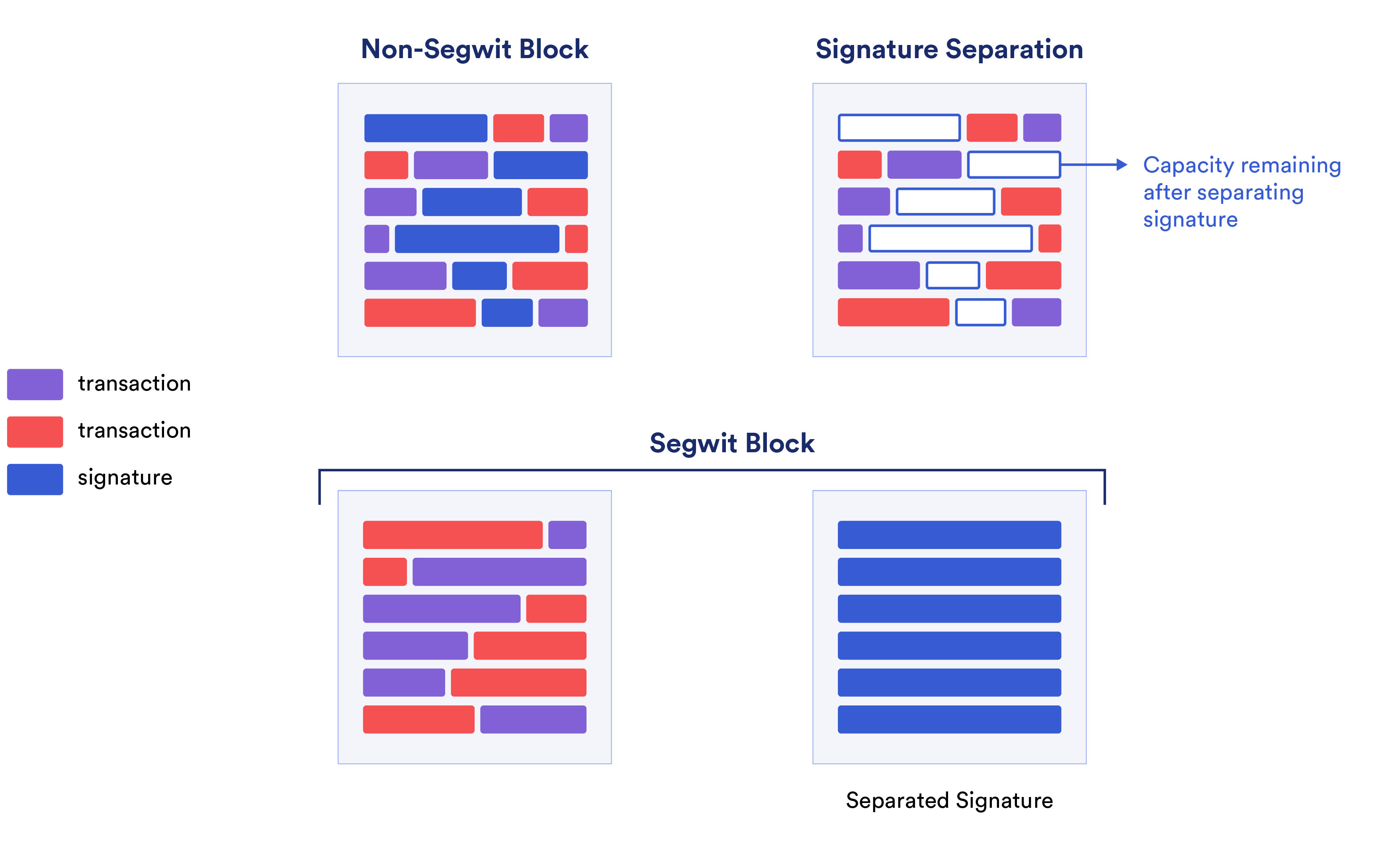
SegWit separates transaction and witness (signature) data into different parts and allows arbitrary data to be stored in the witness part
2. Colored coin technology causes congestion in native Bitcoin transactions, and the technical route is not friendly, setting up obstacles for large-scale adoption. Therefore, the colored coin scheme such as BRC-20 is only a short-term opportunity.
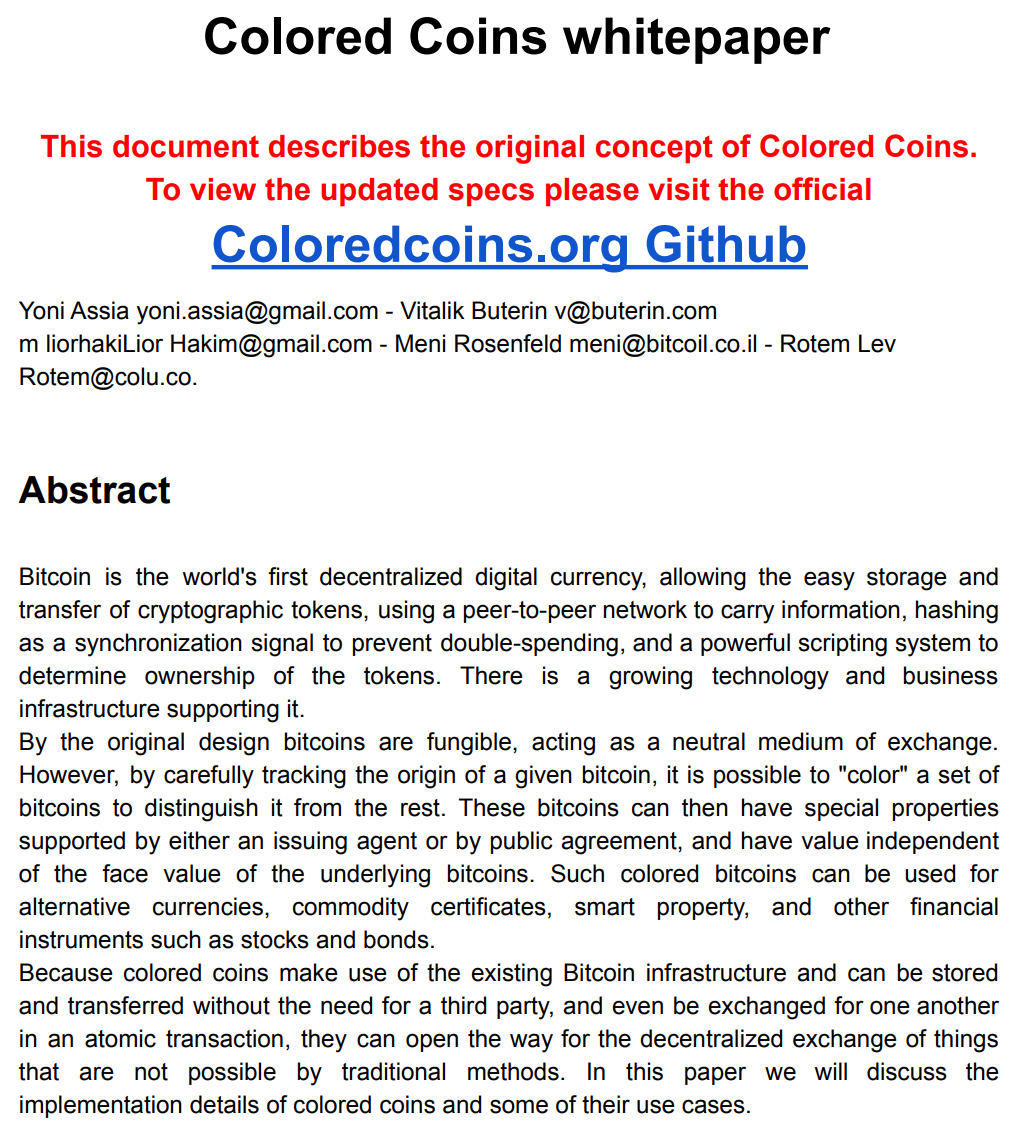
Colored Coin White Paper co-authored by Assia, Rosenfeld and Ethereum founder Vitalik Buterin in 2013
Mid-term - Transformation opportunities for the Ethereum L2 team
The mid-term opportunities are divided into two tracks, one is Bitcoin Layer 2, and the other is Nostr + Lightning Network.
Bitcoin Layer 2 Scaling Solution
The Layer 2 scaling solution (L2), also known as the execution layer, is built on top of the Bitcoin main blockchain, mainly to solve the scalability problem of the Bitcoin main chain. In July 2023, Binance announced that it had completed Lightning Network integration. This means Binance users can now directly make BTC withdrawals and deposits using the layer 2 scaling solution.
Users create off-chain transaction channels in the L2 execution layer and process transactions through off-chain calculations, which improves scalability and throughput while reducing transaction costs. For example, the Lightning Network uses state channels for transactions - users can open payment channels outside the main chain and conduct multiple transactions within these channels. Because every transaction does not need to be uploaded to the chain, gas fees are greatly reduced.
In addition to Lightning Network, other Layer 2 scaling solutions include:
Stacks: A blockchain protocol that utilizes the Bitcoin blockchain as its settlement layer, enabling smart contracts and decentralized applications (dApps) to be built on top of Bitcoin while maintaining its security and stability.
Liquid Network: A solution developed by Blockstream for Bitcoin. It provides this by creating a separate blockchain that pegs its own native asset (Liquid Bitcoin, L-BTC) to Bitcoin, allowing for faster and more confidential transactions between participating exchanges and institutions. Enhanced privacy and scalability features.
Rootstock: A smart contract platform capable of executing smart contracts using a Turing-complete virtual machine, enhancing the functionality of Bitcoin by supporting decentralized applications and enabling more complex programmable transactions on the Bitcoin network.
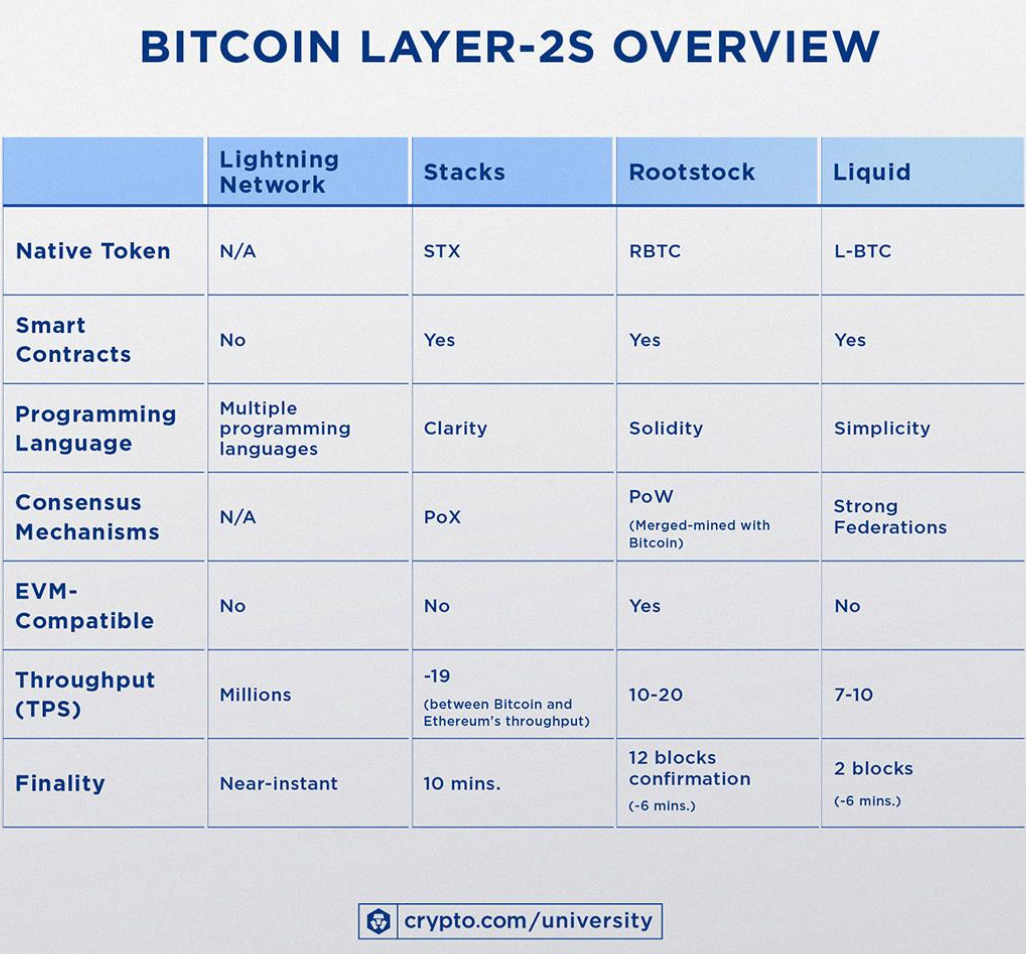
Source: https://crypto.com/university/what-are-bitcoin-layer-2s
There are also more Ethereum L2 teams moving to Bitcoin L2 for base layer development. In fact, for the Layer 2 team, whether the anchored Layer 1 is Bitcoin or Ethereum has little difference in difficulty at the deployment level. It is just that the DA solution is different, but it can be handled through technology. The more important thing is to migrate Ethereum applications, so they are more customized as Layer 2 teams or ZK teams. For these teams, what is more important is to choose the ecology where the next round of narrative will rise——Whether to choose the Red Ocean of Ethereum, which has many competitors and contenders, or the Blue Ocean of Bitcoin, which is temporarily a barbarian land compared to Ethereum, determines the ceiling of the next bull market for the L2 project.
In the same way, for investors, Ethereum Layer 2 projects often start with a valuation of one billion US dollars, while Bitcoin Layer 2 projects with similar technical paths are currently valued at an average of tens of millions of US dollars. There is a 100-fold valuation gap. . In addition, BTC L2 has Bitcoin as the underlying asset, and theoretically TVL is easier to rise.
The Bitcoin halving schedule is gradually approaching. It remains to be seen whether the results of Bitcoin Layer 2 as a medium-term investment opportunity can be verified to be correct.
Nostr combined with Lightning Network
The second opportunity in the mid-term is the upgraded Lightning Network combined with Nostr and Tproot.
At its core, Nostr is a decentralized messaging protocol designed to drive secure, private, and open communications through an innovative framework. Although Nostr and Bitcoin are different technologies that serve different purposes, they share the same decentralization principle and can coexist and complement Bitcoin, but operate independently.
Nostr core components include:
Node (Relay): In Nostr’s decentralized network, nodes store and relay messages, and each node operates independently.
Public key encryption technology: Nostr uses public key encryption technology for secure communication to ensure the privacy and security of communication.
Protocol rules: As a protocol, Nostr establishes a set of rules for transmitting messages. This includes message formats, how to send and receive messages, and how to validate messages.
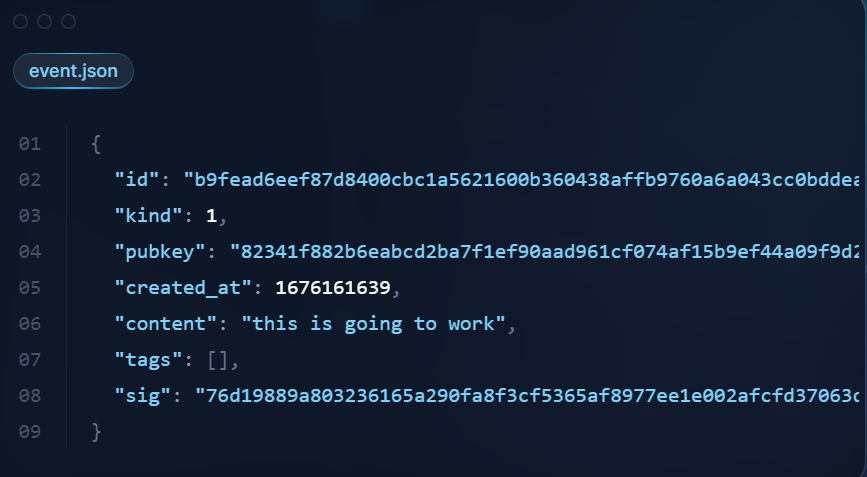
Source: Nostr official website
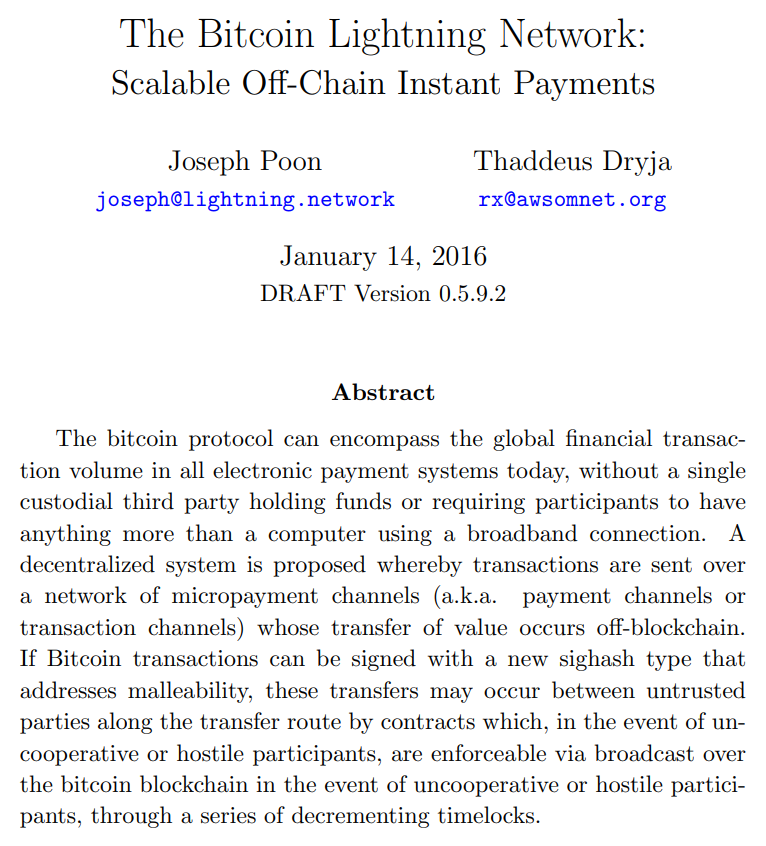
The Lightning Network has experienced rapid development and growth and has been widely recognized by the Bitcoin ecosystem. In addition, after the upgrade of Taproot, the Lightning Network has taproot assets, which theoretically gives the Lightning Network the possibility of issuing coins.However, the overall scale of the Lightning Network is still relatively limited. The main challenges lie in the high entry threshold for users and the lack of decentralized business infrastructure on the Lightning Network.
Source: Lightning Network White Paper
Integration between Nostr and Lightning Network, which serve different purposes - Nostr focuses on messaging, Lightning Network focuses on financial transactions - and the two complement each other. The efficient and secure messaging of Nostr and the fast and low-cost transactions of the Lightning Network complement each other. The combination of the two is expected to provide a unique and powerful toolset for the next generation of decentralized applications, and it is also expected to integrate more into the Bitcoin ecosystem in the future. app.
Long Term – RGB vs. Bitcoin’s Endgame
For the long-term opportunity, or the end game of Bitcoin, there are only two seed players - one is RGB and the other is BitVM. BitVM is a computing paradigm that expresses Turing-complete Bitcoin contracts. It was just proposed in October this year. It is currently just an idea and is still in a very early stage. So the most promising one right now is RGB.
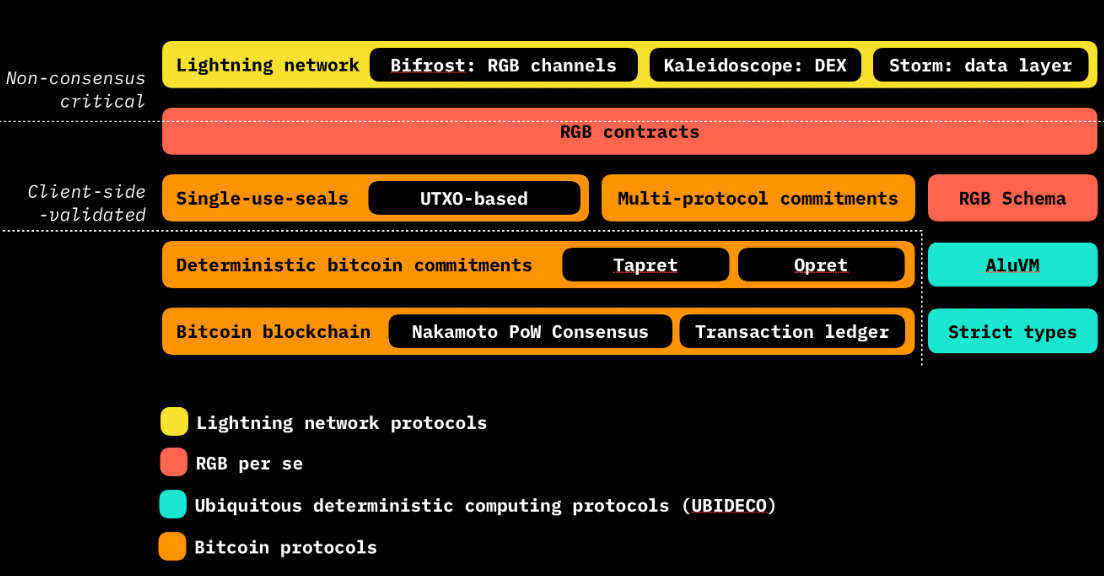
The RGB protocol is Bitcoins native smart contract protocol. The earliest naming was to distinguish colored coins similar to BRC-20, so it was named after the three primary colors (Red, Green, Blue). The RGB protocol is an under-development open source protocol built on top of Bitcoin and the first implementation to run on an interoperable sidechain anchored to the Bitcoin blockchain, aiming to complement the Bitcoin script and provide Bitcoin brings smart contract functionality.The RGB protocol does not require any changes to the actual Bitcoin protocol or consensus rules and is common to both Bitcoin layer one and layer two networks.
Source: RGB BlackPaper
The system built by RGB allows users to audit, execute and individually verify smart contracts at any time at no additional cost. Because it unlike traditional systems such as Layer 1, Layer 2, sidechains, etc. need to operate on-chain, RGB uses off-chain client verification principles - by leveraging Bitcoin transactions (and scripts) as smart contract ownership The control system, the evolution of smart contracts is completely defined by off-chain solutions and verified on the client side. This approach circumvents the limitations of the Blockchain Impossible Triangle and therefore has unlimited scalability.The RGB protocol can also be understood as an expansion protocol of the Lightning Network. Based on the principle of off-chain computing, RGB technology can be used to experience smart contracts at the speed of the Lightning Network.
Infinitas: A Turing-complete BTC application ecosystem with infinite scalability. Combined with the Lightning Network, an incentive mechanism is introduced for RGB, and RGB engineering is implemented to achieve the foundation for large-scale application.
DIBA: The first Bitcoin market to use the RGB smart contract protocol and the Lightning Network to exchange NFTs.
Key features supported by RGB include creating and managing digital assets/collectibles, integrating real-world data using oracles, performing cross-chain transactions via hooked sidechains, and more. This expands the functionality of Bitcoin beyond its long-standing value storage significance as digital gold, making it possible to develop large-scale commercial applications on Bitcoin and achieve value transfer. RGB will unlock features such as smart contracts and DeFi on top of Bitcoin’s secure base layer, operating as a secondary protocol that leverages the capabilities of the Bitcoin network.
Summarize
The colored coin scheme represented by $Ordi, because it takes up Segregated Witness space, may cause congestion on the Bitcoin main network in the long run and increase handling fees. Although the second layer of Bitcoin is greatly improved compared to the first layer, it cannot carry web3 applications that require higher speed and efficiency except Defi.The Lightning Network, or the RGB smart contract platform based on the Lightning Network, provides innovative off-chain solutions. It is expected to build ultra-high-speed, tamper-proof, fair and transparent smart contracts on top of Bitcoin scripts, and contribute to the Bitcoin ecosystem. Bring long-term growth and vitality.
Considering the balance between blockchain and the impossible triangle, the development of the RGB smart contract platform has the opportunity to fill the scalability shortcomings and provide a wider range of application scenarios for decentralized applications based on security. We expect that off-chain solutions represented by RGB will become the ultimate vision of the Bitcoin ecosystem and even the entire blockchain industry.
refer to
https://blackpaper.rgb.tech/general-information/2.-protocol-design/2.2.-design-overview
https://chain.link/education-hub/ordinals-bitcoin-nfts
https://trustmachines.co/learn/what-is-the-rgb-protocol-on-bitcoin/
https://bitcoinmagazine.com/guides/a-brief-introduction-to-rgb-protocols


