Discussion on the potential of RWA: The next large-scale application track after the US dollar stable currency?



TLDR
The characteristics of RWA assets, such as high transparency and strong liquidity, make it the next track for large-scale application in Defi after the US dollar stable currency.
RWA has roughly three development directions: public chain with no certification similar to Defi experience, public chain but with regulatory whitelist transaction characteristics and limited to private chain or alliance chain transactions, etc. The first one has the highest composability, and it is also our The development direction you most want to see
Currently, Defi does not have a good way to retain existing assets or introduce new assets. Tradfi faces urgent problems such as liquidity, transparency, and transaction costs. The introduction of RWA can solve the current problems of both to a certain extent and promote The integration of Defi and Tradfi
Referring to the concept of RWA, we can derive CWA (Crypto-World Asset), such as BTC ETF and other financial instruments that participate in the cryptocurrency market in the traditional financial market. The deep demand for both can be attributed to investors breakdown of risk matching. There is an urgent need for specialized products to improve financial efficiency.
Taking into account the users transaction costs, the cost of holding assets, and the resistance to meeting compliance requirements, U.S. bond ETF assets are the best choice for early-stage RWA to achieve large-scale application. For the current development of RWA, compliance risks, counterparty risks and U.S. debt default risks are the main sources of uncertainty.
By introducing RWA assets, MakerDAO currently achieves an adjusted return of approximately 6.83%, and since the current proportion of DAI deposits is not high, Maker can amplify DSR to 1.86 times the RWA return. Currently, MakerDAO provides DAI depositors with a 5% rate of return, which is slightly higher than the income of U.S. bond ETFs. It not only achieves considerable income through RWA income, but also brings this income to the chain to DAI depositors.
As the CDP stablecoin project team gradually keeps up with MakerDAO and gradually uses RWA as its underlying asset, RWA will have room for exponential growth in the CDP stablecoin market as the CDP stablecoin market share and the proportion of RWA assets increase. , with a rough range of $15.96 billion to $21.50 billion
With the improvement of compliance supervision, RWA will start with standardized assets and gradually expand to non-standard assets. It will be combined with CWA to realize the transformation of blockchain technology from back-end to front-end. RWA will also become the integration of Defi and Tradfi. key tracks and achieve large-scale application
RWA at a glance
Real World Assets (RWA) refers to traditional assets that are tokenized through blockchain technology. This process gives these assets digital form and programmable characteristics. Under this framework, various types of assets—from real estate and infrastructure to art and private equity—can be converted into digital tokens. These tokens are not just digital symbols of asset value, they also contain multi-dimensional information about their corresponding physical assets, including but not limited to the nature, current status, historical transaction records and ownership structure of the asset. Broadly speaking, the US dollar stablecoin used on a large scale today is also a form of RWA, that is, the tokenization of the US dollar. This article will introduce step by stepHow does RWA become the next track to achieve large-scale application after the US dollar stable currency?
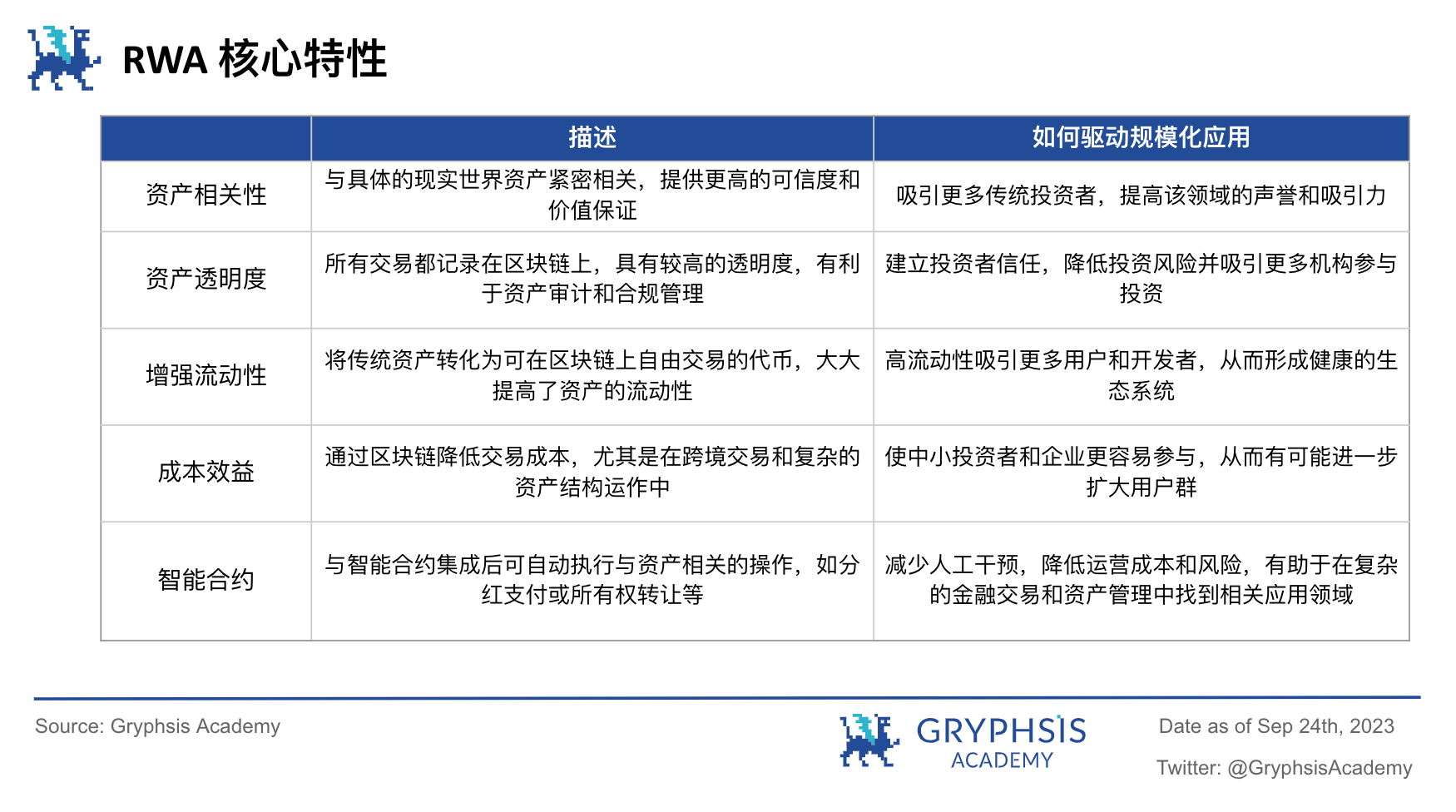
With its unique multi-dimensional advantages, RWA assets have the potential to achieve large-scale applications in the blockchain ecosystem. Its high degree of asset correlation and transaction transparency can build investor trust, while enhanced liquidity and cost efficiency effectively promote market activity and diversity. The introduction of smart contracts further improves operational efficiency while also simplifying compliance and auditing processes. Together, these core features pave the way for RWA to become the next large-scale application track after the US dollar stable currency, indicating its broad prospects in the blockchain and even the entire financial field. Of course, RWA assets are diverse. Which assets will be the first to be applied on a large scale on the chain? And what are the risks or challenges of putting different assets on the chain?
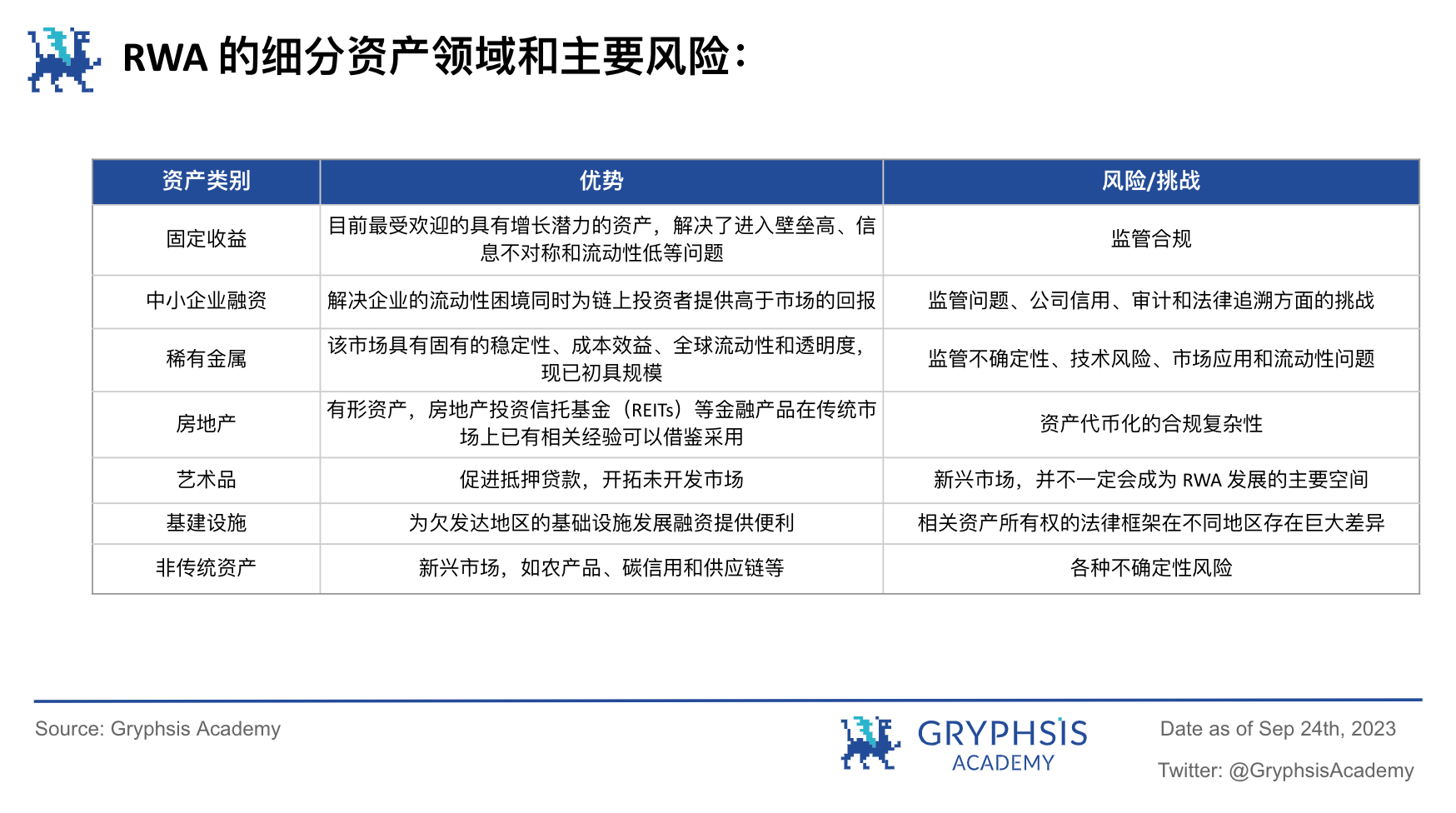
Taken together, the tokenization market for fixed income assets and rare metal assets is currently relatively easy to implement and has begun to take shape. Although the current market value of the gold tokenization market has exceeded 1 billion (mainly representing projects $PAXG, $XAUT ), but starting from the current pain points and needs of Defi, that is, from the perspective of seeking standardized assets that can bring real yields to the chain, fixed-income assets such as U.S. bonds/U.S. bond ETFs have begun to develop RWA. Easier and more efficient way.
Judging from the distinction between the blockchain and the strictness of KYC, RWA has three main development directions:
1. Public chain and permissionless experience
The first direction emphasizes the realization of permissionless transactions of assets on the public chain as much as possible to provide a user experience close to DeFi. In this model, real-world assets are tokenized and traded freely on the public chain without centralized approval or permission, and there are no restrictions on asset transfers. This approach maximizes asset liquidity and market participation while also reducing transaction costs. However, this proximity to the DeFi experience also brings with it a range of regulatory and compliance challenges, including but not limited to anti-money laundering (AML) and KYC issues. So while there are clear advantages to this direction, there are corresponding risk and compliance issues that need to be addressed.
2. Public chain and regulatory whitelist
The second direction is a compromise, that is, assets may be traded on the public chain, but may be subject to some form of supervision or have certain thresholds, such as limiting participants through an address whitelisting mechanism. In this case, only addresses that have been verified and added to the whitelist can participate in RWA transactions. This approach provides a level of liquidity and transparency while also allowing regulators to conduct more effective oversight and compliance checks. In this way, it strikes a balance between permissionless and fully regulated models.
3. Private chain/consortium chain and complex KYC process
The third direction is to conduct RWA transactions on private chains or alliance chains, which usually involves complex KYC processes and stricter regulatory controllability, and currently there is basically no asset composability. In this model, the verification node is usually an institution verified by the government and has certain thresholds, which ensures that the entire system operates in a highly compliant and controllable environment. While this approach may limit asset liquidity and market participation, it provides the highest level of regulatory compliance and data security. This is the model that many governments and traditional monetary institutions prefer to adopt.
Why do you need RWA?
Defi perspective:
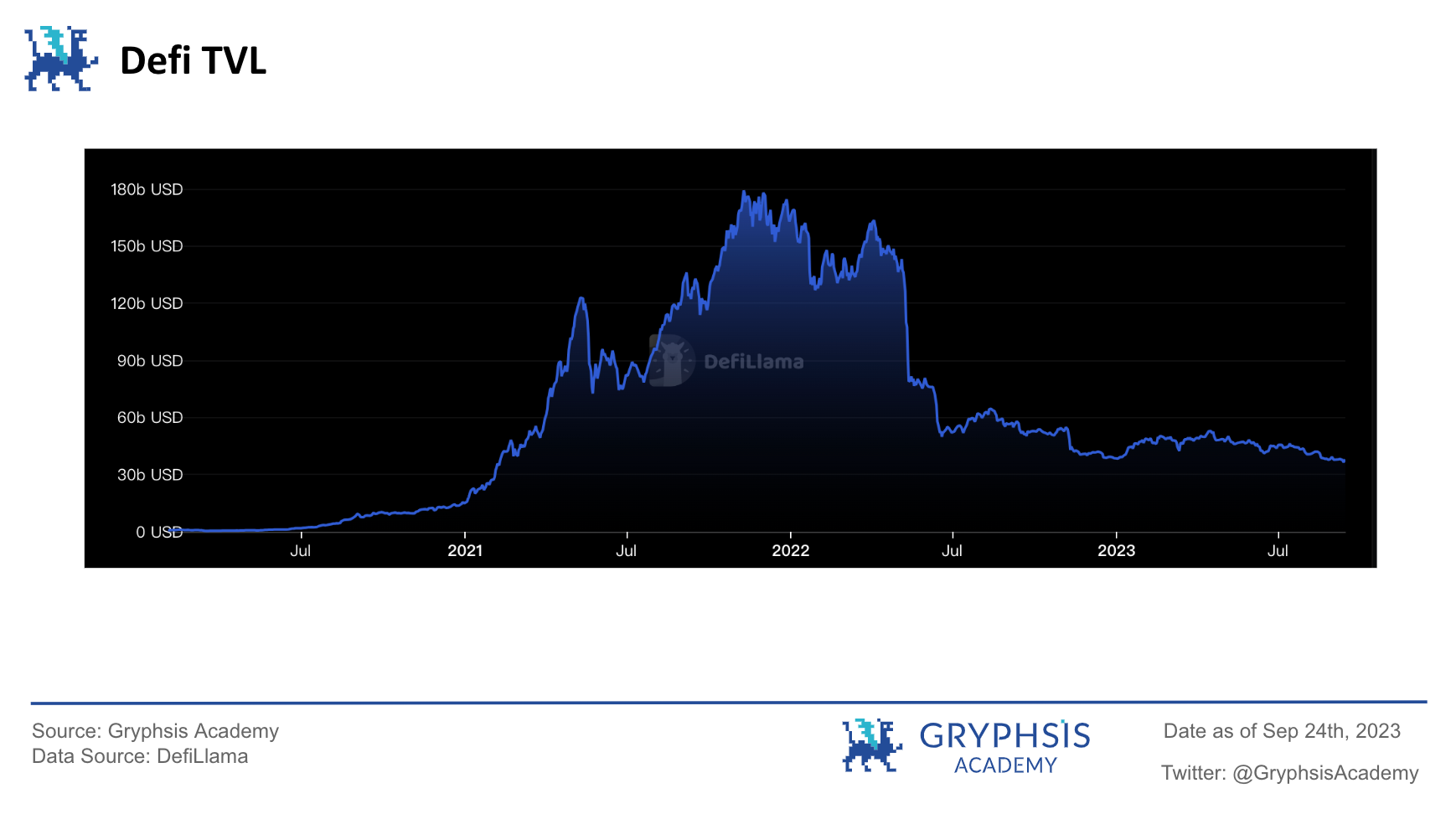
As can be seen from the Defi TVL data in the above figure, since the decoupling of UST in May 2022 triggered market panic and massive selling, the TVL of the Defi sector has been showing a downward trend. It is now difficult for projects and narratives to attract OTC funds, and new ones need to be introduced. Narrative structure and participants, drawing on the above-mentioned RWA characteristics, real-world assets on the chain to provide real asset values may be the best solution at present.
At the same time, in order to retain on-site funds or attract off-site funds, the high rate of return that Defi can provide is the key data that funds are chasing, and the Ponzi-like rate of return of $UST causes funds to distrust high rates of return.RWA adds a real rate of return to the protocol that is more backed by real-world assets.Can solve this problem very well.
Tradfi perspective:
1. Limitations of strong regulatory controls and liquidity tools
Although the traditional financial system has made significant progress in asset segmentation and liquidity, such as through real estate investment trusts (REITs) and exchange-traded funds (ETFs), these vehicles are still subject to strict regulatory and structural constraints. For example, REITs and ETFs often need to meet a complex set of compliance requirements, which not only increases operating costs but also limits product innovation and market participation. Therefore, although these instruments have improved asset liquidity to a certain extent, there is still a lot of room for improvement.
2. Limitations in the private credit sector
There are multiple constraints and unmet needs in private markets, particularly in private credit. These marketplaces are often manual, slow, opaque, and expensive to operate. The capital matching process involves multiple steps from finding and qualifying investors and investment opportunities, to initial capital allocation, to secondary trading and management of assets. These factors lead to irrational capital allocation and suboptimal customer experience.
3. The “black box” problem of complex financial products
When producing complex financial products, the traditional financial system often faces a black box problem, that is, a lack of transparency and traceability, and it is often difficult to penetrate the underlying assets. This opacity not only increases risk but also limits trust and participation among market participants. By mapping the underlying assets to the chain, and packaging the assets into products through the composability of smart contracts on the chain, regulatory authorities only need to supervise the custody of the underlying assets, so that the process of making complex financial products based on simple financial products can be maintained Be transparent and open to solve this problem.Regulatory convenience may increase the diversity and liquidity of financial products on the chain compared with traditional financial means.
In general, the needs and challenges faced by TradFi mainly focus on improving liquidity, increasing transparency and reducing costs. RWA provides effective solutions to these problems through tokenization and blockchain technology. Especially in private markets and complex financial products, RWA is expected to bring unprecedented transparency and efficiency, thereby solving the core bottlenecks of the traditional financial system. By introducing RWA, the traditional financial system is expected to achieve higher capital efficiency, wider market participation, and lower transaction costs, thus promoting the healthy and sustainable development of the entire financial ecosystem.
At the same time, it is not difficult to observe that both traditional institutions or official institutions in Tradfi and Defi project parties have been deeply involved in the RWA field for many years, looking for opportunities for synergy and integration between the two. And here I have to mention a concept that has attracted much attention recently - Bitcoin ETF, and thusWith reference to the concept of RWA, we can extend a new concept - CWA (Crypto-World Asstes)
RWA and CWA
As Bitcoin gradually becomes a mainstream investment category, major financial institutions are actively applying for approval of Bitcoin ETFs. This trend not only marks the gradual integration of crypto assets into the traditional financial system, but also provides us with a new perspective to consider these assets: the concept of CWA (Crypto-World Assets). CWA has many similarities with RWA, mainly in terms of asset standardization and liquidity improvement. However, unlike RWA, which is primarily concerned with tokenizing real-world assets, CWA is the real-world standardization of crypto-assets and financial products related to them. We can see the prototypes of the two, namely the on-chain issuance of U.S. debt/U.S. debt ETFs and the approval and issuance transactions of Bitcoin ETFs in the real world.
Like RWAs, CWAs face a range of regulatory and compliance issues. However, these issues are more complex in the context of CWA due to the decentralized and cross-border nature of crypto-assets. For example, the approval of Bitcoin ETFs requires solving multiple regulatory challenges, including but not limited to asset custody, price manipulation, and market supervision. However, the introduction of CWA is expected to further increase the liquidity and market participation of crypto assets. By combining crypto assets with traditional financial products, CWA will not only attract more traditional investors to the crypto market, but also provide existing crypto investors with more investment and risk management tools.
Whether it is RWA or CWA, their deep needs and reasons for their emergence can be traced back to the improvement of financial efficiency through the launch of risk-matching segmented products. Efficient financial markets enable increased speculation, which further drives demand for more assets and investment opportunities.In this context, both traditional financial institutions and DeFi platforms need RWA and CWA to open up the path of capital flow, thereby attracting more users and capital. As new forms of financial innovation, RWA and CWA can not only meet the markets demand for diversified assets and stable returns, but also promote the flow of funds to more efficient areas. By breaking down the barriers between Tradfi and DeFi, RWA and CWA are expected to drive the entire financial ecosystem towards a more efficient, transparent and sustainable direction. This will not only improve the overall efficiency of financial markets, but also provide investors with more investment options and better risk management tools. This is also an important basis behind the large-scale application of RWA.
Why U.S. Treasury ETF assets?
education cost
Let’s think about it, why has the U.S. dollar stablecoin become an application area for cryptocurrency Mass Adoption? Why not Bitcoin or other native cryptocurrencies in the currency circle, or why not fiat currency stablecoins in other countries?
firstUser education cost is an important but often overlooked consideration. For most users, understanding and accepting new financial products and technologies takes time and effort. Secondly, compared with other fiat currency stablecoins, the US dollar stablecoin is more easily accepted by users around the world, and the US dollar itself is the worlds most important reserve currency and transaction currency. Its extensive cross-border use scenarios have greatly reduced the burden of educating users. cost. Therefore, with the help of users’ understanding and trust in the US dollar, stablecoins linked to the US dollar can gain market trust faster. At the same time, due to the global dominance of the U.S. dollar, its related educational materials and resources are easier to standardize and globalize, further reducing the difficulty of education in a multilingual and multicultural environment.Lower user education costs are often also one of the important factors in achieving large-scale applications.
For the same reason, this is why we use U.S. debt-related assets rather than debt issued by other sovereign countries. U.S. Treasury bonds are widely regarded as one of the safest assets in the world. Their high credibility and liquidity in global financial markets reduce users resistance to accepting new financial products or investment channels. A high degree of market transparency and auditing standards provide users with strong information support, thereby reducing the cost of continuing education and marketing. In addition, the stability and global liquidity of U.S. Treasury bonds also help shorten the users learning curve, making it easier to accelerate the adaptation and acceptance of new users through community interaction and social authentication. Of course, issues of transparency and auditing cannot be ignored. The U.S. financial market is characterized by high transparency and strict auditing, which also provides reliability and credibility to U.S. debt assets.
real rate of return
Tether ($USDT), the most widely used U.S. dollar stablecoin in the crypto-asset space, has been facing issues with transparency and reserve asset compliance. The lack of transparency provides Tether with room to overissue $USDT without sufficient reserves, thereby enabling it to use the overissued funds to conduct other financial activities for investment profits. These earnings are not returned to $USDT holders, but are owned by the Tether company. This is particularly concerning in the current DeFi environment because it raises the question of how to more equitably distribute such potential gains to members of the DeFi ecosystem. In this context, U.S. Treasury bonds, with their relatively stable, standardized and low-risk characteristics, have become a subject worth considering as an underlying asset for stablecoin issuers. On this basis, U.S. bond ETFs not only reduce regulatory risks compared to U.S. bond assets, but also make it easier for issuers to obtain these assets and income (refer to the table below to compare the purchase qualifications of U.S. bonds and U.S. bond ETFs)
Taken together, U.S. Treasury ETFs have become a powerful option that can solve the transparency and counterparty risks of $USDT and other centralized stablecoins as underlying assets for stablecoin issuers such as MakerDAO, and at the same time promote crypto assets to the public Acceptance potential, using U.S. Treasury ETFs as underlying assets not only provides a more transparent and regulated investment approach, but also distributes investment income more equitably to all participants, thereby meeting public acceptance and regulatory requirements. At the same time, it will have a positive impact on the DeFi ecosystem. So we now see that many stablecoin projects are beginning to use their collateralized stablecoins to penetrate the U.S. debt income like MakerDAO. I believe that in the future this will become a CDP stablecoin (Collateralized Debt Position is through users to lock collateral. One of the necessary elements for generating corresponding stablecoins in smart contracts) and even the stablecoin market is to bring real benefits from real-world asset endorsement to Defi. Compared with stablecoins such as $USDT, stablecoins that map RWA asset return rates on the chain are more transparent for investors in terms of underlying assets and income, and more equitable in income distribution; they are more credible and acceptable to regulatory agencies. High; for stablecoin issuers, although some black box benefits are lost, with the cooperation of regulatory agencies, there will be greater market and stability. Mass Adoption of RWA assets is at least a win-win-win situation for the stablecoin space.
U.S. Bond ETF Advantages
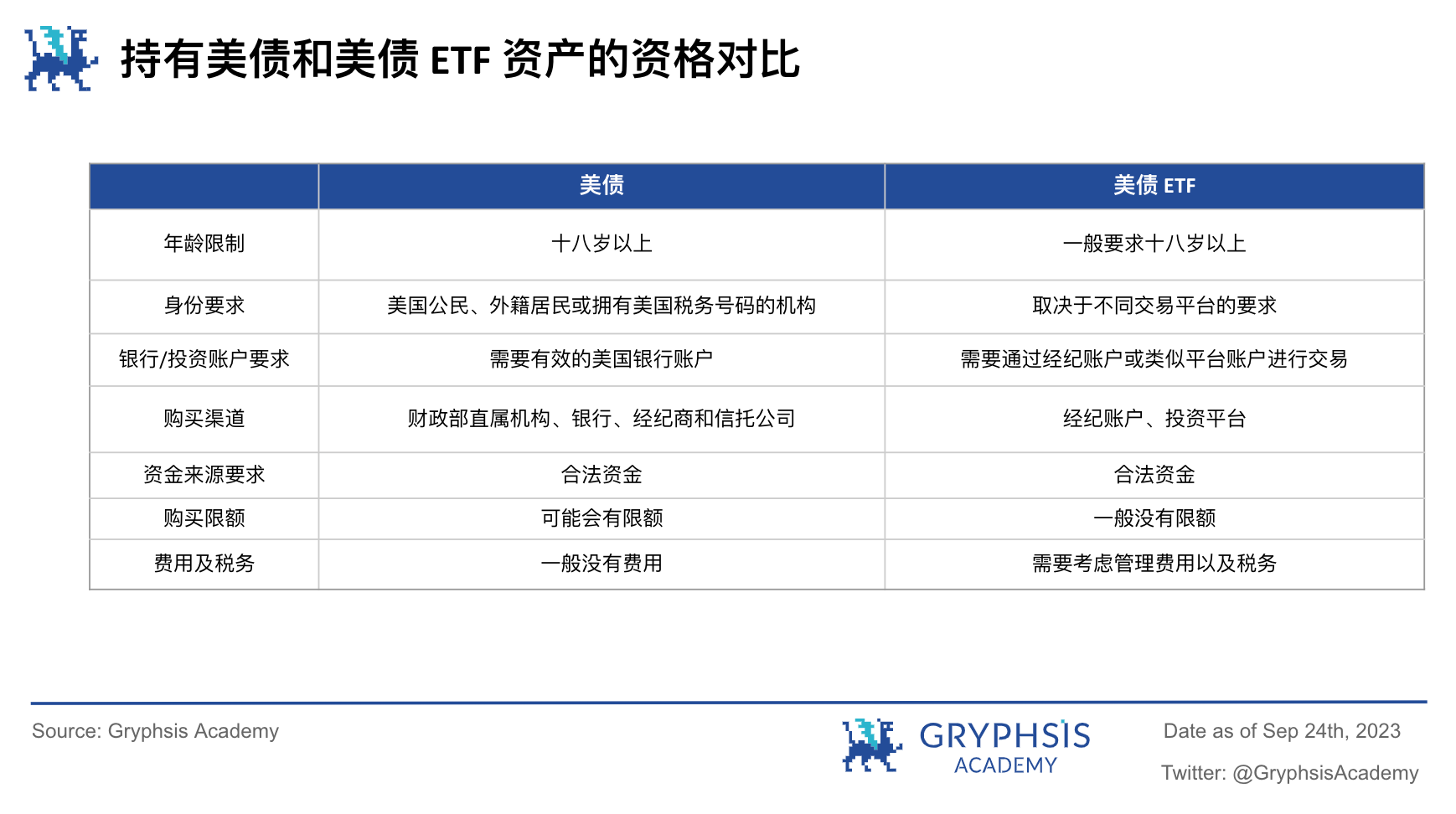
Combined with the above table comparing the two assets of U.S. bonds and U.S. bond ETFs, direct purchase of U.S. bonds has higher requirements for investors in all aspects, especially decentralized stablecoin issuers with their own compliance risks, or Other Defi project parties who want to obtain real-world asset returns, so if there is a reliable ETF issuer as a partner, directly purchasing U.S. bond ETF assets is a lower overall cost and better liquidity than directly holding U.S. bond assets. . At the same time, referring to the table below, Defi project parties have many advantages in holding U.S. bond ETF assets compared to other real-world assets.
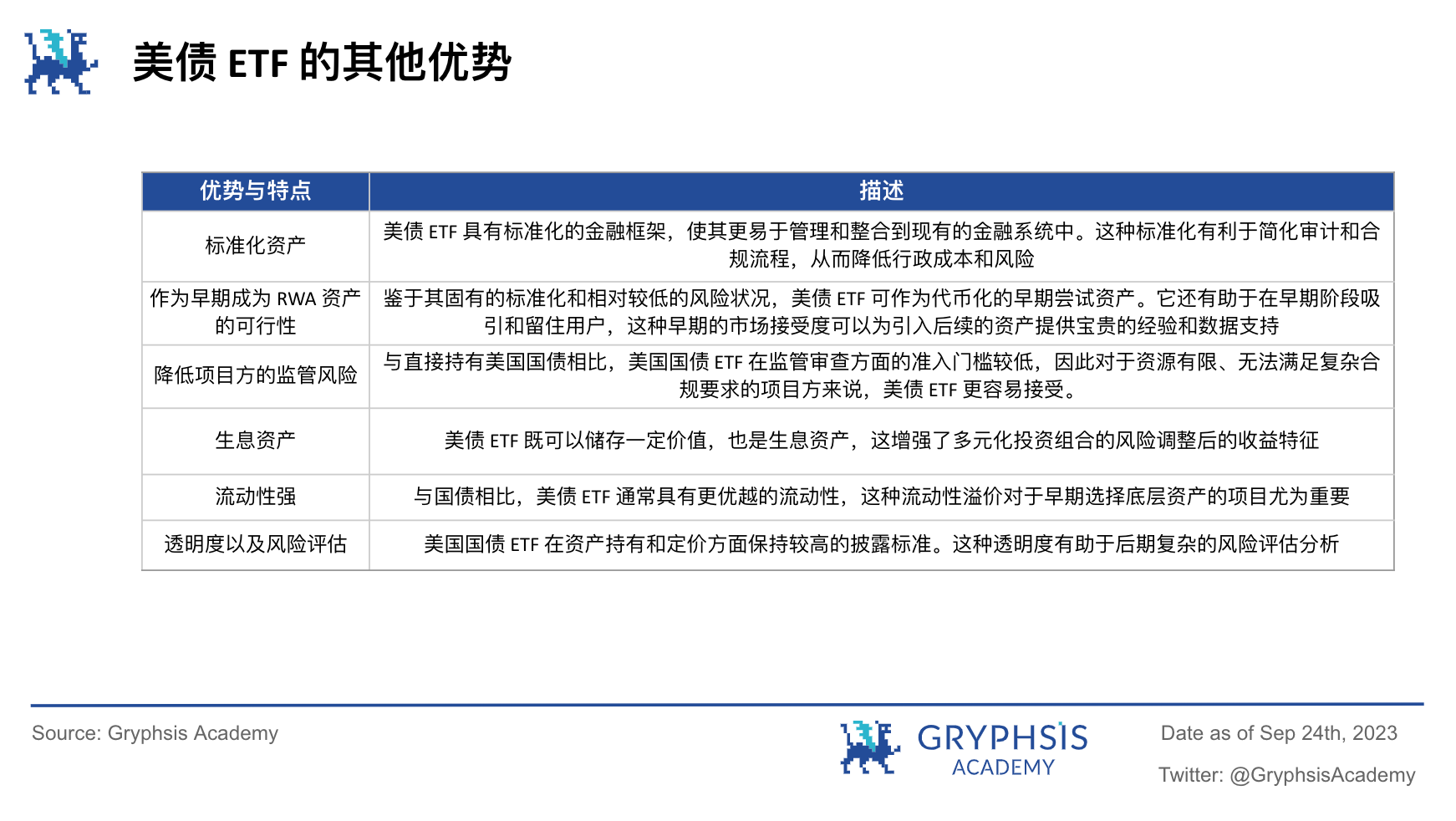
According to Mint Ventures researcher @Colin (refer to The only correct answer to short- and medium-term RWA: Web3 treasury bond business discussion), the main advantage of using U.S. Treasury ETFs as the underlying assets is that it greatly simplifies the asset management process.Under this arrangement, all management responsibilities related to the underlying assets, including liquidity management and rolling renewal of bonds, are the responsibility of the issuer and manager of the ETF. This approach actually relieves the project party from the burden of asset management. operational burdens and risks. Moreover, U.S. bond ETFs have not experienced major risk problems so far, and project parties do not need to worry about this risk in particular. They currently only need to select the largest, most liquid, standardized assets on the market to include in their portfolios. Compared with holding U.S. bond assets on their own, U.S. bond ETFs allow project parties to focus on their core business and hand over complex asset management tasks to professional ETF issuers and managers, thereby reducing operational risks and improving efficiency.
In summary, U.S. bond ETFs have multiple advantages as an on-chain underlying, including its standardized characteristics, potential as an early underlying for RWA exploration, relatively low compliance requirements, and the ability to serve as an interest-earning asset. These advantages make it an option worth considering, especially for projects looking to conduct early exploration and experimentation in on-chain real-world assets. Of course, these are based on the current limited scale of the tokenized asset market. According to the asset tokenization document released by the Board of Governors of the Federal Reserve in August, as the scale gradually expands, ETF assets in the traditional financial market may be affected by tokenization. The advantages of high liquidity and composability of monetized assets lead to the fragility of their prices, or the transmission of price fluctuations in the crypto market to the traditional asset market. This issue is also one of the concerns of investors and regulators, and is still Need to wait for effective solution. And with the subsequent decline in U.S. bond yields, whether we can find U.S. bond-like products is also a major problem that Defi will face.
How to put RWA assets on the chain?
Although the RWA market has begun to take shape, it is still in the exploratory stage. Different project parties and financial institutions in Defi and Tradfi are also trying different asset on-chain solutions. Combining the three development directions of RWA mentioned above, we can see that MakerDAO is currently closest to the Defi experience and penetrates the DAI deposit interest rate (DSR) into RWA asset income; or a whitelist trading model such as Ondo Finance and the Hong Kong government’s approval There are various ways to tokenize real-world assets such as green bonds issued by Goldman Sachs’ tokenization platform GS DAP on private chains.
MakerDAO’s RWA assets are uploaded to the chain:
Although MakerDAO began planning to develop RWA as early as 2020, according to the development of regulatory compliance, so far it has only obtained the income from RWA assets, mainly U.S. debt, through different institutions, and through DSR (DAI deposit interest rate) This part of the penetrated U.S. bond proceeds is distributed to some DAI holders on the chain. In other words, at most it can only be regarded as tokenizing the economic rights and interests of RWA assets rather than ownership rights, etc. However, given that it is currently the closest way to the Defi experience to obtain real-world asset returns, we look forward to the improvement of regulatory compliance. MakerDAO will one day and its cooperative institutions can further tokenize RWA assets and have higher composability. Next, take the two main Vault Types that MakerDAO currently holds U.S. debt assets: RWA 007-A (Monetails Clydesdale) and RWA 015 (BlockTower Andromeda Centriduge) as examples. Let’s take a look at the U.S. debt assets it has made so far. What paths do the projects on the ETF chain take?
I Monetails Glydesdale
Referring to the MIP 65 plan, we can have a general understanding of the structure of how the third-party institution Monetalis helps MakerDAO hold U.S. bond ETF assets. First of all, MakerDAO proposed solutions to the three main problems caused by more than 50% of stablecoins on the balance sheet, especially $USDC and $USDP assets, which are the inability to earn interest, asset concentration risk and bad public relations impact. They believe that by holding short-term government bonds themselves, they can create some positive returns while reducing risk exposure to existing stablecoin issuers.
Started by MakerDAOinitial thoughtsYes, MakerDAO manages these assets by setting a target debt cap and a min/max range for each fiat-backed stablecoin ($USDC/$USDP, etc.). When the debt limit of a certain stablecoins PSM pool exceeds the maximum, the excess funds will be converted into cash and invested in ETFs of short-term investment-grade bonds, thereby reducing risk exposure to the stablecoin while potentially increasing returns. . Instead, if the debt ceiling falls below the minimum, the system will allow manual intervention, a step typically performed by MKR holders. The overall mechanism is to manage the supply and demand of DAI more effectively, while striking a balance between diversifying risks and increasing returns. Bond ETFs are chosen as investment vehicles primarily for liquidity, simplicity, cost-effectiveness, and risk managementConsidering. Not only do ETFs provide a high degree of liquidity and asset diversification, reducing overall risk, but they are also simpler and more cost-effective than managed accounts, which are not as profitable at the time but have some potential to earn. Additionally, because ETFs are managed and supervised by professional asset managers and regulators, they also provide a level of transparency and security. It is difficult to see MakerDAOs intention to develop RWA by simply introducing U.S. bond ETF assets from the perspective of managing risks and obtaining returns in MIP 65. However, through its cooperation with Monetails and the MIP 68 cooperation project, we can see MakerDAOs long-term plan for the development of RWA.
First, find a stable integration point to quickly increase transaction volume without significantly changing the existing daily business of Defi and Tradfi; then, based on large-scale capital flows, gradually achieve more comprehensive on-chain integration. . Ultimately, DeFi will be more closely integrated with traditional financial markets, moving from experimentation to mainstream. In other words, this is Monetails basic plan for the development of RWA business, and it will serve as a supplement to RWA business in various fields such as Centrifuge, Maple, and TrueFi.
So how to implement it specifically? According to MIP 68, there are roughly three subjects:
ARENA is committed to solving the complex interaction problems between traditional finance and Defi, that is, to find the current appropriate integration point as a breakthrough for growth, including but not limited to compliance, operations, and technology, in order to achieve organic integration and long-term development of the two. The purpose is equivalent to a bridge between the two.
At TradFi, Glydesdale is primarily responsible for managing and initiating relationships with financial institutions, building trust, analyzing and matching appropriate products and needs, and implementing these relationships. And solve the practical conflicts and problems between DeFi and TradFi. At present, both have their own inherent needs and expectations, but their tolerance for compromise is limited. Clydesdale exists as an intermediary solution to fill the gap between DeFi and TradFi, especially for DeFi protocols like MakerDAO, which provides a path to gradually attract and integrate large financial institutions.
Lusitano, meanwhile, is an asset management platform that specializes in attracting and integrating teams with experience and proven track record in specific asset classes. By creating a flexible platform, it not only promotes the deep integration of DeFi and TradFi, but also serves as an empirical tool to demonstrate the feasibility and innovation capabilities of DeFi. The platform is particularly focused on promoting the teams development in the direction of ESG and green economy, thereby establishing a broader and diversified partnership between DeFi and TradFi.
In other words, through the above plan, MakerDAO and Monetails have clearly introduced the development direction of RWA assets as collateral through cooperation, providing real-world asset protection for DAO income. At the same time, it can be seen that what the two want to participate in and expand is broader. a market. Next, let’s take a look at how BlockTower Andromeda and Centrifuge, which have also cooperated with Maker, work.
II BlockTower Andromeda and Centrifuge paths
If the cooperation between MakerDAO and Monetails is a consistent and in-depth advancement of the RWA vision, then the three-party cooperation between MakerDAO, BlockTower Andromeda and Centrifuge provides other project parties with almost a complete set of solutions for introducing RWA assets, especially the latter two. My main mission is to create a repeatable, scalable and reliable framework for RWA investment, which is a key link in the large-scale application process of RWA. At the same time, we can also see that MakerDAO has greater ambitions for the integration of Tradfi and Defi at this time, which is a so-called ambitious plan aimed at pushing MakerDAO and DAI into wider social and business fields, especially in emerging markets and real-world applications.
Through cooperation with the Centrifuge platform, MakerDAO has achieved indirect holdings of real-world assets such as U.S. Treasury bonds. This process is highly innovative and combines the advantages of traditional finance and blockchain technology. First, asset management company BlockTower Andromeda creates SPVs, and these SPVs are associated with the capital pools established on the Centrifuge platform. This setup ensures the independence of each capital pool and also gives each capital pool a certain legal person identity, which helps reduce compliance and operational risks.
Borrowers issue NFTs through the SPV that correspond to real-world assets they hold, such as U.S. Treasury bonds. These NFTs are considered the on-chain form of these assets and are locked in Centrifuges relevant fund pools to draw on corresponding borrowings. This link is particularly critical as it provides additional transparency and traceability via blockchain, making external audits and risk assessments easier and more reliable. These NFTs are aggregated into asset pools, which are further divided into two types of tokens: $DROP and $TIN. The $DROP token represents the senior portion of the asset pool, which is lower risk, while the $TIN token represents the junior portion, which is higher risk.
As Centrifuges main debt purchaser, MakerDAO is directly integrated with Centrifuges capital pool, allowing it to directly withdraw the corresponding DAI stablecoin from its Vault through $DROP tokens. This direct integration greatly simplifies the process of purchasing and managing debt, increasing the efficiency and availability of the entire system. As a result of this integration, MakerDAO will not only be able to earn solid returns relative to real-world assets such as U.S. Treasuries, but it will also be able to manage and optimize its balance sheet more efficiently. To ensure investment security, Centrifuge introduces a series of complex risk layering and protection mechanisms. The two most important concepts are"Minimum Subordination Percentage"and"Epoch Mechanism". The former is used to ensure that priority assets ($DROP) have sufficient risk buffers to prevent unexpected losses. The latter is a redemption mechanism that allows token holders to redeem based on the cash flow of the underlying asset, with $DROP holders having priority. Together, these mechanisms provide MakerDAO with additional risk protection.
However, this mechanism is not without risks. First, the system involves multiple partners and complex contractual relationships, which increases compliance risks, counterparty risks and legal risks. Secondly, although the settings of SPV and capital pools reduce centralization risks to a certain extent, interactions with real-world assets may still bring other forms of risks, such as liquidity risks and market risks. Furthermore, since this model is relatively new, how to deal with security issues such as potential governance attacks remains to be further explored and resolved.
There is no doubt that not every project party can gradually open up the way to hold RWA assets through cooperation with institutions like Monetails like MakerDAO. Instead, it can indirectly hold RWA assets through infrastructure institutions such as BlockTower Andromeda and Centrifuge that specialize in chaining RWA assets. Having real-world assets not only simplifies the process and reduces costs, but more importantly, you do not need to bear the legal compliance costs yourself, and you can also have access to a wider variety of assets. This infrastructure construction is critical to RWAs vision of achieving large-scale applications. Of course, what MakerDAO currently does is still tokenize the economic rights and interests of RWA assets. If the assets are tokenized as we originally expected, Ondo Finances asset on-chain method is more in line with the RWA concept.
Whitelist trading mode for Ondo Finance US Treasury Tokens:
The $OUSG token is a cryptocurrency token that represents an investors share in the Ondo I LP fund. Ondo I LP is a limited partnership registered in Delaware that attracts on-chain investors to invest and hold fund assets, such as ETF assets. The $OUSG token is different from a regular cryptocurrency or asset in that it is a token tied to a specific fund’s assets.
On a technical level, $OUSG is a token based on Ethereum smart contracts. It can track investors’ fund shares on the chain and can be used in the fund’s subscription and redemption process. When investors wish to subscribe to the fund, they need to go through Ondo I LPs KYC/AML process. This usually involves providing proof of personal identity, financial information, etc. Once completed, the investors Ethereum wallet address will be whitelisted so that they can send USDC to the funds smart contract to subscribe. This process is completed by smart contracts, including the receipt of funds and the distribution of shares.
When investors send USDC to the funds smart contract, the contract will automatically transfer the funds to the fund account hosted by Coinbase. Ondo Investment Management (Ondo IM) then converts the USDC to U.S. dollars and transfers it to a cash account at Clear Street (a securities brokerage and qualified custodian) through a partner bank. There, Ondo IM uses the funds to purchase ETF shares. Upon completion of the subscription, investors will receive an equivalent amount of $OUSG tokens as proof of their share of the fund. These $OUSG tokens can be held in an Ethereum wallet or used on other platforms (composability), and can also be used for future redemption operations.
When investors are ready to redeem their shares, they can send $OUSG tokens to the fund’s smart contract to submit a redemption request. The smart contract automatically records this action. Ondo IM will then sell a sufficient number of ETF shares on Clear Street to satisfy the redemption request. The resulting USD will be converted to USDC and sent to the investor’s Ethereum wallet via Coinbase.
It can be said that Ondo Finance has currently found a more compromise method, which also allows us to see the next step after the tokenization of RWA assets, that is, the composability of RWA tokens. However, due to current compliance developments, we are still not very optimistic about this whitelist approach.
Hong Kong Government Evergreen Project:
In the Evergreen project, the tokenization of bonds is divided into multiple stages during issuance and subscription, some of which are conducted on the Goldman Sachs GS DAP platform. First of all, the platform is only open to platform participants, such as the Hong Kong SAR Government, Hong Kong Securities Custodian (i.e. Hong Kong Central Settlement of Debt Instruments CMU), distributors, custodians and secondary market traders, etc., and these participants are allocated With corresponding roles and responsibilities, the threshold is as high as you can imagine. For indirect platform participants, their interests will be held through custodian banks (similar to customers whose banks have done super strong KYC)
For tokenized bonds, part of it is done off-chain, with steps like bookbuilding and pricing. At the same time, on the bookkeeping and pricing day, CMU will create smart contracts on the chain that represent the actual rights and interests of the tokenized bonds, as well as smart contract instructions that represent Hong Kong dollar cash tokens. At this time, platform certified participants such as distributors need By transferring the corresponding funds to the Real Time Payment and Settlement System (RTGS) account managed by CMU, you can participate in the subscription process on the platform through smart contracts.
The digital platform in this project consists of smart contracts implemented by the Canton blockchain responsible for the interpretation and execution of smart contracts and the inter-node communication and consensus ledger Hyperledger Besy running on Ethereum. Both are private chains, providing higher Security and privacy. It is worth noting that the visibility of certain smart contracts by different participants in the project depends on whether they are signers and observers of the relevant smart contracts.
Finally, various payment and settlement activities during the life cycle of the bonds, such as interest payments and principal repayments, are conducted through Hong Kong dollar cash tokens minted by the HKMA on the digital platform. Smart contracts automatically handle these payment and settlement operations. Compared with other digital securities transactions, which are conducted using digital tokens not minted by the HKMA or any central bank, they may be tokens specially designed for a single transaction and have flexibility. However, counterparty risks, operational risks and liquidity are extremely unstable. The use of unified Hong Kong dollar cash tokens for transactions ensures the smooth progress of the entire process of the Evergreen project.
Based on the above three methods, the Hong Kong governments tokenized securities model can be said to be highly compliant and controllable. However, this may be just an attempt by traditional institutions to use blockchain technology to improve the efficiency of financial asset transactions and reduce costs. It is not necessarily strong evidence of large-scale application and growth of RWA.
data analysis
As the Federal Reserve continues to raise interest rates starting in early 2022, the yield on U.S. bonds has also increased significantly. The two-year U.S. bond has soared from an average yield of only 0.15% at the end of 2021 to an average yield of 4.5% at the end of 2022. You can see that MakerDAO The decision to introduce U.S. debt assets is almost synchronized with the Federal Reserves decision to raise interest rates. There is no doubt that MakerDAO has made considerable profits through RWA and has also distributed part of the profits to DAI holdings. people. We use data to roughly calculate the adjusted return rate (Adjusted Return Rate) that RWA assets bring to DAI depositors and the amplification factor in the process of DSR penetrating into the income of RWA assets.
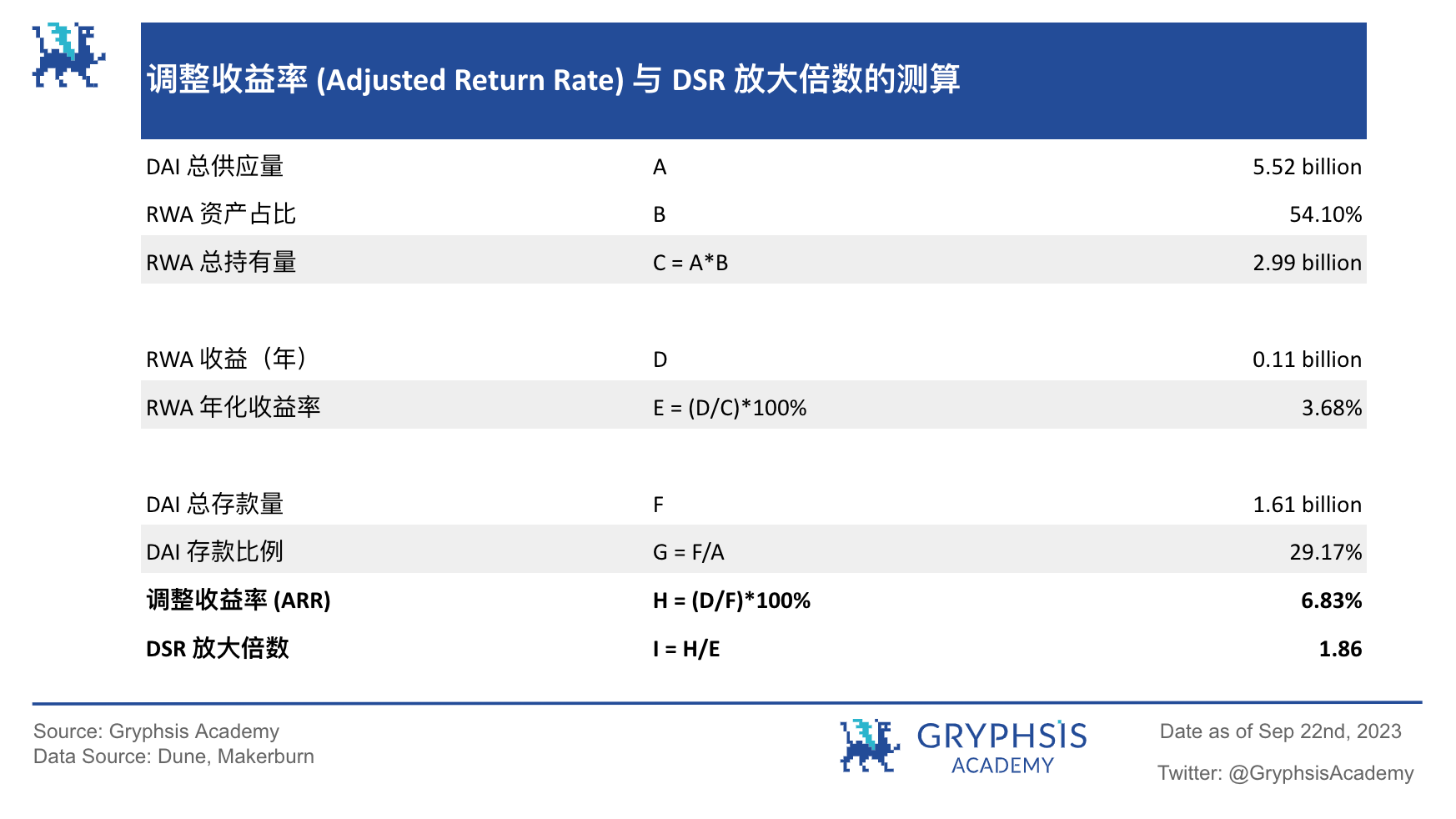
As shown in the table above, the adjusted return rate (ARR, Adjusted Return Rate) is calculated by dividing RWAs annual return (D, 0.11 billion) by the total deposit amount of DAI (F, 1.61 billion). This adjusted return rate can be viewed as Based on the current deposit ratio and RWA annual income, it is a rate of return that DAI depositors can theoretically obtain through the MakerDAO platform, although it is achieved indirectly through RWA assets. In addition, the DSR (Dai Savings Rate) amplification multiple is calculated by dividing the adjusted rate of return (ARR) by the annualized rate of return (E, 3.68%) of RWA. This ratio reflects what DAI depositors can obtain through the DSR mechanism. The rate of return is relative to the increase multiple of directly holding RWA assets. A DSR amplification factor of 1.86 means that through the DSR mechanism, DAI depositors can achieve an annualized rate of return that is nearly twice that of directly holding RWA assets. This magnification shows the potential value and yield advantages the DSR mechanism provides DAI depositors. In this case, the DSR mechanism appears to provide DAI depositors with a higher yield, allowing them to achieve better returns on their investment over the course of a year.
So why is ARR almost twice as high as RWA annualized return? This is because the current DAI deposit rate is not high, and MakerDAO can distribute the income obtained through RWA to a relatively small number of DAI depositors. This is why we see that Maker can give a DSR of up to 8%. But how to tell if this is a Ponzi? We believe that at present, on the premise of ensuring the transparency of underlying assets and profits costs, Makers historical average data of DSR is lower than the real return of RWA assets, which means that the rate of return on the chain is guaranteed by real-world asset returns. A higher rate of return will attract more DAI deposits, that is, the total amount of DAI deposits will increase, that is, the proportion of DAI deposits will increase, resulting in a reduction in the amplification times of ARR and DSR, which means that the same RWA income is shared by more people.
All in all, MakerDAO has been very effective at penetrating the stable income of RWA assets and distributing income to DAI depositors. The rate of return guaranteed by transparent real-world assets is a major gap in Defi at present, and will become In the future, RWA will be the most basic layer for realizing large-scale applications. Of course, U.S. debt may not always maintain such high interest rates, but since it is difficult to predict, let’s assume that MakerDAO can obtain a stable annualized return of 3.68% through RWA. As the proportion of RWA as the underlying asset and the proportion of DAI deposits increase, Perform sensitivity analysis on ARR and DSR multiples.
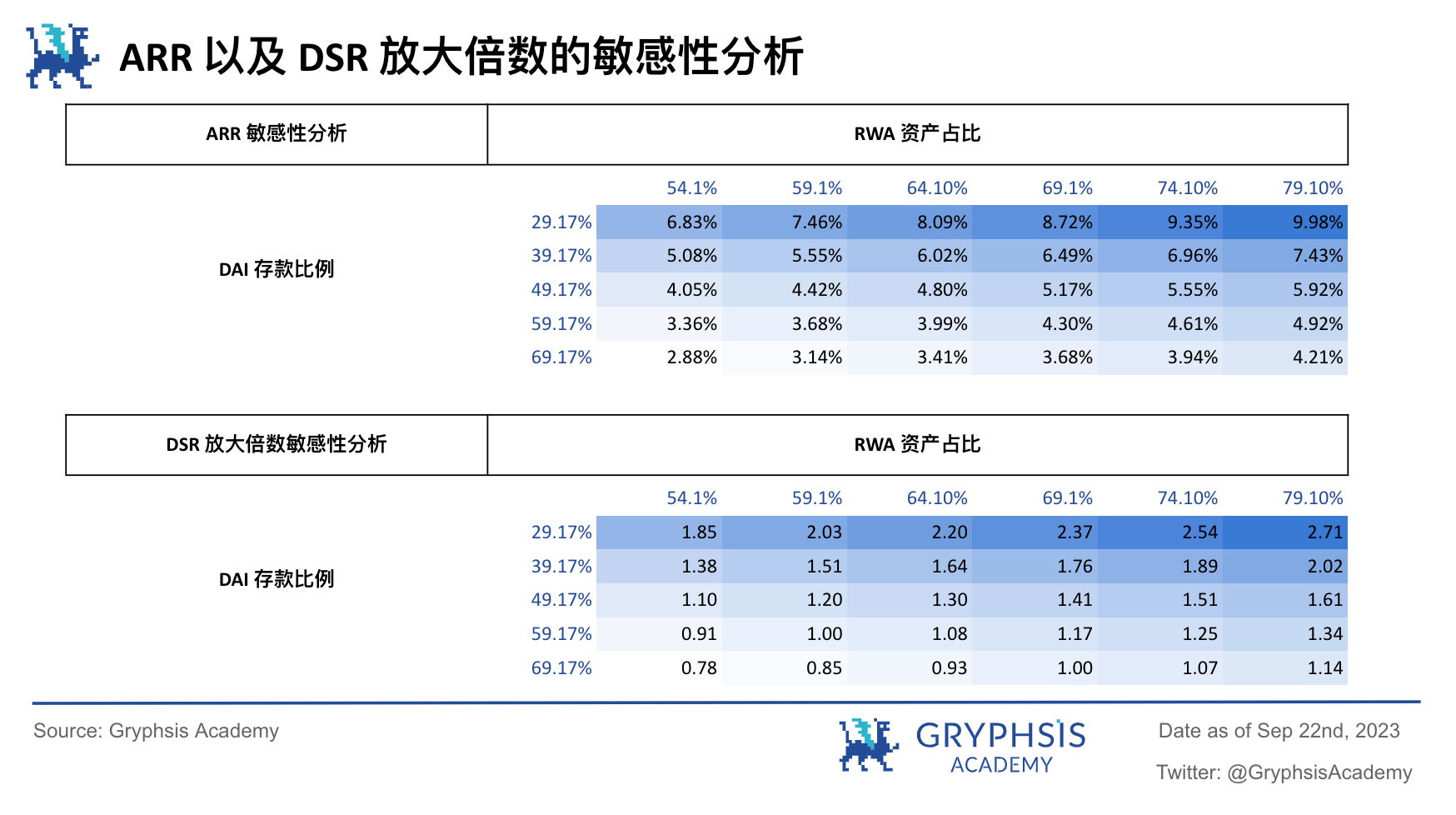
As shown in the table above, listed on the left are different DAI deposit ratios, and listed on the top are different RWA asset ratios. As the proportion of DAI deposits increases, the annualized income of DAI depositors is gradually decreasing, and the DSR amplification factor is also decreasing, which means that the deposit income of DAI is gradually approaching or lower than the real income obtained by MakerDAO from RWA assets; and As MakerDAO uses more and more RWA assets as collateral assets, the real income it obtains has also increased. You can see that the DAI deposit rate and DSR multiple have also increased.
At present, it seems that holding DAI deposits to obtain a risk-free deposit interest rate similar to Defi is a good development trend for this type of CDP stablecoin explored by MakerDAO, especially now that you can obtain a relatively high risk-free interest rate on U.S. debt. interest rate environment. Starting from this point, we roughly predict the future market value of the RWA sector in the CDP market.
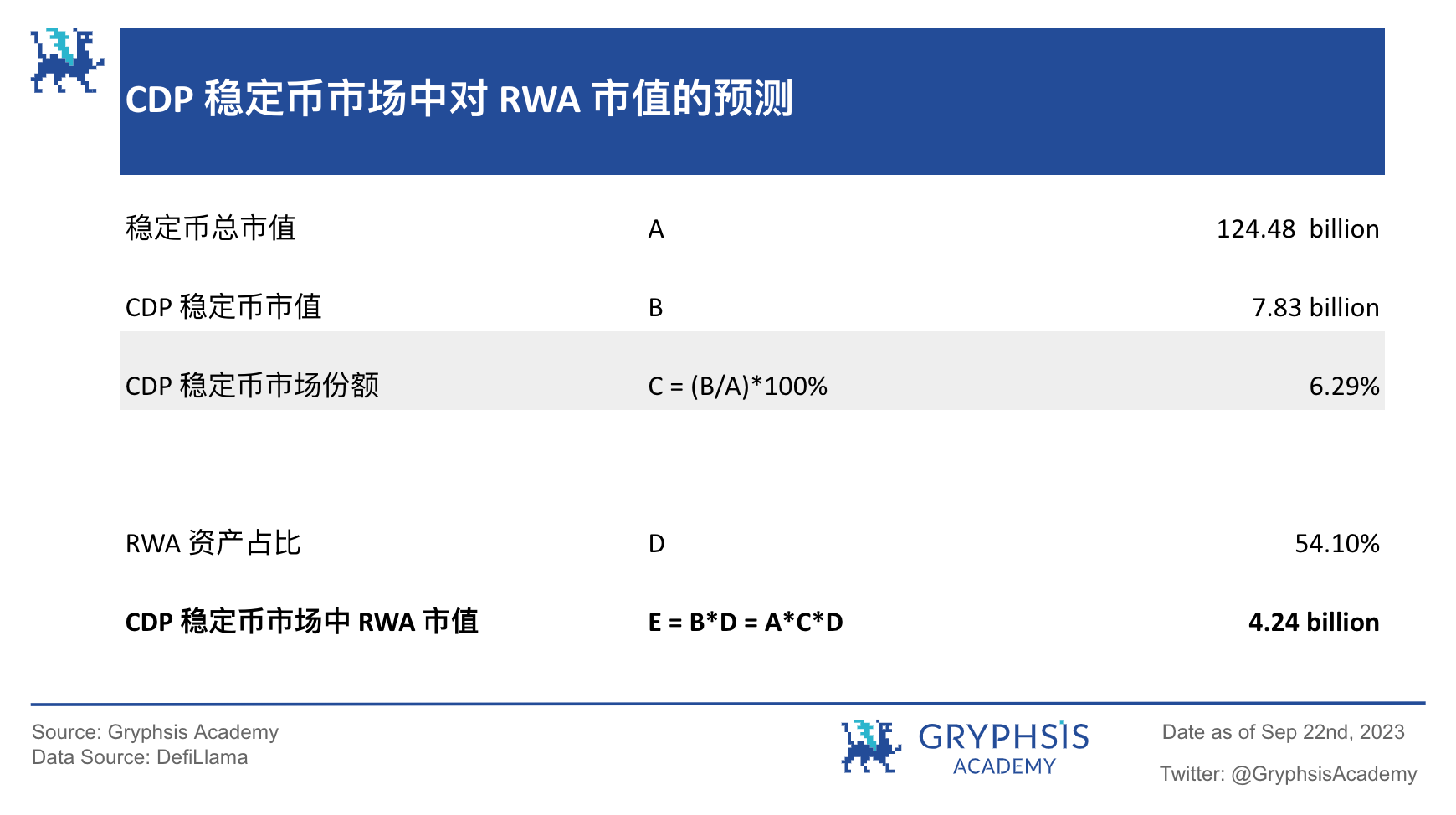
Based on MakerDAOs current RWA asset ratio of 54.1%, it can be roughly concluded that RWAs market value in the CDP stablecoin market is $4.24 billion. As mentioned above, with the large-scale application of RWA, CDP stablecoins market share will increase accordingly because it can distribute stable and transparent returns on RWA assets to stablecoin depositors. From this, we conduct a simple sensitivity analysis on the market value of RWA in the CDP stablecoin market. (unit billion)
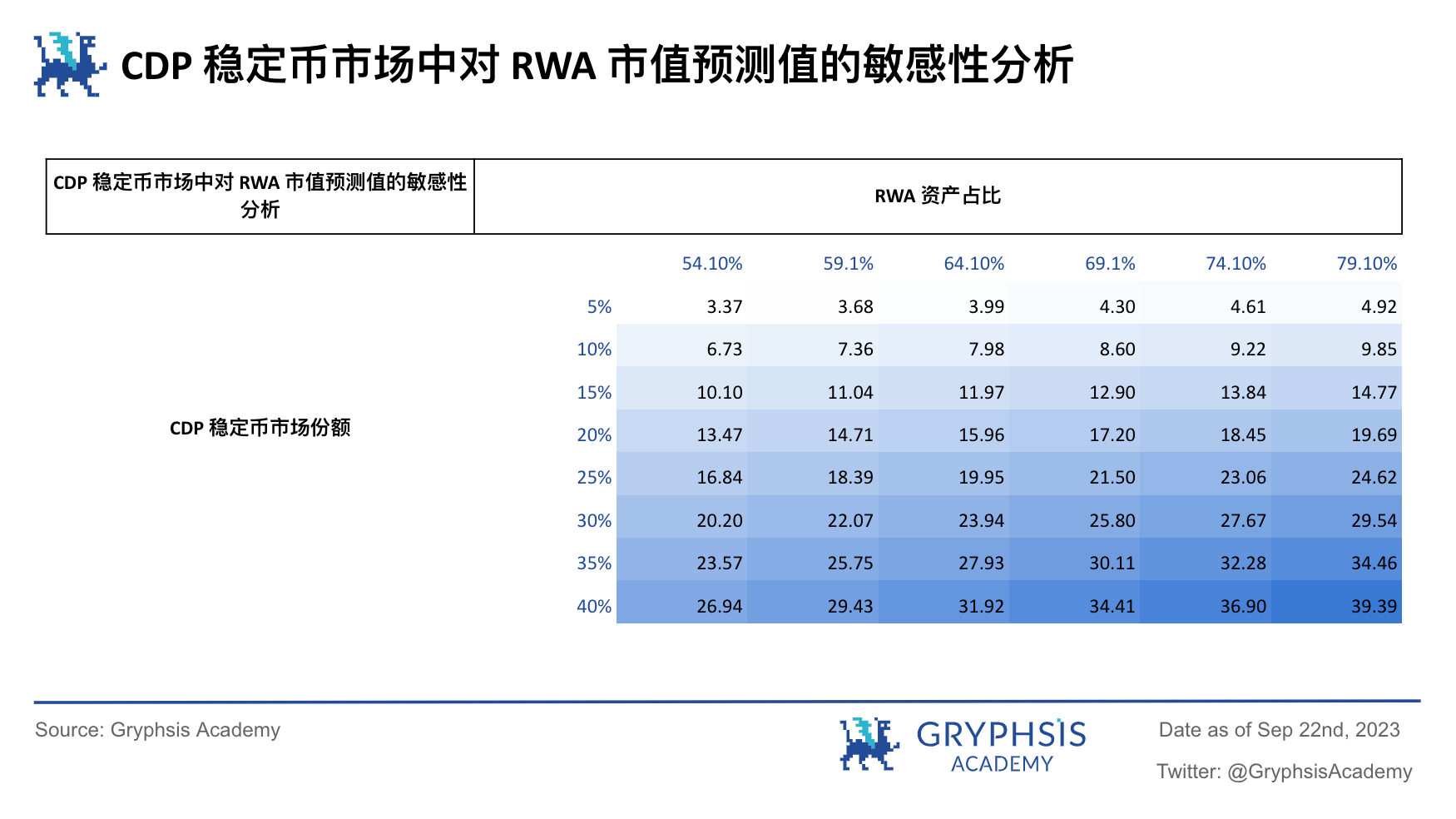
Listed on the left in the above table is the market share of CDP stablecoins, and the top is the proportion of RWA as the underlying asset. It can be seen that with the increase of the two, the market value of RWA has increased significantly. Compared with the current mainstream stablecoin $USDC, this CDP stablecoin, which is equivalent to its own deposit interest rate, is more transparent and the income distribution to holders is more reasonable. It can be reasonably speculated that more projects will follow MakerDAOs example. Their own underlying assets are gradually replaced by RWA assets, which may only be a small part of RWAs large-scale application landscape.
Summary and Outlook
After in-depth analysis and data evidence, we believe that RWA shows huge market potential and long-term growth space. With the advancement of large-scale application of RWA, both the Defi and Tradfi fields will usher in many new opportunities and may even achieve partial integration. However, the current unclear attitude towards supervision and compliance has become a major obstacle to the large-scale application of RWA. Although we expect RWA to achieve a public chain and permissionless experience similar to DeFi after the regulatory framework is clarified, we still need to be cautious about being overly optimistic in the short term.
By observing the relevant practices of MakerDAO, Ondo Finance and the Hong Kong government, we have initially seen the various solutions of RWA and its application possibilities. It is expected that as the scale of RWA gradually expands, its characteristics can be further utilized to solve various problems faced by DeFi and TradFi.
Looking to the future, the development of RWA lays the foundation for innovative changes in the financial sector. In terms of asset selection,RWA will initially start with standardized assets such as U.S. Treasury bonds, U.S. bond ETFs, gold, REITs and high-rated corporate bonds. These assets have mature trading mechanisms and high liquidity, providing a solid foundation for RWA. As technology advances and the market matures, we expect that RWA will gradually expand to non-standardized assets, such as art, real estate, and private equity, which will require more innovative ideas and solutions, including complex evaluation mechanisms and The design of risk management strategies is also inseparable from the gradual improvement of regulatory and compliance frameworks.
In terms of user acceptance, RWA’s strategy should focus on first meeting investors’ needs for standardized assets and then gradually guiding them to understand and accept non-standardized assets. This process requires not only carefully designed market education and promotion strategies, but also in-depth analysis of investor needs to ensure that RWA can provide investment opportunities with substantial value.
also,The combination of RWA and CWA is expected to promote the transformation of blockchain technology from back-end to front-end applications. This transformation is similar to the evolution of the Internet from back-end servers and databases to front-end user interfaces and applications, which can greatly enhance the ease of use and popularity of the technology.At the same time, the combination of RWA and CWA will not only break the limitations of the traditional financial market, but also provide investors with more and higher-quality investment options. Achieving this goal requires multi-faceted efforts and cooperation, including standardization of assets, construction of infrastructure, market education and regulatory compliance support.
Taken together,RWA is very likely to become an important track for realizing large-scale applications and promoting the integration of DeFi and TradFi after the US dollar stable currency.We will continue to pay attention to the development of RWA and related regulatory policies in order to provide investors with accurate and timely market analysis.
references:
https://forum.makerdao.com/t/monetalis-evolution/14811
https://docs.centrifuge.io/getting-started/off-chain/
https://drive.google.com/file/d/1x89OjKjaqPLJI-W2-U7pXiS9H_zBOyUb/view
https://drive.google.com/file/d/1kDMvQ2drS0jfbv4uB5UAUbfcObmA-I 0 H/view
https://www.hkma.gov.hk/media/gb_chi/doc/key-information/press-release/2023/20230824c3a 1.pdf
https://docs.ondo.finance/qualified-access-products/ousg/how-it-works
Disclaimer: This report is produced by,@yelsanwong, a student at @GryphsisAcademy, in@CryptoScott_ETHand@Zou_BlockOriginal works completed under the guidance of. The authors are solely responsible for all content, which does not necessarily reflect the views of Gryphsis Academy, nor the views of the organization that commissioned the report. Editorial content and decisions are not influenced by readers. Please be aware that the author may own the cryptocurrencies mentioned in this report. This document is for informational purposes only and should not be relied upon for investment decisions. It is strongly recommended that you conduct your own research and consult with an unbiased financial, tax or legal advisor before making any investment decisions. Remember, the past performance of any asset does not guarantee future returns.