






BitKeep x ParaSpace Research Report: Analysis on the Development of NFT Trading Track in the First Half of 2023


Summary
first level title
Summary
This report mainly analyzes the development status of the NFT trading track in the first half of 2023 and the subsequent trend development and draws the following conclusions:
• The market value of the NFT market fluctuates greatly, but it proves that the NFT market still has development prospects.
• The liquidity of the NFT market is the primary problem to be solved at the moment, and the active development of NFTFi has greatly promoted the application scenarios of NFT.
• The NFT application that combines digital collections and brand IP is the first NFT application that breaks traditional boundaries and is well known by the general public.
1. What happens in 2023
At the beginning of 2021, NFT projects began to emerge in the market and attracted a lot of attention. Although the emergence of the Ordinals protocol in February this year set off a boom in NFT again, the market has shown signs of weakness since the end of April.
secondary title
Since the beginning of 2023, the market in the currency circle has been ups and downs after the rapid recovery. In January 2023, the total transaction volume of the entire NFT market reached 941 million US dollars. Affected by BTC Ordinals, the total transaction volume of the NFT market in March increased to 1.5 billion. But now the current transaction volume in May is only 330 million US dollars.
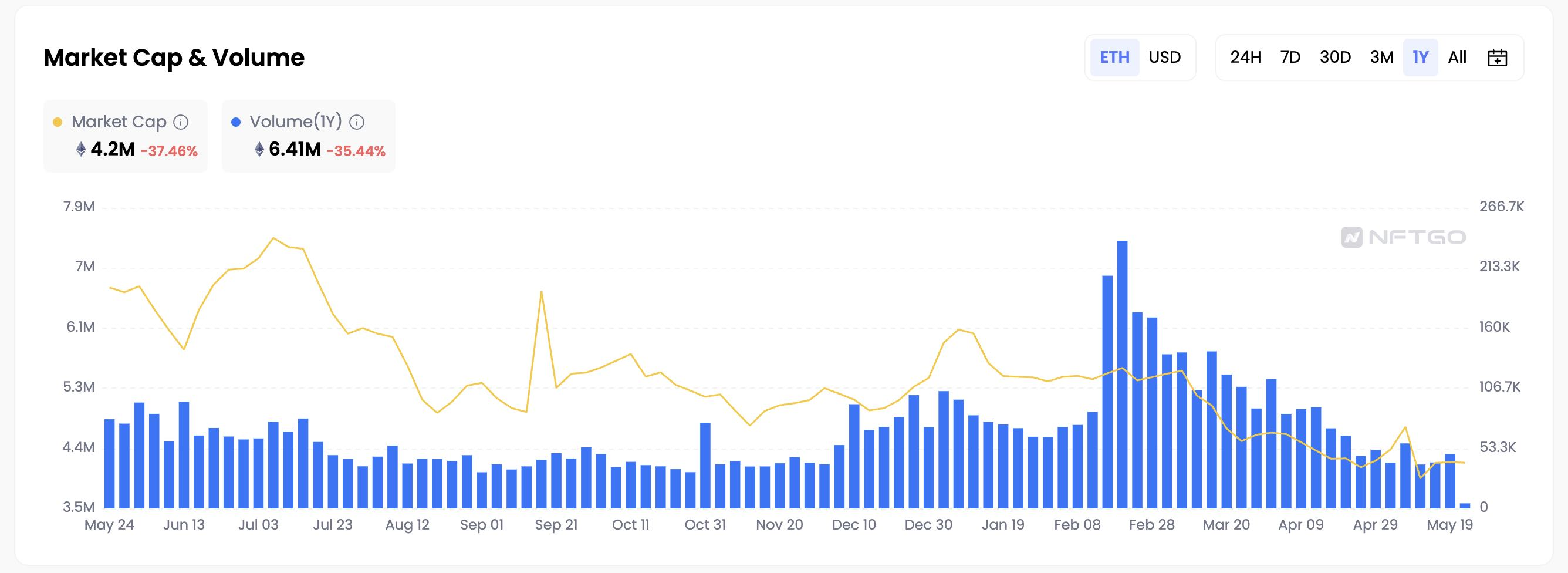
At present, the market value of NFT is maintained at 4.2 million US dollars, which shows that this year the NFT market still receives a lot of attention from funds.
secondary title
1.2 2023 NFT Key Events
• During the first quarter, the NFTFi lending market began to gradually recover
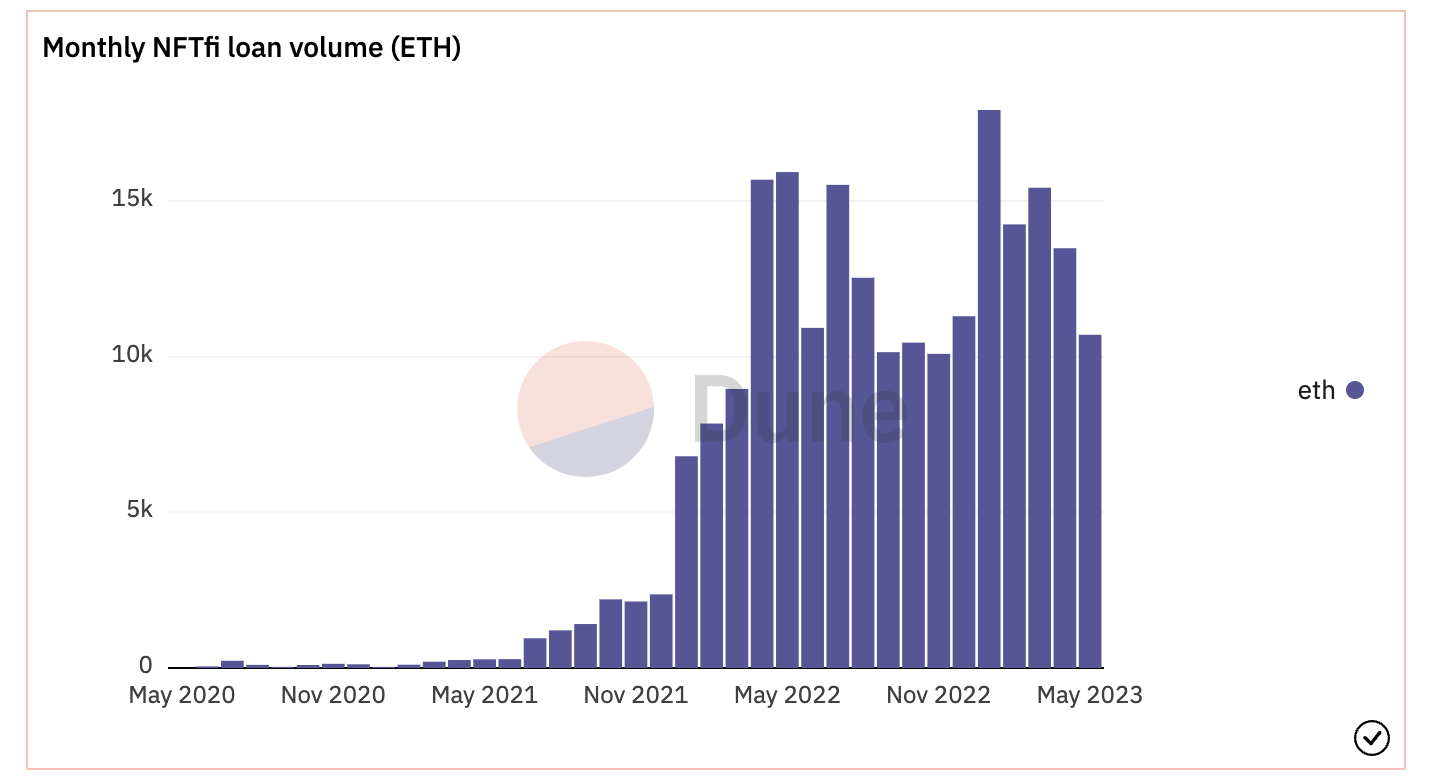
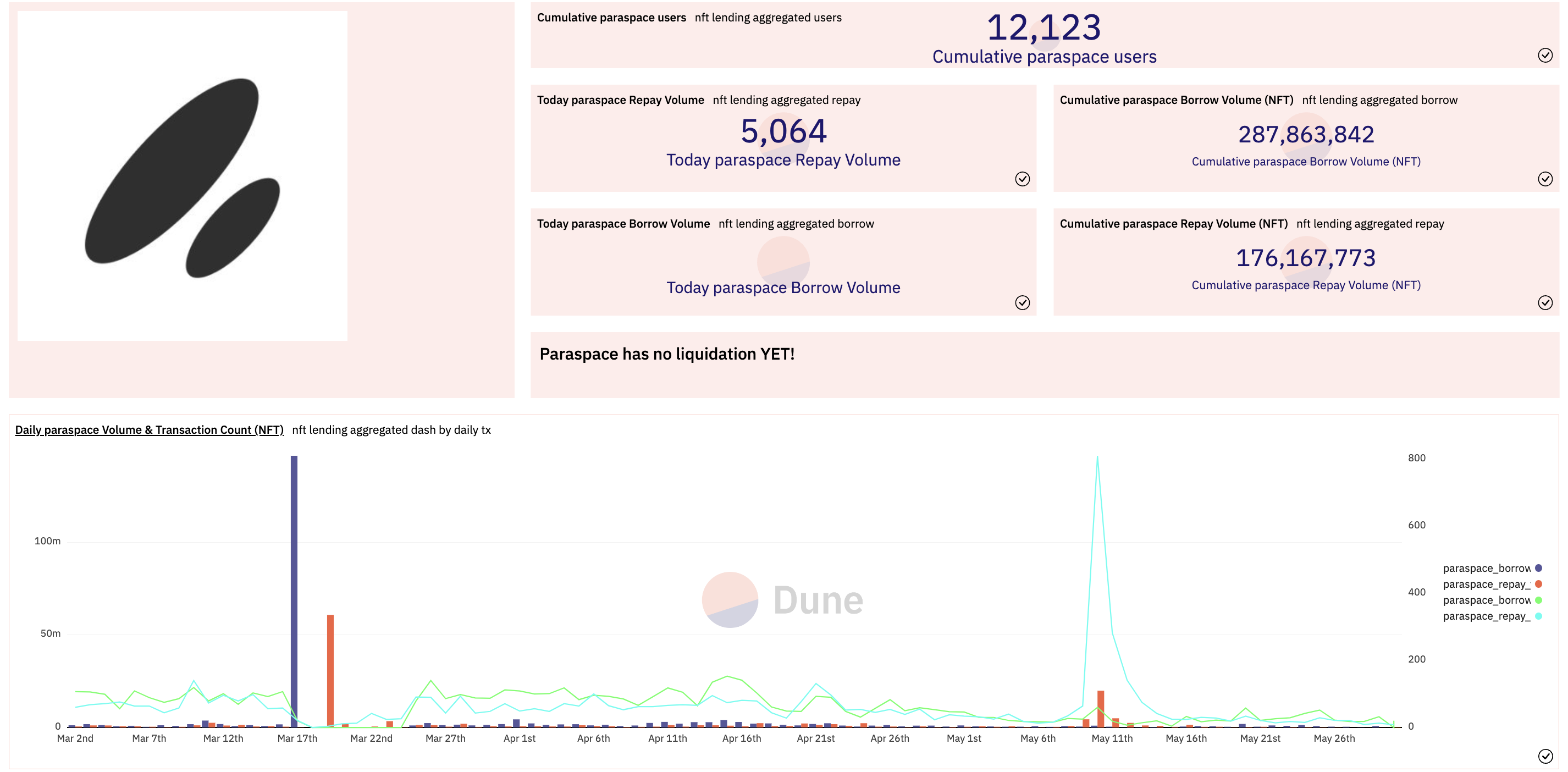
The total amount of loans in the NFT market from January to March this year alone reached about 25 million US dollars. BLUR launched the peer-to-peer perpetual lending agreement Blend with NFT as collateral on May 2, officially entering the NFT lending track, and has already harvested 30 million US dollars in deposits. Among them, ParaSpace has the largest market share in the lending market. The top three lending projects account for more than 65% of the entire lending market, with a loan volume of about US$35 million and a total deposit of US$120 million. The development potential of the NFT lending market is huge, attracting more and more users to participate in it.
• BTC Ordinals Explosion
Bitcoin Ordinals NFT is an NFT version of Bitcoin that is engraved in the Bitcoin blockchain in units of satoshi (the smallest unit of BTC). However, since Ordinals NFT is based on the BTC network, everyone needs to bear slow transaction speed, high cost and limited application range. Although creating an NFT on Bitcoin is more complicated than on Ethereum, it can be done using layer-two protocols such as the Lightning Network and RSK.
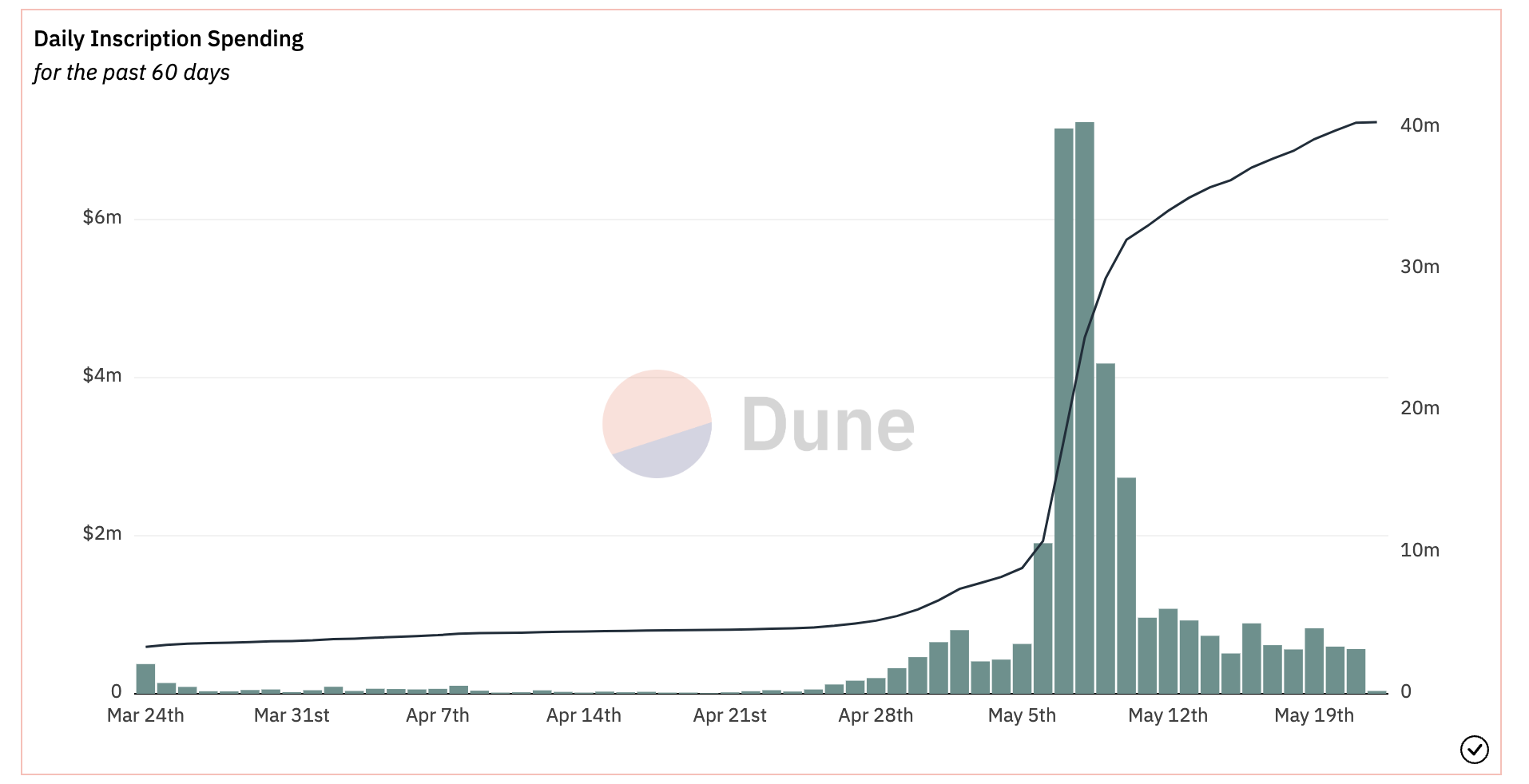
After the launch of the Ordinals protocol, a large number of NFT projects were minted on the chain. According to the data on Dune, Ordinals has grown rapidly since March, setting off a wave of BTC NFT. Many NFT investors and community members are actively plunge into it. Currently, the volume and volume of the BTC Ordinals market is on the rise. The total number of NFTs minted in four months reached 1.19 million, and the transaction volume also reached 20 million US dollars.
• BLUR release airdrop
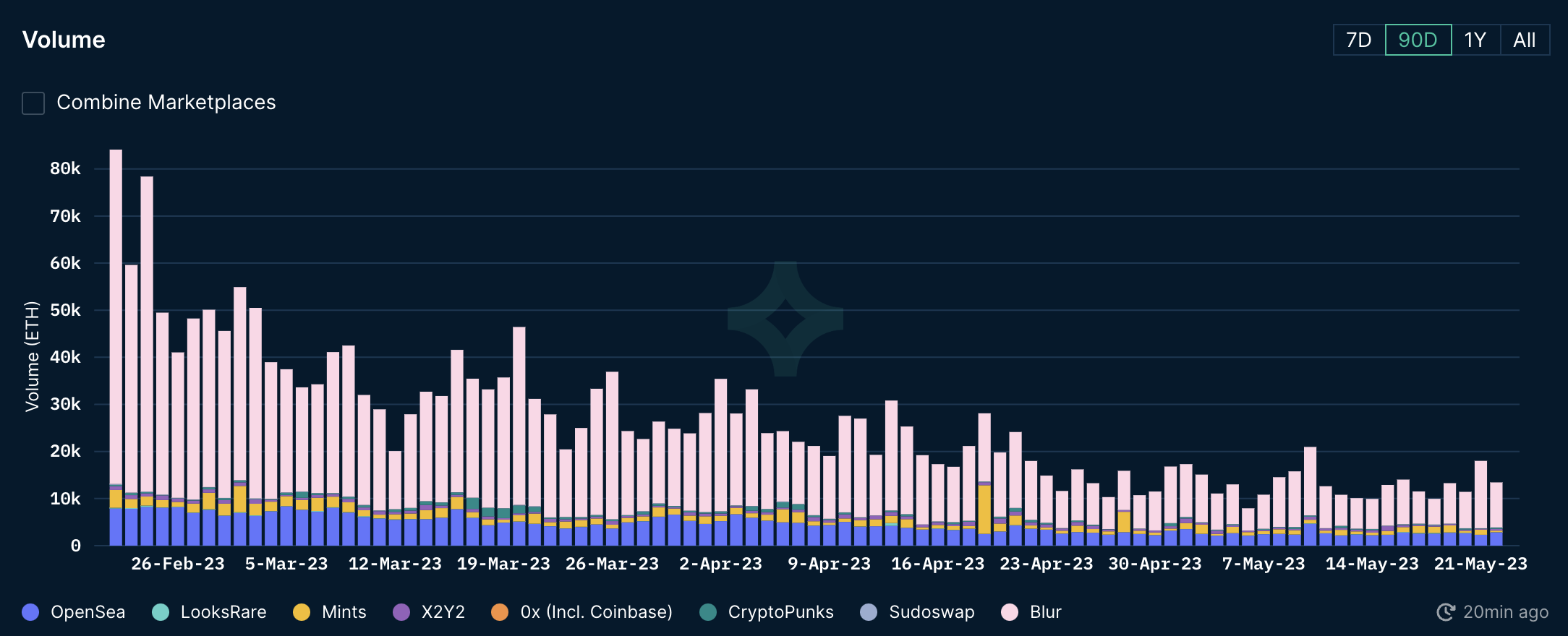
At present, BLUR has become the largest NFT aggregation trading platform with the largest trading volume on the chain. It is highly sought after by the market because of its zero-fee, token airdrops and other activities, and has now surpassed the previous largest NFT trading platform OpenSea.
NFT transaction volume rose sharply in the first quarter of 2023, but then declined, with BLUR's incentive and airdrop mechanism being the main driving force. After BLUR released the tokens of its own platform, major exchanges went online immediately, pushing this wave of NFT craze to a new height.
• OpenSea Pro renames to Gem.xyz, introduces "Gemesis" NFT
first level title
2. NFT market overview and analysis
secondary title
2.1 Current status of NFT market transactions
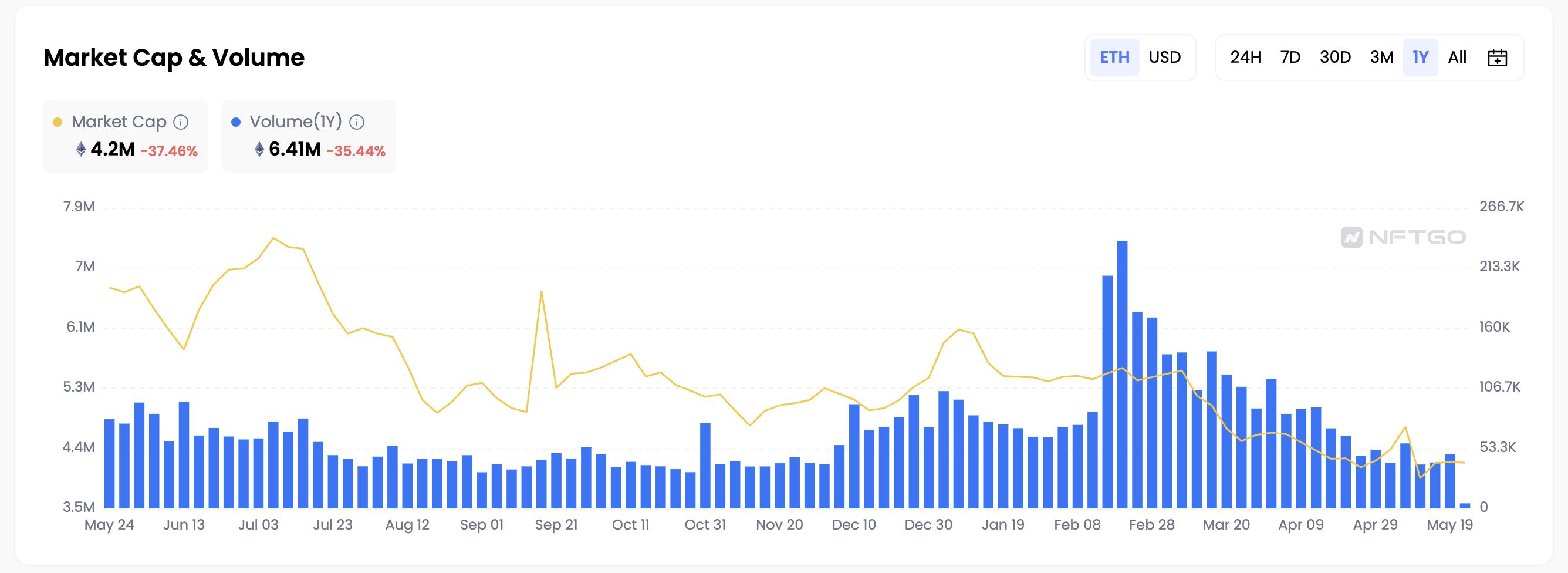
• The NFT market began to attract market attention from the popularity of Ordinals NFT in February. Coupled with the stimulation of memecoin, the enthusiasm for market transactions was high and attracted capital inflows. The NFT market rebounded rapidly and lasted until the end of April. The current situation creates an interesting and potential market for NFT traders.
Although creating NFTs on Bitcoin is more complicated than on Ethereum, Ordinals are still in their infancy. At present, the total value of Ordinals has reached tens of millions of dollars, and has attracted market attention. The market value of Bitcoin is 2.3 times that of Ethereum. If Ordinals wants to catch up with the market value of Ethereum NFT, its growth space is still 1000 times. Therefore, in the long run, Ordinals NFT is still in the early stage. There is also huge space.
Lending, as one of the commonly used means of finance, has many application scenarios in the blockchain market. Coupled with the lack of liquidity in the NFT market, the NFT assets in the hands of many users cannot be realized immediately. At this time, the emergence of NFT lending platforms can Let users put their own NFT into the platform as collateral, and then lend the corresponding digital currency or legal currency. In addition, the lending platform will also provide an appropriate loan ratio based on the value of the collateral. With the development of the NFT market, there is room for the lending market to continue to rise.
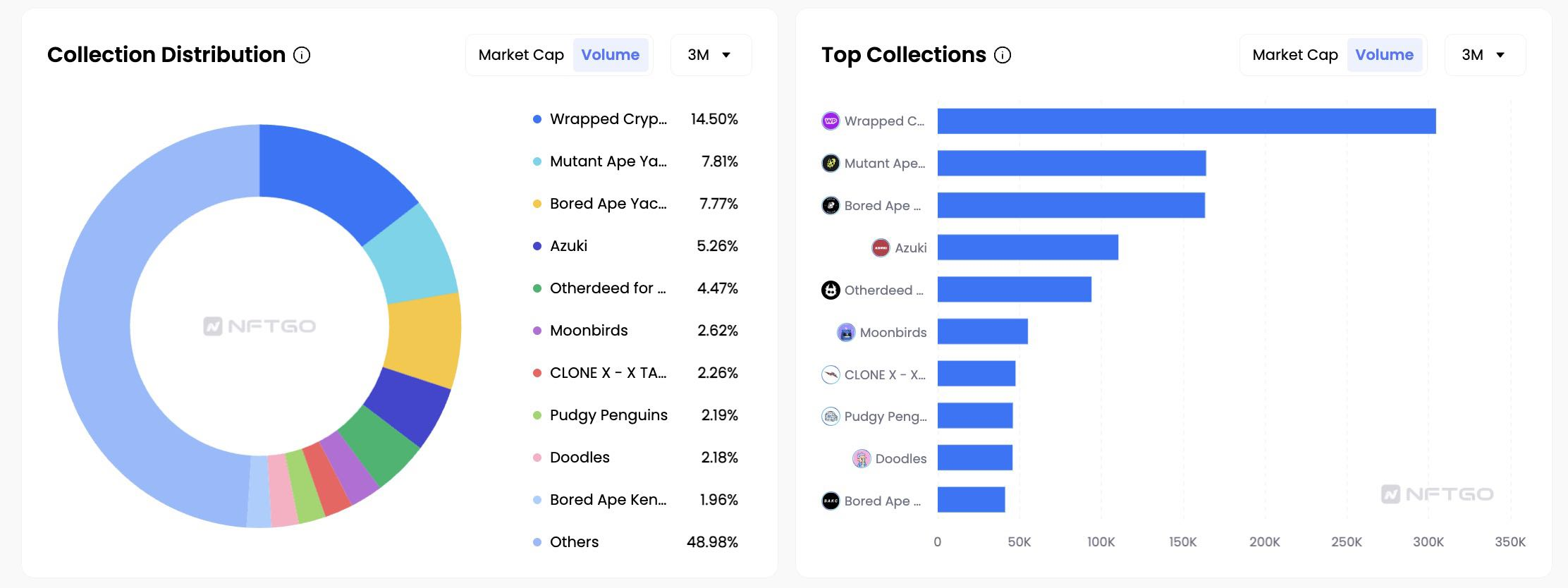
• In the last three months, the trading volume of Wrapped Cryptopunks ranked first, accounting for 14.50% of the entire market, while MAYC and BAYC ranked second and third with 7.81% and 7.77% respectively. Among them, Wrapped Cryptopunks contributed more than 3 M ETH in transaction volume and performed the best. The NFT projects in the YugaLabs ecosystem account for a quarter of the entire market.
secondary title
2.2 NFT liquidity and characteristics
The liquidity problem is not only fatal to the development of DeFi, but also to NFT. The lack of liquidity in NFT transactions is mainly due to problems such as the limited number of users, difficulty in pricing, and excessively high NFT prices. NFT liquidity is also closely related to market heat, so we can see two extreme scenarios. The top 10 NFT projects have always maintained a certain level of liquidity and the fluctuations between projects are not large, while the other part of NFT needs to Convenient sale at a discount.
The NFT market is an emerging market, lacking historical data and recognized valuation analysis methods, which makes pricing difficult. People have different opinions on the degree of rarity and subjectiveness. Even for the same series of NFTs, the prices may vary greatly, resulting in low liquidity and low capital efficiency. Coupled with the fact that the price of the NFT market is usually too high, many investors have lost interest. The entry threshold for blue-chip NFTs is extremely high, with an average price range between US$11K-120K, and some NFT investors are unwilling to sell their NFTs in exchange for instant liquidity, making it difficult to solve the NFT liquidity problem.
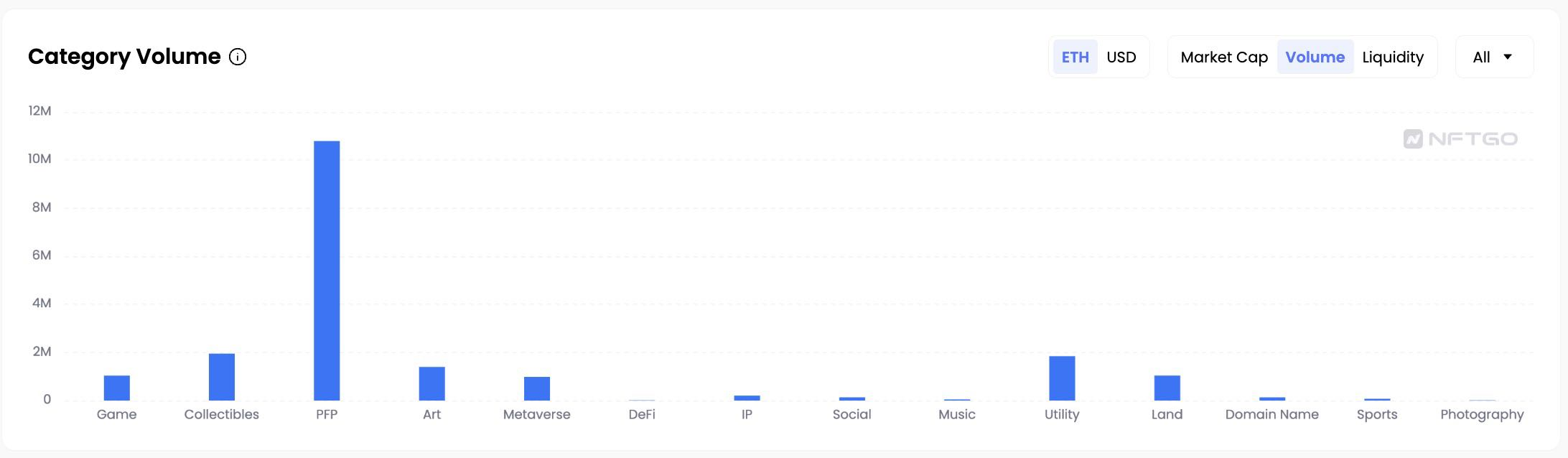
The most important and popular NFT is the "PFP (Profile Picture)" project, with a total market capitalization of US$1.3 billion and a transaction volume of US$1.8 billion. However, in terms of liquidity, Utility NFT has the best liquidity.
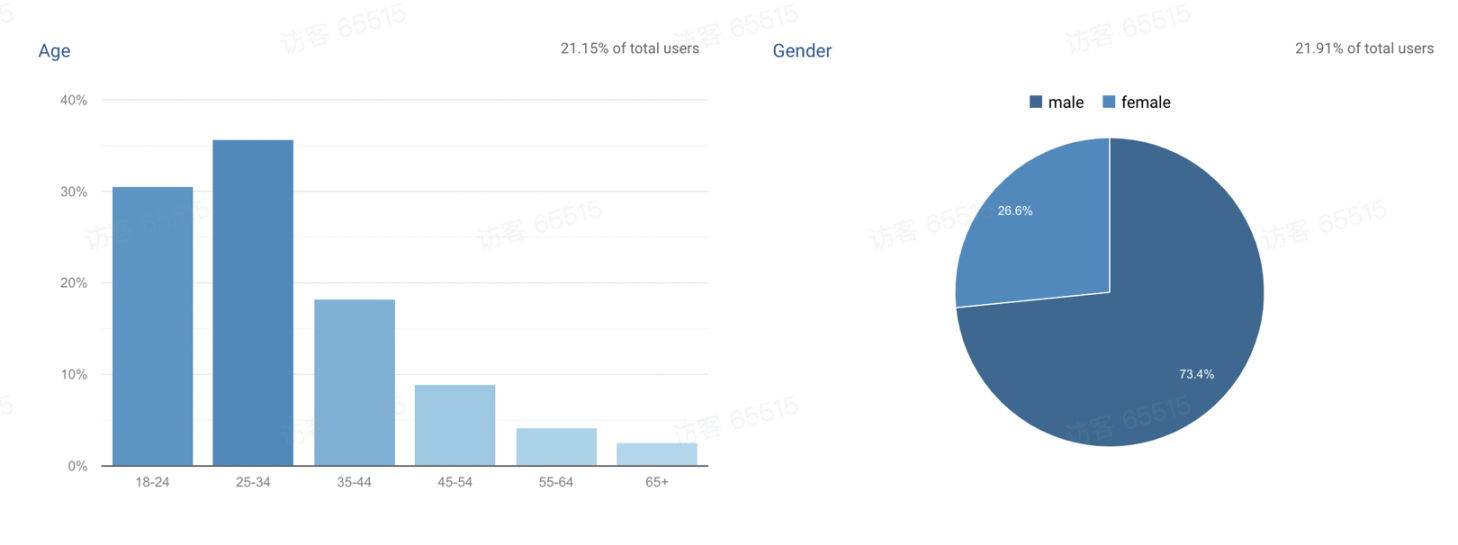
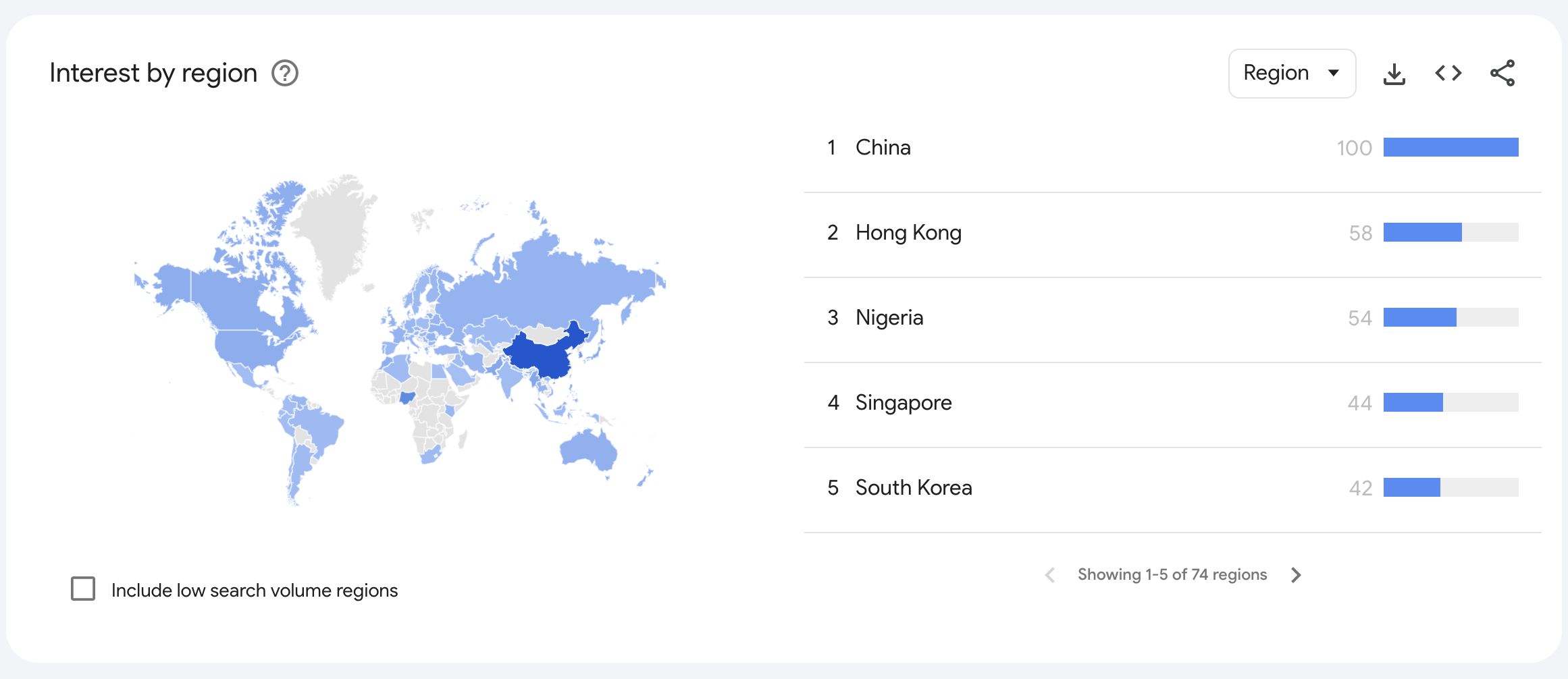
NFT players are mainly distributed as young men, accounting for more than 70%.
3. NFT project development and future trends
High-quality NFT projects often have strong community consensus, team background, and distinctive artistic style, and institutions are very fond of them. For ordinary users, the threshold for participating in blue-chip NFTs or popular NFTs is getting higher and higher, and now there are some solutions: NFT fragmentation, NFT pledge, the rise of NFT liquidity platforms, etc.
secondary title
3.1 NFT trading platform
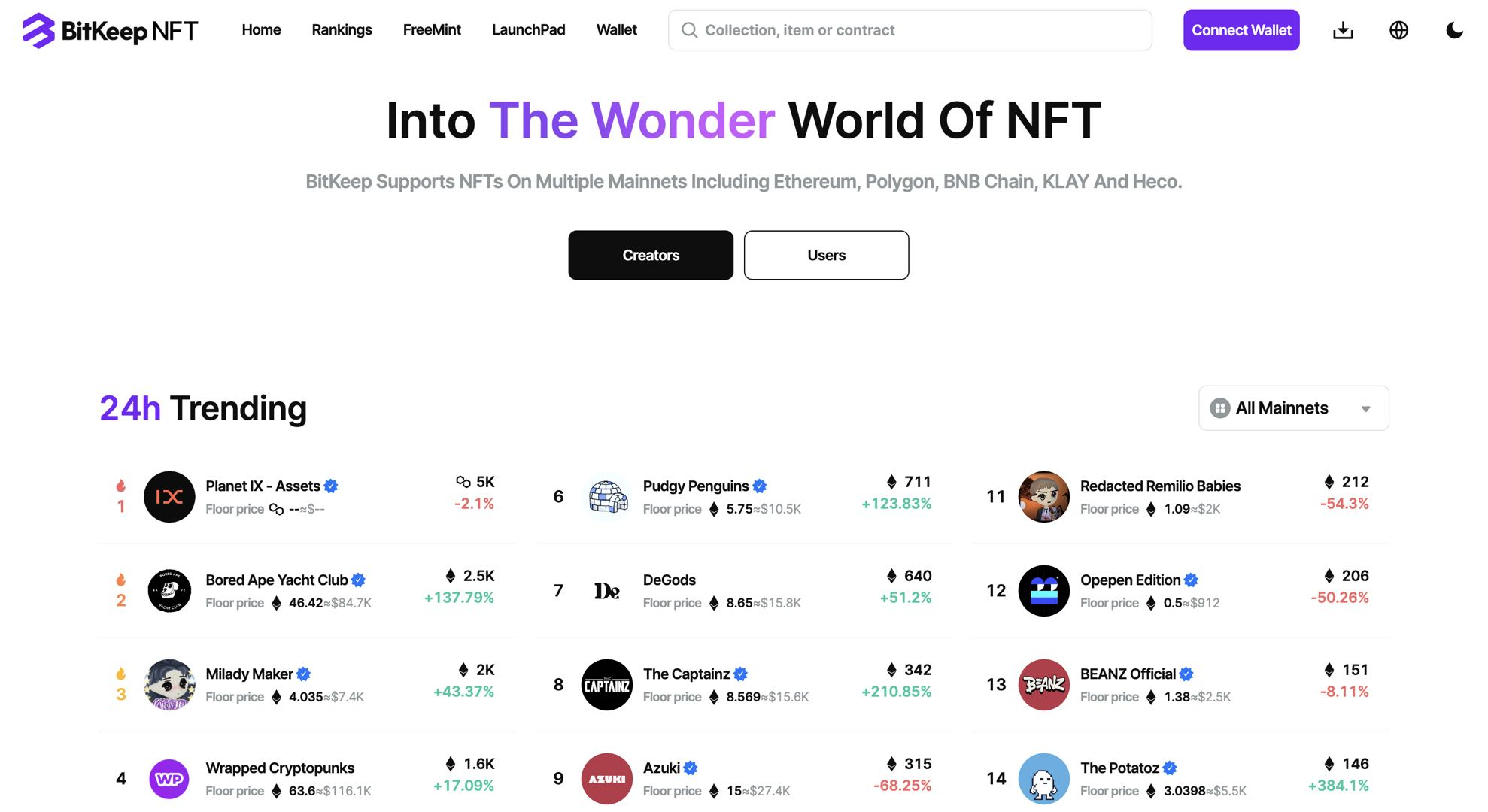
The NFT trading platform provides a traffic portal for buying or selling NFT. Currently, the number of people using the NFT trading platform accounts for the largest share. BitKeep, Opensea, Looksrare, and Binance have their own dedicated NFT trading sections.
Due to the high threshold for BTC participation, participants can only rely on Google documents to buy and sell Ordinal punks, which shows how early this industry is and how Ordinals lack the necessary infrastructure. As the infrastructure of the NFT market, BitKeep Wallet is currently on the Ordinals market board, and will soon be connected to the Bitcoin ecosystem, launching a Bitcoin NFT trading area, supporting the display, casting, transfer, trading and other functions of the Ordinals protocol BTC NFT.
The BitKeep wallet will also be compatible with the Taproot address format, providing services such as asset display, transfer and transaction for BRC-20 tokens. After the access is completed, BitKeep users can use the BTC Taproot address format on the mobile terminal and plug-in terminal, and perform operations such as deposit and withdrawal management, transfer transactions, etc. of BRC-20 tokens and Bitcoin NFT.
secondary title
• Gem
3.2 NFT transaction aggregator
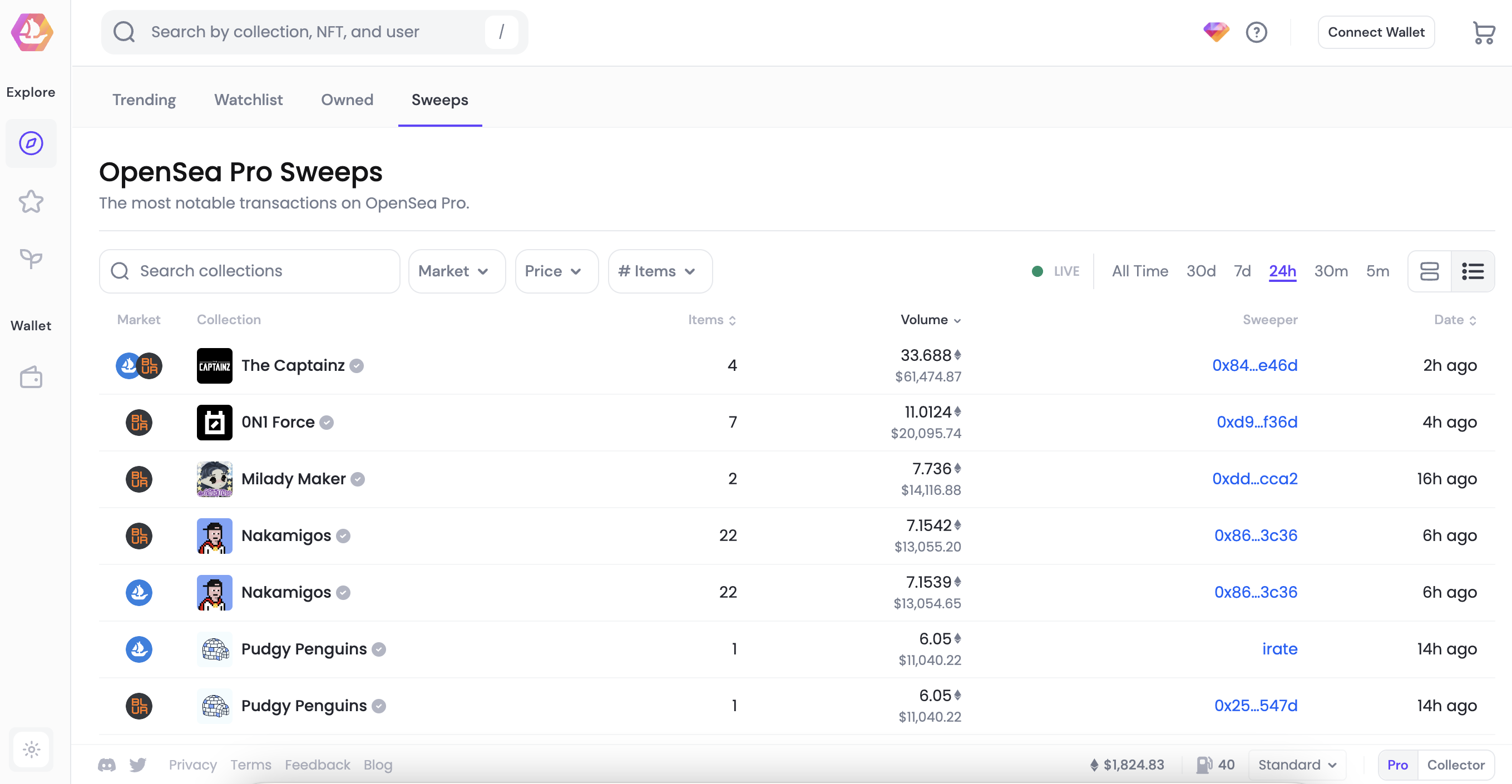
NFT marketplace aggregators are perhaps the most compelling of the NFT liquidity solutions available right now. Users can save up to 40% in gas costs by allowing them to buy in bulk. Currently the top three aggregators are Gem (acquired by OpenSea), Genie (acquired by Uniswap Labs) and Flip, all of which provide NFT cross-platform aggregation transactions, among which the "batch sweeping the floor" function is very useful.
• Genie
Gem V2 is now OpenSea Pro! Gem has the most powerful NFT market aggregator in more than 170 markets, providing users with the best prices, and is now integrated with LooksRare's liquidity. To provide you with better functions such as purchase, collection, feature screening, leaderboard list, etc., with 0 fees. Integrating NFT listings on most NFT trading markets, and providing rich and comprehensive data and tools for NFT investors, Gem's new rarity ranking and collection analysis are particularly useful for users.
Because as NFTs become more and more popular, the market is also growing. NFT trading aggregators can provide you with a wider selection of NFT markets and can help users get better trading prices, because they can compare prices in multiple markets and provide users with the best deals, and their development prospects are very broad.
The trading market platforms supported by Genie Swap include OpenSea, NFTX, NFT 20, Rarible, and Larva Labs' CryptoPunks, and there is no platform fee.
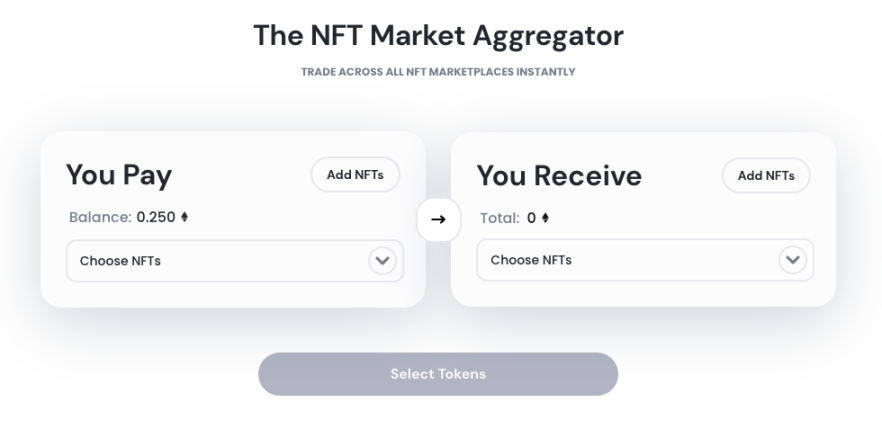
The launch of Genie List supports users to purchase multiple NFTs (up to 60 NFTs) from multiple markets in a single transaction, and reduces transaction costs through aggregated transactions.
secondary title
• Bored Ape Yacht Club
3.3 NFT projects
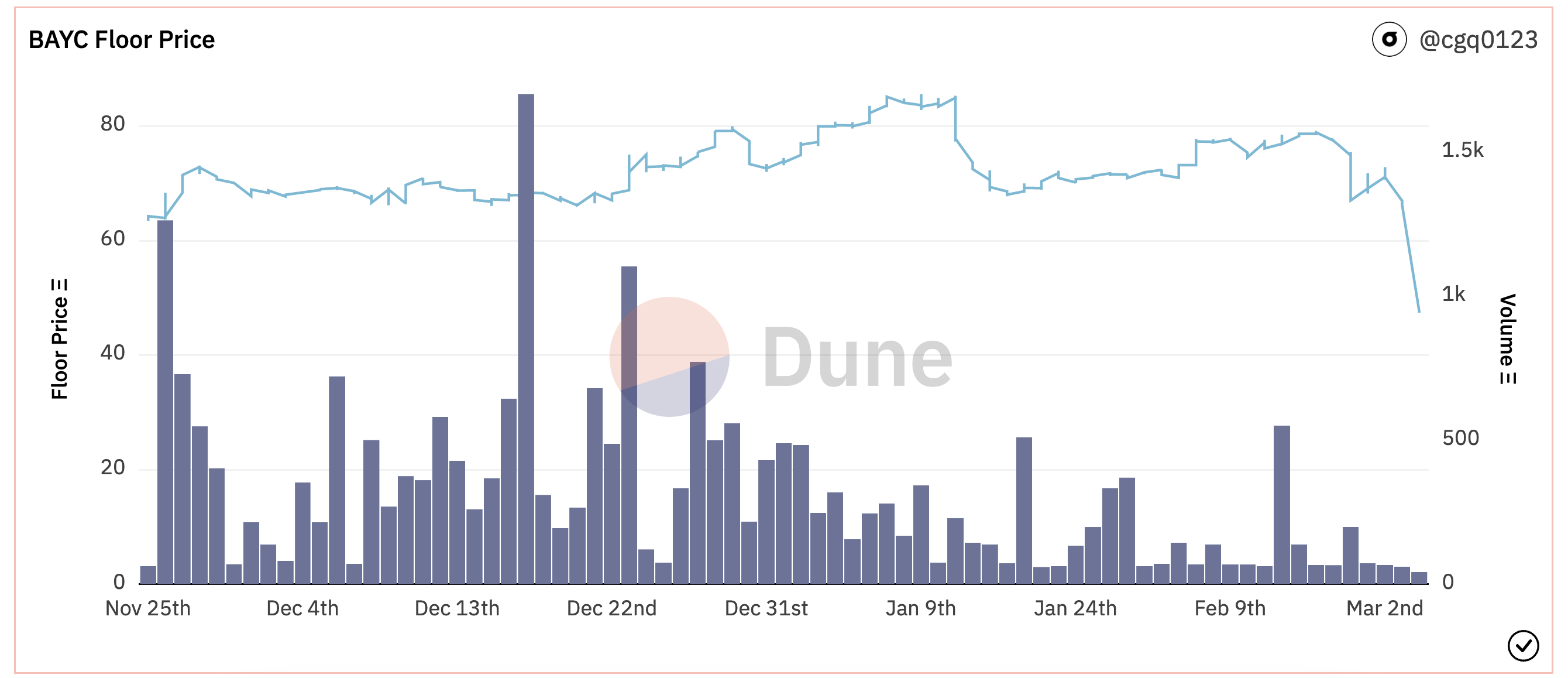
High-quality NFT projects usually have a strong team background and are easy to get the attention of the market. For example, BYAC blessed by various stars is very popular, and the domestic Jay Bear’s own traffic can even attract new capital inflows from web2. Fan traffic and celebrity benefits come in the NFT circle. It is very important to say that the development of any project is inseparable from the accumulation of popularity, and the market brought by stars highly satisfies this condition.
• Azuki
Bored Ape Yacht Club (BAYC) is a typical PFP NFT, an NFT series consisting of 10,000 "Bored Apes", launched on April 30, 2021, and it is the first project launched by the famous Yuga Labs.
BAYC has been actively expanding its ecological applications, issuing its ecological token ApeCoin (APE) to create the metaverse land otherside, and also selling IP commercial use rights to increase royalties to empower NFT.
• ParaSpace
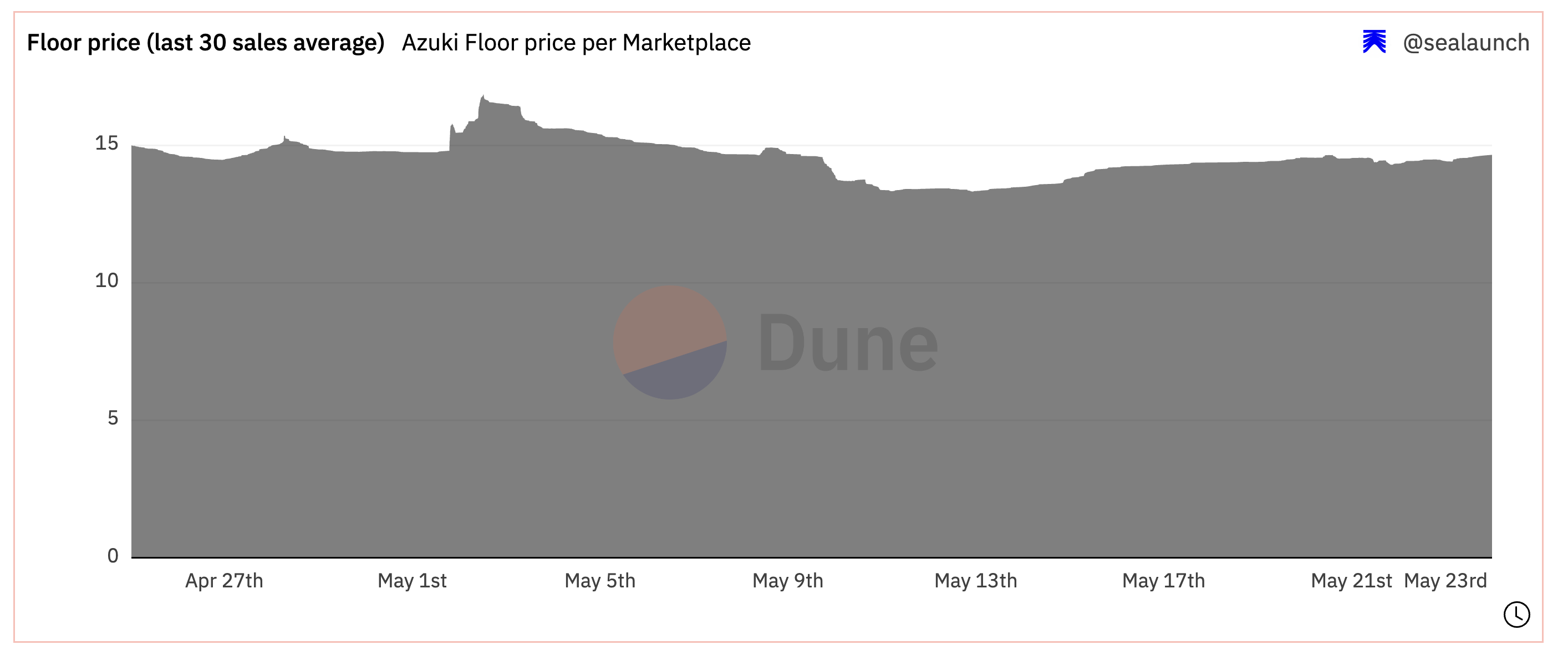
Azuki is a Japanese-style PFP-type NFT, and it is one of the hottest NFT projects in 2022. Azuki has attracted market attention mainly due to its three distribution methods: Dutch auction, whitelist mint, and public sale. Azuki's total sales even surpassed CryptoPunks and BAYC at one point.
Azuki has long started adopting fragmented NFT, fragmenting #Bobu, one of the IPs (to generate $Bobu tokens), and fragment holders form a DAO to determine the future development of Bobu. The fragmentation of Bobu has successfully lowered the threshold for new users to enter the Azuki ecosystem, and also rewarded the original Holder. So we can see that despite the volatile Q1 NFT market price, Azuki managed to overcome the bearish trend in terms of floor price and market cap. Blue-chip projects generally fell by as much as 50%, but Azuki bucked the trend, and the number of giant whales holdings rose and the chips were concentrated.
• Fractional_art
In the current lack of liquidity in the NFT market, it is necessary to further enhance the demand for NFT application scenarios, and maximize capital utilization by lending NFT in exchange for cash liquidity. In addition, users choose to mortgage NFT instead of selling NFT, which also helps to alleviate the problem of oversupply.
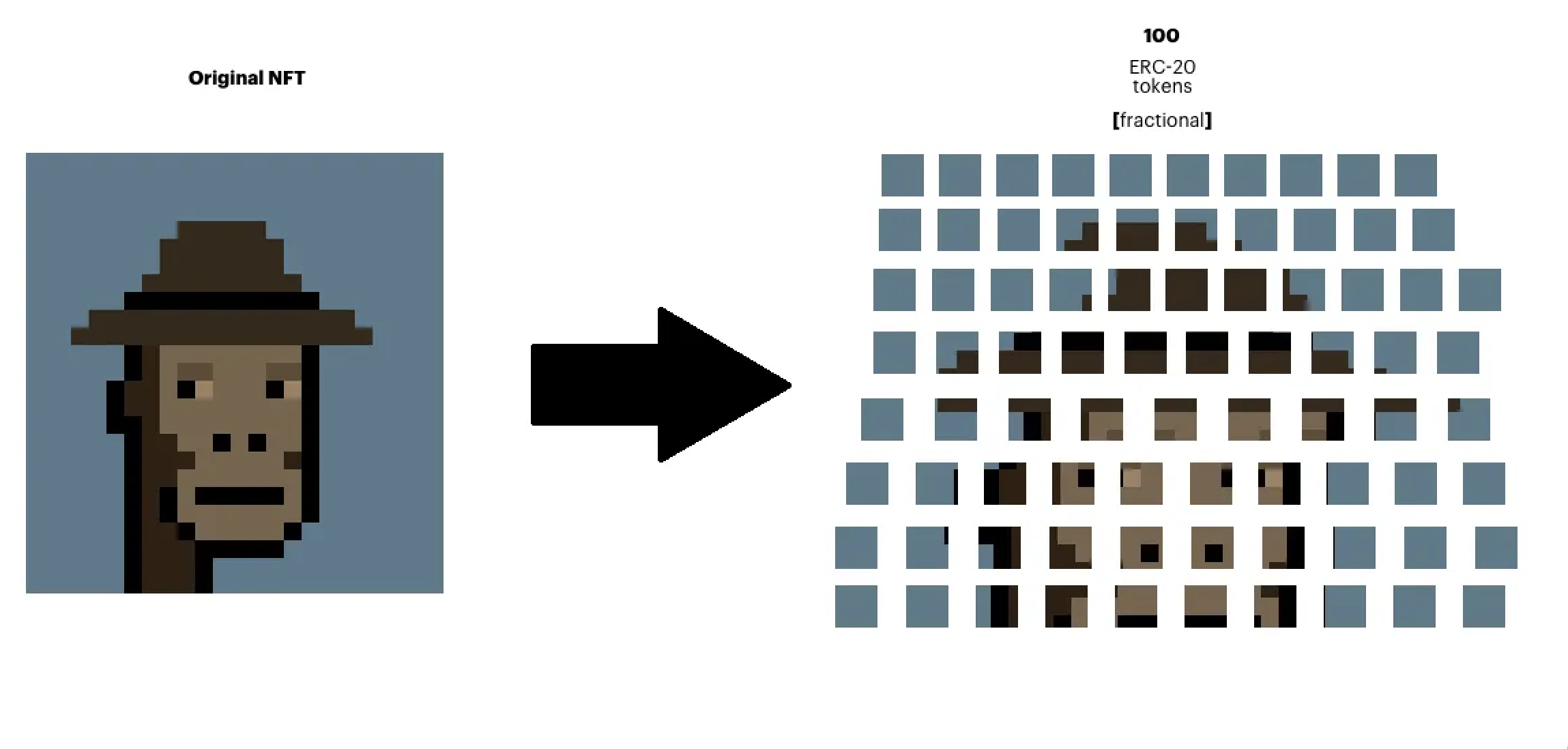
Fractional is a decentralized protocol that fragments NFTs. It is one of the NFT market liquidity solutions and splits a given NFT into multiple parts that can be traded separately in the market.
Fractional is the leading project of NFT fragmentation. Once users own NFT fragmentation tokens, they have the right to vote on the bottom price of NFT. The fragmentation of NFT is conducive to activating more ways to play NFT, and also lowers the threshold for everyone to participate in the NFT market. For blue-chip NFT projects with high unit prices, it greatly reduces the threshold for users to participate, and can also improve asset liquidity. With the development of technology, NFT fragmentation will become more flexible and intelligent. If it is fully utilized in many blue-chip NFT projects, its application market will be particularly large.
first level title
4. Opportunities and development of NFT in the second half of the year
The NFT market is still an emerging market in its early stages. The explosion of the NFT market in 2021 is mainly driven by the cryptocurrency market and celebrity endorsements, and people flock to enter the market. Since relatively few people understand NFT, there will be a long-term oversupply in 2022. Although the ups and downs of the Q1 NFT market in 2023 also prove that the NFT market is still alive, we have seen that the upsurge triggered by the Ordinals protocol has brought good data, but because there are no new narratives and hot spots continue to emerge, it is impossible to maintain the market heat.
As a digital product, NFT is produced as a piece of standardized software code executed on the blockchain, which is highly dependent on the properties of the underlying blockchain protocol. The safety and security issues of NFT should not be underestimated. Most NFTs are minted on the Ethereum network. The development of Ethereum Layer 2 is actively aimed at solving the problem of the scalability of the Ethereum network. The current blockchain technology is in a period of rapid development, but its security and privacy are not perfect. Hackers carry out fraudulent activities such as theft, network attack or fake disk. These problems remind us to raise security awareness to prevent scammers from taking advantage of it.
Conclusion:
Conclusion:
Reference:
https://www.bitkeep.com/
https://para.space/
https://dune.com/browse/dashboards? q=NFT&tags=NFT
https://www.nftgo.io/
https://www.nansen.ai/
https://trends.google.com/trends/


