Comparing the application chain progress of Polygon and Avalanche in multiple dimensions



On March 22, the NFT game Aavegotchi announced that it is using Polygon Supernets to launch its own blockchain Gotchichain. After multi-chain ecosystems such as Cosmos and Polkadot, Avalanche, Polygon, etc. have also successively launched exclusive App Chains (application chain) services. This article will compare the Subnets and Supernets solutions launched by Avalanche and Polygon, which are both Layer 1, from multiple dimensions. .
Introducing Polygon Supernets and Avalanche Subnets
Both Polygon and Avalanche are Layer 1 blockchains that are compatible with EVM and have benefited from the value spillover of Ethereum.
Polygon claims to be the "Swiss Army Knife" for Ethereum expansion and provides a variety of expansion solutions, including Polygon PoS side chain, EVM equivalent zk Rollup solution Polygon zkEVM, Polygon Supernets for application chains and zk-optimized which is not yet online. Rollup scheme Polygon Miden. Polygon Supernets is an iteration of the original Polygon Edge in the ecosystem, aiming to implement an EVM-compatible, application-specific sovereign blockchain. Polygon Supernets are designed as "supernetworks" that provide developers with more features and functionality, allowing them to easily build and deploy blockchain-based solutions.
Avalanche Subnets allow everyone to customize private or public blockchain networks according to their own needs. Subnets can be seamlessly connected to the Avalanche ecosystem without competing with other applications for network resources, enabling unlimited expansion. With the increase in fees on the Avalanche C-chain, Subnets can also reduce transaction fees for users on Subnets while the overall transaction volume in the Avalanche ecosystem increases.
Both Polygon Supernets and Avalanche Subnets are customizable to meet the needs of specific applications, and in most application scenarios they are competing.
Performance
Although both Polygon Supernets and Avalanche Subnets are App Chains solutions, they have some similarities and differences in the implementation details.
EVM: Both support EVM, and Avalanche Subnets also supports custom virtual machines.
Cross-chain bridge: There are cross-chain bridges to Polygon or Avalanche, which can access the ecology on the corresponding Layer 1.
Consensus mechanism: Polygon Supernets is the IBFT equity proof or IBFT authority proof mechanism, and Avalanche Subnets is the Snowman consensus mechanism.
TPS: 1500+ for Polygon Supernets and 4500+ for Avalanche Subnets.
Validators: The maximum number of validators for Polygon Supernets is 100, and there is no limit for the number of validators for Avalanche Subnets. Validators on Avalanche Subnets need to verify the main network at the same time.
Validator pledge requirements: Both need to pledge the native tokens of the corresponding public chain, which are 20,000 MATIC and 2,000 AVAX respectively.
official support
Both Polygon and Avalanche have official incentive programs for Supernets and Subnets. Launched in February 2022, Polygon Supernets said in March 2022 that it plans to invest $500 million in projects interested in developing on the Supernet. On March 22 this year, Polygon announced that ten companies in the fields of games and DeFi will launch their own Polygon Supernets. Over the past year, Polygon Labs developers have worked hard to upgrade the Polygon Supernets technology stack, address community feedback, and make it easier for projects interested in launching proprietary chains to use Supernets.
In March 2022, the Avalanche Foundation launched a Multiverse Incentive Program of 4 million AVAX (valued at $290 million at the time) to accelerate the development of Subnets. Avalanche Multiverse’s first collaborators include DeFi Kingdom, Aave, Golden Tree Asset Management, Wintermute, Jump Crypto, Valkyrie, and Securitize. Aave founder Stani Kulechov said that Avalanche Subnets can create an ideal environment for institutions to move online and let everyone experience the power of these protocols as users.
Application status
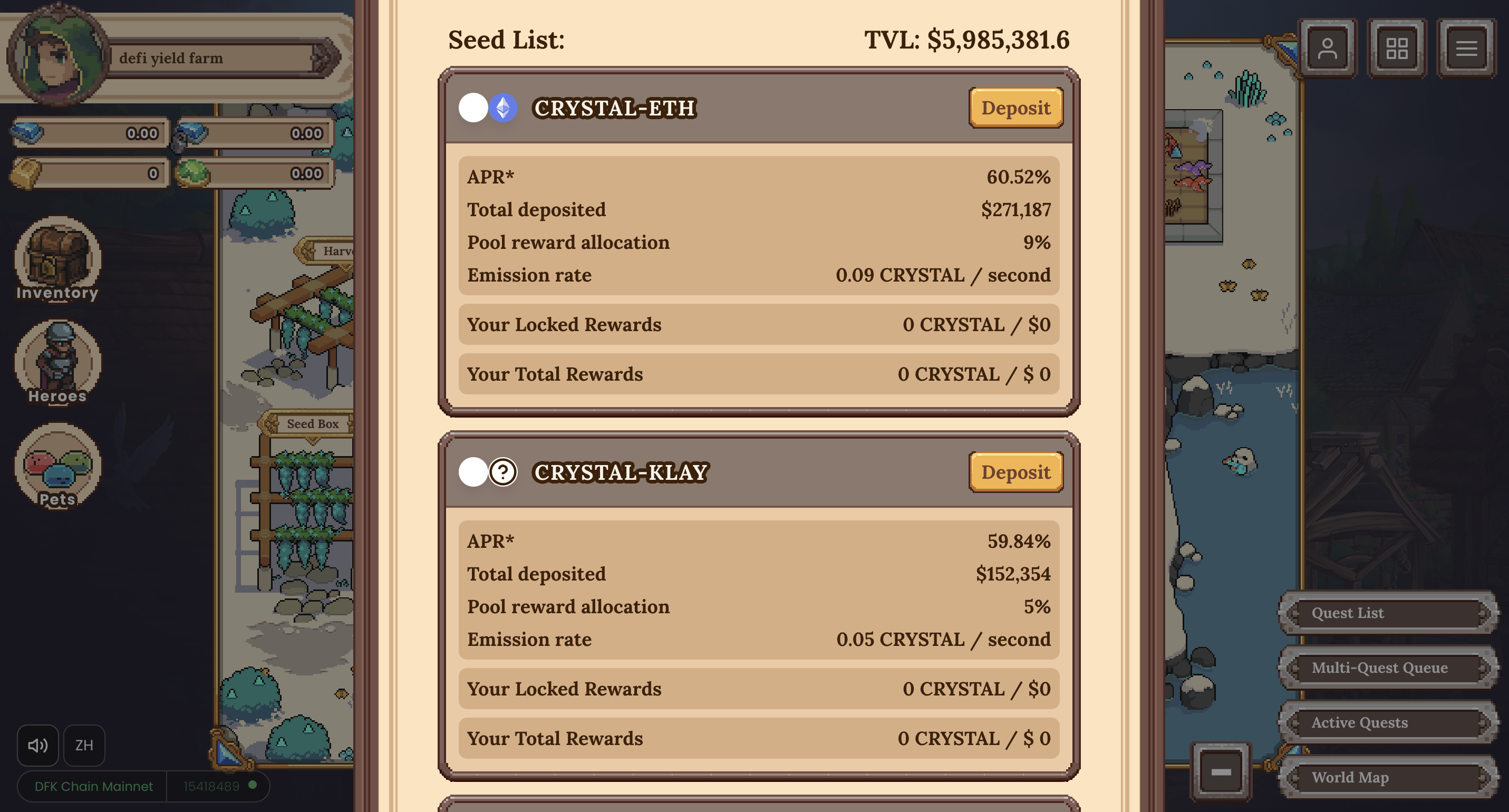
Avalanche Subnets allow projects to design blockchains according to specific business needs, and can perform KYC and other customized functions to promote the mass adoption of Web3. As of March 29, the Avalanche Subnets official website shows only two games that have been launched, Crabada and DeFi Kingdom, and games such as Wild Life, Shrapnel, and Ascenders will be launched soon. DeFi Kingdoms is a representative project on Avalanche Subnets. When the Multiverse incentive plan was launched, Avalanche announced that it would provide DeFi Kingdoms with rewards of up to 15 million US dollars. DeFi Kingdoms was originally built on Harmony with the native token $JEWEL. After being deployed on Avalanche Subnets and independent as DFK Chain, $JEWEL can also be used to pay Gas fees while serving as a governance token, and a new token $CRYSTAL was issued on DFK Chain. According to current data, the deployment of Avalanche Subnets has not ushered in new opportunities for DeFi Kingdoms. As of March 29, the price of the native token $JEWEL was $0.188, which has fallen by more than 99% from the high of $21 in January 2022, and the liquidity on DFK Chain is less than $6 million.
summary
summary
Judging from the current situation, both Polygon and Avalanche have invested a lot of resources in their respective application chain solutions Supernets and Subnets, such as using native tokens for incentives, and cooperating with other industry providers to provide customized services, so that related projects can be completed quickly deploy.
However, there are currently no representative projects for these two solutions. DeFi Kingdoms has not performed well after being deployed to Avalanche Subnets. It can be seen that for project parties, App Chain is not a good medicine for growth. The Polygon Supernets main network has not yet been released, and the focus of Polygon's expansion solution is a variety of solutions including zkEVM. Previously, the market had predicted that the application chain would bloom everywhere in the future, and PANews will continue to pay attention to how the application chain will develop in the future.