Valuation framework and market value forecast of 12 mainstream public chains: which ones are overvalued or undervalued?



Compilation of the original text: The Way of DeFi
Compilation of the original text: The Way of DeFi
At any point in time, you can think that the valuation of the blockchain platform is determined by 3 aspects, including:
adoption and use
platform moat
Crypto Market Conditions
How do these 3 factors affect the valuation/market cap of Token?
1. Adoption and use:
This is the fundamental valuation driver. Users need a chain's native Token to pay transaction fees. More active users means more people need to hold at least a certain amount of the aforementioned tokens, leading to higher token demand and pushing prices up.
This is a mechanical relationship that has nothing to do with speculative demand or expectations of price appreciation. So it's a long-term valuation driver.
2. Platform moat:
This affects investors' risk assessment of the platform. If a chain is perceived as having a large moat -- say, it's been around for a long time and has a strong community -- then more people will consider it a safer bet.
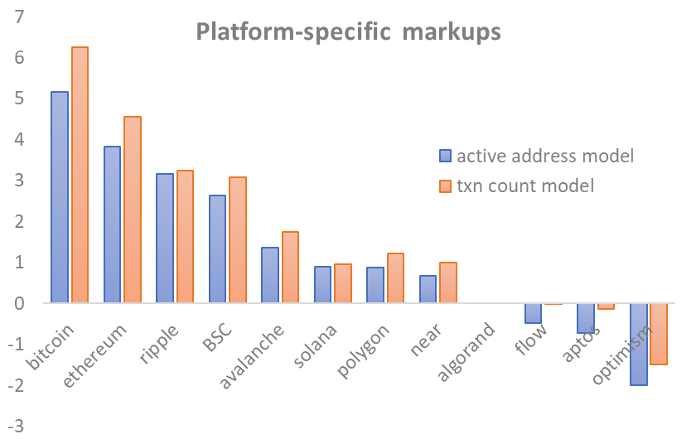
Whether this view is correct is a question. The key is that the perception of a larger moat and lower risk enables Token to obtain a premium, other conditions remain unchanged. I call this a "platform-specific markup" (later, you'll see what markups refer to for various chains).
3. Crypto Market Conditions:
Investor sentiment -- such as the level of risk appetite -- affects demand for all tokens. The same is true for overall crypto adoption levels. Without the background of the overall encryption market, the valuation of a single Token is out of the question.
We can use active addresses or transaction counts to measure the adoption and usage of a chain, while using the total crypto market cap to represent market conditions. This way we can get:
Valuation of a chain = a 1 * (active address or transaction count) + a 2 * (total crypto market cap) + (platform specific markup)
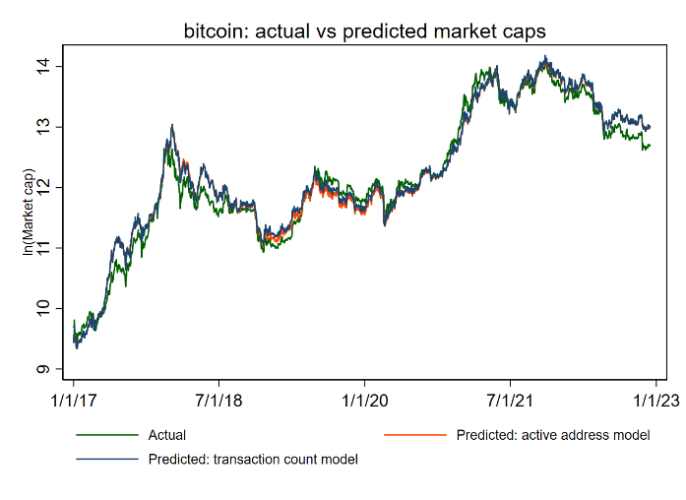
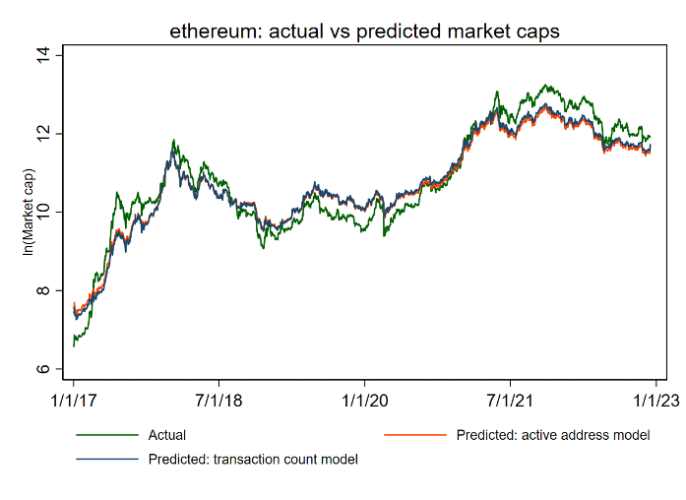
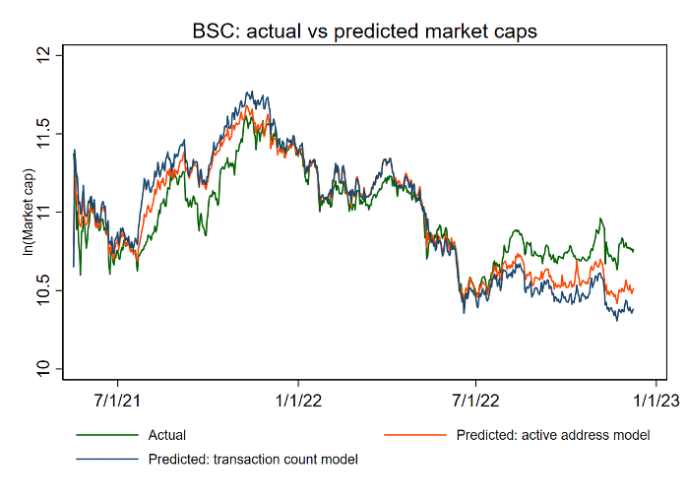
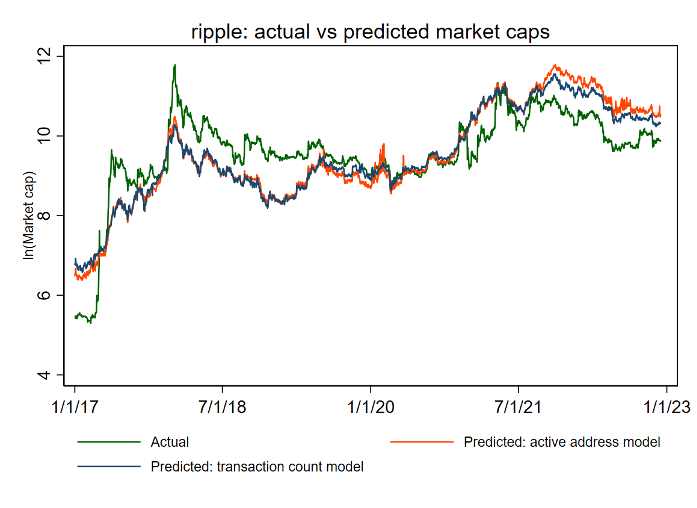
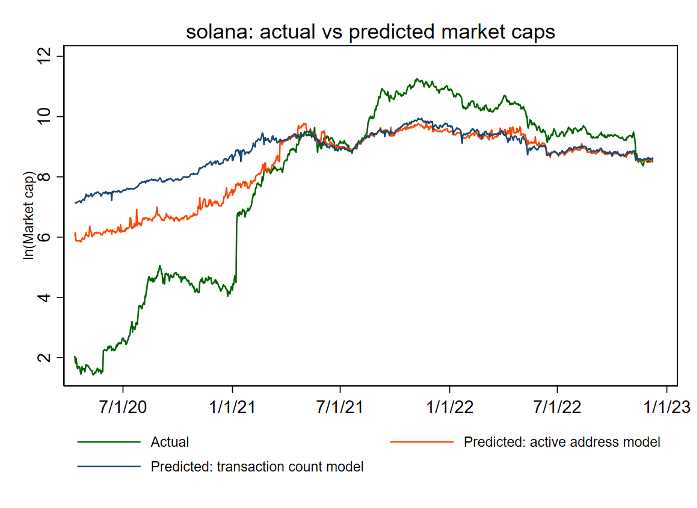
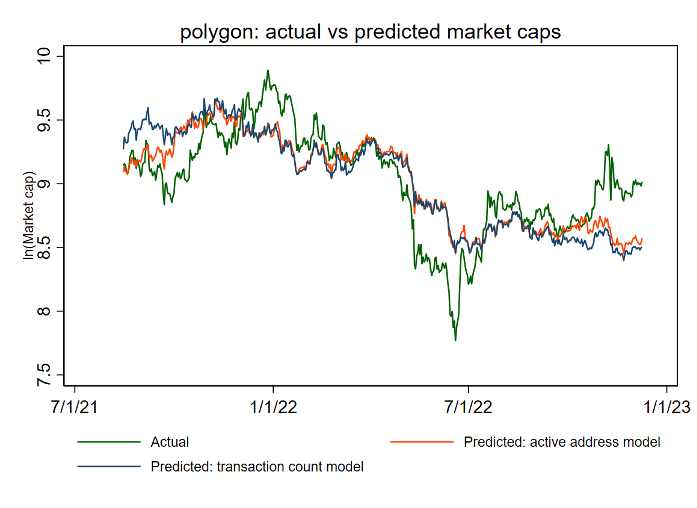
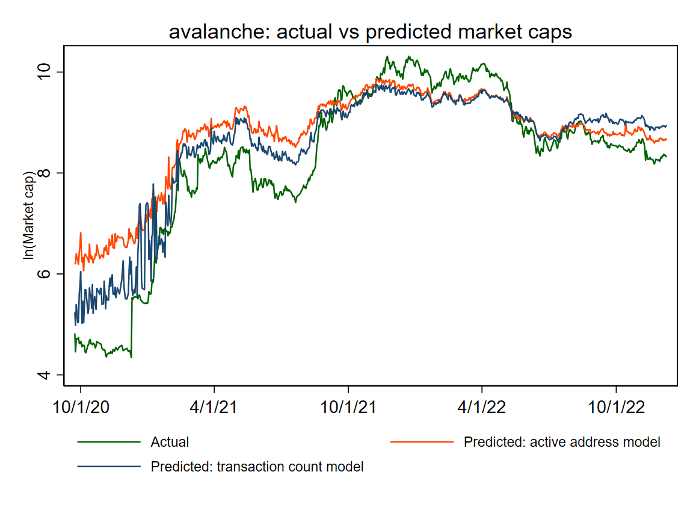
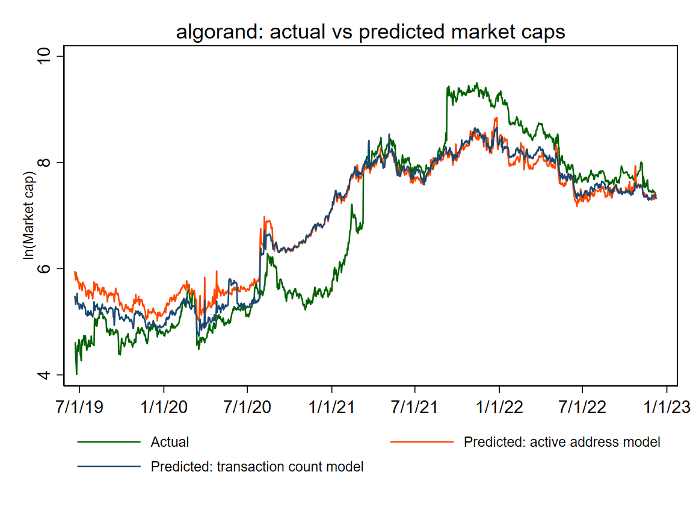
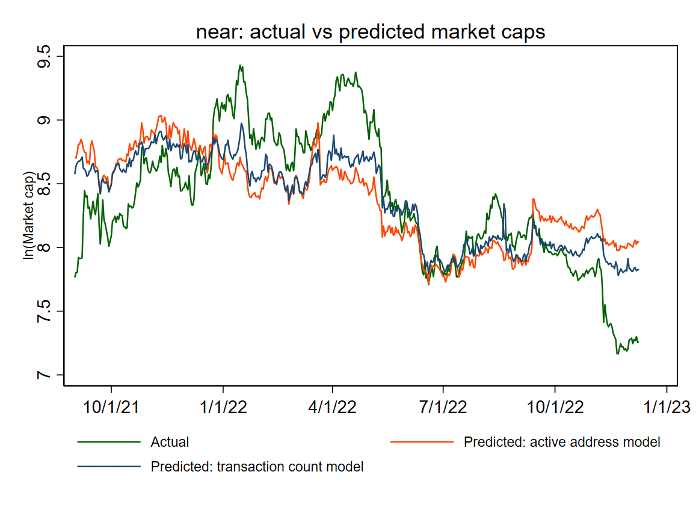
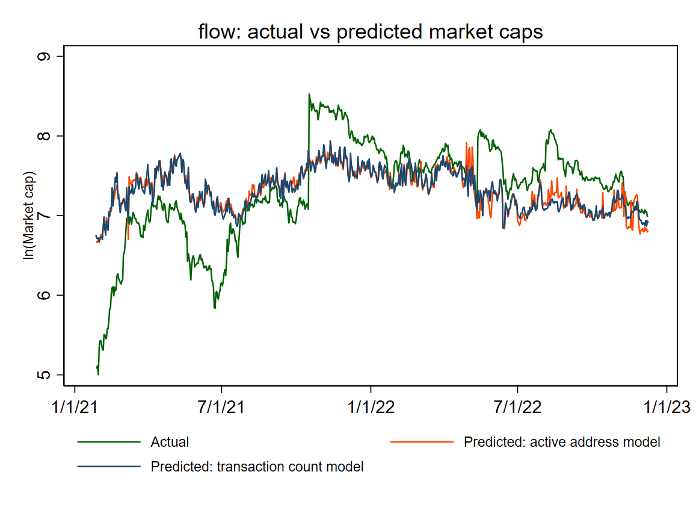
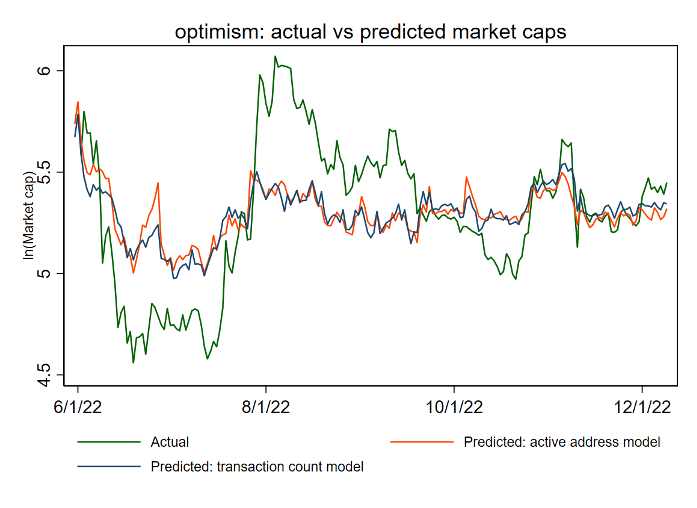
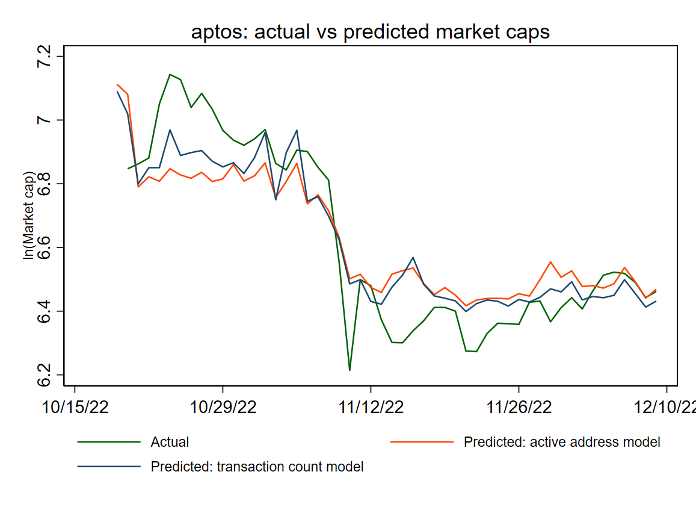
The chart below shows the actual market capitalization (logarithmic) and the model predicted market capitalization of 12 major blockchains. These two models measure chain adoption using active addresses and transaction counts, respectively.
About Terminology
I call the period when the actual market capitalization (green line) is higher than the projected valuation (red and blue lines) as the "overvaluation period", and vice versa as "undervaluation".
These are awkward terms, because to say something is overvalued or undervalued implies that there is an objective, fixed true value somewhere.
The reality is that all valuations are relative. A chain's valuation today can only be assessed against its past and overall cryptographic context.
(It's like your physical location - a concept that seems real and reliable, but is really just location relative to the earth)
What "overvalued" here really means is that the current market capitalization is higher than what investors have historically valued the platform if the current level of adoption and crypto market conditions are taken into account.
However, this is just word of mouth. So we still stick to "overestimated" and "underestimated" for now.
Ethereum
Ethereum
BSC
Ripple
Solana
Polygon
Avalanche
Algorand
Near
Flow
Optimism
Aptos
Below is a ranking of the gap between actual and estimated market capitalization as of two weeks ago, arranged by chain. Likewise, positive gap = overvalued, negative gap = undervalued.
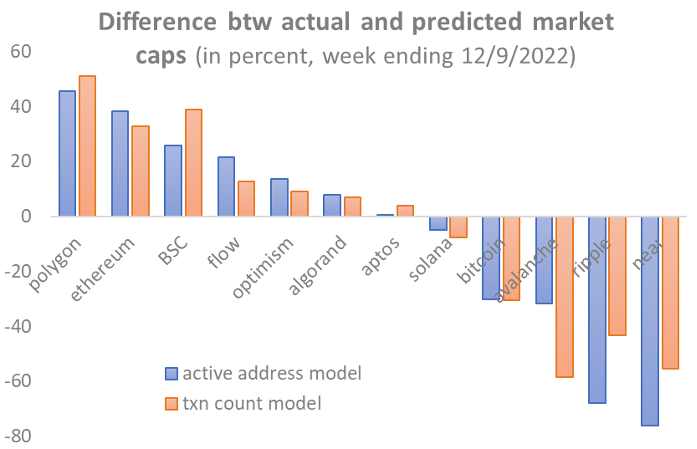
The results show that the most overvalued chains currently are:
Polygon
Ethereum
BSC
Flow
The most underrated chains are:
Near
Ripple
Avalanche
Bitcoin
The rest -- Optimism, Aptos, Algorand, Solana -- areA small difference of < 10%. I think these are more or less within the margin of error.
I know these results will touch a nerve in some people. If your favorite chain isn't in the category you want to see, there are a few things to be aware of:
First, these are empirically estimated results. I am not imposing any personal opinion. So there is no need to shoot the messenger.
Second, there are a thousand reasons why these results do not apply to the "current situation" -- the so-called "this time is different" phenomenon.
For example, you could say that the price of chain xyz is higher now because the token supply is decreasing, or that the market is pricing in higher growth prospects because big projects are about to go live. Or the price of chain XXZ is lower because it is actually dead or dying.
Are these all valid reasons? sure.
But no matter how good the reasoning, keep in mind that periods of overvaluation have historically been followed by tokens underperforming the overall market in the following year. This overvaluation-underperformance relationship is very strong.
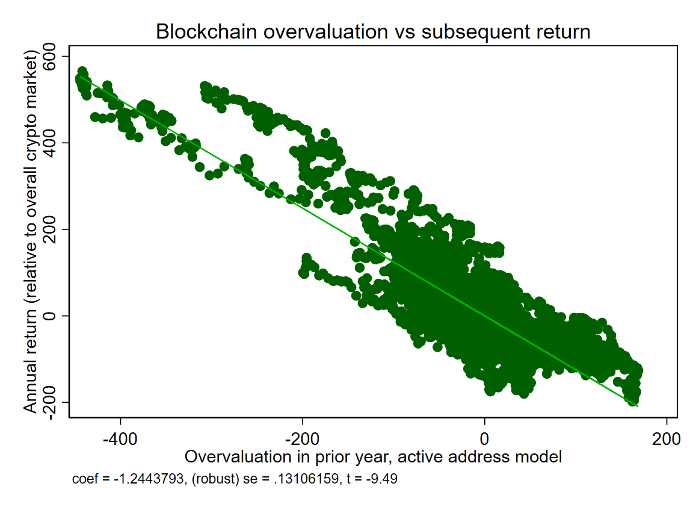
Can the case you have in mind really be an exception? Is it statistically possible?
Third, although these valuation gaps often represent regressions, with periods of overvaluation or undervaluation typically lasting 6 months to a year, there is no way to accurately predict how long they will last.
Just because a chain looks undervalued today, doesn't mean it will correct itself tomorrow, and vice versa. The typical "value investor" trap is to buy something that appears to be undervalued, and it will remain undervalued forever.
When you believe something is undervalued, a better approach is to put it on your radar. But only buy if you see some indication that the trend may be turning.
Finally, here are estimates for platform-specific markups. Again, these measure a platform's moat or perceived risk level. If a chain is considered to have a greater moat, i.e. is more likely to continue to survive and grow, then it can command a higher price for the same level of adoption and usage.
Among these markups, there are a few patterns that stand out. You are very smart. I'm sure you can discover what they are.
Finally, while these valuations are based on data from 12 public blockchains, the same framework can be used to evaluate other blockchains, and in fact any tokenized project with potential for network effects, such as gaming platforms, can use this frame.
Original link