






Comprehensive analysis of Blur: Will NFT transactions be raised to new heights?


This article comes fromcryptobriefing, original author: Timothy Craig
Odaily Translator |
Odaily Translator |Blur's daily transaction volume is equivalent to more than 4.6 times that of OpenSea。
secondary title
What is Blur?
Blur is an NFT marketplace and aggregator designed for professional traders with many innovative features.
Recently, as Blur will start the third round of airdrops, the transaction volume and floor price of blue-chip NFTs such as BAYC and Azuki have risen rapidly. So what kind of power does this platform have that can affect the entire NFT market? Next, let us comprehensively analyze and score from five aspects: ease of use, function, team, token economics and market competitiveness (note: the full score for each item is 5 points).
secondary title
1. Ease of use (3 points)
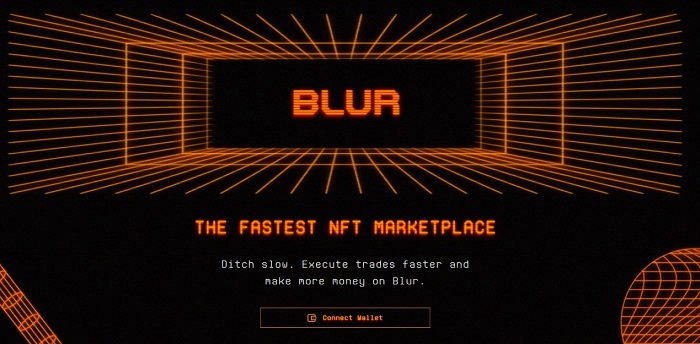
Using Blur is simple. After navigating to the platform's landing page, users are prompted to connect their Web3 wallets (MetaMask, WalletConnect, and Coinbase wallets are currently supported) and start exploring the various NFT collections on the site.
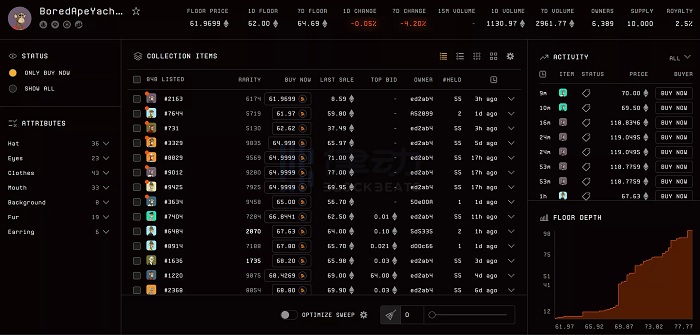
By default, collections are listed in order of daily trade volume, and some key data is displayed (such as floor price, number of holders, and various price and volume indicators). Users can also view all Ethereum-based NFTs in their wallets through Blur's Portfolio tab, and then easily track listed NFTs and their rarity, estimated collectible value, and lifetime profit and loss statement.
The Blur interface is customizable, and users can switch between multiple views (such as lists and tiles) according to their preferences when browsing NFT collections. Unlike OpenSea, where users need to switch tabs to view sales history or other analytics, Blur displays everything on a single page, making it easier to access and compare all relevant NFT collectible data, and other accessibility features are also standard. Features such as light and dark modes, gas fee tracker and ETH price feed data, etc.
But overall, Blur isn't difficult to use, but could definitely become more popular.
secondary title
2. Function (5 points)
In terms of functionality, I give it full marks without hesitation.
The Blur platform operates ten times faster than other NFT aggregators, showing pending transactions on NFTs in less than a second and updating the list every four seconds. The lightning-fast display of pending transactions, combined with near-instant metadata updates on collectible art displays, offers Blur users who want to "snipe" NFTs a huge advantage. Additionally, Blur's gas priority presets help users "beat" opponents who buy NFTs through other exchanges or aggregators. Most importantly, Blur's contracts are more optimized than other markets, saving users up to 17% in gas fees.
Another well-received function of Blur is that it can clearly display the rarity of different NFTs and the floor price under specific attributes. Find the lowest-priced NFT list based on individual characteristics. This feature can not only help users accurately evaluate their own assets, but also benefit NFT buyers who want to "buy the bottom".
If you have to fault the Blur function, it can only be said that they only support Ethereum now, but the Blur team has hinted that future plans will integrate other chains such as Polygon.
secondary title
3. Team and supporters (4 points)
However, the entire Blur team is anonymous at this stage, only disclosing members have extensive experience in MIT, Citadel, Five Rings Capital, Twitch, Brex, Square and Y Combinator.
secondary title
4. Token economics (3 points)
Up to now, Blur has launched two airdrops. The first airdrop was launched in October. Users need to list an NFT on the Blur platform within 14 days to participate; the second airdrop was launched on December 5, and the scale is the first ten times. The second round of Blur airdrops is calculated based on the NFT listed on Blur, based on the possibility of its being sold and the dynamic points of the NFT collection; full royalties get 2 times the points; traders get 5% extra points for sweeping 3 times, and sweeping 6 Earn 50% extra points each time. Earn credits for Blur's third airdrop, Blur's final and largest, when users place a bid, and is expected to begin in January 2023.
secondary title
5. Market competitiveness (5 points)

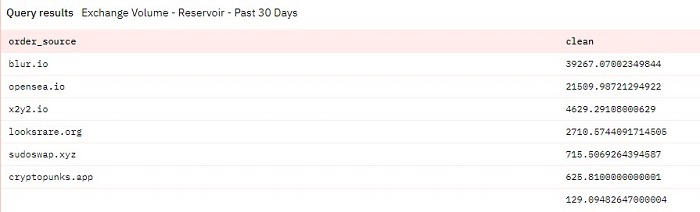
Blur has attracted a large number of users in just two weeks after its public release, and surpassed Gem in three days after its launch, becoming the NFT aggregator with the highest sales. According to the latest data from Dune Analytics, the current total transaction volume of Blur has reached 286,476 ETH, which is more than 360 million US dollars based on the current price. The total transaction volume has reached 869,750, of which the number of independent buyers is 57,706.
secondary title
final thoughts
final thoughts
Despite the current crypto winter, there is an active and dedicated team of developers who believe in the long-term vision of crypto. From a technical standpoint, Blur beats out other NFT marketplaces and aggregators,
But while there's nothing wrong with the quality of what Blur offers, mass adoption remains a concern. Professional users may find the experience good, but beginners may feel that the features offered by Blur cannot match the ease of use offered by marketplaces such as OpenSea. Blur also has the potential to grow its user base as crypto and NFT apps become more popular, but if it wants to outperform OpenSea, it needs to take care of both professional users and "newbies" to make its platform more accessible and friendly to a wider audience.


