This article sorts out the global NFT financial supervision situation and policies and regulations



Original title: "All Information About Global NFT Financial Regulation"
Original source: DappRadar
Financial regulators and consumer protection agencies have expressed concern about NFTs, although their approach varies globally. Users from many jurisdictions may participate in NFT transactions, and it can be difficult for developers to understand the legal situation of their NFTs in various regions. In this article, we examine regulations around the world regarding NFTs.
What are NFTs?
NFTs are digital collectibles, or "non-fungible tokens," that use blockchain technology to authenticate and verify real items, or to provide uniqueness and value to digital objects. They are also a current phenomenon, with thousands of artists taking advantage of the unique features of this new tool to add value to their work globally.
Initially, NFTs invested in the visual arts industry, offering new ways to make and use artwork and revolutionizing the market.
However, the real revolution of "tokenization" has yet to show its effects: it will empower more customization and enable interactions that were not possible before.
If you're interested in cryptocurrency regulation, read our latest guide.
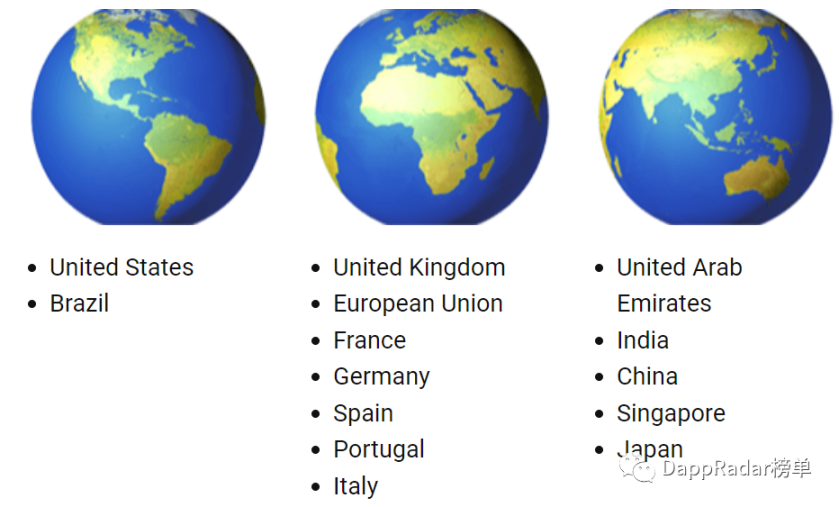
NFT regulations per region
U.K.
U.K.
The UK has no specific rules for NFTs. Instead, NFTs are considered a type of crypto asset. In its advice, the FCA distinguishes three types of crypto assets: security tokens, e-money tokens and unregulated tokens. If an NFT meets the characteristics of a security token, it will be considered a designated investment under the Financial Services and Markets Act 2000 (Regulated Activities). If an NFT is an electronic money token, it will be governed by the Electronic Money Regulations 2011.
standard:
Security tokens provide rights and responsibilities to defined investments such as stocks, savings, and insurance.
Electronic money is an electronic store of monetary value.
Marketing an NFT requires FCA approval if the NFT fits into one of the above categories. This would subject NFTs to money laundering regulations and require KYC checks and oversight of purchasers.
However, the vast majority of NFTs do not meet the above criteria and will therefore remain unregulated.
European Union
To date, the EU has no formal regulation or legal definition of NFTs, nor has it established a unified regulatory plan among member states.
The European Commission has issued the Regulation on Markets in Cryptoassets (MiCA), which explicitly excludes NFTs in 2020.
However, the proposed regulation should specifically apply if the NFT confers on the holder certain rights, such as rights to financial instruments, including usufruct rights or other interests.
The Council of the European Union approved the MiCA framework in October 2022, with the next step to be voted on by the European Parliament on 10 October. The text states:
Insider trading, market manipulation and insider information related to crypto assets must be regulated;
Custody providers will have to implement strict requirements to protect consumers' wallets;
ESMA (European Securities and Markets Authority) will create a public register of non-compliant crypto asset service providers;
The issuer of the asset reference token shall ensure that the holder has the right to redeem it at any time;
EBA (European Banking Authority) will classify any asset reference token;
Proof-of-work is not banned, but information about the environmental footprint is required to be published;
DeFi (only if cryptoasset services are 100% decentralized) will be excluded from MiCA
NFT - MiCA will avoid any attempt to circumvent regulation by using these tokens as security tokens or other related tokens. NFTs will also be subject to any applicable national laws.
If approved by Parliament, the policies will come into force in 2024.
France
Although digital assets are regulated in the 5th Anti-Money Laundering Directive, France currently does not have a legislative framework for NFTs. Suppose French law recognizes NFTs as tokens or digital assets. In this case, this may limit its marketing and promotion, and traders need to register as digital asset service providers.
Germany
Germany
In 2021, the German government stated that it does not anticipate changes to the legal system in light of the introduction of NFTs. However, NFTs may fall under the jurisdiction of certain laws in Germany.
NFTs that meet the definition of a crypto asset or are used for investment purposes will be subject to anti-money laundering regulations, while NFTs that meet the definition of a financial instrument will need to obtain an additional license.
The Federal Financial Supervisory Authority (BaFin) will require a license from anyone wishing to sell NFTs that are considered financial instruments, and issuers of NFTs may require a license if the NFT qualifies as a security under the Prospectus or as an investment in assets under local law. Publish the prospectus.
Spain
NFTs are not specifically regulated in Spain, although they can be protected by anti-money laundering laws if they meet the criteria for virtual currencies.
To trade, transfer, or provide custody services for investment-qualified NFTs, businesses or individuals must register as virtual asset service providers.
NFTs in Spain will also be subject to its underlying asset management regulations. Spain’s Ministry of Consumer Affairs said earlier in 2022 that it was considering regulating cryptocurrency games. To ensure investors understand the risks, it has also instituted regulations for marketing crypto assets.
Portugal
Like other member states, Portugal does not have a legislative definition or explicit regulation of NFTs; nevertheless, if an NFT meets the criteria for a virtual asset, it will be subject to anti-money laundering requirements.
Italy
Italy
Pursuant to Article 1, paragraph 1, of the Italian Consolidated Financial Law, NFTs may qualify as"Investment goods"conditions, although Italy has no special rules regarding NFTs. This places additional responsibilities on the seller, such as licensing.
Again, a case-by-case analysis is required, but if an NFT meets the criteria for a virtual currency, it would be subject to anti-money laundering obligations.
Finally, from a financial point of view, similar to income taxation, this must be taken into account if the NFT is considered a transfer of intellectual property and the transferor acts as an author on a regular or only occasional basis.
In order to determine whether VAT applies and whether the transfer complies with copyright law, it is necessary to determine whether the author is subject to VAT.
USA
USA
NFTs are currently unregulated in the US. The applicability of regulation depends on the classification of a particular NFT, which generally depends on the rights and characteristics associated with that NFT. For example, the SEC revealed that it is reviewing possible illegal token offerings. Currently, under the Securities Act of 1933 and the Securities Exchange Act of 1934, a particular NFT may qualify as a security and be treated as such if it has characteristics of a security, such as an investment contract.
Typically, if a non-fungible token (NFT) has monetary value, it may trigger regulatory liabilities from the Financial Crimes Enforcement Network (FinCEN), such as the need to comply with a wide range of anti-money laundering laws. Non-financial transactions with these characteristics may also be subject to licensing requirements under national currency issuer legislation.
NFTs with monetary value are increasingly common in loyalty and incentive programs. Such NFTs may circumvent FinCEN and national currency issuance regulations, but there are other related requirements that must be strictly adhered to.
For NFT developers, selling NFTs on the market will require paying income tax. If investors buy NFTs and then sell them for a profit, they may be subject to capital gains taxes.
Brazil
In September 2022, Brazil’s Securities and Exchange Commission is said to intend to make improvements to the country’s cryptocurrency regulatory framework.
As defined in the adopted legislation, a virtual asset is a digital representation of value that can be exchanged or transferred electronically and used for payment or investment purposes. Additionally, it establishes techniques to deter money laundering and provides guidelines for best practices in know-your-customer (KYC) businesses. Non-fungible tokens (NFTs) are also not considered securities under the law, but most other tokens are still up for debate.
NFT regulations in Asia and the Middle East
united arab emirates
Abu Dhabi Global Market (ADGM) has just released a consultation paper titled “Proposals for Capital Markets and Virtual Assets Upgrade in ADGM”. ADGM suggested that in order to support NFT transactions, businesses will need a license from a free zone financial institution. Additionally, it believes that NFTs may need to comply with ADGM’s anti-money laundering and sanctions rules. The above content is still in the negotiation stage, and it is recommended that sellers and investors should keep it in mind.
India
India
India's Supreme Court in June 2018 rejected an order by the Reserve Bank of India advising banks not to trade cryptocurrencies. If NFTs are considered derivatives, then NFT trading will be illegal in India. It would be incorrect to classify an NFT as a derivative if it is merely a reference to an existing asset and used as proof of its authenticity. According to Section 14 of the Copyright Act, only the owner of a work has the right to "reproduce and distribute copies thereof".
China
China
Currently, China has no specific laws or regulations regarding NFTs, but on April 13, 2022, the National Internet Finance Association of China, the Securities Association of China, and the China Banking Association issued a joint initiative (“Initiative”) aimed at Prevent NFT-related financial risks. Although the initiative is not a rule stipulated by Chinese law, since these three organizations are supervised by the central bank, banking regulators and securities regulators, the initiative represents the views and policy direction of Chinese regulators to a certain extent.
The initiative does not classify NFTs as cryptocurrencies or virtual currencies. However, under the initiative, the following code of conduct must be observed:
Securities, insurance, credit, precious metals or other financial assets shall not be used as the subject matter of NFT to avoid the issuance or trading of financial products.
Do not reduce the non-fungibility of NFT by dividing ownership or batch creation, etc., to avoid a true initial coin offering (ICO).
It is not allowed to provide NFT with centralized transactions (such as centralized bidding, electronic matching, anonymous transactions, market makers, etc.), continuous listing transactions, standardized contract transactions and other similar transaction services to prevent the establishment of de facto trading venues;
Prohibit the use of virtual currencies such as Bitcoin, Ethereum, and Tether as pricing and settlement mechanisms for NFT issuance and transactions;
Conduct real-name authentication of issuers, sellers and buyers, maintain customer identity information and NFT issuance and transaction records, and actively participate in anti-money laundering work;
Singapore
Singapore
The central bank of Singapore stated that it will not control the NFT market. It believes this nascent market is still in its infancy and has no current plans to control any areas of individual investment.
Nonetheless, if an NFT meets the definition of a capital market product under Singapore’s Securities and Futures Act (SFA), it will be subject to MAS’ regulatory obligations. For example, if an NFT is constructed to reflect rights to a portfolio of listed shares, it will be subject to the same prospectuses, licenses, and business conduct regulations as other collective investment schemes.
Japan
Japan
in conclusion
in conclusion
The sale and purchase of tokenized artwork has raised concerns about its legality, as well as other legal issues, including the rights of NFT holders, the responsibilities of creators and holders, the application of several other cross-cutting laws, and post-first-sale copyright Attribution of Rights to Holders.
It’s clear that artists aren’t too concerned about the crypto-winter status of this burgeoning field, as our latest NFT report shows. NFT has not yet become a bubble; rather, it has sparked a new wave of innovation that has inspired bigger and better NFTs.
Andrius Serpenskas, DappRadar’s legal counsel, pointed out that “cryptocurrencies must be distinguished from NFTs.” Cryptocurrency is a type of money that has economic value and fungibility.
This means that, in a certain cryptocurrency, it makes no difference which crypto token you own; they all have the same value, 1ETH = 1ETH. However, NFTs are irreplaceable and their value goes beyond economics.
“The world of NFTs is constantly evolving as new blockchain technologies open up new cultural and financial opportunities. While laws are often slower than the trend, we’ve seen that, at least in some parts of the world, regulations are on the rise. Gradually starting to integrate into a tangible regulatory system." - Andrius Serpenskas, Legal Counsel, DappRadar
Original link