






Demystifying the "King of Encryption" a16z: "No one is more confident than Dixon"


Original title: "Chris Dixon Keeps the Crypto Faith》
Original title: "
Originally by Cory Weinberg, The Information
Original compilation: Biscuit, chain catcher
Andreessen Horowitz (a16z) became the king of cryptocurrencies with his multibillion-dollar investments in the crypto space, but now the space is full of negative news about falling prices, regulatory scrutiny, and more. Dixon is not holding back for now, and he will continue to pour money into cryptocurrency startups.
This summer, at entertainment executive Michael Ovitz's 28,000-square-foot mansion in Beverly Hills, Ovitz and venture capitalist Chris Dixon had dinner conversations about politics, startup investing and the economy. During this period, the topic shifted to a topic that Dixon is very familiar with: cryptocurrency.
"I'd call him all the time, and if there were some bad headlines, I'd joke with him, 'How do you feel about crypto right now?' But he never wavered," Ovitz told The Information in an interview. . "He didn't respond. He just said calmly, 'No, it's a long way ahead.'"
summary
summary
a16z's first crypto fund has already tripled returns for investors
Helium threatens Dixon as OpenSea in trouble
'Crypto Faith' Helps Dixon Win Early Funding
Dixon relies on cryptocurrencies more than any other investor. In the world of venture capital, he has backed many crypto startups and has a reputation for a firm that values the success of the crypto industry more than any of its peers. In nearly four years, he raised $7.6 billion for Andreessen Horowitz to invest in crypto startups, nearly triple the amount Dixon managed when he joined a16z in 2012.
Forbes this spring named Dixon the world's top venture capitalist for his pinpoint bets on companies like Coinbase and Dapper Labs. He has arguably become the key to a16z's future, as have the company's iconic founders Marc Andreessen and Ben Horowitz.
The remainder of the fund remains unrealized. In theory, the fund is on track for a 10-fold return on paper, but that could shrink as the current cryptocurrency downturn persists, two of the people said. According to Cambridge Associates, by the end of 2021, venture capital funds launched in 2018 have generated an average return on investment of about 1.7 times.
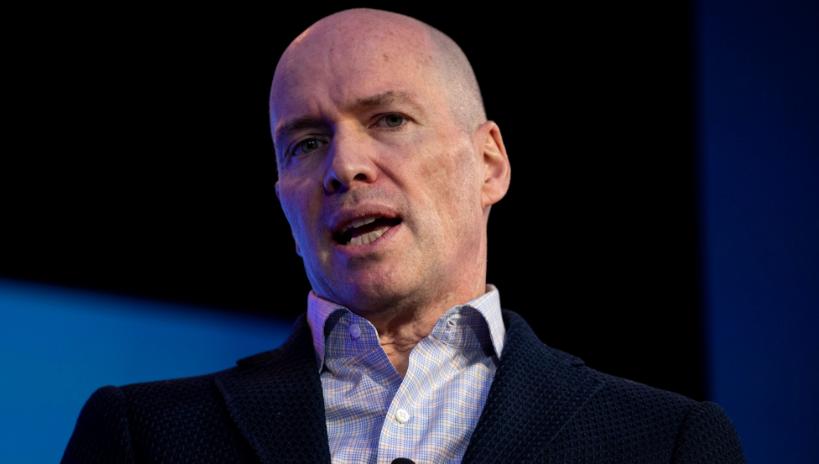
image description
a16z co-founder Ben Horowitz, image source: Bloomberg
But amid the cryptocurrency downturn, Dixon’s investment record began to show blemishes this year. In March, Axie Infinity, a blockchain game produced by a16z-invested developer Sky Mavis, was hacked when hackers stole $600 million worth of cryptocurrencies. Trading volumes on OpenSea, the NFT marketplace of which Dixon is a board member, have plummeted.
"These are devastating disasters," Liron Shapira said. He's a Silicon Valley entrepreneur and angel investor who has amassed a following on Twitter by editing videos and podcasts to expose venture capitalists' motivations for hyping blockchain technology.
“Many skeptics have long argued that such a model is flawed,” added Shapira, who was an early investor in Coinbase before becoming a cryptocurrency critic. "Now we see empirically that the skeptical argument is at work and has not been corrected..."
Dixon’s new model helps popularize cryptocurrencies, with investors buying early stakes in crypto startups’ tradable tokens, but it also creates legal and financial uncertainty. For the 18 crypto startups a16z has invested in, token prices have dropped an average of 68% over the past six months. In April, Dixon's portfolio of crypto companies, including Uniswap, a well-known crypto portfolio company, was sued by a token investor who accused them of illegally promoting securities after the tokens were devalued.
Crypto startups typically want higher valuations, and while some cryptocurrency founders have slowed down their fundraising efforts, Dixon’s team is still making deals. In the past month, the company has announced several new financings, including Sardine, which provides fraud detection for cryptocurrencies; Arpeggi Labs, which uses blockchain technology for music collaboration; knowledge graph network Golden, and more.
Dixon’s job may get tougher as regulators investigate securities fraud related to cryptocurrency and NFT exchanges. The SEC charged a former Coinbase employee with insider trading, while Kim Kardashian failed to disclose that she was paid to dump crypto securities. An ambiguous regulatory environment has discouraged venture capitalists from becoming board members of crypto startups.
Note: Gold. Kim Kardashian, the American socialite, has agreed to pay a $1.26 million fine to the SEC for a settlement of $250,000 for previously failing to disclose that she was paid for promoting the Ethereum Max token, and has agreed not to promote any Ethereum Max tokens for three years. encrypted assets.
“Dixon fostered a culture at the company of: Everyone is a missionary,” said Pruden, who now runs Aleo, an a16z-backed blockchain privacy startup. "It's early days, how do you measure success? It's not an easy question. You just have to believe that success will come."

image description
Screenshot of Axie Infinity. Image via Sky Mavis
Still, Dixon privately frets with colleagues about the price volatility of cryptocurrencies — including the collapse of crypto hedge funds and the frantic speculation on NFT artwork and other crypto assets that have diverted attention from the blockchain industry. The attention of blockchain technology, which is fundamentally reconnecting the Internet. He even helped popularize another term for the category — Web3 — because associations with financial scams have heavily polluted the word crypto.
The Web3 future he paints can be intoxicating. A database running on a network of computers called a blockchain keeps a transparent and secure record of transactions or decisions. Users of blockchain services can even gain financial interest in those blockchains, incentivizing them to grow the network and collectively make management decisions.
In the vision of Dixon and other Web3 followers, the Internet giants will eventually be reduced in size. Musicians, writers, artists and other creators will get a bigger share. Users will be able to vote on whether their social network should ban certain types of content. Huge advances in computing and security, and a lot of advanced mathematics, Web3 will make it all possible.
Critics do not accept utopian crypto rhetoric. Adam Fisher, a partner at Bessemer Venture Partners, said that even some of Dixon's fellow VCs remain skeptical that cryptocurrencies can live up to the conceptual hype. Many crypto projects may sound good, but they are far from proving that they can replace or improve existing financial services, social networks or applications.
"You've never seen such a polarized investment landscape," Fisher said.
Through a spokesperson for a16z, Dixon declined to be interviewed on this topic.
first level title
Discover the Fascination of Bitcoin
Friends, peers and former colleagues of Dixon agree that Dixon's eclectic background shaped his ability to sell his ideas to entrepreneurs and the public. The son of an English professor, Dixon learned to code as a child in Springfield, Ohio. He became interested in early versions of artificial intelligence and studied philosophy at Columbia University before heading to Harvard Business School in 2001.
After a stint at Bessemer Venture Partners, he launched and sold two companies in the 2000s and early 2010s — a security startup, SiteAdvisor, which he sold to McAfee for about $75 million, and another AI recommendation engine Hunch. Enter eBay for $80 million. That's what Dixon accomplished before he turned 40, and he went on to become a prolific angel investor, writing checks for companies like Foursquare, Hipmunk and Kickstarter, and presiding over a small New York City venture before the 2008 financial crisis. technology circle. Dixon began to make a name for himself in the startup community, blogging and advising entrepreneurs on everything from naming startups to studying law.
Shaival Shah, a former Hunch employee who now runs real estate startup Ribbon, said Dixon was thoughtful, direct, geeky and “a bit of an enigma.” He's not one for small talk, but he has definite advice for building a personal brand. Dixon had encouraged Shah to blog about his own business idea.
“As an individual, you need to represent something,” Shah recalls Dixon telling him, “You have to have an identity and not float like a drifter.”
When Dixon moved to the West Coast in 2013 to join Andreessen Horowitz as its seventh general partner, he had already discovered bitcoin's fascination. Dixon said at the time that his fascination with the first cryptocurrency to achieve mainstream acceptance stemmed from his habit of studying “what the smartest people do on the weekends” as a way to predict technology trends. “Today, cutting-edge tech hobbies include: Bitcoin and other math-based cryptocurrencies,” he wrote on his blog.
In early 2014, following a16z's initial investment in Coinbase, Dixon told Wired that he thought a single BTC would one day be worth $100,000. Although the highest price of BTC last year was about 64,000 US dollars, it has now fallen to around 20,000 US dollars.
Dixon has also benefited from investments in big tech companies. One of them is virtual reality startup Oculus VR, which was sold to Facebook in 2014 for $3 billion.
first level title
Crypto's "red pill"
In 2016, Dixon began expressing his frustration after an incident among bitcoin developers arguing over whether to use bitcoin as a platform for business applications or continue to focus on it as a digital currency. By the following year, however, Dixon found an alternative amid the rise of ethereum, which seemed to change his attitude, Dixon's friends said.
Ethereum, created by Russian-born programmer Vitalik Buterin, aims to use blockchain technology and cryptocurrencies to build a new computing network, not just create a digital currency. “Ethereum is the reason for his success. You can have a new computing paradigm that the community owns,” Pruden said.
Dixon got his wish. In 2018, he began building a dedicated crypto fund within a16z, recruiting former U.S. Department of Justice prosecutor Katie Haun, who is also on the Coinbase board. The fund started with $300 million and a few employees. It’s registered with the SEC as an investment advisor — not a venture capital firm — so Dixon and Haun can legally invest their capital in cryptocurrencies, rather than being limited to holding equity stakes in private companies. The following year, a16z also registered as an investment advisor.
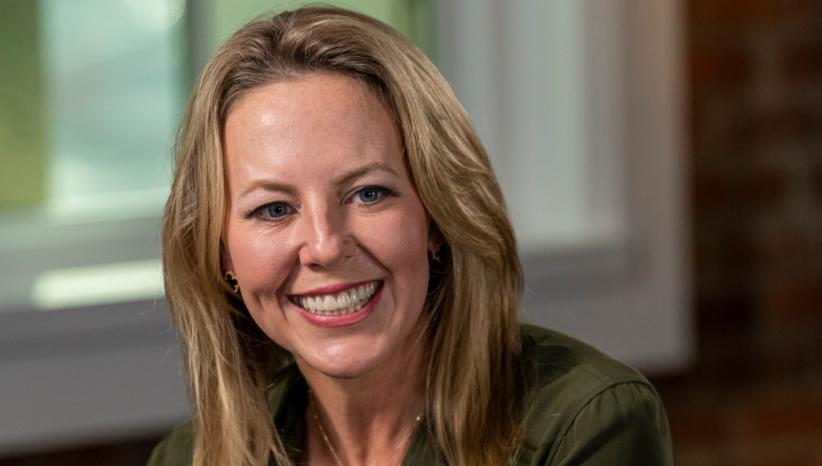
image description
Former a16z partner Katie Haun. Photo by Bloomberg
Dixon’s focus on the future of cryptocurrencies has also helped its rivals win key early deals. One of them is Anchorage Digital, a $3 billion cryptocurrency bank that Dixon invested in five years ago. The bank’s co-founder, Diogo Mónica, said the bank initially hoped to raise money from Sequoia Capital because the firm invested in his previous company, software maker Docker. But Sequoia didn’t have enough “conviction in cryptocurrency,” Mónica said (the company ultimately didn’t invest in Anchorage).
"No one has more confidence than Dixon," she said.
Dixon has continued to up the ante, raising $515 million for the firm's second and third crypto funds in spring 2020 and another $2.2 billion about a year later. He and Haun built a separate team outside of a16z's core business, giving them greater control over their own staff for events, communications and other key functions.
They hired more experts from the fields of cryptography and engineering, and attracted more investment partners from across the company. The company's Slack chat software is constantly buzzing, and Dixon often asks the company's investors to justify decisions or explain why they missed investment opportunities. Friends and former colleagues of Dixon said that despite being over 1.9 meters tall, Dixon did not have an overbearing personality. He's soft-spoken, rarely mentions names, and often wears an athleisure-like Crocs suit to the office.
While a16z has avoided some of the crypto industry’s biggest meltdowns — including crypto lending platform Celsius, which has filed for Chapter 11 bankruptcy, and collapsed stablecoin protocols Luna and UST — Dixon has had several failed investments as well. Last year, the value of the token of a cryptocurrency project called DFINITY — which aims to build a decentralized world computer — plunged about 95% in value after its initial coin offering (ICP).
Helium, a much-hyped wireless IoT startup backed by a16z, rewards people with tokens for setting up hotspots in their apartments. Helium has run into trouble after being accused of exaggerating its relationship with a business partner. The allegations have fueled questions about the distribution of rewards for its products. According to a Forbes report, half of the mined HNT went to the company’s employees, their friends and family, and early investors.
At the same time, a16z also experienced executive departures earlier this year. At the time Haun left the firm ahead of raising its fourth crypto fund, which totaled $4.5 billion when it was announced in May. Haun — who started her own crypto investment firm, Haun Ventures — recently told The Information that she is leaving peacefully.
Now, a16z is pinning its future more on cryptocurrency than any other mainstream Silicon Valley company. Some 22% of its assets under management are funds dedicated to cryptocurrency and blockchain startups. Venture capital firms are sometimes notorious for making premature technology bets, such as Kleiner Perkins' failed cleantech bet 20 years ago.
Sebastian Mallaby, a senior fellow at the Council on Foreign Relations, said: "If you bet all on something that is a mirage, you can destroy your reputation."
As skepticism about cryptocurrencies spread, Dixon said he was spending more time in online forums that were less hostile to the technology. He recently started posting more frequently on Farcaster, a small social network primarily used by programmers and built on the blockchain. a16z is supporting the network.
"The positivity on Farcaster is astonishing compared to the negativity on Twitter," Dixon wrote on Farcaster in early October, though his distaste for Twitter's tone hasn't stopped him from using it regularly.
Like many of his VC peers, Dixon has recently cut back on the Bay Area in favor of New York and Los Angeles, colleagues and friends say. He keeps a relatively low profile online. He doesn't have a LinkedIn account. His Instagram account mainly consists of photos of food and restaurants. His wife Elena Silenok's Instagram account does not post any photos of her husband.
Entertainment executive Ovitz said he believes Dixon will prove his bet on cryptocurrencies.


