






The value and potential of NFT from the perspective of public opinion


By oldlee (Twitter@NFToldlee), Web2 is engaged in the public opinion marketing industry, an expert in analysis and marketing of star entertainment industry
The original intention of building an NFT public opinion tool is actually very simple. In the popular cognition of web3, the value of NFT depends on the buyer's recognition of the project party and the marketing promotion around NFT itself. Therefore, it is difficult to understand its value before mint. Accurate judgments can be made based on the expected holding income.
The generation of all values is based on group consensus, and the consensus itself can be captured through public opinion. The value of a star is based on the love of fans, and the value of NFT can also be reflected in the belief of the holder.

In order to verify the accuracy of this point of view, I captured and analyzed the public opinion data of more than a thousand NFT projects, and initially summarized the correlation model between public opinion and NFT value.
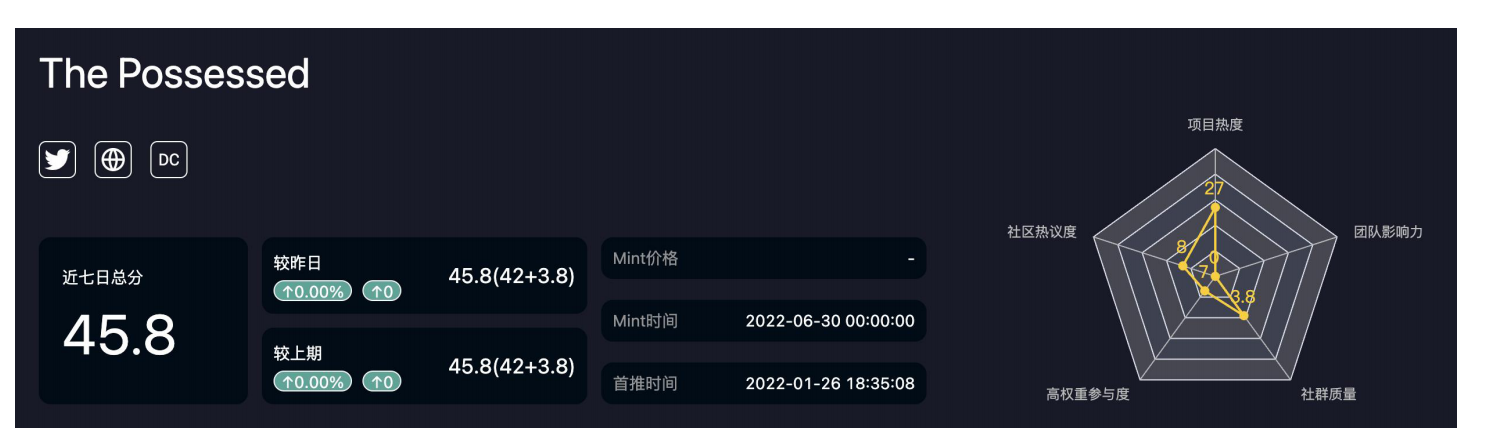
After integrating multiple public opinion data, five categories of data dimensions are divided, namely, project popularity, community popularity, high-weight user participation, community quality, and team social influence. (The picture shows a screenshot of the internal test version of the NFT project public opinion monitoring tool)
In the project library, 10 mint projects with a score of more than 20 points on the day were randomly selected, and the public opinion data scores and floor prices on the 7th and 14th days after mint were sorted out. From the ups and downs of the data, it can be clearly determined that there is a correlation between public opinion and the value of NFT.
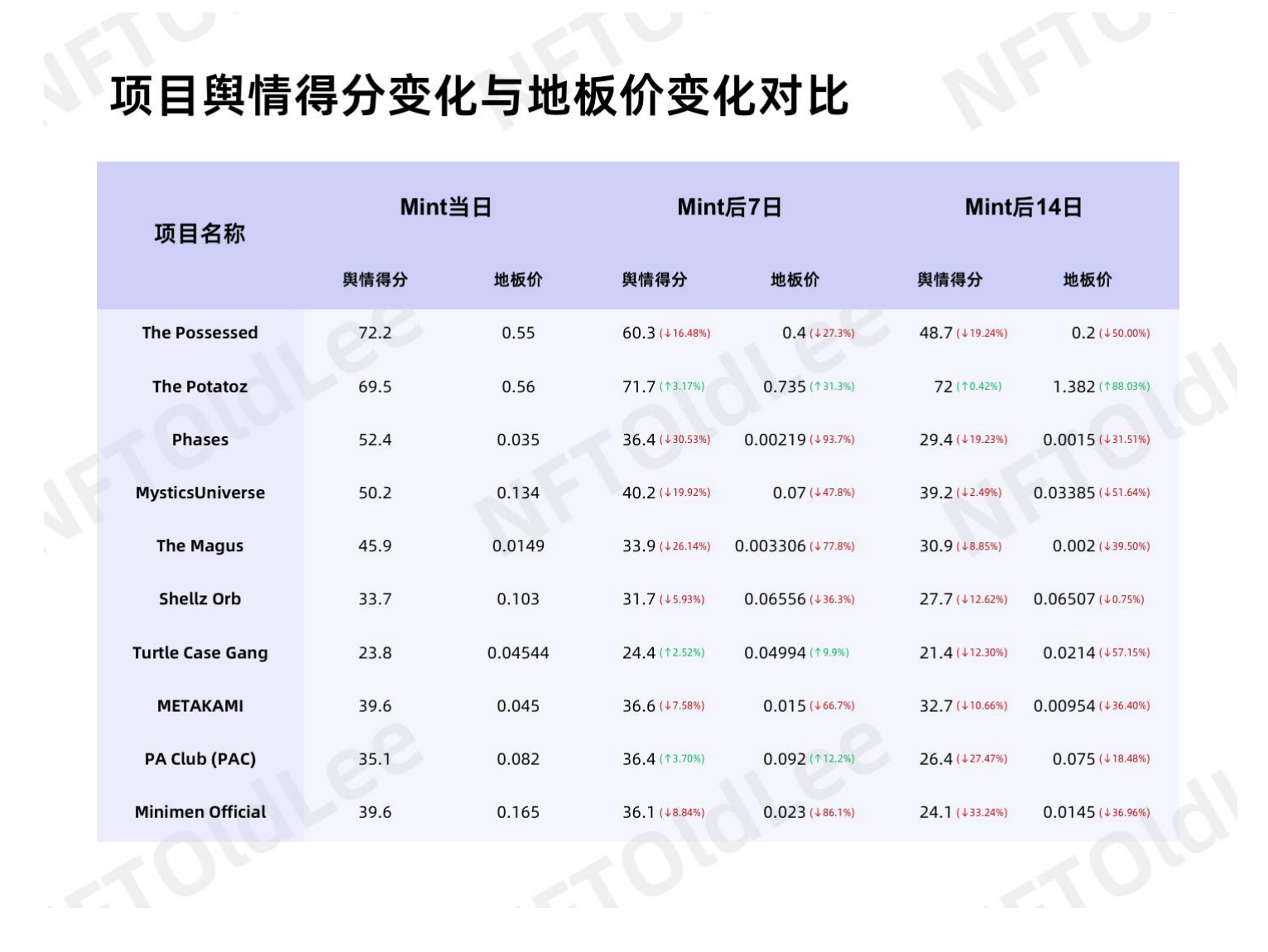 Although the value of NFT is highly related to public opinion and affects each other, it is not easy to judge whether a project will make money from the score. Take mint's detailed data for The Possessed, a project with a high score of the day, as an example:
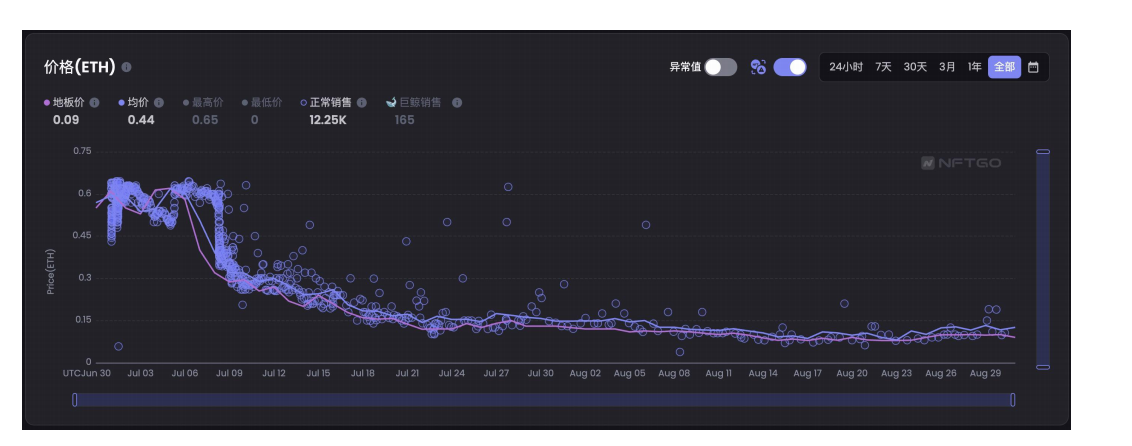
Let’s first look at the trend of the floor price after the mint: about a week after the mint, the floor price was at a high level, but then it fell in half immediately.
Such price fluctuations are almost exactly consistent with the scores of the public opinion monitoring model I built. The Possessed maintained a score of 65.2 and 64.3 after mint, and then plummeted to 48.7.
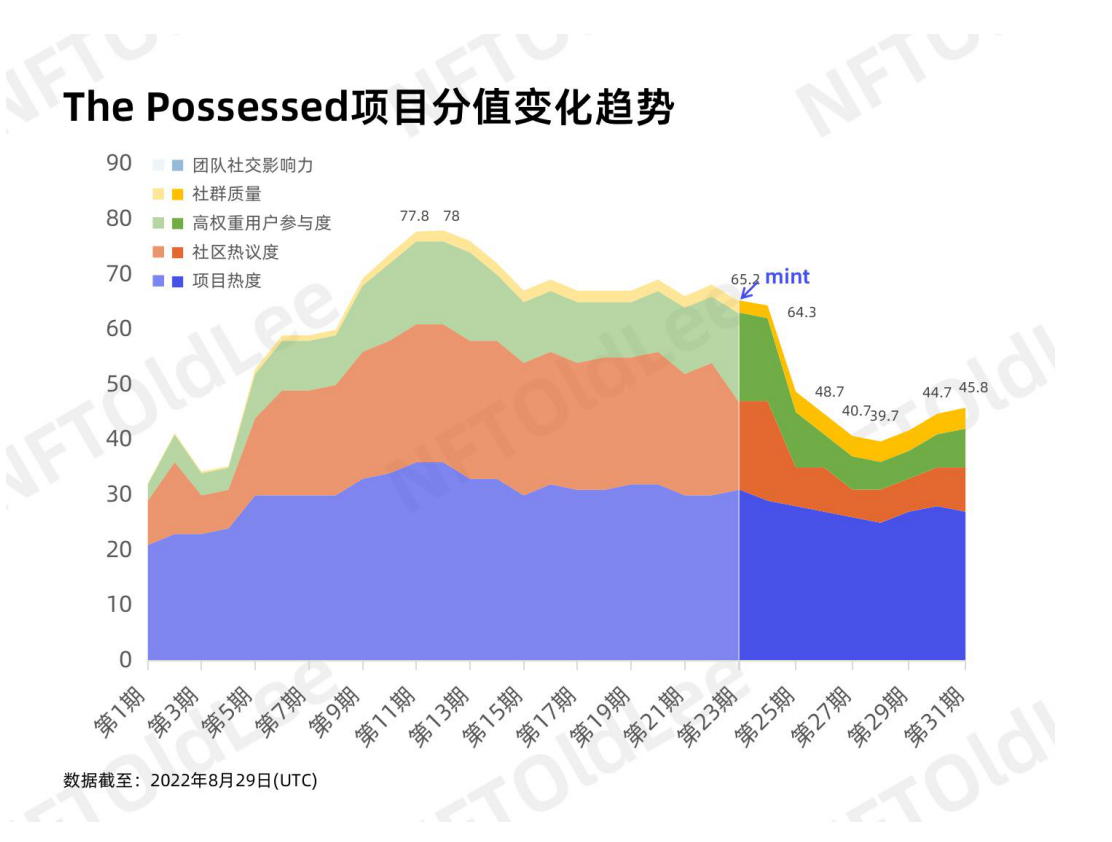
The high opening price of The Possessed is reflected in the high public opinion score before mint, and the price drop is also predicted in the detailed data dimension.
In the early stage of project warm-up, The Possessed's official push data is very good, reaching 166,000 interactions in a single week. However, it is close to the project mint, but there is no dazzling data. The weekly interaction volume is only 32,000, which is a drop of more than 80% compared to the peak period.
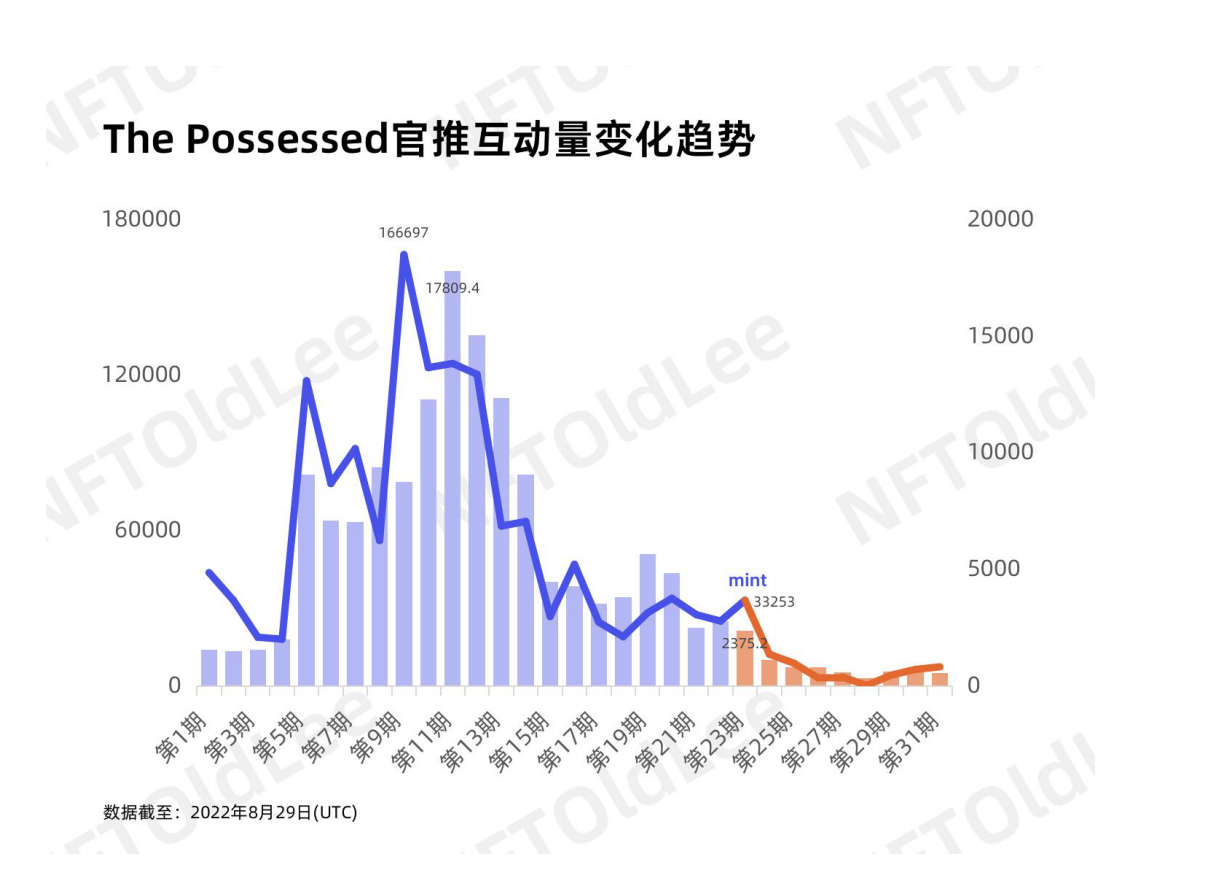
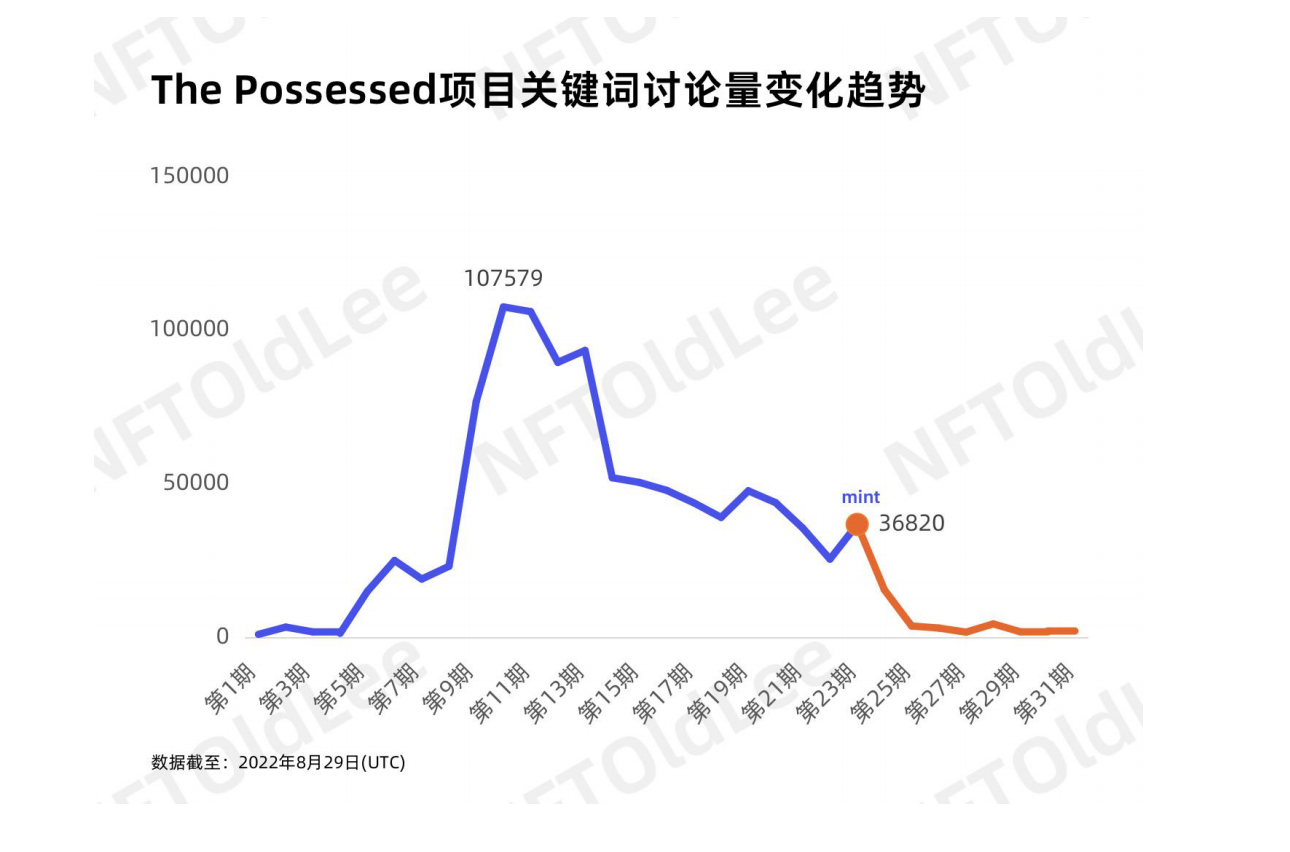
This trend also appeared in the discussion volume of the project. After experiencing a peak discussion volume of 100,000+ in a single issue, mint failed to bring enough discussion heat to the project again, and the current discussion volume was only 36,000.
Let's take a look at the data performance of the big V.
From the perspective of public opinion, the big V’s judgment should not only be based on the number of fans, but based on social graph data such as social media interaction, communication relationship, and fan nature, and obtain a comprehensive value through a variety of machine learning algorithms.
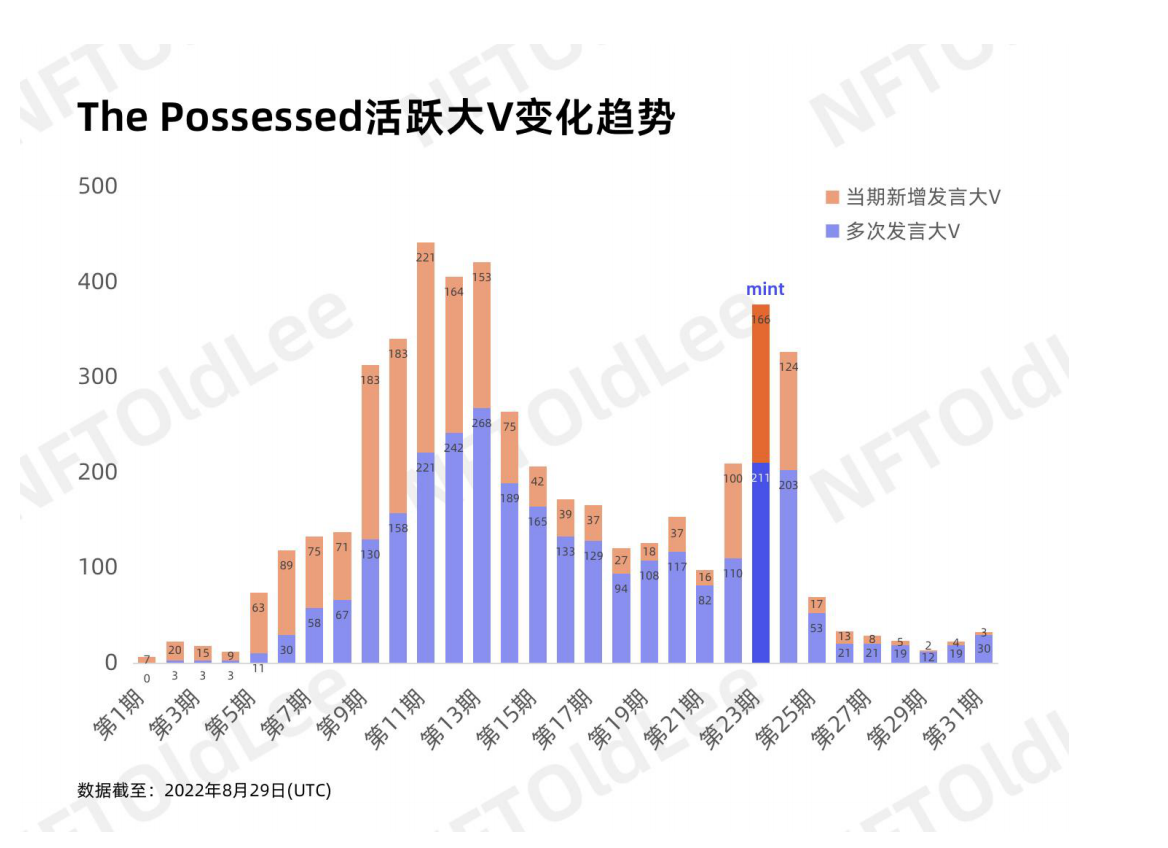
Up to now, a total of 1,986 Twitter big Vs have tweeted about The Possessed. Although from the market as a whole, The Possessed's big V data performance is currently in the top echelon.
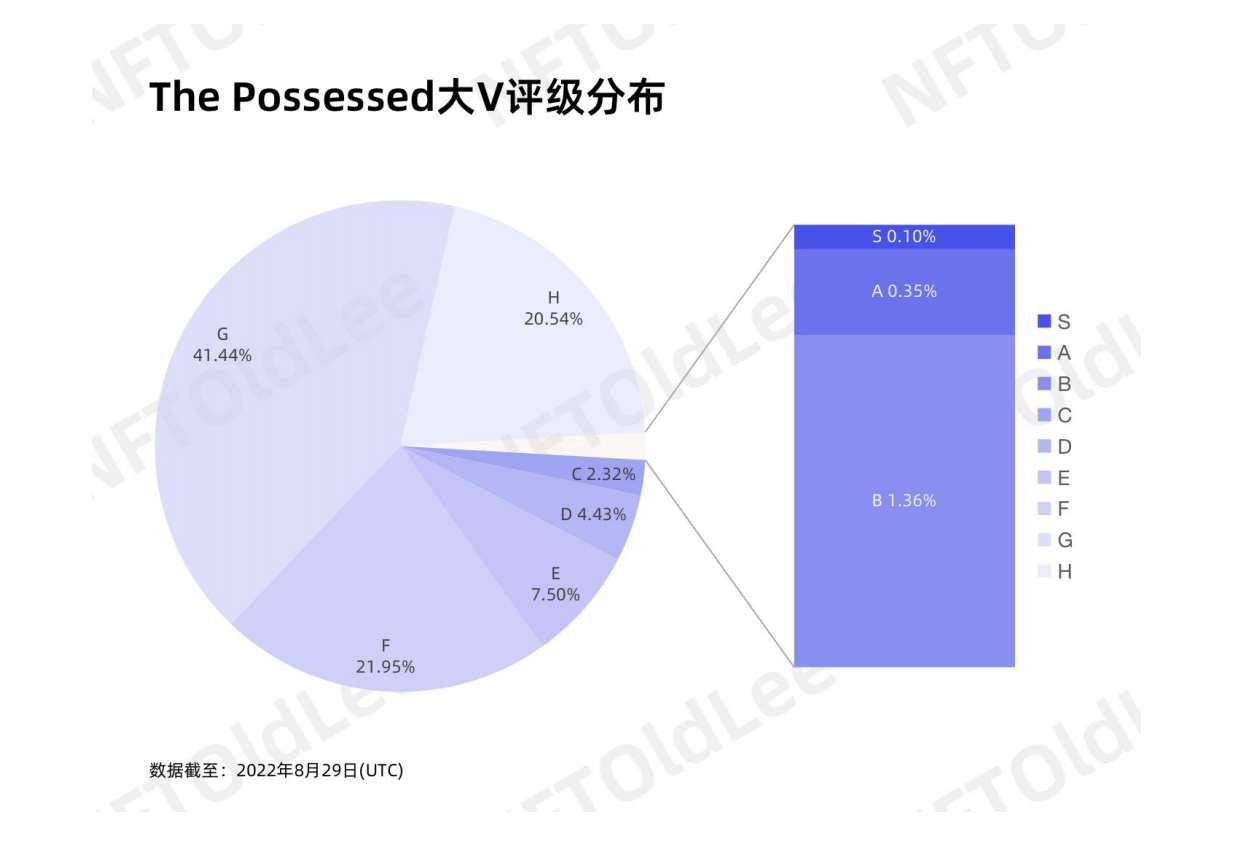 However, after unfolding the data, the changing trend of the active big V also implies the irrationality that is contrary to the conventional logic.
The outbreak period of The Possessed's active big Vs was from the 9th week to the 13th period, and then the number of big Vs dropped sharply, and only 16 new ones were added in the first two periods of mint.
There was a sharp increase again when mint was approaching, but this trend only lasted for three periods. After mint, the number of active big Vs dropped sharply to 70 again.
 To sum up, it is not possible to judge whether a project has appreciation potential or long-term holding value just by looking at public opinion scores. What we need more is to rely on the real representation of the data, combined with comprehensive analysis of various dimensions, to judge the potential of the project as accurately as possible from the performance of public opinion data, and to identify whether it is overestimated or underestimated.


