






How to explain "What is the use of Web3 to the real world" to outsiders?


This article comes fromMediumThis article comes from
, the original author: Mercedes Bent, compiled by Odaily translator Katie Koo.
There are already many examples of consumers putting these products to practical use. In this article, I will delve into the areas where cryptocurrencies provide real value, not just speculation and flips.
secondary title
Which Crypto products are the most viable examples today?
Successful consumer products tend to satisfy many core user needs, not just speculative benefits.
One reason for this is that the appeal of blockchain applications to mainstream users is still in its early days. In cryptocurrencies, users may be primarily motivated by monetary incentives and ownership.
Successful consumer products, on the other hand, tap into a host of core drives of human behavior: the need for meaning, the need for self-expression and creativity, the need for connection and influence, the need to own, the need to belong, The need for safety and security, the need for social influence and connection to others, the need for stimulation and dopamine, the need for completion and construction.
Today, the most realistic use of cryptocurrencies remains as an alternative to fiat currencies, especially when used for international payments. DeFi apps like Pancake Swap have more than 2 million monthly active users in multiple countries. In geographically dispersed countries such as Argentina, South Africa and Thailand, cryptocurrency adoption is close to 20%. (The global average is 10 percent; the U.S. is just under 13 percent.)
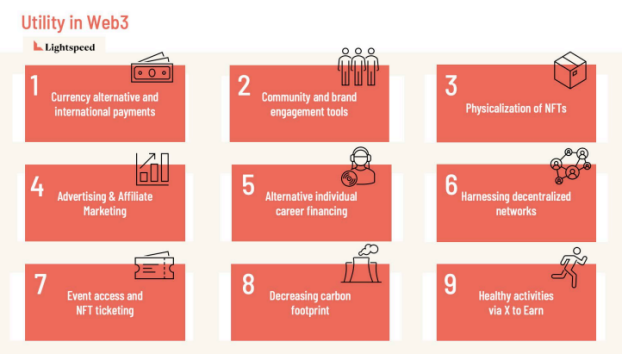
Here are 9 of the most promising real-world areas of crypto utility.
secondary title
1. Currency substitutes and international payment systems
In many countries around the world, government policy restricts its citizens from accessing and using their funds. In Argentina, for example, people can only convert $200 of pesos to dollars per month.
This is a huge challenge if you want to go to college abroad, buy a house, or immigrate to another country. Plus, if you've ever paid a business or person in another country, you know that the international payment system sucks. Sending funds abroad often comes with exorbitant fees.
Some of these international payment system players include:
LemonCash: LemonCash already has more than 1 million users in Argentina and offers its customers a debit card, brokerage, and cashback service that all support cryptocurrencies.
Pintu: This Indonesian crypto exchange allows people to buy and sell cryptocurrencies and has over 4 million registered users.
Chipper Cash: This virtual bank has attracted more than 5 million registered users in Nigeria, and users can now buy and sell bitcoin in other African countries.
Tribal Credit: Tribal offers corporate credit cards, crypto-enabled loans, and payment mechanisms to small businesses in Latin America.
While time will tell how governments ultimately regulate cryptocurrencies, in the meantime, people are using it for new opportunities. Founders in emerging markets have the opportunity to leapfrog financial technology and lead their users into the new century.
secondary title
At the most basic level, NFTs and tokens are simply a way to verify ownership using the blockchain. Brands have started using it as part of their loyalty programs, offering unique perks to certified members of their communities.
example:
example:
Percs: This startup encourages brands to create NFTs for loyal customers and activate new audiences with exclusive experiences. Users link their wallets to find the rewards they are eligible for. Major brands that have tried Percs include Budweiser, Playboy, Shopify and DJ Steve Aoki.
Cal: A calendar app that only allows people who own the same tokens as you (verified via the blockchain) to book meetings with you.
Fan Controlled Football (alternative professional sports league controlled by fans): FCF uses tokens and NFTs to set access rights to team ownership in its fan-driven sports league.
Additionally, many top brands are using NFTs as a way to increase engagement, including the NFL (Super Bowl tickets as collectible tokens), Gucci (digital collection of fantasy fashion apparel), and Nike (virtual NFT sneakers called CryptoKicks) . Agencies specializing in NFTs such as Recur, Unblocked, and ThirdWeb are helping other big brands develop and monetize their NFT and crypto strategies through licensing agreements, brand exposure, loyalty programs, and more.
secondary title
3. NFT materialization or tokenization of existing commodities
Several companies believe that in the future each entity will have an NFT twin. The digital tag would share product information, track the supply chain, enable the original brand to recoup a percentage of secondary sales, and allow owners to prove they actually own the product.
Actors building in this space include:
Courtyard: This digital twin company is working with Brinks Security and others to offer "tokenization of physical objects" as a service platform.
Metaverse-related tech incubator sLABS: NFT-driven merchandise, collaborations with major artists like Beyoncé and JayZ.
Video library platform Infinite Objects: Make the virtual more real by printing NFT videos for sale and displaying them in your home like photo frames.
If you resell the Elsa Castle toy from Frozen to another buyer, Disney doesn't get a second cut. If it comes with an NFT offering theme park discounts, new buyers will want to include that NFT in the sale. But the concept will require a lot of consumer education before it becomes widely accepted.
secondary title
4. Advertising and Affiliate Marketing
Today, it is difficult for marketers to reach blockchain users because they cannot send messages to wallets or even know the identity of the wallet holder.
Given Web3's philosophy of data sovereignty and data interoperability, some blockchain applications have chosen to selectively create advertising and marketing opportunities for brands, offering tokens to users who choose to share their data. This is significantly better than Web2, where centralized entities built free business models around monitoring and selling user data in a non-transparent manner.
The advertising model will enter the encryption field, which needs an opportunity. It has the potential to bring huge benefits to users. Here are some early examples:
Brave: This privacy-focused browser stops advertisers and websites from tracking you. It offers a subscription model called Brave Rewards, where users can view ads anonymously through a token called BAT (Attention Token). BAT has 55 million monthly active users, 16 million daily active users, and 1.5 million certified developers, and claims to have millions of user wallets.
Layer3: Layer3 users collect rewards by participating in Crypto learning tutorials hosted by Layer3. This is essentially an affiliate marketing, where Layer3 uses a portion of the marketing dollars provided by its corporate clients to acquire users while simultaneously informing those users about their product. Layer3 is building an advertising network with on-chain actions.
Coinbase Earn: Tutorials on different crypto products that allow viewers to earn tokens while watching, similar to Layer3.
Holder: Holder's customer relationship management (CRM) and messaging layer helps brands with their marketing campaigns.Another set of ad-supported players areEncrypted Native Messaging Products
As I write this, we are developing new advertising metrics, methods and channels. I believe within a few years we will have a whole new category of digital marketing.
secondary title
If you are an aspiring musician or athlete looking to become a professional athlete, or just a freelancer looking to maintain a steady income between gigs, selling tokens to fund your career could be a viable option alternative plan. Token holders will share a small portion of your future earnings.
example:
example:
Audius: This blockchain-based streaming service could allow musicians to bypass record label gatekeepers, giving them more control over their work. Governance token AUDIO is currently worth $398 million fully diluted. Can be used to reward artists and listeners, as well as network node operators. Today, the direct-to-fan music market is larger than the traditional music industry, thanks in part to the breakout success of Audius (more than 500 million monthly active users).
Royal: Through Royal, fans purchase song copyrights for each song in the form of NFT and receive a certain percentage of royalties. This helps combat music piracy by incentivizing the purchase of certified songs. Some NFTs also include perks like exclusive access to artists and digital art. Like Audius, Royal offers an alternative to traditional labels.
Braintrust: Decentralized Boss direct hiring owned by freelance collectives. Members earn Braintrust tokens BTRST, worth $558 million in FDV (Fully Diluted Valuation) based on their contributions to the network, such as referring customers or vetting new members. These tokens can be used for governance, as collateral against non-paying customers, and redeemed for exclusive community benefits.
Other opportunities for applying this model include industries with monopoly gatekeepers. Industries with high capital expenditure costs (such as telecommunications and logistics) that deliver immediate value to consumers. Highly profitable but poorly paid early adopters, and jobs where the path to success is unclear but desired by millions (such as writing, filmmaking, and other arts).
secondary title
6. Leverage decentralized energy, memory, storage and other power networks
If your business requires a significant capital outlay to build a network, and dense coverage is beneficial to the business, then leveraging a decentralized blockchain-based network incentivized by tokens/cryptocurrencies may be a good option.
Helium: A peer-to-peer wireless network based on personally owned hotspots that power nearby IoT devices like scooters or digital refrigerators. Users earn HNT tokens to support the ecosystem, such as allowing individual hotspots to transmit data on the network. Helium is to telcos what Airbnb is to hotels, creating a powerful alternative to the costly capital it takes for a company to build a wireless network around the world.
Flux: Similar to Helium, Flux is a cloud-based network for providing infrastructure services—essentially a decentralized Amazon AWS cloud service. Its FLUX token has an FDV (fully diluted valuation) market cap of $438 million.
Livepeer: This service compensates users for using idle GPUs to transcode videos, providing a higher quality streaming experience. At the same time, users can generate passive income by mining LPT tokens ($272 million FDV). As of June 2022, the decentralized video streaming network has processed over 90 million minutes of video.
Theta: Another video streaming network whose token THETA is worth 1.2 billion FDV. When users watch videos, some of their computing power is used to forward those videos to other users. Primary users earn tokens as rewards.
This is an opportunity for any industry or product that requires intensive capital financing of distributed hardware. In this case, hardware that meets customer needs is an advantage, or creating resource-intensive products. This creates lower costs for consumers.
secondary title
7. Event Access and NFT Ticketing
NFTs can also convey the right to access exclusive events or spaces. Your crypto wallet determines your access, not your ID or key card. NFTs are also a better form of tickets because they allow artists to earn commissions from ongoing sales.
Afterparty: The world's first ticketing platform for artists held events in Los Angeles and Las Vegas with tokenized tickets for participation, allowing artists to earn some secondary resale value from NFTs. Because Afterparty collects data directly from attendees, it can also create more opportunities for artists to engage directly with their fanbase.
Tokenproof: Tokenproof was originally launched to allow users to prove that they own NFT without exposing their wallets. Now Tokenproof uses this function to support events that use NFT as tickets, including this year's ApeFest and NFT NYC events.
Opportunities here are more limited. With the LiveNation/TicketMaster ticketing service monopolizing most events, new entrants will need to build a strong enough following at indie venues (Livehouses) and indie festivals, or convince artists directly to push the event.
secondary title
8. Reduce carbon footprint
Blockchains attract a lot of negative attention for being energy intensive, but they also bring solutions that improve the environment.
Here are 3 examples to illustrate how this industry chain is green and environmentally friendly:
KlimaDAO: This decentralized autonomous organization aims to reduce greenhouse gases by incentivizing carbon credits. It incentivizes people to exchange tokenized carbon credits for KLIMA tokens ($6 million in FDV) at a discount. Tokens can only be minted when users prove that tokenized carbon credits are locked in their treasury. It is essentially a token backed by carbon credits.
Veritree: This project aims at reforestation, using the blockchain to verify when new trees have been planted. Cardano is behind the effort, announcing earlier this year that it had planted 1 million trees.
The opportunities here are endless. Other purpose-driven fields can draw inspiration from the work being done on climate change to incentivize more creations that benefit us as humans in the long run.
secondary title
9. Incentivize healthy activities through X to Earn
The premise is simple: pay people to adopt healthy habits. Compensating people for sticking to healthier habits makes a lot of sense. Insurance companies are already encouraging healthy behaviors, which can help them avoid huge payouts in the future. Why not choose to achieve this through cryptocurrency?
This category is still in its relative infancy, but here are some promising candidates:
Stepn: Users can earn GMT ($4.1 billion FDV) by walking. Stepn asks people to buy physical shoes that track their steps. A good hardware+software game that encourages people to go for a daily walk is clearly gaining ground, gaining 3 million users in its first six months.
Sweatcoin: Same idea - to encourage people to get over their guilt and take action. At its peak, Sweatcoin had over 10 million daily active users. The company has yet to actually implement the cryptocurrency, but plans to do so soon.
secondary title
Summarize
secondary title
Related Reading
How should brands consider practicality when issuing NFT?
The next consumer-grade encryption-native product may be an on-chain chat tool


