






Read and understand the verifiable random function


In cryptography, a verifiable random function (VRF) is a random number generator (RNG) that cryptographically verifies randomness. Verifiable random numbers are an indispensable element for many blockchain applications because they are tamper-resistant and unpredictable, and can be used to create exciting gaming experiences and cast rare coins.NFT, and guarantee a fair outcome.
Chainlink Verifiable Random Function (VRF)Chainlink Verifiable Random Function (VRF)first level title
What is a Verifiable Random Function (VRF)?
A verifiable random function is a cryptographic function that generates pseudorandom numbers based on a data input and attaches a proof that anyone can verify it.
The data input to a VRF typically consists of a pair of public and private keys (also called "verification key" and "secret key") and a seed. The public and private keys are generated, and the seed is chosen. Enter these values into VRF together, and use the private key and seed to generate random numbers. The VRF then generates a random number and a proof. The most critical step is to generate a proof, because the user can verify the function through the proof. Keeping the private key secret ensures that the random number cannot be predicted.
The key properties of a verifiable random function are written in its name:
Verifiable——Anyone can verify that the random numbers generated by the VRF are valid, just look at the proof and verify that the hash calculation is correct. Only those who hold the VRF private key can perform the hash operation, and anyone who holds the public key can verify the hash operation result.
random--For those who do not know the seed or do not hold the private key, the output of the VRF is completely unpredictable and the probability is evenly distributed, without any rules to follow. Each result output by VRF has the same probability, and uses seed and private key to generate random numbers in a unique way.
function--secondary title
History of VRF development
paperpaperproposed in. It is worth mentioning that Silvio Micali later created the Algorand blockchain, and Algorand also uses VRF in its consensus mechanism.
Since then, there have been a series of key breakthroughs in VRF technology. In 2005, Yevgeniy Dodis and Aleksandr Yampolskiy used collision-resistant hash functions to achieve shorter proofs and keys, thus increasing the efficiency of VRFs and advancing the technology. In 2015, Dennis Hofheinz and Tibor Jager developed verifiably secure VRFs using elliptic curve cryptography. In 2019, Nir Bitansky proposed that VRFs can be constructed using general primitives instead of simple algebraic constructions. Many VRF solutions today build on these innovations.
secondary title
Application scenarios of VRF
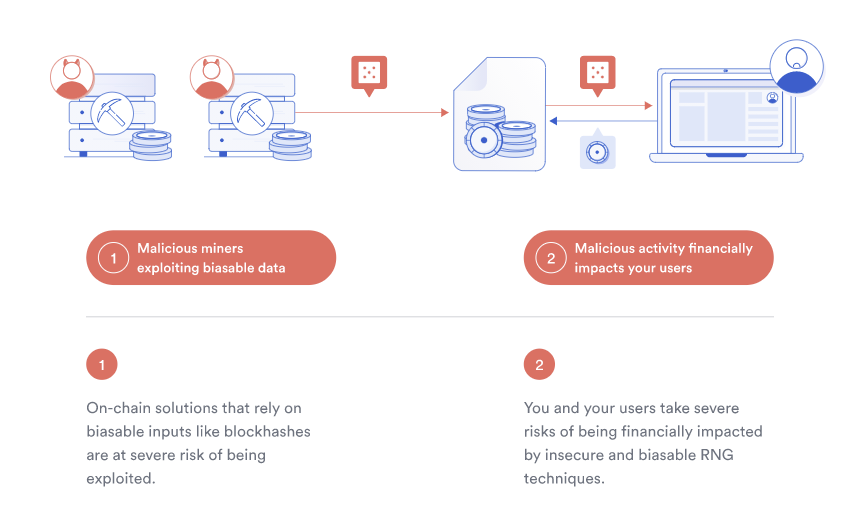
Most RNGs cannot generate random numbers that can be verified by cryptography, so such RNGs are vulnerable to manipulation, which limits their application scenarios. If VRF can guarantee the security of random numbers, it can unlock a series of key use cases, including:
cyber security--Use VRF to ensure the security of domain name system (DNS) message transmission.
Zero-Knowledge Technology -VRF can be used to create zero-knowledge proofs and zero-knowledge databases.
Non-interactive lottery system——VRF can guarantee fair, verifiable and efficient results for lottery games.
Verifiable transaction escrow mechanism——VRF can support automatic hosting services to ensure the anonymity of users.
Blockchain and Smart Contracts -secondary title
VRFs in the blockchain
Many L1 blockchains including Algorand, Cardano, Internet Computer, and Polkadot use VRF in their consensus mechanism to randomly select block producers.
image description
text
first level title
Chainlink VRF
Chainlink VRFIt is a fair and verifiable RNG that can meet the above requirements and provide secure random numbers with cryptographic proofs for smart contracts, which cannot be tampered with by oracle nodes, users or development teams.
Chainlink VRF can bring the following benefits to developers:
Unpredictability—Chainlink VRF cannot be predicted. Since the block data is not known when the nonce is requested, no one can predict the nonce to improve their own probability of success.
Fairness——Chainlink VRF is very fair and just because the random numbers are uniformly distributed and all numbers have the same probability of being selected.
Randomness——The randomness of Chainlink VRF can be verified because it uses the block hash as a seed to generate random numbers, and the block hash cannot be predicted in advance.
Tamper-proof——Chainlink VRF is tamper-proof, and no one, including oracles, external parties, or the development team, can manipulate the random number generation process.
image description
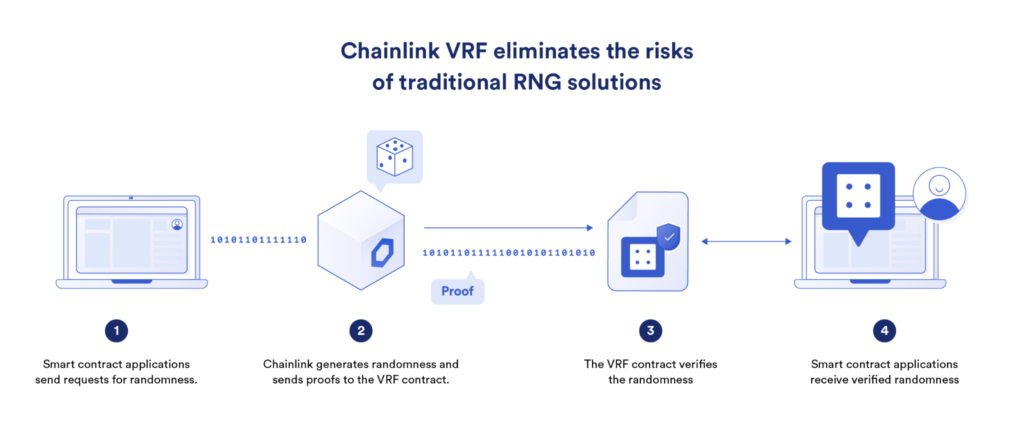
Chainlink VRF uses open source code and encryption technology to generate tamper-proof random numbers, and users can verify the authenticity of random numbers.
paperpapersecondary title
Application Scenarios of Chainlink VRF
Chainlink VRF is currently providing a secure source of on-chain random numbers for many applications in the Web3 ecosystem, including projects such as GameFi, DeFi, and NFT.
ChainlinkApplication scenarios of VRFinclude:
Assign random attributes to NFT——Chainlink VRF can be used to mint special NFTs. for example,Axie InfinityUse Chainlink VRF to assign random attributes to each Origin Axie.
Fair distribution of rare NFTs -Chainlink VRF can prove that NFTs are distributed fairly, and the proof can be verified. for example,Bored Ape Yacht Club(BAYC)Random distribution of mutated serum NFTs to BAYC NFT holders using Chainlink VRF.
The outcome of the game is unpredictable——Developers can use random numbers to create more fun blockchain games. for example,BlockmineRandomly draw cards in the Next Card game using Chainlink VRF.
Fair selection of participants—Distribute tickets for popular events, draw buyers for pre-sales of luxury goods, and select participants for popular public sale events. for example,CentaurUse Chainlink VRF to select participants for an on-chain public sale event.
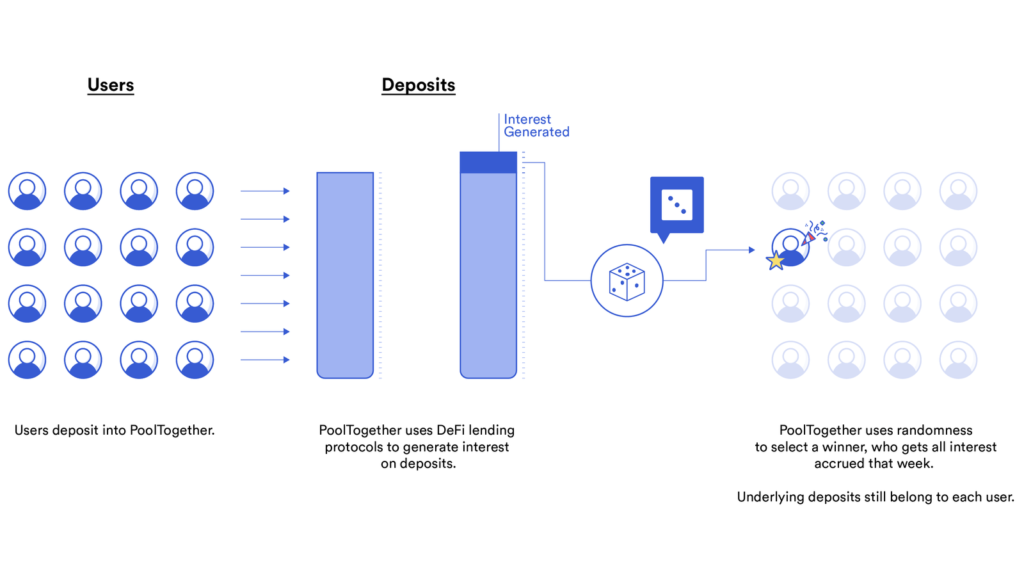
Winners will be chosen at random -Chainlink VRF allows users to verify that the selection process for winners is fair and just. for example,PoolTogetherimage description
Summarize
Summarize
Chainlink VRF is the blockchain industry's leading secure random number generator (RNG), providing a verifiable and tamper-proof source of random numbers for smart contracts and off-chain systems.
encrypted factsencrypted factsIf you are a developer and want to quickly connect smart contracts to
If you are a developer and want to quickly connect smart contracts toChainlink VRFand join us atdeveloper documentationand join us atDiscordfurther readingherecontact us.
further reading


